

Trump and Clinton: National versus global perspectives

By Richard Falk

November 6, 2016

It is not often that Medea Benjamin, the charismatic founder of Code Pink, offers us her insight into a troublesome American reality that is almost simultaneously confirmed by the New York Times, the virtual bible for secular liberals in the United States.

Yet it happened, most surprisingly, in a positive portrayal of one thin slice of Trump loyalists – veterans of recent foreign wars.

Medea reports on a conversation with such a veteran on a train out West, and was impressed that he felt Clinton much more likely than Trump to get Americans killed in a future distant war disconnected from any reasonable defense of the homeland.

The New York Times in a front-page feature article reached this same plausible conclusion on the basis of a wider scan of relevant evidence.

Here are two disturbing realities worth pondering as we come closer to this most potentially momentous of American presidential elections. While the civilian national security establishment in the United States is outspokenly supportive of the Clinton candidacy, many combat veterans seem to consider Trump less of a warmonger despite his loose talk about crushing the enemies of America.

Is it that the national security establishment has entered the arena of partisan politics because it is so worried about Trump’s petulant style and go it alone adventurism or because it finds Clinton’s record of military internationalism strongly to their liking? Or maybe a combination?

The second cluster of observations concerns the split between those of left liberal persuasion who reside in America and those living abroad, especially in the Euro-Mediterranean region.

Those outside, whether American citizens or not, think of what these bitter rivals are likely to do once ensconced in the White House, and it makes them fearful.

Typical is the view of Slavoj Źiźek, the celebrity Slovenian public intellectual: he believes that Trump is ‘apparently less dangerous’ than Clinton, a view overwhelmingly held among Russian elites, and not just Putin.

In complementary fashion Julian Assange insists, with the weight of Wikileaks on his shoulders, that the American political class will not allow Trump to win. Such opinions are also shared by many expatriates (as well as in country America First isolationists who are all in for Trump) who consider Clinton fully committed to continuing the American global domination project, no matter its costs, with twin ominous dangers of raising tensions with both Russia and China.

Those of us on the left who live mainly in the United States see the risks and dangers differently.

We are more inclined to repudiate unconditionally anyone with Trump’s unsavory views on nuclear weapons, race, women, Muslims, immigrants, climate change, guns, and torture without bothering to look further.

And if this is not enough, then Trump’s commitment to appoint justices to the US Supreme Court who embrace a jurisprudence that resembles the approach of the recently deceased arch conservative, Anthony Scalia, lower taxes on the super-rich, and is cavalier about the menaces posed by nuclear weaponry and global warming, is more than enough to turn many, including most disappointed Sanders’ enthusiasts, into reluctant Clinton supporters.

Additionally, those with Wall Street portfolios also have reasonable fears that Trump’s rejection of trade agreements and commitments to scrap existing arrangements and negotiate better deals with China and others, as well as make countries being defended by American military power pay their fair share will lead to an unraveling of the world economy, collapsing stock markets, and a return of protectionist policies leading to a new economic downturn reviving grim memories of ‘beggar thy neighbor’ trade wars and the Great Depression of the 1930s, which also operated as one incubator of the rise of fascism.

Trumpism might also destabilize security arrangements to such an extent that several states will go all out to acquire their own stockpile of nuclear weapons, and a series of regional nuclear arms races ensue.

We learn from this recital of competing fears, what has always been implicit, but now becomes apparent, that the United States is a global Behemoth whose missteps have for decades harmed the wellbeing of peoples around the world.

For this reason, continuity with the past tends not to be viewed favorably by many foreign progressive observers, especially the projection of American military power throughout the planet. Trump for all his flaws is perceived as embodying a crucial discontinuity, and this alone makes him attractive for the very same reasons that Clinton appeals to many mainstream Republican and neocon foreign policy analysts.

Additionally, Clinton is seen domestically as less of an uncertain quantity. She is predictable and stable, which explains the overwhelming support she receives from the American political class, including the media, Beltway think tanks, Silicon Valley, liberal centers of learning, and much of the military industrial complex.

Even though my months spent in Turkey each year have made me a partial expatriate, I still regard the political choices primarily from an insider’s perspective.

This helps me justify to myself why I am a reluctant supporter of Clinton, which in the end strikes me as a clear choice, which would hold up even internationally if properly appraised.

Although it is naïve to expect that Clinton has learned to be more cautious about the use of American military power on the basis of past failures of regime-changing interventions and muscular geopolitics, it feels grotesquely naïve to trust Trump with the ‘nuclear football,’ as well as to risk a mighty economic crash or the dire consequences of neglecting climate change (a hoax according to Trump), which if any materializes, would be catastrophic far beyond the borders of the United States, and as usual in such circumstances deliver the most crushing blows to the poorest and most vulnerable among us here at home and abroad.

One aspect of the conventional wisdom is to say that Clinton has experience that shows she can get things done. In contrast, Trump is almost proud of his lack of experience, and the prospect of his twisting Congressional arms to reach a compromise in support of his policy initiatives seems like what in American football talk is called ‘a hail Mary.’

Yet reflecting on this prospect the contrast may not be so clear.

After all Clinton as president will almost certainly face a Republican dominated Congress determined to nullify her presidency by all means at its disposal. Trump as winner, which at present remains an improbable outcome, would enjoy a tactically sympathetic Congress controlled by Republicans, who despite themselves being sharply divided, would probably join with centrist Democrats to be more legislatively effective than a Clinton presidency.

What is most deeply worrisome about the Trump candidacy, win or lose, is the degree to which it has empowered a hitherto relatively dormant proto-fascist underclass, which for its own reasons of alienation had long been boycotting mainstream politics (at least since Reagan), although gradually building a populist base during the last decade via the extremist Tea Party.

Trump now has a movement at its disposal that can create havoc either as the mobilized base of an extremist leadership or as the militant vortex of a disruptive opposition that could pose a threat to the future of the republic, especially if mega-terrorist incidents on a 9/11 scale were to happen in the West, and especially within the United States, or economic hard times occur.

To the extent I equivocated earlier in this electoral cycle, it was to consider seriously giving my vote to the Green Party candidate, Jill Stein.

I think third party candidates have every right to seek as widespread support as they can gain, and that existing rules restricting their participation in national debates should be relaxed to allow their voices to be heard nationally.

This would make such political alternative more competitive with the big money machines that the two major parties have become, and create a live possibility of candidates whose program and character can be affirmed, freeing persons like myself from the demoralizing dilemma of voting for the lesser of evils. If American democracy is going to be strengthened it must begin to give the citizenry political alternatives that resonate with our ‘better angels.’

I admit voting for Ralph Nader back in 2000 when it seems that Nader’s votes in Florida swung the election to George W. Bush with some help from the Supreme Court. Few strangely cast blame on the 300,000 or so Democrats who voted for Bush in Florida, and were hence a much larger factor in explaining the outcome. Liberal are scornful of those who voted for Nader, while giving a pass to their more wayward fellow Democrats, perhaps forgiven because they didn’t ‘waste’ their vote.

My vote for Nader represented a refusal to acquiesce in the lesser of evils argument.

I was also influenced by my perception back then of Al Gore as militarist and unapologetic champion of neoliberal globalization, making only Nader the only candidate to express views that I could endorse in good faith. In retrospect, I did underestimate the leverage of neoconservative forces surrounding Bush, and wanting, partly on Israel’s behalf, to restructure the Middle East by what became euphemistically described as ‘democracy promotion’ but can be more realistically described as forcible ‘regime change.’

It was the 9/11 attacks in 2001 that gave the Bush presidency a political climate within which to pursue this disastrous neocon program in the Middle East, centering on the attack and occupation of Iraq starting in 2003, and undoubtedly a primary cause of much of the suffering and turmoil that now afflicts the region as a whole. It is reasonable to believe that Gore would have responded similarly to 9/11 with respect to Afghanistan and the tightening of homeland security, but likely would have acted more prudently in the Middle East, although this is far from a certainty.

Perhaps, I can end by taking note that American presidential elections generally, and this one in particular, should be understood as a type of two-level political exercise. On its primary level, the election is treated by both sides as inward looking, and determined by which side is most persuasive with voters on domestic policy issues.

This domestic focus has itself become quite problematic, affected by Republican efforts at ‘voter suppression’ (ways to deny the vote to African Americans and Hispanics), by relentless fundraising favoring the priorities of the most wealthy, and by a variety of ways to manipulate results in the few key ‘battleground states’ that determine which side wins enough electoral college votes to gain the office of the presidency.

For the sake of balanced perspective, it should be acknowledged that there been serious infringements on the proper exercise of the right to vote ever since the United States became a republic.

Then there is the secondary level of this American electoral process where people around the globe view American elections as directly affecting and threatening their lives in a variety of tangible ways.

These people situated around the world are victimized (or benefitted) by the American global state but are disenfranchised so far as being denied any voice, much less a vote.

From the primary level, Russian efforts to meddle in American elections are totally unacceptable, but viewed from the secondary level, are completely understandable. Putin is not irresponsible to believe that vital Russian interests are at stake, and that Trump is less likely than Clinton to produce inflammatory confrontations.

From a nationalist perspective, Trump’s possible encouragement of Putin’s concerns seems treasonous; from a global perspective, Russia is acting prudently by acting nonviolently to avoid an electoral outcome in the United States that could have grave consequences for its future wellbeing, and for that matter, so is Wikileaks.

In this respect, there is a real erosion of global sovereignty in the sense of self-determination that results from this non-territorial salience attributed to the effects of an American presidential election. For a truly legitimate political order of global scope, we need to begin thinking of how to construct a global democracy that is responsive to the multiple experiences of political, economic, and cultural globalization.

To aspire to such an end presupposes the ethos of ‘citizen pilgrims,’ those who transcend national identities in their journey toward a promised land of peaceful co-existence, equitable distribution of material goods, ecological vigilance and sensitivity, a culture of inclusive human rights, and above all, enhanced and variegated spirituality.

It may sound utopian, and it is. I believe we are reaching a biopolitical threshold that increasingly equates prospects for human survival with the achievement of an eco-political utopia.

This presupposes that utopianism must soon become the new realism of a politics dedicated to a benign human future.
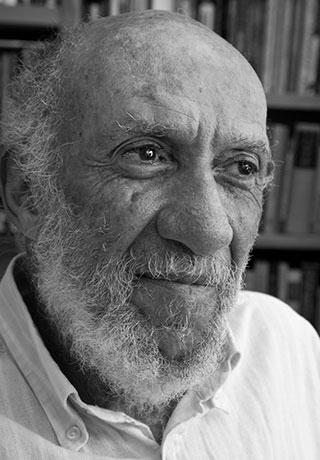

Professor Falk became an adviser to TFF when it was established in 1985.

Related Posts

Johan Galtung 1930-2024October 2015 Published here on October 3, 2026 Let us focus on Civilization for conflict analysis and remedies. Major forms of disorder use violence; war is state organized violence. The most belligerent states are the United States of America and Israel, both with civilization roots. National Evangelism, the US Protestant Christian civilization– more national than evangelical–justifies US warfare as exceptionalism of a people chosen by God, with a manifest destiny to run the world. Orthodox Judaism justifies Israeli warfare to conquer and expand from Nile to Euphrates as a religious right and duty to the Eternal One. The third most belligerent country, the UK, no longer believes it is God-chosen but chosen by the USA; not quite the same but something. But the root cause of global disorder lies in the Occident–with Islam–seeing itself as the single, universal civilization valid for all at all times, all others being...
The agreement is catastrophic both because of what it says and what it doesn’t mention. It reduces further the major asset of security policies: Freedom of action. Jan Oberg TFF director September 25, 2026 A couple of hours before the agreement was signed on September 22, 2026, I published the following 13 hypotheses about what it would most likely contain on TFF Substack (in English). I was wrong on only the first point. Contrary to what Trump had written on his Truth Social platform, it does not appear to come into force immediately. In fact, it turned out to be worse than even I had anticipated. After these hypotheses now come a number of reflections in light of what the agreement actually contains, and does not contain, as well as the way in which it has generally been presented by major media outlets and by the public-service broadcaster DR. My...
Photos © TFF 2000 Read PressInfo 90 “Lift the Sanctions and Bring More Aid to Yugoslavia” See Pictures from Belgrade © TFF 2000 Please reprint, copy, archive, quote or re-post this item, but please retain the source.

Recent Articles

Tony Robinson October 4, 2026 Violence is easy to recognise when someone is being beaten, shot or killed. It becomes more difficult when nobody is holding a weapon. Poverty, discrimination, exploitation and repression can restrict a human life just as effectively, although they do so in very different ways and with very different consequences. Simply adding more categories to an ever-growing list of forms of violence does not really solve the problem. The more interesting question is what all these different situations have in common and why it makes sense to describe them using the same word. Human beings do not simply react to what happens around them. They remember the past, imagine things that do not yet exist, make plans and undertake projects. Workers organise because they imagine different working conditions; people migrate because they imagine another life somewhere else; social movements emerge because people refuse to accept the...
It’s a matter of principles, courage, vision and pulling together – while the militarist world is falling apart… Peter Langille October 3, 2026 “Here, then, is the problem which we present to you, stark and dreadful and inescapable: Shall we put an end to the human race; or shall mankind renounce war?”The Bertrand Russell—Albert Einstein Manifesto, July 9, 1955 ⁕ The forecast for what’s ahead is worrisome. The sharp rise in armed conflicts over the past three years is adding to what was already the highest level in over seventy years. Genocides, which should be prevented are supported. A shared climate emergency that jeopardises survival is ignored. Diverse polls now suggest that people are war-weary, worried and interested in a more effective United Nations. And, there are viable policy options for a more secure world! Yet governments are doubling-down, betting on more war and investing heavily. If current trends persist,...
Johan Galtung 1930-2024October 2015 Published here on October 3, 2026 Let us focus on Civilization for conflict analysis and remedies. Major forms of disorder use violence; war is state organized violence. The most belligerent states are the United States of America and Israel, both with civilization roots. National Evangelism, the US Protestant Christian civilization– more national than evangelical–justifies US warfare as exceptionalism of a people chosen by God, with a manifest destiny to run the world. Orthodox Judaism justifies Israeli warfare to conquer and expand from Nile to Euphrates as a religious right and duty to the Eternal One. The third most belligerent country, the UK, no longer believes it is God-chosen but chosen by the USA; not quite the same but something. But the root cause of global disorder lies in the Occident–with Islam–seeing itself as the single, universal civilization valid for all at all times, all others being...

TFF on Substack

Discover and subscribe to more peace materials on TFF Substack

Most Popular

Tony Robinson October 4, 2026 Violence is easy to recognise when someone is being beaten, shot or killed. It becomes more difficult when nobody is holding a weapon. Poverty, discrimination, exploitation and repression can restrict a human life just as effectively, although they do so in very different ways and with very different consequences. Simply adding more categories to an ever-growing list of forms of violence does not really solve the problem. The more interesting question is what all these different situations have in common and why it makes sense to describe them using the same word. Human beings do not simply react to what happens around them. They remember the past, imagine things that do not yet exist, make plans and undertake projects. Workers organise because they imagine different working conditions; people migrate because they imagine another life somewhere else; social movements emerge because people refuse to accept the...
It’s a matter of principles, courage, vision and pulling together – while the militarist world is falling apart… Peter Langille October 3, 2026 “Here, then, is the problem which we present to you, stark and dreadful and inescapable: Shall we put an end to the human race; or shall mankind renounce war?”The Bertrand Russell—Albert Einstein Manifesto, July 9, 1955 ⁕ The forecast for what’s ahead is worrisome. The sharp rise in armed conflicts over the past three years is adding to what was already the highest level in over seventy years. Genocides, which should be prevented are supported. A shared climate emergency that jeopardises survival is ignored. Diverse polls now suggest that people are war-weary, worried and interested in a more effective United Nations. And, there are viable policy options for a more secure world! Yet governments are doubling-down, betting on more war and investing heavily. If current trends persist,...
Johan Galtung 1930-2024October 2015 Published here on October 3, 2026 Let us focus on Civilization for conflict analysis and remedies. Major forms of disorder use violence; war is state organized violence. The most belligerent states are the United States of America and Israel, both with civilization roots. National Evangelism, the US Protestant Christian civilization– more national than evangelical–justifies US warfare as exceptionalism of a people chosen by God, with a manifest destiny to run the world. Orthodox Judaism justifies Israeli warfare to conquer and expand from Nile to Euphrates as a religious right and duty to the Eternal One. The third most belligerent country, the UK, no longer believes it is God-chosen but chosen by the USA; not quite the same but something. But the root cause of global disorder lies in the Occident–with Islam–seeing itself as the single, universal civilization valid for all at all times, all others being...
Read More
Living-Peace-Sign-Budapest-copy
Tony Robinson October 4, 2026 Violence is easy to recognise when someone is being beaten, shot or killed. It becomes more difficult when nobody is holding a weapon. Poverty, discrimination, exploitation and repression can restrict a human life just as effectively, although they do so in very different ways and with very different consequences. Simply adding more categories to an ever-growing list of forms of violence does not really solve the problem. The more interesting question is what all these different situations have in common and why it makes sense to describe them using the same word. Human beings do not simply react to what happens around them. They remember the past, imagine things that do not yet exist, make plans and undertake projects. Workers organise because they imagine different working conditions; people migrate because they imagine another life somewhere else; social movements emerge because people refuse to accept the...
b54a1f10-8c65-4f0b-9dd5-4abc0a7d04cc_2659x2659
It’s a matter of principles, courage, vision and pulling together – while the militarist world is falling apart… Peter Langille October 3, 2026 “Here, then, is the problem which we present to you, stark and dreadful and inescapable: Shall we put an end to the human race; or shall mankind renounce war?”The Bertrand Russell—Albert Einstein Manifesto, July 9, 1955 ⁕ The forecast for what’s ahead is worrisome. The sharp rise in armed conflicts over the past three years is adding to what was already the highest level in over seventy years. Genocides, which should be prevented are supported. A shared climate emergency that jeopardises survival is ignored. Diverse polls now suggest that people are war-weary, worried and interested in a more effective United Nations. And, there are viable policy options for a more secure world! Yet governments are doubling-down, betting on more war and investing heavily. If current trends persist,...
010
Johan Galtung 1930-2024October 2015 Published here on October 3, 2026 Let us focus on Civilization for conflict analysis and remedies. Major forms of disorder use violence; war is state organized violence. The most belligerent states are the United States of America and Israel, both with civilization roots. National Evangelism, the US Protestant Christian civilization– more national than evangelical–justifies US warfare as exceptionalism of a people chosen by God, with a manifest destiny to run the world. Orthodox Judaism justifies Israeli warfare to conquer and expand from Nile to Euphrates as a religious right and duty to the Eternal One. The third most belligerent country, the UK, no longer believes it is God-chosen but chosen by the USA; not quite the same but something. But the root cause of global disorder lies in the Occident–with Islam–seeing itself as the single, universal civilization valid for all at all times, all others being...
Screenshot 2026-10-02 011738
Jan ObergPhD, director, The Transnational Foundation for Peace and Future Research, TFFLund, Sweden October 2, 2026 This is my full original manuscript. The Chinese Academy of Social Science, CASS, makes two publications out if it. 1. China’s Five-year plan emphasized the capabilities of basic research and original innovation. It is regarded as the goal of the future social development, which, as required, should be significantly enhanced. Can you comment on the importance of original innovation in research and academic study? I believe it is easier to define “original innovation” in the natural sciences than in social sciences. The breaking points of what constitutes something new, or innovative, are not quite as sharp in the latter. But in both fields it is about opening up something that was closed, unseen, unexplored before – making manifest what was earlier latent. Innovations come in many forms and shapes – naming something that was not...
arctic-circle-map
The agreement is catastrophic both because of what it says and what it doesn’t mention. It reduces further the major asset of security policies: Freedom of action. Jan Oberg TFF director September 25, 2026 A couple of hours before the agreement was signed on September 22, 2026, I published the following 13 hypotheses about what it would most likely contain on TFF Substack (in English). I was wrong on only the first point. Contrary to what Trump had written on his Truth Social platform, it does not appear to come into force immediately. In fact, it turned out to be worse than even I had anticipated. After these hypotheses now come a number of reflections in light of what the agreement actually contains, and does not contain, as well as the way in which it has generally been presented by major media outlets and by the public-service broadcaster DR. My...
girl-5894831_1280
Below are TFF-related media mentions, comments, videos and social media posts published elsewhere but not on this homepage. We happen to catch and list only a fraction. Regarding video comments and debates, we recommend that you go to the TFF Video Channel on Substack where many of them are reproduced. Jan Oberg is a contributor to China Daily – 52 million daily clicks – and Global Times, CGTN and CCTV (the national television), China Investment, Xinhua News Agency and several others. Articles and videos on these media very often multiply into countless Chinese (and Western media) that re-post them from these main media. Thanks to The China Academy, his analyses, interviews and comments are frequently posted on YouTube channels such as Thinkers Forum and Wave Media. These videos are often re-posted on Bilibili (China’s YouTube), the China Content Center on TikTok, and on the Chinese edition of TikTok, Douyin.com. This means reaching hundreds of millions of viewers worldwide over a year. While there are too many to catch on all these...




