
Three unshakeable pillars of American foreign policy

It deserves to be noticed that it is only the two anti-establishment candidates who have challenged the foreign policy consensus that has guided American politicians ever since the end of World War II: 1) consistently express unconditional support for the Pentagon, 2) Wall Street, and 3) Israel (especially since the 1967 War).

Bernie Sanders has been the first serious presidential aspirant for several decades to challenge directly and unabashedly at least one of these pillars by way of his principled and concerted attacks on Wall Street, on the billionaire class, on the exploitative 1%.

Although moderate overall, Sanders has been respectfully deferential to the other two pillars, Pentagon and Israel. Because he has mobilized an intense following among all categories of American youth there has been a media reluctance to assault his substantive views frontally, except to offer a variety of snide remarks that cast doubt on his ‘electability.’

Such a dismissal pretends to be pragmatic, but the polls indicate that Sanders would do better against likely Republicans than Clinton. This leads me to interpret the refusal of the corporatized mainstream to take Sanders seriously, at least so far, as a coded ideological attack, basically a reaction to his anti-Wall Street stand that can be viewed as the opening salvo of class warfare.

Donald Trump has encountered a somewhat different firestorm but with a similar intent.

At first, when the cognoscenti dismissed him as a serious candidate, he was welcomed as a source of entertainment. When his popularity with primary voters could no longer be overlooked, he was challenged by a steady flow of condescending rebukes that question his competence to govern (rather than his electability) or to be a commander in chief.

Again his cardinal sin, in my judgment, is not the extraordinary mobilization of a proto-fascist populism that relishes his anti-Muslim immigration stand, his xenophobic call for a high wall on the Mexican border paid for by Mexico, and his proposed revival of torture as a necessary instrument of anti-terrorism. Most hard core Trump supporters have been long hiding out in a closet until The Donald stepped forward with a plomb and a strident willingness to be politically incorrect.

As with Sanders, but seemingly more capriciously and less convincingly, Trump has agitated the guardians of all three pillars, unlike Sanders with a programmatic assault, but more obliquely with provocative comments here and there. He manages to convey, although by way of his many off hand and unrehearsed asides, a heretical state of mind with respect to the received wisdom that has been guiding the country since World War II regardless of which party’s president sits in the oval office.

Of the Pentagon, his heretical views seem spontaneous challenges to settled policies. Trump appears to look with some indifference, if not outright approval, at the prospect for further proliferation of nuclear weapons, specifically in relation to Japan and South Korea.

Such a comment is regarded as imprudent even if never meant to be acted upon as it makes the so-called ‘nuclear umbrella’ seem leaky to those accustomed to its protection, and more importantly, casts some doubt on American global commitments around the world.

Similarly, casting doubt on the role of NATO in a post-Cold War world, asking for the Europeans to pay more, is seen by the Beltway wonks, as both an unacceptable public rebuke to allies and an even more unacceptable failure to take seriously the threat being posed by a newly belligerent Russia that flexed its muscles in the Ukraine, and then Syria.

Trump’s skeptical attitude toward NATO was particularly resented as it seemed insensitive to the bellicose slide toward a new cold war that had been gathering bipartisan momentum in Washington.

Beyond this, Trump showed little appreciation of the way the Pentagon community views the war on terror. Although war planners likely welcomed the Trump promise to rebuild America’s armed forces so as overcome their alleged decline during the Obama presidency.

What bothered the Washington policy community was Trump’s skepticism about such mainstays of American foreign policy as military intervention and regime-changing missions. At one heretical high point Trump even hinted that it would be a good idea to divert Pentagon dollars into infrastructure investment here in America. Annoyed listeners among the guardians might have detected in such a sweeping assertion a disguised, if confused, nostalgia for a revival of American isolationism.

Of the Wall Street pillar, Trump is perhaps more seriously worrisome, although not at all in the Sanders’ mode. Trump trashes the international trading regime that has been such an article of faith at the core of ‘the Washington consensus’ that gave substance and direction to neoliberal globalization in the latter stages of the prior century. His views of the world economy clearly favor the nationalist sort of protectionism that is widely held responsible for the Great Depression.

Beyond this, Trump seems intent on challenging the terms of trade with China in ways that could expose a disastrous American vulnerability to Chinese countermeasures, especially given their enormous dollar holdings.

Although the foreign policy approach to China endorsed by the guardians is ready, if not eager, to confront China on the island disputes in the South China Sea, it does not want to disrupt the enormous economic benefits and continuing potential of orderly relations with the Chinese market. From this perspective, Trump’s aggressive deal-making approach to global economic policy is viewed as highly dangerous.

Trump has even made the Israeli pillar quiver ever so slightly by suggesting at one point that he favored neutrality in approaching the relations between Israel and Palestine.

He sought to override this unwelcome and uncharacteristic display of judiciousness, by making a fawning speech at the AIPAC annual conference. Yet Trump’s willingness to follow the intimations of his gut must have probably made ardent Israeli advocates yearn for the likes of Clinton and Cruz who have mortgaged what’s left of their soul on the altar of subservience to the lordship of Netanyahu and his extremist cohorts.

The candidates who pass the litmus test associated with the three pillars approach are clearly Clinton and Kasich, with Ryan on the sidelines waiting to be called if gridlock ensues at the Republican Convention.

Cruz would also be treated as an outlier if it were not for Trump preempting him by this assault on the three pillars. Cruz is hardly the kind of candidate that the guardians prefer. His evangelical religiosity is outside the political box, as is his imprudent stance toward engaging international adversaries, crushing enemies, patrolling Muslim communities, and endorsements of waterboarding. It is not the sort of image of America that the guardians wish to convey to the rest of the world.

Sanders is grudgingly admired for his authenticity, but grounded politically for assailing Wall Street and cruel capitalism in ways that threaten the established economic order (universal health care, free public university tuition) with initiatives popular with many voters.

For months the guardians assumed that Trump would self-destruct but instead he kept dominating the field of presidential hopefuls among the Republican ranks. Unlike the Clinton control of the Democratic Party machine, the Republican Party bureaucracy has been ineffectual in stemming the Trump tide.

For this reason media and establishment reinforcements were called upon, and even President Obama joined the chorus of Trump detractors, not because he overtly opposed to the activation of fascist populism but to relieve pressures on the three pillars consensus.

The voters in Wisconsin and elsewhere still have an opportunity to push back.

If Sanders should win by double digits on Tuesday, it will create a quandary for the guardians. To have to depend on Clinton’s support among the super delegates for the nomination would be such an anti-democratic rebuff of the Sanders’ constituency that not even Sanders could effectively control the backlash. Many of the Sanders’ faithful would sit out the election no matter what their leader urged, rejecting the lesser of evils plea.

If Trump should prevail, even narrowly, it looks as though the Republicans will find themselves swallowing hard while being forced to select a candidate unacceptable to themselves. Such an outcome would also probably mean kissing goodbye to any hope of regaining the White House, leading the main party effort to be directed at holding on to control of Congress.

Actually, this primary campaign reveals a dismal underlying situation: in a healthy democracy all three pillars should long ago have been shaken at least as hard as Sanders is currently challenging Wall Street.

This benevolent challenge mounted by Sanders is a sign that America may be finally getting ready for a genuinely revolutionary challenge, although the grassroots strength of the Trump legions creates the menacing alternative possibility of a fascist counterrevolution.

Such radical options are at this point no more than remote possibilities.

The persisting probability is more of the same, most likely under Democratic Party auspices. In this respect, the three pillars seem secure in their dysfunction for the foreseeable future. We who lament this can only wish that this dysfunction does not achieve political maturity in the form of global catastrophe.

I have not dwelled on the lesser of evils argument that makes Clinton seem a vastly preferable alternative to a wannabe reactionary like Trump or Cruz.

Even if we fear Clinton’s warmongering past, we could at least expect better judicial appointments, more positive initiatives on health care and women’s rights, and more informed and balanced assessment of foreign economic policy.

Whether this is enough to overcome our distaste for Clinton’s wanton opportunism and instinctive militarism, is something every citizen will have to ponder on her own if the choice comes down to this next November.


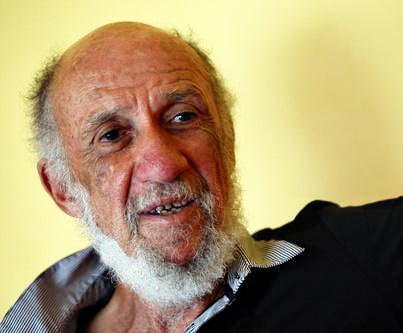
Professor Falk became an adviser to TFF when it was established in 1985.

Related Posts

The agreement is catastrophic both because of what it says and what it doesn’t mention. It reduces further the major asset of security policies: Freedom of action. Jan Oberg TFF director September 25, 2026 A couple of hours before the agreement was signed on September 22, 2026, I published the following 13 hypotheses about what it would most likely contain on TFF Substack (in English). I was wrong on only the first point. Contrary to what Trump had written on his Truth Social platform, it does not appear to come into force immediately. In fact, it turned out to be worse than even I had anticipated. After these hypotheses now come a number of reflections in light of what the agreement actually contains, and does not contain, as well as the way in which it has generally been presented by major media outlets and by the public-service broadcaster DR. My...
Photos © TFF 2000 Read PressInfo 90 “Lift the Sanctions and Bring More Aid to Yugoslavia” See Pictures from Belgrade © TFF 2000 Please reprint, copy, archive, quote or re-post this item, but please retain the source.
By Jan ObergTFF co-founder and director February 11, 2026 PART 3 — ECONOMICS, TRADE & FINANCIAL SOVEREIGNTY A. Trade Measures & Market Signaling Economic pressure can be applied instantly and scaled without violence. Immediate Measures (within a week) Government boycott US goods and services  A very powerful signal which over time will be felt. Targeted tariffs on selected U.S. goods Symbolic but high-visibility sectors send a clear message. Suspend trade facilitation talks A peaceful pause that signals deep concern. Freeze U.S. participation in public procurement – military procurement in particular A nonviolent way to reduce influence. Competition law review of U.S. corporations A legal tool to scrutinise market dominance. Longer-Term Measures EU–Asia–Africa trade corridors Reducing reliance on U.S. markets. European supply chains for critical minerals Strategic autonomy in resource access. European Strategic Trade Authority Monitoring coercive practices globally. Euro-denominated commodity markets Weakening the dollar’s pricing monopoly. The EU must resume contacts and negotiations with Russia, focusing on energy cooperation To...

Recent Articles

Tony Robinson October 4, 2026 Violence is easy to recognise when someone is being beaten, shot or killed. It becomes more difficult when nobody is holding a weapon. Poverty, discrimination, exploitation and repression can restrict a human life just as effectively, although they do so in very different ways and with very different consequences. Simply adding more categories to an ever-growing list of forms of violence does not really solve the problem. The more interesting question is what all these different situations have in common and why it makes sense to describe them using the same word. Human beings do not simply react to what happens around them. They remember the past, imagine things that do not yet exist, make plans and undertake projects. Workers organise because they imagine different working conditions; people migrate because they imagine another life somewhere else; social movements emerge because people refuse to accept the...
It’s a matter of principles, courage, vision and pulling together – while the militarist world is falling apart… Peter Langille October 3, 2026 “Here, then, is the problem which we present to you, stark and dreadful and inescapable: Shall we put an end to the human race; or shall mankind renounce war?”The Bertrand Russell—Albert Einstein Manifesto, July 9, 1955 ⁕ The forecast for what’s ahead is worrisome. The sharp rise in armed conflicts over the past three years is adding to what was already the highest level in over seventy years. Genocides, which should be prevented are supported. A shared climate emergency that jeopardises survival is ignored. Diverse polls now suggest that people are war-weary, worried and interested in a more effective United Nations. And, there are viable policy options for a more secure world! Yet governments are doubling-down, betting on more war and investing heavily. If current trends persist,...
Johan Galtung 1930-2024October 2015 Published here on October 3, 2026 Let us focus on Civilization for conflict analysis and remedies. Major forms of disorder use violence; war is state organized violence. The most belligerent states are the United States of America and Israel, both with civilization roots. National Evangelism, the US Protestant Christian civilization– more national than evangelical–justifies US warfare as exceptionalism of a people chosen by God, with a manifest destiny to run the world. Orthodox Judaism justifies Israeli warfare to conquer and expand from Nile to Euphrates as a religious right and duty to the Eternal One. The third most belligerent country, the UK, no longer believes it is God-chosen but chosen by the USA; not quite the same but something. But the root cause of global disorder lies in the Occident–with Islam–seeing itself as the single, universal civilization valid for all at all times, all others being...

TFF on Substack

Discover and subscribe to more peace materials on TFF Substack

Most Popular

Tony Robinson October 4, 2026 Violence is easy to recognise when someone is being beaten, shot or killed. It becomes more difficult when nobody is holding a weapon. Poverty, discrimination, exploitation and repression can restrict a human life just as effectively, although they do so in very different ways and with very different consequences. Simply adding more categories to an ever-growing list of forms of violence does not really solve the problem. The more interesting question is what all these different situations have in common and why it makes sense to describe them using the same word. Human beings do not simply react to what happens around them. They remember the past, imagine things that do not yet exist, make plans and undertake projects. Workers organise because they imagine different working conditions; people migrate because they imagine another life somewhere else; social movements emerge because people refuse to accept the...
It’s a matter of principles, courage, vision and pulling together – while the militarist world is falling apart… Peter Langille October 3, 2026 “Here, then, is the problem which we present to you, stark and dreadful and inescapable: Shall we put an end to the human race; or shall mankind renounce war?”The Bertrand Russell—Albert Einstein Manifesto, July 9, 1955 ⁕ The forecast for what’s ahead is worrisome. The sharp rise in armed conflicts over the past three years is adding to what was already the highest level in over seventy years. Genocides, which should be prevented are supported. A shared climate emergency that jeopardises survival is ignored. Diverse polls now suggest that people are war-weary, worried and interested in a more effective United Nations. And, there are viable policy options for a more secure world! Yet governments are doubling-down, betting on more war and investing heavily. If current trends persist,...
Johan Galtung 1930-2024October 2015 Published here on October 3, 2026 Let us focus on Civilization for conflict analysis and remedies. Major forms of disorder use violence; war is state organized violence. The most belligerent states are the United States of America and Israel, both with civilization roots. National Evangelism, the US Protestant Christian civilization– more national than evangelical–justifies US warfare as exceptionalism of a people chosen by God, with a manifest destiny to run the world. Orthodox Judaism justifies Israeli warfare to conquer and expand from Nile to Euphrates as a religious right and duty to the Eternal One. The third most belligerent country, the UK, no longer believes it is God-chosen but chosen by the USA; not quite the same but something. But the root cause of global disorder lies in the Occident–with Islam–seeing itself as the single, universal civilization valid for all at all times, all others being...
Read More
Living-Peace-Sign-Budapest-copy
Tony Robinson October 4, 2026 Violence is easy to recognise when someone is being beaten, shot or killed. It becomes more difficult when nobody is holding a weapon. Poverty, discrimination, exploitation and repression can restrict a human life just as effectively, although they do so in very different ways and with very different consequences. Simply adding more categories to an ever-growing list of forms of violence does not really solve the problem. The more interesting question is what all these different situations have in common and why it makes sense to describe them using the same word. Human beings do not simply react to what happens around them. They remember the past, imagine things that do not yet exist, make plans and undertake projects. Workers organise because they imagine different working conditions; people migrate because they imagine another life somewhere else; social movements emerge because people refuse to accept the...
b54a1f10-8c65-4f0b-9dd5-4abc0a7d04cc_2659x2659
It’s a matter of principles, courage, vision and pulling together – while the militarist world is falling apart… Peter Langille October 3, 2026 “Here, then, is the problem which we present to you, stark and dreadful and inescapable: Shall we put an end to the human race; or shall mankind renounce war?”The Bertrand Russell—Albert Einstein Manifesto, July 9, 1955 ⁕ The forecast for what’s ahead is worrisome. The sharp rise in armed conflicts over the past three years is adding to what was already the highest level in over seventy years. Genocides, which should be prevented are supported. A shared climate emergency that jeopardises survival is ignored. Diverse polls now suggest that people are war-weary, worried and interested in a more effective United Nations. And, there are viable policy options for a more secure world! Yet governments are doubling-down, betting on more war and investing heavily. If current trends persist,...
010
Johan Galtung 1930-2024October 2015 Published here on October 3, 2026 Let us focus on Civilization for conflict analysis and remedies. Major forms of disorder use violence; war is state organized violence. The most belligerent states are the United States of America and Israel, both with civilization roots. National Evangelism, the US Protestant Christian civilization– more national than evangelical–justifies US warfare as exceptionalism of a people chosen by God, with a manifest destiny to run the world. Orthodox Judaism justifies Israeli warfare to conquer and expand from Nile to Euphrates as a religious right and duty to the Eternal One. The third most belligerent country, the UK, no longer believes it is God-chosen but chosen by the USA; not quite the same but something. But the root cause of global disorder lies in the Occident–with Islam–seeing itself as the single, universal civilization valid for all at all times, all others being...
Screenshot 2026-10-02 011738
Jan ObergPhD, director, The Transnational Foundation for Peace and Future Research, TFFLund, Sweden October 2, 2026 This is my full original manuscript. The Chinese Academy of Social Science, CASS, makes two publications out if it. 1. China’s Five-year plan emphasized the capabilities of basic research and original innovation. It is regarded as the goal of the future social development, which, as required, should be significantly enhanced. Can you comment on the importance of original innovation in research and academic study? I believe it is easier to define “original innovation” in the natural sciences than in social sciences. The breaking points of what constitutes something new, or innovative, are not quite as sharp in the latter. But in both fields it is about opening up something that was closed, unseen, unexplored before – making manifest what was earlier latent. Innovations come in many forms and shapes – naming something that was not...
arctic-circle-map
The agreement is catastrophic both because of what it says and what it doesn’t mention. It reduces further the major asset of security policies: Freedom of action. Jan Oberg TFF director September 25, 2026 A couple of hours before the agreement was signed on September 22, 2026, I published the following 13 hypotheses about what it would most likely contain on TFF Substack (in English). I was wrong on only the first point. Contrary to what Trump had written on his Truth Social platform, it does not appear to come into force immediately. In fact, it turned out to be worse than even I had anticipated. After these hypotheses now come a number of reflections in light of what the agreement actually contains, and does not contain, as well as the way in which it has generally been presented by major media outlets and by the public-service broadcaster DR. My...
girl-5894831_1280
Below are TFF-related media mentions, comments, videos and social media posts published elsewhere but not on this homepage. We happen to catch and list only a fraction. Regarding video comments and debates, we recommend that you go to the TFF Video Channel on Substack where many of them are reproduced. Jan Oberg is a contributor to China Daily – 52 million daily clicks – and Global Times, CGTN and CCTV (the national television), China Investment, Xinhua News Agency and several others. Articles and videos on these media very often multiply into countless Chinese (and Western media) that re-post them from these main media. Thanks to The China Academy, his analyses, interviews and comments are frequently posted on YouTube channels such as Thinkers Forum and Wave Media. These videos are often re-posted on Bilibili (China’s YouTube), the China Content Center on TikTok, and on the Chinese edition of TikTok, Douyin.com. This means reaching hundreds of millions of viewers worldwide over a year. While there are too many to catch on all these...




