


johangaltung

Washington, DC

The Big View is the West doing badly, euro and pound down with miserable growth rates; US $-growth rate better but erratic; China, India, Islam growing, Latin America (CELAC) getting its act together and probably growing. This matters for essentially bankrupt USA: China, India, Islam, CELAC are huge powers with huge minorities inside the USA: they could move in, take over. Last week’s prediction about Trump’s foreign policy came true the next day (Washington Post 22 Mar 2016): less wars, not affordable, less NATO, let Europe do it, no nation-building, building our own. He was then branded “isolationist” with US incapacity for a third option: foreign policy by peacefare.

Diagnosis
Any economy has two key faultlines: high vs low class, with inequality by exploitation; real vs finance economy, with crises by speculation. LEAP Press Review (noreply@leap2020.net 17 Feb 2016) traces “something Big was about to happen” to February 2006: no more M3 published (money printing); Iran’ stock market based on the euro, Iraq following (invasion). Before that, the Rest manufacturing, beating the West. Slow in coming, but then quickly; leaving the USA with agriculture and speculation, maybe to be followed by a Brexit UK.

Martin Wolf (Financial Times, english@other-news.info 24 Feb 2016) points to the world exhausting “monetary policy 1,2”-lower interest, printing money-and calls for nº 3: more spending, less saving to beat the “chronic demand crisis”. A non-starter: given the inequalities and crises, people will save for worse to come and for their children, not spend unnecessarily, and not accumulate debts to their children.

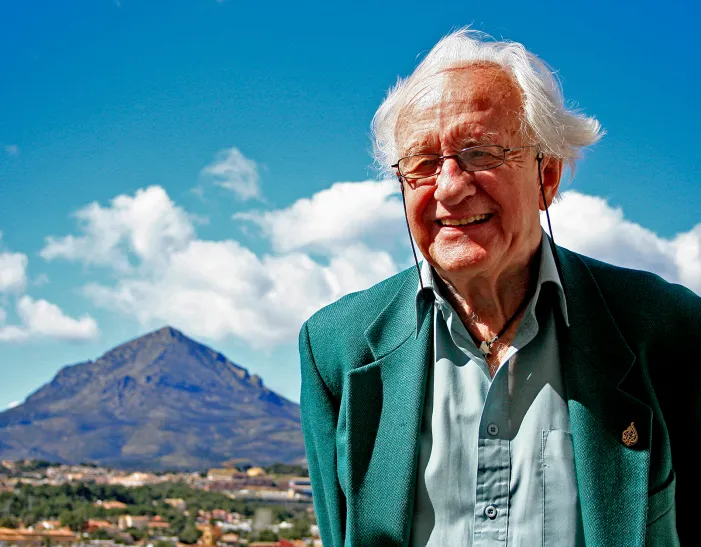
Joseph Stiglitz (above) puts it this way: “Banks choose financial speculation over lending /for/ economic growth”. The money supply “stimulated sharp increases in-financial-sector profitability”.

Rune Skarstein, the leading Norwegian global economist, focuses on the slipping locomotive effect from the Chinese economy; buying resources from developing countries, giving cheap credit to developed countries indebted by bailing out failing banks (and selling cheap consumer goods, alleviating the austerity policies). Nevertheless, why blind reliance on a China that might change economic policy, also in USA? (Klassekampen 2 Mar 2016, for similar points, see INYT 11 Jan 2016).

Paul Buchheit (Nation of Change 9 Dec 2013), “Three Ways the Super-Rich Suck Wealth Out of the Rest of Us”, on quantity and mechanisms: from the 2008 recession till the end of 2013 “the richest US 5% (six million households) own–$ 10 trillion of the $ 15 trillion gained–from stock market gains rather than from job-creating business” (The Nation, 7 Mar 2016, pp. 13-16, has even more shocking figures, so does the OXFAM Briefing Paper “An Economy for the 1%”, 18 Jan 2016).

“The speculative-derivatives market has increased to-over $ 1 quadrillion-twenty times more than the world economy-US driving the expansion of this great bubble of wealth-global inequality between rather than within countries has become even worse than for any one country. Just 250 individuals have more money than half the world”.

The working class is not rewarded for productivity–financial industry-extracts wealth from society. Median household income dropped from $73,000 to $57,000 over 25 years. A major livelihood decrease.

Joseph Stiglitz, with an academic life spent on inequality, is summarized in a review by James Surowiecki (NYRB 24 Sep 2015), ending with “high marginal tax rates on the rich and meaningful investment in public infrastructure, education and technology”. However, the funds generated these ways may easily end up in the “financial industry”.

Zhou Xiaochuan, People’s Bank of China governor: “The growth target of 6.5-7% for 2016 was made on the basis of China’s growth-in the past and its growth potential”. Adding, “China now seeks growth by relying more on domestic demand, while export is unable to contribute to growth the way it used to” (The Weekly Mirror, Nepal, 18 Mar 2016).

More investment-consumption in China; more GDP, less GNP, growth; no money printing-speculation; massive job creation-investment-infrastructure, massive inequality (mostly territorial), massive lifting up the bottom, in the field, locally. With “silk (rail)roads” for all.

Prognosis
Larry Summers in 2009 predicted “the new economy”: “Unemployment would be normal-the market the center of economy and finance-social welfare would no longer be the economy’s concern”. Klaus Schwab, founder of the World Economic Forum: “In a decade robots will account for 52% of industrial production, up from present 12%”. (Roberto Savio, “Are We Entering a Long Term Stagnation?” 17 Mar 2016). Self-fulfilling predictions by people not hit by the social disasters.

Therapy
USA pins its hopes on TPP(TTIP), but other countries worry greatly about Chapter 28 on “Dispute Settlement”, in Washington, so far in favor of USA; not counteracting Summers and Schwab visions.

Go straight to the basic problems: speculation and exploitation!

Derivative-based speculation is a US economic cancer metastasizing around the world. Criminalize, separate savings and investment banks, and US banking from the world. Fail to do so, and suffer the crises.

Inequality due to exploitation is built into the present “free” market; some state control is indispensable. Yet, even better, people control at the roots. What China did in the poorest communities, the West can do in the worst companies, boycotting companies with CEO-worker income ratios above 10, building cooperatives, sharing benefits-risks. By reviving all economic sectors, trading with all, dependent on none.

Anthony Atkinson, Inequality: What Can Be Done? Harvard, 2015, is superb but not on what is said above. Thomas Piketty’s Capital relies much on taxing the rich-like most economists-a negative approach. A greener economy is as indispensable for nature as fighting speculation and exploitation to humans. We need all three, not only two, or one.

And Pope Francis covered them all in Laudato Si’. A strong force.

NOTE:

* The reader will find much more in Johan Galtung, Peace Economics, TRANSCEND University Press 2012.

Originally published at Transcend Media Service here.
Related Posts

Jan ObergPhD, director, The Transnational Foundation for Peace and Future Research, TFFLund, Sweden October 2, 2026 This is my full original manuscript. The Chinese Academy of Social Science, CASS, makes two publications out if it. 1. China’s Five-year plan emphasized the capabilities of basic research and original innovation. It is regarded as the goal of the future social development, which, as required, should be significantly enhanced. Can you comment on the importance of original innovation in research and academic study? I believe it is easier to define “original innovation” in the natural sciences than in social sciences. The breaking points of what constitutes something new, or innovative, are not quite as sharp in the latter. But in both fields it is about opening up something that was closed, unseen, unexplored before – making manifest what was earlier latent. Innovations come in many forms and shapes – naming something that was not...
A friendly quarrel while we agree that the US sanctions are a weapon of mass destruction and kill more people than wars do. And that we must talk much more about sanctions than we have so far. Jan Oberg, TFF director March 16, 2026 John Mearsheimer recently stated that U.S. sanctions murdered around 38 million people between 1971 and 2021 – see the video below. It is a dramatic figure, and it has spread quickly because it captures, in one sentence, the enormous human cost of modern sanctions. I share his concern about the destructive effects of economic coercion. But the specific number he cites — and the way he attributes it — deserves a friendly academic clarification. The figure comes from a 2023 Lancet Global Health article estimating the mortality effects of unilateral U.S. and EU sanctions over the past half‑century. This is the first point where Mearsheimer’s shorthand diverges from the text: the study...
Photos © TFF 2000 Read PressInfo 90 “Lift the Sanctions and Bring More Aid to Yugoslavia” See Pictures from Belgrade © TFF 2000 Please reprint, copy, archive, quote or re-post this item, but please retain the source.

Recent Articles

Tony Robinson October 4, 2026 Violence is easy to recognise when someone is being beaten, shot or killed. It becomes more difficult when nobody is holding a weapon. Poverty, discrimination, exploitation and repression can restrict a human life just as effectively, although they do so in very different ways and with very different consequences. Simply adding more categories to an ever-growing list of forms of violence does not really solve the problem. The more interesting question is what all these different situations have in common and why it makes sense to describe them using the same word. Human beings do not simply react to what happens around them. They remember the past, imagine things that do not yet exist, make plans and undertake projects. Workers organise because they imagine different working conditions; people migrate because they imagine another life somewhere else; social movements emerge because people refuse to accept the...
It’s a matter of principles, courage, vision and pulling together – while the militarist world is falling apart… Peter Langille October 3, 2026 “Here, then, is the problem which we present to you, stark and dreadful and inescapable: Shall we put an end to the human race; or shall mankind renounce war?”The Bertrand Russell—Albert Einstein Manifesto, July 9, 1955 ⁕ The forecast for what’s ahead is worrisome. The sharp rise in armed conflicts over the past three years is adding to what was already the highest level in over seventy years. Genocides, which should be prevented are supported. A shared climate emergency that jeopardises survival is ignored. Diverse polls now suggest that people are war-weary, worried and interested in a more effective United Nations. And, there are viable policy options for a more secure world! Yet governments are doubling-down, betting on more war and investing heavily. If current trends persist,...
Johan Galtung 1930-2024October 2015 Published here on October 3, 2026 Let us focus on Civilization for conflict analysis and remedies. Major forms of disorder use violence; war is state organized violence. The most belligerent states are the United States of America and Israel, both with civilization roots. National Evangelism, the US Protestant Christian civilization– more national than evangelical–justifies US warfare as exceptionalism of a people chosen by God, with a manifest destiny to run the world. Orthodox Judaism justifies Israeli warfare to conquer and expand from Nile to Euphrates as a religious right and duty to the Eternal One. The third most belligerent country, the UK, no longer believes it is God-chosen but chosen by the USA; not quite the same but something. But the root cause of global disorder lies in the Occident–with Islam–seeing itself as the single, universal civilization valid for all at all times, all others being...

TFF on Substack

Discover and subscribe to more peace materials on TFF Substack

Most Popular

Tony Robinson October 4, 2026 Violence is easy to recognise when someone is being beaten, shot or killed. It becomes more difficult when nobody is holding a weapon. Poverty, discrimination, exploitation and repression can restrict a human life just as effectively, although they do so in very different ways and with very different consequences. Simply adding more categories to an ever-growing list of forms of violence does not really solve the problem. The more interesting question is what all these different situations have in common and why it makes sense to describe them using the same word. Human beings do not simply react to what happens around them. They remember the past, imagine things that do not yet exist, make plans and undertake projects. Workers organise because they imagine different working conditions; people migrate because they imagine another life somewhere else; social movements emerge because people refuse to accept the...
It’s a matter of principles, courage, vision and pulling together – while the militarist world is falling apart… Peter Langille October 3, 2026 “Here, then, is the problem which we present to you, stark and dreadful and inescapable: Shall we put an end to the human race; or shall mankind renounce war?”The Bertrand Russell—Albert Einstein Manifesto, July 9, 1955 ⁕ The forecast for what’s ahead is worrisome. The sharp rise in armed conflicts over the past three years is adding to what was already the highest level in over seventy years. Genocides, which should be prevented are supported. A shared climate emergency that jeopardises survival is ignored. Diverse polls now suggest that people are war-weary, worried and interested in a more effective United Nations. And, there are viable policy options for a more secure world! Yet governments are doubling-down, betting on more war and investing heavily. If current trends persist,...
Johan Galtung 1930-2024October 2015 Published here on October 3, 2026 Let us focus on Civilization for conflict analysis and remedies. Major forms of disorder use violence; war is state organized violence. The most belligerent states are the United States of America and Israel, both with civilization roots. National Evangelism, the US Protestant Christian civilization– more national than evangelical–justifies US warfare as exceptionalism of a people chosen by God, with a manifest destiny to run the world. Orthodox Judaism justifies Israeli warfare to conquer and expand from Nile to Euphrates as a religious right and duty to the Eternal One. The third most belligerent country, the UK, no longer believes it is God-chosen but chosen by the USA; not quite the same but something. But the root cause of global disorder lies in the Occident–with Islam–seeing itself as the single, universal civilization valid for all at all times, all others being...
Read More
Living-Peace-Sign-Budapest-copy
Tony Robinson October 4, 2026 Violence is easy to recognise when someone is being beaten, shot or killed. It becomes more difficult when nobody is holding a weapon. Poverty, discrimination, exploitation and repression can restrict a human life just as effectively, although they do so in very different ways and with very different consequences. Simply adding more categories to an ever-growing list of forms of violence does not really solve the problem. The more interesting question is what all these different situations have in common and why it makes sense to describe them using the same word. Human beings do not simply react to what happens around them. They remember the past, imagine things that do not yet exist, make plans and undertake projects. Workers organise because they imagine different working conditions; people migrate because they imagine another life somewhere else; social movements emerge because people refuse to accept the...
b54a1f10-8c65-4f0b-9dd5-4abc0a7d04cc_2659x2659
It’s a matter of principles, courage, vision and pulling together – while the militarist world is falling apart… Peter Langille October 3, 2026 “Here, then, is the problem which we present to you, stark and dreadful and inescapable: Shall we put an end to the human race; or shall mankind renounce war?”The Bertrand Russell—Albert Einstein Manifesto, July 9, 1955 ⁕ The forecast for what’s ahead is worrisome. The sharp rise in armed conflicts over the past three years is adding to what was already the highest level in over seventy years. Genocides, which should be prevented are supported. A shared climate emergency that jeopardises survival is ignored. Diverse polls now suggest that people are war-weary, worried and interested in a more effective United Nations. And, there are viable policy options for a more secure world! Yet governments are doubling-down, betting on more war and investing heavily. If current trends persist,...
010
Johan Galtung 1930-2024October 2015 Published here on October 3, 2026 Let us focus on Civilization for conflict analysis and remedies. Major forms of disorder use violence; war is state organized violence. The most belligerent states are the United States of America and Israel, both with civilization roots. National Evangelism, the US Protestant Christian civilization– more national than evangelical–justifies US warfare as exceptionalism of a people chosen by God, with a manifest destiny to run the world. Orthodox Judaism justifies Israeli warfare to conquer and expand from Nile to Euphrates as a religious right and duty to the Eternal One. The third most belligerent country, the UK, no longer believes it is God-chosen but chosen by the USA; not quite the same but something. But the root cause of global disorder lies in the Occident–with Islam–seeing itself as the single, universal civilization valid for all at all times, all others being...
Screenshot 2026-10-02 011738
Jan ObergPhD, director, The Transnational Foundation for Peace and Future Research, TFFLund, Sweden October 2, 2026 This is my full original manuscript. The Chinese Academy of Social Science, CASS, makes two publications out if it. 1. China’s Five-year plan emphasized the capabilities of basic research and original innovation. It is regarded as the goal of the future social development, which, as required, should be significantly enhanced. Can you comment on the importance of original innovation in research and academic study? I believe it is easier to define “original innovation” in the natural sciences than in social sciences. The breaking points of what constitutes something new, or innovative, are not quite as sharp in the latter. But in both fields it is about opening up something that was closed, unseen, unexplored before – making manifest what was earlier latent. Innovations come in many forms and shapes – naming something that was not...
arctic-circle-map
The agreement is catastrophic both because of what it says and what it doesn’t mention. It reduces further the major asset of security policies: Freedom of action. Jan Oberg TFF director September 25, 2026 A couple of hours before the agreement was signed on September 22, 2026, I published the following 13 hypotheses about what it would most likely contain on TFF Substack (in English). I was wrong on only the first point. Contrary to what Trump had written on his Truth Social platform, it does not appear to come into force immediately. In fact, it turned out to be worse than even I had anticipated. After these hypotheses now come a number of reflections in light of what the agreement actually contains, and does not contain, as well as the way in which it has generally been presented by major media outlets and by the public-service broadcaster DR. My...
girl-5894831_1280
Below are TFF-related media mentions, comments, videos and social media posts published elsewhere but not on this homepage. We happen to catch and list only a fraction. Regarding video comments and debates, we recommend that you go to the TFF Video Channel on Substack where many of them are reproduced. Jan Oberg is a contributor to China Daily – 52 million daily clicks – and Global Times, CGTN and CCTV (the national television), China Investment, Xinhua News Agency and several others. Articles and videos on these media very often multiply into countless Chinese (and Western media) that re-post them from these main media. Thanks to The China Academy, his analyses, interviews and comments are frequently posted on YouTube channels such as Thinkers Forum and Wave Media. These videos are often re-posted on Bilibili (China’s YouTube), the China Content Center on TikTok, and on the Chinese edition of TikTok, Douyin.com. This means reaching hundreds of millions of viewers worldwide over a year. While there are too many to catch on all these...





