


The common roots of our faiths: Return to our collective consciousness – Iran and Christmas

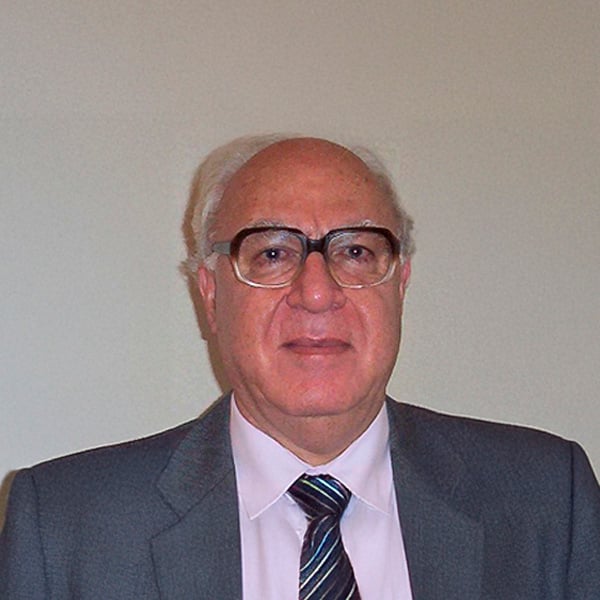
By Farhang Jahanpour

While Christians celebrate Christmas on Dec. 25th, the Persians celebrate one of their oldest and most festive celebrations on Dec. 21st, the eve of winter solstice, the longest night and the shortest day of the year. In Iran this night is called “Shab-e Yalda”, the night of the birth or nativity of the sun, or Mithra the Sun-god.

According to Orthodox Christians, the Armenians and the Eastern churches, Jesus Christ was born on January 6, and the celebration of his birthday on December 25th, may in fact be born out of the Persian Mithraic influence. In ancient Persian mythology, Mitra (Mithra, Mehr), the God of love, friendship, and light, or the sun-god, was miraculously born from a rock by a river or stream on this longest night of the year.

In his fifth volume of the collected works, Symbols of Transformation, Carl Jung, the famous Swiss psychiatrist, has extensively discussed the influence of Mithraism on Christianity and has portrayed its images and symbols. In praise of the Mithraic sun-god, Jung states:

“The sun. . . is the truly ‘rational’ image of God, whether we adopt the standpoint of the primitive savage or of modern science. In either case Father-God from whom all living things draw life; he is the fructifier and the creator, the source of energy into our world. The discord into which the human soul has fallen can be harmoniously resolved through the sun as a natural object which knows no inner conflict . . . It shines equally on the just and the unjust, and allows useful creatures to flourish as well as the harmful. Therefore the sun is perfectly suited to represent the visible God of this world, i.e., the creative power of our own soul, which we call libido, and whose nature it is to bring forth the useful and the harmful, the good and the bad. That this comparison is not just a matter of words can be seen from the teachings of the mystics: when they descend into the depths of their own being, they find “in their heart” the image of the sun, they find their own life-force which they call the “sun” for a legitimate and, I would say, a physical reason, because our source of energy and life actually is the sun. Our physiological life, regarded as an energy process, is entirely solar (para. 176).”

Soon, Mithraism spread its wings from Persia to the ancient-civilized world in Rome and many European countries. Consequently, in Europe as in Persia, the 21st of December was celebrated as Mithra’s birthday. But because of some errors in counting the leap year, the birthday of Mithra shifted to 25th of December and was established as such. Hence, in 274 A.D., the Roman emperor Aurelia declared December 25th as Mithra’s birthday. Later, the Church of Rome established the commemoration of the birthday of Christ, the “sun of righteousness,” on this same date.

Until that time, the birthday of Jesus Christ was celebrated on different dates, including January 6th. But the religion of most of the Romans and many people of the European continent was influenced by Mithraism. Pope Leo in the fourth century, after almost destroying the temple of Mithra in 376 A.D. in his campaign against Mithraism, proclaimed the 25th of December as Christ’s birthday instead of January 6th, a date which is still celebrated by the Eastern Orthodox Church and by the Armenians.

It is also noteworthy that Epiphany, or the “Feast of the Three Holy Kings” on January 6, commemorates the manifestation of Christ to the Gentiles, the Magi. The Magi, who were known as astrologers, allegedly saw a newborn bright star in the sky and predicted the birth of Christ. From the religious city of Qom in Iran, they set out to Jerusalem to greet the infant Christ as the newly born king of the Jews, offering him gifts of gold, frankincense and myrrh.

Originally, the Magi had been disciples of Zoroaster, who spread his new religion in Persia long after Mithra. Their name is the Latinized form of Magoi [Herodotus I, 101]. In early Christian art the Magi usually wear Persian clothes (e.g., the Catacombs of Priscilla in Rome, 2nd century). In the Syriac tradition those names are Persian and they are connected with Persian religious history.

After refining and discarding some of the mythical and “heretical” aspects of Mithraism, the Zoroastrians retained Yalda, a Soryani word meaning “the birth”. The ceremony is traced to the historical combat myth between the good forces of light against the evil forces of darkness. This longest night with evil as its zenith is considered ill-fated by this ancient Persian religion. From this day onward, the good forces of light triumph as the days grow longer and give more light.

This celebration comes on the eve of the Persian month of “DAY,” the first month of winter, also the name of the pre-Zoroastrian creator god, more commonly known as ‘Saturn” in the west. In ancient Persia, DAY was praised and revered as the most powerful God of creation and light, from which we have the English word “day” (the period of light in 24 hours). In the Roman world, the Saturnalia, from December 17 through to December 24, became a time of merrymaking and exchange of presents, in honour of the Roman God Saturn.

Ancient Zoroastrians believed that Ahura Mazda created light, day and sunshine as representations of order and “the ahuraic,” or good. The day is a time of work, harvest and productivity. They also believed that Ahriman created “the night’, a time of darkness, cold, hidden secrets and wild predators. Observing the cyclical changes in the length of days and nights engendered a belief that light and darkness, or day and night, are in continuous battle. The triumphant light brought about longer days, whereas the victory of darkness produced longer nights.

It was believed that the greatest battle between the forces of good and evil was fought on Shab-e Yalda, the night before winter solstice. Since the first night of winter is the longest and from that night onwards the days get longer while the warmth and light of the sun increases, the night of the winter solstice was recognized and celebrated as the time of the sun’s birth or rebirth by Aryan tribes in Iran, India and Europe.

Ancient Persians also decorated an evergreen tree called Sarve. The Sarve or “Rocket Juniper” – also known as the cypress tree – being straight, upright and resistant to the cold weather, was known as a symbol of enduring hardship, thus appropriate for celebrating Mithra.

The younger ones had their “wishes” symbolically wrapped in colourful silk cloth and hung them on the tree along with lots of offerings for Mithra in the hopes that he would answer their prayers.

Martin Luther, the famous German reformer, in 1756, having learned of the Yalda Sarve, introduced the Christmas tree to the Germans. As cypress trees were not widespread in Germany, as indeed in most of Europe, the chosen tree became a variety of pine which was abundant in Europe.

In summary, it is not just Mithra’s birth time which entered Christianity. There are many similarities between the Mithraic and Christian traditions. Nowadays all Christians who celebrate the birth of Jesus, light fireplaces and candles, decorate trees with lights, stay up all night, sing and dance, eat special foods, pay visits, and celebrate this festive occasion with family and friends, may not be aware of the original pagan or Zoroastrian origins of these festivities.

In his book “Spirituality in the Land of the Noble: How Iran Shaped the World’s Religions” (Oneworld, 2004), pp. 40-41, in the chapter on “Zoroastrianism’s contributions to other religions”, Professor Richard C. Foltz writes:

“Much of what has been described in this chapter as the “basics” of Zoroastrianism will no doubt seem familiar to many readers. What may not be apparent is that these widespread beliefs and practices appeared in Zoroastrianism first, and only later in other religions.

The concept of an all-powerful Creator god who is purely good, the personification of evil in an opposing being, the resurrection of the body after death, the judgement of the dead on the basis of their deeds while living, the existence of a heavenly paradise for the good and a hell of damnation for the evil, the expectation of a savior and a final cataclysmic battle in which good will ultimately triumph, as well as a universe populated by angels and demons, are all ideas that other religions acquired either directly or indirectly from Zoroastrianism.

Other notions, such as the possibility of an individual as opposed to communal relationship to the divine, the superiority of one faith over all others, the emphasis on right belief and not just practice, and a professed adherence not only to a single deity but also to a particular prophet, may have originated with Zoroaster as well. For the first time we hear of a religion being actively spread by missionaries, who are sometimes persecuted or killed for their efforts.”

Christmas and Yalda are just another example of the many common beliefs, customs, symbols, stories and myths that bind people of different nations and religions across the globe together.

Let us honour these manifestations of the collective unconscious, so that we may be the keepers of light, love, friendship and peace among the peoples of the world.

Enjoy your Christmas holidays and the New Year in the true spirit of love, gratitude, compassion, giving and forgiving, knowing that it may have its origins in an ancient tradition which, as Carl Jung says, links us back to “the creative power of our own soul.”

As the great Persian poet Rumi says, “Open up your hidden eyes and return to the root of the root of your own Self.”

Related Posts

Tony Robinson October 4, 2026 Violence is easy to recognise when someone is being beaten, shot or killed. It becomes more difficult when nobody is holding a weapon. Poverty, discrimination, exploitation and repression can restrict a human life just as effectively, although they do so in very different ways and with very different consequences. Simply adding more categories to an ever-growing list of forms of violence does not really solve the problem. The more interesting question is what all these different situations have in common and why it makes sense to describe them using the same word. Human beings do not simply react to what happens around them. They remember the past, imagine things that do not yet exist, make plans and undertake projects. Workers organise because they imagine different working conditions; people migrate because they imagine another life somewhere else; social movements emerge because people refuse to accept the...
It’s a matter of principles, courage, vision and pulling together – while the militarist world is falling apart… Peter Langille October 3, 2026 “Here, then, is the problem which we present to you, stark and dreadful and inescapable: Shall we put an end to the human race; or shall mankind renounce war?”The Bertrand Russell—Albert Einstein Manifesto, July 9, 1955 ⁕ The forecast for what’s ahead is worrisome. The sharp rise in armed conflicts over the past three years is adding to what was already the highest level in over seventy years. Genocides, which should be prevented are supported. A shared climate emergency that jeopardises survival is ignored. Diverse polls now suggest that people are war-weary, worried and interested in a more effective United Nations. And, there are viable policy options for a more secure world! Yet governments are doubling-down, betting on more war and investing heavily. If current trends persist,...
Johan Galtung 1930-2024October 2015 Published here on October 3, 2026 Let us focus on Civilization for conflict analysis and remedies. Major forms of disorder use violence; war is state organized violence. The most belligerent states are the United States of America and Israel, both with civilization roots. National Evangelism, the US Protestant Christian civilization– more national than evangelical–justifies US warfare as exceptionalism of a people chosen by God, with a manifest destiny to run the world. Orthodox Judaism justifies Israeli warfare to conquer and expand from Nile to Euphrates as a religious right and duty to the Eternal One. The third most belligerent country, the UK, no longer believes it is God-chosen but chosen by the USA; not quite the same but something. But the root cause of global disorder lies in the Occident–with Islam–seeing itself as the single, universal civilization valid for all at all times, all others being...

Recent Articles

Tony Robinson October 4, 2026 Violence is easy to recognise when someone is being beaten, shot or killed. It becomes more difficult when nobody is holding a weapon. Poverty, discrimination, exploitation and repression can restrict a human life just as effectively, although they do so in very different ways and with very different consequences. Simply adding more categories to an ever-growing list of forms of violence does not really solve the problem. The more interesting question is what all these different situations have in common and why it makes sense to describe them using the same word. Human beings do not simply react to what happens around them. They remember the past, imagine things that do not yet exist, make plans and undertake projects. Workers organise because they imagine different working conditions; people migrate because they imagine another life somewhere else; social movements emerge because people refuse to accept the...
It’s a matter of principles, courage, vision and pulling together – while the militarist world is falling apart… Peter Langille October 3, 2026 “Here, then, is the problem which we present to you, stark and dreadful and inescapable: Shall we put an end to the human race; or shall mankind renounce war?”The Bertrand Russell—Albert Einstein Manifesto, July 9, 1955 ⁕ The forecast for what’s ahead is worrisome. The sharp rise in armed conflicts over the past three years is adding to what was already the highest level in over seventy years. Genocides, which should be prevented are supported. A shared climate emergency that jeopardises survival is ignored. Diverse polls now suggest that people are war-weary, worried and interested in a more effective United Nations. And, there are viable policy options for a more secure world! Yet governments are doubling-down, betting on more war and investing heavily. If current trends persist,...
Johan Galtung 1930-2024October 2015 Published here on October 3, 2026 Let us focus on Civilization for conflict analysis and remedies. Major forms of disorder use violence; war is state organized violence. The most belligerent states are the United States of America and Israel, both with civilization roots. National Evangelism, the US Protestant Christian civilization– more national than evangelical–justifies US warfare as exceptionalism of a people chosen by God, with a manifest destiny to run the world. Orthodox Judaism justifies Israeli warfare to conquer and expand from Nile to Euphrates as a religious right and duty to the Eternal One. The third most belligerent country, the UK, no longer believes it is God-chosen but chosen by the USA; not quite the same but something. But the root cause of global disorder lies in the Occident–with Islam–seeing itself as the single, universal civilization valid for all at all times, all others being...

TFF on Substack

Discover and subscribe to more peace materials on TFF Substack

Most Popular

Tony Robinson October 4, 2026 Violence is easy to recognise when someone is being beaten, shot or killed. It becomes more difficult when nobody is holding a weapon. Poverty, discrimination, exploitation and repression can restrict a human life just as effectively, although they do so in very different ways and with very different consequences. Simply adding more categories to an ever-growing list of forms of violence does not really solve the problem. The more interesting question is what all these different situations have in common and why it makes sense to describe them using the same word. Human beings do not simply react to what happens around them. They remember the past, imagine things that do not yet exist, make plans and undertake projects. Workers organise because they imagine different working conditions; people migrate because they imagine another life somewhere else; social movements emerge because people refuse to accept the...
It’s a matter of principles, courage, vision and pulling together – while the militarist world is falling apart… Peter Langille October 3, 2026 “Here, then, is the problem which we present to you, stark and dreadful and inescapable: Shall we put an end to the human race; or shall mankind renounce war?”The Bertrand Russell—Albert Einstein Manifesto, July 9, 1955 ⁕ The forecast for what’s ahead is worrisome. The sharp rise in armed conflicts over the past three years is adding to what was already the highest level in over seventy years. Genocides, which should be prevented are supported. A shared climate emergency that jeopardises survival is ignored. Diverse polls now suggest that people are war-weary, worried and interested in a more effective United Nations. And, there are viable policy options for a more secure world! Yet governments are doubling-down, betting on more war and investing heavily. If current trends persist,...
Johan Galtung 1930-2024October 2015 Published here on October 3, 2026 Let us focus on Civilization for conflict analysis and remedies. Major forms of disorder use violence; war is state organized violence. The most belligerent states are the United States of America and Israel, both with civilization roots. National Evangelism, the US Protestant Christian civilization– more national than evangelical–justifies US warfare as exceptionalism of a people chosen by God, with a manifest destiny to run the world. Orthodox Judaism justifies Israeli warfare to conquer and expand from Nile to Euphrates as a religious right and duty to the Eternal One. The third most belligerent country, the UK, no longer believes it is God-chosen but chosen by the USA; not quite the same but something. But the root cause of global disorder lies in the Occident–with Islam–seeing itself as the single, universal civilization valid for all at all times, all others being...
Read More
Living-Peace-Sign-Budapest-copy
Tony Robinson October 4, 2026 Violence is easy to recognise when someone is being beaten, shot or killed. It becomes more difficult when nobody is holding a weapon. Poverty, discrimination, exploitation and repression can restrict a human life just as effectively, although they do so in very different ways and with very different consequences. Simply adding more categories to an ever-growing list of forms of violence does not really solve the problem. The more interesting question is what all these different situations have in common and why it makes sense to describe them using the same word. Human beings do not simply react to what happens around them. They remember the past, imagine things that do not yet exist, make plans and undertake projects. Workers organise because they imagine different working conditions; people migrate because they imagine another life somewhere else; social movements emerge because people refuse to accept the...
b54a1f10-8c65-4f0b-9dd5-4abc0a7d04cc_2659x2659
It’s a matter of principles, courage, vision and pulling together – while the militarist world is falling apart… Peter Langille October 3, 2026 “Here, then, is the problem which we present to you, stark and dreadful and inescapable: Shall we put an end to the human race; or shall mankind renounce war?”The Bertrand Russell—Albert Einstein Manifesto, July 9, 1955 ⁕ The forecast for what’s ahead is worrisome. The sharp rise in armed conflicts over the past three years is adding to what was already the highest level in over seventy years. Genocides, which should be prevented are supported. A shared climate emergency that jeopardises survival is ignored. Diverse polls now suggest that people are war-weary, worried and interested in a more effective United Nations. And, there are viable policy options for a more secure world! Yet governments are doubling-down, betting on more war and investing heavily. If current trends persist,...
010
Johan Galtung 1930-2024October 2015 Published here on October 3, 2026 Let us focus on Civilization for conflict analysis and remedies. Major forms of disorder use violence; war is state organized violence. The most belligerent states are the United States of America and Israel, both with civilization roots. National Evangelism, the US Protestant Christian civilization– more national than evangelical–justifies US warfare as exceptionalism of a people chosen by God, with a manifest destiny to run the world. Orthodox Judaism justifies Israeli warfare to conquer and expand from Nile to Euphrates as a religious right and duty to the Eternal One. The third most belligerent country, the UK, no longer believes it is God-chosen but chosen by the USA; not quite the same but something. But the root cause of global disorder lies in the Occident–with Islam–seeing itself as the single, universal civilization valid for all at all times, all others being...
Screenshot 2026-10-02 011738
Jan ObergPhD, director, The Transnational Foundation for Peace and Future Research, TFFLund, Sweden October 2, 2026 This is my full original manuscript. The Chinese Academy of Social Science, CASS, makes two publications out if it. 1. China’s Five-year plan emphasized the capabilities of basic research and original innovation. It is regarded as the goal of the future social development, which, as required, should be significantly enhanced. Can you comment on the importance of original innovation in research and academic study? I believe it is easier to define “original innovation” in the natural sciences than in social sciences. The breaking points of what constitutes something new, or innovative, are not quite as sharp in the latter. But in both fields it is about opening up something that was closed, unseen, unexplored before – making manifest what was earlier latent. Innovations come in many forms and shapes – naming something that was not...
arctic-circle-map
The agreement is catastrophic both because of what it says and what it doesn’t mention. It reduces further the major asset of security policies: Freedom of action. Jan Oberg TFF director September 25, 2026 A couple of hours before the agreement was signed on September 22, 2026, I published the following 13 hypotheses about what it would most likely contain on TFF Substack (in English). I was wrong on only the first point. Contrary to what Trump had written on his Truth Social platform, it does not appear to come into force immediately. In fact, it turned out to be worse than even I had anticipated. After these hypotheses now come a number of reflections in light of what the agreement actually contains, and does not contain, as well as the way in which it has generally been presented by major media outlets and by the public-service broadcaster DR. My...
girl-5894831_1280
Below are TFF-related media mentions, comments, videos and social media posts published elsewhere but not on this homepage. We happen to catch and list only a fraction. Regarding video comments and debates, we recommend that you go to the TFF Video Channel on Substack where many of them are reproduced. Jan Oberg is a contributor to China Daily – 52 million daily clicks – and Global Times, CGTN and CCTV (the national television), China Investment, Xinhua News Agency and several others. Articles and videos on these media very often multiply into countless Chinese (and Western media) that re-post them from these main media. Thanks to The China Academy, his analyses, interviews and comments are frequently posted on YouTube channels such as Thinkers Forum and Wave Media. These videos are often re-posted on Bilibili (China’s YouTube), the China Content Center on TikTok, and on the Chinese edition of TikTok, Douyin.com. This means reaching hundreds of millions of viewers worldwide over a year. While there are too many to catch on all these...




