
W.H. Auden wrote these suggestive lines in the poem ‘Lament for a Lawgiver’ that can be found in his Age of Anxiety:

‘The gods are wringing their great worn hands

for their watchman is away, their world engine

Creaking and cracking…’

If we pause to look about the world, we will observe many signs of creaking and cracking.

Among the most alarming forms of creaking and cracking is the appalling failure of political leadership. Where are the Roosevelts, DeGaulles, Chou En-Lais, Sukarnos, Titos, and Nehrus? Is the dumbing down of political leadership a consequence of the reordering of the world economy in ways that constrain and corrupt the role of governments?

Or has the technology of control, surveillance, and destruction become so overwhelming as to make the moral and political imagination seem irrelevant, giving exclusive historical agency to those who propose doing nothing while the fires ravaging the earth burn out of control?

Or even propose pouring more and more oil on the fires? In this respect, should we not regard the ‘climate denier’ as the true hero of our time, he that worships that which destroys, and so distresses the wearying gods.

Or should we blame the structures that have evolved to constitute modernity, especially the fragmenting impact of the sovereignty of states as reinforced by the passions of tribalizing nationalisms?

This optic of the national tribalized self that controls our visionary capability has so far been virtually paralyzed when confronted by the advent of nuclear weaponry, global warming, and waves of desperate migrants seeking sanctuary.

Instead of generating policies and practices responsive to human and global imperatives of collective and species survival, the feeble responses that were forthcoming depended on the aggregation of what little states would agree upon to satisfy their collective interests.

The hierarchy among states is also responsible for the infernal spiral by so awkwardly imposing itself on the principle of juridical equality. It has contrived such devices as claiming a right of veto in the UN Security Council on behalf of the permanent five (P5) and by invalidating the acquisition rather than possession and use of nuclear weaponry.

Or maybe we should pause long enough to contemplate the religious resurgence that can be understood from many angles: As a revolt against the spiritual aridity of modernity, that is, the failures of instrumental rationality and a false consciousness that equates technological innovation with progress, and material gain with happiness.

We find ourselves haunted by the prospect of perpetual war fought with ever more extraordinary technological prowess, but giving rise to apocalyptic phantasies of wars between good and evil, the self and the other, drained of empathy and drenched with displays of hyper-violence. Is it any wonder that it is ‘Star Wars’ that best entertains and diverts while the greatest human gift of the imagination prolongs its hibernation despite a growing realization that this is a time of unprecedented species danger?

Or did the gods grow weary, fatigued by such a record of shattered hopes?

When the Soviet experiment became totalitarian criminality rather than an emancipatory process of collective liberation, many lost their confidence in revolutionary change. Utopian landscapes of the future were derisively put to one side, and the market and the moderate ‘selfie’ state were accepted as the outer limits of healthy human aspiration.

We have lost that bit of biblical wisdom recognizing that a society without vision perishes.

We as a nation and our citizens as members of a species need badly to recover ‘horizons of desire.’ At present, we find ourselves trapped, gradually becoming aware that ‘horizons of feasibility’ (what politics as the art of the possible deems feasible) is disastrously separated from ‘horizons of necessity (what science, morality, and common sense deem as necessary).

When this gap between feasibility and necessity becomes understood, it seeks refuge in denial, escapism, and extremism. That is, the gap is either ignored or a simplistic alternative narrative of what is wrong is seized upon, a quack remedy with a terrible taste—the sort of vacuum that Trump seems to be filling for those many Americans who want enemies to blame and lethal promises to keep.

Consider the failure to rid the world of nuclear weaponry or the refusal to deal with climate change in a manner that heeds the consensus among climate experts. Or consider the Syrian babies washed ashore on Turkish beaches and Greek islands as an ultimate metaphor of a species that endlessly moralizes yet behaves with spectacular inhospitality and insensitivity in the face of even the most horrific suffering by fellow humans.

The opposite of cosmopolitan ethics is the psychologically dominant template of tribal and communitarian loyalties, combining with the othering of those whose presence among us poses a challenge of some sort.

The post-Holocaust pledge of ‘never again’ has a hollow ring, if even recalled.

Or maybe we should worry most about the collective forms of ecological alienation that are daily ravaging our planet.

We have become a species that destroys its own habitat, forgetting the evolutionary reality of an ultimate dependence of all living beings on its natural surroundings.

We have lost these elemental moorings that seemed self-evident to pre-modern peoples who understood the need to live with nature, not as domineering exploiters but as stewards and partners, sensitive to such abstractions as ‘carrying capacity’ and ‘sustainability,’ but also to the exotic wonders of biodiversity and the natural beauty of our extraordinary planet.

We should not overlook the salience of racially driven police brutality and the several failures of the justice system to impose some appropriate measure of accountability. We can be grateful for the emergence of Black Lives Matter dedicated to bringing this kind of governmental racism to an end. Laws are not enough if public consciousness is not committed to their implementation, without which the application of law seems synonymous with injustice.

Let us pause as the new year begins to remember the shocking deaths of Trayvon Martin, Freddie Gray, Eric Garner, Sandra Bland, Tamir Rice, Quintonio LeGrier, Bettie Jones among many other African American lives destroyed, and then recall the series of distressing acquittals, especially the impunity legally accorded to the police killer of Michael Brown shot dead multiple times in Ferguson, Missouri on August 9, 2014.

It is time to realize that it is up to each of us to make black lives matter applicable in our own lives, our own experience.

To grasp the complexity of what this means I recommend three extraordinary books: Claudia Rankine, Citizen: An American Lyric, Robin Coste Lewis, Voyage of the Sable Venus, and Ta-Nehisi, Between the World and Me. To understand the menace of police violence as expressing the persistence of racism in the sort of plutocracy that the United States has become, I urge all to read Gerry Spence’s extraordinarily timely Police State: How American Cops Get Away with Murder.

As always, I feel an especial bond of solidarity with all those resisting Israeli oppression and seeking justice for the millions of Palestinians trapped in Gaza, oppressed in the West Bank, cleansed in East Jerusalem, victimized in refugee camps, and languishing in exile.

I would also wish that pressures from within and without might prompt, however belatedly, Israeli soul searching and with it, the realization that it is never too late to walk the path of peace and justice

Yet we should not greet the arrival of 2016 without words of consolation and hope.

My friend, Robert Lifton, many years ago usefully quoted Theodore Roethke who poetically observed “in the dark the eye begins to see.”

The future is unknowable, and history teaches us that both disasters and miracles happen unexpectedly, and that what we do and don’t do makes a difference even if the outcome of our dedication to a humane future cannot be known to be worthwhile in advance. It makes a difference to engage in such a struggle even aside from whether it is vindicated by achieving the goals that animate such a quest.

Pursuing a humane future is a process, a journey or pilgrimage that alone can elevate our strivings to correspond with our values, dreams, and hopes, leaving the eventual outcome at the mercy of the gods.

Those caught in despair believe we are living on borrowed time, amid the dusk of the species. Those clinging to hope consider ourselves enduring the morbid symptoms of transition (Gramsci’s illuminating comment that the old has not yet died while the new has yet to be born), and that emerging forces are shaping a cosmic consciousness that will overcome ecological alienation and all varieties of racism, allowing us to think, feel, and above all discover that we belong to the only species assigned by the gods this sacred vocation to serve as the guardian angel of planetary wellbeing that includes racial just, and in so doing clip the wings of avenging angels.

Pope Francis seems to have best grasped this ultimate form of human responsibility, and one can only hope that more of us act within the circle of his vision before it is too late. Most needed in these dark times is to hold tight to what we believe with an unruly embrace of faith, patience, and urgency.

This is my most fervent New Year’s wish for 2016.
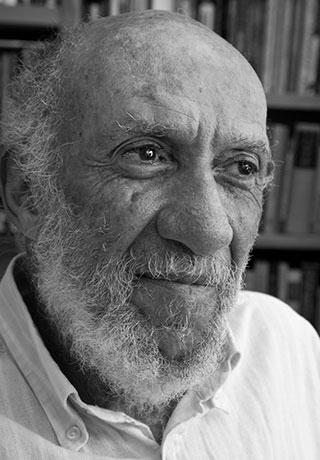
Professor Falk became an adviser to TFF when it was established in 1985.

Related Posts

Tony Robinson October 4, 2026 Violence is easy to recognise when someone is being beaten, shot or killed. It becomes more difficult when nobody is holding a weapon. Poverty, discrimination, exploitation and repression can restrict a human life just as effectively, although they do so in very different ways and with very different consequences. Simply adding more categories to an ever-growing list of forms of violence does not really solve the problem. The more interesting question is what all these different situations have in common and why it makes sense to describe them using the same word. Human beings do not simply react to what happens around them. They remember the past, imagine things that do not yet exist, make plans and undertake projects. Workers organise because they imagine different working conditions; people migrate because they imagine another life somewhere else; social movements emerge because people refuse to accept the...
It’s a matter of principles, courage, vision and pulling together – while the militarist world is falling apart… Peter Langille October 3, 2026 “Here, then, is the problem which we present to you, stark and dreadful and inescapable: Shall we put an end to the human race; or shall mankind renounce war?”The Bertrand Russell—Albert Einstein Manifesto, July 9, 1955 ⁕ The forecast for what’s ahead is worrisome. The sharp rise in armed conflicts over the past three years is adding to what was already the highest level in over seventy years. Genocides, which should be prevented are supported. A shared climate emergency that jeopardises survival is ignored. Diverse polls now suggest that people are war-weary, worried and interested in a more effective United Nations. And, there are viable policy options for a more secure world! Yet governments are doubling-down, betting on more war and investing heavily. If current trends persist,...
Johan Galtung 1930-2024October 2015 Published here on October 3, 2026 Let us focus on Civilization for conflict analysis and remedies. Major forms of disorder use violence; war is state organized violence. The most belligerent states are the United States of America and Israel, both with civilization roots. National Evangelism, the US Protestant Christian civilization– more national than evangelical–justifies US warfare as exceptionalism of a people chosen by God, with a manifest destiny to run the world. Orthodox Judaism justifies Israeli warfare to conquer and expand from Nile to Euphrates as a religious right and duty to the Eternal One. The third most belligerent country, the UK, no longer believes it is God-chosen but chosen by the USA; not quite the same but something. But the root cause of global disorder lies in the Occident–with Islam–seeing itself as the single, universal civilization valid for all at all times, all others being...

Recent Articles

Tony Robinson October 4, 2026 Violence is easy to recognise when someone is being beaten, shot or killed. It becomes more difficult when nobody is holding a weapon. Poverty, discrimination, exploitation and repression can restrict a human life just as effectively, although they do so in very different ways and with very different consequences. Simply adding more categories to an ever-growing list of forms of violence does not really solve the problem. The more interesting question is what all these different situations have in common and why it makes sense to describe them using the same word. Human beings do not simply react to what happens around them. They remember the past, imagine things that do not yet exist, make plans and undertake projects. Workers organise because they imagine different working conditions; people migrate because they imagine another life somewhere else; social movements emerge because people refuse to accept the...
It’s a matter of principles, courage, vision and pulling together – while the militarist world is falling apart… Peter Langille October 3, 2026 “Here, then, is the problem which we present to you, stark and dreadful and inescapable: Shall we put an end to the human race; or shall mankind renounce war?”The Bertrand Russell—Albert Einstein Manifesto, July 9, 1955 ⁕ The forecast for what’s ahead is worrisome. The sharp rise in armed conflicts over the past three years is adding to what was already the highest level in over seventy years. Genocides, which should be prevented are supported. A shared climate emergency that jeopardises survival is ignored. Diverse polls now suggest that people are war-weary, worried and interested in a more effective United Nations. And, there are viable policy options for a more secure world! Yet governments are doubling-down, betting on more war and investing heavily. If current trends persist,...
Johan Galtung 1930-2024October 2015 Published here on October 3, 2026 Let us focus on Civilization for conflict analysis and remedies. Major forms of disorder use violence; war is state organized violence. The most belligerent states are the United States of America and Israel, both with civilization roots. National Evangelism, the US Protestant Christian civilization– more national than evangelical–justifies US warfare as exceptionalism of a people chosen by God, with a manifest destiny to run the world. Orthodox Judaism justifies Israeli warfare to conquer and expand from Nile to Euphrates as a religious right and duty to the Eternal One. The third most belligerent country, the UK, no longer believes it is God-chosen but chosen by the USA; not quite the same but something. But the root cause of global disorder lies in the Occident–with Islam–seeing itself as the single, universal civilization valid for all at all times, all others being...

TFF on Substack

Discover and subscribe to more peace materials on TFF Substack

Most Popular

Tony Robinson October 4, 2026 Violence is easy to recognise when someone is being beaten, shot or killed. It becomes more difficult when nobody is holding a weapon. Poverty, discrimination, exploitation and repression can restrict a human life just as effectively, although they do so in very different ways and with very different consequences. Simply adding more categories to an ever-growing list of forms of violence does not really solve the problem. The more interesting question is what all these different situations have in common and why it makes sense to describe them using the same word. Human beings do not simply react to what happens around them. They remember the past, imagine things that do not yet exist, make plans and undertake projects. Workers organise because they imagine different working conditions; people migrate because they imagine another life somewhere else; social movements emerge because people refuse to accept the...
It’s a matter of principles, courage, vision and pulling together – while the militarist world is falling apart… Peter Langille October 3, 2026 “Here, then, is the problem which we present to you, stark and dreadful and inescapable: Shall we put an end to the human race; or shall mankind renounce war?”The Bertrand Russell—Albert Einstein Manifesto, July 9, 1955 ⁕ The forecast for what’s ahead is worrisome. The sharp rise in armed conflicts over the past three years is adding to what was already the highest level in over seventy years. Genocides, which should be prevented are supported. A shared climate emergency that jeopardises survival is ignored. Diverse polls now suggest that people are war-weary, worried and interested in a more effective United Nations. And, there are viable policy options for a more secure world! Yet governments are doubling-down, betting on more war and investing heavily. If current trends persist,...
Johan Galtung 1930-2024October 2015 Published here on October 3, 2026 Let us focus on Civilization for conflict analysis and remedies. Major forms of disorder use violence; war is state organized violence. The most belligerent states are the United States of America and Israel, both with civilization roots. National Evangelism, the US Protestant Christian civilization– more national than evangelical–justifies US warfare as exceptionalism of a people chosen by God, with a manifest destiny to run the world. Orthodox Judaism justifies Israeli warfare to conquer and expand from Nile to Euphrates as a religious right and duty to the Eternal One. The third most belligerent country, the UK, no longer believes it is God-chosen but chosen by the USA; not quite the same but something. But the root cause of global disorder lies in the Occident–with Islam–seeing itself as the single, universal civilization valid for all at all times, all others being...
Read More
Living-Peace-Sign-Budapest-copy
Tony Robinson October 4, 2026 Violence is easy to recognise when someone is being beaten, shot or killed. It becomes more difficult when nobody is holding a weapon. Poverty, discrimination, exploitation and repression can restrict a human life just as effectively, although they do so in very different ways and with very different consequences. Simply adding more categories to an ever-growing list of forms of violence does not really solve the problem. The more interesting question is what all these different situations have in common and why it makes sense to describe them using the same word. Human beings do not simply react to what happens around them. They remember the past, imagine things that do not yet exist, make plans and undertake projects. Workers organise because they imagine different working conditions; people migrate because they imagine another life somewhere else; social movements emerge because people refuse to accept the...
b54a1f10-8c65-4f0b-9dd5-4abc0a7d04cc_2659x2659
It’s a matter of principles, courage, vision and pulling together – while the militarist world is falling apart… Peter Langille October 3, 2026 “Here, then, is the problem which we present to you, stark and dreadful and inescapable: Shall we put an end to the human race; or shall mankind renounce war?”The Bertrand Russell—Albert Einstein Manifesto, July 9, 1955 ⁕ The forecast for what’s ahead is worrisome. The sharp rise in armed conflicts over the past three years is adding to what was already the highest level in over seventy years. Genocides, which should be prevented are supported. A shared climate emergency that jeopardises survival is ignored. Diverse polls now suggest that people are war-weary, worried and interested in a more effective United Nations. And, there are viable policy options for a more secure world! Yet governments are doubling-down, betting on more war and investing heavily. If current trends persist,...
010
Johan Galtung 1930-2024October 2015 Published here on October 3, 2026 Let us focus on Civilization for conflict analysis and remedies. Major forms of disorder use violence; war is state organized violence. The most belligerent states are the United States of America and Israel, both with civilization roots. National Evangelism, the US Protestant Christian civilization– more national than evangelical–justifies US warfare as exceptionalism of a people chosen by God, with a manifest destiny to run the world. Orthodox Judaism justifies Israeli warfare to conquer and expand from Nile to Euphrates as a religious right and duty to the Eternal One. The third most belligerent country, the UK, no longer believes it is God-chosen but chosen by the USA; not quite the same but something. But the root cause of global disorder lies in the Occident–with Islam–seeing itself as the single, universal civilization valid for all at all times, all others being...
Screenshot 2026-10-02 011738
Jan ObergPhD, director, The Transnational Foundation for Peace and Future Research, TFFLund, Sweden October 2, 2026 This is my full original manuscript. The Chinese Academy of Social Science, CASS, makes two publications out if it. 1. China’s Five-year plan emphasized the capabilities of basic research and original innovation. It is regarded as the goal of the future social development, which, as required, should be significantly enhanced. Can you comment on the importance of original innovation in research and academic study? I believe it is easier to define “original innovation” in the natural sciences than in social sciences. The breaking points of what constitutes something new, or innovative, are not quite as sharp in the latter. But in both fields it is about opening up something that was closed, unseen, unexplored before – making manifest what was earlier latent. Innovations come in many forms and shapes – naming something that was not...
arctic-circle-map
The agreement is catastrophic both because of what it says and what it doesn’t mention. It reduces further the major asset of security policies: Freedom of action. Jan Oberg TFF director September 25, 2026 A couple of hours before the agreement was signed on September 22, 2026, I published the following 13 hypotheses about what it would most likely contain on TFF Substack (in English). I was wrong on only the first point. Contrary to what Trump had written on his Truth Social platform, it does not appear to come into force immediately. In fact, it turned out to be worse than even I had anticipated. After these hypotheses now come a number of reflections in light of what the agreement actually contains, and does not contain, as well as the way in which it has generally been presented by major media outlets and by the public-service broadcaster DR. My...
girl-5894831_1280
Below are TFF-related media mentions, comments, videos and social media posts published elsewhere but not on this homepage. We happen to catch and list only a fraction. Regarding video comments and debates, we recommend that you go to the TFF Video Channel on Substack where many of them are reproduced. Jan Oberg is a contributor to China Daily – 52 million daily clicks – and Global Times, CGTN and CCTV (the national television), China Investment, Xinhua News Agency and several others. Articles and videos on these media very often multiply into countless Chinese (and Western media) that re-post them from these main media. Thanks to The China Academy, his analyses, interviews and comments are frequently posted on YouTube channels such as Thinkers Forum and Wave Media. These videos are often re-posted on Bilibili (China’s YouTube), the China Content Center on TikTok, and on the Chinese edition of TikTok, Douyin.com. This means reaching hundreds of millions of viewers worldwide over a year. While there are too many to catch on all these...





