
TFF PressInfo # 348 – After 70 years: The UN falls short, and yet…

The United Nations turns 70 today. It isn’t “we, the peoples” – it is “we, the governments”. It’s in need of reform but we must also remember that its first Secretary-General Trygve Lie said in 1948 – that it will never be stronger or better than the member states want to make it.

Whatever you think of it, we certainly can’t do without it, nor without its Charter that is still the most Gandhian document, all governments have ever signed.

If its member governments were not so navel-gazing, it would be the best vehicle for global governance – for globalising democracy in a world where the economy and the military as well as communication and culture are all globalizing while politics is still anchored in parliaments in increasingly irrelevant nation-states.

And why not set up a People’s Assembly? Establish UN Embassies in each member state and let people vote for who shall represent their country in the UN?

All doable with a little creativity and good will – for the common good, the common future.

Below, please find the thoughts at the UN’s 70th Anniversary of one of the finest international law and peace experts we have who has also worked with the UN for many years.

– Jan Oberg

Prefatory note

A shorter somewhat modified version of this post was published in Al Jazeera Turka, but only in Turkish translation. The thesis set forth is that the UN has disappointed the expectations of those who took seriously its original promise of war prevention, but that it has over its lifetime done many things that need doing in the world.

It also provided a meeting place for all governments, and has developed the best networking sites for all those concerned with the state of the world and what can be done by way of improvement. The UN System faces an important test in the upcoming Climate Change Conference to be held in Paris at the end of November. The event is billed as the make or break session for the governments of the world to agree finally on a strong enough framework of constraint governing the release of greenhouse gasses to satisfy the scientific consensus.

If Paris is generally regarded as successful, the UN stock will rise steeply, but if it should fail, then its stature and role of the Organization could become even more marginalized. Either way, the UN as of 2015 is a very different kind of political actor than when it was founded in 1945, disappointing to those that hoped for permanent peace and some justice, while pleasing to those that sought from the outset a wider global agenda for the Organization and felt that its best contributions would likely be in a wide range of practical concerns where the interests of major political actors more or less overlap.

After 70 Years: The UN Falls Short, and Yet..

When the UN was established in the aftermath of the Second World War hopes were high that this new world organization would be a major force in world politics, and fulfill its Preamble pledge to prevent future wars. Seventy years later the UN disappoints many, and bores even more, appearing to be nothing more that a gathering place for the politically powerful.

I think such a negative image has taken hold because the UN these days seems more than ever like a spectator than a political actor in the several crises that dominate the current agenda of global politics. This impression of paralysis and impotence has risen to new heights in recent years.

When we consider the waves of migrants fleeing war-torn countries in the Middle East and Africa or four years of devastating civil war in Syria or 68 years of failure to find a solution for the Israel/Palestine conflict or the inability to shape a treaty to rid the world of nuclear weapons, and on and on, it becomes clear that the UN is not living up to the expectations created by its own Charter and the fervent hopes of people around the world yearning for peace and justice.

The UN itself seems unreformable, unable to adapt its structures and operations to changes in the global setting. The Security Council’s five permanent members are still the five winners in World War II, taking no account of the rise of India, Brazil, Indonesia, Nigeria or even the European Union. Despite globalization and the transnational rise of civil society, states and only states are eligible for UN membership and meaningful participation in the multifold operations of the Organization.

How can we explain this disappointment?

We must at the outset acknowledge that the high hopes attached to the UN early on were never realistic. After all, the Charter itself acknowledged the geopolitical major premise, which is the radical inequality of sovereign states when it comes to power and wealth. Five permanent seats in the Security Council were set aside for these actors that seemed dominant in 1945.

More importantly, they were given an unrestricted right to veto any decision that went against their interests or values, or those of its allies and friends. In effect, the constitution of the Organization endowed the potentially most dangerous states in the world, at least as measured by war making capabilities, with the option of being exempt from UN authority and international law.

Such an architectural feature of the UN was not a quixotic oversight of the founders. It was a deliberate step taken to overcome what perceived to be a weakness of the League of Nations established after World War I, which did look upon the equality of sovereign states as the unchallengeable constitutional foundation of an organization dedicated to preserving international peace.

The experience of the League was interpreted as discouraging the most powerful states from meaningful participation (and in the case of the United States, from any participation at all) precisely because their geopolitical role was not taken into account.

In practice over the life of the UN, the veto has had a crippling political effect as it has meant that the UN cannot make any strong response unless the permanent five (P5) agree, which as we have learned during the Cold War and even since, is not very often. There is little doubt that without the veto possessed by Russia the UN would have been far more assertive in relation to the Syrian catastrophe, and not found itself confined to offering its good offices to a regime in Damascus that never seemed sincere about ending the violence or finding a political solution except on its own harsh terms of all out defeat of its adversaries.

Of course, the General Assembly, which brings all 194 member states together, supposedly has the authority to make recommendations, and act when the Security Council is blocked. It has not worked out that way. After the General Assembly flexed its muscles in the early 1970s emboldened by the outcome of the main colonial wars geopolitics took over. The GA became a venue controlled by the non-aligned movement, and in 1974 when it found backing for the Declaration of a New International Economic Order the writing was on the wall.

The larger capitalist states fought back, and were able to pull enough strings to ensure that almost all authority to take action became concentrated in the Security Council. The Soviet Union went along, worried about political majorities against its interests, and comfortable with the availability of the veto as needed.

The General Assembly has been since mainly relegated to serving the world as a talk shop, and is hardly noticed when it comes to crisis management or lawmaking. Despite this development the GA is still relevant to the formation of world public opinion. Its Autumn session provides the leaders of the world with the most influential lectern at which to express their worldview and recommendations for the future. Even Pope Francis took advantage of such an influential platform on which to articulate his concerns, hopes, and prescriptions.

There is an additional fundamental explanation of why the UN cannot do more in response to the global crises that are bringing such widespread human suffering to many peoples in the world. The UN was constructed on the basis of mutual and legally unconditional respect for the territorial sovereignty of its members.

The Charter itself in Article 2(7) prohibits the UN from intervening in matters that are essentially internal to a state, such as strife, insurgency, abridgement of human rights, and even civil war. Such an insulation of domestic strife runs counter to the practice of intervention by geopolitical actors, and in this respect gives the UN framework a legalistic character that is not descriptive of the manner in which world politics operates.

True, when the political winds blow strongly in certain threatening directions as was the case in relation to Serbian behavior in Kosovo that seemed to be on the verge of repeating the Srebrenica massacre of 1995, NATO effectively intervened but without the blessings of the UN, and hence in violation of international law.

Then again in Libya the Security Council actually gave its approval for a limited intervention in the form of a no-fly-zone to avoid a humanitarian catastrophe befalling the besieged inhabitants of Benghazi. In that setting, the SC relying on the new norm of ‘responsibility-to-protect’ or R2P to justify its use of force.

When NATO immediately converted this limited UN mandate into a regime-changing intervention that led to the execution of Qaddafi and the replacement of the Libyan government it was clear that the R2P argument acted as little more than a pretext to pursue a more ambitious, yet legally dubious and politically unacceptable, Western agenda in the country. R2P diplomacy has been further discredited by the failure to offer UN protection in the extreme circumstances of Palestine, Syria, and now Yemen.

Not surprisingly, Russia and China that had been persuaded by Western powers in 2011 to go along with the establishment of a no-fly-zone to protect Benghazi felt deceived and manipulated. These governments lost their trust in the capacity of the Security Council to set limits that would be respected once a decision was reached.

This is part of the story of why the UN has been gridlocked when it came to Syria, and why R2P has been kept on the diplomatic shelf. The Security Council to be able to overcome the veto depends upon trust among the P5 sufficient to achieve a consensus, which was badly betrayed by what NATO did in Libya. Human rights advocates have long put forward the idea that the P5 agree informally or by formal resolution to forego the use of the veto in devising responses to mass atrocities, but so far, there has been little resonance.

Similarly, sensible proposals to establish an UN Peace Force that could respond quickly to natural and humanitarian catastrophes on the originating initiative of the UN Secretary General have also not found much political resonance over the years. It would seem that the P5 are unwilling to relax their grip on the geopolitical reins on UN authority established in the very different world situation that existed in 1945.

Kosovo showed that, at times, humanitarian pressures (when reinforcing dominant geopolitical interests) induce states to act outside the UN framework, while Libya illustrates the long term weakening of UN capacity and legitimacy by manipulating the debate to gain support of skeptical states for intervention in an immediate war/peace and human rights situation.

The hypocrisy of the R2P diplomacy by the failure to make a protective response of any kind to the acute vulnerability of such abused minorities as the Uighurs in Xinjiang Province of China, the Rohingya in Rankhine State of Myanmar, and of course the Palestinians of Palestine. There are, of course, many other victimized groups whose rights are trampled upon by the state apparatus of control that for UN purposes is treated as their sole and unreviewable legal protector.

In the end, what this pattern adds up to is a clear demonstration of the persisting primacy of geopolitics within the UN. When the P5 agree, the UN can generally do whatever the consensus mandates, although it technically requires additional support from non-permanent members of the SC.

If there is no agreement, then the UN is paralyzed when it comes to action, and geopolitical actors have a political option of acting unlawfully, that is, without obtaining prior authority from the Security Council and in contravention of international law. This happened in 2003 when the U.S. Government failed to gain support from the SC for its proposed military attack upon Iraq, and went ahead anyway, with disastrous results for itself, and even more so for the Iraqi people.

The fault of the geopolitical heavyweights

It is helpful to appreciate that disappointment with the role of the UN is usually less the fault of the Organization than of the behavior of the geopolitical heavyweights. If we want a stronger UN then it will be necessary to constrain geopolitics, and make all states, including the P5 subject to the restraints of international law and sensitive to moral imperatives.

Another kind of UN reform that should have been achieved decades ago is to make the P5 into the P8 or P9 by enlarging permanent membership to include a member from Asia (additional to China), Africa, and Latin America. This would give the Security Council and the UN more legitimacy in a post-colonial world where shifts in the global balance are still suppressed.

Reasons to anyhow be grateful

Along with the above explanation of public disappointment, there are also many reasons to be grateful for the existence of the UN and to be thankful that despite the many conflicts in the world during its lifetime every state in the world has wanted to become a member, and none have exhibited their displeasure with UN policies to leave the Organization.

Given the intensity of conflict in the world, sustaining this universality is itself a remarkable achievement. It perhaps expresses the unanticipated significance of the UN as the most influential and versatile hub for global communications.

There are other major UN contributions to human wellbeing. The UN has been principally responsible for the rise of human rights and environmental protection, and has done much to improve global health, preserve cultural heritage, protect children, and inform us about the hazards of ignoring climate change.

We could live better with a stronger UN, but we would be far worse off if the UN didn’t exist or collapsed.

The only constructive approach is to do our best in the years ahead to make the UN more effective, less victimized by geopolitical maneuvering, and more attuned to achieving humane global governance.
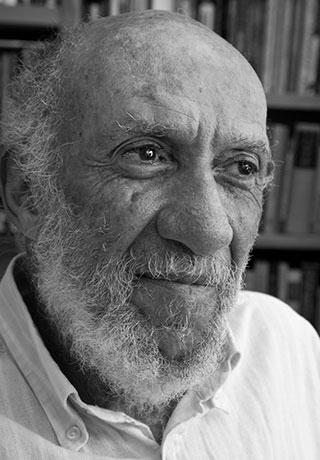

Professor Falk became an adviser to TFF when it was established in 1985.

Related Posts

The agreement is catastrophic both because of what it says and what it doesn’t mention. It reduces further the major asset of security policies: Freedom of action. Jan Oberg TFF director September 25, 2026 A couple of hours before the agreement was signed on September 22, 2026, I published the following 13 hypotheses about what it would most likely contain on TFF Substack (in English). I was wrong on only the first point. Contrary to what Trump had written on his Truth Social platform, it does not appear to come into force immediately. In fact, it turned out to be worse than even I had anticipated. After these hypotheses now come a number of reflections in light of what the agreement actually contains, and does not contain, as well as the way in which it has generally been presented by major media outlets and by the public-service broadcaster DR. My...
Below are TFF-related media mentions, comments, videos and social media posts published elsewhere but not on this homepage. We happen to catch and list only a fraction. Regarding video comments and debates, we recommend that you go to the TFF Video Channel on Substack where many of them are reproduced. Jan Oberg is a contributor to China Daily – 52 million daily clicks – and Global Times, CGTN and CCTV (the national television), China Investment, Xinhua News Agency and several others. Articles and videos on these media very often multiply into countless Chinese (and Western media) that re-post them from these main media. Thanks to The China Academy, his analyses, interviews and comments are frequently posted on YouTube channels such as Thinkers Forum and Wave Media. These videos are often re-posted on Bilibili (China’s YouTube), the China Content Center on TikTok, and on the Chinese edition of TikTok, Douyin.com. This means reaching hundreds of millions of viewers worldwide over a year. While there are too many to catch on all these...
Jan Oberg May 15, 2026 Go to this Fox News page and scroll the whole way down: President Donald Trump tells the world that his meeting with President Xi Jinping yielded a lot of very concrete political and economic results – of course, only where the Chinese side, according to him, agreed with him. He does not mention the Taiwan issue, but Secretary of State, Marco Rubio, says that it did not feature prominently in their talks and that the US policy on Taiwan has not changed. Then go to China Daily – or Global Times – and you will see that for the Chinese it is framework, principles, structure of cooperation etc. that matters – all embedded in the overall idea of “constructive bilateral relationship of strategic stability.” Nowhere is any concrete agreement or deal – all that Trump refers to – mentioned. At the general level, this gives you insights into the very different social...

Recent Articles

Tony Robinson October 4, 2026 Violence is easy to recognise when someone is being beaten, shot or killed. It becomes more difficult when nobody is holding a weapon. Poverty, discrimination, exploitation and repression can restrict a human life just as effectively, although they do so in very different ways and with very different consequences. Simply adding more categories to an ever-growing list of forms of violence does not really solve the problem. The more interesting question is what all these different situations have in common and why it makes sense to describe them using the same word. Human beings do not simply react to what happens around them. They remember the past, imagine things that do not yet exist, make plans and undertake projects. Workers organise because they imagine different working conditions; people migrate because they imagine another life somewhere else; social movements emerge because people refuse to accept the...
It’s a matter of principles, courage, vision and pulling together – while the militarist world is falling apart… Peter Langille October 3, 2026 “Here, then, is the problem which we present to you, stark and dreadful and inescapable: Shall we put an end to the human race; or shall mankind renounce war?”The Bertrand Russell—Albert Einstein Manifesto, July 9, 1955 ⁕ The forecast for what’s ahead is worrisome. The sharp rise in armed conflicts over the past three years is adding to what was already the highest level in over seventy years. Genocides, which should be prevented are supported. A shared climate emergency that jeopardises survival is ignored. Diverse polls now suggest that people are war-weary, worried and interested in a more effective United Nations. And, there are viable policy options for a more secure world! Yet governments are doubling-down, betting on more war and investing heavily. If current trends persist,...
Johan Galtung 1930-2024October 2015 Published here on October 3, 2026 Let us focus on Civilization for conflict analysis and remedies. Major forms of disorder use violence; war is state organized violence. The most belligerent states are the United States of America and Israel, both with civilization roots. National Evangelism, the US Protestant Christian civilization– more national than evangelical–justifies US warfare as exceptionalism of a people chosen by God, with a manifest destiny to run the world. Orthodox Judaism justifies Israeli warfare to conquer and expand from Nile to Euphrates as a religious right and duty to the Eternal One. The third most belligerent country, the UK, no longer believes it is God-chosen but chosen by the USA; not quite the same but something. But the root cause of global disorder lies in the Occident–with Islam–seeing itself as the single, universal civilization valid for all at all times, all others being...

TFF on Substack

Discover and subscribe to more peace materials on TFF Substack

Most Popular

Tony Robinson October 4, 2026 Violence is easy to recognise when someone is being beaten, shot or killed. It becomes more difficult when nobody is holding a weapon. Poverty, discrimination, exploitation and repression can restrict a human life just as effectively, although they do so in very different ways and with very different consequences. Simply adding more categories to an ever-growing list of forms of violence does not really solve the problem. The more interesting question is what all these different situations have in common and why it makes sense to describe them using the same word. Human beings do not simply react to what happens around them. They remember the past, imagine things that do not yet exist, make plans and undertake projects. Workers organise because they imagine different working conditions; people migrate because they imagine another life somewhere else; social movements emerge because people refuse to accept the...
It’s a matter of principles, courage, vision and pulling together – while the militarist world is falling apart… Peter Langille October 3, 2026 “Here, then, is the problem which we present to you, stark and dreadful and inescapable: Shall we put an end to the human race; or shall mankind renounce war?”The Bertrand Russell—Albert Einstein Manifesto, July 9, 1955 ⁕ The forecast for what’s ahead is worrisome. The sharp rise in armed conflicts over the past three years is adding to what was already the highest level in over seventy years. Genocides, which should be prevented are supported. A shared climate emergency that jeopardises survival is ignored. Diverse polls now suggest that people are war-weary, worried and interested in a more effective United Nations. And, there are viable policy options for a more secure world! Yet governments are doubling-down, betting on more war and investing heavily. If current trends persist,...
Johan Galtung 1930-2024October 2015 Published here on October 3, 2026 Let us focus on Civilization for conflict analysis and remedies. Major forms of disorder use violence; war is state organized violence. The most belligerent states are the United States of America and Israel, both with civilization roots. National Evangelism, the US Protestant Christian civilization– more national than evangelical–justifies US warfare as exceptionalism of a people chosen by God, with a manifest destiny to run the world. Orthodox Judaism justifies Israeli warfare to conquer and expand from Nile to Euphrates as a religious right and duty to the Eternal One. The third most belligerent country, the UK, no longer believes it is God-chosen but chosen by the USA; not quite the same but something. But the root cause of global disorder lies in the Occident–with Islam–seeing itself as the single, universal civilization valid for all at all times, all others being...
Read More
Living-Peace-Sign-Budapest-copy
Tony Robinson October 4, 2026 Violence is easy to recognise when someone is being beaten, shot or killed. It becomes more difficult when nobody is holding a weapon. Poverty, discrimination, exploitation and repression can restrict a human life just as effectively, although they do so in very different ways and with very different consequences. Simply adding more categories to an ever-growing list of forms of violence does not really solve the problem. The more interesting question is what all these different situations have in common and why it makes sense to describe them using the same word. Human beings do not simply react to what happens around them. They remember the past, imagine things that do not yet exist, make plans and undertake projects. Workers organise because they imagine different working conditions; people migrate because they imagine another life somewhere else; social movements emerge because people refuse to accept the...
b54a1f10-8c65-4f0b-9dd5-4abc0a7d04cc_2659x2659
It’s a matter of principles, courage, vision and pulling together – while the militarist world is falling apart… Peter Langille October 3, 2026 “Here, then, is the problem which we present to you, stark and dreadful and inescapable: Shall we put an end to the human race; or shall mankind renounce war?”The Bertrand Russell—Albert Einstein Manifesto, July 9, 1955 ⁕ The forecast for what’s ahead is worrisome. The sharp rise in armed conflicts over the past three years is adding to what was already the highest level in over seventy years. Genocides, which should be prevented are supported. A shared climate emergency that jeopardises survival is ignored. Diverse polls now suggest that people are war-weary, worried and interested in a more effective United Nations. And, there are viable policy options for a more secure world! Yet governments are doubling-down, betting on more war and investing heavily. If current trends persist,...
010
Johan Galtung 1930-2024October 2015 Published here on October 3, 2026 Let us focus on Civilization for conflict analysis and remedies. Major forms of disorder use violence; war is state organized violence. The most belligerent states are the United States of America and Israel, both with civilization roots. National Evangelism, the US Protestant Christian civilization– more national than evangelical–justifies US warfare as exceptionalism of a people chosen by God, with a manifest destiny to run the world. Orthodox Judaism justifies Israeli warfare to conquer and expand from Nile to Euphrates as a religious right and duty to the Eternal One. The third most belligerent country, the UK, no longer believes it is God-chosen but chosen by the USA; not quite the same but something. But the root cause of global disorder lies in the Occident–with Islam–seeing itself as the single, universal civilization valid for all at all times, all others being...
Screenshot 2026-10-02 011738
Jan ObergPhD, director, The Transnational Foundation for Peace and Future Research, TFFLund, Sweden October 2, 2026 This is my full original manuscript. The Chinese Academy of Social Science, CASS, makes two publications out if it. 1. China’s Five-year plan emphasized the capabilities of basic research and original innovation. It is regarded as the goal of the future social development, which, as required, should be significantly enhanced. Can you comment on the importance of original innovation in research and academic study? I believe it is easier to define “original innovation” in the natural sciences than in social sciences. The breaking points of what constitutes something new, or innovative, are not quite as sharp in the latter. But in both fields it is about opening up something that was closed, unseen, unexplored before – making manifest what was earlier latent. Innovations come in many forms and shapes – naming something that was not...
arctic-circle-map
The agreement is catastrophic both because of what it says and what it doesn’t mention. It reduces further the major asset of security policies: Freedom of action. Jan Oberg TFF director September 25, 2026 A couple of hours before the agreement was signed on September 22, 2026, I published the following 13 hypotheses about what it would most likely contain on TFF Substack (in English). I was wrong on only the first point. Contrary to what Trump had written on his Truth Social platform, it does not appear to come into force immediately. In fact, it turned out to be worse than even I had anticipated. After these hypotheses now come a number of reflections in light of what the agreement actually contains, and does not contain, as well as the way in which it has generally been presented by major media outlets and by the public-service broadcaster DR. My...
girl-5894831_1280
Below are TFF-related media mentions, comments, videos and social media posts published elsewhere but not on this homepage. We happen to catch and list only a fraction. Regarding video comments and debates, we recommend that you go to the TFF Video Channel on Substack where many of them are reproduced. Jan Oberg is a contributor to China Daily – 52 million daily clicks – and Global Times, CGTN and CCTV (the national television), China Investment, Xinhua News Agency and several others. Articles and videos on these media very often multiply into countless Chinese (and Western media) that re-post them from these main media. Thanks to The China Academy, his analyses, interviews and comments are frequently posted on YouTube channels such as Thinkers Forum and Wave Media. These videos are often re-posted on Bilibili (China’s YouTube), the China Content Center on TikTok, and on the Chinese edition of TikTok, Douyin.com. This means reaching hundreds of millions of viewers worldwide over a year. While there are too many to catch on all these...




