
America even at its best is a strange place, alive with contradictions, a Teflon political culture that has an unshakable faith in its innocent and virtuous national character and its overall impact on the world, impervious to the ghosts of slavery and of ethnic cleansing of native Americans that should be tormenting our sleep and darkening our dreams, comfortable with its robust gun culture, and with its promiscuous reliance on rogue drones engineered to kill on command and on the brutal happenings that take place in black sites immorally situated in countries whose leaders agree to avert their gaze from the dirty work taking place.

Looked at from a short distance this is not a pretty picture.

Yet there are still those rare moments when this unsavory national profile seems not to be telling the whole story. For instance, I felt heartened by a recent news item reporting that the conservative Nebraska Legislature voted to abolish capital punishment, and in doing so went so far as to override the governor’s veto. That’s right, Nebraska!

Unfortunately, the welcome Nebraska move may not survive the backlash in the making. The Republican state governor, Pete Ricketts, vows to overturn the new law: “My words cannot express how appalled I am that we have lost a critical law to protect law enforcement and Nebraska families.” He is supported in this lethal passion by a pro-capital punishment legislator who proposes arranging a ballot initiative that supposedly will allow Nebraskans to reinstate the death penalty. It is not yet certain whether this is a legally permissible tactic.

While the abolitionist move stands there is a strong temptation to commend Nebraska for such an unexpected show of humanistic sensitivity, but that would be misleading, overlooking what actually swayed the majority to vote the way they did. Speaking for this majority, Peter Collins put it this way, “We went into it wanting to remain objective. This is purely about costs.”

And sure enough, it seems that it was primarily conservatives, not liberals, that pushed hardest for abolition on the amoral grounds of fiscal conservatism and a commitment to “philosophical consistency” when it comes to entrusting the government with authority over life and death. As a Republican legislator, Laure Elke, insisted the bill was “a matter of conscience,” because if you are not able to trust the government on health care, how can it be trusted on such irrevocable life/death decisions.

A few other conservatives were apparently troubled by the seeming contradiction between supporting the right to life for the unborn as a sacred matter while permitting a state government to impose death on a life in being.

The main crusader for the bill was a Democrat, Senator Ernie Chambers who had tried 37 times during his forty years in the Nebraska Legislature to get rid of the death penalty before achieving this notable victory.

Even Chambers was forced to acknowledge that it was ‘conservative pragmatism’ not liberal idealism that made the difference, taking note of a growing Republican trend to oppose capital punishment because it is viewed as costly, inefficient, and for some, un-Christian. On one level, who cares why capital punishment was abolished. It is the outcome that counts. Yet on a second level, it is worth caring, because if the decision reflects cost/benefit assessments rather than a principled ethical stand, it could be quickly reversed when calculations changed.

It is indeed a strange country: rapid public strides in the direction of freedom to shape one’s own gender identity giving rise to a series of vindictive pushbacks by those that want to impose their particular life style on those that seek to live differently in ways that do no harm. The opportunistic rants of right wing politicians on such issues as same sex marriage, trans gender identity, and abortion may not be meant to hurt and demean but they do.

They hurt and demean those who want to live openly their authentic identities or deeply felt needs, which is what freedom should mean for all of us, not just for ourselves but our neighbors, that is, for every sentient being on the planet. and are so often elsewhere in our world forced to live in locked closets or face harsh criminal punishments. Is not this the deeper meta-religious significance of globalization.

For all that is wrong with what the United States is doing to others throughout the world, these explorations on the frontiers of personal freedom might be the start of a better page of national history if this forward momentum can be sustained and exported in relation to personal self-determination.

Perhaps, and only perhaps, what we insist upon for ourselves might finally spill over with respect to what we to do to others. I don’t expect the drones to disappear anytime soon or even for capital punishment to become a bad memory, but at least more folks will begin to draw the sort of connection that to align themselves with a conservative repositioning similar to what turned a big majority of legislators against the death penalty in Nebraska.

Given the political climate in the country, ‘conservative pragmatism’ may be the best we can currently hope for at this time for America. Sadly, the 99% have once again left the playing field of political life enabling the 1% to indulge their inexhaustible appetites.

Of course, for me the abolition of capital punishment has never been a matter of cost/benefit analysis whether measured in dollars or bureaucratic efficiency. It is a matter purely situated in the domain of values.

I believe that no government should ever be given the authority to kill its own citizens, or that anyone anywhere should be vested with authority to kill without proper submission to the rule of law, whether acting domestically or internationally, and I believe it would benefit prospects for species survival if many of us as possible strive for and advocate a comprehensive ethos of nonviolence or what Glenn Paige has dubbed ‘a non-killing politics.’

For now, this is a utopian wish, but this goal has long struck me as being a time sensitive ethical and biopolitical imperative. In the domain of social practice, I feel the same way about same-sex marriage, gender self-determination, and the reproductive rights of women. Capital punishment is about wrongful death, same-sex marriage is an emotional component of the right to life, and reproductive rights recognize the sacred endowments and personal responsibility of women in relation to their own bodies.

America is not alone in being strange. All countries are strange reflecting the particularities of tradition and experience.

Strangeness is bound up with originality and contradiction, and is not necessarily negative. We can be inspired by what is strange and wonderful, and appalled by what is strange and abusive. It is this negative strangeness that we must struggle to mitigate, whether it be capital punishment, human trafficking, or the subjugation that accompanies deep poverty and all forms of forcible dispossession.
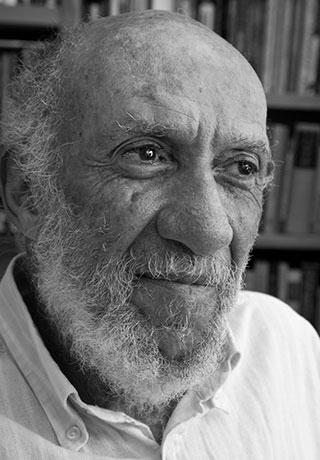

Professor Falk became an adviser to TFF when it was established in 1985.

Related Posts

Lena Petrova of “World Affairs In Context” with more than half a million subscribers on YouTube wanted to explore what a peace researcher like me has to say about, among other things, the First and the Second Cold War and why eethics has disappeared from politics. I am particularly happy about this conversation that also yielded an amazing number of very appreciative comments on YouTube. No doubt, people are longing for alternatives, including peace perspectives.
Jan Oberg, TFF director April 28, 2026 In this third TFF Peace Pulse, I make the important distinction between the violence and the conflict that violence is a symptom of. If you want peace, focus on the underlying conflict because that is the key to resolution, peacemaking, and a better future for the parties. The West is obsessed with violence, just look around you – and 90+ per cent of the public debate is about military issues and other violence – totally wasted for peace. These Peace Pulses will only be published here a few times. You will also not find them on YouTube and Vimeo because both platforms have blocked TFF and me; you know, peace is dangerous these days. Most TFF’s videos since 2007 are now on Rumble.
Photos © TFF 2000 Read PressInfo 90 “Lift the Sanctions and Bring More Aid to Yugoslavia” See Pictures from Belgrade © TFF 2000 Please reprint, copy, archive, quote or re-post this item, but please retain the source.

Recent Articles

Tony Robinson October 4, 2026 Violence is easy to recognise when someone is being beaten, shot or killed. It becomes more difficult when nobody is holding a weapon. Poverty, discrimination, exploitation and repression can restrict a human life just as effectively, although they do so in very different ways and with very different consequences. Simply adding more categories to an ever-growing list of forms of violence does not really solve the problem. The more interesting question is what all these different situations have in common and why it makes sense to describe them using the same word. Human beings do not simply react to what happens around them. They remember the past, imagine things that do not yet exist, make plans and undertake projects. Workers organise because they imagine different working conditions; people migrate because they imagine another life somewhere else; social movements emerge because people refuse to accept the...
It’s a matter of principles, courage, vision and pulling together – while the militarist world is falling apart… Peter Langille October 3, 2026 “Here, then, is the problem which we present to you, stark and dreadful and inescapable: Shall we put an end to the human race; or shall mankind renounce war?”The Bertrand Russell—Albert Einstein Manifesto, July 9, 1955 ⁕ The forecast for what’s ahead is worrisome. The sharp rise in armed conflicts over the past three years is adding to what was already the highest level in over seventy years. Genocides, which should be prevented are supported. A shared climate emergency that jeopardises survival is ignored. Diverse polls now suggest that people are war-weary, worried and interested in a more effective United Nations. And, there are viable policy options for a more secure world! Yet governments are doubling-down, betting on more war and investing heavily. If current trends persist,...
Johan Galtung 1930-2024October 2015 Published here on October 3, 2026 Let us focus on Civilization for conflict analysis and remedies. Major forms of disorder use violence; war is state organized violence. The most belligerent states are the United States of America and Israel, both with civilization roots. National Evangelism, the US Protestant Christian civilization– more national than evangelical–justifies US warfare as exceptionalism of a people chosen by God, with a manifest destiny to run the world. Orthodox Judaism justifies Israeli warfare to conquer and expand from Nile to Euphrates as a religious right and duty to the Eternal One. The third most belligerent country, the UK, no longer believes it is God-chosen but chosen by the USA; not quite the same but something. But the root cause of global disorder lies in the Occident–with Islam–seeing itself as the single, universal civilization valid for all at all times, all others being...

TFF on Substack

Discover and subscribe to more peace materials on TFF Substack

Most Popular

Tony Robinson October 4, 2026 Violence is easy to recognise when someone is being beaten, shot or killed. It becomes more difficult when nobody is holding a weapon. Poverty, discrimination, exploitation and repression can restrict a human life just as effectively, although they do so in very different ways and with very different consequences. Simply adding more categories to an ever-growing list of forms of violence does not really solve the problem. The more interesting question is what all these different situations have in common and why it makes sense to describe them using the same word. Human beings do not simply react to what happens around them. They remember the past, imagine things that do not yet exist, make plans and undertake projects. Workers organise because they imagine different working conditions; people migrate because they imagine another life somewhere else; social movements emerge because people refuse to accept the...
It’s a matter of principles, courage, vision and pulling together – while the militarist world is falling apart… Peter Langille October 3, 2026 “Here, then, is the problem which we present to you, stark and dreadful and inescapable: Shall we put an end to the human race; or shall mankind renounce war?”The Bertrand Russell—Albert Einstein Manifesto, July 9, 1955 ⁕ The forecast for what’s ahead is worrisome. The sharp rise in armed conflicts over the past three years is adding to what was already the highest level in over seventy years. Genocides, which should be prevented are supported. A shared climate emergency that jeopardises survival is ignored. Diverse polls now suggest that people are war-weary, worried and interested in a more effective United Nations. And, there are viable policy options for a more secure world! Yet governments are doubling-down, betting on more war and investing heavily. If current trends persist,...
Johan Galtung 1930-2024October 2015 Published here on October 3, 2026 Let us focus on Civilization for conflict analysis and remedies. Major forms of disorder use violence; war is state organized violence. The most belligerent states are the United States of America and Israel, both with civilization roots. National Evangelism, the US Protestant Christian civilization– more national than evangelical–justifies US warfare as exceptionalism of a people chosen by God, with a manifest destiny to run the world. Orthodox Judaism justifies Israeli warfare to conquer and expand from Nile to Euphrates as a religious right and duty to the Eternal One. The third most belligerent country, the UK, no longer believes it is God-chosen but chosen by the USA; not quite the same but something. But the root cause of global disorder lies in the Occident–with Islam–seeing itself as the single, universal civilization valid for all at all times, all others being...
Read More
Living-Peace-Sign-Budapest-copy
Tony Robinson October 4, 2026 Violence is easy to recognise when someone is being beaten, shot or killed. It becomes more difficult when nobody is holding a weapon. Poverty, discrimination, exploitation and repression can restrict a human life just as effectively, although they do so in very different ways and with very different consequences. Simply adding more categories to an ever-growing list of forms of violence does not really solve the problem. The more interesting question is what all these different situations have in common and why it makes sense to describe them using the same word. Human beings do not simply react to what happens around them. They remember the past, imagine things that do not yet exist, make plans and undertake projects. Workers organise because they imagine different working conditions; people migrate because they imagine another life somewhere else; social movements emerge because people refuse to accept the...
b54a1f10-8c65-4f0b-9dd5-4abc0a7d04cc_2659x2659
It’s a matter of principles, courage, vision and pulling together – while the militarist world is falling apart… Peter Langille October 3, 2026 “Here, then, is the problem which we present to you, stark and dreadful and inescapable: Shall we put an end to the human race; or shall mankind renounce war?”The Bertrand Russell—Albert Einstein Manifesto, July 9, 1955 ⁕ The forecast for what’s ahead is worrisome. The sharp rise in armed conflicts over the past three years is adding to what was already the highest level in over seventy years. Genocides, which should be prevented are supported. A shared climate emergency that jeopardises survival is ignored. Diverse polls now suggest that people are war-weary, worried and interested in a more effective United Nations. And, there are viable policy options for a more secure world! Yet governments are doubling-down, betting on more war and investing heavily. If current trends persist,...
010
Johan Galtung 1930-2024October 2015 Published here on October 3, 2026 Let us focus on Civilization for conflict analysis and remedies. Major forms of disorder use violence; war is state organized violence. The most belligerent states are the United States of America and Israel, both with civilization roots. National Evangelism, the US Protestant Christian civilization– more national than evangelical–justifies US warfare as exceptionalism of a people chosen by God, with a manifest destiny to run the world. Orthodox Judaism justifies Israeli warfare to conquer and expand from Nile to Euphrates as a religious right and duty to the Eternal One. The third most belligerent country, the UK, no longer believes it is God-chosen but chosen by the USA; not quite the same but something. But the root cause of global disorder lies in the Occident–with Islam–seeing itself as the single, universal civilization valid for all at all times, all others being...
Screenshot 2026-10-02 011738
Jan ObergPhD, director, The Transnational Foundation for Peace and Future Research, TFFLund, Sweden October 2, 2026 This is my full original manuscript. The Chinese Academy of Social Science, CASS, makes two publications out if it. 1. China’s Five-year plan emphasized the capabilities of basic research and original innovation. It is regarded as the goal of the future social development, which, as required, should be significantly enhanced. Can you comment on the importance of original innovation in research and academic study? I believe it is easier to define “original innovation” in the natural sciences than in social sciences. The breaking points of what constitutes something new, or innovative, are not quite as sharp in the latter. But in both fields it is about opening up something that was closed, unseen, unexplored before – making manifest what was earlier latent. Innovations come in many forms and shapes – naming something that was not...
arctic-circle-map
The agreement is catastrophic both because of what it says and what it doesn’t mention. It reduces further the major asset of security policies: Freedom of action. Jan Oberg TFF director September 25, 2026 A couple of hours before the agreement was signed on September 22, 2026, I published the following 13 hypotheses about what it would most likely contain on TFF Substack (in English). I was wrong on only the first point. Contrary to what Trump had written on his Truth Social platform, it does not appear to come into force immediately. In fact, it turned out to be worse than even I had anticipated. After these hypotheses now come a number of reflections in light of what the agreement actually contains, and does not contain, as well as the way in which it has generally been presented by major media outlets and by the public-service broadcaster DR. My...
girl-5894831_1280
Below are TFF-related media mentions, comments, videos and social media posts published elsewhere but not on this homepage. We happen to catch and list only a fraction. Regarding video comments and debates, we recommend that you go to the TFF Video Channel on Substack where many of them are reproduced. Jan Oberg is a contributor to China Daily – 52 million daily clicks – and Global Times, CGTN and CCTV (the national television), China Investment, Xinhua News Agency and several others. Articles and videos on these media very often multiply into countless Chinese (and Western media) that re-post them from these main media. Thanks to The China Academy, his analyses, interviews and comments are frequently posted on YouTube channels such as Thinkers Forum and Wave Media. These videos are often re-posted on Bilibili (China’s YouTube), the China Content Center on TikTok, and on the Chinese edition of TikTok, Douyin.com. This means reaching hundreds of millions of viewers worldwide over a year. While there are too many to catch on all these...




