
My reaction to Netanyahu’s theatrical performance yesterday in Congress led me to recall that the deepest thinkers turned against democracy in ancient Greece because of the susceptibility of the Athenian citizenry to demagogic oratory from opportunistic politicians. Plato, Aristotle, Thucydides all became sensitive to the degree to which the rhetoric of demagogues contributed to the decline, and eventual downfall, of ancient Athens. Yet even in the worst last days of Athens the demagogues who performed so destructively were at least homegrown!

It would have been inconceivable anywhere else than the United States for a controversial foreign leader to be welcomed before the legislative chamber to attack ongoing delicate diplomacy of the elected head of state. It is not merely a matter of the niceties of protocol as to whether the Speaker of the House was delinquent in not coordinating the invitation with the White House so as to agree on a date not so embarrassingly tied to Netanyahu’s bid for reelection on March 17, although such issues are not trivial.

More substantial, however, is what it tells us about this self-destructive embrace of a foreign leader that is unabashedly seeking to derail a critical foreign policy initiative clearly in the interest of the United States, the Middle East, and the world, and even Israel (although presumably not Netanyahu’s and Likud’s worldview).

Such concerns about the vulnerabilities of democracy also underpinned the republican ethos of James Madison and other architects of the U.S. Constitution that explain why America’s founders opted for a republic rather than a democracy.

They sought to rein in ‘the tyranny of the majority’ by a series of measures that willingly sacrificed efficiency for restraint. Such republican sentiments have been trashed in recent years, especially by Republicans who have been particularly willing to give the President essentially unlimited discretion to wage war while foregoing the specifics of authorization and the requirements of a ‘declaration of war.’

In fairness, the Democrats are not without blame for this constitutional complacency, which is suggestive of the insidious effects of compulsive bipartisanship in recent American foreign policy, and no where more insidiously than in relation to Israel.

Stripped of its Baroque flourishes, what Netanyahu was telling Congress is that it should be sure to impose such unreasonably strict requirements on any future deal with respect to Iran’s nuclear program as to make the proposed arrangement non-negotiable.

As it is, what Obama seems to be demanding of the Iranians a set of assurances that extend far beyond what has been ever expected of any other non-nuclear state despite several others (including Germany and Japan) edging up against the nuclear weapons threshold. These impositions on Iran’s nuclear program include restrictions on enriching capabilities, removals of existing stockpiles of enriched uranium, and a program of periodic rigorous inspections, scheduled and unannounced.

There already exists an unreflective consensus in the United States that any effort by Iran to cross the nuclear threshold would provide ample justification for launching an aggressive war against Iran. The liberal center of the current American political debate, dominated by soft Zionist, seems mindless or clueless about why such a posture is so unjustified.

It never makes mention of the litany of unlawful military threats made by the United States, and even more so by Israel over the years, directed at Iran.

Most do not realize that threatening a non-defensive military attack is as unlawful as is an actual use of force (the UN Charter uses the language of ‘threat or use of force,’ making no legal distinctions).

This threat diplomacy has been reinforced by a variety of covert interventions disregarding Iran’s rights as a sovereign state, including the assassination of nuclear scientists in Iran and cyber warfare waged against its nuclear program (in 2010 it became clear that the United States and Israel has jointly develop a computer worm known at Stuxnet that was being used to destroy Iranian centrifuge capabilities at their Natanz and maybe elsewhere).

Against such a background, Iran’s willingness to negotiate in light of this background, not to mention its willingness to overlook Israel’s retention of a nuclear weapons monopoly in the region, can only be understood in relation to the hardship imposed on the country by the sanctions regime and the drastic fall in world price of oil. Additionally, the leadership of the Iranian government seems inclined to establish more normal relations with the United States and the West after decades of confrontation.

Against this background, we can begin to appreciate how deeply irresponsible it was for Netanyahu to be given this Congressional platform from which to deliver his fear-mongering speech that quite obviously had one overriding purpose and effect — to defeat, and at least deeply complicated, the already complicated diplomacy of reaching an agreement with Iran acceptable to both sides.

Its secondary motives, equally obviously, was to help Netanyahu win electoral approval in Israel and to show the American people that for the sake of Israel, they are far better off in the future with a Republican in the White House.

If this gloomy assessment is correct it will almost certainly lead in two main directions: giving the hardliners the upper hand, who have contended all along that an encounter with the West is inevitable and in accord with Islamic destiny. In effect, a collision course culminating in war would appear increasingly inevitable. And such a collision would have devastating effects in the region, including a substantial risk of a far wider regional war.

It would also take a huge step in the direction of making the Huntington prophesy of ‘a clash of civilizations’ a tragic reality.

For a global state such as the United States, the pursuit of national interests is often destructive of the interests of others, but given that the alternative here is the adoption of the Netanyahu’s prescriptions, it should be a no brainer that the Obama approach is to be greatly preferred.

As argued, even Obama is being far too deferential to Israel’s view of Iran, but at least it is far less destructive of national and human interests than where Netanyahu’s path leads.

This is one situation in which ‘leading from behind’ (that is, following Israel) will not do. The world needs a responsible United States Government on the global stage, but this can only happen if the umbilical cord tying the country to Israel is cut, and this will only become feasible when many more of the American people awaken to their own interests and the betrayal of their most cherished values.

A final observation — we should not forget while this dark Netanyahu melodrama unfolds, the ordeal of the Palestinian people is completely ignored except by the Palestinians and by activist supporters around the world.

Quite relevantly, the supposedly moderate Israeli opposition to Netanyahu has also kept mum about what they might do to bring about a just peace, apparently being either content with the status quo or fearing than any talk of making peace would alienate even anti-Netanyahu voters. In effect, one more cost of the Netanyahu visit is to preclude any mainstream attention given to the intolerable realities so long endured by Palestinians living under occupation and in refugee camps.


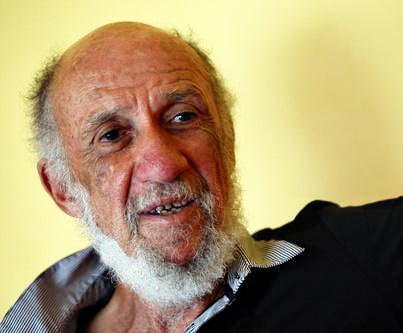
Professor Falk became an adviser to TFF when it was established in 1985.

Related Posts

The agreement is catastrophic both because of what it says and what it doesn’t mention. It reduces further the major asset of security policies: Freedom of action. Jan Oberg TFF director September 25, 2026 A couple of hours before the agreement was signed on September 22, 2026, I published the following 13 hypotheses about what it would most likely contain on TFF Substack (in English). I was wrong on only the first point. Contrary to what Trump had written on his Truth Social platform, it does not appear to come into force immediately. In fact, it turned out to be worse than even I had anticipated. After these hypotheses now come a number of reflections in light of what the agreement actually contains, and does not contain, as well as the way in which it has generally been presented by major media outlets and by the public-service broadcaster DR. My...
Photos © TFF 2000 Read PressInfo 90 “Lift the Sanctions and Bring More Aid to Yugoslavia” See Pictures from Belgrade © TFF 2000 Please reprint, copy, archive, quote or re-post this item, but please retain the source.
By Jan ObergTFF co-founder and director February 11, 2026 PART 3 — ECONOMICS, TRADE & FINANCIAL SOVEREIGNTY A. Trade Measures & Market Signaling Economic pressure can be applied instantly and scaled without violence. Immediate Measures (within a week) Government boycott US goods and services  A very powerful signal which over time will be felt. Targeted tariffs on selected U.S. goods Symbolic but high-visibility sectors send a clear message. Suspend trade facilitation talks A peaceful pause that signals deep concern. Freeze U.S. participation in public procurement – military procurement in particular A nonviolent way to reduce influence. Competition law review of U.S. corporations A legal tool to scrutinise market dominance. Longer-Term Measures EU–Asia–Africa trade corridors Reducing reliance on U.S. markets. European supply chains for critical minerals Strategic autonomy in resource access. European Strategic Trade Authority Monitoring coercive practices globally. Euro-denominated commodity markets Weakening the dollar’s pricing monopoly. The EU must resume contacts and negotiations with Russia, focusing on energy cooperation To...

Recent Articles

Tony Robinson October 4, 2026 Violence is easy to recognise when someone is being beaten, shot or killed. It becomes more difficult when nobody is holding a weapon. Poverty, discrimination, exploitation and repression can restrict a human life just as effectively, although they do so in very different ways and with very different consequences. Simply adding more categories to an ever-growing list of forms of violence does not really solve the problem. The more interesting question is what all these different situations have in common and why it makes sense to describe them using the same word. Human beings do not simply react to what happens around them. They remember the past, imagine things that do not yet exist, make plans and undertake projects. Workers organise because they imagine different working conditions; people migrate because they imagine another life somewhere else; social movements emerge because people refuse to accept the...
It’s a matter of principles, courage, vision and pulling together – while the militarist world is falling apart… Peter Langille October 3, 2026 “Here, then, is the problem which we present to you, stark and dreadful and inescapable: Shall we put an end to the human race; or shall mankind renounce war?”The Bertrand Russell—Albert Einstein Manifesto, July 9, 1955 ⁕ The forecast for what’s ahead is worrisome. The sharp rise in armed conflicts over the past three years is adding to what was already the highest level in over seventy years. Genocides, which should be prevented are supported. A shared climate emergency that jeopardises survival is ignored. Diverse polls now suggest that people are war-weary, worried and interested in a more effective United Nations. And, there are viable policy options for a more secure world! Yet governments are doubling-down, betting on more war and investing heavily. If current trends persist,...
Johan Galtung 1930-2024October 2015 Published here on October 3, 2026 Let us focus on Civilization for conflict analysis and remedies. Major forms of disorder use violence; war is state organized violence. The most belligerent states are the United States of America and Israel, both with civilization roots. National Evangelism, the US Protestant Christian civilization– more national than evangelical–justifies US warfare as exceptionalism of a people chosen by God, with a manifest destiny to run the world. Orthodox Judaism justifies Israeli warfare to conquer and expand from Nile to Euphrates as a religious right and duty to the Eternal One. The third most belligerent country, the UK, no longer believes it is God-chosen but chosen by the USA; not quite the same but something. But the root cause of global disorder lies in the Occident–with Islam–seeing itself as the single, universal civilization valid for all at all times, all others being...

TFF on Substack

Discover and subscribe to more peace materials on TFF Substack

Most Popular

Tony Robinson October 4, 2026 Violence is easy to recognise when someone is being beaten, shot or killed. It becomes more difficult when nobody is holding a weapon. Poverty, discrimination, exploitation and repression can restrict a human life just as effectively, although they do so in very different ways and with very different consequences. Simply adding more categories to an ever-growing list of forms of violence does not really solve the problem. The more interesting question is what all these different situations have in common and why it makes sense to describe them using the same word. Human beings do not simply react to what happens around them. They remember the past, imagine things that do not yet exist, make plans and undertake projects. Workers organise because they imagine different working conditions; people migrate because they imagine another life somewhere else; social movements emerge because people refuse to accept the...
It’s a matter of principles, courage, vision and pulling together – while the militarist world is falling apart… Peter Langille October 3, 2026 “Here, then, is the problem which we present to you, stark and dreadful and inescapable: Shall we put an end to the human race; or shall mankind renounce war?”The Bertrand Russell—Albert Einstein Manifesto, July 9, 1955 ⁕ The forecast for what’s ahead is worrisome. The sharp rise in armed conflicts over the past three years is adding to what was already the highest level in over seventy years. Genocides, which should be prevented are supported. A shared climate emergency that jeopardises survival is ignored. Diverse polls now suggest that people are war-weary, worried and interested in a more effective United Nations. And, there are viable policy options for a more secure world! Yet governments are doubling-down, betting on more war and investing heavily. If current trends persist,...
Johan Galtung 1930-2024October 2015 Published here on October 3, 2026 Let us focus on Civilization for conflict analysis and remedies. Major forms of disorder use violence; war is state organized violence. The most belligerent states are the United States of America and Israel, both with civilization roots. National Evangelism, the US Protestant Christian civilization– more national than evangelical–justifies US warfare as exceptionalism of a people chosen by God, with a manifest destiny to run the world. Orthodox Judaism justifies Israeli warfare to conquer and expand from Nile to Euphrates as a religious right and duty to the Eternal One. The third most belligerent country, the UK, no longer believes it is God-chosen but chosen by the USA; not quite the same but something. But the root cause of global disorder lies in the Occident–with Islam–seeing itself as the single, universal civilization valid for all at all times, all others being...
Read More
Living-Peace-Sign-Budapest-copy
Tony Robinson October 4, 2026 Violence is easy to recognise when someone is being beaten, shot or killed. It becomes more difficult when nobody is holding a weapon. Poverty, discrimination, exploitation and repression can restrict a human life just as effectively, although they do so in very different ways and with very different consequences. Simply adding more categories to an ever-growing list of forms of violence does not really solve the problem. The more interesting question is what all these different situations have in common and why it makes sense to describe them using the same word. Human beings do not simply react to what happens around them. They remember the past, imagine things that do not yet exist, make plans and undertake projects. Workers organise because they imagine different working conditions; people migrate because they imagine another life somewhere else; social movements emerge because people refuse to accept the...
b54a1f10-8c65-4f0b-9dd5-4abc0a7d04cc_2659x2659
It’s a matter of principles, courage, vision and pulling together – while the militarist world is falling apart… Peter Langille October 3, 2026 “Here, then, is the problem which we present to you, stark and dreadful and inescapable: Shall we put an end to the human race; or shall mankind renounce war?”The Bertrand Russell—Albert Einstein Manifesto, July 9, 1955 ⁕ The forecast for what’s ahead is worrisome. The sharp rise in armed conflicts over the past three years is adding to what was already the highest level in over seventy years. Genocides, which should be prevented are supported. A shared climate emergency that jeopardises survival is ignored. Diverse polls now suggest that people are war-weary, worried and interested in a more effective United Nations. And, there are viable policy options for a more secure world! Yet governments are doubling-down, betting on more war and investing heavily. If current trends persist,...
010
Johan Galtung 1930-2024October 2015 Published here on October 3, 2026 Let us focus on Civilization for conflict analysis and remedies. Major forms of disorder use violence; war is state organized violence. The most belligerent states are the United States of America and Israel, both with civilization roots. National Evangelism, the US Protestant Christian civilization– more national than evangelical–justifies US warfare as exceptionalism of a people chosen by God, with a manifest destiny to run the world. Orthodox Judaism justifies Israeli warfare to conquer and expand from Nile to Euphrates as a religious right and duty to the Eternal One. The third most belligerent country, the UK, no longer believes it is God-chosen but chosen by the USA; not quite the same but something. But the root cause of global disorder lies in the Occident–with Islam–seeing itself as the single, universal civilization valid for all at all times, all others being...
Screenshot 2026-10-02 011738
Jan ObergPhD, director, The Transnational Foundation for Peace and Future Research, TFFLund, Sweden October 2, 2026 This is my full original manuscript. The Chinese Academy of Social Science, CASS, makes two publications out if it. 1. China’s Five-year plan emphasized the capabilities of basic research and original innovation. It is regarded as the goal of the future social development, which, as required, should be significantly enhanced. Can you comment on the importance of original innovation in research and academic study? I believe it is easier to define “original innovation” in the natural sciences than in social sciences. The breaking points of what constitutes something new, or innovative, are not quite as sharp in the latter. But in both fields it is about opening up something that was closed, unseen, unexplored before – making manifest what was earlier latent. Innovations come in many forms and shapes – naming something that was not...
arctic-circle-map
The agreement is catastrophic both because of what it says and what it doesn’t mention. It reduces further the major asset of security policies: Freedom of action. Jan Oberg TFF director September 25, 2026 A couple of hours before the agreement was signed on September 22, 2026, I published the following 13 hypotheses about what it would most likely contain on TFF Substack (in English). I was wrong on only the first point. Contrary to what Trump had written on his Truth Social platform, it does not appear to come into force immediately. In fact, it turned out to be worse than even I had anticipated. After these hypotheses now come a number of reflections in light of what the agreement actually contains, and does not contain, as well as the way in which it has generally been presented by major media outlets and by the public-service broadcaster DR. My...
girl-5894831_1280
Below are TFF-related media mentions, comments, videos and social media posts published elsewhere but not on this homepage. We happen to catch and list only a fraction. Regarding video comments and debates, we recommend that you go to the TFF Video Channel on Substack where many of them are reproduced. Jan Oberg is a contributor to China Daily – 52 million daily clicks – and Global Times, CGTN and CCTV (the national television), China Investment, Xinhua News Agency and several others. Articles and videos on these media very often multiply into countless Chinese (and Western media) that re-post them from these main media. Thanks to The China Academy, his analyses, interviews and comments are frequently posted on YouTube channels such as Thinkers Forum and Wave Media. These videos are often re-posted on Bilibili (China’s YouTube), the China Content Center on TikTok, and on the Chinese edition of TikTok, Douyin.com. This means reaching hundreds of millions of viewers worldwide over a year. While there are too many to catch on all these...




