

The long history of Israel gaming the ‘Iranian Threat’*

Gareth Porter

By Gareth Porter

Western news media has feasted on Prime Minister Netanyahu’s talk and the reactions to it as a rare political spectacle rich in personalities in conflict. But the real story of Netanyahu’s speech is that he is continuing a long tradition in Israeli politics of demonising Iran to advance domestic and foreign policy interests.

The history of that practice, in which Netanyahu has played a central role going back nearly two decades, shows that it has been based on a conscious strategy of vastly exaggerating the threat from Iran.

In conjuring the spectre of Iranian genocide against Israelis, Netanyahu was playing two political games simultaneously. He was exploiting the fears of the Israeli population associated with the Holocaust to boost his electoral prospects while at the same time exploiting the readiness of most members of US Congress to support whatever Netanyahu orders on Iran policy.

Netanyahu’s primary audience was the Israeli electorate. He was speaking as a candidate for re-election as prime minister in an election that is just two weeks away. His speech was calculated to play on the deep-rooted anxiety of Israeli voters about the outsiders who may want to destroy the Jewish people.

Fear of the Persians

Netanyahu reminded his Israeli audience that, “In our nearly 4,000 years of history, many have tried repeatedly to destroy the Jewish people.” That was an obvious allusion to the annual Jewish ritual at Passover of repeating the warning that “in every generation they have risen up against us to annihilate us”.

But Netanyahu drew a parallel between the story in the book of Esther about a “powerful Persian viceroy…who plotted to destroy the Jewish people 2,000 years ago” and “another attempt by another Persian potentate to destroy us”.

Netanyahu was taking advantage of what former Israeli deputy national security adviser Chuck Freilich calls the “Holocaust Syndrome” or “Masada complex” that is woven into the fabric of Israeli politics. His ranting about an Iran intending to wipe out the entire country has appealed especially to his Likud constituency and other Israelis who believe that the outside world is “permanently hostile” to the Jewish people.

Other Israeli prime ministers have played the Holocaust card for domestic purposes too. Yitzhak Rabin actually started it during his tenure as Prime Minister from 1992 to 1995, pointing to the alleged “existential threat” from Iran in order to justify his policy of negotiating with the PLO.

It was also Rabin who established the propaganda theme of Iran as a terrorist threat to Jews across five continents that Netanyahu continues to cite today.

Phantom of genocide

Later, however, Netanyahu would use the alleged Iranian threat to do exactly the opposite – refuse to reach an agreement with the Palestinians. Many former senior military and intelligence officials have never forgiven Netanyahu for what they consider a reckless policy toward Iran that they link to his failure to deal with the Palestinian problem.

The demonisation of Iran has also served Netanyahu’s political interest in manipulating the policy of the US government and other other world powers. By portraying Iran as bent on the genocide of the Israeli Jews, Netanyahu has sought to get the Americans to threaten war against Iran, hoping for a real military confrontation that would lead to actual war with Iran that would reduce that country’s power.

A key element in Netanyahu’s manipulation of the United States and other states has been the suggestion that it if they don’t take care of the problem he may be forced to attack Iran’s nuclear facilities.

He has failed to achieve that maximum objective, but he has been successful in his lesser objective of getting the United States to organise a system of “crippling sanctions” against Iran.

Rabin and the nuclear threat

The portrayal of Iran as a serious threat to Israel’s existence has been serving Israeli diplomatic interests ever since Rabin reversed more than a decade of low-key policy toward the Islamic Republic and suddenly began claiming that Iran would have nuclear weapons and missiles capable of hitting Israel within three to seven years and appealed to the United States to stop it. The government even hinted in January 1995 that it might have to attack Iran’s nuclear reactors (Iran had only one) as it had done against Iraq 12 years earlier.

Rabin, who did view Iran as a threat to Israel in the long run, deliberately exaggerated that threat, as one of his advisors later acknowledged, in part to ensure that the United States would continue to see Israel as its irreplaceable ally in the Middle East and not be tempted to come to terms with Iran.

In fact, as Rabin’s director of Mossad recalled two decades later, Israeli intelligence still considered Iran to rank much lower than Iraq and other threats to Israel during Rabin’s tenure, because Iran was still preoccupied with Iraq and would have no missile that could reach Israel for many years.

Mossad has also repudiated Netanyahu’s political manipulation of the Iran threat.

Since 2012, at least Israeli intelligence has agreed with US intelligence that Iran has not made any decision to try to acquire nuclear weapons. And a series of Mossad chiefs have taken the unprecedented step openly rejecting Netanyahu’s use of the term “existential threat”.

‘Existential danger’ dismissed by Mossad

Tamir Pardo, the current chief of Mossad, has said that a nuclear Iran would not necessarily pose an existential threat to Israel even if it did acquire nuclear weapons.

His predecessor Meir Dagan, who has made no secret of his disdain for Netanyahu’s handling of policy toward Iran as dangerously reckless, said flatly in 2012, that “Israel faces no existential threat,” and another previous Mossad chief, Ephraim Halevy, has also criticised Netanyahu for talking about an “existential threat” from Iran.

Interestingly, Netanyahu stopped using the term in his AIPAC and congressional speeches, while continuing to make the claim that Iran has genocidal intentions toward Israel.

Netanyahu’s dishonesty on the subject of Iran is best documented by the fact that he was so persuaded by Mossad’s briefing on the subject when he first became prime minister in 1996 that he appointed the Mossad briefer, Uzi Arad, as his national security adviser and abandoned the Labor government’s exaggerated depiction of the threat from Iran’s nuclear and missile programmes. For six months the Israeli government stopped claiming that Iran was threatening Israel.

Israel’s fear of US-Iran rapprochement

What induced Netanyahu to start selling the snake oil of Iran as menace to Israel was not any new evidence of Iranian interest in nuclear weapons or hostility toward Israel. It was the fear of a rapprochement between the Clinton administration and the newly elected Khatami government and the hope of depriving Iran of what was assumed to be Russian assistance for building missiles that could reach Israel.

Netanyahu was alarmed by the signals from both Tehran and Washington in the summer of 1997 indicating interest in reducing tensions between the two countries. That would have represented a real threat to Israel’s political and strategic interests, and he was determined to cut it short.

Netanyahu’s response was to start to begin sending messages to Iran through other governments that Israel would carry out pre-emptive strikes against Iranian missile development sites unless it stopped its ballistic missile programme.

It was a reckless tactic that would not cause Iran to stop working on missiles, but could well provoke a much tougher Iranian public posture toward Israel. That, in turn, would allow Netanyahu to put pressure on the Clinton administration to steer clear of any warming relations with Iran.

Netanyahu’s indirect threats did cause Iran to focus much more on the potential threat from Israel in its missile programme, making Iran and Israel strategic adversaries for the first time. Netanyahu bears personal responsibility for having created a conflict with Iran that had never existed before. But it is not the conflict that he has been alleging all these years.

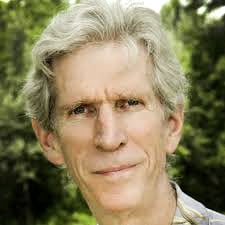
– Gareth Porter is an independent investigative journalist and winner of the 2012 Gellhorn Prize for journalism. He is also a new TFF Associate. He is the author of the newly published Manufactured Crisis: The Untold Story of the Iran Nuclear Scare.

This article was published originally at The Middle East Eye here.
Related Posts

Tony Robinson October 4, 2026 Violence is easy to recognise when someone is being beaten, shot or killed. It becomes more difficult when nobody is holding a weapon. Poverty, discrimination, exploitation and repression can restrict a human life just as effectively, although they do so in very different ways and with very different consequences. Simply adding more categories to an ever-growing list of forms of violence does not really solve the problem. The more interesting question is what all these different situations have in common and why it makes sense to describe them using the same word. Human beings do not simply react to what happens around them. They remember the past, imagine things that do not yet exist, make plans and undertake projects. Workers organise because they imagine different working conditions; people migrate because they imagine another life somewhere else; social movements emerge because people refuse to accept the...
It’s a matter of principles, courage, vision and pulling together – while the militarist world is falling apart… Peter Langille October 3, 2026 “Here, then, is the problem which we present to you, stark and dreadful and inescapable: Shall we put an end to the human race; or shall mankind renounce war?”The Bertrand Russell—Albert Einstein Manifesto, July 9, 1955 ⁕ The forecast for what’s ahead is worrisome. The sharp rise in armed conflicts over the past three years is adding to what was already the highest level in over seventy years. Genocides, which should be prevented are supported. A shared climate emergency that jeopardises survival is ignored. Diverse polls now suggest that people are war-weary, worried and interested in a more effective United Nations. And, there are viable policy options for a more secure world! Yet governments are doubling-down, betting on more war and investing heavily. If current trends persist,...
Johan Galtung 1930-2024October 2015 Published here on October 3, 2026 Let us focus on Civilization for conflict analysis and remedies. Major forms of disorder use violence; war is state organized violence. The most belligerent states are the United States of America and Israel, both with civilization roots. National Evangelism, the US Protestant Christian civilization– more national than evangelical–justifies US warfare as exceptionalism of a people chosen by God, with a manifest destiny to run the world. Orthodox Judaism justifies Israeli warfare to conquer and expand from Nile to Euphrates as a religious right and duty to the Eternal One. The third most belligerent country, the UK, no longer believes it is God-chosen but chosen by the USA; not quite the same but something. But the root cause of global disorder lies in the Occident–with Islam–seeing itself as the single, universal civilization valid for all at all times, all others being...

Recent Articles

Tony Robinson October 4, 2026 Violence is easy to recognise when someone is being beaten, shot or killed. It becomes more difficult when nobody is holding a weapon. Poverty, discrimination, exploitation and repression can restrict a human life just as effectively, although they do so in very different ways and with very different consequences. Simply adding more categories to an ever-growing list of forms of violence does not really solve the problem. The more interesting question is what all these different situations have in common and why it makes sense to describe them using the same word. Human beings do not simply react to what happens around them. They remember the past, imagine things that do not yet exist, make plans and undertake projects. Workers organise because they imagine different working conditions; people migrate because they imagine another life somewhere else; social movements emerge because people refuse to accept the...
It’s a matter of principles, courage, vision and pulling together – while the militarist world is falling apart… Peter Langille October 3, 2026 “Here, then, is the problem which we present to you, stark and dreadful and inescapable: Shall we put an end to the human race; or shall mankind renounce war?”The Bertrand Russell—Albert Einstein Manifesto, July 9, 1955 ⁕ The forecast for what’s ahead is worrisome. The sharp rise in armed conflicts over the past three years is adding to what was already the highest level in over seventy years. Genocides, which should be prevented are supported. A shared climate emergency that jeopardises survival is ignored. Diverse polls now suggest that people are war-weary, worried and interested in a more effective United Nations. And, there are viable policy options for a more secure world! Yet governments are doubling-down, betting on more war and investing heavily. If current trends persist,...
Johan Galtung 1930-2024October 2015 Published here on October 3, 2026 Let us focus on Civilization for conflict analysis and remedies. Major forms of disorder use violence; war is state organized violence. The most belligerent states are the United States of America and Israel, both with civilization roots. National Evangelism, the US Protestant Christian civilization– more national than evangelical–justifies US warfare as exceptionalism of a people chosen by God, with a manifest destiny to run the world. Orthodox Judaism justifies Israeli warfare to conquer and expand from Nile to Euphrates as a religious right and duty to the Eternal One. The third most belligerent country, the UK, no longer believes it is God-chosen but chosen by the USA; not quite the same but something. But the root cause of global disorder lies in the Occident–with Islam–seeing itself as the single, universal civilization valid for all at all times, all others being...

TFF on Substack

Discover and subscribe to more peace materials on TFF Substack

Most Popular

Tony Robinson October 4, 2026 Violence is easy to recognise when someone is being beaten, shot or killed. It becomes more difficult when nobody is holding a weapon. Poverty, discrimination, exploitation and repression can restrict a human life just as effectively, although they do so in very different ways and with very different consequences. Simply adding more categories to an ever-growing list of forms of violence does not really solve the problem. The more interesting question is what all these different situations have in common and why it makes sense to describe them using the same word. Human beings do not simply react to what happens around them. They remember the past, imagine things that do not yet exist, make plans and undertake projects. Workers organise because they imagine different working conditions; people migrate because they imagine another life somewhere else; social movements emerge because people refuse to accept the...
It’s a matter of principles, courage, vision and pulling together – while the militarist world is falling apart… Peter Langille October 3, 2026 “Here, then, is the problem which we present to you, stark and dreadful and inescapable: Shall we put an end to the human race; or shall mankind renounce war?”The Bertrand Russell—Albert Einstein Manifesto, July 9, 1955 ⁕ The forecast for what’s ahead is worrisome. The sharp rise in armed conflicts over the past three years is adding to what was already the highest level in over seventy years. Genocides, which should be prevented are supported. A shared climate emergency that jeopardises survival is ignored. Diverse polls now suggest that people are war-weary, worried and interested in a more effective United Nations. And, there are viable policy options for a more secure world! Yet governments are doubling-down, betting on more war and investing heavily. If current trends persist,...
Johan Galtung 1930-2024October 2015 Published here on October 3, 2026 Let us focus on Civilization for conflict analysis and remedies. Major forms of disorder use violence; war is state organized violence. The most belligerent states are the United States of America and Israel, both with civilization roots. National Evangelism, the US Protestant Christian civilization– more national than evangelical–justifies US warfare as exceptionalism of a people chosen by God, with a manifest destiny to run the world. Orthodox Judaism justifies Israeli warfare to conquer and expand from Nile to Euphrates as a religious right and duty to the Eternal One. The third most belligerent country, the UK, no longer believes it is God-chosen but chosen by the USA; not quite the same but something. But the root cause of global disorder lies in the Occident–with Islam–seeing itself as the single, universal civilization valid for all at all times, all others being...
Read More
Living-Peace-Sign-Budapest-copy
Tony Robinson October 4, 2026 Violence is easy to recognise when someone is being beaten, shot or killed. It becomes more difficult when nobody is holding a weapon. Poverty, discrimination, exploitation and repression can restrict a human life just as effectively, although they do so in very different ways and with very different consequences. Simply adding more categories to an ever-growing list of forms of violence does not really solve the problem. The more interesting question is what all these different situations have in common and why it makes sense to describe them using the same word. Human beings do not simply react to what happens around them. They remember the past, imagine things that do not yet exist, make plans and undertake projects. Workers organise because they imagine different working conditions; people migrate because they imagine another life somewhere else; social movements emerge because people refuse to accept the...
b54a1f10-8c65-4f0b-9dd5-4abc0a7d04cc_2659x2659
It’s a matter of principles, courage, vision and pulling together – while the militarist world is falling apart… Peter Langille October 3, 2026 “Here, then, is the problem which we present to you, stark and dreadful and inescapable: Shall we put an end to the human race; or shall mankind renounce war?”The Bertrand Russell—Albert Einstein Manifesto, July 9, 1955 ⁕ The forecast for what’s ahead is worrisome. The sharp rise in armed conflicts over the past three years is adding to what was already the highest level in over seventy years. Genocides, which should be prevented are supported. A shared climate emergency that jeopardises survival is ignored. Diverse polls now suggest that people are war-weary, worried and interested in a more effective United Nations. And, there are viable policy options for a more secure world! Yet governments are doubling-down, betting on more war and investing heavily. If current trends persist,...
010
Johan Galtung 1930-2024October 2015 Published here on October 3, 2026 Let us focus on Civilization for conflict analysis and remedies. Major forms of disorder use violence; war is state organized violence. The most belligerent states are the United States of America and Israel, both with civilization roots. National Evangelism, the US Protestant Christian civilization– more national than evangelical–justifies US warfare as exceptionalism of a people chosen by God, with a manifest destiny to run the world. Orthodox Judaism justifies Israeli warfare to conquer and expand from Nile to Euphrates as a religious right and duty to the Eternal One. The third most belligerent country, the UK, no longer believes it is God-chosen but chosen by the USA; not quite the same but something. But the root cause of global disorder lies in the Occident–with Islam–seeing itself as the single, universal civilization valid for all at all times, all others being...
Screenshot 2026-10-02 011738
Jan ObergPhD, director, The Transnational Foundation for Peace and Future Research, TFFLund, Sweden October 2, 2026 This is my full original manuscript. The Chinese Academy of Social Science, CASS, makes two publications out if it. 1. China’s Five-year plan emphasized the capabilities of basic research and original innovation. It is regarded as the goal of the future social development, which, as required, should be significantly enhanced. Can you comment on the importance of original innovation in research and academic study? I believe it is easier to define “original innovation” in the natural sciences than in social sciences. The breaking points of what constitutes something new, or innovative, are not quite as sharp in the latter. But in both fields it is about opening up something that was closed, unseen, unexplored before – making manifest what was earlier latent. Innovations come in many forms and shapes – naming something that was not...
arctic-circle-map
The agreement is catastrophic both because of what it says and what it doesn’t mention. It reduces further the major asset of security policies: Freedom of action. Jan Oberg TFF director September 25, 2026 A couple of hours before the agreement was signed on September 22, 2026, I published the following 13 hypotheses about what it would most likely contain on TFF Substack (in English). I was wrong on only the first point. Contrary to what Trump had written on his Truth Social platform, it does not appear to come into force immediately. In fact, it turned out to be worse than even I had anticipated. After these hypotheses now come a number of reflections in light of what the agreement actually contains, and does not contain, as well as the way in which it has generally been presented by major media outlets and by the public-service broadcaster DR. My...
girl-5894831_1280
Below are TFF-related media mentions, comments, videos and social media posts published elsewhere but not on this homepage. We happen to catch and list only a fraction. Regarding video comments and debates, we recommend that you go to the TFF Video Channel on Substack where many of them are reproduced. Jan Oberg is a contributor to China Daily – 52 million daily clicks – and Global Times, CGTN and CCTV (the national television), China Investment, Xinhua News Agency and several others. Articles and videos on these media very often multiply into countless Chinese (and Western media) that re-post them from these main media. Thanks to The China Academy, his analyses, interviews and comments are frequently posted on YouTube channels such as Thinkers Forum and Wave Media. These videos are often re-posted on Bilibili (China’s YouTube), the China Content Center on TikTok, and on the Chinese edition of TikTok, Douyin.com. This means reaching hundreds of millions of viewers worldwide over a year. While there are too many to catch on all these...





