
What the Chapel Hill police in North Carolina initially pitched to the world as ‘a parking dispute’ was the deliberate killing of three young and devout Muslim American students by an ideologically driven ‘new atheist’ killer named Craig Stephen Hicks.

What the The Economist unhesitatingly calls ‘terrorism in Copenhagen’ involved the attempted shooting of a Danish cartoonist who repeatedly mocks the Prophet and Islamic beliefs as well as the lethal shooting of a Jewish security guard outside a synagogue.

A friend understandably poses a serious question on Twitter that might have been dismissed as rhetorical overkill just a few years ago: “Are only Muslims capable of terrorism?”

I find it deeply disturbing that while the Chapel Hill tragedy is given marginal media attention except among groups previously worried about Islamophobia and racism, The Economist considers that important principles of Western liberal democracy are at stake apparently only in the European context.

In the words of Zanny Minton Beddoes, the new editor of the magazine: “Jacob Mchangama, a lawyer and founder of a human-rights think-tank called Justitia, told me it would be a disaster if his country were to grow faint-hearted in its defense of free speech. ‘There can be no truce in the struggle between secular democracy and extremism,’ he says. Above all, politicians should avoid the trap of saying or implying that violence was really the fault of provocateurs, or that religious insult was to be equated with physical injury. Giving in to that sort of relativism would be letting down those followers of Islam who were brave enough to stand up for free speech, and indulging in a sort of “bigotry of low expectations”, said Mr Mchangama, whose paternal forebears were Muslims from the Comoros Islands. A good point.”

I am quite sure that this is not a good point, at least as phrased by Mr. Mchangama.

Of course, governments should take action to protect all who are violently threatened, but to refuse to regard Islamophobic messaging as a species of hate speech while so regarding anti-Semitic slurs or Holocaust denial is to combine two things that are both unacceptable: ignoring the root causes of political extremism and pathological violence; and prohibiting and punishing anti-Semitic utterances as hate speech while treating anti-Islamic or Islamophobic speech as requiring protection from the perspective of ‘freedom of expression.’

Admittedly, these outer bondaries are difficult to draw. Should the views of professional historians that cast doubt on the magnitude of the Holocaust be forbidden? Should critical literary and satiric treatments of Mohammed and the Koran be suppressed for the sake of public order?

In the former case we have the experience of the French historian, Robert Faurisson, while in the latter case, that of Salman Rushdie. In my view, the writings of both should be regarded as forms of protected speech, and if a government is unable or unwilling to do this, it compromises its own claims to legitimacy. And what it certainly should not do, is defend Rushdie on freedom of expression grounds while punishing Faurisson on the basis of defamation or collective hate laws.

Another trope along a similar trajectory is the push toward acknowledging ‘war’ between the West and Islam, an embrace of the infamous Huntington thesis of ‘the clash of civilizations.’ Roger Cohen, an ethically oriented regular contributor to the opinion page of the New York Times, in a column headlined as “Islam and the West at War” [Feb. 17, 2015] criticizes the Danish prime minister, Helle Thorning-Schmidt, as well as Barack Obama, for describing the adversary as a ‘dark ideology’ and as ‘violent extremists.’ Cohen insists that such terms are euphemisms that evade the central reality of our time, namely, that the West is confronting Islamic movements and governments throughout the world, and even argues that Islam is ‘fair game’ because it “has spawned multifaceted political movements whose goal is power.”

The article also observes that young Muslims feel alienated and are drawn toward ISIS and other radical Islamic movements. Cohen asks the central question “Who or what is to blame?” and then suggests that there are two opposing sets of responses. His descriptions are worth quoting in full: “For the first, it is the West that is to blame through its support for Israel (seen as the latest iteration of Western imperialism in the Levant); its wars (Iraq); its brutality (Guantanamo, Abu Ghraib); its killings of civilians (drones); its oil-driven hypocrisy (a Jihadi-funding Saudi ally).”

And then comes the second type of response: “… it is rather the abject failure of the Arab world, its blocked societies where dictators face off against political Islam, its repression, its feeble institutions, its sectarianism precluding the practice of participatory citizenship, its wild conspiracy theories, its inability to provide jobs or hope for its youth, that gives the Islamic state its appeal.”

I find several serious flaws in this way of presenting the issue. It should be obvious to any objective commentator that both sets of issues are interwoven, and cannot be separated except for polemical purposes. Furthermore, the failures of the Arab world are presented as detached realities, implying that the Western colonial legacies endured by the Arab world are irrelevant.

We need to recall that following World War I, almost one hundred years ago, the European colonial powers effectively insinuated their national ambitions into the diplomatic process that produced the Middle East as we know it today. Such moves undermined Woodrow Wilson’s advocacy of self-determination for the peoples comprising the collapsed Ottoman Empire as well as the promises of a unified country made to enlist Arab support for the war against Germany and the Ottomans.

These historical antecedents certainly contributed to the authoritarianism of the region as the only basis for sustaining a coherent order in the artificial political communities with which the region experienced the transition to political independence.

And the sectarianism that Cohen laments was clearly inflamed by American occupation policy in Iraq, as well as providing the most palatable way for Saudi Arabia to justify its hostility to Iran, deflecting attention from corruption and gender cruelty of its dynastic rule.

Overlooking this legacy of colonialism also ignores the effects of the Balfour Declaration, which gave the imperial blessings of British Foreign Office to the Zionist project for Jewish homeland in historic Palestine that were later endorsed by the League of Nation and the UN. It is debatable as to how much of the turmoil and violence in the region is attributable to the open wounds caused by the dispossession and occupation of the Palesinian people, but it is certainly part of the sad regional story that has unfolded in the last several decades.

Not surprisingly, Cohen finds the second series of explanations “more persuasive” and especially so in light of “the failure of the Arab Spring,” which he believe is partly a consequence of Obama’s refusal to do more to promote and sustain democratic outcomes in the Middle East by way of intervention. Somewhat mysteriously he blames the Syrian tragedy on American ‘nonintervention’ without bothering to consider the prolonged national disasters that have followed from such interventions as the sustained ones in Iraq and Afghanistan, or the more limited one under NATO auspices in Libya. In each instance the aftermath of intervention was not democracy, or even stability, but chaos, strife, and a worsening of human security.

Cohen never ventures to suggest that in light of the colonial legacies in the region, abetted by the oil lust of the West, the least bad arrangement at this point that can be fashioned is a less corrupt and more responsible authoritarianism.

As deficient as Saddam Hussein and Muamar Qaddafi were from the perspective of human rights and democracy, they did maintain order within their borders and their countries were rated rather highly by the Human Development Indicators (HDI) of the UNDP. If the United States is to be blamed for its diplomacy during the recent past, it would seem much more convincing to hold the Bush Administration responsible for the downward spiral of politics in the region than to point a critical finger at Obama.

It was after all during the Bush presidency that an American interventionary resolve was linked to and justified as ‘democracy promotion.’ If we focus on the alienation of Arab youth, it would seem to be much more the result of these military and political interventions than a consequence of the Obama reluctance to engage the United States in yet another war with a Muslim country. Indeed, Obama can be faulted for being too quick to authorize drone and other air strikes, while pursuing an unimaginative diplomacy that remains the best hope for achieving sustainable peace in the region.

Cohen’s diagnosis and allocation of responsibility is a telling expression of the liberal mind-set as it addresses the interlinked agendas of anti-terrorism and Middle East politics.

Liberals both minimize Western and American responsibility for what has gone wrong in the spirit of Bernard Lewis and make the partisan United States relationship to Israel seem almost irrelevant to the troubles of the region, thereby overlooking the high costs of the policy.

For instance, many knowledgeable observers agree that regional stability would be dramatically enhanced by the establishment of a nuclear weapons free zone in the Middle East. Yet such a policy option was never even considered in diplomatic settings, apparently because it would exert too much pressure on Israel to give up its arsenal of nuclear weaponry, which has given Israel a monopoly on nuclear weapons in the region that insists on preserving at all costs, including risking a disastrous war with Iran.

At this stage there are no easy answers as to allocating responsibility or producing causal explanations for terrible realities being endured by the peoples of the region. Quite clearly there are no good military answers to the various unresolved disasters in the region, although that is where the sort of ‘war thinking’ that Cohen affirms continues to place its bets.

In contrast, I would contend that a more imaginative diplomacy responsive to international law remains the only way forward.

Such an orientation would look with favor on Iran’s active participation, especially in relation to Syria and to the possible negotiation of a regional security framework. It would also presuppose the relevance of a just and sustainable resolution of the Israel-Palestine conflict, which it turn depends upon the adoption of a normal approach by the U.S. Government to its relationship to Israel.

Until such a reorientation on the part of policymakers occurs, the path of least resistance is to engage in one air war after another, and co-exist contentedly with Sisi’s Egypt and dynastic rule in Saudi Arabia.
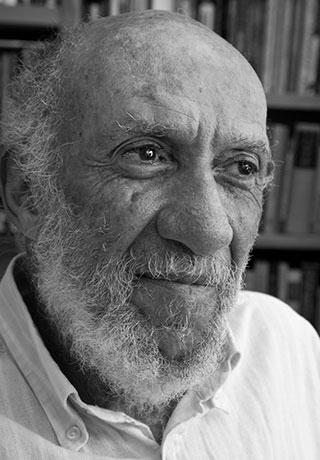

Professor Falk became an adviser to TFF when it was established in 1985.

Related Posts

Jan Oberg, TFF director April 28, 2026 In this third TFF Peace Pulse, I make the important distinction between the violence and the conflict that violence is a symptom of. If you want peace, focus on the underlying conflict because that is the key to resolution, peacemaking, and a better future for the parties. The West is obsessed with violence, just look around you – and 90+ per cent of the public debate is about military issues and other violence – totally wasted for peace. These Peace Pulses will only be published here a few times. You will also not find them on YouTube and Vimeo because both platforms have blocked TFF and me; you know, peace is dangerous these days. Most TFF’s videos since 2007 are now on Rumble.
Photos © TFF 2000 Read PressInfo 90 “Lift the Sanctions and Bring More Aid to Yugoslavia” See Pictures from Belgrade © TFF 2000 Please reprint, copy, archive, quote or re-post this item, but please retain the source.
By Jan ObergTFF co-founder and director February 11, 2026 PART 3 — ECONOMICS, TRADE & FINANCIAL SOVEREIGNTY A. Trade Measures & Market Signaling Economic pressure can be applied instantly and scaled without violence. Immediate Measures (within a week) Government boycott US goods and services  A very powerful signal which over time will be felt. Targeted tariffs on selected U.S. goods Symbolic but high-visibility sectors send a clear message. Suspend trade facilitation talks A peaceful pause that signals deep concern. Freeze U.S. participation in public procurement – military procurement in particular A nonviolent way to reduce influence. Competition law review of U.S. corporations A legal tool to scrutinise market dominance. Longer-Term Measures EU–Asia–Africa trade corridors Reducing reliance on U.S. markets. European supply chains for critical minerals Strategic autonomy in resource access. European Strategic Trade Authority Monitoring coercive practices globally. Euro-denominated commodity markets Weakening the dollar’s pricing monopoly. The EU must resume contacts and negotiations with Russia, focusing on energy cooperation To...

Recent Articles

Tony Robinson October 4, 2026 Violence is easy to recognise when someone is being beaten, shot or killed. It becomes more difficult when nobody is holding a weapon. Poverty, discrimination, exploitation and repression can restrict a human life just as effectively, although they do so in very different ways and with very different consequences. Simply adding more categories to an ever-growing list of forms of violence does not really solve the problem. The more interesting question is what all these different situations have in common and why it makes sense to describe them using the same word. Human beings do not simply react to what happens around them. They remember the past, imagine things that do not yet exist, make plans and undertake projects. Workers organise because they imagine different working conditions; people migrate because they imagine another life somewhere else; social movements emerge because people refuse to accept the...
It’s a matter of principles, courage, vision and pulling together – while the militarist world is falling apart… Peter Langille October 3, 2026 “Here, then, is the problem which we present to you, stark and dreadful and inescapable: Shall we put an end to the human race; or shall mankind renounce war?”The Bertrand Russell—Albert Einstein Manifesto, July 9, 1955 ⁕ The forecast for what’s ahead is worrisome. The sharp rise in armed conflicts over the past three years is adding to what was already the highest level in over seventy years. Genocides, which should be prevented are supported. A shared climate emergency that jeopardises survival is ignored. Diverse polls now suggest that people are war-weary, worried and interested in a more effective United Nations. And, there are viable policy options for a more secure world! Yet governments are doubling-down, betting on more war and investing heavily. If current trends persist,...
Johan Galtung 1930-2024October 2015 Published here on October 3, 2026 Let us focus on Civilization for conflict analysis and remedies. Major forms of disorder use violence; war is state organized violence. The most belligerent states are the United States of America and Israel, both with civilization roots. National Evangelism, the US Protestant Christian civilization– more national than evangelical–justifies US warfare as exceptionalism of a people chosen by God, with a manifest destiny to run the world. Orthodox Judaism justifies Israeli warfare to conquer and expand from Nile to Euphrates as a religious right and duty to the Eternal One. The third most belligerent country, the UK, no longer believes it is God-chosen but chosen by the USA; not quite the same but something. But the root cause of global disorder lies in the Occident–with Islam–seeing itself as the single, universal civilization valid for all at all times, all others being...

TFF on Substack

Discover and subscribe to more peace materials on TFF Substack

Most Popular

Tony Robinson October 4, 2026 Violence is easy to recognise when someone is being beaten, shot or killed. It becomes more difficult when nobody is holding a weapon. Poverty, discrimination, exploitation and repression can restrict a human life just as effectively, although they do so in very different ways and with very different consequences. Simply adding more categories to an ever-growing list of forms of violence does not really solve the problem. The more interesting question is what all these different situations have in common and why it makes sense to describe them using the same word. Human beings do not simply react to what happens around them. They remember the past, imagine things that do not yet exist, make plans and undertake projects. Workers organise because they imagine different working conditions; people migrate because they imagine another life somewhere else; social movements emerge because people refuse to accept the...
It’s a matter of principles, courage, vision and pulling together – while the militarist world is falling apart… Peter Langille October 3, 2026 “Here, then, is the problem which we present to you, stark and dreadful and inescapable: Shall we put an end to the human race; or shall mankind renounce war?”The Bertrand Russell—Albert Einstein Manifesto, July 9, 1955 ⁕ The forecast for what’s ahead is worrisome. The sharp rise in armed conflicts over the past three years is adding to what was already the highest level in over seventy years. Genocides, which should be prevented are supported. A shared climate emergency that jeopardises survival is ignored. Diverse polls now suggest that people are war-weary, worried and interested in a more effective United Nations. And, there are viable policy options for a more secure world! Yet governments are doubling-down, betting on more war and investing heavily. If current trends persist,...
Johan Galtung 1930-2024October 2015 Published here on October 3, 2026 Let us focus on Civilization for conflict analysis and remedies. Major forms of disorder use violence; war is state organized violence. The most belligerent states are the United States of America and Israel, both with civilization roots. National Evangelism, the US Protestant Christian civilization– more national than evangelical–justifies US warfare as exceptionalism of a people chosen by God, with a manifest destiny to run the world. Orthodox Judaism justifies Israeli warfare to conquer and expand from Nile to Euphrates as a religious right and duty to the Eternal One. The third most belligerent country, the UK, no longer believes it is God-chosen but chosen by the USA; not quite the same but something. But the root cause of global disorder lies in the Occident–with Islam–seeing itself as the single, universal civilization valid for all at all times, all others being...
Read More
Living-Peace-Sign-Budapest-copy
Tony Robinson October 4, 2026 Violence is easy to recognise when someone is being beaten, shot or killed. It becomes more difficult when nobody is holding a weapon. Poverty, discrimination, exploitation and repression can restrict a human life just as effectively, although they do so in very different ways and with very different consequences. Simply adding more categories to an ever-growing list of forms of violence does not really solve the problem. The more interesting question is what all these different situations have in common and why it makes sense to describe them using the same word. Human beings do not simply react to what happens around them. They remember the past, imagine things that do not yet exist, make plans and undertake projects. Workers organise because they imagine different working conditions; people migrate because they imagine another life somewhere else; social movements emerge because people refuse to accept the...
b54a1f10-8c65-4f0b-9dd5-4abc0a7d04cc_2659x2659
It’s a matter of principles, courage, vision and pulling together – while the militarist world is falling apart… Peter Langille October 3, 2026 “Here, then, is the problem which we present to you, stark and dreadful and inescapable: Shall we put an end to the human race; or shall mankind renounce war?”The Bertrand Russell—Albert Einstein Manifesto, July 9, 1955 ⁕ The forecast for what’s ahead is worrisome. The sharp rise in armed conflicts over the past three years is adding to what was already the highest level in over seventy years. Genocides, which should be prevented are supported. A shared climate emergency that jeopardises survival is ignored. Diverse polls now suggest that people are war-weary, worried and interested in a more effective United Nations. And, there are viable policy options for a more secure world! Yet governments are doubling-down, betting on more war and investing heavily. If current trends persist,...
010
Johan Galtung 1930-2024October 2015 Published here on October 3, 2026 Let us focus on Civilization for conflict analysis and remedies. Major forms of disorder use violence; war is state organized violence. The most belligerent states are the United States of America and Israel, both with civilization roots. National Evangelism, the US Protestant Christian civilization– more national than evangelical–justifies US warfare as exceptionalism of a people chosen by God, with a manifest destiny to run the world. Orthodox Judaism justifies Israeli warfare to conquer and expand from Nile to Euphrates as a religious right and duty to the Eternal One. The third most belligerent country, the UK, no longer believes it is God-chosen but chosen by the USA; not quite the same but something. But the root cause of global disorder lies in the Occident–with Islam–seeing itself as the single, universal civilization valid for all at all times, all others being...
Screenshot 2026-10-02 011738
Jan ObergPhD, director, The Transnational Foundation for Peace and Future Research, TFFLund, Sweden October 2, 2026 This is my full original manuscript. The Chinese Academy of Social Science, CASS, makes two publications out if it. 1. China’s Five-year plan emphasized the capabilities of basic research and original innovation. It is regarded as the goal of the future social development, which, as required, should be significantly enhanced. Can you comment on the importance of original innovation in research and academic study? I believe it is easier to define “original innovation” in the natural sciences than in social sciences. The breaking points of what constitutes something new, or innovative, are not quite as sharp in the latter. But in both fields it is about opening up something that was closed, unseen, unexplored before – making manifest what was earlier latent. Innovations come in many forms and shapes – naming something that was not...
arctic-circle-map
The agreement is catastrophic both because of what it says and what it doesn’t mention. It reduces further the major asset of security policies: Freedom of action. Jan Oberg TFF director September 25, 2026 A couple of hours before the agreement was signed on September 22, 2026, I published the following 13 hypotheses about what it would most likely contain on TFF Substack (in English). I was wrong on only the first point. Contrary to what Trump had written on his Truth Social platform, it does not appear to come into force immediately. In fact, it turned out to be worse than even I had anticipated. After these hypotheses now come a number of reflections in light of what the agreement actually contains, and does not contain, as well as the way in which it has generally been presented by major media outlets and by the public-service broadcaster DR. My...
girl-5894831_1280
Below are TFF-related media mentions, comments, videos and social media posts published elsewhere but not on this homepage. We happen to catch and list only a fraction. Regarding video comments and debates, we recommend that you go to the TFF Video Channel on Substack where many of them are reproduced. Jan Oberg is a contributor to China Daily – 52 million daily clicks – and Global Times, CGTN and CCTV (the national television), China Investment, Xinhua News Agency and several others. Articles and videos on these media very often multiply into countless Chinese (and Western media) that re-post them from these main media. Thanks to The China Academy, his analyses, interviews and comments are frequently posted on YouTube channels such as Thinkers Forum and Wave Media. These videos are often re-posted on Bilibili (China’s YouTube), the China Content Center on TikTok, and on the Chinese edition of TikTok, Douyin.com. This means reaching hundreds of millions of viewers worldwide over a year. While there are too many to catch on all these...




