
Why foreign military intervention usually fails in the 21st century

When Nehru was taking a train on his return to India after studying abroad he read of the Japanese victory over Russia in the 1904-05 Russo Japanese War. At that moment he had an epiphany, realizing the hitherto unthinkable, that the British Empire was vulnerable to Indian nationalism. An earlier understanding of the colonial reality by native peoples generally subscribed to the postulates of hard power primacy making it futile or worse to challenge a colonial master, although throughout history there were always pockets of resistance.

This soft power attribute of colonial hard power by way of intimidation and a façade of invincibility is what made colonialism efficient and profitable for so long at the great expense of colonized peoples.

A traditional colonial occupation assumes that the foreign domineering presence, while oppressive and exploitative, refrains from ethnic cleansing or genocide in relation to the indigenous population.

When settler versions of colonialism emerged in relation to the Western Hemisphere and regions occupied by traditional peoples that were without either population density or some kind of industrial capability, the occupier managed to achieve enduring control typically relying on brutal means to establish its state-building claim via some form of dispossession that successfully superseded indigenous identities. Thus the indigenous identity is marginalized or extinguished, and the settler identity is legitimized as the ‘true’ identity.

There is still a mysterious connection between military inferiority and political victory. It seems to defy common sense and the pragmatic wisdom of political elites that believe in the historical agency of hard power long after the empirical record casts severe doubt on such ‘realist’ claims. Of course, and it should not be overlooked, if an occupied people mistakenly chooses to risk its future by militarily challenging the occupier on the battlefield it is likely to lose, and may suffer extreme losses. Military resistance is possible, but it needs to be calibrated to the interplay of unequal capabilities and take advantage of elements of conflict that favor the militarily weaker side.

As Tolstoy portrays in War and Peace the extraordinary Russian resilience displayed in defeating and expeling the superior military forces of Napoleon’s France, it was a matter of tactically retreating to the point that French supply lines were stretched beyond their capacities to maintain their alien and foreign presence, especially given the rigors of the Russian winter; Hitler’s war machine experienced a similar devastating defeat at the hands of the outgunned Soviet defensive forces who also understood the benefits of withdrawal.

In effect, there are tactical, geographical, ideological, normative dimensions of conflict that when intelligently activated can neutralize the seemingly decisive advantages of the militarily superior side that has the best weaponry. The history of imperial decline also illustrates the eventual neutralization of the sharp realist edge that had been earlier achieved through battlefield dominance.

The architects of colonial expansion made ideological claims that were able to give their economic and political ambitions a kind of moral justification. It was Europe’s moral hubris to insist upon an imperial entitlement premised on the supposed civilizational and racial superiority of Western peoples.

Such a rationale for conquest and occupation put forward an apparent normative claim to govern backward peoples, and additionally argued that more advanced industrial practice make more efficient use of resources than did the native population.

In the period since World War II, considering the weakening of the European colonial powers, a determined drive for nationalist self-empowerment spread to all of Asia and Africa. Each situation was different, and in some the colonial power left more or less willingly after a period of struggle, as in India, while in others long wars ensued as in Indochina and Algeria.

The wave of anti-colonial successes politically transformed world order, creating dozens of new states that reshaped the political landscape of the United Nations. The anti-colonial movement enjoyed extraordinary success in achieving formal independence for colonized people, but it did not end the role of hierarchy in structuring international relations and the world economy. The geopolitical ascendancy of the United States and the Soviet Union, as well as the capitalist world economy sustained on a material basis the exploitative and dominant relationship of the West to the non-West.

During the Cold War, geopolitical rivalry and American efforts at counter-revolution directed at left-oriented political developments, led to military interventions designed to impose limits on the exercise of the right of self-determination. The Soviet interventions in East Europe, such as Hungary in 1956 and Czechoslovakia in 1968 were emblematic of such a pattern within the state socialist bloc of countries.

The United States relied on covert interventions whenever possible (as in Iran 1953, Guatemala 1954), and resorted to military interventions when necessary to uphold its strategic and ideological interests. The Vietnam War was the most important example of a full-fledged intervention designed to prevent the emergence of a left-leaning government that would strengthen Communist influence in South Asia.

The United States enjoyed complete military dominance in Vietnam throughout the decade long war, having mastery of air, sea, and land, yet proved vulnerable to certain defensive tactics of guerrilla warfare. The war was lost by the United States in the end because its political system lost patience with its inability to establish stability in support of a Vietnamese leadership that was anti-Communist and dependent on the West. Some militarists contend that the war was lost on TV in American living rooms (seeing the body bags of Americans killed in Vietnam swayed public opinion) or because the military presence that reached a half million relied on conscripted troops that gave rise to a student led anti-war movement. In other words, the war was lost politically, not militarily.

Such an understanding is partly true, but it overlooks the role of national resistance in Vietnam, and attributes the outcome to the faltering political will of the intervening side.

The great advantage of those national forces seeking to expel foreign occupation, even if indirect as in Vietnam where the United States was nominally supporting one side in a civil war, is its familiarity with the terrain and its far greater stake in the outcome. Henry Kissinger made the apt observation that in a counterinsurgency war if the counterinsurgent side doesn’t win, it loses, while if the insurgent side doesn’t lose, it wins. Such a statement, not surprisingly considering its source, overlooks the role of people, especially the greater steadfastness of those fighting for the independence of their country as compared with those seeking to impose an alien or foreign solution on a conflict.

The foreign intervener calculates whether it is worth the cost, and in a democratic society, the mixture of casualties and the absence of a timely victory, gradually undermines the popular enthusiasm that may have accompanied the earliest expressions of support. Patience among the citizenry runs out when the foreign war does not seem to be closely connected with the defense of the national homeland.

This became especially clear in the United States during the latter stages of the Vietnam War when the American public began to perceive a ‘credibility gap’ between the government’s claim that it was winning the war and a more sober account of a stalemate without a victorious end in sight. For the Vietnamese, this was not a matter of whether to give up or not, but how to continue their struggle despite their material inferiority and the adversities associated with the devastation of their country. The Vietnamese leadership was prepared for every eventuality, including a 50-year retreat to mountainous regions, being convinced that at some point the foreigners would tire of the conflict and go home.

The United States as global hegemon is incapable of learning such lessons or accepting the ethos of self-determination that has such salience in the post-colonial world. Instead it tries over and over again to reinvent counterinsurgency warfare, hoping finally to discover the path leading to victory. The American strategic community believed the lessons of Vietnam were to build better support at home for the war effort, embark on war with sufficient force to achieve victory quickly, and abandon the drafting of its military personnel from among its youth.

The warmakers also tried to design weaponry and tactics so as minimize casualties in these one-sided wars for the intervening side. At first, the adjustments seemed to work as the adversary was foolish enough to meet the foreign challenge on the battlefield as in the 1991 Iraq War or where the military intervention was itself seeking to remove Serbian foreign rule as in Kosovo in 1999. There was enthusiasm in the Washington think tanks for what were thought to be a new triumphal era of ‘zero casualty wars.’ Of course, there were zero (or very low) casualties, as in these two wars, but only for the foreign intervener; the society being attacked from the air endured heavy casualties, and much devastation, as well as the demoralizing experience of total helplessness.

In the post-9/11 atmosphere of ‘a global war on terrorism’ this same geopolitical logic applies. The violence is carried to wherever on the planet a threat is perceived, and the victims are not only those who are perceived, whether rightly or wrongly as posing the threat, but also to the innocent civilians that happen to be living in the same vicinity. There is no deference to the sovereignty of other countries or to civilian innocence, and a unilateral right of preemptive attack is claimed in a manner that would be refused to any adversary of the West.

The weaponry is designed to minimize political friction at home, exemplified by the growing reliance on attack drones that can inflict strikes without ever risking casualties for the attacker. Such weaponry allows war to persist almost permanently, especially as it serves both bureaucratic and private sector interests, and produces an almost enveloping securitization of the political atmosphere, destroying democratic freedoms in the process.

As the outcomes in Afghanistan and Iraq show, despite the enormous military and economic effort by the United States, the political outcome was disappointing, if not yet clearly a defeat. And the results are strategically worse from an American perspective than the original provocation and goals.

Putting the point provocatively, many in the Washington policymaking world would be secretly glad if there occurred a second coming in Iraq of Saddam Hussein who alone could restore unity and order to the country. The American version of a civilizing mission was ‘democracy promotion,’ which proved just as unpalatable to the population being attacked and occupied as were the earlier moral claims of outright colonial administrations.

Indirect adverse consequences from a U.S. perspective of these failed intervention included the intensification of Sunni/Shi’ia sectarian tensions throughout the region and the establishment of fertile breeding grounds for anti-Western political extremism.

The West also builds support for its militarist approaches to contemporary forms of conflict by demonizing its adversary, ignoring their grievances, whether legitimate or not. The politics of demonization that fits so neatly with ascribing terrorist behavior to the other also has the effect of rejecting diplomacy and compromise.

Yet interestingly, there is a willingness to regard yesterday’s demon as today’s ally. This shuffling of ‘the enemy’ has been happening constantly in the setting of Iraq and Syria. The abrupt entry of IS on the scene is the most spectacular example of such a shuffling of alignments, having the effect of suspending the anti-Assad efforts of the United States and Europe.

There is more to these unlearned lessons than strategic failures, and being on the wrong side of history. These ventures cause millions of ordinary people in distant countries to bear the terrifying brunt of modern weaponry that kills, wounds, displaces, and traumatizes. For the intervener the outcome is at worst a regrettable or even tragic mistake, but the society back home persists in its complacent affluence; but for the target societies, in contrast, the experience of such foreign military encroachment is experienced as swallowing a massive dose of criminality in a global setting in which the criminals scandalously enjoy total impunity.

Given the way elites think and militarism is structured into the bloodstream of major states, foreign military intervention is intrinsic to the war system. We must work now as hard to eliminate war as earlier centuries worked to eliminate slavery. Nothing less will suffice to rescue the planet from free fall to disaster.

In the end, we have reached a stage in the political development of life on the planet where civilizational and species survival itself depends on the urgency of building an effective movement against the war system that remains indispensable to sustain hierarchy and exploitation, wastes huge amounts of resources, and dangerously diverts problem-solving priorities from climate change and the elimination of nuclear weaponry.

Unless such a radical transformation of the way life on the planet is undertaken in the decades ahead, two intertwined developments are likely to make the future inhospitable to human habitation even if the worst catastrophes can be avoided: globalization morphing into various forms of authoritarian and oppressive political leadership intertwined with extremist movements of resistance that have no vision beyond that of striking back at the oppressors.

How to evade such a dark future is what should be everywhere preoccupying persons of good will.
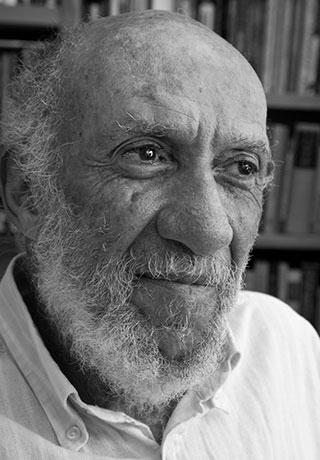
Professor Falk became an adviser to TFF when it was established in 1985.

Related Posts

Tony Robinson October 4, 2026 Violence is easy to recognise when someone is being beaten, shot or killed. It becomes more difficult when nobody is holding a weapon. Poverty, discrimination, exploitation and repression can restrict a human life just as effectively, although they do so in very different ways and with very different consequences. Simply adding more categories to an ever-growing list of forms of violence does not really solve the problem. The more interesting question is what all these different situations have in common and why it makes sense to describe them using the same word. Human beings do not simply react to what happens around them. They remember the past, imagine things that do not yet exist, make plans and undertake projects. Workers organise because they imagine different working conditions; people migrate because they imagine another life somewhere else; social movements emerge because people refuse to accept the...
It’s a matter of principles, courage, vision and pulling together – while the militarist world is falling apart… Peter Langille October 3, 2026 “Here, then, is the problem which we present to you, stark and dreadful and inescapable: Shall we put an end to the human race; or shall mankind renounce war?”The Bertrand Russell—Albert Einstein Manifesto, July 9, 1955 ⁕ The forecast for what’s ahead is worrisome. The sharp rise in armed conflicts over the past three years is adding to what was already the highest level in over seventy years. Genocides, which should be prevented are supported. A shared climate emergency that jeopardises survival is ignored. Diverse polls now suggest that people are war-weary, worried and interested in a more effective United Nations. And, there are viable policy options for a more secure world! Yet governments are doubling-down, betting on more war and investing heavily. If current trends persist,...
Johan Galtung 1930-2024October 2015 Published here on October 3, 2026 Let us focus on Civilization for conflict analysis and remedies. Major forms of disorder use violence; war is state organized violence. The most belligerent states are the United States of America and Israel, both with civilization roots. National Evangelism, the US Protestant Christian civilization– more national than evangelical–justifies US warfare as exceptionalism of a people chosen by God, with a manifest destiny to run the world. Orthodox Judaism justifies Israeli warfare to conquer and expand from Nile to Euphrates as a religious right and duty to the Eternal One. The third most belligerent country, the UK, no longer believes it is God-chosen but chosen by the USA; not quite the same but something. But the root cause of global disorder lies in the Occident–with Islam–seeing itself as the single, universal civilization valid for all at all times, all others being...

Recent Articles

Tony Robinson October 4, 2026 Violence is easy to recognise when someone is being beaten, shot or killed. It becomes more difficult when nobody is holding a weapon. Poverty, discrimination, exploitation and repression can restrict a human life just as effectively, although they do so in very different ways and with very different consequences. Simply adding more categories to an ever-growing list of forms of violence does not really solve the problem. The more interesting question is what all these different situations have in common and why it makes sense to describe them using the same word. Human beings do not simply react to what happens around them. They remember the past, imagine things that do not yet exist, make plans and undertake projects. Workers organise because they imagine different working conditions; people migrate because they imagine another life somewhere else; social movements emerge because people refuse to accept the...
It’s a matter of principles, courage, vision and pulling together – while the militarist world is falling apart… Peter Langille October 3, 2026 “Here, then, is the problem which we present to you, stark and dreadful and inescapable: Shall we put an end to the human race; or shall mankind renounce war?”The Bertrand Russell—Albert Einstein Manifesto, July 9, 1955 ⁕ The forecast for what’s ahead is worrisome. The sharp rise in armed conflicts over the past three years is adding to what was already the highest level in over seventy years. Genocides, which should be prevented are supported. A shared climate emergency that jeopardises survival is ignored. Diverse polls now suggest that people are war-weary, worried and interested in a more effective United Nations. And, there are viable policy options for a more secure world! Yet governments are doubling-down, betting on more war and investing heavily. If current trends persist,...
Johan Galtung 1930-2024October 2015 Published here on October 3, 2026 Let us focus on Civilization for conflict analysis and remedies. Major forms of disorder use violence; war is state organized violence. The most belligerent states are the United States of America and Israel, both with civilization roots. National Evangelism, the US Protestant Christian civilization– more national than evangelical–justifies US warfare as exceptionalism of a people chosen by God, with a manifest destiny to run the world. Orthodox Judaism justifies Israeli warfare to conquer and expand from Nile to Euphrates as a religious right and duty to the Eternal One. The third most belligerent country, the UK, no longer believes it is God-chosen but chosen by the USA; not quite the same but something. But the root cause of global disorder lies in the Occident–with Islam–seeing itself as the single, universal civilization valid for all at all times, all others being...

TFF on Substack

Discover and subscribe to more peace materials on TFF Substack

Most Popular

Tony Robinson October 4, 2026 Violence is easy to recognise when someone is being beaten, shot or killed. It becomes more difficult when nobody is holding a weapon. Poverty, discrimination, exploitation and repression can restrict a human life just as effectively, although they do so in very different ways and with very different consequences. Simply adding more categories to an ever-growing list of forms of violence does not really solve the problem. The more interesting question is what all these different situations have in common and why it makes sense to describe them using the same word. Human beings do not simply react to what happens around them. They remember the past, imagine things that do not yet exist, make plans and undertake projects. Workers organise because they imagine different working conditions; people migrate because they imagine another life somewhere else; social movements emerge because people refuse to accept the...
It’s a matter of principles, courage, vision and pulling together – while the militarist world is falling apart… Peter Langille October 3, 2026 “Here, then, is the problem which we present to you, stark and dreadful and inescapable: Shall we put an end to the human race; or shall mankind renounce war?”The Bertrand Russell—Albert Einstein Manifesto, July 9, 1955 ⁕ The forecast for what’s ahead is worrisome. The sharp rise in armed conflicts over the past three years is adding to what was already the highest level in over seventy years. Genocides, which should be prevented are supported. A shared climate emergency that jeopardises survival is ignored. Diverse polls now suggest that people are war-weary, worried and interested in a more effective United Nations. And, there are viable policy options for a more secure world! Yet governments are doubling-down, betting on more war and investing heavily. If current trends persist,...
Johan Galtung 1930-2024October 2015 Published here on October 3, 2026 Let us focus on Civilization for conflict analysis and remedies. Major forms of disorder use violence; war is state organized violence. The most belligerent states are the United States of America and Israel, both with civilization roots. National Evangelism, the US Protestant Christian civilization– more national than evangelical–justifies US warfare as exceptionalism of a people chosen by God, with a manifest destiny to run the world. Orthodox Judaism justifies Israeli warfare to conquer and expand from Nile to Euphrates as a religious right and duty to the Eternal One. The third most belligerent country, the UK, no longer believes it is God-chosen but chosen by the USA; not quite the same but something. But the root cause of global disorder lies in the Occident–with Islam–seeing itself as the single, universal civilization valid for all at all times, all others being...
Read More
Living-Peace-Sign-Budapest-copy
Tony Robinson October 4, 2026 Violence is easy to recognise when someone is being beaten, shot or killed. It becomes more difficult when nobody is holding a weapon. Poverty, discrimination, exploitation and repression can restrict a human life just as effectively, although they do so in very different ways and with very different consequences. Simply adding more categories to an ever-growing list of forms of violence does not really solve the problem. The more interesting question is what all these different situations have in common and why it makes sense to describe them using the same word. Human beings do not simply react to what happens around them. They remember the past, imagine things that do not yet exist, make plans and undertake projects. Workers organise because they imagine different working conditions; people migrate because they imagine another life somewhere else; social movements emerge because people refuse to accept the...
b54a1f10-8c65-4f0b-9dd5-4abc0a7d04cc_2659x2659
It’s a matter of principles, courage, vision and pulling together – while the militarist world is falling apart… Peter Langille October 3, 2026 “Here, then, is the problem which we present to you, stark and dreadful and inescapable: Shall we put an end to the human race; or shall mankind renounce war?”The Bertrand Russell—Albert Einstein Manifesto, July 9, 1955 ⁕ The forecast for what’s ahead is worrisome. The sharp rise in armed conflicts over the past three years is adding to what was already the highest level in over seventy years. Genocides, which should be prevented are supported. A shared climate emergency that jeopardises survival is ignored. Diverse polls now suggest that people are war-weary, worried and interested in a more effective United Nations. And, there are viable policy options for a more secure world! Yet governments are doubling-down, betting on more war and investing heavily. If current trends persist,...
010
Johan Galtung 1930-2024October 2015 Published here on October 3, 2026 Let us focus on Civilization for conflict analysis and remedies. Major forms of disorder use violence; war is state organized violence. The most belligerent states are the United States of America and Israel, both with civilization roots. National Evangelism, the US Protestant Christian civilization– more national than evangelical–justifies US warfare as exceptionalism of a people chosen by God, with a manifest destiny to run the world. Orthodox Judaism justifies Israeli warfare to conquer and expand from Nile to Euphrates as a religious right and duty to the Eternal One. The third most belligerent country, the UK, no longer believes it is God-chosen but chosen by the USA; not quite the same but something. But the root cause of global disorder lies in the Occident–with Islam–seeing itself as the single, universal civilization valid for all at all times, all others being...
Screenshot 2026-10-02 011738
Jan ObergPhD, director, The Transnational Foundation for Peace and Future Research, TFFLund, Sweden October 2, 2026 This is my full original manuscript. The Chinese Academy of Social Science, CASS, makes two publications out if it. 1. China’s Five-year plan emphasized the capabilities of basic research and original innovation. It is regarded as the goal of the future social development, which, as required, should be significantly enhanced. Can you comment on the importance of original innovation in research and academic study? I believe it is easier to define “original innovation” in the natural sciences than in social sciences. The breaking points of what constitutes something new, or innovative, are not quite as sharp in the latter. But in both fields it is about opening up something that was closed, unseen, unexplored before – making manifest what was earlier latent. Innovations come in many forms and shapes – naming something that was not...
arctic-circle-map
The agreement is catastrophic both because of what it says and what it doesn’t mention. It reduces further the major asset of security policies: Freedom of action. Jan Oberg TFF director September 25, 2026 A couple of hours before the agreement was signed on September 22, 2026, I published the following 13 hypotheses about what it would most likely contain on TFF Substack (in English). I was wrong on only the first point. Contrary to what Trump had written on his Truth Social platform, it does not appear to come into force immediately. In fact, it turned out to be worse than even I had anticipated. After these hypotheses now come a number of reflections in light of what the agreement actually contains, and does not contain, as well as the way in which it has generally been presented by major media outlets and by the public-service broadcaster DR. My...
girl-5894831_1280
Below are TFF-related media mentions, comments, videos and social media posts published elsewhere but not on this homepage. We happen to catch and list only a fraction. Regarding video comments and debates, we recommend that you go to the TFF Video Channel on Substack where many of them are reproduced. Jan Oberg is a contributor to China Daily – 52 million daily clicks – and Global Times, CGTN and CCTV (the national television), China Investment, Xinhua News Agency and several others. Articles and videos on these media very often multiply into countless Chinese (and Western media) that re-post them from these main media. Thanks to The China Academy, his analyses, interviews and comments are frequently posted on YouTube channels such as Thinkers Forum and Wave Media. These videos are often re-posted on Bilibili (China’s YouTube), the China Content Center on TikTok, and on the Chinese edition of TikTok, Douyin.com. This means reaching hundreds of millions of viewers worldwide over a year. While there are too many to catch on all these...





