
TFF PressInfo: “The human price of the war on Iraq” Hearing Statement

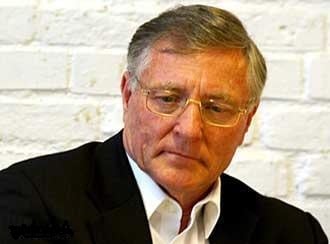
Comments by Hans-C. von Sponeck
Former UN Assistant Secretary General, UN Humanitarian Coordinator for Iraq & TFF Associate

Hearing at the UK House of Commons, London

Intro
1. HoC/HoL have repeatedly held Iraq hearings as have British NGOs such as CASI (Campaign Against Sanctions on Iraq) and Stop the War Coalition/UK. In Europe these are considered models for responsible public action.

2. My contribution at this hearing is not about the crimes of dictatorship or the details of Iraqi suffering. For both well researched data is available. The objective of my participation is to make two detailed observations about externally-driven Iraq politics during the period 1990-2014.

Observation 1

3. Today’s tragic Iraq reality can only be understood if the additive impact of the years before and the years following the US/UK Governments’ illegal invasion and occupation is fully taken into account.

4. Involved are 3 distinct time periods:

1990-2003:
i) 13 years of the most comprehensive economic and financial sanctions ever levied on a country by the UN Security Council (UNSC). Initially the UNSC did not provide any social safety net whatsoever. The Iraqi people were at the mercy of voluntary external donations and these turned out to be well below the minimum estimated by the UN Secretary General to sustain life.
A UN humanitarian exemption, the oil-for-food programme, began only in December 1996. It provided important but severely inadequate subsistence support, amounting to a paltry .51 cents (US) worth of supplies/person/per day.

ii) Not commonly known is that this UN ‘humanitarian’ programme authorized by the UN Security Council was entirely(!) financed from Iraq’s own resources (oil revenue). The word ‘humanitarian’ is therefore a misnomer! One compelling statistic of misery resulting from this reality is the following: During these years of UN sanctions, Iraq’s child mortality rates were as high as 132 of 1000 children dying before reaching 5 years of age, together with Afghanistan these rates were among the highest in the world. (UNICEF)

iii) A sobering conclusion about the irresponsibility of the UN Security Council was presented in 2000 to the Council by the Ambassador of Malaysia to the United Nations, Dato Agam Hasmy:

“How ironic is it that the same policy that is supposed to disarm Iraq from its weapons of mass destruction has itself become a weapon of mass destruction!”

2003-2011:
The 2003 illegal invasion and 8 years of occupation constituted a period of dismantling every fibre of Iraqi society. There is evidence of horrific violations of the Hague and Geneva Conventions by the occupying powers symbolized by the “Iraqi man with the hood” in the Abu Ghraib jail.

People’s courts and tribunals concerning Iraq held in many parts of the world have credibly established the culpability of western leaders, especially former US President Bush and former British Prime Minister Tony Blair. The most detailed evidence has been compiled by the Kuala Lumpur War Crimes Commission (KLWCC) of which Denis Halliday and I are members.

We would like to present to Lord Megginnes of Drumglass of the House of Lords and MPs Jeremy Corbyn and George McDonald as well as other participants two volumes of torture and war-crimes related evidence compiled by the KLWCC.

2012-2014:
i) Since the departure of US and other foreign forces from Iraq, social and political chaos have further intensified in the country. The Kurdish-Arab divide is deeper than ever before. Sectarianism and the danger of disintegration remain. Civil-war like conditions in central Iraq have increased. Terrorism and criminal violence have become part of daily life in many parts of the country. National re-building following wars, sanctions and occupation is far below people’s rightful expectations.

ii) The resulting national human balance sheet in 2014:
Out of an estimated population of 33 million some 23% live in poverty in this immensely oil-rich country.
600.000 children have become street children – something that was unknown before 1990.
Transparency International refers to Iraq’s rampant corruption (178th out of 181 countries).
A staggering 14% of Iraqis are orphans, most since 2003!
Hashish and heroin, not a problem before 2003, are an increasing concern.
In 2007, the World Bank estimated that “almost 23% of Iraqis were illiterate” and 5 million school-age children were not in school.
Serious health problems have arisen because of occupation forces’ use of depleted uranium and white phosphorus.

One must ask how much can a people endure?

Credible data and additional indicators are available from a wide variety of international sources.

Observation 2
i) To build ‘necessary bridges’ (HoL) to facilitate a return to a human-rights minded political climate in Iraq, is wholeheartedly supported. Justice, peace and accelerated nation re-building must be the priority of the moment. There was no UN Security Council commitment in this respect when my colleague and close friend, Denis Halliday, and I served in succession in Iraq. For this reason we resigned.

ii) It is therefore crucial to realize that the Iraq tragedy has also wider implications for the way in which the community of nations lives together. There is great urgency for UN reforms.

iii) The perpetrators of 24 years of continuous mistreatment of a people are known. Large amounts of evidence in this regard has been collected. Sir John Chilcot’s demand to have key evidence of possible war crimes by occupation forces published should be respected. The same applies to other evidence involving years of sanctions and occupation. The United Nations and member countries should no longer be allowed to make excuses to avoid releasing such evidence to the public.

iv)To arraign perpetrators involved during any of the three time periods identified above and the preparation of court cases must no longer be considered utopian. Ending impunity remains a serious demand from civil society. Qualified individuals are available to prepare specific court cases and time lines as well as to mount campaigns to obtain civil society funding.

v) The ICC must be made increasingly aware that their reluctance to accept the mandate and responsibility for hearing Iraq cases against former senior US and UK officials has become unacceptable. The submission by Public Interest Lawyers in the UK of cases of military abuse in southern Iraq is a significant step in challenging the ICC to accept the Iraq file.

vi) Iraq continues to pay compensation for damages resulting from its 1990 invasion into Kuwait. As of April 2014 $46 billion have actually been paid. The UN Compensation Commission must begin to consider counterclaims by Iraqi society for the physical and mental damages afflicted on Iraqi citizens as a result of two wars, sanctions, occupation and the illegal use of munitions.

vii) Continued support from both houses of the UK Parliament will give the credibility a justice-for-Iraq process requires and the respect Iraqi society deserves.

Related Posts

Tony Robinson October 4, 2026 Violence is easy to recognise when someone is being beaten, shot or killed. It becomes more difficult when nobody is holding a weapon. Poverty, discrimination, exploitation and repression can restrict a human life just as effectively, although they do so in very different ways and with very different consequences. Simply adding more categories to an ever-growing list of forms of violence does not really solve the problem. The more interesting question is what all these different situations have in common and why it makes sense to describe them using the same word. Human beings do not simply react to what happens around them. They remember the past, imagine things that do not yet exist, make plans and undertake projects. Workers organise because they imagine different working conditions; people migrate because they imagine another life somewhere else; social movements emerge because people refuse to accept the...
It’s a matter of principles, courage, vision and pulling together – while the militarist world is falling apart… Peter Langille October 3, 2026 “Here, then, is the problem which we present to you, stark and dreadful and inescapable: Shall we put an end to the human race; or shall mankind renounce war?”The Bertrand Russell—Albert Einstein Manifesto, July 9, 1955 ⁕ The forecast for what’s ahead is worrisome. The sharp rise in armed conflicts over the past three years is adding to what was already the highest level in over seventy years. Genocides, which should be prevented are supported. A shared climate emergency that jeopardises survival is ignored. Diverse polls now suggest that people are war-weary, worried and interested in a more effective United Nations. And, there are viable policy options for a more secure world! Yet governments are doubling-down, betting on more war and investing heavily. If current trends persist,...
Johan Galtung 1930-2024October 2015 Published here on October 3, 2026 Let us focus on Civilization for conflict analysis and remedies. Major forms of disorder use violence; war is state organized violence. The most belligerent states are the United States of America and Israel, both with civilization roots. National Evangelism, the US Protestant Christian civilization– more national than evangelical–justifies US warfare as exceptionalism of a people chosen by God, with a manifest destiny to run the world. Orthodox Judaism justifies Israeli warfare to conquer and expand from Nile to Euphrates as a religious right and duty to the Eternal One. The third most belligerent country, the UK, no longer believes it is God-chosen but chosen by the USA; not quite the same but something. But the root cause of global disorder lies in the Occident–with Islam–seeing itself as the single, universal civilization valid for all at all times, all others being...

Recent Articles

Tony Robinson October 4, 2026 Violence is easy to recognise when someone is being beaten, shot or killed. It becomes more difficult when nobody is holding a weapon. Poverty, discrimination, exploitation and repression can restrict a human life just as effectively, although they do so in very different ways and with very different consequences. Simply adding more categories to an ever-growing list of forms of violence does not really solve the problem. The more interesting question is what all these different situations have in common and why it makes sense to describe them using the same word. Human beings do not simply react to what happens around them. They remember the past, imagine things that do not yet exist, make plans and undertake projects. Workers organise because they imagine different working conditions; people migrate because they imagine another life somewhere else; social movements emerge because people refuse to accept the...
It’s a matter of principles, courage, vision and pulling together – while the militarist world is falling apart… Peter Langille October 3, 2026 “Here, then, is the problem which we present to you, stark and dreadful and inescapable: Shall we put an end to the human race; or shall mankind renounce war?”The Bertrand Russell—Albert Einstein Manifesto, July 9, 1955 ⁕ The forecast for what’s ahead is worrisome. The sharp rise in armed conflicts over the past three years is adding to what was already the highest level in over seventy years. Genocides, which should be prevented are supported. A shared climate emergency that jeopardises survival is ignored. Diverse polls now suggest that people are war-weary, worried and interested in a more effective United Nations. And, there are viable policy options for a more secure world! Yet governments are doubling-down, betting on more war and investing heavily. If current trends persist,...
Johan Galtung 1930-2024October 2015 Published here on October 3, 2026 Let us focus on Civilization for conflict analysis and remedies. Major forms of disorder use violence; war is state organized violence. The most belligerent states are the United States of America and Israel, both with civilization roots. National Evangelism, the US Protestant Christian civilization– more national than evangelical–justifies US warfare as exceptionalism of a people chosen by God, with a manifest destiny to run the world. Orthodox Judaism justifies Israeli warfare to conquer and expand from Nile to Euphrates as a religious right and duty to the Eternal One. The third most belligerent country, the UK, no longer believes it is God-chosen but chosen by the USA; not quite the same but something. But the root cause of global disorder lies in the Occident–with Islam–seeing itself as the single, universal civilization valid for all at all times, all others being...

TFF on Substack

Discover and subscribe to more peace materials on TFF Substack

Most Popular

Tony Robinson October 4, 2026 Violence is easy to recognise when someone is being beaten, shot or killed. It becomes more difficult when nobody is holding a weapon. Poverty, discrimination, exploitation and repression can restrict a human life just as effectively, although they do so in very different ways and with very different consequences. Simply adding more categories to an ever-growing list of forms of violence does not really solve the problem. The more interesting question is what all these different situations have in common and why it makes sense to describe them using the same word. Human beings do not simply react to what happens around them. They remember the past, imagine things that do not yet exist, make plans and undertake projects. Workers organise because they imagine different working conditions; people migrate because they imagine another life somewhere else; social movements emerge because people refuse to accept the...
It’s a matter of principles, courage, vision and pulling together – while the militarist world is falling apart… Peter Langille October 3, 2026 “Here, then, is the problem which we present to you, stark and dreadful and inescapable: Shall we put an end to the human race; or shall mankind renounce war?”The Bertrand Russell—Albert Einstein Manifesto, July 9, 1955 ⁕ The forecast for what’s ahead is worrisome. The sharp rise in armed conflicts over the past three years is adding to what was already the highest level in over seventy years. Genocides, which should be prevented are supported. A shared climate emergency that jeopardises survival is ignored. Diverse polls now suggest that people are war-weary, worried and interested in a more effective United Nations. And, there are viable policy options for a more secure world! Yet governments are doubling-down, betting on more war and investing heavily. If current trends persist,...
Johan Galtung 1930-2024October 2015 Published here on October 3, 2026 Let us focus on Civilization for conflict analysis and remedies. Major forms of disorder use violence; war is state organized violence. The most belligerent states are the United States of America and Israel, both with civilization roots. National Evangelism, the US Protestant Christian civilization– more national than evangelical–justifies US warfare as exceptionalism of a people chosen by God, with a manifest destiny to run the world. Orthodox Judaism justifies Israeli warfare to conquer and expand from Nile to Euphrates as a religious right and duty to the Eternal One. The third most belligerent country, the UK, no longer believes it is God-chosen but chosen by the USA; not quite the same but something. But the root cause of global disorder lies in the Occident–with Islam–seeing itself as the single, universal civilization valid for all at all times, all others being...
Read More
Living-Peace-Sign-Budapest-copy
Tony Robinson October 4, 2026 Violence is easy to recognise when someone is being beaten, shot or killed. It becomes more difficult when nobody is holding a weapon. Poverty, discrimination, exploitation and repression can restrict a human life just as effectively, although they do so in very different ways and with very different consequences. Simply adding more categories to an ever-growing list of forms of violence does not really solve the problem. The more interesting question is what all these different situations have in common and why it makes sense to describe them using the same word. Human beings do not simply react to what happens around them. They remember the past, imagine things that do not yet exist, make plans and undertake projects. Workers organise because they imagine different working conditions; people migrate because they imagine another life somewhere else; social movements emerge because people refuse to accept the...
b54a1f10-8c65-4f0b-9dd5-4abc0a7d04cc_2659x2659
It’s a matter of principles, courage, vision and pulling together – while the militarist world is falling apart… Peter Langille October 3, 2026 “Here, then, is the problem which we present to you, stark and dreadful and inescapable: Shall we put an end to the human race; or shall mankind renounce war?”The Bertrand Russell—Albert Einstein Manifesto, July 9, 1955 ⁕ The forecast for what’s ahead is worrisome. The sharp rise in armed conflicts over the past three years is adding to what was already the highest level in over seventy years. Genocides, which should be prevented are supported. A shared climate emergency that jeopardises survival is ignored. Diverse polls now suggest that people are war-weary, worried and interested in a more effective United Nations. And, there are viable policy options for a more secure world! Yet governments are doubling-down, betting on more war and investing heavily. If current trends persist,...
010
Johan Galtung 1930-2024October 2015 Published here on October 3, 2026 Let us focus on Civilization for conflict analysis and remedies. Major forms of disorder use violence; war is state organized violence. The most belligerent states are the United States of America and Israel, both with civilization roots. National Evangelism, the US Protestant Christian civilization– more national than evangelical–justifies US warfare as exceptionalism of a people chosen by God, with a manifest destiny to run the world. Orthodox Judaism justifies Israeli warfare to conquer and expand from Nile to Euphrates as a religious right and duty to the Eternal One. The third most belligerent country, the UK, no longer believes it is God-chosen but chosen by the USA; not quite the same but something. But the root cause of global disorder lies in the Occident–with Islam–seeing itself as the single, universal civilization valid for all at all times, all others being...
Screenshot 2026-10-02 011738
Jan ObergPhD, director, The Transnational Foundation for Peace and Future Research, TFFLund, Sweden October 2, 2026 This is my full original manuscript. The Chinese Academy of Social Science, CASS, makes two publications out if it. 1. China’s Five-year plan emphasized the capabilities of basic research and original innovation. It is regarded as the goal of the future social development, which, as required, should be significantly enhanced. Can you comment on the importance of original innovation in research and academic study? I believe it is easier to define “original innovation” in the natural sciences than in social sciences. The breaking points of what constitutes something new, or innovative, are not quite as sharp in the latter. But in both fields it is about opening up something that was closed, unseen, unexplored before – making manifest what was earlier latent. Innovations come in many forms and shapes – naming something that was not...
arctic-circle-map
The agreement is catastrophic both because of what it says and what it doesn’t mention. It reduces further the major asset of security policies: Freedom of action. Jan Oberg TFF director September 25, 2026 A couple of hours before the agreement was signed on September 22, 2026, I published the following 13 hypotheses about what it would most likely contain on TFF Substack (in English). I was wrong on only the first point. Contrary to what Trump had written on his Truth Social platform, it does not appear to come into force immediately. In fact, it turned out to be worse than even I had anticipated. After these hypotheses now come a number of reflections in light of what the agreement actually contains, and does not contain, as well as the way in which it has generally been presented by major media outlets and by the public-service broadcaster DR. My...
girl-5894831_1280
Below are TFF-related media mentions, comments, videos and social media posts published elsewhere but not on this homepage. We happen to catch and list only a fraction. Regarding video comments and debates, we recommend that you go to the TFF Video Channel on Substack where many of them are reproduced. Jan Oberg is a contributor to China Daily – 52 million daily clicks – and Global Times, CGTN and CCTV (the national television), China Investment, Xinhua News Agency and several others. Articles and videos on these media very often multiply into countless Chinese (and Western media) that re-post them from these main media. Thanks to The China Academy, his analyses, interviews and comments are frequently posted on YouTube channels such as Thinkers Forum and Wave Media. These videos are often re-posted on Bilibili (China’s YouTube), the China Content Center on TikTok, and on the Chinese edition of TikTok, Douyin.com. This means reaching hundreds of millions of viewers worldwide over a year. While there are too many to catch on all these...




