
I have long believed that prospects for a hopeful human future depend on radical and visionary feelings, thought, and action. Such an outlook reflects my view that the major challenges of our time cannot be met by thinking within the box, or implementing the realist agenda of doing what it is feasible while disregarding what is necessary and desirable. For instance, with respect to climate change such a conventional approach avoids asking what needs to be done to give future generations positive life prospects, but seeks, at best, to do what seems politically feasible at the moment, that is, far too little.

This means not putting a cap on energy or water use, not limiting carbon emissions or prohibiting fracking, continuing to encourage economic growth, and refusing to question consumerism. In effect, this conventional approach does not meet challenges, but at most seeks to defer and mitigate harmful effects to the extent possible. In effect, it opts for a worse human future, and remains in bondage to the deformities wrought by clearly deficient neoliberal prescriptions for human fulfillment.

Against this background, it was a personal breakthrough to meet Jeff Wilson who is,

of all things, a dean of the arts college and faculty member in environmental and biological sciences at Huston-Tillotson University in Austin. This is a small mainly undergraduate university with about 900 students, and is what is called a ‘historically black’ college, established in 1881 by some Christian initiatives, with the specific mission of providing higher educational opportunities for former slaves freed in the course of the Civil War.

What makes Jeff charismatic is his radical sensibility that has crafted a most unlikely project that has been receiving increasing media attention — converting a trash dumpster into a place of residence, not in the name of austerity, but all in the name of promoting a vision of sustainable living. For those like me unfamiliar with dumpsters, other than as an annoyance if driving behind a garbage pickup vehicle in a crowded city, the idea of living in a 33 square foot enclosure that must be climbed to enter or leave struck me as a kind of ecological stunt when I first heard about it. Like many first impressions this one was quickly superseded by a sense of awe almost at the point of contact.

That is, until visiting the site, which is on the campus, and actually a project of a student group, intriguingly named “Green is the New Black,” and part of a vision, appropriately radical, to make black colleges take a national lead in the years ahead in producing green campuses throughout the country in every black school.

Getting back to Wilson, it is obvious from appearance and style that he strikes his own pose: he is unusual in dress and deeply engaging and infectionously friendly when it comes to sociability, with lively wit and a robust sense of self-irony. He did not come to this experiment in sustainable living overnight. He had earned a PhD at the University of Canterbury and did post-doctoral work at Harvard, he has written numerous papers published in scientific journals on environmental and biological issues, and won an award as the outstanding teacher in all of Texas when he was still an assistant professor. Through it all, he realized that the academic career of a typical scholar, however dedicated, was not going to get done the job of sustainability given the obstacles.

As his girlfriend, Clara Benson, a writer by trade, remembers her first impression of Jeff, “This guy was trouble of the best variety.” And speaking of their affinity transcending differing personalities and vocations, she writes, “We live for the unexpected, the experimental, and the subtly disruptive.” My only skeptical reaction is the use of the word ‘subtly’!

Jeff and Clara, as is increasingly customary in our digitized era met in cyberspace, via social media, and before long embarked on a most usual ice-breaking three week adventure journey through the Middle East and Europe with no luggage or even a change of clothing. Obviously, the idea of reinventing how we live together happily on the planet has been gestating in Jeff’s restless mind for some time. Clara’s wonderfully witty and lucid narrative of their trip together was published on November 11, 2013 by Salon.com, and won such a huge audience that a book and film are presently in the works.

The Dumpster Project is, first of all, a vivid reminder of unsustainability. It is also a carefully conceived way of showing that there are other alternative ways to organize society.

Jeff started living in the dumpster on February 4, 2013, and he and students will continue to camp out there in sleeping bags for a year, relying on solar light and water hauled and then filtered from a nearby river, subsisting without any normal links to water or electric supply. This phase will be followed by adapting the dumpster to the energy and water use of the average American, getting all the appliances to be found in the average home, and measuring their environmental footprints in relation to energy and water use, with the expressed intent of dramatizing the gap between what is possible and what is necessary.

And there is the third phase described as the ‘Ultimate Dumpster Home,’ which will incorporate the best of design and innovation to show that life can be fulfilling within drastically scaled down proportions, with the goal being one of creating a net-zero energy home that still manages to enjoy the comforts of a normal home. For further exposition I recommend Jeff’s website <dumpsterproject.org/team/dr-jeff-wilson>

The overall focus, and inspiring imagery, is captured by Jeff’s slogan, “We are the new 1%!” The dumpster takes up 1% of the living space used by the average American family. Further, the energy/water regime is shaped by getting along on 1% or less of what is currently the fashion in America. At a deeper level the new 1% is based on a different kind of leadership — toward a sustainable and hopeful future — that contrasts with the old 1% that feasts on a hyper-consumptive life style, portrayed as decadent and dehumanizing in the recent film, The Wolf of Wall Street.

It is a matter of repudiating the elites of wealth while celebrating emergent elites of sustainability, worthy ecological pilgrims of our time. As well, the activist challenges posed by the Occupy Movement’s claim in 2012 that “we are 99%” resonates with the conviction that change comes from the people, and not from governments and bureaucracies. Despite the smallness of the dumpster, the scope of the message is as large as the planet, or perhaps, even the universe.

I was drawn to the inspirational value of this brave trust in the power of imagination once it is made actual! In the past, I have written about the importance of engaged citizenship to heal the wounds of the planet, and praised particularly, ‘the citizen pilgrim,’ those who have embarked on a life journey in search of a better future. Citizenship, then, becomes enacted in time and is not conceived only as a dimension of space as, for instance, in opting to be ‘a world citizen.’ It is in this spirit that I acknowledge Jeff Wilson as an exemplary citizen pilgrim!
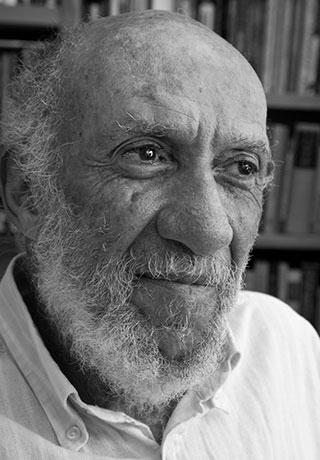

Professor Falk became an adviser to TFF when it was established in 1985.

Related Posts

Tony Robinson October 4, 2026 Violence is easy to recognise when someone is being beaten, shot or killed. It becomes more difficult when nobody is holding a weapon. Poverty, discrimination, exploitation and repression can restrict a human life just as effectively, although they do so in very different ways and with very different consequences. Simply adding more categories to an ever-growing list of forms of violence does not really solve the problem. The more interesting question is what all these different situations have in common and why it makes sense to describe them using the same word. Human beings do not simply react to what happens around them. They remember the past, imagine things that do not yet exist, make plans and undertake projects. Workers organise because they imagine different working conditions; people migrate because they imagine another life somewhere else; social movements emerge because people refuse to accept the...
It’s a matter of principles, courage, vision and pulling together – while the militarist world is falling apart… Peter Langille October 3, 2026 “Here, then, is the problem which we present to you, stark and dreadful and inescapable: Shall we put an end to the human race; or shall mankind renounce war?”The Bertrand Russell—Albert Einstein Manifesto, July 9, 1955 ⁕ The forecast for what’s ahead is worrisome. The sharp rise in armed conflicts over the past three years is adding to what was already the highest level in over seventy years. Genocides, which should be prevented are supported. A shared climate emergency that jeopardises survival is ignored. Diverse polls now suggest that people are war-weary, worried and interested in a more effective United Nations. And, there are viable policy options for a more secure world! Yet governments are doubling-down, betting on more war and investing heavily. If current trends persist,...
Johan Galtung 1930-2024October 2015 Published here on October 3, 2026 Let us focus on Civilization for conflict analysis and remedies. Major forms of disorder use violence; war is state organized violence. The most belligerent states are the United States of America and Israel, both with civilization roots. National Evangelism, the US Protestant Christian civilization– more national than evangelical–justifies US warfare as exceptionalism of a people chosen by God, with a manifest destiny to run the world. Orthodox Judaism justifies Israeli warfare to conquer and expand from Nile to Euphrates as a religious right and duty to the Eternal One. The third most belligerent country, the UK, no longer believes it is God-chosen but chosen by the USA; not quite the same but something. But the root cause of global disorder lies in the Occident–with Islam–seeing itself as the single, universal civilization valid for all at all times, all others being...

Recent Articles

Tony Robinson October 4, 2026 Violence is easy to recognise when someone is being beaten, shot or killed. It becomes more difficult when nobody is holding a weapon. Poverty, discrimination, exploitation and repression can restrict a human life just as effectively, although they do so in very different ways and with very different consequences. Simply adding more categories to an ever-growing list of forms of violence does not really solve the problem. The more interesting question is what all these different situations have in common and why it makes sense to describe them using the same word. Human beings do not simply react to what happens around them. They remember the past, imagine things that do not yet exist, make plans and undertake projects. Workers organise because they imagine different working conditions; people migrate because they imagine another life somewhere else; social movements emerge because people refuse to accept the...
It’s a matter of principles, courage, vision and pulling together – while the militarist world is falling apart… Peter Langille October 3, 2026 “Here, then, is the problem which we present to you, stark and dreadful and inescapable: Shall we put an end to the human race; or shall mankind renounce war?”The Bertrand Russell—Albert Einstein Manifesto, July 9, 1955 ⁕ The forecast for what’s ahead is worrisome. The sharp rise in armed conflicts over the past three years is adding to what was already the highest level in over seventy years. Genocides, which should be prevented are supported. A shared climate emergency that jeopardises survival is ignored. Diverse polls now suggest that people are war-weary, worried and interested in a more effective United Nations. And, there are viable policy options for a more secure world! Yet governments are doubling-down, betting on more war and investing heavily. If current trends persist,...
Johan Galtung 1930-2024October 2015 Published here on October 3, 2026 Let us focus on Civilization for conflict analysis and remedies. Major forms of disorder use violence; war is state organized violence. The most belligerent states are the United States of America and Israel, both with civilization roots. National Evangelism, the US Protestant Christian civilization– more national than evangelical–justifies US warfare as exceptionalism of a people chosen by God, with a manifest destiny to run the world. Orthodox Judaism justifies Israeli warfare to conquer and expand from Nile to Euphrates as a religious right and duty to the Eternal One. The third most belligerent country, the UK, no longer believes it is God-chosen but chosen by the USA; not quite the same but something. But the root cause of global disorder lies in the Occident–with Islam–seeing itself as the single, universal civilization valid for all at all times, all others being...

TFF on Substack

Discover and subscribe to more peace materials on TFF Substack

Most Popular

Tony Robinson October 4, 2026 Violence is easy to recognise when someone is being beaten, shot or killed. It becomes more difficult when nobody is holding a weapon. Poverty, discrimination, exploitation and repression can restrict a human life just as effectively, although they do so in very different ways and with very different consequences. Simply adding more categories to an ever-growing list of forms of violence does not really solve the problem. The more interesting question is what all these different situations have in common and why it makes sense to describe them using the same word. Human beings do not simply react to what happens around them. They remember the past, imagine things that do not yet exist, make plans and undertake projects. Workers organise because they imagine different working conditions; people migrate because they imagine another life somewhere else; social movements emerge because people refuse to accept the...
It’s a matter of principles, courage, vision and pulling together – while the militarist world is falling apart… Peter Langille October 3, 2026 “Here, then, is the problem which we present to you, stark and dreadful and inescapable: Shall we put an end to the human race; or shall mankind renounce war?”The Bertrand Russell—Albert Einstein Manifesto, July 9, 1955 ⁕ The forecast for what’s ahead is worrisome. The sharp rise in armed conflicts over the past three years is adding to what was already the highest level in over seventy years. Genocides, which should be prevented are supported. A shared climate emergency that jeopardises survival is ignored. Diverse polls now suggest that people are war-weary, worried and interested in a more effective United Nations. And, there are viable policy options for a more secure world! Yet governments are doubling-down, betting on more war and investing heavily. If current trends persist,...
Johan Galtung 1930-2024October 2015 Published here on October 3, 2026 Let us focus on Civilization for conflict analysis and remedies. Major forms of disorder use violence; war is state organized violence. The most belligerent states are the United States of America and Israel, both with civilization roots. National Evangelism, the US Protestant Christian civilization– more national than evangelical–justifies US warfare as exceptionalism of a people chosen by God, with a manifest destiny to run the world. Orthodox Judaism justifies Israeli warfare to conquer and expand from Nile to Euphrates as a religious right and duty to the Eternal One. The third most belligerent country, the UK, no longer believes it is God-chosen but chosen by the USA; not quite the same but something. But the root cause of global disorder lies in the Occident–with Islam–seeing itself as the single, universal civilization valid for all at all times, all others being...
Read More
Living-Peace-Sign-Budapest-copy
Tony Robinson October 4, 2026 Violence is easy to recognise when someone is being beaten, shot or killed. It becomes more difficult when nobody is holding a weapon. Poverty, discrimination, exploitation and repression can restrict a human life just as effectively, although they do so in very different ways and with very different consequences. Simply adding more categories to an ever-growing list of forms of violence does not really solve the problem. The more interesting question is what all these different situations have in common and why it makes sense to describe them using the same word. Human beings do not simply react to what happens around them. They remember the past, imagine things that do not yet exist, make plans and undertake projects. Workers organise because they imagine different working conditions; people migrate because they imagine another life somewhere else; social movements emerge because people refuse to accept the...
b54a1f10-8c65-4f0b-9dd5-4abc0a7d04cc_2659x2659
It’s a matter of principles, courage, vision and pulling together – while the militarist world is falling apart… Peter Langille October 3, 2026 “Here, then, is the problem which we present to you, stark and dreadful and inescapable: Shall we put an end to the human race; or shall mankind renounce war?”The Bertrand Russell—Albert Einstein Manifesto, July 9, 1955 ⁕ The forecast for what’s ahead is worrisome. The sharp rise in armed conflicts over the past three years is adding to what was already the highest level in over seventy years. Genocides, which should be prevented are supported. A shared climate emergency that jeopardises survival is ignored. Diverse polls now suggest that people are war-weary, worried and interested in a more effective United Nations. And, there are viable policy options for a more secure world! Yet governments are doubling-down, betting on more war and investing heavily. If current trends persist,...
010
Johan Galtung 1930-2024October 2015 Published here on October 3, 2026 Let us focus on Civilization for conflict analysis and remedies. Major forms of disorder use violence; war is state organized violence. The most belligerent states are the United States of America and Israel, both with civilization roots. National Evangelism, the US Protestant Christian civilization– more national than evangelical–justifies US warfare as exceptionalism of a people chosen by God, with a manifest destiny to run the world. Orthodox Judaism justifies Israeli warfare to conquer and expand from Nile to Euphrates as a religious right and duty to the Eternal One. The third most belligerent country, the UK, no longer believes it is God-chosen but chosen by the USA; not quite the same but something. But the root cause of global disorder lies in the Occident–with Islam–seeing itself as the single, universal civilization valid for all at all times, all others being...
Screenshot 2026-10-02 011738
Jan ObergPhD, director, The Transnational Foundation for Peace and Future Research, TFFLund, Sweden October 2, 2026 This is my full original manuscript. The Chinese Academy of Social Science, CASS, makes two publications out if it. 1. China’s Five-year plan emphasized the capabilities of basic research and original innovation. It is regarded as the goal of the future social development, which, as required, should be significantly enhanced. Can you comment on the importance of original innovation in research and academic study? I believe it is easier to define “original innovation” in the natural sciences than in social sciences. The breaking points of what constitutes something new, or innovative, are not quite as sharp in the latter. But in both fields it is about opening up something that was closed, unseen, unexplored before – making manifest what was earlier latent. Innovations come in many forms and shapes – naming something that was not...
arctic-circle-map
The agreement is catastrophic both because of what it says and what it doesn’t mention. It reduces further the major asset of security policies: Freedom of action. Jan Oberg TFF director September 25, 2026 A couple of hours before the agreement was signed on September 22, 2026, I published the following 13 hypotheses about what it would most likely contain on TFF Substack (in English). I was wrong on only the first point. Contrary to what Trump had written on his Truth Social platform, it does not appear to come into force immediately. In fact, it turned out to be worse than even I had anticipated. After these hypotheses now come a number of reflections in light of what the agreement actually contains, and does not contain, as well as the way in which it has generally been presented by major media outlets and by the public-service broadcaster DR. My...
girl-5894831_1280
Below are TFF-related media mentions, comments, videos and social media posts published elsewhere but not on this homepage. We happen to catch and list only a fraction. Regarding video comments and debates, we recommend that you go to the TFF Video Channel on Substack where many of them are reproduced. Jan Oberg is a contributor to China Daily – 52 million daily clicks – and Global Times, CGTN and CCTV (the national television), China Investment, Xinhua News Agency and several others. Articles and videos on these media very often multiply into countless Chinese (and Western media) that re-post them from these main media. Thanks to The China Academy, his analyses, interviews and comments are frequently posted on YouTube channels such as Thinkers Forum and Wave Media. These videos are often re-posted on Bilibili (China’s YouTube), the China Content Center on TikTok, and on the Chinese edition of TikTok, Douyin.com. This means reaching hundreds of millions of viewers worldwide over a year. While there are too many to catch on all these...




