
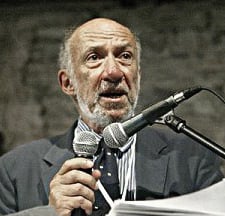
There is a new mood of moral desperation associated with the ongoing strife in Syria that has resulted in at least 135,000 deaths, 9.3 millions Syrians displaced, countless atrocities, Palestinian refugee communities attacked, blockaded, and dispersed, and urban sieges designed to starve civilians perceived to be hostile.

As the second round of negotiations in Geneva-2 ended as fruitlessly as the earlier round, there is a sense that diplomacy is a performance ritual without any serious intent to engage in conflict-resolving negotiations. Expectations couldn’t be lower for the as yet unscheduled, but still planned, third round of this Geneva-2 process.

The Damascus regime wants an end to armed opposition, while the insurgency insists upon setting up a transition process that is independently administered and committed to the election of a new political leadership. The gap between the parties is too big, and getting bigger, especially as the Damascus government correctly perceives the combat tide as turning in its favor, leading the main opposition forces seemingly to seek to achieve politically and diplomatically what they appear unable to do militarily. Also, it is unclear whether the opposition presence in Geneva has the authority to speak on behalf of several opposition groups in the field in Syria.

In light of these frustrations it is not surprising to observe an acrimonious debate unfolding between American interventionists who believe that only force, or at least its threat, can thread the needle of hope.

The interventionists, invoking the responsibility to protect norm that was used effectively to mobilize support in the Security Council to mandate a no fly zone in Libya back in 2011, suggest that such an approach should be used again in 2014 either to establish a no fly zone opening a corridor that will allow humanitarian aid to flow to besieged cities or to achieve regime change in Syria as the only way to end the ordeal by ridding the country of a governing process guilty of repeated mass atrocities against its own people.

The anti-interventionists point out that the Libyan precedent of 2011 is tainted by the deliberate expansion of the humanitarian scope of what was authorized by the UN Security Council to undertake a much wider campaign with the clear intent of regime change, which in fact ended with the capture and execution of Qaddafi, then the head of state in Libya. It is also somewhat tarnished by the post-Qaddafi realities of widespread militia violence and the failure to develop a coherent and legitimate governance structure.

The anti-interventionists argue that introducing external military force almost always makes matters worse, more killing, more devastation, and no politically sustainable outcome, and there is no good reason to think this will not happen in Syria. Furthermore, without a Security Council mandate such a use of military force would once again be undertaken in violation of the UN Charter and international law as it could not be justified as self-defense.

Providing humanitarian relief in a situation mainly free of internal political struggle should be sharply distinguished from the realities amid serious civil strife. The response to the Somali breakdown of governability during the presidency of George H. W. Bush in 1992, is illustrative of a seemingly pure humanitarian response to famine and disease characterized by a posture of political non-interference and by the shipment of food and medical supplies to a people in desperate need.

This contrasted with the supposedly more muscular response to a troubled Somalia during the early stages of the Clinton presidency in 1993 when the humanitarian mission was fused with anti-‘warlord’ and political reconstruction goals. Difficulties soon emerged as robust national armed resistance was encountered culminating in the Blackhawk Down incident that resulted in 18 deaths of American soldiers, prompting an almost immediate American pullout from Somalia under a cloud of intense criticism of the diplomacy of ‘humanitarian intervention’ within the United States.

This had the disastrous spillover effect of leading the supposedly liberal Clinton White House to discourage even a minimal humanitarian response to the onset of genocide in Rwanda in 1994, which might have saved hundreds of thousand of lives. In the Rwanda context the United States Government even discouraged a modest upgraded response by the United Nations that already had a peacekeeping presence in the country, and whose commander urged reinforcements and authority to protect the targets of genocidal massacres.

This failure to act in Rwanda remains a terrible stain on America’s reputation as a humane and respected world leader, and is frequently interpreted as a racist disregard of threats confronting an African population when no major strategic interest of Western countries were present on the side of the victims.

The Syrian reality since its inception was dominated by a political uprising, later an insurgency, demanding regime change in Damascus. It was also beset with a leadership deficit and by factionalism that only became worse with the passage of time. It was further complicated and confused by its proxy dimensions, both in relation to the supply of arms and with respect to diplomatic alignment.

The humanitarian relief argument to be credible, much less persuasive, needs to deal with the complexities of Somalia 2, and not act as if the humanitarian response can be addressed in detachment from the political struggle as was the case in Somalia 1. When political objectives become intertwined with a humanitarian rationale, forces of national resistance are activated on the reasonable assumption that the real goal of the mission is the political one, and the humanitarian relief is being used as a cover.

As we can foresee, this complexity makes for a stiffer climb facing an advocate of humanitarian intervention in the current Syrian tragedy. There exists a more difficult burden of persuasion, although not an impossible one. Indeed, against the background of recent failed interventions, every proposed intervention confronts such a burden at some level.

The Syrian case makes this burden more formidable, given the record of past interventions in the region and considering the mixture of forces that make up ‘the opposition,’ which is so far from unified even in carrying on the struggle against the Assad regime, on occasion diverting attention to take action against a rival faction.

In fact, the Syrian situation has an originality that makes the Somalia template clarifying, but hardly definitive. The Syrian political struggle is more acute and vicious than was the case in Somalia 2. Also the humanitarian crisis is deeper and the plight of many Syrians caught in the maelstrom of this horrifying war that is both internal and contains regional proxy elements in ways that make it more confusing as to the probable effects of threats and uses of force on behalf of genuine humanitarian goals.

My basic contention is that there are no easy answers at this stage as to what should be done about the Syrian situation, and dogmatic discourse for or against intervention misses the deeply tragic nature of the policy predicament for all political actors. I would feel more comfortable about the intervention debate if it were expressed in a discourse that accords prominence to the virtue of humility. Too much in Syria remains unknowable to have any confidence that a clear line of advocacy will be historically vindicated.

For me the fundamental question is what it is best to do or not do in such a desperate situation of radical uncertainty. It is not only that the interventionists, and perhaps the anti-interventionists are motivated by a convergence of humanitarian/moral considerations with geostrategic ambitions, but that the nature of these hidden calculations are discussed in governmental circles behind locked doors and transcribed in secret policy memoranda.

Until we address these questions of consequences and secret goals in the context of uncertainty and unknowability, the public discourse on what to do about Syria offers limited insight into how best to evaluate policy options being endorsed by policymakers and leaders. I hope that such a discussion will ensue, and replace the rather pointless and dogmatic self-righteous indignation of both interventionists and anti-interventionists.

I remember hearing the senior State Department diplomat, George Ball, speak just weeks after he left the government in the closing years of the Vietnam War. His primary message was that he only began to understand the war when he stopped reading the cables, that is the secret highly classified messages being sent by the military commanders and their civilian counterparts in the war zone. In effect, rather than make policy more transparent its counter-intuitive reality was to shroud the reality of Vietnam in greater obscurity.

It is easy to explain why. Those in the field were committed to achieving victory, and were determined to provide reassurance, however false, to the leaders back in Washington so that they could deal with growing anti-war pressures that were a combination of public fatigue after almost a decade of engagement and skepticism based on what became known as ‘the credibility gap’ between the claims of continuing progress in the war and what was actually taking place in Vietnam.
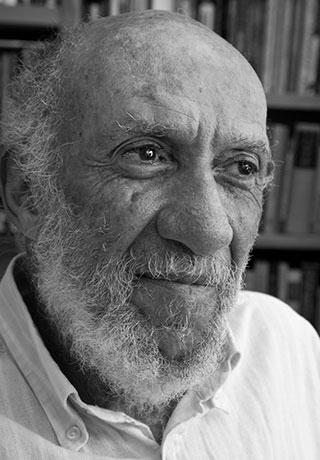

Professor Falk became an adviser to TFF when it was established in 1985.

Related Posts

The agreement is catastrophic both because of what it says and what it doesn’t mention. It reduces further the major asset of security policies: Freedom of action. Jan Oberg TFF director September 25, 2026 A couple of hours before the agreement was signed on September 22, 2026, I published the following 13 hypotheses about what it would most likely contain on TFF Substack (in English). I was wrong on only the first point. Contrary to what Trump had written on his Truth Social platform, it does not appear to come into force immediately. In fact, it turned out to be worse than even I had anticipated. After these hypotheses now come a number of reflections in light of what the agreement actually contains, and does not contain, as well as the way in which it has generally been presented by major media outlets and by the public-service broadcaster DR. My...
Lena Petrova of “World Affairs In Context” with more than half a million subscribers on YouTube wanted to explore what a peace researcher like me has to say about, among other things, the First and the Second Cold War and why eethics has disappeared from politics. I am particularly happy about this conversation that also yielded an amazing number of very appreciative comments on YouTube. No doubt, people are longing for alternatives, including peace perspectives.
Jan Oberg, TFF director April 28, 2026 In this third TFF Peace Pulse, I make the important distinction between the violence and the conflict that violence is a symptom of. If you want peace, focus on the underlying conflict because that is the key to resolution, peacemaking, and a better future for the parties. The West is obsessed with violence, just look around you – and 90+ per cent of the public debate is about military issues and other violence – totally wasted for peace. These Peace Pulses will only be published here a few times. You will also not find them on YouTube and Vimeo because both platforms have blocked TFF and me; you know, peace is dangerous these days. Most TFF’s videos since 2007 are now on Rumble.

Recent Articles

Tony Robinson October 4, 2026 Violence is easy to recognise when someone is being beaten, shot or killed. It becomes more difficult when nobody is holding a weapon. Poverty, discrimination, exploitation and repression can restrict a human life just as effectively, although they do so in very different ways and with very different consequences. Simply adding more categories to an ever-growing list of forms of violence does not really solve the problem. The more interesting question is what all these different situations have in common and why it makes sense to describe them using the same word. Human beings do not simply react to what happens around them. They remember the past, imagine things that do not yet exist, make plans and undertake projects. Workers organise because they imagine different working conditions; people migrate because they imagine another life somewhere else; social movements emerge because people refuse to accept the...
It’s a matter of principles, courage, vision and pulling together – while the militarist world is falling apart… Peter Langille October 3, 2026 “Here, then, is the problem which we present to you, stark and dreadful and inescapable: Shall we put an end to the human race; or shall mankind renounce war?”The Bertrand Russell—Albert Einstein Manifesto, July 9, 1955 ⁕ The forecast for what’s ahead is worrisome. The sharp rise in armed conflicts over the past three years is adding to what was already the highest level in over seventy years. Genocides, which should be prevented are supported. A shared climate emergency that jeopardises survival is ignored. Diverse polls now suggest that people are war-weary, worried and interested in a more effective United Nations. And, there are viable policy options for a more secure world! Yet governments are doubling-down, betting on more war and investing heavily. If current trends persist,...
Johan Galtung 1930-2024October 2015 Published here on October 3, 2026 Let us focus on Civilization for conflict analysis and remedies. Major forms of disorder use violence; war is state organized violence. The most belligerent states are the United States of America and Israel, both with civilization roots. National Evangelism, the US Protestant Christian civilization– more national than evangelical–justifies US warfare as exceptionalism of a people chosen by God, with a manifest destiny to run the world. Orthodox Judaism justifies Israeli warfare to conquer and expand from Nile to Euphrates as a religious right and duty to the Eternal One. The third most belligerent country, the UK, no longer believes it is God-chosen but chosen by the USA; not quite the same but something. But the root cause of global disorder lies in the Occident–with Islam–seeing itself as the single, universal civilization valid for all at all times, all others being...

TFF on Substack

Discover and subscribe to more peace materials on TFF Substack

Most Popular

Tony Robinson October 4, 2026 Violence is easy to recognise when someone is being beaten, shot or killed. It becomes more difficult when nobody is holding a weapon. Poverty, discrimination, exploitation and repression can restrict a human life just as effectively, although they do so in very different ways and with very different consequences. Simply adding more categories to an ever-growing list of forms of violence does not really solve the problem. The more interesting question is what all these different situations have in common and why it makes sense to describe them using the same word. Human beings do not simply react to what happens around them. They remember the past, imagine things that do not yet exist, make plans and undertake projects. Workers organise because they imagine different working conditions; people migrate because they imagine another life somewhere else; social movements emerge because people refuse to accept the...
It’s a matter of principles, courage, vision and pulling together – while the militarist world is falling apart… Peter Langille October 3, 2026 “Here, then, is the problem which we present to you, stark and dreadful and inescapable: Shall we put an end to the human race; or shall mankind renounce war?”The Bertrand Russell—Albert Einstein Manifesto, July 9, 1955 ⁕ The forecast for what’s ahead is worrisome. The sharp rise in armed conflicts over the past three years is adding to what was already the highest level in over seventy years. Genocides, which should be prevented are supported. A shared climate emergency that jeopardises survival is ignored. Diverse polls now suggest that people are war-weary, worried and interested in a more effective United Nations. And, there are viable policy options for a more secure world! Yet governments are doubling-down, betting on more war and investing heavily. If current trends persist,...
Johan Galtung 1930-2024October 2015 Published here on October 3, 2026 Let us focus on Civilization for conflict analysis and remedies. Major forms of disorder use violence; war is state organized violence. The most belligerent states are the United States of America and Israel, both with civilization roots. National Evangelism, the US Protestant Christian civilization– more national than evangelical–justifies US warfare as exceptionalism of a people chosen by God, with a manifest destiny to run the world. Orthodox Judaism justifies Israeli warfare to conquer and expand from Nile to Euphrates as a religious right and duty to the Eternal One. The third most belligerent country, the UK, no longer believes it is God-chosen but chosen by the USA; not quite the same but something. But the root cause of global disorder lies in the Occident–with Islam–seeing itself as the single, universal civilization valid for all at all times, all others being...
Read More
Living-Peace-Sign-Budapest-copy
Tony Robinson October 4, 2026 Violence is easy to recognise when someone is being beaten, shot or killed. It becomes more difficult when nobody is holding a weapon. Poverty, discrimination, exploitation and repression can restrict a human life just as effectively, although they do so in very different ways and with very different consequences. Simply adding more categories to an ever-growing list of forms of violence does not really solve the problem. The more interesting question is what all these different situations have in common and why it makes sense to describe them using the same word. Human beings do not simply react to what happens around them. They remember the past, imagine things that do not yet exist, make plans and undertake projects. Workers organise because they imagine different working conditions; people migrate because they imagine another life somewhere else; social movements emerge because people refuse to accept the...
b54a1f10-8c65-4f0b-9dd5-4abc0a7d04cc_2659x2659
It’s a matter of principles, courage, vision and pulling together – while the militarist world is falling apart… Peter Langille October 3, 2026 “Here, then, is the problem which we present to you, stark and dreadful and inescapable: Shall we put an end to the human race; or shall mankind renounce war?”The Bertrand Russell—Albert Einstein Manifesto, July 9, 1955 ⁕ The forecast for what’s ahead is worrisome. The sharp rise in armed conflicts over the past three years is adding to what was already the highest level in over seventy years. Genocides, which should be prevented are supported. A shared climate emergency that jeopardises survival is ignored. Diverse polls now suggest that people are war-weary, worried and interested in a more effective United Nations. And, there are viable policy options for a more secure world! Yet governments are doubling-down, betting on more war and investing heavily. If current trends persist,...
010
Johan Galtung 1930-2024October 2015 Published here on October 3, 2026 Let us focus on Civilization for conflict analysis and remedies. Major forms of disorder use violence; war is state organized violence. The most belligerent states are the United States of America and Israel, both with civilization roots. National Evangelism, the US Protestant Christian civilization– more national than evangelical–justifies US warfare as exceptionalism of a people chosen by God, with a manifest destiny to run the world. Orthodox Judaism justifies Israeli warfare to conquer and expand from Nile to Euphrates as a religious right and duty to the Eternal One. The third most belligerent country, the UK, no longer believes it is God-chosen but chosen by the USA; not quite the same but something. But the root cause of global disorder lies in the Occident–with Islam–seeing itself as the single, universal civilization valid for all at all times, all others being...
Screenshot 2026-10-02 011738
Jan ObergPhD, director, The Transnational Foundation for Peace and Future Research, TFFLund, Sweden October 2, 2026 This is my full original manuscript. The Chinese Academy of Social Science, CASS, makes two publications out if it. 1. China’s Five-year plan emphasized the capabilities of basic research and original innovation. It is regarded as the goal of the future social development, which, as required, should be significantly enhanced. Can you comment on the importance of original innovation in research and academic study? I believe it is easier to define “original innovation” in the natural sciences than in social sciences. The breaking points of what constitutes something new, or innovative, are not quite as sharp in the latter. But in both fields it is about opening up something that was closed, unseen, unexplored before – making manifest what was earlier latent. Innovations come in many forms and shapes – naming something that was not...
arctic-circle-map
The agreement is catastrophic both because of what it says and what it doesn’t mention. It reduces further the major asset of security policies: Freedom of action. Jan Oberg TFF director September 25, 2026 A couple of hours before the agreement was signed on September 22, 2026, I published the following 13 hypotheses about what it would most likely contain on TFF Substack (in English). I was wrong on only the first point. Contrary to what Trump had written on his Truth Social platform, it does not appear to come into force immediately. In fact, it turned out to be worse than even I had anticipated. After these hypotheses now come a number of reflections in light of what the agreement actually contains, and does not contain, as well as the way in which it has generally been presented by major media outlets and by the public-service broadcaster DR. My...
girl-5894831_1280
Below are TFF-related media mentions, comments, videos and social media posts published elsewhere but not on this homepage. We happen to catch and list only a fraction. Regarding video comments and debates, we recommend that you go to the TFF Video Channel on Substack where many of them are reproduced. Jan Oberg is a contributor to China Daily – 52 million daily clicks – and Global Times, CGTN and CCTV (the national television), China Investment, Xinhua News Agency and several others. Articles and videos on these media very often multiply into countless Chinese (and Western media) that re-post them from these main media. Thanks to The China Academy, his analyses, interviews and comments are frequently posted on YouTube channels such as Thinkers Forum and Wave Media. These videos are often re-posted on Bilibili (China’s YouTube), the China Content Center on TikTok, and on the Chinese edition of TikTok, Douyin.com. This means reaching hundreds of millions of viewers worldwide over a year. While there are too many to catch on all these...




