
TFF PressInfo – Geneva will fail but don’t blame only the Syrian parties

Lund, Sweden – January 24, 2014

/10/janoberg.jpg”>
Subscribe to PressInfos to your right here!

The meeting in Geneva about Syria resumes today. It is destined to become a historic failure. Most observers will blame either of the armed Syrian parties – the government or the rebels – for adhering unbendingly to their mutually exclusive positions.

But that isn’t fair. Those who set themselves up as conflict-managers, mediators, negotiators and peace-makers and called the meeting must also take responsibility for its failure. It is the UN, the Arab League and several governments, various NATO countries and Russia (”facilitators” in the following).

This article is about how to achieve a negotiated peace.

Here follow 8 – out of many more – professional criteria that are useful for an evaluation of Geneva. Summary at the end:

1) How well do the facilitators understand what the conflict is about?
It’s about history, suffering, socio-economic crisis, foreign involvement, traumas and constitutional matters; it’s about vicious cycles of violence and arms traders’ profits.
No conflict is only about one top leader and, as we know from Iraq, Libya and elsewhere, conflicts are not solved by that leader leaving the stage. And no conflict is about only two sides, one with all the good people on one side and one with all the evil ones.
Further it is reasonable to say that Syria is a stage for a much larger conflict being played out: the wider Middle East as well as among actors who are competing for power in tomorrow’s world.

2) How was the meeting’s overall purpose and participants decided?
Judging from media reports, there seems to have been more quarrels about who should be there than about a) what should be the focus, b) the frame – Syria, the Middle East, whoever? – and c) who should not be there? With a good conflict diagnosis, it is more easy to determine who should be at the table.
Judging from the media images, it would be desirable if there had been more women and younger people and fewer men close to, or beyond, their best-before age.

3) How were participants consulted before the meeting and what is good timing?
It borders on the bizarre to invite people straight from the battlefield. Before coming to Geneva, there should have been a UN mediated ceasefire followed by comprehensive talks with each party, perhaps then in pairs and, finally – when the facilitators would believe that there were some kind of possibly overlapping views, interests and some kind of building blocks for a peace agreement – then and only then would a meeting like Geneva take place.

4) Assessing the risk and consequences of a failure
Every professional conflict-resolution expert knows that it is only making things worse if parties meet at a table and conclude that it is impossible to deal with ”them” and then go back – not to other types of negotiations but – to the battle field.
Geneva II represents a high-risk methodology that threatens to make everybody worse off. With the set-up, it did not have even a 50% chance to become a success.

5) How well do the facilitators utilise the positive building blocks that may exist?
Geneva II builds on the document from Geneva I in 2012. Almost all its constructive elements have been ignored by the violent parties on the Syrian ground and by many of the governments now in Geneva. In addition, Geneva I was based on the eminent work carried out by Kofi Annan, and his work – by far the best in this conflict up till today – was undermined by leading UN members to such a degree that he resigned a few weeks after Geneva I.

6) How creative are the facilitators?
To help solve conflicts, one must have imagination, be able to see a better future for all – because the parties who are at each others’ throat usually have no time or motivation to think longterm. Conflict mediation and resolution, thus, is a science/profession, yes; but it is also a deeply imaginative endeavour. No conflict can be solved by looking only at the past.

7) How disinterested and impartial are the facilitators of negotiations?
What does ”disinterested” mean here? Simply that no one can be a mediator/facilitator and trusted by all sides if that person or organisation is known to a) be clearly sympathetic with one side against one or more, b) be involved, for instance as a weapons supplier to one side and c) have strong interests in a particular solution to the conflict that satisfies the mediator’s interests more than the needs of those who are in the conflict.
A mediator is soft on people and hard on solving the problem.
Much of what politicians and media call ’conflict management’, ‘negotiations’ and ‘peace-making’ is power politics in disguise.

8. How long will it take to negotiate a peace?
Perhaps a year or two in an elaborate, inclusive (parties and issues) criss-crossing process process. It would involve professionals and other impartial mediators and secure civil society’s inclusion. It takes times for the parties to go home and explain step-by-step to their constituencies and get new mandates. And it must happen without the press being there.
Attempts at quick fixes of a broad and deep conflict – almost unsolvable thanks to those who have weaponised it – is to make a mockery of concerns for life and peace of the people of Syria.

Pro-peace – what if?
There has been enough wars the last 25 years that have failed in terms of their own stated purposes. The world is, in certain respects, therefore moving away from warfare. This makes it increasingly important to critically and professionally evaluate attempts to negotiate peace. Because when they fail too, the parties go back to the killing fields and human suffering accumulates exponentially.

The UN Charter says that peace shall be established by peaceful means (Article 1). Wouldn’t it be both logical and good for all if

• every country allocated funds to educate conflict analysts, mediators and peace-builders?

• students and diplomats alike got to know the theories, principles, values and methods of peace-making, also through simulations such as Model UN?

• peace academies were set up everywhere as defence academies were in the past?

We must learn to use negotiations and other civilian methods before violence breaks out. We must learn to focus on the arms traders, the largest war criminals.

It’s perfectly doable if we want peace and respect human life. And if we equate civilisation with the successive reduction of violence and switch to intelligent, professional peace development.

Summary
1. Respect the complexity of complex conflicts.
2. Invite all relevant parties, representatives of the citizens too.
3. Prepare negotiations very carefully and get a ceasefire.
4. Start negotiations only if you have 50% chance of success.
5. Make good use of common interests and positive documents.
6. Use professional skills and creativity, brainstorm a lot.
7. Secure that mediators are truly impartial and disinterested.
8. Understand that it may take years and not a weekend.

These principles have been ignored by the facilitators. Had they used them the chance of peace would have been much better.
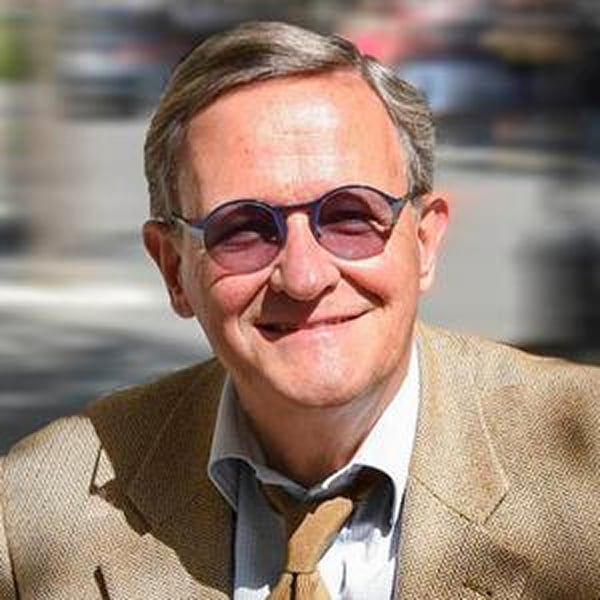

Peace & future researcher + ‌Art Photographer

Related Posts

The agreement is catastrophic both because of what it says and what it doesn’t mention. It reduces further the major asset of security policies: Freedom of action. Jan Oberg TFF director September 25, 2026 A couple of hours before the agreement was signed on September 22, 2026, I published the following 13 hypotheses about what it would most likely contain on TFF Substack (in English). I was wrong on only the first point. Contrary to what Trump had written on his Truth Social platform, it does not appear to come into force immediately. In fact, it turned out to be worse than even I had anticipated. After these hypotheses now come a number of reflections in light of what the agreement actually contains, and does not contain, as well as the way in which it has generally been presented by major media outlets and by the public-service broadcaster DR. My...
Jan Oberg, TFF director April 28, 2026 In this third TFF Peace Pulse, I make the important distinction between the violence and the conflict that violence is a symptom of. If you want peace, focus on the underlying conflict because that is the key to resolution, peacemaking, and a better future for the parties. The West is obsessed with violence, just look around you – and 90+ per cent of the public debate is about military issues and other violence – totally wasted for peace. These Peace Pulses will only be published here a few times. You will also not find them on YouTube and Vimeo because both platforms have blocked TFF and me; you know, peace is dangerous these days. Most TFF’s videos since 2007 are now on Rumble.
Photos © TFF 2000 Read PressInfo 90 “Lift the Sanctions and Bring More Aid to Yugoslavia” See Pictures from Belgrade © TFF 2000 Please reprint, copy, archive, quote or re-post this item, but please retain the source.

Recent Articles

Tony Robinson October 4, 2026 Violence is easy to recognise when someone is being beaten, shot or killed. It becomes more difficult when nobody is holding a weapon. Poverty, discrimination, exploitation and repression can restrict a human life just as effectively, although they do so in very different ways and with very different consequences. Simply adding more categories to an ever-growing list of forms of violence does not really solve the problem. The more interesting question is what all these different situations have in common and why it makes sense to describe them using the same word. Human beings do not simply react to what happens around them. They remember the past, imagine things that do not yet exist, make plans and undertake projects. Workers organise because they imagine different working conditions; people migrate because they imagine another life somewhere else; social movements emerge because people refuse to accept the...
It’s a matter of principles, courage, vision and pulling together – while the militarist world is falling apart… Peter Langille October 3, 2026 “Here, then, is the problem which we present to you, stark and dreadful and inescapable: Shall we put an end to the human race; or shall mankind renounce war?”The Bertrand Russell—Albert Einstein Manifesto, July 9, 1955 ⁕ The forecast for what’s ahead is worrisome. The sharp rise in armed conflicts over the past three years is adding to what was already the highest level in over seventy years. Genocides, which should be prevented are supported. A shared climate emergency that jeopardises survival is ignored. Diverse polls now suggest that people are war-weary, worried and interested in a more effective United Nations. And, there are viable policy options for a more secure world! Yet governments are doubling-down, betting on more war and investing heavily. If current trends persist,...
Johan Galtung 1930-2024October 2015 Published here on October 3, 2026 Let us focus on Civilization for conflict analysis and remedies. Major forms of disorder use violence; war is state organized violence. The most belligerent states are the United States of America and Israel, both with civilization roots. National Evangelism, the US Protestant Christian civilization– more national than evangelical–justifies US warfare as exceptionalism of a people chosen by God, with a manifest destiny to run the world. Orthodox Judaism justifies Israeli warfare to conquer and expand from Nile to Euphrates as a religious right and duty to the Eternal One. The third most belligerent country, the UK, no longer believes it is God-chosen but chosen by the USA; not quite the same but something. But the root cause of global disorder lies in the Occident–with Islam–seeing itself as the single, universal civilization valid for all at all times, all others being...

TFF on Substack

Discover and subscribe to more peace materials on TFF Substack

Most Popular

Tony Robinson October 4, 2026 Violence is easy to recognise when someone is being beaten, shot or killed. It becomes more difficult when nobody is holding a weapon. Poverty, discrimination, exploitation and repression can restrict a human life just as effectively, although they do so in very different ways and with very different consequences. Simply adding more categories to an ever-growing list of forms of violence does not really solve the problem. The more interesting question is what all these different situations have in common and why it makes sense to describe them using the same word. Human beings do not simply react to what happens around them. They remember the past, imagine things that do not yet exist, make plans and undertake projects. Workers organise because they imagine different working conditions; people migrate because they imagine another life somewhere else; social movements emerge because people refuse to accept the...
It’s a matter of principles, courage, vision and pulling together – while the militarist world is falling apart… Peter Langille October 3, 2026 “Here, then, is the problem which we present to you, stark and dreadful and inescapable: Shall we put an end to the human race; or shall mankind renounce war?”The Bertrand Russell—Albert Einstein Manifesto, July 9, 1955 ⁕ The forecast for what’s ahead is worrisome. The sharp rise in armed conflicts over the past three years is adding to what was already the highest level in over seventy years. Genocides, which should be prevented are supported. A shared climate emergency that jeopardises survival is ignored. Diverse polls now suggest that people are war-weary, worried and interested in a more effective United Nations. And, there are viable policy options for a more secure world! Yet governments are doubling-down, betting on more war and investing heavily. If current trends persist,...
Johan Galtung 1930-2024October 2015 Published here on October 3, 2026 Let us focus on Civilization for conflict analysis and remedies. Major forms of disorder use violence; war is state organized violence. The most belligerent states are the United States of America and Israel, both with civilization roots. National Evangelism, the US Protestant Christian civilization– more national than evangelical–justifies US warfare as exceptionalism of a people chosen by God, with a manifest destiny to run the world. Orthodox Judaism justifies Israeli warfare to conquer and expand from Nile to Euphrates as a religious right and duty to the Eternal One. The third most belligerent country, the UK, no longer believes it is God-chosen but chosen by the USA; not quite the same but something. But the root cause of global disorder lies in the Occident–with Islam–seeing itself as the single, universal civilization valid for all at all times, all others being...
Read More
Living-Peace-Sign-Budapest-copy
Tony Robinson October 4, 2026 Violence is easy to recognise when someone is being beaten, shot or killed. It becomes more difficult when nobody is holding a weapon. Poverty, discrimination, exploitation and repression can restrict a human life just as effectively, although they do so in very different ways and with very different consequences. Simply adding more categories to an ever-growing list of forms of violence does not really solve the problem. The more interesting question is what all these different situations have in common and why it makes sense to describe them using the same word. Human beings do not simply react to what happens around them. They remember the past, imagine things that do not yet exist, make plans and undertake projects. Workers organise because they imagine different working conditions; people migrate because they imagine another life somewhere else; social movements emerge because people refuse to accept the...
b54a1f10-8c65-4f0b-9dd5-4abc0a7d04cc_2659x2659
It’s a matter of principles, courage, vision and pulling together – while the militarist world is falling apart… Peter Langille October 3, 2026 “Here, then, is the problem which we present to you, stark and dreadful and inescapable: Shall we put an end to the human race; or shall mankind renounce war?”The Bertrand Russell—Albert Einstein Manifesto, July 9, 1955 ⁕ The forecast for what’s ahead is worrisome. The sharp rise in armed conflicts over the past three years is adding to what was already the highest level in over seventy years. Genocides, which should be prevented are supported. A shared climate emergency that jeopardises survival is ignored. Diverse polls now suggest that people are war-weary, worried and interested in a more effective United Nations. And, there are viable policy options for a more secure world! Yet governments are doubling-down, betting on more war and investing heavily. If current trends persist,...
010
Johan Galtung 1930-2024October 2015 Published here on October 3, 2026 Let us focus on Civilization for conflict analysis and remedies. Major forms of disorder use violence; war is state organized violence. The most belligerent states are the United States of America and Israel, both with civilization roots. National Evangelism, the US Protestant Christian civilization– more national than evangelical–justifies US warfare as exceptionalism of a people chosen by God, with a manifest destiny to run the world. Orthodox Judaism justifies Israeli warfare to conquer and expand from Nile to Euphrates as a religious right and duty to the Eternal One. The third most belligerent country, the UK, no longer believes it is God-chosen but chosen by the USA; not quite the same but something. But the root cause of global disorder lies in the Occident–with Islam–seeing itself as the single, universal civilization valid for all at all times, all others being...
Screenshot 2026-10-02 011738
Jan ObergPhD, director, The Transnational Foundation for Peace and Future Research, TFFLund, Sweden October 2, 2026 This is my full original manuscript. The Chinese Academy of Social Science, CASS, makes two publications out if it. 1. China’s Five-year plan emphasized the capabilities of basic research and original innovation. It is regarded as the goal of the future social development, which, as required, should be significantly enhanced. Can you comment on the importance of original innovation in research and academic study? I believe it is easier to define “original innovation” in the natural sciences than in social sciences. The breaking points of what constitutes something new, or innovative, are not quite as sharp in the latter. But in both fields it is about opening up something that was closed, unseen, unexplored before – making manifest what was earlier latent. Innovations come in many forms and shapes – naming something that was not...
arctic-circle-map
The agreement is catastrophic both because of what it says and what it doesn’t mention. It reduces further the major asset of security policies: Freedom of action. Jan Oberg TFF director September 25, 2026 A couple of hours before the agreement was signed on September 22, 2026, I published the following 13 hypotheses about what it would most likely contain on TFF Substack (in English). I was wrong on only the first point. Contrary to what Trump had written on his Truth Social platform, it does not appear to come into force immediately. In fact, it turned out to be worse than even I had anticipated. After these hypotheses now come a number of reflections in light of what the agreement actually contains, and does not contain, as well as the way in which it has generally been presented by major media outlets and by the public-service broadcaster DR. My...
girl-5894831_1280
Below are TFF-related media mentions, comments, videos and social media posts published elsewhere but not on this homepage. We happen to catch and list only a fraction. Regarding video comments and debates, we recommend that you go to the TFF Video Channel on Substack where many of them are reproduced. Jan Oberg is a contributor to China Daily – 52 million daily clicks – and Global Times, CGTN and CCTV (the national television), China Investment, Xinhua News Agency and several others. Articles and videos on these media very often multiply into countless Chinese (and Western media) that re-post them from these main media. Thanks to The China Academy, his analyses, interviews and comments are frequently posted on YouTube channels such as Thinkers Forum and Wave Media. These videos are often re-posted on Bilibili (China’s YouTube), the China Content Center on TikTok, and on the Chinese edition of TikTok, Douyin.com. This means reaching hundreds of millions of viewers worldwide over a year. While there are too many to catch on all these...




