
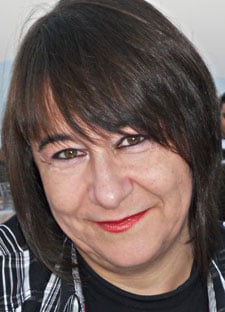
By Biljana Vankovska – Билјана Ванковска

Recently a short statement (from a longer interview) that “Macedonia and Bosnia are post-Yugoslav states that, in fact, are not states because Bosnia is a protectorate of some kind and Macedonia is a type of an ambiguously collapsed state which never united in order to be able to fall apart” echoed as an earthquake with the public.

Even “Vodno” [President’s office] was visibly upset and angered at the statement of one of the most authoritative professors and public intellectuals from the area of former Yugoslavia, Zarko Puhovski. He is one step away of being labeled persona non grata. The very fact that part of the establishment dramatically took to heart a media statement of a professor from a third country, as if said by an influential political factor or a center or power, is a clear indication of the accuracy of the thesis that we are not a true state. By the way, Puhovski had given statements such as: Serbia is “an unfinished state”, Kosovo is “ a caricature of the other independent states in the region”, and that there is more democracy in the Central Committee of the Communist Party of China than in EU.

Can you imagine a serious state reacting to a media assessment of an intellectual, regardless of his influence? At the same time, our authorities are deaf to the criticism that comes from the citizens, the domestic intellectuals, and even those that come from EU, OSCE, and the State Department.

Those that are scandalized by the question of whether Macedonia is a real state react in a “Pavlov reflex” way and are prepared “until the last man standing” to defend the statehood. There is a problem that after 20 years of politics of negations from outside (from the UN to Greece and Bulgaria) one easily succumbs to emotions against everyone that is “against us, the Macedonians, and the Republic of Macedonia as a subject of international relations.”

Very few would think that behind the concept and notion of a state lie many a definition. It is not about questioning the international and legal existence of the Republic of Macedonia (even Somalia is formally a state, isn’t it?) nor is a question of closing our eyes in front of the well-known pressures and injustices inflicted to a small state because of a bizzare problem – the self-naming and the self-determination.

What Puhovski is saying and what I have repeated many times, both in the media and my scientific work, relates to what we do with that internationally recognized state? According to a famous British theorist, the state is not defined only as territory, population and a sovereign government but through the elements such as the idea of the state, the institutional structure, and the inhabitants. This theory divides states to weak and strong, and we definitely are a weak state which not only is unable to (does not want to?) deliver services to its citizens for decent life but in which there is no clear “social contract” between the people and the government.

The “Contracts” on which consensus is built in this country are those that are imposed from outside after the initially highly-praised-by-Badinter Constitution became casus belli in 2001. Alongside the Ohrid Framework Agreement, there are different agreements with EU and NATO and, if you want, even the report on the events of December 24 – all written or dictated in English, all supervised by the external factors. Why is this so?

Simply because in Macedonia, similarly as in Bosnia and Herzegovina (though more complicated) there is no awareness about the political community, there is no vision, no idea of the state (outside of the empty phrases about EU and NATO, as if they need to adopt us and make us people, i.e. state). There is no work on behalf of that community because there are no citizens and the elites are mere representatives of squabbling tribes (and also fractions within those tribes).

Forgive me but we cannot get angry with those who see things clearly from outside and who, through media or academically, classify us among states with a risk to fail. As a matter of fact, leaders in the country talk about that failure too: how many times has Ahmeti (DUI) spoken about that while sitting in the Government and not blinking with an eye? In which normal state can a census not be conducted? A basic statistical operation!

In which state can the political parties run their own foreign and even internal affairs? In which normal state is breakfast given away on a bridge, in which people (I cannot call them citizens) are pushing each other and even falling off the bridge in the attempt to get to a modest meal while the authorities present this as a “cultural event” and a proof of an existing community? It may as well turn out true that those students who fall into a test trap are right when defining the social state as a state that is poor and receives social help. Our only vision of togetherness is the nationalistic and surreal vision of EU because there is no internal glue. There is no understanding (we discuss issues through interpreters), there is no empathy, and no common heroes but there are criminals on the other side.

Institutional structure is rotten and corrupt. The biggest pillar of that structure is the police itself with all the equipment for special investigative measures and this is the best sign of a weak state: incapable of brokering a social contract, it relies more and more on fines, power, and force. And it becomes weaker not stronger by doing that. Democracy? Yes, there is democracy on paper or as some theorists say “Potemkin democracy”, presented as a façade to the governors from Brussels or Washington but dysfunctional when it comes to its own populace.

And so we come to the third element – the populace. This is the key issue because half of it has either moved or is about to or acquires a different (Bulgarian or Albanian) passport. What remains cannot be demos. Macedonia, as small as it is, becomes an ethnopolis and there is no word of a Macedonian political nation and a political community. The pre-political situation is such that the stronger get everything and in which a party to a party and a human to a human is wolf.

The international community tries to play the role of a “leader”, of a bearer or at least a manager of the sovereign government but they only weaken the state structure. Truth be said, regardless of whether analysts from outside would agree or not, in spite of all inner weaknesses immanent to the Macedonian society that fails to consolidate in a political community with a common goal, a major parts of the problems are a consequence of the counter indications of the “therapy” prescribed by the international community – stripped of responsibility and even protected from criticisms.

It created Dayton Bosnia and Ohrid Macedonia (it also created Kosovo abovo) and it blames the locals for the weaknesses of the two con-societal states, never itself and its conflicting management. Consociation became a shelter for all primitive nationalists and war-driven dukes who, now, negotiate among themselves (even about amnesty of war crimes and suspension of the rule of law) as if the state is their private property.

Meanwhile, they are erasing unscrupulously the border between the private spheres of undisputed human rights so that they can stay in power. In fact, Puhovski is wrong, very wrong when he says that this is a failing state; he does not know the love that exists among the Macedonian and Albanian elites thirsty for power! Without Macedonia, the way they created it and divided among themselves, they could never be “statesmen.”


Related Posts

Tony Robinson October 4, 2026 Violence is easy to recognise when someone is being beaten, shot or killed. It becomes more difficult when nobody is holding a weapon. Poverty, discrimination, exploitation and repression can restrict a human life just as effectively, although they do so in very different ways and with very different consequences. Simply adding more categories to an ever-growing list of forms of violence does not really solve the problem. The more interesting question is what all these different situations have in common and why it makes sense to describe them using the same word. Human beings do not simply react to what happens around them. They remember the past, imagine things that do not yet exist, make plans and undertake projects. Workers organise because they imagine different working conditions; people migrate because they imagine another life somewhere else; social movements emerge because people refuse to accept the...
It’s a matter of principles, courage, vision and pulling together – while the militarist world is falling apart… Peter Langille October 3, 2026 “Here, then, is the problem which we present to you, stark and dreadful and inescapable: Shall we put an end to the human race; or shall mankind renounce war?”The Bertrand Russell—Albert Einstein Manifesto, July 9, 1955 ⁕ The forecast for what’s ahead is worrisome. The sharp rise in armed conflicts over the past three years is adding to what was already the highest level in over seventy years. Genocides, which should be prevented are supported. A shared climate emergency that jeopardises survival is ignored. Diverse polls now suggest that people are war-weary, worried and interested in a more effective United Nations. And, there are viable policy options for a more secure world! Yet governments are doubling-down, betting on more war and investing heavily. If current trends persist,...
Johan Galtung 1930-2024October 2015 Published here on October 3, 2026 Let us focus on Civilization for conflict analysis and remedies. Major forms of disorder use violence; war is state organized violence. The most belligerent states are the United States of America and Israel, both with civilization roots. National Evangelism, the US Protestant Christian civilization– more national than evangelical–justifies US warfare as exceptionalism of a people chosen by God, with a manifest destiny to run the world. Orthodox Judaism justifies Israeli warfare to conquer and expand from Nile to Euphrates as a religious right and duty to the Eternal One. The third most belligerent country, the UK, no longer believes it is God-chosen but chosen by the USA; not quite the same but something. But the root cause of global disorder lies in the Occident–with Islam–seeing itself as the single, universal civilization valid for all at all times, all others being...

Recent Articles

Tony Robinson October 4, 2026 Violence is easy to recognise when someone is being beaten, shot or killed. It becomes more difficult when nobody is holding a weapon. Poverty, discrimination, exploitation and repression can restrict a human life just as effectively, although they do so in very different ways and with very different consequences. Simply adding more categories to an ever-growing list of forms of violence does not really solve the problem. The more interesting question is what all these different situations have in common and why it makes sense to describe them using the same word. Human beings do not simply react to what happens around them. They remember the past, imagine things that do not yet exist, make plans and undertake projects. Workers organise because they imagine different working conditions; people migrate because they imagine another life somewhere else; social movements emerge because people refuse to accept the...
It’s a matter of principles, courage, vision and pulling together – while the militarist world is falling apart… Peter Langille October 3, 2026 “Here, then, is the problem which we present to you, stark and dreadful and inescapable: Shall we put an end to the human race; or shall mankind renounce war?”The Bertrand Russell—Albert Einstein Manifesto, July 9, 1955 ⁕ The forecast for what’s ahead is worrisome. The sharp rise in armed conflicts over the past three years is adding to what was already the highest level in over seventy years. Genocides, which should be prevented are supported. A shared climate emergency that jeopardises survival is ignored. Diverse polls now suggest that people are war-weary, worried and interested in a more effective United Nations. And, there are viable policy options for a more secure world! Yet governments are doubling-down, betting on more war and investing heavily. If current trends persist,...
Johan Galtung 1930-2024October 2015 Published here on October 3, 2026 Let us focus on Civilization for conflict analysis and remedies. Major forms of disorder use violence; war is state organized violence. The most belligerent states are the United States of America and Israel, both with civilization roots. National Evangelism, the US Protestant Christian civilization– more national than evangelical–justifies US warfare as exceptionalism of a people chosen by God, with a manifest destiny to run the world. Orthodox Judaism justifies Israeli warfare to conquer and expand from Nile to Euphrates as a religious right and duty to the Eternal One. The third most belligerent country, the UK, no longer believes it is God-chosen but chosen by the USA; not quite the same but something. But the root cause of global disorder lies in the Occident–with Islam–seeing itself as the single, universal civilization valid for all at all times, all others being...

TFF on Substack

Discover and subscribe to more peace materials on TFF Substack

Most Popular

Tony Robinson October 4, 2026 Violence is easy to recognise when someone is being beaten, shot or killed. It becomes more difficult when nobody is holding a weapon. Poverty, discrimination, exploitation and repression can restrict a human life just as effectively, although they do so in very different ways and with very different consequences. Simply adding more categories to an ever-growing list of forms of violence does not really solve the problem. The more interesting question is what all these different situations have in common and why it makes sense to describe them using the same word. Human beings do not simply react to what happens around them. They remember the past, imagine things that do not yet exist, make plans and undertake projects. Workers organise because they imagine different working conditions; people migrate because they imagine another life somewhere else; social movements emerge because people refuse to accept the...
It’s a matter of principles, courage, vision and pulling together – while the militarist world is falling apart… Peter Langille October 3, 2026 “Here, then, is the problem which we present to you, stark and dreadful and inescapable: Shall we put an end to the human race; or shall mankind renounce war?”The Bertrand Russell—Albert Einstein Manifesto, July 9, 1955 ⁕ The forecast for what’s ahead is worrisome. The sharp rise in armed conflicts over the past three years is adding to what was already the highest level in over seventy years. Genocides, which should be prevented are supported. A shared climate emergency that jeopardises survival is ignored. Diverse polls now suggest that people are war-weary, worried and interested in a more effective United Nations. And, there are viable policy options for a more secure world! Yet governments are doubling-down, betting on more war and investing heavily. If current trends persist,...
Johan Galtung 1930-2024October 2015 Published here on October 3, 2026 Let us focus on Civilization for conflict analysis and remedies. Major forms of disorder use violence; war is state organized violence. The most belligerent states are the United States of America and Israel, both with civilization roots. National Evangelism, the US Protestant Christian civilization– more national than evangelical–justifies US warfare as exceptionalism of a people chosen by God, with a manifest destiny to run the world. Orthodox Judaism justifies Israeli warfare to conquer and expand from Nile to Euphrates as a religious right and duty to the Eternal One. The third most belligerent country, the UK, no longer believes it is God-chosen but chosen by the USA; not quite the same but something. But the root cause of global disorder lies in the Occident–with Islam–seeing itself as the single, universal civilization valid for all at all times, all others being...
Read More
Living-Peace-Sign-Budapest-copy
Tony Robinson October 4, 2026 Violence is easy to recognise when someone is being beaten, shot or killed. It becomes more difficult when nobody is holding a weapon. Poverty, discrimination, exploitation and repression can restrict a human life just as effectively, although they do so in very different ways and with very different consequences. Simply adding more categories to an ever-growing list of forms of violence does not really solve the problem. The more interesting question is what all these different situations have in common and why it makes sense to describe them using the same word. Human beings do not simply react to what happens around them. They remember the past, imagine things that do not yet exist, make plans and undertake projects. Workers organise because they imagine different working conditions; people migrate because they imagine another life somewhere else; social movements emerge because people refuse to accept the...
b54a1f10-8c65-4f0b-9dd5-4abc0a7d04cc_2659x2659
It’s a matter of principles, courage, vision and pulling together – while the militarist world is falling apart… Peter Langille October 3, 2026 “Here, then, is the problem which we present to you, stark and dreadful and inescapable: Shall we put an end to the human race; or shall mankind renounce war?”The Bertrand Russell—Albert Einstein Manifesto, July 9, 1955 ⁕ The forecast for what’s ahead is worrisome. The sharp rise in armed conflicts over the past three years is adding to what was already the highest level in over seventy years. Genocides, which should be prevented are supported. A shared climate emergency that jeopardises survival is ignored. Diverse polls now suggest that people are war-weary, worried and interested in a more effective United Nations. And, there are viable policy options for a more secure world! Yet governments are doubling-down, betting on more war and investing heavily. If current trends persist,...
010
Johan Galtung 1930-2024October 2015 Published here on October 3, 2026 Let us focus on Civilization for conflict analysis and remedies. Major forms of disorder use violence; war is state organized violence. The most belligerent states are the United States of America and Israel, both with civilization roots. National Evangelism, the US Protestant Christian civilization– more national than evangelical–justifies US warfare as exceptionalism of a people chosen by God, with a manifest destiny to run the world. Orthodox Judaism justifies Israeli warfare to conquer and expand from Nile to Euphrates as a religious right and duty to the Eternal One. The third most belligerent country, the UK, no longer believes it is God-chosen but chosen by the USA; not quite the same but something. But the root cause of global disorder lies in the Occident–with Islam–seeing itself as the single, universal civilization valid for all at all times, all others being...
Screenshot 2026-10-02 011738
Jan ObergPhD, director, The Transnational Foundation for Peace and Future Research, TFFLund, Sweden October 2, 2026 This is my full original manuscript. The Chinese Academy of Social Science, CASS, makes two publications out if it. 1. China’s Five-year plan emphasized the capabilities of basic research and original innovation. It is regarded as the goal of the future social development, which, as required, should be significantly enhanced. Can you comment on the importance of original innovation in research and academic study? I believe it is easier to define “original innovation” in the natural sciences than in social sciences. The breaking points of what constitutes something new, or innovative, are not quite as sharp in the latter. But in both fields it is about opening up something that was closed, unseen, unexplored before – making manifest what was earlier latent. Innovations come in many forms and shapes – naming something that was not...
arctic-circle-map
The agreement is catastrophic both because of what it says and what it doesn’t mention. It reduces further the major asset of security policies: Freedom of action. Jan Oberg TFF director September 25, 2026 A couple of hours before the agreement was signed on September 22, 2026, I published the following 13 hypotheses about what it would most likely contain on TFF Substack (in English). I was wrong on only the first point. Contrary to what Trump had written on his Truth Social platform, it does not appear to come into force immediately. In fact, it turned out to be worse than even I had anticipated. After these hypotheses now come a number of reflections in light of what the agreement actually contains, and does not contain, as well as the way in which it has generally been presented by major media outlets and by the public-service broadcaster DR. My...
girl-5894831_1280
Below are TFF-related media mentions, comments, videos and social media posts published elsewhere but not on this homepage. We happen to catch and list only a fraction. Regarding video comments and debates, we recommend that you go to the TFF Video Channel on Substack where many of them are reproduced. Jan Oberg is a contributor to China Daily – 52 million daily clicks – and Global Times, CGTN and CCTV (the national television), China Investment, Xinhua News Agency and several others. Articles and videos on these media very often multiply into countless Chinese (and Western media) that re-post them from these main media. Thanks to The China Academy, his analyses, interviews and comments are frequently posted on YouTube channels such as Thinkers Forum and Wave Media. These videos are often re-posted on Bilibili (China’s YouTube), the China Content Center on TikTok, and on the Chinese edition of TikTok, Douyin.com. This means reaching hundreds of millions of viewers worldwide over a year. While there are too many to catch on all these...




