
There is some difficulty in reconciling humanistic ethics with biblical scripture that has disturbed me recently. If a religious text nurtures morally unacceptable impulses that are acted upon either consciously or sub-consciously in political domains, how can these adverse influences be repudiated without purporting to claim a hegemonic status for a secular reader?

Even a religiously oriented person such as myself, who rejects deference to whatever is contained in the most holy of books if it conflicts with conscience, is troubled by this tension between what we believe to be right and what can be found in the holiest of books. In the West, where the specific religious roots of political authority are rarely acknowledged directly, the problem persists, especially in claims by the state to deal with its enemies at home and abroad.

Even if we leave to one side the problems that the modern mind has with the metaphysical and miraculous claims made on behalf of religious authority, and take refuge in how Paul Tillich handled these issues by way of identifying God with the human experience of ‘ultimate depth’ regardless of the form assumed, provided only that it did not serve to vindicate ethically unacceptable behavior. In effect, the post-theistic core of religious devotion in this reworking of tradition becomes almost synonymous with spirituality and awe as experiential realities, having more in common with the thought of Alfred North Whitehead than with the institutional religions.

My concern here is far more modest and limited, and can be expressed in a very particular manner. Its main concern is how to read Psalm 21 in ways that are neither designed to avoid the awkwardness of its apparent endorsement of genocidal violence nor to repudiate the spirituality that is bound up with the sentiments that led the psalmist, reputedly King David, to intone sentiments that seem too extreme. After exalting the Lord for his support of the earthly ruler, the psalmist removes any doubt about an affirmation of unquestioning faith: “For the king trusts in the Lord, and through the mercy of the Most High he shall not be moved.”

What particularly impresses the psalmist is the strength of God, and his power and will to subjugate all that is found to be evil, or in practical terms, posing a threat to an earthly ruler or society: “You shall make them as a fiery oven in the time of Your anger; the Lord shall swallow them up in His wrath, and the fire shall devour them.”

Even beyond exterminating those who are enemies of the favored ruler and designated as evil, this wrath attributed to God shall know no bounds: “Their offspring You shall devour from the earth, and their descendants among the sons of men.” Continuing in this vein, “[f]or they intended evil against You; they devised a plot which they are able to perform.” With a military flourish such enemies will be made to “turn their back” while the arrows of the Lord are strung so as to carry out their lethal mission. The psalm ends glorifying this sacred violence: “Be exalted, O Lord, in your own strength! We will sing and praise Your power.”

Psalm 21 is not an aberration in the Bible, but neither is it a summary of the biblical worldview. The Book of Esther is another tale of God’s wrath unleashed on behalf of Jews living in the vast kingdom of King Ahasueres. Saving these Jews of the kingdom from a plot to destroy them, the king heeding Queen Esther, is merciless and shows no respect for innocence: “Thus the Jews defeated all their enemies with the stroke of the sword, with slaughter and destruction, and did what they pleased with them.” (Esther 9:5)

It is this absence of limits if the cause is righteous that prepares the way for the commission of what today are called ‘crimes against humanity.’

There are many biblical expressions of God’s wrath mobilized against the enemies of the Israelites in ways that offend those strands of contemporary morality that rejects ideas about the absolute evil of the enemy or the unconditional goodness of the nation and its friends, and is sensitive to the innocence of those who are not themselves perpetrators of wrongful acts. The ethical and legal rejection of genocidal vengeance became supported by an almost universal secular consensus after the Holocaust, but unfortunately genocidal politics and sentiments remain embedded in human experience of ethnic and religious conflict, and everywhere lye dormant just below the surface in virtually every society.

Religious websites do not condemn or contextualize such genocidal language, but insist that the intention of the psalmist is to underscore the degree to which evil will be punished and the degree of protection given to those who put their trust in God.

In most institutionalized religious circles there is little willingness to consider such sentiments as problematic or exerting dangerous cultural influences. What seems required is a repudiation of the plain meaning of the language used as well as an explanation that such sentiments was never meant to be taken as guides to action and justifications for limitless violence against enemies. It might also be observed that the distinction between friends and enemies was somewhat more polarized in ancient times.

Of course, I am far from the first to raise some doubts about literal deference biblical ethics, although it should be noted that the two later monotheistic religions incorporate without reservation the Old Testament, including Psalm 21, although in various ways they move beyond it, exhibiting a moral evolution. Thomas Jefferson, among many others, in the Deist tradition, prepared his own biblical text, removing passages that he found ethically offensive or contrary to reason. Such an undertaking would seem to be clearly heretical from most institutional perspectives, privileging individual human judgment over a sacred text endorsed by religious authority over the course of many centuries.

Yet is this display of reverence for revealed truth really different than subtle moves in the opposite direction, such as giving a sanitizing reading to the text so as to avoid the ethically offensive content of its clear meaning as interpreted on the basis of common sense?

Have we in the modern world truly rejected these absolutist attitudes toward ‘the enemy’? The Nazi death camps and the atomic bombings of Hiroshima and Nagasaki suggest that the hatred of the other and the uncritical celebration of the self continue to produce the most hideous crimes against humanity.

These shameful undertakings are usually accompanied by rationalizations and erasures that result in widespread denial in the relevant national communities and manage to suppress critical reactions by ‘good Germans’ and ‘good Americans’ who insist that they know not often in apparent good faith.

The anti-terrorist rhetoric of recent years is rather exterminist in its expression, and political implications. George W. Bush, not someone who shuns self-serving moralism, openly endorsed the idea that the attackers of 9/11 were evil, and should be hunted down and exterminated, although at least he did not implicate the descendents. There is a biblical resonance in his words spoken during his commencement address to West Point graduates in June 2002: “Some worry that it is somehow undiplomatic or impolite to speak the language of right and wrong. I disagree…We are in a conflict between good and evil. And America will call evil by its name.”

Such a dualistic passage, at once presupposing that we are the side of the good and opposed by that which is evil is confusing if thought about. It, at once, claims a religiously sanctioned authority to destroy and violates the specifically Christian teaching that rejects such a sharp divide between good and evil since we are all born sinners. What Bush does somewhat contrary to a more refined religious understanding is to fuse his ultra-nationalist agenda with a moral imperative to destroy the enemy without worrying about limits, restraints, and compassion.

A similar entitlement to kill was claimed by Barack Obama when Osama bin Laden was finally found hiding out in Abbottabad, Pakistan on May 2, 2010, killed although unarmed, with few questions being raised as to whether such an almost ritualized execution was justified or necessary. Instead the American president, presented the event as a major victory for his presidency, and the process by which this outcome came about was celebrated in a rare bipartisan spirit by the public and given an attempted public vindication in the film “Zero Dark Thirty,” which included an indirect endorsement of torture as an essential element in the CIA search process yielded crucial information about the whereabouts of the al-Qaeda leader.

This kind of partisan morality is more in keeping with the ethos of Psalm 21 than with the mainstream Christian understanding of good and evil, which condemns as heresy the idea of the absolute good of the self and the absolute evil of the enemy. In this regard human undertakings if claiming moral authority, should always include respect for the redemptive potential of the other, as well as the element of sinfulness of the self.

To claim God’s partnership in warlike undertakings thus seems like a distortion of the truer understanding of the spiritual core of the biblical message, especially as understood and interpreted over the centuries in relation to the New Testament. Yet such protection against the hubris of the powerful stands on the shoulders of unrepudiated biblical texts such as Psalm 21 or the Book of Esther.

The retaliatory threat embedded in the doctrine of nuclear deterrence seems defensive in its posture, yet it proposes an absolute lethality of response that threatens to kill tens of millions, and even to risk endangering the future of the species; E.P. Thompson in his condemnation of any reliance on nuclear weapons, believed that even the mental and cultural preparation required to make a credible deterrent threat to bomb enemy cities embraces an exterminist form of national security, and as such, is morally decadent.

This radical separation of good and evil in the globalized world of politics, either with bold conviction, as during the Bush presidency, or more subtly, during the Obama administration, suggests that societies are still comfortable with the dangerously self-serving approach of Psalm 21.

This commentary is not meant to single out for criticism either the Old Testament or the United States. These tendencies are embedded deeply within Western political culture, and unless challenged and repudiated, possess several ominous implications for the entire human future: The absolutist pretensions of nationalist and religious extremism, the globalization of conflict, scarcities of space and resources, the devastations and uncertainties of climate change, prospects for pandemics, the apocalyptic potential of military technology, pervasive insecurity and vulnerability, and the unavailability of actors and capabilities on a global stage to uphold human and global interests.

There is a narrow question: should not those of us who affirm the spiritual significance of our life experience insist on a reading of religious texts that corresponds with our conscience, and not evade the challenge of rejecting some elements of religious tradition rather than attempting to explain it away?

There is also a broader issue: unless we purge our individual and collective lives of these destructive patterns, the destiny of modern civilizations and even of the species is placed in severe jeopardy. The idea of civilizational collapse has been extensively explored from the perspective of collective failures to heed warnings and adapt, but as a matter of delimited ethno-religious communities, not in relation to the species and entire world, which notoriously lack effective sensors for dangers directed at the whole as distinct from challenges to the part.

Our modern world order, an evolving state-centric structure, absolutizes the parts, marginalizes the whole, and thus seems dangerously obsolescent as the challenges to the whole grow more and more relevant, while remaining unmanageable. To grasp onto what must be done is also perplexing. For instance, in my view the advocates of philosophical anarchism have more to teach us than the champions of world government.
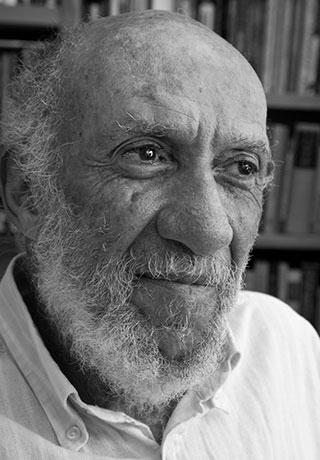

Professor Falk became an adviser to TFF when it was established in 1985.

Related Posts

Tony Robinson October 4, 2026 Violence is easy to recognise when someone is being beaten, shot or killed. It becomes more difficult when nobody is holding a weapon. Poverty, discrimination, exploitation and repression can restrict a human life just as effectively, although they do so in very different ways and with very different consequences. Simply adding more categories to an ever-growing list of forms of violence does not really solve the problem. The more interesting question is what all these different situations have in common and why it makes sense to describe them using the same word. Human beings do not simply react to what happens around them. They remember the past, imagine things that do not yet exist, make plans and undertake projects. Workers organise because they imagine different working conditions; people migrate because they imagine another life somewhere else; social movements emerge because people refuse to accept the...
It’s a matter of principles, courage, vision and pulling together – while the militarist world is falling apart… Peter Langille October 3, 2026 “Here, then, is the problem which we present to you, stark and dreadful and inescapable: Shall we put an end to the human race; or shall mankind renounce war?”The Bertrand Russell—Albert Einstein Manifesto, July 9, 1955 ⁕ The forecast for what’s ahead is worrisome. The sharp rise in armed conflicts over the past three years is adding to what was already the highest level in over seventy years. Genocides, which should be prevented are supported. A shared climate emergency that jeopardises survival is ignored. Diverse polls now suggest that people are war-weary, worried and interested in a more effective United Nations. And, there are viable policy options for a more secure world! Yet governments are doubling-down, betting on more war and investing heavily. If current trends persist,...
Johan Galtung 1930-2024October 2015 Published here on October 3, 2026 Let us focus on Civilization for conflict analysis and remedies. Major forms of disorder use violence; war is state organized violence. The most belligerent states are the United States of America and Israel, both with civilization roots. National Evangelism, the US Protestant Christian civilization– more national than evangelical–justifies US warfare as exceptionalism of a people chosen by God, with a manifest destiny to run the world. Orthodox Judaism justifies Israeli warfare to conquer and expand from Nile to Euphrates as a religious right and duty to the Eternal One. The third most belligerent country, the UK, no longer believes it is God-chosen but chosen by the USA; not quite the same but something. But the root cause of global disorder lies in the Occident–with Islam–seeing itself as the single, universal civilization valid for all at all times, all others being...

Recent Articles

Tony Robinson October 4, 2026 Violence is easy to recognise when someone is being beaten, shot or killed. It becomes more difficult when nobody is holding a weapon. Poverty, discrimination, exploitation and repression can restrict a human life just as effectively, although they do so in very different ways and with very different consequences. Simply adding more categories to an ever-growing list of forms of violence does not really solve the problem. The more interesting question is what all these different situations have in common and why it makes sense to describe them using the same word. Human beings do not simply react to what happens around them. They remember the past, imagine things that do not yet exist, make plans and undertake projects. Workers organise because they imagine different working conditions; people migrate because they imagine another life somewhere else; social movements emerge because people refuse to accept the...
It’s a matter of principles, courage, vision and pulling together – while the militarist world is falling apart… Peter Langille October 3, 2026 “Here, then, is the problem which we present to you, stark and dreadful and inescapable: Shall we put an end to the human race; or shall mankind renounce war?”The Bertrand Russell—Albert Einstein Manifesto, July 9, 1955 ⁕ The forecast for what’s ahead is worrisome. The sharp rise in armed conflicts over the past three years is adding to what was already the highest level in over seventy years. Genocides, which should be prevented are supported. A shared climate emergency that jeopardises survival is ignored. Diverse polls now suggest that people are war-weary, worried and interested in a more effective United Nations. And, there are viable policy options for a more secure world! Yet governments are doubling-down, betting on more war and investing heavily. If current trends persist,...
Johan Galtung 1930-2024October 2015 Published here on October 3, 2026 Let us focus on Civilization for conflict analysis and remedies. Major forms of disorder use violence; war is state organized violence. The most belligerent states are the United States of America and Israel, both with civilization roots. National Evangelism, the US Protestant Christian civilization– more national than evangelical–justifies US warfare as exceptionalism of a people chosen by God, with a manifest destiny to run the world. Orthodox Judaism justifies Israeli warfare to conquer and expand from Nile to Euphrates as a religious right and duty to the Eternal One. The third most belligerent country, the UK, no longer believes it is God-chosen but chosen by the USA; not quite the same but something. But the root cause of global disorder lies in the Occident–with Islam–seeing itself as the single, universal civilization valid for all at all times, all others being...

TFF on Substack

Discover and subscribe to more peace materials on TFF Substack

Most Popular

Tony Robinson October 4, 2026 Violence is easy to recognise when someone is being beaten, shot or killed. It becomes more difficult when nobody is holding a weapon. Poverty, discrimination, exploitation and repression can restrict a human life just as effectively, although they do so in very different ways and with very different consequences. Simply adding more categories to an ever-growing list of forms of violence does not really solve the problem. The more interesting question is what all these different situations have in common and why it makes sense to describe them using the same word. Human beings do not simply react to what happens around them. They remember the past, imagine things that do not yet exist, make plans and undertake projects. Workers organise because they imagine different working conditions; people migrate because they imagine another life somewhere else; social movements emerge because people refuse to accept the...
It’s a matter of principles, courage, vision and pulling together – while the militarist world is falling apart… Peter Langille October 3, 2026 “Here, then, is the problem which we present to you, stark and dreadful and inescapable: Shall we put an end to the human race; or shall mankind renounce war?”The Bertrand Russell—Albert Einstein Manifesto, July 9, 1955 ⁕ The forecast for what’s ahead is worrisome. The sharp rise in armed conflicts over the past three years is adding to what was already the highest level in over seventy years. Genocides, which should be prevented are supported. A shared climate emergency that jeopardises survival is ignored. Diverse polls now suggest that people are war-weary, worried and interested in a more effective United Nations. And, there are viable policy options for a more secure world! Yet governments are doubling-down, betting on more war and investing heavily. If current trends persist,...
Johan Galtung 1930-2024October 2015 Published here on October 3, 2026 Let us focus on Civilization for conflict analysis and remedies. Major forms of disorder use violence; war is state organized violence. The most belligerent states are the United States of America and Israel, both with civilization roots. National Evangelism, the US Protestant Christian civilization– more national than evangelical–justifies US warfare as exceptionalism of a people chosen by God, with a manifest destiny to run the world. Orthodox Judaism justifies Israeli warfare to conquer and expand from Nile to Euphrates as a religious right and duty to the Eternal One. The third most belligerent country, the UK, no longer believes it is God-chosen but chosen by the USA; not quite the same but something. But the root cause of global disorder lies in the Occident–with Islam–seeing itself as the single, universal civilization valid for all at all times, all others being...
Read More
Living-Peace-Sign-Budapest-copy
Tony Robinson October 4, 2026 Violence is easy to recognise when someone is being beaten, shot or killed. It becomes more difficult when nobody is holding a weapon. Poverty, discrimination, exploitation and repression can restrict a human life just as effectively, although they do so in very different ways and with very different consequences. Simply adding more categories to an ever-growing list of forms of violence does not really solve the problem. The more interesting question is what all these different situations have in common and why it makes sense to describe them using the same word. Human beings do not simply react to what happens around them. They remember the past, imagine things that do not yet exist, make plans and undertake projects. Workers organise because they imagine different working conditions; people migrate because they imagine another life somewhere else; social movements emerge because people refuse to accept the...
b54a1f10-8c65-4f0b-9dd5-4abc0a7d04cc_2659x2659
It’s a matter of principles, courage, vision and pulling together – while the militarist world is falling apart… Peter Langille October 3, 2026 “Here, then, is the problem which we present to you, stark and dreadful and inescapable: Shall we put an end to the human race; or shall mankind renounce war?”The Bertrand Russell—Albert Einstein Manifesto, July 9, 1955 ⁕ The forecast for what’s ahead is worrisome. The sharp rise in armed conflicts over the past three years is adding to what was already the highest level in over seventy years. Genocides, which should be prevented are supported. A shared climate emergency that jeopardises survival is ignored. Diverse polls now suggest that people are war-weary, worried and interested in a more effective United Nations. And, there are viable policy options for a more secure world! Yet governments are doubling-down, betting on more war and investing heavily. If current trends persist,...
010
Johan Galtung 1930-2024October 2015 Published here on October 3, 2026 Let us focus on Civilization for conflict analysis and remedies. Major forms of disorder use violence; war is state organized violence. The most belligerent states are the United States of America and Israel, both with civilization roots. National Evangelism, the US Protestant Christian civilization– more national than evangelical–justifies US warfare as exceptionalism of a people chosen by God, with a manifest destiny to run the world. Orthodox Judaism justifies Israeli warfare to conquer and expand from Nile to Euphrates as a religious right and duty to the Eternal One. The third most belligerent country, the UK, no longer believes it is God-chosen but chosen by the USA; not quite the same but something. But the root cause of global disorder lies in the Occident–with Islam–seeing itself as the single, universal civilization valid for all at all times, all others being...
Screenshot 2026-10-02 011738
Jan ObergPhD, director, The Transnational Foundation for Peace and Future Research, TFFLund, Sweden October 2, 2026 This is my full original manuscript. The Chinese Academy of Social Science, CASS, makes two publications out if it. 1. China’s Five-year plan emphasized the capabilities of basic research and original innovation. It is regarded as the goal of the future social development, which, as required, should be significantly enhanced. Can you comment on the importance of original innovation in research and academic study? I believe it is easier to define “original innovation” in the natural sciences than in social sciences. The breaking points of what constitutes something new, or innovative, are not quite as sharp in the latter. But in both fields it is about opening up something that was closed, unseen, unexplored before – making manifest what was earlier latent. Innovations come in many forms and shapes – naming something that was not...
arctic-circle-map
The agreement is catastrophic both because of what it says and what it doesn’t mention. It reduces further the major asset of security policies: Freedom of action. Jan Oberg TFF director September 25, 2026 A couple of hours before the agreement was signed on September 22, 2026, I published the following 13 hypotheses about what it would most likely contain on TFF Substack (in English). I was wrong on only the first point. Contrary to what Trump had written on his Truth Social platform, it does not appear to come into force immediately. In fact, it turned out to be worse than even I had anticipated. After these hypotheses now come a number of reflections in light of what the agreement actually contains, and does not contain, as well as the way in which it has generally been presented by major media outlets and by the public-service broadcaster DR. My...
girl-5894831_1280
Below are TFF-related media mentions, comments, videos and social media posts published elsewhere but not on this homepage. We happen to catch and list only a fraction. Regarding video comments and debates, we recommend that you go to the TFF Video Channel on Substack where many of them are reproduced. Jan Oberg is a contributor to China Daily – 52 million daily clicks – and Global Times, CGTN and CCTV (the national television), China Investment, Xinhua News Agency and several others. Articles and videos on these media very often multiply into countless Chinese (and Western media) that re-post them from these main media. Thanks to The China Academy, his analyses, interviews and comments are frequently posted on YouTube channels such as Thinkers Forum and Wave Media. These videos are often re-posted on Bilibili (China’s YouTube), the China Content Center on TikTok, and on the Chinese edition of TikTok, Douyin.com. This means reaching hundreds of millions of viewers worldwide over a year. While there are too many to catch on all these...




