
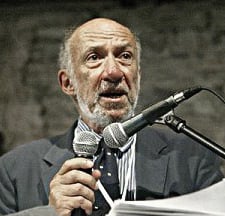
Such self-designated ‘wise men’ of our time as David Brooks and Tom Friedman, highly influential opinion and opinionated writers of the NY Times, have been telling their readers that Edward Snowden was decent and intelligent, but overstepped the law by arrogating to himself the disclosure of the ‘total data’ surveillance programs of the National Security Agency of the U.S. Government.

By deliberately releasing abundant evidence of the astonishing breadth and depth of surveillance, Snowden was clearly motivated by the concern that rights of privacy, the quality of democratic life, and respect for the sovereignty of foreign countries and the confidentiality of diplomatic events were being placed in jeopardy. For some, this bold decision to expose American intelligence gathering made Snowden a villain, called ‘a traitor’ by a variety of public officials including John Kerry, the Secretary of State.

There is no doubt that Snowden is guilty of violating espionage laws, which automatically almost constitutes treason for those who possess an ultra-nationalist mentality. Those who think this way believe Snowden deserves to be punished to the limits of the law, and that foreign governments friendly to this country should accede to Washington’s request for his detention and expulsion to the United States to face charges.

Of course for many others Snowden is a hero for our times, actions that should be honored by a Nobel Prize. Snowden put democratic accountability ahead of his own career and security, knowingly placing himself at great risk by daring to challenge the security policies of the government of his own mighty country for the sake of avoiding a gathering Orwellian political storm. What President Obama speaking after the Snowden leaks described in Germany somewhat disingenuously as “a circumscribed, narrow system directed at us being able to protect our own people.” What protection of the American people have to do with listening in on the diplomatic communications of European Union members seems more than far fetched!

There are many sober voices declaring themselves worried about the dangerous implications of such a massive breach of national security, especially following the major discrediting disclosures of those recent master whistle blowers – Bradley Manning and Julian Assange. In effect, given the kind of security threats that exist in the post-9/11 world the public must trust the government to strike the right balance between protecting the country against threats to national security and upholding the liberty of its citizens and respecting the sovereignty of other countries.

As Michael Hayden, former director of the CIA and later the NSA, put it after these events: “We are now going to target the U.S. as if it were a foreign country.” Should Snowden’s violation of his oath and of espionage laws be welcomed as ‘a safety valve,’ a check upon abusive government, or as a gaping hole in governmental operations that needs to be closed as tightly as possible? The Belt Way insiders’ argument is that unless this latter approach is taken governmental policy-making will suffer because the needed institutional confidence that secrets are kept will be lost.

I find the Big Brother fears more credible than these anxieties about leaks in the secrecy enclosures relied upon by supposedly constitutional governments in defiance of the democratic ethos of accountability, transparency, and participation. What one finds consistently in government practice is an excess of secrecy via promiscuous classification tendencies that seem frequently used often to avoid embarrassing politicians from exposing dubious behavior or protecting bureaucrats from second-guessing and hostile commentary by journalists and the public.

What is evident is that the government, even in a country that prides itself on freedom and privacy, tends to view information gathering in a spirit similar to weaponry – do whatever the technology allows so long as the costs are reasonable and the risks can be contained at moderate levels. And with the advent of digitized information technology, the sky is the limit: the PRISM program that was what Snowden was working on in his role as private contractor in the employ of the consulting firm of Booz Allen Hamilton was an indiscriminate data collection process that didn’t confine its intrusions to those for whom there existed grounds of suspicion. Indeed, every person everywhere was now living under a cloud of suspicion, there were no roster of ‘usual suspects’ to be rounded up in the aftermath of serious criminal incidents. The distinction crucial for the political well-being of people living in a liberal society between suspect and citizen now seems superseded and irrelevant-

This is an ominous development that should be challenged.

Two major developments brought this unsavory reality into being, and given ‘libertarian politics’ a new credibility. First, the most feared existential security threat became associated with potential political extremists who could be anywhere, within or beyond national borders, with or without affiliations to a political network. Consider such instances as the Norwegian Islamophobic right wing sociopath, Anders Breivik, guilty of a massacre on July 22, 2011 or the Tsarnaev brothers who carried out the Boston Marathon bombers on April 15, 2013. It is truly the case that the presence of isolated individuals, as well as transnational terrorist networks, pose severe threats to the viability of constitutional democracies. Many have voiced fears that a repetition of 9/11 in the United States would produce a slide into a kind of reactive fascism, and thus some sacrificing of freedoms, placing our trust in elected leaders and representative institutions, and hoping for the best is a kind of situational necessity.

Politicians contend that such information trolling in the private domains of peoples’ lives has already contributed to the avoidance of terrorist attacks and horrifying incidents in as many as 90% of the cases of successful prevention. That is, the kind of threat that dominates our current fears can only be addressed in a responsible manner by giving up any expectations of autonomous citizenship or the promises of accountable government. Such a democratic slippage may simply have become a fact of 21st century life about which most of society has accepted, even if with scant awareness of what is happening.

The second important factor is the ‘can do’ quality of digital technology as applied to the temptations of mass surveillance whether for purposes of governmental control or private profit. Information can be gathered, enlisting the social networking infrastructures of modern society, stored, analyzed, coded, and made available for a wide range of licit and illicit uses. There is a sinister continuity between the technological capabilities of the massive data collection program of the NSA known as PRISM and the lethal drone missions controlled by civilian operators acting far from any combat zone, carrying out battle plans based on the selection of targets from a kill list presented daily to the president, and approving in secret the execution of American citizens and those living in foreign countries who owe no allegiance to American laws.

Such is the nature of the ‘global war’ unleashed by George W. Bush after 9/11 and continued by Barack Obama. There are reassurances that care is taken, efforts are made to minimize mistakes, and only the most imminent of threats are targets. The objective assessment of the killing fields tell a different story – of innocent persons killed, of ‘signature’ strikes targeting for death those against whom there is only vague circumstantial evidence, of a reign of terror in areas where suspects are supposed to be based.

In actuality, what Snowden did was surprisingly responsive to national security concerns, including the protection of secrecy surrounding controversial overseas undertakings. Snowden has indicated that he never had an intention to release any documents that implicate particular agents engaged in covert operations or that reveal the location of CIA bases in foreign countries. In effect, Snowden was acknowledging that the government has ‘secrets’ that deserve keeping, and that he was distinguishing these from those that were not justified by security considerations and posed a severe threat to the future quality of constitutional democracy.

It is undoubtedly the case, as Snowden has hinted, that he had good reason to believe without such an unauthorized disclosure, the public would have no way of finding out what was going on and no say in shaping the privacy/security balance, and the government would undoubtedly continue to rely on excessive claims of secrecy to insulate itself from procedures of accountability, including the rather unconvincing forms of oversight that are entrusted with avoiding wrongdoing in its surveillance gulag. I think there is good reason to conclude that it is only the obtrusiveness of whistleblowers that produces these occasional glimmers of sunlight that illumine to some degree the dark corridors of governmental power.

The three major whistleblowing incidents of the last half century bearing on national security, (Ellsberg (Pentagon Papers), Bradley Manning (Iraq and Afghanistan document trove), and Snowden (the NSA Prism Program of Surveillance) had one thing in come, disclosures of state crimes that had been long covered up, and were integral to structures of impunity that seem vital to the performance of the dirty work of empire. Daniel Ellsberg in a Salon interview with Brad Friedman on June 14, 2013 insisted that a more permissive political atmosphere existed in 1972 when he released the Pentagon Papers. There was then at least the possibility of getting the story out without being thrown into prison under conditions of solitary confinement (Manning) or hounded as if a common criminal (Assange, and now Snowden). Under current conditions it seems as if the only way for Snowden to have some opportunity to give his reasons for doing what he did was to go abroad, and then seek asylum.

What seems most dismaying about the Snowden affair is the prosecutorial zeal of the Obama presidency, supposedly liberal in its outlook on matters of personal freedom and the values of constitutional government. What Snowden has done is so clearly ‘a political crime,’ if it is a crime at all, and in recognition of this there has existed since the French Revolution been seen as inconsistent with the generally desirable policy of inter-governmental cooperation in the apprehension of suspected criminals. In such circumstances it is unseemly to instruct the Vice President to call around the world exerting leverage to discourage grants of asylum or sanctuary to Snowden, or worse yet, to use American influence to interfere with international flights thought to be associated with Snowden’s attempt to seek asylum, itself a right conferred in Article 14(1) of the Universal Declaration of Human Rights.

Maybe it is a legal stretch to insist on Snowden’s right of asylum considering that the ‘persecution’ he might face if returned to the United States would be nothing more (or less) than prosecution under applicable American criminal law, which presumably would be carried out in a judicially supervised manner as constitutionally prescribed by due process standards.

But given the vindictive response to the Manning release of a cache of documents to WikiLeaks, and the refusal of the government to acknowledge the implications of policies that are criminal in nature, asylum should be granted to Snowden, and the failure to do so exhibits two features of present world order: American exceptionalism (would the US Government really turn over to China or Cuba a person who had risked everything to disclose state secrets to the world? The following statutory language is certainly suggestive of an answer: “No return or surrender shall be made of any person charged with the commission of any offense of a political nature.”); and the logic of major states that share an interest in collaborating with each other so as to keep the lid of secrecy covering their most nefarious practices.
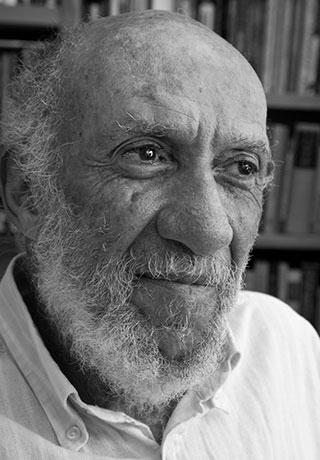

Professor Falk became an adviser to TFF when it was established in 1985.

Related Posts

Tony Robinson October 4, 2026 Violence is easy to recognise when someone is being beaten, shot or killed. It becomes more difficult when nobody is holding a weapon. Poverty, discrimination, exploitation and repression can restrict a human life just as effectively, although they do so in very different ways and with very different consequences. Simply adding more categories to an ever-growing list of forms of violence does not really solve the problem. The more interesting question is what all these different situations have in common and why it makes sense to describe them using the same word. Human beings do not simply react to what happens around them. They remember the past, imagine things that do not yet exist, make plans and undertake projects. Workers organise because they imagine different working conditions; people migrate because they imagine another life somewhere else; social movements emerge because people refuse to accept the...
It’s a matter of principles, courage, vision and pulling together – while the militarist world is falling apart… Peter Langille October 3, 2026 “Here, then, is the problem which we present to you, stark and dreadful and inescapable: Shall we put an end to the human race; or shall mankind renounce war?”The Bertrand Russell—Albert Einstein Manifesto, July 9, 1955 ⁕ The forecast for what’s ahead is worrisome. The sharp rise in armed conflicts over the past three years is adding to what was already the highest level in over seventy years. Genocides, which should be prevented are supported. A shared climate emergency that jeopardises survival is ignored. Diverse polls now suggest that people are war-weary, worried and interested in a more effective United Nations. And, there are viable policy options for a more secure world! Yet governments are doubling-down, betting on more war and investing heavily. If current trends persist,...
Johan Galtung 1930-2024October 2015 Published here on October 3, 2026 Let us focus on Civilization for conflict analysis and remedies. Major forms of disorder use violence; war is state organized violence. The most belligerent states are the United States of America and Israel, both with civilization roots. National Evangelism, the US Protestant Christian civilization– more national than evangelical–justifies US warfare as exceptionalism of a people chosen by God, with a manifest destiny to run the world. Orthodox Judaism justifies Israeli warfare to conquer and expand from Nile to Euphrates as a religious right and duty to the Eternal One. The third most belligerent country, the UK, no longer believes it is God-chosen but chosen by the USA; not quite the same but something. But the root cause of global disorder lies in the Occident–with Islam–seeing itself as the single, universal civilization valid for all at all times, all others being...

Recent Articles

Tony Robinson October 4, 2026 Violence is easy to recognise when someone is being beaten, shot or killed. It becomes more difficult when nobody is holding a weapon. Poverty, discrimination, exploitation and repression can restrict a human life just as effectively, although they do so in very different ways and with very different consequences. Simply adding more categories to an ever-growing list of forms of violence does not really solve the problem. The more interesting question is what all these different situations have in common and why it makes sense to describe them using the same word. Human beings do not simply react to what happens around them. They remember the past, imagine things that do not yet exist, make plans and undertake projects. Workers organise because they imagine different working conditions; people migrate because they imagine another life somewhere else; social movements emerge because people refuse to accept the...
It’s a matter of principles, courage, vision and pulling together – while the militarist world is falling apart… Peter Langille October 3, 2026 “Here, then, is the problem which we present to you, stark and dreadful and inescapable: Shall we put an end to the human race; or shall mankind renounce war?”The Bertrand Russell—Albert Einstein Manifesto, July 9, 1955 ⁕ The forecast for what’s ahead is worrisome. The sharp rise in armed conflicts over the past three years is adding to what was already the highest level in over seventy years. Genocides, which should be prevented are supported. A shared climate emergency that jeopardises survival is ignored. Diverse polls now suggest that people are war-weary, worried and interested in a more effective United Nations. And, there are viable policy options for a more secure world! Yet governments are doubling-down, betting on more war and investing heavily. If current trends persist,...
Johan Galtung 1930-2024October 2015 Published here on October 3, 2026 Let us focus on Civilization for conflict analysis and remedies. Major forms of disorder use violence; war is state organized violence. The most belligerent states are the United States of America and Israel, both with civilization roots. National Evangelism, the US Protestant Christian civilization– more national than evangelical–justifies US warfare as exceptionalism of a people chosen by God, with a manifest destiny to run the world. Orthodox Judaism justifies Israeli warfare to conquer and expand from Nile to Euphrates as a religious right and duty to the Eternal One. The third most belligerent country, the UK, no longer believes it is God-chosen but chosen by the USA; not quite the same but something. But the root cause of global disorder lies in the Occident–with Islam–seeing itself as the single, universal civilization valid for all at all times, all others being...

TFF on Substack

Discover and subscribe to more peace materials on TFF Substack

Most Popular

Tony Robinson October 4, 2026 Violence is easy to recognise when someone is being beaten, shot or killed. It becomes more difficult when nobody is holding a weapon. Poverty, discrimination, exploitation and repression can restrict a human life just as effectively, although they do so in very different ways and with very different consequences. Simply adding more categories to an ever-growing list of forms of violence does not really solve the problem. The more interesting question is what all these different situations have in common and why it makes sense to describe them using the same word. Human beings do not simply react to what happens around them. They remember the past, imagine things that do not yet exist, make plans and undertake projects. Workers organise because they imagine different working conditions; people migrate because they imagine another life somewhere else; social movements emerge because people refuse to accept the...
It’s a matter of principles, courage, vision and pulling together – while the militarist world is falling apart… Peter Langille October 3, 2026 “Here, then, is the problem which we present to you, stark and dreadful and inescapable: Shall we put an end to the human race; or shall mankind renounce war?”The Bertrand Russell—Albert Einstein Manifesto, July 9, 1955 ⁕ The forecast for what’s ahead is worrisome. The sharp rise in armed conflicts over the past three years is adding to what was already the highest level in over seventy years. Genocides, which should be prevented are supported. A shared climate emergency that jeopardises survival is ignored. Diverse polls now suggest that people are war-weary, worried and interested in a more effective United Nations. And, there are viable policy options for a more secure world! Yet governments are doubling-down, betting on more war and investing heavily. If current trends persist,...
Johan Galtung 1930-2024October 2015 Published here on October 3, 2026 Let us focus on Civilization for conflict analysis and remedies. Major forms of disorder use violence; war is state organized violence. The most belligerent states are the United States of America and Israel, both with civilization roots. National Evangelism, the US Protestant Christian civilization– more national than evangelical–justifies US warfare as exceptionalism of a people chosen by God, with a manifest destiny to run the world. Orthodox Judaism justifies Israeli warfare to conquer and expand from Nile to Euphrates as a religious right and duty to the Eternal One. The third most belligerent country, the UK, no longer believes it is God-chosen but chosen by the USA; not quite the same but something. But the root cause of global disorder lies in the Occident–with Islam–seeing itself as the single, universal civilization valid for all at all times, all others being...
Read More
Living-Peace-Sign-Budapest-copy
Tony Robinson October 4, 2026 Violence is easy to recognise when someone is being beaten, shot or killed. It becomes more difficult when nobody is holding a weapon. Poverty, discrimination, exploitation and repression can restrict a human life just as effectively, although they do so in very different ways and with very different consequences. Simply adding more categories to an ever-growing list of forms of violence does not really solve the problem. The more interesting question is what all these different situations have in common and why it makes sense to describe them using the same word. Human beings do not simply react to what happens around them. They remember the past, imagine things that do not yet exist, make plans and undertake projects. Workers organise because they imagine different working conditions; people migrate because they imagine another life somewhere else; social movements emerge because people refuse to accept the...
b54a1f10-8c65-4f0b-9dd5-4abc0a7d04cc_2659x2659
It’s a matter of principles, courage, vision and pulling together – while the militarist world is falling apart… Peter Langille October 3, 2026 “Here, then, is the problem which we present to you, stark and dreadful and inescapable: Shall we put an end to the human race; or shall mankind renounce war?”The Bertrand Russell—Albert Einstein Manifesto, July 9, 1955 ⁕ The forecast for what’s ahead is worrisome. The sharp rise in armed conflicts over the past three years is adding to what was already the highest level in over seventy years. Genocides, which should be prevented are supported. A shared climate emergency that jeopardises survival is ignored. Diverse polls now suggest that people are war-weary, worried and interested in a more effective United Nations. And, there are viable policy options for a more secure world! Yet governments are doubling-down, betting on more war and investing heavily. If current trends persist,...
010
Johan Galtung 1930-2024October 2015 Published here on October 3, 2026 Let us focus on Civilization for conflict analysis and remedies. Major forms of disorder use violence; war is state organized violence. The most belligerent states are the United States of America and Israel, both with civilization roots. National Evangelism, the US Protestant Christian civilization– more national than evangelical–justifies US warfare as exceptionalism of a people chosen by God, with a manifest destiny to run the world. Orthodox Judaism justifies Israeli warfare to conquer and expand from Nile to Euphrates as a religious right and duty to the Eternal One. The third most belligerent country, the UK, no longer believes it is God-chosen but chosen by the USA; not quite the same but something. But the root cause of global disorder lies in the Occident–with Islam–seeing itself as the single, universal civilization valid for all at all times, all others being...
Screenshot 2026-10-02 011738
Jan ObergPhD, director, The Transnational Foundation for Peace and Future Research, TFFLund, Sweden October 2, 2026 This is my full original manuscript. The Chinese Academy of Social Science, CASS, makes two publications out if it. 1. China’s Five-year plan emphasized the capabilities of basic research and original innovation. It is regarded as the goal of the future social development, which, as required, should be significantly enhanced. Can you comment on the importance of original innovation in research and academic study? I believe it is easier to define “original innovation” in the natural sciences than in social sciences. The breaking points of what constitutes something new, or innovative, are not quite as sharp in the latter. But in both fields it is about opening up something that was closed, unseen, unexplored before – making manifest what was earlier latent. Innovations come in many forms and shapes – naming something that was not...
arctic-circle-map
The agreement is catastrophic both because of what it says and what it doesn’t mention. It reduces further the major asset of security policies: Freedom of action. Jan Oberg TFF director September 25, 2026 A couple of hours before the agreement was signed on September 22, 2026, I published the following 13 hypotheses about what it would most likely contain on TFF Substack (in English). I was wrong on only the first point. Contrary to what Trump had written on his Truth Social platform, it does not appear to come into force immediately. In fact, it turned out to be worse than even I had anticipated. After these hypotheses now come a number of reflections in light of what the agreement actually contains, and does not contain, as well as the way in which it has generally been presented by major media outlets and by the public-service broadcaster DR. My...
girl-5894831_1280
Below are TFF-related media mentions, comments, videos and social media posts published elsewhere but not on this homepage. We happen to catch and list only a fraction. Regarding video comments and debates, we recommend that you go to the TFF Video Channel on Substack where many of them are reproduced. Jan Oberg is a contributor to China Daily – 52 million daily clicks – and Global Times, CGTN and CCTV (the national television), China Investment, Xinhua News Agency and several others. Articles and videos on these media very often multiply into countless Chinese (and Western media) that re-post them from these main media. Thanks to The China Academy, his analyses, interviews and comments are frequently posted on YouTube channels such as Thinkers Forum and Wave Media. These videos are often re-posted on Bilibili (China’s YouTube), the China Content Center on TikTok, and on the Chinese edition of TikTok, Douyin.com. This means reaching hundreds of millions of viewers worldwide over a year. While there are too many to catch on all these...




