TFF PressInfo 1-2013

On Tuesday February 26, in Kazakhstan, a new round of negotiations are due between Iran and the Five Permanent UN Security Council members + Germany. We’d like to bring the following expert statement to your attention.
Contacts for interviews as well as analytical sources below the statement.

Summary

The problem is not nuclear weapons, essentially. It’s strategic interests such as control of oil and gas and that requires a change of Iran’s ‘obstinate’ and ‘defiant’ regime.


The present US/NATO/EU policy is based on escalating threats without an exit strategy. This increases the risk of war, whether intended or not. If that is not the deliberate purpose, an entirely new Western policy vis-a-vis Iran must be developed.

The Transnational Foundation in Sweden – an independent think tank with 27 years of experience – provides you with the diagnosis, the prognosis and the proposals for improved relations built on trust.
 (See below.)

Lacking evidence for policies

According to the highest intelligence authority in the U.S., National Intelligence Estimate, and its sister in Israel, Mossad, this much is clear: There is no evidence that Iran has decided to build nuclear weapons.

Of course, Iran may start such a program, but to establish Iran as a nuclear weapons state (with a credible projection capacity) like Israel’s 80-200 nukes, would take very many years.

West’s policies are wrong and could make Iran a threat


Respect and trust are the essential ingredients if the goal is to persuade Iran – a world civilization of some 6,000 years – to not acquire nuclear weapons.

But the three things the U.S./NATO/EU do vis-a-vis Iran is fundamentally counterproductive to trust-building:

1) Ever more suffocating sanctions will, if continued, lead to an Iraq-like genocide on the innocent Iranian citizens.

2) The oil embargo costs Iran US$ 100 million per day and cripples the economy.

3) Bombing threats increase the likelihood that Iran will feel insecure and humiliated and, logically, invest more in armament.

These components lead to increasing smuggling and lawlessness, and even larger income gaps in Iran; they undermine the middle class that could bring about political change and – essentially – make people stand with the leadership and undermine oppositional policies.

Double standards

Nuclear weapons states possess some 17,000 nukes. None of the governments that argue that Iran should not acquire nuclear weapons have done anything substantial to achieve the goal of nuclear abolition stipulated in the Non-Proliferation Treaty.

We should talk much more about possession than about proliferation of nuclear weapons.

Due to this duality – ”we including Israel shall have them, Iran shall not” – the moral capital of the U.S./NATO vis-a-vis Iran is much smaller than usually assumed.

Furthermore, the Iranians remember well the US-British coup against the democratically elected Dr. Mossadegh in 1953, ushering in the Shah’s dictatorship until 1979 – as they remember that the West were firmly behind Saddam Hussein’s war on Iran.

Should Israel and the West fear Iran?

No – Iran’s military expenditure are roughly the same as Norway’s and amounts to US$ 7 billion. That is 1% of the military expenditure of the United States; and is half as big as Israel’s, whose population is 1/10 of Iran’s. Iran has not invaded any other country for more than 200 years.

The Iranian leadership knows well that, under such ‘correlations of forces’, it would be suicidal to start a war.


Constructive proposals for a new Iran policy


TFF has about 20 policy proposals as to what all sides can do to reduce the risk of war and facilitate trustful relations between the West and Iran.

They are based on our Associates’ experience from other conflict situations and several visits we have made to Iran.

You’ll find these proposals in the source material below. But we know it is easier for you to call or mail us.

Who is TFF and why are we qualified?

The Transnational Foundation for Peace and Future Research, TFF, in Lund, Sweden (www.transnational.org) is independent of government and corporate funding and thus conducts truly free research.

Thanks to its 60 expert Associates around the world, it has a well-respected capacity from on-the-ground conflict analysis and mediation work in e.g. Georgia, ex-Yugoslavia, Israel-Palestine, Iraq, Burundi.

For 27 years TFF has worked for the UN Charter goal of peace by peaceful means. 

TFF produces truthful, comprehensive analyses and critiques the exaggerated use of violent means. That’s diagnosis and prognosis. But we also do treatment because the world will not become a better place without constructive dialogue and ideas.


Contacts


Dr Jan Oberg, TFF director
Write Email
+46 738 525200

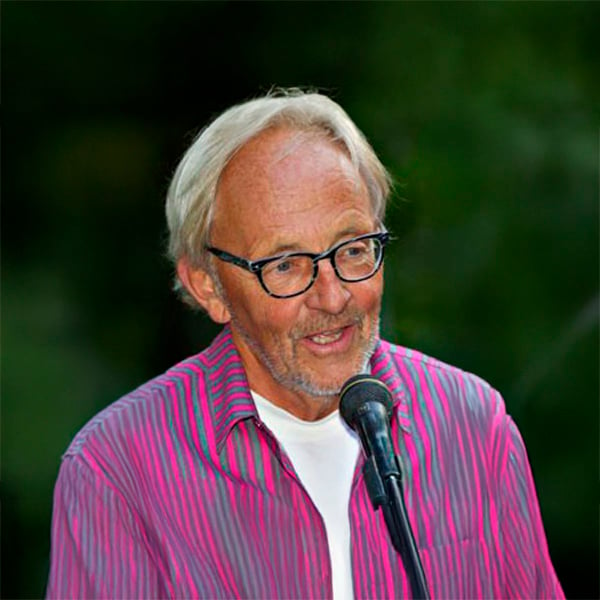
Dr Gunnar Westberg, TFF board member


Write Email
Phone +46 72 744 30 23 or +46 31 82 86 92

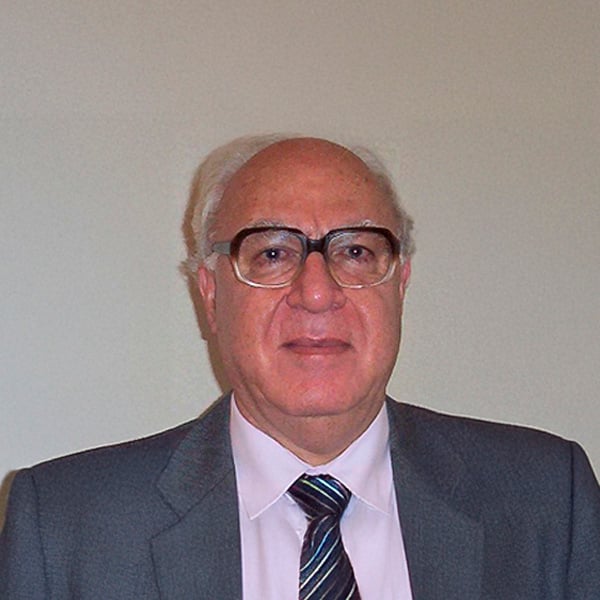
Dr Farhang Jahanpour
, TFF Associate
Write Email
Dept. of Continuing Education, member of the Kellogg College, Oxford
Former professor at Isfahan’s University
, Iran
Phone – call Jan Oberg’s number


TFF Sources


Iran, Israel and the USA
By Gunnar Westberg

Room for optimism in Iran and the P5+1 talks

By Farhang Jahanpour

Israel’s nuclear weapons
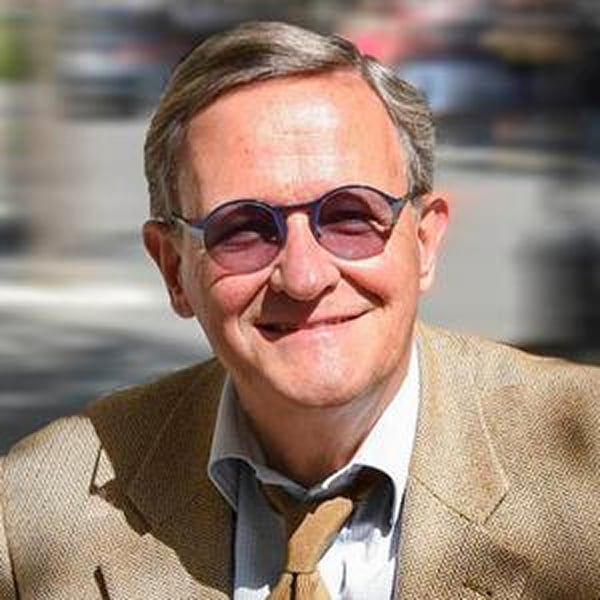
By Jonathan Power, TFF Associate

Attacking Iran – Disaster for the region and the whole world
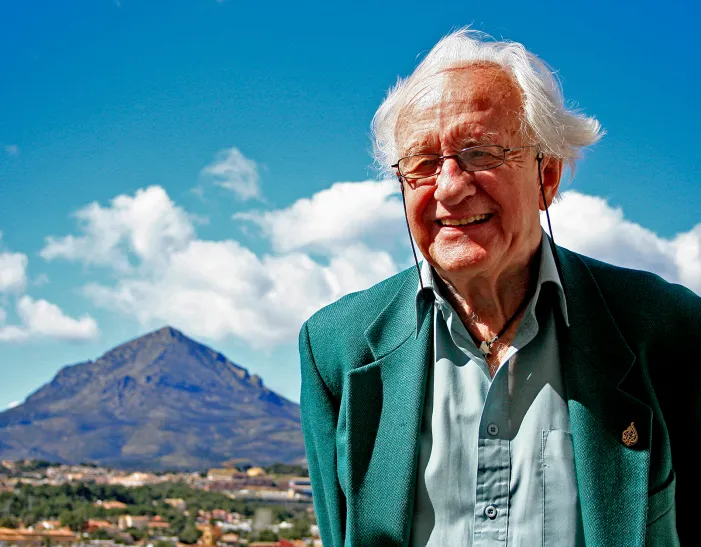
By Johan Galtung, TFF Associate

What to do instead of bombing Iran?
By Jan Oberg, video
 lecture

For a de-nuclearized Middle East
By Daisaku Ikeda, TFF Associate

The U.S. Congress pushes for war with Iran


By Stephen Zunes, TFF Associate

An innocent victim of our sanction against Iran

By Jan Oberg


Iran and Israel – What the West should and can do
By Jan Oberg

Was it wrong to support the Iranian revolution because it turned out badly?
By Richard Falk, TFF Associate

End

Related Posts

The agreement is catastrophic both because of what it says and what it doesn’t mention. It reduces further the major asset of security policies: Freedom of action. Jan Oberg TFF director September 25, 2026 A couple of hours before the agreement was signed on September 22, 2026, I published the following 13 hypotheses about what it would most likely contain on TFF Substack (in English). I was wrong on only the first point. Contrary to what Trump had written on his Truth Social platform, it does not appear to come into force immediately. In fact, it turned out to be worse than even I had anticipated. After these hypotheses now come a number of reflections in light of what the agreement actually contains, and does not contain, as well as the way in which it has generally been presented by major media outlets and by the public-service broadcaster DR. My...
Below are TFF-related media mentions, comments, videos and social media posts published elsewhere but not on this homepage. We happen to catch and list only a fraction. Regarding video comments and debates, we recommend that you go to the TFF Video Channel on Substack where many of them are reproduced. Jan Oberg is a contributor to China Daily – 52 million daily clicks – and Global Times, CGTN and CCTV (the national television), China Investment, Xinhua News Agency and several others. Articles and videos on these media very often multiply into countless Chinese (and Western media) that re-post them from these main media. Thanks to The China Academy, his analyses, interviews and comments are frequently posted on YouTube channels such as Thinkers Forum and Wave Media. These videos are often re-posted on Bilibili (China’s YouTube), the China Content Center on TikTok, and on the Chinese edition of TikTok, Douyin.com. This means reaching hundreds of millions of viewers worldwide over a year. While there are too many to catch on all these...
Jan Oberg May 15, 2026 Go to this Fox News page and scroll the whole way down: President Donald Trump tells the world that his meeting with President Xi Jinping yielded a lot of very concrete political and economic results – of course, only where the Chinese side, according to him, agreed with him. He does not mention the Taiwan issue, but Secretary of State, Marco Rubio, says that it did not feature prominently in their talks and that the US policy on Taiwan has not changed. Then go to China Daily – or Global Times – and you will see that for the Chinese it is framework, principles, structure of cooperation etc. that matters – all embedded in the overall idea of “constructive bilateral relationship of strategic stability.” Nowhere is any concrete agreement or deal – all that Trump refers to – mentioned. At the general level, this gives you insights into the very different social...

Recent Articles

Tony Robinson October 4, 2026 Violence is easy to recognise when someone is being beaten, shot or killed. It becomes more difficult when nobody is holding a weapon. Poverty, discrimination, exploitation and repression can restrict a human life just as effectively, although they do so in very different ways and with very different consequences. Simply adding more categories to an ever-growing list of forms of violence does not really solve the problem. The more interesting question is what all these different situations have in common and why it makes sense to describe them using the same word. Human beings do not simply react to what happens around them. They remember the past, imagine things that do not yet exist, make plans and undertake projects. Workers organise because they imagine different working conditions; people migrate because they imagine another life somewhere else; social movements emerge because people refuse to accept the...
It’s a matter of principles, courage, vision and pulling together – while the militarist world is falling apart… Peter Langille October 3, 2026 “Here, then, is the problem which we present to you, stark and dreadful and inescapable: Shall we put an end to the human race; or shall mankind renounce war?”The Bertrand Russell—Albert Einstein Manifesto, July 9, 1955 ⁕ The forecast for what’s ahead is worrisome. The sharp rise in armed conflicts over the past three years is adding to what was already the highest level in over seventy years. Genocides, which should be prevented are supported. A shared climate emergency that jeopardises survival is ignored. Diverse polls now suggest that people are war-weary, worried and interested in a more effective United Nations. And, there are viable policy options for a more secure world! Yet governments are doubling-down, betting on more war and investing heavily. If current trends persist,...
Johan Galtung 1930-2024October 2015 Published here on October 3, 2026 Let us focus on Civilization for conflict analysis and remedies. Major forms of disorder use violence; war is state organized violence. The most belligerent states are the United States of America and Israel, both with civilization roots. National Evangelism, the US Protestant Christian civilization– more national than evangelical–justifies US warfare as exceptionalism of a people chosen by God, with a manifest destiny to run the world. Orthodox Judaism justifies Israeli warfare to conquer and expand from Nile to Euphrates as a religious right and duty to the Eternal One. The third most belligerent country, the UK, no longer believes it is God-chosen but chosen by the USA; not quite the same but something. But the root cause of global disorder lies in the Occident–with Islam–seeing itself as the single, universal civilization valid for all at all times, all others being...

TFF on Substack

Discover and subscribe to more peace materials on TFF Substack

Most Popular

Tony Robinson October 4, 2026 Violence is easy to recognise when someone is being beaten, shot or killed. It becomes more difficult when nobody is holding a weapon. Poverty, discrimination, exploitation and repression can restrict a human life just as effectively, although they do so in very different ways and with very different consequences. Simply adding more categories to an ever-growing list of forms of violence does not really solve the problem. The more interesting question is what all these different situations have in common and why it makes sense to describe them using the same word. Human beings do not simply react to what happens around them. They remember the past, imagine things that do not yet exist, make plans and undertake projects. Workers organise because they imagine different working conditions; people migrate because they imagine another life somewhere else; social movements emerge because people refuse to accept the...
It’s a matter of principles, courage, vision and pulling together – while the militarist world is falling apart… Peter Langille October 3, 2026 “Here, then, is the problem which we present to you, stark and dreadful and inescapable: Shall we put an end to the human race; or shall mankind renounce war?”The Bertrand Russell—Albert Einstein Manifesto, July 9, 1955 ⁕ The forecast for what’s ahead is worrisome. The sharp rise in armed conflicts over the past three years is adding to what was already the highest level in over seventy years. Genocides, which should be prevented are supported. A shared climate emergency that jeopardises survival is ignored. Diverse polls now suggest that people are war-weary, worried and interested in a more effective United Nations. And, there are viable policy options for a more secure world! Yet governments are doubling-down, betting on more war and investing heavily. If current trends persist,...
Johan Galtung 1930-2024October 2015 Published here on October 3, 2026 Let us focus on Civilization for conflict analysis and remedies. Major forms of disorder use violence; war is state organized violence. The most belligerent states are the United States of America and Israel, both with civilization roots. National Evangelism, the US Protestant Christian civilization– more national than evangelical–justifies US warfare as exceptionalism of a people chosen by God, with a manifest destiny to run the world. Orthodox Judaism justifies Israeli warfare to conquer and expand from Nile to Euphrates as a religious right and duty to the Eternal One. The third most belligerent country, the UK, no longer believes it is God-chosen but chosen by the USA; not quite the same but something. But the root cause of global disorder lies in the Occident–with Islam–seeing itself as the single, universal civilization valid for all at all times, all others being...
Read More
Living-Peace-Sign-Budapest-copy
Tony Robinson October 4, 2026 Violence is easy to recognise when someone is being beaten, shot or killed. It becomes more difficult when nobody is holding a weapon. Poverty, discrimination, exploitation and repression can restrict a human life just as effectively, although they do so in very different ways and with very different consequences. Simply adding more categories to an ever-growing list of forms of violence does not really solve the problem. The more interesting question is what all these different situations have in common and why it makes sense to describe them using the same word. Human beings do not simply react to what happens around them. They remember the past, imagine things that do not yet exist, make plans and undertake projects. Workers organise because they imagine different working conditions; people migrate because they imagine another life somewhere else; social movements emerge because people refuse to accept the...
b54a1f10-8c65-4f0b-9dd5-4abc0a7d04cc_2659x2659
It’s a matter of principles, courage, vision and pulling together – while the militarist world is falling apart… Peter Langille October 3, 2026 “Here, then, is the problem which we present to you, stark and dreadful and inescapable: Shall we put an end to the human race; or shall mankind renounce war?”The Bertrand Russell—Albert Einstein Manifesto, July 9, 1955 ⁕ The forecast for what’s ahead is worrisome. The sharp rise in armed conflicts over the past three years is adding to what was already the highest level in over seventy years. Genocides, which should be prevented are supported. A shared climate emergency that jeopardises survival is ignored. Diverse polls now suggest that people are war-weary, worried and interested in a more effective United Nations. And, there are viable policy options for a more secure world! Yet governments are doubling-down, betting on more war and investing heavily. If current trends persist,...
010
Johan Galtung 1930-2024October 2015 Published here on October 3, 2026 Let us focus on Civilization for conflict analysis and remedies. Major forms of disorder use violence; war is state organized violence. The most belligerent states are the United States of America and Israel, both with civilization roots. National Evangelism, the US Protestant Christian civilization– more national than evangelical–justifies US warfare as exceptionalism of a people chosen by God, with a manifest destiny to run the world. Orthodox Judaism justifies Israeli warfare to conquer and expand from Nile to Euphrates as a religious right and duty to the Eternal One. The third most belligerent country, the UK, no longer believes it is God-chosen but chosen by the USA; not quite the same but something. But the root cause of global disorder lies in the Occident–with Islam–seeing itself as the single, universal civilization valid for all at all times, all others being...
Screenshot 2026-10-02 011738
Jan ObergPhD, director, The Transnational Foundation for Peace and Future Research, TFFLund, Sweden October 2, 2026 This is my full original manuscript. The Chinese Academy of Social Science, CASS, makes two publications out if it. 1. China’s Five-year plan emphasized the capabilities of basic research and original innovation. It is regarded as the goal of the future social development, which, as required, should be significantly enhanced. Can you comment on the importance of original innovation in research and academic study? I believe it is easier to define “original innovation” in the natural sciences than in social sciences. The breaking points of what constitutes something new, or innovative, are not quite as sharp in the latter. But in both fields it is about opening up something that was closed, unseen, unexplored before – making manifest what was earlier latent. Innovations come in many forms and shapes – naming something that was not...
arctic-circle-map
The agreement is catastrophic both because of what it says and what it doesn’t mention. It reduces further the major asset of security policies: Freedom of action. Jan Oberg TFF director September 25, 2026 A couple of hours before the agreement was signed on September 22, 2026, I published the following 13 hypotheses about what it would most likely contain on TFF Substack (in English). I was wrong on only the first point. Contrary to what Trump had written on his Truth Social platform, it does not appear to come into force immediately. In fact, it turned out to be worse than even I had anticipated. After these hypotheses now come a number of reflections in light of what the agreement actually contains, and does not contain, as well as the way in which it has generally been presented by major media outlets and by the public-service broadcaster DR. My...
girl-5894831_1280
Below are TFF-related media mentions, comments, videos and social media posts published elsewhere but not on this homepage. We happen to catch and list only a fraction. Regarding video comments and debates, we recommend that you go to the TFF Video Channel on Substack where many of them are reproduced. Jan Oberg is a contributor to China Daily – 52 million daily clicks – and Global Times, CGTN and CCTV (the national television), China Investment, Xinhua News Agency and several others. Articles and videos on these media very often multiply into countless Chinese (and Western media) that re-post them from these main media. Thanks to The China Academy, his analyses, interviews and comments are frequently posted on YouTube channels such as Thinkers Forum and Wave Media. These videos are often re-posted on Bilibili (China’s YouTube), the China Content Center on TikTok, and on the Chinese edition of TikTok, Douyin.com. This means reaching hundreds of millions of viewers worldwide over a year. While there are too many to catch on all these...