
Book Review

ZERO: THE CASE FOR NUCLEAR WEAPONS ABOLITION
By David Krieger (published in 2013 by the Nuclear Age Peace Foundation); $14.95

I have known David Krieger for the past twenty-five years, and he has never wavered, even for a day, from his lifelong journey dedicated to ridding the world of nuclear weapons and the threat of nuclear war. If I were given to categorization, I would label such an extraordinary engagement with a cause as an instance of ‘benign fanaticism.’

Unfortunately, from the perspective of the human future, it is a rather rare condition, posing the puzzle as to why Krieger should be so intensely inclined, given his seemingly untraumatized background. He traces his own obsession back to his mother’s principled refusal to install a bomb shelter in the backyard of their Los Angeles home when he was 12 years old. He comments in the Preface to ZERO that even at the time he “hadn’t expected” her to take such a stand, which he experienced as “a powerful lesson in compassion,” was especially moved by her unwillingness “to buy into saving herself at the expense of humanity.” (xiv).

Nine years later after Krieger graduated from college his mother was again an instrumental force, giving him as a graduation present a trip to Japan to witness first-hand “what two nuclear weapons had done to the cities of Hiroshima and Nagasaki.” (xiv) The rest is, as they say, ‘history.’ Or as Krieger puts it in characteristic understatement, “[t]hose visits changed my life.” (xiv)

On a psychological level, I remain perplexed by two opposite observations: we still lack the key that unlocks the mystery of Krieger’s unwavering dedication or explains why so few others have been similarly touched over the years. What ZERO does better than any of Krieger’s earlier books on nuclear weapons, and indeed more comprehensively and lucidly than anyone else anywhere, is to provide the reader with the reasons for thinking, feeling, and acting with a comparable passion until the goal of abolishing the totality of nuclear weaponry is finally reached.

Krieger himself extensively explores and laments the absence of widespread anti-nuclear passion and tries to explain it by calling attention to a series of factors: ignorance, complacency, deference to authority, sense of powerlessness, fear, economic advantage, conformity, marginalization, technological optimism, tyranny of experts. (90-92) The argument of the book, concisely developed in a series of short essays, and is reinforced by some canonical documents in the struggle over the decades to rid the world of nuclear weaponry, including Obama’s Prague Speech of 2009, the Einstein/Russell Manifesto of 1955, and Joseph Rotblat’s Nobel Prize Acceptance Speech of 1995.

Krieger’s approach as an author is multi-layered, and includes analytic critiques of conventional strategic wisdom that finds a security role for nuclear weapons, a worked out conception of how a negotiated international treaty could safely by stages move the world toward the zero goal of abolition, poems that seek to recapture the existential horror of nuclear war, essays of appreciation for the courage, commitment, and insight of the hibakusha (Japanese survivors of the 1945 atomic attacks), and concerted inquiry into what needs to happen to make nuclear disarmament a viable political project rather than a mere hope. For a short book of 166 pages this is a lot of ground to cover, but Krieger does so with clarity, a calm demeanor, and an impressive understanding and knowledge about all aspects of this complex question of what to do about nuclear weapons.

Krieger is not afraid to take on critics, even those who tell him that his quest is ‘silly’ because the nuclear genie, a favorite metaphor of liberal apologists, is out of the bottle, and cannot be put back. Krieger acknowledges that the knowledge is out there, and cannot be eliminated, but makes a measured case for his assessment that the nuclear disarmament process poses far fewer risks than does retaining the weaponry, and exposing humanity to what he believes to be the near certainty that nuclear weapons will be used in the future with apocalyptic results.

For Krieger the stakes are ultimate: human survival and the rights of future generations. In other words, given his strongly held opinion that the weaponry will be used at some point in the future with disastrous results, there is for him no ethically, politically, and even biologically acceptable alternative to getting rid totally of nuclear weapons. Krieger argues both from a worldview that regards nuclear weapons as intrinsically wrong because of the kind of suffering and devastation that they cause and consequentially because of their threat to civilization and even species survival.

Ever since I have known David Krieger he has been deeply influenced by Albert Einstein’s most famous assertion: “The unleashed power of the atom has changed everything save our modes of thinking, and thus we drift toward unparalleled catastrophe.” Krieger even treats his readers to an imagined dialogue between Einstein and the greatest interrogator of all time, Socrates. In their exchange, Socrates is convinced by Einstein that the necessary adjustments “won’t come from our leaders.”(85) Socrates gets the point in a manner that resonates with Krieger: “Then the people must be awakened, and they must demand an end to war, a world free of nuclear weapons.” (85)

There is a certain ambiguity in this statement when placed in the larger context of Krieger’s thought and work: is it necessary to end war as a social institution in order to get rid of nuclear weapons? In one way, most of Krieger’s efforts seem to separate nuclear weapons from the wider context of war making, but from time to time, there is a fusion of the two agendas.

Krieger realizes that changing our modes of thinking is a necessary step toward zero but it is not sufficient. He also believes that we can not achieve a world without nuclear weapons unless we act “collectively and globally” (97) to create a sustainable future. In the end, there is some ground for hope: “We have the potential to assert a constructive power for change that is greater than the destructive power of the weapons themselves.”

In effect, Krieger is telling us that what we can imagine we can achieve, but not without an unprecedented popular mobilization of peace minded people throughout the entire planet. Above all, Krieger wants to avoid a counsel of despair: “We must choose hope and find a way to fight for the dream of peace and the elimination of nuclear weapons. Achieving these goals is the great challenge of our time, on their success rests the realization of all other goals and for a more and decent world.” (105).

Certainly Krieger has founded and administered the Nuclear Age Peace Foundation over the course of more than 25 years maintaining faith with this uplifting vision. Such single mindedness is probably essential to motivate people of good will to support the endeavor, and to keep his own compass fixed over time, even in the face of many discouragements, on the destination he has identified as the only sanctuary to ensure a desirable future for humanity. Although sharing all of Krieger’s assessments, values, and visions, I am both less hopeful and not as focused, being committed to other indispensable policy imperatives (addressing the global challenge of climate change) and to more proximate ends that involve current injustices (seeking realization of the inalienable rights of the Palestinian people; seeking a UN Emergency Peace Force to intervene to protect vulnerable people facing a humanitarian or natural catastrophe), but I would not for a minute encourage Krieger to dilute his anti-nuclear posture.

This country and the world needs his message and dedication, and at some point, there may emerge a conjuncture of forces that is unexpectedly receptive to the vision of a world without nuclear weapons and even entertains the prospect of ending the war system as the foundation of national and global security.

From my vantage point such an anti-nuclear moment is not yet visible on the horizon of possibilities. After all, the Kissinger, Shultz, Nunn, and Perry call for abolition, emanating from the pinnacles of political realism, was widely noticed, but made no impact on the pro-nuclear consensus that guides the policy-making of the nine nuclear weapons states, and most of all the American establishment. And then Barack Obama’s 2009 call for a world without nuclear weapons, although qualified and conditional, was essentially abandoned even in the articulation of the president’s goals for his second term.

Presumably, his advisory entourage pushed him to concentrate his energy on attainable goals such as immigration and tax reform, protecting entitlements, and retreating from the fiscal cliffs, and not to waste his political capital on the unattainable such as nuclear disarmament and a just peace between Israel and Palestine. Short-term political calculations within the Beltway almost always trump long-term visionary goals, “and so it goes,” as Kurt Vonnegut taught us to say to the unyielding cruelty of human experience.

In the end, after this adventure of response to the life and work of a dear friend, admired collaborator, and inspirational worker for peace and justice, I can only commend David Krieger’s ZERO to everyone with the slightest interest in what kind of future we are bestowing upon our children and grandchildren. The book can be obtained via the following two links: it is preferred that ZERO is ordered through the Nuclear Age Peace Foundation at its online Peace Store.

It can also be ordered at Amazon.
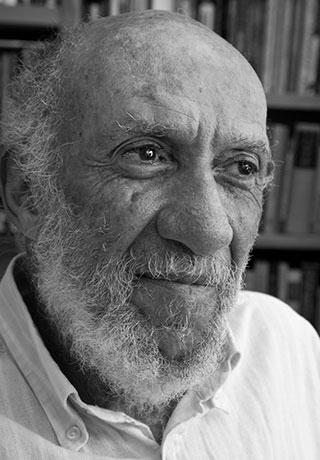
Professor Falk became an adviser to TFF when it was established in 1985.

Related Posts

Tony Robinson October 4, 2026 Violence is easy to recognise when someone is being beaten, shot or killed. It becomes more difficult when nobody is holding a weapon. Poverty, discrimination, exploitation and repression can restrict a human life just as effectively, although they do so in very different ways and with very different consequences. Simply adding more categories to an ever-growing list of forms of violence does not really solve the problem. The more interesting question is what all these different situations have in common and why it makes sense to describe them using the same word. Human beings do not simply react to what happens around them. They remember the past, imagine things that do not yet exist, make plans and undertake projects. Workers organise because they imagine different working conditions; people migrate because they imagine another life somewhere else; social movements emerge because people refuse to accept the...
It’s a matter of principles, courage, vision and pulling together – while the militarist world is falling apart… Peter Langille October 3, 2026 “Here, then, is the problem which we present to you, stark and dreadful and inescapable: Shall we put an end to the human race; or shall mankind renounce war?”The Bertrand Russell—Albert Einstein Manifesto, July 9, 1955 ⁕ The forecast for what’s ahead is worrisome. The sharp rise in armed conflicts over the past three years is adding to what was already the highest level in over seventy years. Genocides, which should be prevented are supported. A shared climate emergency that jeopardises survival is ignored. Diverse polls now suggest that people are war-weary, worried and interested in a more effective United Nations. And, there are viable policy options for a more secure world! Yet governments are doubling-down, betting on more war and investing heavily. If current trends persist,...
Johan Galtung 1930-2024October 2015 Published here on October 3, 2026 Let us focus on Civilization for conflict analysis and remedies. Major forms of disorder use violence; war is state organized violence. The most belligerent states are the United States of America and Israel, both with civilization roots. National Evangelism, the US Protestant Christian civilization– more national than evangelical–justifies US warfare as exceptionalism of a people chosen by God, with a manifest destiny to run the world. Orthodox Judaism justifies Israeli warfare to conquer and expand from Nile to Euphrates as a religious right and duty to the Eternal One. The third most belligerent country, the UK, no longer believes it is God-chosen but chosen by the USA; not quite the same but something. But the root cause of global disorder lies in the Occident–with Islam–seeing itself as the single, universal civilization valid for all at all times, all others being...

Recent Articles

Tony Robinson October 4, 2026 Violence is easy to recognise when someone is being beaten, shot or killed. It becomes more difficult when nobody is holding a weapon. Poverty, discrimination, exploitation and repression can restrict a human life just as effectively, although they do so in very different ways and with very different consequences. Simply adding more categories to an ever-growing list of forms of violence does not really solve the problem. The more interesting question is what all these different situations have in common and why it makes sense to describe them using the same word. Human beings do not simply react to what happens around them. They remember the past, imagine things that do not yet exist, make plans and undertake projects. Workers organise because they imagine different working conditions; people migrate because they imagine another life somewhere else; social movements emerge because people refuse to accept the...
It’s a matter of principles, courage, vision and pulling together – while the militarist world is falling apart… Peter Langille October 3, 2026 “Here, then, is the problem which we present to you, stark and dreadful and inescapable: Shall we put an end to the human race; or shall mankind renounce war?”The Bertrand Russell—Albert Einstein Manifesto, July 9, 1955 ⁕ The forecast for what’s ahead is worrisome. The sharp rise in armed conflicts over the past three years is adding to what was already the highest level in over seventy years. Genocides, which should be prevented are supported. A shared climate emergency that jeopardises survival is ignored. Diverse polls now suggest that people are war-weary, worried and interested in a more effective United Nations. And, there are viable policy options for a more secure world! Yet governments are doubling-down, betting on more war and investing heavily. If current trends persist,...
Johan Galtung 1930-2024October 2015 Published here on October 3, 2026 Let us focus on Civilization for conflict analysis and remedies. Major forms of disorder use violence; war is state organized violence. The most belligerent states are the United States of America and Israel, both with civilization roots. National Evangelism, the US Protestant Christian civilization– more national than evangelical–justifies US warfare as exceptionalism of a people chosen by God, with a manifest destiny to run the world. Orthodox Judaism justifies Israeli warfare to conquer and expand from Nile to Euphrates as a religious right and duty to the Eternal One. The third most belligerent country, the UK, no longer believes it is God-chosen but chosen by the USA; not quite the same but something. But the root cause of global disorder lies in the Occident–with Islam–seeing itself as the single, universal civilization valid for all at all times, all others being...

TFF on Substack

Discover and subscribe to more peace materials on TFF Substack

Most Popular

Tony Robinson October 4, 2026 Violence is easy to recognise when someone is being beaten, shot or killed. It becomes more difficult when nobody is holding a weapon. Poverty, discrimination, exploitation and repression can restrict a human life just as effectively, although they do so in very different ways and with very different consequences. Simply adding more categories to an ever-growing list of forms of violence does not really solve the problem. The more interesting question is what all these different situations have in common and why it makes sense to describe them using the same word. Human beings do not simply react to what happens around them. They remember the past, imagine things that do not yet exist, make plans and undertake projects. Workers organise because they imagine different working conditions; people migrate because they imagine another life somewhere else; social movements emerge because people refuse to accept the...
It’s a matter of principles, courage, vision and pulling together – while the militarist world is falling apart… Peter Langille October 3, 2026 “Here, then, is the problem which we present to you, stark and dreadful and inescapable: Shall we put an end to the human race; or shall mankind renounce war?”The Bertrand Russell—Albert Einstein Manifesto, July 9, 1955 ⁕ The forecast for what’s ahead is worrisome. The sharp rise in armed conflicts over the past three years is adding to what was already the highest level in over seventy years. Genocides, which should be prevented are supported. A shared climate emergency that jeopardises survival is ignored. Diverse polls now suggest that people are war-weary, worried and interested in a more effective United Nations. And, there are viable policy options for a more secure world! Yet governments are doubling-down, betting on more war and investing heavily. If current trends persist,...
Johan Galtung 1930-2024October 2015 Published here on October 3, 2026 Let us focus on Civilization for conflict analysis and remedies. Major forms of disorder use violence; war is state organized violence. The most belligerent states are the United States of America and Israel, both with civilization roots. National Evangelism, the US Protestant Christian civilization– more national than evangelical–justifies US warfare as exceptionalism of a people chosen by God, with a manifest destiny to run the world. Orthodox Judaism justifies Israeli warfare to conquer and expand from Nile to Euphrates as a religious right and duty to the Eternal One. The third most belligerent country, the UK, no longer believes it is God-chosen but chosen by the USA; not quite the same but something. But the root cause of global disorder lies in the Occident–with Islam–seeing itself as the single, universal civilization valid for all at all times, all others being...
Read More
Living-Peace-Sign-Budapest-copy
Tony Robinson October 4, 2026 Violence is easy to recognise when someone is being beaten, shot or killed. It becomes more difficult when nobody is holding a weapon. Poverty, discrimination, exploitation and repression can restrict a human life just as effectively, although they do so in very different ways and with very different consequences. Simply adding more categories to an ever-growing list of forms of violence does not really solve the problem. The more interesting question is what all these different situations have in common and why it makes sense to describe them using the same word. Human beings do not simply react to what happens around them. They remember the past, imagine things that do not yet exist, make plans and undertake projects. Workers organise because they imagine different working conditions; people migrate because they imagine another life somewhere else; social movements emerge because people refuse to accept the...
b54a1f10-8c65-4f0b-9dd5-4abc0a7d04cc_2659x2659
It’s a matter of principles, courage, vision and pulling together – while the militarist world is falling apart… Peter Langille October 3, 2026 “Here, then, is the problem which we present to you, stark and dreadful and inescapable: Shall we put an end to the human race; or shall mankind renounce war?”The Bertrand Russell—Albert Einstein Manifesto, July 9, 1955 ⁕ The forecast for what’s ahead is worrisome. The sharp rise in armed conflicts over the past three years is adding to what was already the highest level in over seventy years. Genocides, which should be prevented are supported. A shared climate emergency that jeopardises survival is ignored. Diverse polls now suggest that people are war-weary, worried and interested in a more effective United Nations. And, there are viable policy options for a more secure world! Yet governments are doubling-down, betting on more war and investing heavily. If current trends persist,...
010
Johan Galtung 1930-2024October 2015 Published here on October 3, 2026 Let us focus on Civilization for conflict analysis and remedies. Major forms of disorder use violence; war is state organized violence. The most belligerent states are the United States of America and Israel, both with civilization roots. National Evangelism, the US Protestant Christian civilization– more national than evangelical–justifies US warfare as exceptionalism of a people chosen by God, with a manifest destiny to run the world. Orthodox Judaism justifies Israeli warfare to conquer and expand from Nile to Euphrates as a religious right and duty to the Eternal One. The third most belligerent country, the UK, no longer believes it is God-chosen but chosen by the USA; not quite the same but something. But the root cause of global disorder lies in the Occident–with Islam–seeing itself as the single, universal civilization valid for all at all times, all others being...
Screenshot 2026-10-02 011738
Jan ObergPhD, director, The Transnational Foundation for Peace and Future Research, TFFLund, Sweden October 2, 2026 This is my full original manuscript. The Chinese Academy of Social Science, CASS, makes two publications out if it. 1. China’s Five-year plan emphasized the capabilities of basic research and original innovation. It is regarded as the goal of the future social development, which, as required, should be significantly enhanced. Can you comment on the importance of original innovation in research and academic study? I believe it is easier to define “original innovation” in the natural sciences than in social sciences. The breaking points of what constitutes something new, or innovative, are not quite as sharp in the latter. But in both fields it is about opening up something that was closed, unseen, unexplored before – making manifest what was earlier latent. Innovations come in many forms and shapes – naming something that was not...
arctic-circle-map
The agreement is catastrophic both because of what it says and what it doesn’t mention. It reduces further the major asset of security policies: Freedom of action. Jan Oberg TFF director September 25, 2026 A couple of hours before the agreement was signed on September 22, 2026, I published the following 13 hypotheses about what it would most likely contain on TFF Substack (in English). I was wrong on only the first point. Contrary to what Trump had written on his Truth Social platform, it does not appear to come into force immediately. In fact, it turned out to be worse than even I had anticipated. After these hypotheses now come a number of reflections in light of what the agreement actually contains, and does not contain, as well as the way in which it has generally been presented by major media outlets and by the public-service broadcaster DR. My...
girl-5894831_1280
Below are TFF-related media mentions, comments, videos and social media posts published elsewhere but not on this homepage. We happen to catch and list only a fraction. Regarding video comments and debates, we recommend that you go to the TFF Video Channel on Substack where many of them are reproduced. Jan Oberg is a contributor to China Daily – 52 million daily clicks – and Global Times, CGTN and CCTV (the national television), China Investment, Xinhua News Agency and several others. Articles and videos on these media very often multiply into countless Chinese (and Western media) that re-post them from these main media. Thanks to The China Academy, his analyses, interviews and comments are frequently posted on YouTube channels such as Thinkers Forum and Wave Media. These videos are often re-posted on Bilibili (China’s YouTube), the China Content Center on TikTok, and on the Chinese edition of TikTok, Douyin.com. This means reaching hundreds of millions of viewers worldwide over a year. While there are too many to catch on all these...





