
Hope, wisdom, law, ethics, and spirituality in relation to killing and dying: Persisting Syrian dilemmas

In appraising political developments most of us rely on trusted sources, our overall political orientation, what we have learned from past experience, and our personal hierarchy of hopes and fears. No matter how careful, and judicious, we are still reaching conclusions in settings of radical uncertainty, which incline our judgments to reflect a priori and interpretative biases.

As militarists tends to favor reliance on force to resolve disputes among and within sovereign states, so war weary and pacifist citizens will seek to resolve even the most extreme dire conflict situations by insisting on the potentialities of non-violent diplomacy.

In the end, even in liberal democracies most of us are far too dependent on rather untrustworthy and manipulated media assessments to form our judgments about unfolding world events. How then should we understand the terrible ongoing ordeal of violence in Syria? The mainly polarized perceptions of the conflict are almost certain to convey one-sided false impressions that either the atrocities and violence are the work of a bloody regime that has a history of brutal oppression or that this hapless country has become the scene of a proxy war between irresponsible outsiders, with strong religious sectarian overtones of the Sunni/Shi’ia regional divide, and further complicated by various geopolitical alignments and the undisclosed ambitions of the United States, Russia, Israel, Iran, Saudi Arabia, and others.

Undoubtedly, the truth lies at some point between the two poles, with many ambiguities, undisclosed interferences, and assorted unknowns undermining our capacity to reach any ‘objective’ understanding, and leading many to discount the extremely dirty hands of all the major participants, seen and unseen, so as to permit a clear partisan position of being for or against.

The difficulties are even greater. If, in contrast, we seek to interpret the conflict from all angles with as much detachment as possible, the result is likely to be paralyzing so far as action is concerned. There is too much uncertainty, secrecy, and complexity to give rise to the clarity needed to shape policy with any confidence, and without confidence killing or allowing the killing to continue, no responsible conclusion can be reached. In effect, only over-simplification, that is, polarized interpretations, are capable of overcoming passivity, but at a high cost. Arguably, in relation to the Syrian maelstrom, passivity functions as a political virtue, or put differently, as the lesser of evils.

In such a situation, assuming we repudiate proxy and geopolitical agendas as the desired bases for determining the future for Syria, what should we hope for? A rapid end of the violence, some sort of now unimaginable accommodation between the two (or many) sides in the struggle, a recognition by the various ‘interested’ third parties that their goals cannot be attained at acceptable costs, an abdication by Bashar al-Assad, an arms embargo uniformly enforced, the completely implausible emergence of constitutional democracy, including respect for minority rights. Merely composing such a wish list underscores the seeming hopelessness of resolving the situation in as acceptable manner, and yet we know that it will somehow be eventually resolved.

From the perspective of the Syrian factions and participants, so much of their own blood has been spilled, that it probably seems unacceptable and unreliable to be receptive at this point to any offer of reconciliation, and when the only hope is for either an unconditional victory for the self or the extermination of the other. And with such extremist attitudes, it is not surprising that the bodies keep piling up! What are we to do when every realistic trajectory adds to an outcome that is already tragic?

My approach in these situations of internal conflict has been to oppose and distrust the humanitarian and democratizing pretensions of those who counsel intervention under the alluring banner of ‘the responsibility to protect.’ (R2P) and other liberal rationales supportive of military intervention, what Noam Chomsky tellingly calls ‘military humanism.’

Yet in concrete situations such as existed in Kosovo in 1999, Libya in 2011, and Syria today, to counsel a passive international response to the most severe crimes against humanity and genocidal atrocities would seems to deny the most elemental ethical bonds of human solidarity in a networked, globalized world, bonds that may turn out in the near future to be indispensable if we are to achieve environmental sustainability before the planet burns us to a crisp.

There are structural issues arising from the statist character of world order in the post-colonial era that make political choices in such situations of bitter internal conflict a tragic predicament. On the one side, is the statist logic that endows territorial governments with unconditional authority to sustain their unity in the face of insurgent challenges, a political principle given constitutional backing in Article 2(7) of the UN Charter, prohibiting UN intervention in internal conflicts.

This statist logic is deeply confused and contradicted by legitimizing the inalienable and emancipatory right of self-determination conferred on every ‘people,’ and not on governments. In the background, as well, are the various non-Western collective memories, uniformly bad, of colonial rule, and wellfounded contemporary suspicions that humanitarian interventions, however described and unwittingly, represent attempted colonialist revivals, both ideologically and behaviorally.

On the other side of the policy fence, there is an odd coalition of liberal internationalists who sincerely regard intervention as an essential tool for the promotion of a more humane world along with more cynical geopolitical strategists who regard conflict zones, especially where large oil reserves exist, as targets of opportunity for extending Western interests. Further, normative confusion arises from the drift of practice on the part of the UN that has been understood to vest in the Security Council unlimited competence to interpret the Charter as it wishes. (See World Court decision in the Lockerbie case, which coincidentally involved Libya).

In this regard, the rhetoric of human rights has been used to circumvent the Charter limits restricting UN competence to address conflicts internal to states: for instance, the Security Council in 2011 authorized a ‘No Fly Zone’ for Libya that was immediately converted by the NATO intervenors into a de facto mandate for ‘regime change’; the whole undertaking was validated for most advocates of the broadened undertaking because it freed Libya from a murderous dictatorship; others approved, believing that the operation involved a proper invocation of the R2P norm, and still others endorsed the intervention on the basis of its supposed post-conflict state-building successes, avoiding chaos, and especially the rather impressive efforts to base the governance of Libya on democratic procedures. As the situation continues to evolve, there exists controversy as to how to assess the positive and negative aspects of post-Qaddafi Libya.

In evaluating our positions for or against a given intervention, should our sense of strategic motivations matter? For instance, the Kosovo intervention was at least partially motivated by the desire in Washington and among many European elites to show that NATO was still useful despite the end of the Cold War and the disappearance of the Soviet threat that generated the alliance in the first place. Do such strategic considerations matter if indeed the people of Kosovo were spared the kind of ethnic cleansing endured not long before by the people of Bosnia, culminating in the genocide at Srebrenica in 1995? Might it not be claimed that only when strategic incentives exist, will an intervention be of sufficient magnitude to be effective? In effect, altruism alone will not produce effective forms of humanitarian intervention. Does the existence of double standards matter? Certain crimes against humanity generate an interventionary response while others are overlooked, for instance, the persisting collective punishment of the people of Gaza. Should we drink from a glass that is only half full? The same question applies to the recent surge of criminal prosecutions under the authority of the International Criminal Court.

There are other ways of evaluating what has taken place. For example, should the consequences of intervention or non-intervention color our assessments of the policy choice? Let’s say that Kosovo evolves in a constructive direction of respect for human rights, including those of the Serbian minority, or in contrast, becomes repressive towards of its minority population. Do we, should we, retrospectively reexamine our earlier view on what it was preferable to do back in 1999? And finally, should we give priority to the postulates of human solidarity, what might be called ‘moral globalization,’ or to the primacy of self-determination as the best hope that peoples of the world have of achieving emancipatory goals, recognizing that the grand strategies of the geopolitical actors are indifferent, at best, and often hostile to such claims?

My argument reduces to this: in such a global setting we cannot avoid making disastrous mistakes, but to renounce the effort to find the preferred course of action, we should not withdraw from politics and throw up our hands in frustration. We can expose false claims, contradictions, double standards, and we can side with those who act on behalf of emancipatory goals, while not being insensitive to the complexity, and even contradictions, of ‘emancipation’ in many political settings.

There are often ‘right’ and ‘wrong’ sides from the perspective of international morality, international law, and global justice, but not always. When all sides seem deeply ‘wrong’ as in Syria, the dilemmas for the engaged global citizen is heightened to the point where the only responsible posture may be one of humility and an acknowledgement of radical uncertainty. In such circumstances, the most salient moral imperative is to refrain from acts that are likely to intensify the violence, intensify suffering, and increase dying and killing. This may not be a heroic political posture, but it may offer the most constructive response to a particular mix of circumstances, minimizing prospects of further escalation.

Finally, it is not very helpful to observe, ‘time will tell whether this was the best response.’ Perhaps, we can learn for the future about factors overlooked that might have altered our assessment, but our past decision was based on what we knew and perceived at that time, and should not be revised by taking account of subsequent developments. In some situations, such as the many struggles of oppressed and occupied peoples, it seems desirable to be hopeful even in the face of the realization that the eventual outcome could bring deep disappointment.

We should, I feel, as often as possible be guided by our hopes and beliefs even when, as nearly always, we are confronted by the dilemmas of radical uncertainty. We should also do our best not to be manipulated by those media savvy ‘realists’ who stress fears, claim a convergence of benevolence and interests, exaggerate the benefits of military superiority, and especially in America serve as the self-appointed chief designers of exploitative patterns of geopolitically shaped security.

With hope we can often overcome uncertainty with desire, and engage in struggles for a just and sustainable future that celebrates human potential for moral growth, political enhancement, and spiritual wisdom.

Without hope we fall victim to despair and will be carried along with the historical current that is leading nation, society, civilization, species, and world toward catastrophe.

We live in what can be described both as the Information Age and cope daily with information overload. We are supposed to shape policy on the basis of knowledge, yet when it comes to crucial issues such war/peace or climate change, we act and advocate without sufficient knowledge, or even ignore an informed consensus, and what is worse, we put aside law, ethics, and our spiritual sensitivities.

Finally, to think, act, and feel as a citizen pilgrim provides the necessary foundation for hope, and its two sisters, wisdom and spirituality.
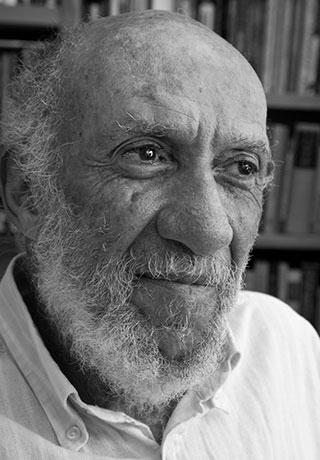

Professor Falk became an adviser to TFF when it was established in 1985.

Related Posts

Tony Robinson October 4, 2026 Violence is easy to recognise when someone is being beaten, shot or killed. It becomes more difficult when nobody is holding a weapon. Poverty, discrimination, exploitation and repression can restrict a human life just as effectively, although they do so in very different ways and with very different consequences. Simply adding more categories to an ever-growing list of forms of violence does not really solve the problem. The more interesting question is what all these different situations have in common and why it makes sense to describe them using the same word. Human beings do not simply react to what happens around them. They remember the past, imagine things that do not yet exist, make plans and undertake projects. Workers organise because they imagine different working conditions; people migrate because they imagine another life somewhere else; social movements emerge because people refuse to accept the...
It’s a matter of principles, courage, vision and pulling together – while the militarist world is falling apart… Peter Langille October 3, 2026 “Here, then, is the problem which we present to you, stark and dreadful and inescapable: Shall we put an end to the human race; or shall mankind renounce war?”The Bertrand Russell—Albert Einstein Manifesto, July 9, 1955 ⁕ The forecast for what’s ahead is worrisome. The sharp rise in armed conflicts over the past three years is adding to what was already the highest level in over seventy years. Genocides, which should be prevented are supported. A shared climate emergency that jeopardises survival is ignored. Diverse polls now suggest that people are war-weary, worried and interested in a more effective United Nations. And, there are viable policy options for a more secure world! Yet governments are doubling-down, betting on more war and investing heavily. If current trends persist,...
Johan Galtung 1930-2024October 2015 Published here on October 3, 2026 Let us focus on Civilization for conflict analysis and remedies. Major forms of disorder use violence; war is state organized violence. The most belligerent states are the United States of America and Israel, both with civilization roots. National Evangelism, the US Protestant Christian civilization– more national than evangelical–justifies US warfare as exceptionalism of a people chosen by God, with a manifest destiny to run the world. Orthodox Judaism justifies Israeli warfare to conquer and expand from Nile to Euphrates as a religious right and duty to the Eternal One. The third most belligerent country, the UK, no longer believes it is God-chosen but chosen by the USA; not quite the same but something. But the root cause of global disorder lies in the Occident–with Islam–seeing itself as the single, universal civilization valid for all at all times, all others being...

Recent Articles

Tony Robinson October 4, 2026 Violence is easy to recognise when someone is being beaten, shot or killed. It becomes more difficult when nobody is holding a weapon. Poverty, discrimination, exploitation and repression can restrict a human life just as effectively, although they do so in very different ways and with very different consequences. Simply adding more categories to an ever-growing list of forms of violence does not really solve the problem. The more interesting question is what all these different situations have in common and why it makes sense to describe them using the same word. Human beings do not simply react to what happens around them. They remember the past, imagine things that do not yet exist, make plans and undertake projects. Workers organise because they imagine different working conditions; people migrate because they imagine another life somewhere else; social movements emerge because people refuse to accept the...
It’s a matter of principles, courage, vision and pulling together – while the militarist world is falling apart… Peter Langille October 3, 2026 “Here, then, is the problem which we present to you, stark and dreadful and inescapable: Shall we put an end to the human race; or shall mankind renounce war?”The Bertrand Russell—Albert Einstein Manifesto, July 9, 1955 ⁕ The forecast for what’s ahead is worrisome. The sharp rise in armed conflicts over the past three years is adding to what was already the highest level in over seventy years. Genocides, which should be prevented are supported. A shared climate emergency that jeopardises survival is ignored. Diverse polls now suggest that people are war-weary, worried and interested in a more effective United Nations. And, there are viable policy options for a more secure world! Yet governments are doubling-down, betting on more war and investing heavily. If current trends persist,...
Johan Galtung 1930-2024October 2015 Published here on October 3, 2026 Let us focus on Civilization for conflict analysis and remedies. Major forms of disorder use violence; war is state organized violence. The most belligerent states are the United States of America and Israel, both with civilization roots. National Evangelism, the US Protestant Christian civilization– more national than evangelical–justifies US warfare as exceptionalism of a people chosen by God, with a manifest destiny to run the world. Orthodox Judaism justifies Israeli warfare to conquer and expand from Nile to Euphrates as a religious right and duty to the Eternal One. The third most belligerent country, the UK, no longer believes it is God-chosen but chosen by the USA; not quite the same but something. But the root cause of global disorder lies in the Occident–with Islam–seeing itself as the single, universal civilization valid for all at all times, all others being...

TFF on Substack

Discover and subscribe to more peace materials on TFF Substack

Most Popular

Tony Robinson October 4, 2026 Violence is easy to recognise when someone is being beaten, shot or killed. It becomes more difficult when nobody is holding a weapon. Poverty, discrimination, exploitation and repression can restrict a human life just as effectively, although they do so in very different ways and with very different consequences. Simply adding more categories to an ever-growing list of forms of violence does not really solve the problem. The more interesting question is what all these different situations have in common and why it makes sense to describe them using the same word. Human beings do not simply react to what happens around them. They remember the past, imagine things that do not yet exist, make plans and undertake projects. Workers organise because they imagine different working conditions; people migrate because they imagine another life somewhere else; social movements emerge because people refuse to accept the...
It’s a matter of principles, courage, vision and pulling together – while the militarist world is falling apart… Peter Langille October 3, 2026 “Here, then, is the problem which we present to you, stark and dreadful and inescapable: Shall we put an end to the human race; or shall mankind renounce war?”The Bertrand Russell—Albert Einstein Manifesto, July 9, 1955 ⁕ The forecast for what’s ahead is worrisome. The sharp rise in armed conflicts over the past three years is adding to what was already the highest level in over seventy years. Genocides, which should be prevented are supported. A shared climate emergency that jeopardises survival is ignored. Diverse polls now suggest that people are war-weary, worried and interested in a more effective United Nations. And, there are viable policy options for a more secure world! Yet governments are doubling-down, betting on more war and investing heavily. If current trends persist,...
Johan Galtung 1930-2024October 2015 Published here on October 3, 2026 Let us focus on Civilization for conflict analysis and remedies. Major forms of disorder use violence; war is state organized violence. The most belligerent states are the United States of America and Israel, both with civilization roots. National Evangelism, the US Protestant Christian civilization– more national than evangelical–justifies US warfare as exceptionalism of a people chosen by God, with a manifest destiny to run the world. Orthodox Judaism justifies Israeli warfare to conquer and expand from Nile to Euphrates as a religious right and duty to the Eternal One. The third most belligerent country, the UK, no longer believes it is God-chosen but chosen by the USA; not quite the same but something. But the root cause of global disorder lies in the Occident–with Islam–seeing itself as the single, universal civilization valid for all at all times, all others being...
Read More
Living-Peace-Sign-Budapest-copy
Tony Robinson October 4, 2026 Violence is easy to recognise when someone is being beaten, shot or killed. It becomes more difficult when nobody is holding a weapon. Poverty, discrimination, exploitation and repression can restrict a human life just as effectively, although they do so in very different ways and with very different consequences. Simply adding more categories to an ever-growing list of forms of violence does not really solve the problem. The more interesting question is what all these different situations have in common and why it makes sense to describe them using the same word. Human beings do not simply react to what happens around them. They remember the past, imagine things that do not yet exist, make plans and undertake projects. Workers organise because they imagine different working conditions; people migrate because they imagine another life somewhere else; social movements emerge because people refuse to accept the...
b54a1f10-8c65-4f0b-9dd5-4abc0a7d04cc_2659x2659
It’s a matter of principles, courage, vision and pulling together – while the militarist world is falling apart… Peter Langille October 3, 2026 “Here, then, is the problem which we present to you, stark and dreadful and inescapable: Shall we put an end to the human race; or shall mankind renounce war?”The Bertrand Russell—Albert Einstein Manifesto, July 9, 1955 ⁕ The forecast for what’s ahead is worrisome. The sharp rise in armed conflicts over the past three years is adding to what was already the highest level in over seventy years. Genocides, which should be prevented are supported. A shared climate emergency that jeopardises survival is ignored. Diverse polls now suggest that people are war-weary, worried and interested in a more effective United Nations. And, there are viable policy options for a more secure world! Yet governments are doubling-down, betting on more war and investing heavily. If current trends persist,...
010
Johan Galtung 1930-2024October 2015 Published here on October 3, 2026 Let us focus on Civilization for conflict analysis and remedies. Major forms of disorder use violence; war is state organized violence. The most belligerent states are the United States of America and Israel, both with civilization roots. National Evangelism, the US Protestant Christian civilization– more national than evangelical–justifies US warfare as exceptionalism of a people chosen by God, with a manifest destiny to run the world. Orthodox Judaism justifies Israeli warfare to conquer and expand from Nile to Euphrates as a religious right and duty to the Eternal One. The third most belligerent country, the UK, no longer believes it is God-chosen but chosen by the USA; not quite the same but something. But the root cause of global disorder lies in the Occident–with Islam–seeing itself as the single, universal civilization valid for all at all times, all others being...
Screenshot 2026-10-02 011738
Jan ObergPhD, director, The Transnational Foundation for Peace and Future Research, TFFLund, Sweden October 2, 2026 This is my full original manuscript. The Chinese Academy of Social Science, CASS, makes two publications out if it. 1. China’s Five-year plan emphasized the capabilities of basic research and original innovation. It is regarded as the goal of the future social development, which, as required, should be significantly enhanced. Can you comment on the importance of original innovation in research and academic study? I believe it is easier to define “original innovation” in the natural sciences than in social sciences. The breaking points of what constitutes something new, or innovative, are not quite as sharp in the latter. But in both fields it is about opening up something that was closed, unseen, unexplored before – making manifest what was earlier latent. Innovations come in many forms and shapes – naming something that was not...
arctic-circle-map
The agreement is catastrophic both because of what it says and what it doesn’t mention. It reduces further the major asset of security policies: Freedom of action. Jan Oberg TFF director September 25, 2026 A couple of hours before the agreement was signed on September 22, 2026, I published the following 13 hypotheses about what it would most likely contain on TFF Substack (in English). I was wrong on only the first point. Contrary to what Trump had written on his Truth Social platform, it does not appear to come into force immediately. In fact, it turned out to be worse than even I had anticipated. After these hypotheses now come a number of reflections in light of what the agreement actually contains, and does not contain, as well as the way in which it has generally been presented by major media outlets and by the public-service broadcaster DR. My...
girl-5894831_1280
Below are TFF-related media mentions, comments, videos and social media posts published elsewhere but not on this homepage. We happen to catch and list only a fraction. Regarding video comments and debates, we recommend that you go to the TFF Video Channel on Substack where many of them are reproduced. Jan Oberg is a contributor to China Daily – 52 million daily clicks – and Global Times, CGTN and CCTV (the national television), China Investment, Xinhua News Agency and several others. Articles and videos on these media very often multiply into countless Chinese (and Western media) that re-post them from these main media. Thanks to The China Academy, his analyses, interviews and comments are frequently posted on YouTube channels such as Thinkers Forum and Wave Media. These videos are often re-posted on Bilibili (China’s YouTube), the China Content Center on TikTok, and on the Chinese edition of TikTok, Douyin.com. This means reaching hundreds of millions of viewers worldwide over a year. While there are too many to catch on all these...




