
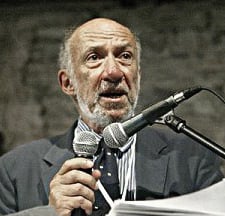
Around the world even more than in the United States there is an audible sigh of relief the day after Obama won a clear mandate for a second term as president. Deconstructed it mainly meant that many more were relieved that Romney lost, rather than excited that Obama won. Yet there were some, with whom I partly agree, whose gaze carries beyond the narrow victory in popular vote (as distinct from the decisive victory in the electoral college vote), to appreciate a positive fundamental change in American demographics.

The white majority coalition that Reagan fashioned so skillfully in the 1980s, achieving incredibly regressive societal results, seems to be losing out to the rising proportion of the electorate that is African-American and Latino, reinforced by the political outlook of youth and the liberal outlook of many women when it comes to reproductive rights. Perhaps, as indicative of a changing social climate were the successful referenda on state ballots in Maine, Maryland, and Washington to legalize same sex marriage and separate initiatives calling for legalizing the medical use of marijuana. Only a decade ago putting such measures on the ballot in several battleground states was understood as a brilliant tactical move by Karl Rove to mobilize the Republican base that was passionately dedicated to defeating such liberalizing initiatives, widely regarded by conservatives as signs of societal degeneracy.

What makes the Obama victory surprising is that his four years in the White House had definitely demobilized his base that had been so ardent in 2008, and seemed only lukewarm in 2012. Toward the end of the recent campaign, antagonism to Romney and fears about a Republican victory, partially remobilized this base, which the Obama people effectively used to carry on their so-called ‘ground game’ that brought out the minority vote in the key states that were expected to decide the election.

In this sense, the 2012 electoral result is bound to provoke some long looks in the mirror by the Republican faithful. Unless some kind of economic collapse occurs in the years ahead, it is hard to imagine that a similar kind of campaign and candidate that was offered to the American people will be any more successful in 2016, and is quite likely to be less so. After all, Romney turned out to be a great fundraiser, especially after he chose arch-conservative Paul Ryan to stand by his side, and an energetic performer on the campaign trail and a surprisingly good debater. Of course, Romney was unexpectedly assisted by a shift of momentum in his favor after the first presidential debate, a result greatly facilitated by the uncharacteristic gross under-performance by Barack Obama.

What makes the Obama victory more impressive is the degree to which his first term was so disappointing to many of us who had hoped for something more. The escalation in Afghanistan was a costly failure, and the refusal to acknowledge this outcome means that the policy community will remain unencumbered by its past experience of counter-insurgency defeat. The Pentagon will be ready to go forward with yet another military intervention in a non-Western country when so instructed by civilian enthusiasts for hard power diplomacy.

Worse than this persisting disposition toward military solutions for international conflicts is the expansion of drone warfare under Obama’s watch. Drone attacks are a chilling reminder that state terrorism remains an officially endorsed feature of American foreign policy, including the claim to kill American citizens wherever they may be on the planet without even the pretense of an indictment and due process. Drones let loose a new menacing technology that kills without accountability, and has been the ability to disregard the territorial sovereignty of states as well as to ignore the innocence of those who are made to live under the threat of such weaponry.

On the home front, there is little to applaud in the Obama presidency to day, and quite a bit to lament. There was no attempt to explore whether crimes had been committed during the Bush presidency despite the promise to govern with a scrupulous respect for the rule of law. The treatment of the Wikileaks disclosures, and especially the abuse of the young soldier, Bradley Manning, who is accused of leaking the documents, sends a chilling signal in relation to conscience and criminality.

The U.S. Government crimes disclosed in the documents, pertaining to actions during the Iraq and Afghanistan wars were totally overlooked while the entire focus of governmental concern was placed on the breach of secrecy. When state secrets are guarded so zealously and crimes against humanity are granted impunity, it is a sure sign that the republic is not morally flourishing. It reinforces the impression that America is still reeling from the combination of trauma and belligerency brought about by the 9/11 attacks.

There is no reason to suppose that Obama will take steps to vindicate retroactively in his second term the premature award in 2009 of a Nobel Peace Prize. In fact, among the more disturbing sentiments expressed in his victory speech was to twice boast about the United States having the most dominant military force ever possessed throughout the whole of human history. In Obama’s extravagant words, “We want to pass on a country that’s safe and respected and admired around the world, a nation defended by the strongest military on earth and the best troops this world has ever known.” It seems almost unnecessary to point out that the wishes expressed in the first part of the sentence are perceived to be directly contradicted by the militarist claim in the second part.

Perhaps, we can hope for something slightly better when it comes to the economy. Obama could have been far worse, and he not only inherited a mess from the Bush era, but was faced with a Republican controlled House of Representatives that was consistently obstructionist, and did little to conceal its priority of making the Obama leadership fail. His programs of stimulus and bailouts did probably prevent a slide into a deep national depression. It remains disturbing, however, that he relied exclusively on economists friendly to Wall Street throughout the process, avoiding any reliance even on such moderate critics as Robert Reich, Paul Krugman, and Joseph Stiglitz. Nevertheless, there were some moves by the Obama administration to put a lid on the most irresponsible practices of the financial world that had generated the mortgage/foreclosure fiasco in the real estate market and its related crises affecting the leading brokerage and banking outfits.

Romney was reported to have told a private fundraising gathering that the Israel/Palestine problem was not going to be resolved in the near future, and that this was okay. Obama seems to have avoided any commentary, although it became well known that Israel was the only country in the world, including it turned out, the United States, in which Romney would have been the electoral choice of the citizenry. In the United States, Jewish support for Obama declined somewhat, but was still maintained a robust 70% level. We can expect two kinds of tests in the months ahead as to whether Obama’s approach to the conflict will change:

– diplomacy toward Iran’s nuclear program, especially with respect to the threat of an attack launched by Israel;

– degree of Washington’s opposition to the effort by the Palestinian Authority to obtain an upgraded non-member observer status at the United Nations.

Another inexcusable failure of the Obama presidency and the presidential campaign was the widely noticed silence on the challenge of climate change. It might as time passes be noted as the clearest signal that democratic politics, deformed by special interests dispersing bundles of cash, could succeed in keeping issues vital to the wellbeing of the citizenry completely off the agenda. Such a result was aided and abetted by the media that never called attention to the concern despite record-setting heat in the summer of 2012. Fortunately, for Obama, Hurricane Sandy managed what none of the media pundits dared, forcing the recognition that extreme events could no longer be explained away by reference to natural weather cycles.

And it was notable that finally in his victory speech Obama made a fleeting reference to doing something about halting the warming trends that so dangerously imperils human health, food security, and overall wellbeing. [“We want our children to live in an America..that isn’t threatened by the destructive power of a warming planet.”] We must watch carefully to see whether this revived concern about climate change translates into high profile national policy, including global leadership, which has been entirely absent during Obama’s time as president, despite his original recognition as a candidate in 2008 of what an important challenge climate change posed for the future welfare of the country.

There are two basic interpretations of the Obama victory among those who were hostile to Romney’s candidacy:

– the dominant view is that Obama offers the American people and the world a set of expectations that were decidedly preferable to what Romney and the Republicans were offering: more people-oriented; fairer taxation, government regulation of business, and stronger commitments to a government safety net for health, housing, poverty, and education; better appointments to the courts and to government, with greater representation for women and minorities; a more positive approach to the United Nations and foreign policy; and somewhat more forthcoming on environmental issues, including climate change.

– the minority view that when it comes to plutocracy, militarism, and the general structures of global capitalism there is no significant difference between the two parties, and that the election is in this deeper sense, irrelevant. Those adhering to such an outlook were inclined to support the Green Party candidate, Jill Stein, who articulated a genuinely progressive agenda that refused to be swayed by liberal appeals to the differences between Republicans and Democrats. The mainstream media completely ignored the existence of the Green Party perspective, which revealingly contrasted with the great attention accorded the Tea Party from its first irreverent stirrings.

I felt drawn to both of these somewhat inconsistent interpretations, and because I was living in California, which was deemed super-safe for Obama, I felt that I could vote structurally, that is, for the Green Party, rather than tactically, that is, for Obama. When it came to secondary candidates and state and local issues, I cast my votes in a pattern that was the same as that of my liberal democratic friends. Of course, the question that I find more difficult to answer is whether if I had lived in Florida or Ohio, I would have risked the structural choice. There is the memory that George W. Bush defeated Al Gore in the 2000 election because 90,000 votes were cast on behalf of a Third Party candidate, Ralph Nader. The question comes down to this: is it more important to show symbolic support for a party and candidate that diagnoses the issues in a sufficiently radical manner to offer some promise of a transformative agenda, or is it better to go with the lesser of evils?

I admit that in the excitement occasioned by the Obama victory last night I was prepared to admit to myself that somehow Obama and the constituencies that supported him could be harbingers of a better future for the country. This sentiment was shared, in reverse, by the pro-business community, which registered their displeasure with the electoral outcome by a major stock market selloff that drove the Dow Jones index down by more than 312 points.

There was something I found inspiring and hopeful about the ethnic and racial diversity of the Obama inner core waiting in Chicago for his victory speech as compared to the stiff and formal whiteness of the Romney crowd despondently gathered in Boston for their leader’s concession speech. At this point, my hopeful side is ready for Obama’s new mandate to outdo my modest expectations, just as in 2008 he disappointed me beyond my apprehensions. Among Obama supporters there is the belief that in this second term he will take risks in an effort to elevate his presidency to the ranks of greatness.

Regardless of whether Obama pleases more than he disappoints, sending the Republicans to the sidelines is something to cheer about! And beyond this, the Green Party effort did remind me and a few others that a progressive alternative to predatory capitalism can be put forward in a coherent and compelling manner by a candidate with talent and impeccable credentials. Perhaps, we can look forward to a period when Jill Stein does for the Obama presidency what Norman Thomas, and the Socialist Party, did for the New Deal presidency of FDR, that is, be both a thorn in the side, and an inducement to stop the bleeding of disaffected party members by adopting important parts of the Socialist agenda.
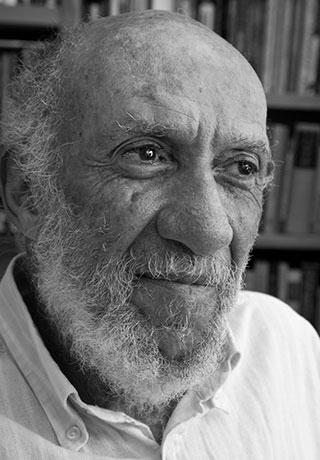

Professor Falk became an adviser to TFF when it was established in 1985.

Related Posts

Photos © TFF 2000 Read PressInfo 90 “Lift the Sanctions and Bring More Aid to Yugoslavia” See Pictures from Belgrade © TFF 2000 Please reprint, copy, archive, quote or re-post this item, but please retain the source.
By Jan ObergTFF co-founder and director February 11, 2026 PART 3 — ECONOMICS, TRADE & FINANCIAL SOVEREIGNTY A. Trade Measures & Market Signaling Economic pressure can be applied instantly and scaled without violence. Immediate Measures (within a week) Government boycott US goods and services  A very powerful signal which over time will be felt. Targeted tariffs on selected U.S. goods Symbolic but high-visibility sectors send a clear message. Suspend trade facilitation talks A peaceful pause that signals deep concern. Freeze U.S. participation in public procurement – military procurement in particular A nonviolent way to reduce influence. Competition law review of U.S. corporations A legal tool to scrutinise market dominance. Longer-Term Measures EU–Asia–Africa trade corridors Reducing reliance on U.S. markets. European supply chains for critical minerals Strategic autonomy in resource access. European Strategic Trade Authority Monitoring coercive practices globally. Euro-denominated commodity markets Weakening the dollar’s pricing monopoly. The EU must resume contacts and negotiations with Russia, focusing on energy cooperation To...
Background and CV Dr Pascal Lottaz joined TFF as an Associate in May 2025. Very short bio Dr. Pascal Lottaz is an Associate Professor at Kyoto University’s Graduate School of Law and Hakubi Center (Japan). He researches neutrality in international relations and directs the network neutralitystudies.com. Short bio Dr. Pascal Lottaz is an Associate Professor at Kyoto University, where he investigates neutrality in international relations and directs the research network neutralitystudies.com. He received his MA and PhD from the National Graduate Institute for Policy Studies (GRIPS) and previously researched and taught at Waseda University and Temple University (Japan Campus). His recent books include Sweden, Japan, and the Long Second World War (Routledge, 2022), Neutral Beyond the Cold: Neutral States and the Post-Cold War International System (Lexington Books, 2022), and Notions of Neutralities (Lexington Books, 2019). He also wrote articles on “Neutrality Studies” for Oxford Encyclopedia and “The Politics and Diplomacy of Neutrality”...

Recent Articles

Tony Robinson October 4, 2026 Violence is easy to recognise when someone is being beaten, shot or killed. It becomes more difficult when nobody is holding a weapon. Poverty, discrimination, exploitation and repression can restrict a human life just as effectively, although they do so in very different ways and with very different consequences. Simply adding more categories to an ever-growing list of forms of violence does not really solve the problem. The more interesting question is what all these different situations have in common and why it makes sense to describe them using the same word. Human beings do not simply react to what happens around them. They remember the past, imagine things that do not yet exist, make plans and undertake projects. Workers organise because they imagine different working conditions; people migrate because they imagine another life somewhere else; social movements emerge because people refuse to accept the...
It’s a matter of principles, courage, vision and pulling together – while the militarist world is falling apart… Peter Langille October 3, 2026 “Here, then, is the problem which we present to you, stark and dreadful and inescapable: Shall we put an end to the human race; or shall mankind renounce war?”The Bertrand Russell—Albert Einstein Manifesto, July 9, 1955 ⁕ The forecast for what’s ahead is worrisome. The sharp rise in armed conflicts over the past three years is adding to what was already the highest level in over seventy years. Genocides, which should be prevented are supported. A shared climate emergency that jeopardises survival is ignored. Diverse polls now suggest that people are war-weary, worried and interested in a more effective United Nations. And, there are viable policy options for a more secure world! Yet governments are doubling-down, betting on more war and investing heavily. If current trends persist,...
Johan Galtung 1930-2024October 2015 Published here on October 3, 2026 Let us focus on Civilization for conflict analysis and remedies. Major forms of disorder use violence; war is state organized violence. The most belligerent states are the United States of America and Israel, both with civilization roots. National Evangelism, the US Protestant Christian civilization– more national than evangelical–justifies US warfare as exceptionalism of a people chosen by God, with a manifest destiny to run the world. Orthodox Judaism justifies Israeli warfare to conquer and expand from Nile to Euphrates as a religious right and duty to the Eternal One. The third most belligerent country, the UK, no longer believes it is God-chosen but chosen by the USA; not quite the same but something. But the root cause of global disorder lies in the Occident–with Islam–seeing itself as the single, universal civilization valid for all at all times, all others being...

TFF on Substack

Discover and subscribe to more peace materials on TFF Substack

Most Popular

Tony Robinson October 4, 2026 Violence is easy to recognise when someone is being beaten, shot or killed. It becomes more difficult when nobody is holding a weapon. Poverty, discrimination, exploitation and repression can restrict a human life just as effectively, although they do so in very different ways and with very different consequences. Simply adding more categories to an ever-growing list of forms of violence does not really solve the problem. The more interesting question is what all these different situations have in common and why it makes sense to describe them using the same word. Human beings do not simply react to what happens around them. They remember the past, imagine things that do not yet exist, make plans and undertake projects. Workers organise because they imagine different working conditions; people migrate because they imagine another life somewhere else; social movements emerge because people refuse to accept the...
It’s a matter of principles, courage, vision and pulling together – while the militarist world is falling apart… Peter Langille October 3, 2026 “Here, then, is the problem which we present to you, stark and dreadful and inescapable: Shall we put an end to the human race; or shall mankind renounce war?”The Bertrand Russell—Albert Einstein Manifesto, July 9, 1955 ⁕ The forecast for what’s ahead is worrisome. The sharp rise in armed conflicts over the past three years is adding to what was already the highest level in over seventy years. Genocides, which should be prevented are supported. A shared climate emergency that jeopardises survival is ignored. Diverse polls now suggest that people are war-weary, worried and interested in a more effective United Nations. And, there are viable policy options for a more secure world! Yet governments are doubling-down, betting on more war and investing heavily. If current trends persist,...
Johan Galtung 1930-2024October 2015 Published here on October 3, 2026 Let us focus on Civilization for conflict analysis and remedies. Major forms of disorder use violence; war is state organized violence. The most belligerent states are the United States of America and Israel, both with civilization roots. National Evangelism, the US Protestant Christian civilization– more national than evangelical–justifies US warfare as exceptionalism of a people chosen by God, with a manifest destiny to run the world. Orthodox Judaism justifies Israeli warfare to conquer and expand from Nile to Euphrates as a religious right and duty to the Eternal One. The third most belligerent country, the UK, no longer believes it is God-chosen but chosen by the USA; not quite the same but something. But the root cause of global disorder lies in the Occident–with Islam–seeing itself as the single, universal civilization valid for all at all times, all others being...
Read More
Living-Peace-Sign-Budapest-copy
Tony Robinson October 4, 2026 Violence is easy to recognise when someone is being beaten, shot or killed. It becomes more difficult when nobody is holding a weapon. Poverty, discrimination, exploitation and repression can restrict a human life just as effectively, although they do so in very different ways and with very different consequences. Simply adding more categories to an ever-growing list of forms of violence does not really solve the problem. The more interesting question is what all these different situations have in common and why it makes sense to describe them using the same word. Human beings do not simply react to what happens around them. They remember the past, imagine things that do not yet exist, make plans and undertake projects. Workers organise because they imagine different working conditions; people migrate because they imagine another life somewhere else; social movements emerge because people refuse to accept the...
b54a1f10-8c65-4f0b-9dd5-4abc0a7d04cc_2659x2659
It’s a matter of principles, courage, vision and pulling together – while the militarist world is falling apart… Peter Langille October 3, 2026 “Here, then, is the problem which we present to you, stark and dreadful and inescapable: Shall we put an end to the human race; or shall mankind renounce war?”The Bertrand Russell—Albert Einstein Manifesto, July 9, 1955 ⁕ The forecast for what’s ahead is worrisome. The sharp rise in armed conflicts over the past three years is adding to what was already the highest level in over seventy years. Genocides, which should be prevented are supported. A shared climate emergency that jeopardises survival is ignored. Diverse polls now suggest that people are war-weary, worried and interested in a more effective United Nations. And, there are viable policy options for a more secure world! Yet governments are doubling-down, betting on more war and investing heavily. If current trends persist,...
010
Johan Galtung 1930-2024October 2015 Published here on October 3, 2026 Let us focus on Civilization for conflict analysis and remedies. Major forms of disorder use violence; war is state organized violence. The most belligerent states are the United States of America and Israel, both with civilization roots. National Evangelism, the US Protestant Christian civilization– more national than evangelical–justifies US warfare as exceptionalism of a people chosen by God, with a manifest destiny to run the world. Orthodox Judaism justifies Israeli warfare to conquer and expand from Nile to Euphrates as a religious right and duty to the Eternal One. The third most belligerent country, the UK, no longer believes it is God-chosen but chosen by the USA; not quite the same but something. But the root cause of global disorder lies in the Occident–with Islam–seeing itself as the single, universal civilization valid for all at all times, all others being...
Screenshot 2026-10-02 011738
Jan ObergPhD, director, The Transnational Foundation for Peace and Future Research, TFFLund, Sweden October 2, 2026 This is my full original manuscript. The Chinese Academy of Social Science, CASS, makes two publications out if it. 1. China’s Five-year plan emphasized the capabilities of basic research and original innovation. It is regarded as the goal of the future social development, which, as required, should be significantly enhanced. Can you comment on the importance of original innovation in research and academic study? I believe it is easier to define “original innovation” in the natural sciences than in social sciences. The breaking points of what constitutes something new, or innovative, are not quite as sharp in the latter. But in both fields it is about opening up something that was closed, unseen, unexplored before – making manifest what was earlier latent. Innovations come in many forms and shapes – naming something that was not...
arctic-circle-map
The agreement is catastrophic both because of what it says and what it doesn’t mention. It reduces further the major asset of security policies: Freedom of action. Jan Oberg TFF director September 25, 2026 A couple of hours before the agreement was signed on September 22, 2026, I published the following 13 hypotheses about what it would most likely contain on TFF Substack (in English). I was wrong on only the first point. Contrary to what Trump had written on his Truth Social platform, it does not appear to come into force immediately. In fact, it turned out to be worse than even I had anticipated. After these hypotheses now come a number of reflections in light of what the agreement actually contains, and does not contain, as well as the way in which it has generally been presented by major media outlets and by the public-service broadcaster DR. My...
girl-5894831_1280
Below are TFF-related media mentions, comments, videos and social media posts published elsewhere but not on this homepage. We happen to catch and list only a fraction. Regarding video comments and debates, we recommend that you go to the TFF Video Channel on Substack where many of them are reproduced. Jan Oberg is a contributor to China Daily – 52 million daily clicks – and Global Times, CGTN and CCTV (the national television), China Investment, Xinhua News Agency and several others. Articles and videos on these media very often multiply into countless Chinese (and Western media) that re-post them from these main media. Thanks to The China Academy, his analyses, interviews and comments are frequently posted on YouTube channels such as Thinkers Forum and Wave Media. These videos are often re-posted on Bilibili (China’s YouTube), the China Content Center on TikTok, and on the Chinese edition of TikTok, Douyin.com. This means reaching hundreds of millions of viewers worldwide over a year. While there are too many to catch on all these...




