
Comparing presidential elections: 2008 versus 2012

In 2008, Barack Obama rekindled faith in the America electoral process for many, and revived the deeper promise of American democracy, bringing to the foreground of the national political experience a brilliant and compassionate African American candidate. When Obama actually won the presidency, it was one of the exciting political moments in my lifetime, and rather reassuring as a sequel to the dark years of George W. Bush’s presidency.

Of course, many Americans didn’t share such positive feelings, and an important embittered minority believed that the election of a liberal-minded black man was the lowest point ever reached in national politics, challenging this segment of society that now was deeply alienated from the prevailing political current to mobilize their forces so as to win back control of the country on behalf of white Christian Americans, and also a time to indulge such absurd scenarios as an imminent Muslim takeover of the society. Such polarization, gave rise to an Islamophobic surge that revived the mood of fear and paranoia that followed upon the 9/11 attacks and was reinforced by evangelical enthusiasm for Israel. In this regard, the Obama phenomenon was a mixed blessing as it contributed to a rising tide of rightest politics in the United States that poses unprecedented dangers for the country and the world.

Nevertheless, as mentioned, Obama’s campaign and election was at the time a most welcome development, although not entirely free from doubts. From the outset my hopes were tinged with concerns, although I did my best to suspend disbelief. All along I found little evidence that Obama’s leadership would liberate the governing process from its threefold bondage to Wall Street, the Pentagon, and Israel. Such a political will to mount such a challenge was never in evidence, and never materialized.

Even in lucid moments, however, I reasoned it was important to elect Obama, despite his endorsement of a woefully deficient set of foreign policy assumptions, because more would be done to give assistance to those impoverished and hit by unemployment and home foreclosures, better judges and diplomats would be appointed, and more attention would be given to climate change. After four years, I continue to believe that these differences matter sufficiently to make it irresponsible not to support Obama and the Democratic Party, especially in so-called swing states.

And if there was excitement in much of America during the 2008 electoral campaigned, it was mild compared with pro-Obama sentiments in the rest of the world four years ago, which reached dizzying heights after his victory. This enthusiasm was a compound of several elements: Obama’s success lifted confidence throughout the world that the United States could again play a benevolent role on the global stage and also because it validated that mythic image of America as a country where it was truly possible for anyone in the society, including members of minorities long discriminated against, to reach the pinnacles of wealth and power provided only that they were sufficiently talented and determined, and some would add, lucky.

There remains little doubt that if the peoples of the world were allowed to vote in American elections, as might be appropriate in a globalized world, it would have produced a landslide of unprecedented magnitude in Obama’s favor.

All at once in 2008 it became evident that an American presidential election was no longer just a national ritual that bemused outsiders watched as a kind of spectacle but a global event that affected the entire world. In fact the selection of a leader for the United States might be in some respects more important for other societies than for America, and further that the outcome of an American election could have a greater impact on a country in Asia, Africa, and Latin America than the effects of their own national elections, a significance reinforced by intense global media coverage of the American election in real time.

In this respect, the 2008 election of Barack Obama made many of us aware that ‘political globalization’ was now as much a part of our experiences as ‘economic globalization.’ We were no longer living in a world where the standard map based on the borders of territorial sovereign states depicted the essential organization of political life on the planet. Our globalizing world had made the geopolitical cartography of influence much more spatially elusive, almost impossible to depict visually, but no less real.

Overall, the initial candidacy and election of Obama was, despite my qualms, more about hope than fear. There were concerns to be sure that the McCain/Palin Republican opposition would be dangerous for the world, but such anxieties were relatively subdued, and did not extinguish the strong positive expectations generated by Obama. And these hopes seemed somewhat justified in the first months of his presidency.

In April Obama delivered a visionary speech in Prague that articulated a strong commitment to work toward a world without nuclear weapons. The newly elected president also seemed determined to carry out his campaign pledge to end the Iraq War in a responsible fashion, although this welcome move was offset by a disquieting hint that such a demilitarizing move in Iraq would be balanced by an increased commitment to prevailing in the ongoing war for the control of Afghanistan.

In June Obama made a relatively forthcoming speech in Cairo promising a new more positive relationship with the Islamic world as a whole and to the Middle East in particular. The president referred to the long ordeal of the Palestinian people and proclaimed his dedication to achieving a peaceful and just resolution of the Israel/Pa;lestine conflict, including a most reasonable call upon Israel to freeze all settlement expansion while peace negotiations were taking place.

That this call on Israel to stop unlawful activity during negotiations was treated by the media as such a bold step tells us just how biased the mainstream attitude toward the conflict had become, and when Israel rejected at Obama ‘s moderate plea it experienced no adverse consequences, although the White House was put on the defensive because it had dared to push Israel to take a step that was against its wishes. This initiative, followed by its withdrawal, demonstrated to the world the extent to which the United States Government was in Israel’s corner, was revealed to all who cared to notice that the only superpower in global politics was a paper tiger when it came to the pursuit of a just outcome of the conflict.

As already indicated, I half expected disappointments in 2008. I worried about Obama’s typical liberal effort to demonstrate his tough approach to national security including support for a bloated defense budget in the face of a fiscal and employment crisis, about his lame effort to distinguish between Iraq as a bad war and Afghanistan as a war necessary for American security, and hence a good war. Also, I was disturbed by the way Obama dumped Rev. Jeremiah Wright when he became a liability to his electoral campaign, seemed embarrassed by his friendship with the distinguished Palestinian political historian, Rashid Khalidi, and made Rahm Emanuel chief of staff, as his first major appointment.

Obama surrounded himself with economic advisors who were the same folks that had collaborated with the banks, hedge funds, and big brokerage houses in the 1990s to facilitate the huge regressive redistribution of wealth in the spirit of ‘casino capitalism.’ Unfortunately, these telltale signs of weakness of principle and ideology were an accurate foretaste of what was in store for the country during the next four years, although it apparently never dawned on the Nobel Peace Prize Committee to withhold its coveted award until Obama demonstrated that he was a deserving recipient, which sadly he never did.

What happened during the first term of the Obama presidency is definitely disappointing, although it is only fair to acknowledge that extenuating circumstances existed. Obama was dealt ‘a bad hand’ in the form of the worst economic crisis since the Great Depression of the 1930s. American society was sliding to the right as exhibited by the rise of the Tea Party, and the election of increasingly reactionary politicians as senators and congressmen, creating the most right-wing Congress in memory. It was difficult to govern in such a setting, and Obama compounded the difficulties by moving more than half way to meet the unreasonable demands of the opposition, and continued to do so even in the face of their clear unwillingness to reciprocate in a corresponding manner.

Also, the pressures mounted by Israel and its formidable AIPAC lobby led the White House to back pedal awkwardly with respect to its efforts to create an atmosphere conducive to a balanced peace process for Israel and Palestine. On other issues, as well, Obama followed the pollsters and the party insiders more than principle, and failed to do what was best for the country and the world. After promising to take climate change seriously, Obama led an international effort to avoid imposing legal constraints on carbon emissions, and throughout his reelection campaign in 2012 has done his best to avoid the looming challenge of global warming aside from blandly promoting energy independence and green technology. As a result, the near unanimous scientific consensus on the urgent need for mandatory strict limits on carbon emissions has been disastrously pushed further and further into the background of public consciousness.

For me the 2012 elections have a different tone and relevance, that is not less consequential than in 2008, although absent the uplift. I believe this time around the stakes in the presidential election have been reversed. The upcoming election is more about fear than hope. The outcome is as fateful, or possibly more so, for the American people and the world, especially those living in the Middle East, but fateful also in the sense of avoiding the worst, not hoping for the best, or at least something better.

Romney’s election, even if he means only 50% of what he is saying, could lead to military confrontation with Iran, a completely free hand for Israel, an effort to undermine and control democratic forces in the main Arab countries, a trade war with China, a deepening of the world financial and employment crises, reduced respect for human rights, especially the reproductive rights of women, and a return to the overt lawlessness of the Bush presidency.

Obama if reelected would likely be a more prudent leader, although continuing to throw the weight of American influence mostly on ‘the wrong side of history.’ In this sense, although prudence is to be preferred to recklessness, there are no major principled differences between the candidates when it comes to foreign policy (on domestic policy there is).

Romney proposes that the U.S. stay longer in Afghanistan, move closer to an attack mode with Iran, and challenge China more vigorously on economic policy, and Obama agrees with all these positions but pursues them in a more nuanced way, with a greater seeming sensitivity to the risks and pitfalls, but nevertheless adhering to the same misguided and regressive policy options.

When fear rather than hope shapes our political consciousness, the effect on the citizenry is likely to be despair. Such an effect induces collective depression and encourages extremisms. What is also scary is the degree to which those who are making us fearful are being aided and abetted by the deep pockets of extremist billionaires who seem clearly to sense their ability in this period to buy enough votes to distort the will of the citizenry, and if they should be successful will step up to the policy window to cash in their chips, which could produce some disastrous results at home and abroad.

In the background, of course, is the disappointment with the political consciousness of the citizenry that seems so receptive to such a dysfunctional and menacing political agenda as is being presented to them by the Republican Party; it does inspire confidence that the democratic way can lead toward sustainability, security, and justice in the years ahead.

With such an understanding, why not support the Green Party candidacy of Jill Stein and Cheri Honkala? Their positions seem principled and admirable, and their alignments are with the poor and with the environment. Their platform is inspirational and congenial compared to what the Republicans and Democrats offer the American people. But their capacity to govern is untested, and their level of support is minimal.

I ask myself whether a vote for the Green Party in light of these circumstances would be a wasted vote? It evades the question to observe that in some states, say California or Nebraska, the outcome is so clear that taking sides as between the candidates put forward by the Democrats and Republicans is meaningless. The real test is whether it is worth voting for the Green Party candidates as a matter of principle because they are decent enough not to stoop to the dirty games of money and the accommodation of special interests that are poisoning the political process in the United States.

At this point, I am not able to resolve my doubts. Is it irresponsible, given what is at stake, not to vote for the lesser of evils? Is it a misunderstanding of modern democracies to expect clear choices based on principled positions, respect for international law and human rights, dedication to environmental protection, sustainable economic policies, and a commitment to social justice for the entire population? Should we not insist on this misunderstanding to avoid ourselves being entrapped in a demeaning morality that overlooks crimes of state? (for instance, drone terror)

I must admit if living in a swing state I would vote for Obama, not having sufficient courage of my convictions to risk symbolic responsibility for a Romney victory!
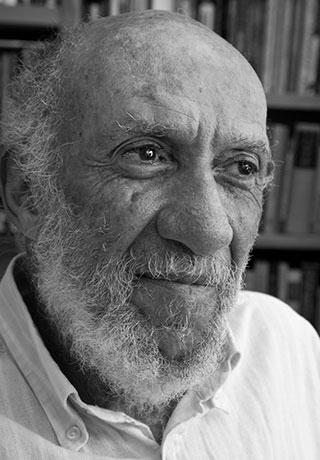

Professor Falk became an adviser to TFF when it was established in 1985.

Related Posts

Photos © TFF 2000 Read PressInfo 90 “Lift the Sanctions and Bring More Aid to Yugoslavia” See Pictures from Belgrade © TFF 2000 Please reprint, copy, archive, quote or re-post this item, but please retain the source.
By Jan ObergTFF co-founder and director February 11, 2026 PART 3 — ECONOMICS, TRADE & FINANCIAL SOVEREIGNTY A. Trade Measures & Market Signaling Economic pressure can be applied instantly and scaled without violence. Immediate Measures (within a week) Government boycott US goods and services  A very powerful signal which over time will be felt. Targeted tariffs on selected U.S. goods Symbolic but high-visibility sectors send a clear message. Suspend trade facilitation talks A peaceful pause that signals deep concern. Freeze U.S. participation in public procurement – military procurement in particular A nonviolent way to reduce influence. Competition law review of U.S. corporations A legal tool to scrutinise market dominance. Longer-Term Measures EU–Asia–Africa trade corridors Reducing reliance on U.S. markets. European supply chains for critical minerals Strategic autonomy in resource access. European Strategic Trade Authority Monitoring coercive practices globally. Euro-denominated commodity markets Weakening the dollar’s pricing monopoly. The EU must resume contacts and negotiations with Russia, focusing on energy cooperation To...
Background and CV Dr Pascal Lottaz joined TFF as an Associate in May 2025. Very short bio Dr. Pascal Lottaz is an Associate Professor at Kyoto University’s Graduate School of Law and Hakubi Center (Japan). He researches neutrality in international relations and directs the network neutralitystudies.com. Short bio Dr. Pascal Lottaz is an Associate Professor at Kyoto University, where he investigates neutrality in international relations and directs the research network neutralitystudies.com. He received his MA and PhD from the National Graduate Institute for Policy Studies (GRIPS) and previously researched and taught at Waseda University and Temple University (Japan Campus). His recent books include Sweden, Japan, and the Long Second World War (Routledge, 2022), Neutral Beyond the Cold: Neutral States and the Post-Cold War International System (Lexington Books, 2022), and Notions of Neutralities (Lexington Books, 2019). He also wrote articles on “Neutrality Studies” for Oxford Encyclopedia and “The Politics and Diplomacy of Neutrality”...

Recent Articles

Tony Robinson October 4, 2026 Violence is easy to recognise when someone is being beaten, shot or killed. It becomes more difficult when nobody is holding a weapon. Poverty, discrimination, exploitation and repression can restrict a human life just as effectively, although they do so in very different ways and with very different consequences. Simply adding more categories to an ever-growing list of forms of violence does not really solve the problem. The more interesting question is what all these different situations have in common and why it makes sense to describe them using the same word. Human beings do not simply react to what happens around them. They remember the past, imagine things that do not yet exist, make plans and undertake projects. Workers organise because they imagine different working conditions; people migrate because they imagine another life somewhere else; social movements emerge because people refuse to accept the...
It’s a matter of principles, courage, vision and pulling together – while the militarist world is falling apart… Peter Langille October 3, 2026 “Here, then, is the problem which we present to you, stark and dreadful and inescapable: Shall we put an end to the human race; or shall mankind renounce war?”The Bertrand Russell—Albert Einstein Manifesto, July 9, 1955 ⁕ The forecast for what’s ahead is worrisome. The sharp rise in armed conflicts over the past three years is adding to what was already the highest level in over seventy years. Genocides, which should be prevented are supported. A shared climate emergency that jeopardises survival is ignored. Diverse polls now suggest that people are war-weary, worried and interested in a more effective United Nations. And, there are viable policy options for a more secure world! Yet governments are doubling-down, betting on more war and investing heavily. If current trends persist,...
Johan Galtung 1930-2024October 2015 Published here on October 3, 2026 Let us focus on Civilization for conflict analysis and remedies. Major forms of disorder use violence; war is state organized violence. The most belligerent states are the United States of America and Israel, both with civilization roots. National Evangelism, the US Protestant Christian civilization– more national than evangelical–justifies US warfare as exceptionalism of a people chosen by God, with a manifest destiny to run the world. Orthodox Judaism justifies Israeli warfare to conquer and expand from Nile to Euphrates as a religious right and duty to the Eternal One. The third most belligerent country, the UK, no longer believes it is God-chosen but chosen by the USA; not quite the same but something. But the root cause of global disorder lies in the Occident–with Islam–seeing itself as the single, universal civilization valid for all at all times, all others being...

TFF on Substack

Discover and subscribe to more peace materials on TFF Substack

Most Popular

Tony Robinson October 4, 2026 Violence is easy to recognise when someone is being beaten, shot or killed. It becomes more difficult when nobody is holding a weapon. Poverty, discrimination, exploitation and repression can restrict a human life just as effectively, although they do so in very different ways and with very different consequences. Simply adding more categories to an ever-growing list of forms of violence does not really solve the problem. The more interesting question is what all these different situations have in common and why it makes sense to describe them using the same word. Human beings do not simply react to what happens around them. They remember the past, imagine things that do not yet exist, make plans and undertake projects. Workers organise because they imagine different working conditions; people migrate because they imagine another life somewhere else; social movements emerge because people refuse to accept the...
It’s a matter of principles, courage, vision and pulling together – while the militarist world is falling apart… Peter Langille October 3, 2026 “Here, then, is the problem which we present to you, stark and dreadful and inescapable: Shall we put an end to the human race; or shall mankind renounce war?”The Bertrand Russell—Albert Einstein Manifesto, July 9, 1955 ⁕ The forecast for what’s ahead is worrisome. The sharp rise in armed conflicts over the past three years is adding to what was already the highest level in over seventy years. Genocides, which should be prevented are supported. A shared climate emergency that jeopardises survival is ignored. Diverse polls now suggest that people are war-weary, worried and interested in a more effective United Nations. And, there are viable policy options for a more secure world! Yet governments are doubling-down, betting on more war and investing heavily. If current trends persist,...
Johan Galtung 1930-2024October 2015 Published here on October 3, 2026 Let us focus on Civilization for conflict analysis and remedies. Major forms of disorder use violence; war is state organized violence. The most belligerent states are the United States of America and Israel, both with civilization roots. National Evangelism, the US Protestant Christian civilization– more national than evangelical–justifies US warfare as exceptionalism of a people chosen by God, with a manifest destiny to run the world. Orthodox Judaism justifies Israeli warfare to conquer and expand from Nile to Euphrates as a religious right and duty to the Eternal One. The third most belligerent country, the UK, no longer believes it is God-chosen but chosen by the USA; not quite the same but something. But the root cause of global disorder lies in the Occident–with Islam–seeing itself as the single, universal civilization valid for all at all times, all others being...
Read More
Living-Peace-Sign-Budapest-copy
Tony Robinson October 4, 2026 Violence is easy to recognise when someone is being beaten, shot or killed. It becomes more difficult when nobody is holding a weapon. Poverty, discrimination, exploitation and repression can restrict a human life just as effectively, although they do so in very different ways and with very different consequences. Simply adding more categories to an ever-growing list of forms of violence does not really solve the problem. The more interesting question is what all these different situations have in common and why it makes sense to describe them using the same word. Human beings do not simply react to what happens around them. They remember the past, imagine things that do not yet exist, make plans and undertake projects. Workers organise because they imagine different working conditions; people migrate because they imagine another life somewhere else; social movements emerge because people refuse to accept the...
b54a1f10-8c65-4f0b-9dd5-4abc0a7d04cc_2659x2659
It’s a matter of principles, courage, vision and pulling together – while the militarist world is falling apart… Peter Langille October 3, 2026 “Here, then, is the problem which we present to you, stark and dreadful and inescapable: Shall we put an end to the human race; or shall mankind renounce war?”The Bertrand Russell—Albert Einstein Manifesto, July 9, 1955 ⁕ The forecast for what’s ahead is worrisome. The sharp rise in armed conflicts over the past three years is adding to what was already the highest level in over seventy years. Genocides, which should be prevented are supported. A shared climate emergency that jeopardises survival is ignored. Diverse polls now suggest that people are war-weary, worried and interested in a more effective United Nations. And, there are viable policy options for a more secure world! Yet governments are doubling-down, betting on more war and investing heavily. If current trends persist,...
010
Johan Galtung 1930-2024October 2015 Published here on October 3, 2026 Let us focus on Civilization for conflict analysis and remedies. Major forms of disorder use violence; war is state organized violence. The most belligerent states are the United States of America and Israel, both with civilization roots. National Evangelism, the US Protestant Christian civilization– more national than evangelical–justifies US warfare as exceptionalism of a people chosen by God, with a manifest destiny to run the world. Orthodox Judaism justifies Israeli warfare to conquer and expand from Nile to Euphrates as a religious right and duty to the Eternal One. The third most belligerent country, the UK, no longer believes it is God-chosen but chosen by the USA; not quite the same but something. But the root cause of global disorder lies in the Occident–with Islam–seeing itself as the single, universal civilization valid for all at all times, all others being...
Screenshot 2026-10-02 011738
Jan ObergPhD, director, The Transnational Foundation for Peace and Future Research, TFFLund, Sweden October 2, 2026 This is my full original manuscript. The Chinese Academy of Social Science, CASS, makes two publications out if it. 1. China’s Five-year plan emphasized the capabilities of basic research and original innovation. It is regarded as the goal of the future social development, which, as required, should be significantly enhanced. Can you comment on the importance of original innovation in research and academic study? I believe it is easier to define “original innovation” in the natural sciences than in social sciences. The breaking points of what constitutes something new, or innovative, are not quite as sharp in the latter. But in both fields it is about opening up something that was closed, unseen, unexplored before – making manifest what was earlier latent. Innovations come in many forms and shapes – naming something that was not...
arctic-circle-map
The agreement is catastrophic both because of what it says and what it doesn’t mention. It reduces further the major asset of security policies: Freedom of action. Jan Oberg TFF director September 25, 2026 A couple of hours before the agreement was signed on September 22, 2026, I published the following 13 hypotheses about what it would most likely contain on TFF Substack (in English). I was wrong on only the first point. Contrary to what Trump had written on his Truth Social platform, it does not appear to come into force immediately. In fact, it turned out to be worse than even I had anticipated. After these hypotheses now come a number of reflections in light of what the agreement actually contains, and does not contain, as well as the way in which it has generally been presented by major media outlets and by the public-service broadcaster DR. My...
girl-5894831_1280
Below are TFF-related media mentions, comments, videos and social media posts published elsewhere but not on this homepage. We happen to catch and list only a fraction. Regarding video comments and debates, we recommend that you go to the TFF Video Channel on Substack where many of them are reproduced. Jan Oberg is a contributor to China Daily – 52 million daily clicks – and Global Times, CGTN and CCTV (the national television), China Investment, Xinhua News Agency and several others. Articles and videos on these media very often multiply into countless Chinese (and Western media) that re-post them from these main media. Thanks to The China Academy, his analyses, interviews and comments are frequently posted on YouTube channels such as Thinkers Forum and Wave Media. These videos are often re-posted on Bilibili (China’s YouTube), the China Content Center on TikTok, and on the Chinese edition of TikTok, Douyin.com. This means reaching hundreds of millions of viewers worldwide over a year. While there are too many to catch on all these...




