
Beyond language: Reflections on the Arakan tragedy

Yesterday I listened to the wife of the Prime Minister, Emine Erdogan, speak about her recent harrowing visit to the Rohingya people in the the federal state of Arakan (mainly known in the West as Rakhine) who are located in northwestern Myanmar (aka Burma).
The Rohingya are a Muslim minority numbering over one million, long victimized locally and nationally in Burma and on several occasions over the years their people have been brutally massacred and their villages burned. She spoke in a deeply moving way about this witnessing of acute human suffering shortly after the most recent bloody episode of communal violence in June of this year. She lamented that such an orgy of violence directed at an ethnic and religious minority by the Buddhist majority is almost totally ignored by most of the world, and is quietly consigned by media outlets to their outermost zones of indifference and irrelevance.
She especially appealed to the women present to respond with activist compassion, stressing that women are always the most victimized category in these extreme situations of minority persecution and ethnic cleansing.

The situation of the Rohingya is an archetypal example of acute vulnerability in a state-centric world. In 1982 the territorial government of Burma stripped away the citizen rights of the impoverished Rohingya Muslims who have lived in Arakan for many generations, but are cynically claimed by Rangoon to be unlawful new migrants from bordering Bangladesh who do not belong in Burma and have no right to remain or to burden the state or cause tension by their presence.
Bangladesh in turn, itself among the world’s poorest countries, already has 500,000 Rohingya who fled across the Burmese border after earlier attacks on their communities, and has closed its borders to any further crossings by those escaping persecution, displacement, destruction of their homes and villages, and threats to their lives.
To deepen this aspect of the tragedy, only 10% of these migrants who fled from Burma have been accepted as ‘refugees’ by the UN High Commission of Refugees, and the great majority of the Rohingya living in Bangladesh for years survive miserably as stateless persons without rights and living generally at or even below subsistence levels.
The Rohingya who continue to exist precariously within Arakan are stateless and unwanted, many are reported to wish openly for their own death. As a group they endure hardships and deprivations in many forms, including denial of health services, educational opportunity, and normal civil rights, while those who have left for the sake of survival, are considered to be comparatively fortunate if they manage to be accepted as ‘refugees’ even if their status as undocumented refugees means the absence of minimal protection, the denial of any realistic opportunity for a life of dignity, and the terrifying uncertainties of being at the continuing mercy of a hostile community and an inhospitable state.

The principal purpose of this educational conference sponsored by Mazlumder, a Turkish NGO with strong Muslim affinities, was to gather experts to report on the situation and urge the audience to take action and thereby mobilize public opinion in support of the Rohingya people. It served to reinforce the high profile diplomatic and aid initiatives undertaken in recent months by the Turkish government to relieve the Rohingya plight.
It also called attention to the strange and unacceptable silence of Aung San Suu Kyi, the widely admired democratic political leader in Myanmar, herself long placed under punitive house arrest by the ruling military junta and recipient of the 1992 Nobel Peace Prize honoring her heroic resistance to dictatorship in her country. Her voice on behalf of justice for Burmese ethnic and religious minorities, and especially for the Rohingya, would carry great weight among Buddhists in the country and with world public opinion, and might shame the government into taking appropriate action.
As it is, the present Burmese leadership and the prevailing tendency in domestic public opinion is to view the conflict as intractable, with preferred solutions being one or another version of ethnic cleansing, a crime against humanity – either forced deportation or the distribution of the Rohingya throughout the country so as to destroy their identity as a coherent people with deep historical roots in northern Arakan. Outside pressures from Saudi Arabia and the United States might help to rally wider international concern, especially if tied to Burma’s economic goals. Aside from Turkey, governments have been reluctant to put pressure on Rangoon in this period because the Rangoon leadership has softened their dictatorial style of governance and seem to be moving toward the establishment of constitutional democracy in the country.

What struck me while listening to the presentations at the conference was how powerful language can become when its role is to think with the heart. I have always found that women are far less afraid to do this in public spaces than men. We – fully secular children of the European Enlightenment – are brainwashed from infancy, taught in myriad ways that instrumental reason and logical analysis are the only acceptable ways to think and express serious interpretations of societal reality.
Mrs. Erdogan, not only thinks with her heart, but she infuses such thought with an obvious religious consciousness that conveys a spiritual commitment to empathy that neither needs nor relies upon some sort of rational justification.

Such a powerful rendering of suffering reminded me of James Douglass’ use of the realm of the ‘unspeakable’ (in turn inspired by the Catholic mystic author and poet, Thomas Merton) to address those crimes that shock our conscience but can only be diminished in their magnitude by speech. Their essential horror cannot be comprehended by expository language even if it is emotively heightened by an inspirational appeal.
Only that blend of thinking with the heart combined the existential validation of direct witnessing can begin to communicate what we know, in the organic sense of knowing, to be the reality. I have discovered in my attempt to address the Palestinian ordeal as honestly as possible that direct contact with the actualities of occupation and the experience of listening closely to those who have been most directly victimized is my only way to approximate the existential reality.
For this reason, my exclusion by Israel from visiting Occupied Palestine in my UN role does not affect the rational legal analysis of the violation of Palestinian rights under international law, but it does diminish my capacity as a witness to touch the live tissue of these violations, and erodes my capacity to convey to others a fuller sense of what this means for the lives and wellbeing of those so victimized. Of course, UN reports are edited to drain their emotive content in any event.

I recall also my experience with the world media after a 1968 visit to Hanoi in the midst of the Vietnam War. I had been invited by a European lawyers’ organization to view the bomb damage in North Vietnam at a time when American officials, especially the Secretary of Defense, Robert McNamara, were claiming ‘the most surgical strikes in the history of air warfare.’ I accepted this ‘controversial’ invitation to visit ‘the enemy’ during an ongoing war, although the fighting was somewhat paused at the time, as ‘a realist’ opponent of the war, basically accepting the position of Bernard Fall, George Kennan, and Hans Morgenthau that it was a losing proposition to suppose that the U.S. could achieve what the French colonial occupying power was unable to do and that it was a costly diversion of resources and attention from more important security concerns.
My experience in Hanoi transformed my understanding and outlook on the war. It was a result of meeting many of the leaders, including the Prime Minister on several occasions, visiting bombed villages, talking with peasants and ordinary Vietnamese, and most of all, realizing the total vulnerability of the country to the military superiority of the United States with no prospect of retaliation — the concrete and cumulative terror of being on the receiving end of one-sided war that continues for years.
I came away from North Vietnam convinced that ‘the enemy,’ and especially its people, was on the right side of history, and the United States, and the badly corrupted Saigon regime that it propped up, was on the wrong side; above all, I felt the pain of the Vietnamese and was moved by their courage, humanity, and under the dire circumstances, their uncanny faith in humanity and their own collective destiny as a free nation. It produced a sea change in my mindset concerning the Vietnam War, and ever since.

When I left Vietnam, and returned to Paris, I received lots of attention from mainstream media, but total disinterest from these prominent journalists in what was for me the most important outcome of the trip — the realization of what it meant humanly for a peasant society to be on the receiving end of a high tech war machine of a distant superpower whose homeland was completely outside what is now being called ‘the hot battlefield.’
The journalists had no interest in my (re)interpretation of the war, but they were keenly eager to report on proposals for ending the conflict that had been entrusted to me by Vietnamese leaders to convey to the United States Government upon my return. It turned out that the contour of these proposals was more favorable from Washington’s point of view than what was negotiated four years and many deaths later by Henry Kissinger, who ironically received a Nobel Peace Prize for his questionable efforts.
My main reflection relates back to the Arakan meeting. The media is completely deaf to the concerns of the heart, and is only capable of thinking, if at all, with the head. It limits thought to what can be set forth analytically, as if emotion, law, and morality are irrelevant to forming an understanding of public events.
What at the time interested the NY Times and CBS correspondents, who were sympathetic and intelligent individuals, was the shaping of a diplomatic bargain that might end the war, whether it was a serious proposal, and whether Washington might be interested. It turned out that Washington was not ready for even such a favorable compromise, and plodded on for several years, culminating in the unseemly withdrawal in 1975 in the setting of a thinly disguised surrender.

Poets in the West, caught between a cultural insistence on heeding the voice of reason and their inability to transfer feelings and perceptions into words, vent their frustration with language as the only available vehicle for truth-telling.

As T.S. Eliot memorably expressed it in the final section of his great poem East Coker:

Trying to use words, and every attempt
Is a wholly new start, and a different kind of failure

Imagine if the master poet of the English language in the prior century gives voice to such feelings of defeat (paradoxically in one of the great modern poems), how must the rest of us feel! We who are mere journeymen of the written word fault ourselves for inadequacies of depictions and usually lack the temerity to blame the imperfect medium of language for the shortcomings of efforts to communicate that which eludes precise expression.

Earlier in the same poem Eliot writes some lines that makes me wonder if I have not crossed a line in the sands of time, and should long ago have taken refuge in silent vigil:

…..Do not let me hear
Of the wisdom of old men, but rather of their folly
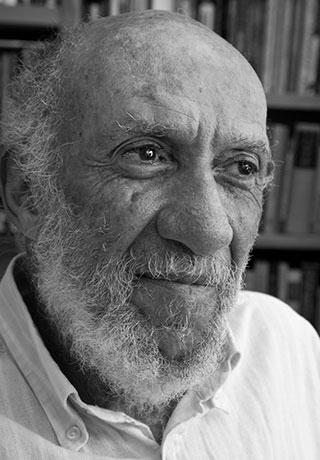
Professor Falk became an adviser to TFF when it was established in 1985.

Related Posts

Joie De Vivre, 1946 by Pablo Picasso Not recognizing the magic of the present moment may just be a crime against our humanity. David Andersson August 5, 2025 TFF publishes this with particular joy because, while we have always been pro-peace, future-oriented and proposal-making, we need even more of that now: Peace is to be FOR something and go for it. In my recent article, From Personal Development to Human Development, I explored the imbalance between our inner growth and society’s relentless focus on external activity. One of the greatest obstacles to genuine human development today is the sheer level of negativity we encounter daily. As an editor, I regularly receive submissions from Western contributors. Many center on themes like political corruption—even among progressive leaders—technological control, cognitive warfare, genocide, alarming climate forecasts (“only three years left to avoid the worst”), and Europe’s persistent, deadly hypocrisy. The list continues, each entry more...
LONDON – So far so good, at least on the wider level. While internally Iraq seems on the edge of chaos, the much heralded clash of civilizations between the Muslim and Judaeo-Christian worlds has yet to become apparent. We have anger and despair aplenty in the Arab and Muslim worlds. But very little rushing to the standard and there was no great pilgrimage of warriors to join the fight, as happened when the Soviet Union invaded Afghanistan twenty years ago, and then, having driven the Red Army out, were left to ferment in that mountainous redoubt. With the armaments supplied by the CIA the mujahidin were transformed into Al Qaeda that became, for a relatively brief moment as these things go, ‘the greatest threat to the homeland that America has ever known.’ Nevertheless a ‘Cold War’ between much of the Muslim world and the West is certainly in full swing. Winston...
Peter Ross From invading Afghanistan to dismantling Confederate monuments, George Orwell has been pressed into the service of all sorts of causes. But the real Orwell remains unknown. August 31, 2023 “It was a bright cold day in April,” said Richard Blair, “and the clocks were striking thirteen.” Blair is seventy-three and the son of George Orwell. To witness him stand at a lectern and read the opening line of his father’s great final novel, 1984, is to experience a sense of completion, an equation solved. We were in Senate House, now part of the University of London, for 1984 Live. For the first time in the United Kingdom, the book was to be read aloud publicly from start to finish. It had been estimated that it would take sixty or so readers—well-known journalists, academics, actors, activists—thirteen hours, that Orwellian number, to get from the bright cold day to the gin-scented tears. “All...

Recent Articles

Tony Robinson October 4, 2026 Violence is easy to recognise when someone is being beaten, shot or killed. It becomes more difficult when nobody is holding a weapon. Poverty, discrimination, exploitation and repression can restrict a human life just as effectively, although they do so in very different ways and with very different consequences. Simply adding more categories to an ever-growing list of forms of violence does not really solve the problem. The more interesting question is what all these different situations have in common and why it makes sense to describe them using the same word. Human beings do not simply react to what happens around them. They remember the past, imagine things that do not yet exist, make plans and undertake projects. Workers organise because they imagine different working conditions; people migrate because they imagine another life somewhere else; social movements emerge because people refuse to accept the...
It’s a matter of principles, courage, vision and pulling together – while the militarist world is falling apart… Peter Langille October 3, 2026 “Here, then, is the problem which we present to you, stark and dreadful and inescapable: Shall we put an end to the human race; or shall mankind renounce war?”The Bertrand Russell—Albert Einstein Manifesto, July 9, 1955 ⁕ The forecast for what’s ahead is worrisome. The sharp rise in armed conflicts over the past three years is adding to what was already the highest level in over seventy years. Genocides, which should be prevented are supported. A shared climate emergency that jeopardises survival is ignored. Diverse polls now suggest that people are war-weary, worried and interested in a more effective United Nations. And, there are viable policy options for a more secure world! Yet governments are doubling-down, betting on more war and investing heavily. If current trends persist,...
Johan Galtung 1930-2024October 2015 Published here on October 3, 2026 Let us focus on Civilization for conflict analysis and remedies. Major forms of disorder use violence; war is state organized violence. The most belligerent states are the United States of America and Israel, both with civilization roots. National Evangelism, the US Protestant Christian civilization– more national than evangelical–justifies US warfare as exceptionalism of a people chosen by God, with a manifest destiny to run the world. Orthodox Judaism justifies Israeli warfare to conquer and expand from Nile to Euphrates as a religious right and duty to the Eternal One. The third most belligerent country, the UK, no longer believes it is God-chosen but chosen by the USA; not quite the same but something. But the root cause of global disorder lies in the Occident–with Islam–seeing itself as the single, universal civilization valid for all at all times, all others being...

TFF on Substack

Discover and subscribe to more peace materials on TFF Substack

Most Popular

Tony Robinson October 4, 2026 Violence is easy to recognise when someone is being beaten, shot or killed. It becomes more difficult when nobody is holding a weapon. Poverty, discrimination, exploitation and repression can restrict a human life just as effectively, although they do so in very different ways and with very different consequences. Simply adding more categories to an ever-growing list of forms of violence does not really solve the problem. The more interesting question is what all these different situations have in common and why it makes sense to describe them using the same word. Human beings do not simply react to what happens around them. They remember the past, imagine things that do not yet exist, make plans and undertake projects. Workers organise because they imagine different working conditions; people migrate because they imagine another life somewhere else; social movements emerge because people refuse to accept the...
It’s a matter of principles, courage, vision and pulling together – while the militarist world is falling apart… Peter Langille October 3, 2026 “Here, then, is the problem which we present to you, stark and dreadful and inescapable: Shall we put an end to the human race; or shall mankind renounce war?”The Bertrand Russell—Albert Einstein Manifesto, July 9, 1955 ⁕ The forecast for what’s ahead is worrisome. The sharp rise in armed conflicts over the past three years is adding to what was already the highest level in over seventy years. Genocides, which should be prevented are supported. A shared climate emergency that jeopardises survival is ignored. Diverse polls now suggest that people are war-weary, worried and interested in a more effective United Nations. And, there are viable policy options for a more secure world! Yet governments are doubling-down, betting on more war and investing heavily. If current trends persist,...
Johan Galtung 1930-2024October 2015 Published here on October 3, 2026 Let us focus on Civilization for conflict analysis and remedies. Major forms of disorder use violence; war is state organized violence. The most belligerent states are the United States of America and Israel, both with civilization roots. National Evangelism, the US Protestant Christian civilization– more national than evangelical–justifies US warfare as exceptionalism of a people chosen by God, with a manifest destiny to run the world. Orthodox Judaism justifies Israeli warfare to conquer and expand from Nile to Euphrates as a religious right and duty to the Eternal One. The third most belligerent country, the UK, no longer believes it is God-chosen but chosen by the USA; not quite the same but something. But the root cause of global disorder lies in the Occident–with Islam–seeing itself as the single, universal civilization valid for all at all times, all others being...
Read More
Living-Peace-Sign-Budapest-copy
Tony Robinson October 4, 2026 Violence is easy to recognise when someone is being beaten, shot or killed. It becomes more difficult when nobody is holding a weapon. Poverty, discrimination, exploitation and repression can restrict a human life just as effectively, although they do so in very different ways and with very different consequences. Simply adding more categories to an ever-growing list of forms of violence does not really solve the problem. The more interesting question is what all these different situations have in common and why it makes sense to describe them using the same word. Human beings do not simply react to what happens around them. They remember the past, imagine things that do not yet exist, make plans and undertake projects. Workers organise because they imagine different working conditions; people migrate because they imagine another life somewhere else; social movements emerge because people refuse to accept the...
b54a1f10-8c65-4f0b-9dd5-4abc0a7d04cc_2659x2659
It’s a matter of principles, courage, vision and pulling together – while the militarist world is falling apart… Peter Langille October 3, 2026 “Here, then, is the problem which we present to you, stark and dreadful and inescapable: Shall we put an end to the human race; or shall mankind renounce war?”The Bertrand Russell—Albert Einstein Manifesto, July 9, 1955 ⁕ The forecast for what’s ahead is worrisome. The sharp rise in armed conflicts over the past three years is adding to what was already the highest level in over seventy years. Genocides, which should be prevented are supported. A shared climate emergency that jeopardises survival is ignored. Diverse polls now suggest that people are war-weary, worried and interested in a more effective United Nations. And, there are viable policy options for a more secure world! Yet governments are doubling-down, betting on more war and investing heavily. If current trends persist,...
010
Johan Galtung 1930-2024October 2015 Published here on October 3, 2026 Let us focus on Civilization for conflict analysis and remedies. Major forms of disorder use violence; war is state organized violence. The most belligerent states are the United States of America and Israel, both with civilization roots. National Evangelism, the US Protestant Christian civilization– more national than evangelical–justifies US warfare as exceptionalism of a people chosen by God, with a manifest destiny to run the world. Orthodox Judaism justifies Israeli warfare to conquer and expand from Nile to Euphrates as a religious right and duty to the Eternal One. The third most belligerent country, the UK, no longer believes it is God-chosen but chosen by the USA; not quite the same but something. But the root cause of global disorder lies in the Occident–with Islam–seeing itself as the single, universal civilization valid for all at all times, all others being...
Screenshot 2026-10-02 011738
Jan ObergPhD, director, The Transnational Foundation for Peace and Future Research, TFFLund, Sweden October 2, 2026 This is my full original manuscript. The Chinese Academy of Social Science, CASS, makes two publications out if it. 1. China’s Five-year plan emphasized the capabilities of basic research and original innovation. It is regarded as the goal of the future social development, which, as required, should be significantly enhanced. Can you comment on the importance of original innovation in research and academic study? I believe it is easier to define “original innovation” in the natural sciences than in social sciences. The breaking points of what constitutes something new, or innovative, are not quite as sharp in the latter. But in both fields it is about opening up something that was closed, unseen, unexplored before – making manifest what was earlier latent. Innovations come in many forms and shapes – naming something that was not...
arctic-circle-map
The agreement is catastrophic both because of what it says and what it doesn’t mention. It reduces further the major asset of security policies: Freedom of action. Jan Oberg TFF director September 25, 2026 A couple of hours before the agreement was signed on September 22, 2026, I published the following 13 hypotheses about what it would most likely contain on TFF Substack (in English). I was wrong on only the first point. Contrary to what Trump had written on his Truth Social platform, it does not appear to come into force immediately. In fact, it turned out to be worse than even I had anticipated. After these hypotheses now come a number of reflections in light of what the agreement actually contains, and does not contain, as well as the way in which it has generally been presented by major media outlets and by the public-service broadcaster DR. My...
girl-5894831_1280
Below are TFF-related media mentions, comments, videos and social media posts published elsewhere but not on this homepage. We happen to catch and list only a fraction. Regarding video comments and debates, we recommend that you go to the TFF Video Channel on Substack where many of them are reproduced. Jan Oberg is a contributor to China Daily – 52 million daily clicks – and Global Times, CGTN and CCTV (the national television), China Investment, Xinhua News Agency and several others. Articles and videos on these media very often multiply into countless Chinese (and Western media) that re-post them from these main media. Thanks to The China Academy, his analyses, interviews and comments are frequently posted on YouTube channels such as Thinkers Forum and Wave Media. These videos are often re-posted on Bilibili (China’s YouTube), the China Content Center on TikTok, and on the Chinese edition of TikTok, Douyin.com. This means reaching hundreds of millions of viewers worldwide over a year. While there are too many to catch on all these...





