
I have been struck by the strange firmament of Turkish pride. In one respect, the nationalist and patriotic fervor of Turkish holidays confirms the enduring success of Kemal Ataturk’s great nation-building project after World War I. Huge Turkish flags are more prominently displayed than in any country I know, and Turkey has earned dubious notoriety for its criminal code provision that punishes insults to Turkishness, potentially including even imprisonment. Such a law has been used in a manner that encroaches upon freedom of expression, targeting even such cultural icons as Orhan Pamuk and Elif Shafik, and undoubtedly intimidating thousands of others who hesitate to make any assertion that might be interpreted as offensive by the Turkish custodians of national pride.

Even many of those who reject the idea of criminalizing anti-Turkish comments were still angered by Pamuk’s interview in which he acknowledged the 1915 genocide against the Armenian community, first because it was contained in an interview conducted in Switzerland and, secondly, because he added the annoying aside “and only I will say this.” Instead of examining the substance of his indictment, the focus was on Pamuk’s supposed anti-Turkishness.

Shafik faced a similar storm of criticism when she published the Bastard of Istanbul, which also in a fictionalized context essentially accepts the Armenian narrative of the tragic events that occurred almost a hundred years ago. Neither Pamuk nor Shaifk were convicted, but prosecution was bad enough. My point here is to take note of the extreme sensitivity that Turkey continues to feel whenever critical commentary is regarded as a taint on national pride and collective memory.

At the same time, as with most countries, but perhaps with an added intensity, Turkey celebrates its athletic exploits. Recently it welcomed home its medal winning woman runners with great fanfare after the London Olympics as if they had made epic contributions to the wellbeing of the country, and it seems they had. And on that day sometime in the near future when Turkish football ascends the heights of a World Cup final, national fervor will certainly become hysterical. This is to be welcomed as an expression of national joy over the most loved sporting event in the world.

And yet, on different planes of discourse there is a strange national reluctance among Turks to enjoy certain achievements of their citizens, even a widespread tendency to belittle them. Over the years in the course of countless conversations about the Turkish Nobel Prize winning author Orhan Pamuk I have encountered such a tendency among Turkish intellectuals intent on downgrading his stature as a world class literary master: “he knows how to appeal to foreigners,” “he is very good at promoting his work overseas,” “he benefits from his translators,” “he is derivative,” “there are many better Turkish writers,” “his fame rests on a heavily funded PR campaign,” “his use of the Turkish language is undistinguished.”

Less intellectually minded Turkish detractors, and there are many, complain that Pamuk is personally unreliable and selfish, that he is a womanizer, that his books are unreadable, or at best, that his imagination only works when he is fictionalizing historical themes or contents himself with being “the biographer of the city of Isranbul.” What he should not do, according to his Turkish critics, is attempt to interpret the contemporary Turkish reality as he did so persuasively in Snow.

I would not suggest that all of these criticisms are unfounded, but what I would say is that their tenor exhibits an unaccustomed Turkish lack of generosity and balance. As an admirer of Pamuk, along with many friends with stronger literary credentials than mine outside of Turkey, I can report that Pamuk’s best books, and there are several candidates, have a vivid resonance for readers that rests on deserved literary acclaim, and cannot be explained away as a triumph of self-promotion.

Pamuk has a great gift for breathing life and its mysteries into a variety of persons, places, situations, and uses the metaphor of ‘the detective’ or ‘the traveler’ with great skill in constructing his captivating plots. Why don’t Turks take great pride in Pamuk’s recognition by the Nobel Prize Committee? Would many Turks diminish a sporting team victory by examining the allegedly compromised private lives of its star athletes?

This brings me to a more controversial set of considerations bearing on Turkish foreign policy, which I view as an extraordinary series of successes, coupled with some disappointments, and several understandable missteps. Such an assessment is far from the perceptions common among Turkish critics of the AKP leadership, and deprives Turkish society as a whole of the satisfaction of being justly proud of what their government has achieved at a time that has been exceedingly difficult for almost every other country in the world.

Turkey emerged from the shadowland of its role as junior alliance member of NATO during the Cold War era and non-presence in the Arab world to become the most admired country in the region, especially during 2011 in the aftermath of the early successes of the popular uprisings in Tunisia and Egypt. On the basis of my visits to the region over the course of the past two years, this admiration rested on three principal sources: deep respect for the diplomatic skill, dedication to conflict resolution, and the great energy and intelligence of the Turkish Foreign Minister, Ahmet Davutoglu; the adoption of an equi-distance diplomacy that allowed Turkey to be critical of Israel and supportive of the Palestinian struggle without alienating the United States and Europe; and most important of all, establishing a flourishing economy that was supported by the more deprived segments of Turkish society, while creating a political leadership that was sensitive to Islamic values without abandoning the core principles of secular government, that is, the emergence of a so-called ‘Turkish Model’ that is contrasted throughout the region with the negativity associated with the ‘Iran Model.’

I would have thought and hoped that however critical a Turkish citizen would be of some domestic policies of the AKP there would be uniform applause for this formidable array of foreign policy achievements. Much critical attention in the Turkish media has been directed at ‘zero problems with neighbors,” especially in light of the debacle in Syria and the upsurge of violence in relation to the Kurdish minority, and it is true that the doctrine from the outset undoubtedly expressed more a hope than a guideline.

At the time it was enunciated, there was no Arab Spring, no Mavi Marmara, no uprising against Qaddafi or Assad, but these unanticipated circumstances required, and produced, a major restatement. Davutoglu made clear that the real commitment of zero problems was in relation to the people and not necessarily to the government, and more specifically, the regimes in Tripoli and Damascus lost their legitimacy when they committed Crimes Against Humanity in relation to their own citizens.

Similarly, Turkey sought to mediate the conflict between Israel and Syria centered on the Golan Heights, lending great energy to the endeavor, but once Israel attacked Gaza at the end of 2008, it was clearly not possible to proceed further toward a resolution of the conflict. Turkey tried a number of other bold initiatives that ended in disappointment, but seemed as though they should have succeeded if the values of peace and justice were genuinely shared and not just proclaimed.

One was the effort to bring Hamas in from the cold, be accepted as a normal political actor, and shift the Isreal/Palestine conflict from sites of violent struggle to diplomatic arenas. After all, in 2006 Hamas had been encouraged by the West to compete in Gaza elections, but they were not supposed to win, and as a result an unlawful blockade has been imposed since 2007 on the people of Gaza and the Israeli insistence upon treating Hamas as ‘a terrorist organization’ has blocked a political solution.

Similarly, in 2010 a brave attempt by Ankara, in collaboration with Brazil, was made to dampen the pre-war flames that surrounded Iran’s alleged nuclear weapons program, but the United States and Israel were intent on confronting Iran by way of coercive diplomacy in the form of escalating sanctions and unlawful threats of a military attack. The disappointment here reflected the impact of mainstream geopolitics on relations with Iran, but it only highlighted the constructive nature of the Turkish effort to produce a shift in tactics and vision in the direction of soft power diplomacy.

The discourse in Turkey takes no account of the radically changed regional circumstances or the boldness of peacemaking experiments that deserved to succeed. Instead, the failures are dwelled upon to establish that Davutoglu is out of touch, that he does not comprehend the true nature of world politics or the conditions prevailing in the Middle East.

Mainly, such conversations shift to a barrage of criticisms directed at the AKP and Erdogan: “they have lost touch,” “they have become too powerful,” “the government imprisons its opposition and silences its critics,” “Erdogan is planning to run an authoritarian state,” “the government is bending to the will of Washington,” “despite its promises it has failed to solve the Kurdish problem.” To varying degrees these criticisms are justified, although exaggerated, given the overall reality of state/society relations in Turkey.

My surprise is the unwillingness of many Turkish friends to separate these appropriate concerns from an appreciation of the extraordinary rise in Turkish stature as a political actor, not only regionally, but globally. Turkey is now an important middle power at the United Nations. It provides a diplomatic venue for many international events that used to be held in Europe. Its courageous Somalia initiative has given Turkey a post-colonial identity in Africa that no other non-African government has been able to achieve. It is my belief that Turkey more than any other country in the 21st century has increased its relevance to the conduct of regional and global politics, and this is something that all Turks can be proud of in a world of 195 or so sovereign states!

Waving the national flag is fine, yet finer still, is taking justifiable pride in what has been accomplished by those who act on behalf of one’s country.
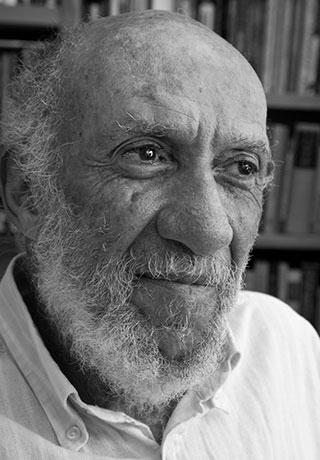

Professor Falk became an adviser to TFF when it was established in 1985.

Related Posts

LONDON – So far so good, at least on the wider level. While internally Iraq seems on the edge of chaos, the much heralded clash of civilizations between the Muslim and Judaeo-Christian worlds has yet to become apparent. We have anger and despair aplenty in the Arab and Muslim worlds. But very little rushing to the standard and there was no great pilgrimage of warriors to join the fight, as happened when the Soviet Union invaded Afghanistan twenty years ago, and then, having driven the Red Army out, were left to ferment in that mountainous redoubt. With the armaments supplied by the CIA the mujahidin were transformed into Al Qaeda that became, for a relatively brief moment as these things go, ‘the greatest threat to the homeland that America has ever known.’ Nevertheless a ‘Cold War’ between much of the Muslim world and the West is certainly in full swing. Winston...
The Challenge of Nuclear Weaponsin the Twenty-first CenturyA Path Forward The peoples and governments of the world face an urgent challenge relating to weaponry of mass destruction and particularly to nuclear weaponry.  At the crossroads of technology, terrorism, geopolitical ambition, and policies of preemption are new and potent dangers for humanity. Despite ending the nuclear standoff of the Cold War era, nuclear weaponry is again menacing the peoples of the world with catastrophic possibilities.  We recognize the need for any government to pursue its security interests in accordance with international law; and further, we recognize that distinctive threats to these interests now exist as a result of an active international terrorist network having declared war on the United States and its allies. Nonetheless, we reject the assessment of the current US administration that upgrading a reliance on nuclear weapons is in any sense justified as a response. We find it...
By Karin Wegestal MP, the Social Democratic Partyon behalf of the Swedish Committee for Solidarity with the Yugoslav People During the last decade, the Federal Republic of Yugoslavia has received more than 500,000 refugees from Croatia and Bosnia, and another 300,000 internally displaced persons, mainly from the province Kosovo and Metohia. For a country with about ten million inhabitants, such an influx of homeless people is obviously a very heavy burden – even under peaceful conditions. But in addition to that, the Federal Republic of Yugoslavia has been the subject to sanctions from the western powers for close to ten years and its infrastructure was badly hurt through Nato’s intense bombardment during 78 days in 1999. The result of all this is that Yugoslavia, once the most developed industrial country in Eastern Europe, is today the poorest country in Europe. In Serbia excluding Kosovo, with about ten million inhabitants and...

Recent Articles

Tony Robinson October 4, 2026 Violence is easy to recognise when someone is being beaten, shot or killed. It becomes more difficult when nobody is holding a weapon. Poverty, discrimination, exploitation and repression can restrict a human life just as effectively, although they do so in very different ways and with very different consequences. Simply adding more categories to an ever-growing list of forms of violence does not really solve the problem. The more interesting question is what all these different situations have in common and why it makes sense to describe them using the same word. Human beings do not simply react to what happens around them. They remember the past, imagine things that do not yet exist, make plans and undertake projects. Workers organise because they imagine different working conditions; people migrate because they imagine another life somewhere else; social movements emerge because people refuse to accept the...
It’s a matter of principles, courage, vision and pulling together – while the militarist world is falling apart… Peter Langille October 3, 2026 “Here, then, is the problem which we present to you, stark and dreadful and inescapable: Shall we put an end to the human race; or shall mankind renounce war?”The Bertrand Russell—Albert Einstein Manifesto, July 9, 1955 ⁕ The forecast for what’s ahead is worrisome. The sharp rise in armed conflicts over the past three years is adding to what was already the highest level in over seventy years. Genocides, which should be prevented are supported. A shared climate emergency that jeopardises survival is ignored. Diverse polls now suggest that people are war-weary, worried and interested in a more effective United Nations. And, there are viable policy options for a more secure world! Yet governments are doubling-down, betting on more war and investing heavily. If current trends persist,...
Johan Galtung 1930-2024October 2015 Published here on October 3, 2026 Let us focus on Civilization for conflict analysis and remedies. Major forms of disorder use violence; war is state organized violence. The most belligerent states are the United States of America and Israel, both with civilization roots. National Evangelism, the US Protestant Christian civilization– more national than evangelical–justifies US warfare as exceptionalism of a people chosen by God, with a manifest destiny to run the world. Orthodox Judaism justifies Israeli warfare to conquer and expand from Nile to Euphrates as a religious right and duty to the Eternal One. The third most belligerent country, the UK, no longer believes it is God-chosen but chosen by the USA; not quite the same but something. But the root cause of global disorder lies in the Occident–with Islam–seeing itself as the single, universal civilization valid for all at all times, all others being...

TFF on Substack

Discover and subscribe to more peace materials on TFF Substack

Most Popular

Tony Robinson October 4, 2026 Violence is easy to recognise when someone is being beaten, shot or killed. It becomes more difficult when nobody is holding a weapon. Poverty, discrimination, exploitation and repression can restrict a human life just as effectively, although they do so in very different ways and with very different consequences. Simply adding more categories to an ever-growing list of forms of violence does not really solve the problem. The more interesting question is what all these different situations have in common and why it makes sense to describe them using the same word. Human beings do not simply react to what happens around them. They remember the past, imagine things that do not yet exist, make plans and undertake projects. Workers organise because they imagine different working conditions; people migrate because they imagine another life somewhere else; social movements emerge because people refuse to accept the...
It’s a matter of principles, courage, vision and pulling together – while the militarist world is falling apart… Peter Langille October 3, 2026 “Here, then, is the problem which we present to you, stark and dreadful and inescapable: Shall we put an end to the human race; or shall mankind renounce war?”The Bertrand Russell—Albert Einstein Manifesto, July 9, 1955 ⁕ The forecast for what’s ahead is worrisome. The sharp rise in armed conflicts over the past three years is adding to what was already the highest level in over seventy years. Genocides, which should be prevented are supported. A shared climate emergency that jeopardises survival is ignored. Diverse polls now suggest that people are war-weary, worried and interested in a more effective United Nations. And, there are viable policy options for a more secure world! Yet governments are doubling-down, betting on more war and investing heavily. If current trends persist,...
Johan Galtung 1930-2024October 2015 Published here on October 3, 2026 Let us focus on Civilization for conflict analysis and remedies. Major forms of disorder use violence; war is state organized violence. The most belligerent states are the United States of America and Israel, both with civilization roots. National Evangelism, the US Protestant Christian civilization– more national than evangelical–justifies US warfare as exceptionalism of a people chosen by God, with a manifest destiny to run the world. Orthodox Judaism justifies Israeli warfare to conquer and expand from Nile to Euphrates as a religious right and duty to the Eternal One. The third most belligerent country, the UK, no longer believes it is God-chosen but chosen by the USA; not quite the same but something. But the root cause of global disorder lies in the Occident–with Islam–seeing itself as the single, universal civilization valid for all at all times, all others being...
Read More
Living-Peace-Sign-Budapest-copy
Tony Robinson October 4, 2026 Violence is easy to recognise when someone is being beaten, shot or killed. It becomes more difficult when nobody is holding a weapon. Poverty, discrimination, exploitation and repression can restrict a human life just as effectively, although they do so in very different ways and with very different consequences. Simply adding more categories to an ever-growing list of forms of violence does not really solve the problem. The more interesting question is what all these different situations have in common and why it makes sense to describe them using the same word. Human beings do not simply react to what happens around them. They remember the past, imagine things that do not yet exist, make plans and undertake projects. Workers organise because they imagine different working conditions; people migrate because they imagine another life somewhere else; social movements emerge because people refuse to accept the...
b54a1f10-8c65-4f0b-9dd5-4abc0a7d04cc_2659x2659
It’s a matter of principles, courage, vision and pulling together – while the militarist world is falling apart… Peter Langille October 3, 2026 “Here, then, is the problem which we present to you, stark and dreadful and inescapable: Shall we put an end to the human race; or shall mankind renounce war?”The Bertrand Russell—Albert Einstein Manifesto, July 9, 1955 ⁕ The forecast for what’s ahead is worrisome. The sharp rise in armed conflicts over the past three years is adding to what was already the highest level in over seventy years. Genocides, which should be prevented are supported. A shared climate emergency that jeopardises survival is ignored. Diverse polls now suggest that people are war-weary, worried and interested in a more effective United Nations. And, there are viable policy options for a more secure world! Yet governments are doubling-down, betting on more war and investing heavily. If current trends persist,...
010
Johan Galtung 1930-2024October 2015 Published here on October 3, 2026 Let us focus on Civilization for conflict analysis and remedies. Major forms of disorder use violence; war is state organized violence. The most belligerent states are the United States of America and Israel, both with civilization roots. National Evangelism, the US Protestant Christian civilization– more national than evangelical–justifies US warfare as exceptionalism of a people chosen by God, with a manifest destiny to run the world. Orthodox Judaism justifies Israeli warfare to conquer and expand from Nile to Euphrates as a religious right and duty to the Eternal One. The third most belligerent country, the UK, no longer believes it is God-chosen but chosen by the USA; not quite the same but something. But the root cause of global disorder lies in the Occident–with Islam–seeing itself as the single, universal civilization valid for all at all times, all others being...
Screenshot 2026-10-02 011738
Jan ObergPhD, director, The Transnational Foundation for Peace and Future Research, TFFLund, Sweden October 2, 2026 This is my full original manuscript. The Chinese Academy of Social Science, CASS, makes two publications out if it. 1. China’s Five-year plan emphasized the capabilities of basic research and original innovation. It is regarded as the goal of the future social development, which, as required, should be significantly enhanced. Can you comment on the importance of original innovation in research and academic study? I believe it is easier to define “original innovation” in the natural sciences than in social sciences. The breaking points of what constitutes something new, or innovative, are not quite as sharp in the latter. But in both fields it is about opening up something that was closed, unseen, unexplored before – making manifest what was earlier latent. Innovations come in many forms and shapes – naming something that was not...
arctic-circle-map
The agreement is catastrophic both because of what it says and what it doesn’t mention. It reduces further the major asset of security policies: Freedom of action. Jan Oberg TFF director September 25, 2026 A couple of hours before the agreement was signed on September 22, 2026, I published the following 13 hypotheses about what it would most likely contain on TFF Substack (in English). I was wrong on only the first point. Contrary to what Trump had written on his Truth Social platform, it does not appear to come into force immediately. In fact, it turned out to be worse than even I had anticipated. After these hypotheses now come a number of reflections in light of what the agreement actually contains, and does not contain, as well as the way in which it has generally been presented by major media outlets and by the public-service broadcaster DR. My...
girl-5894831_1280
Below are TFF-related media mentions, comments, videos and social media posts published elsewhere but not on this homepage. We happen to catch and list only a fraction. Regarding video comments and debates, we recommend that you go to the TFF Video Channel on Substack where many of them are reproduced. Jan Oberg is a contributor to China Daily – 52 million daily clicks – and Global Times, CGTN and CCTV (the national television), China Investment, Xinhua News Agency and several others. Articles and videos on these media very often multiply into countless Chinese (and Western media) that re-post them from these main media. Thanks to The China Academy, his analyses, interviews and comments are frequently posted on YouTube channels such as Thinkers Forum and Wave Media. These videos are often re-posted on Bilibili (China’s YouTube), the China Content Center on TikTok, and on the Chinese edition of TikTok, Douyin.com. This means reaching hundreds of millions of viewers worldwide over a year. While there are too many to catch on all these...




