
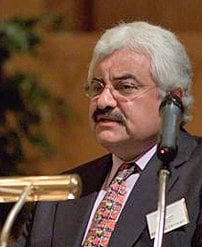
Reforming global finance: Don’t leave it to the economists!

The chairman of Britain’s Financial Services Authority argues that in the decades before the collapse of Western financial markets in 2007, too many economists were practicing a wrong-headed kind of economics. Their obsession with designing intricate mathematical models pushed moral, ethical and practical considerations too far into the background. It is high time for that to change.

In a short article in “The Globalist” Lord Turner discusses some of these issues. Due to its significance to our understanding of what has gone wrong, I have reprinted it below for your keen interest.

Before you begin to read Lord Turner’s wise words, I want to share something coming from my heart with you. It saddens me that when about 15 years ago, I began to say very similar things to what Lord Turner is saying now, my so-called fellow academic colleagues accused me of having gone mad. They told me, if I carry on like this, talking about ethics, morality, philosophy, theology, spirituality, love, sympathy, empathy, trust, sustainability, love for Mother Earth and the common good, I better consider leaving the economics profession and perhaps become a priest or social worker, or joining the Salvation Army.

I am not bitter, whatsoever. I am only sorry that no body at that time took economists like me seriously. But, who said there is no justice in this world. (See more: http://gcgi.info/how-it-began )

And now, here it is: The Wisdom of Lord Turner

“In the decades before the collapse of Western financial markets in 2007 and the resulting deep recession, too many policymakers, bankers and regulators were influenced by a brand of economics that was better equipped to design intricate mathematical models than to deal with moral, ethic and practical considerations. Adair Turner, head of Britain’s Financial Services Authority, says that needs to change.

Keynes famously wrote that “practical men, who believe themselves to be quite exempt from any intellectual influences, are usually the slaves of some defunct economist.”

It is essential that economics deal with human beings as they actually are rather than assuming the existence of a rational Homo economicus.

I suspect however that the greater danger lies not so much with entirely practical men or women exempt from any intellectual influence, as with the reasonably intellectual men and women who are employed in the policymaking departments of central banks, regulatory bodies and governments, as well as in the risk-management departments of banks.

These individuals are often well aware of intellectual influences, but tend nevertheless to gravitate to simplified versions of the dominant beliefs of establishment economists (who are still very much alive).

It is essential to continually seek to lean against that tendency. It is essential that economics deal with the real world as it is — and in particular with human beings as they actually are — rather than assuming the existence of a rational Homo economicus in order to make economic analysis more mathematically tractable.

In my view, robust thinking about economics must be based on the following three requirements.

First, it must not assume that additional income — above a certain level required to satisfy essential human needs — will necessarily increase utility or happiness, even if only to a marginally declining extent. Instead, we should concern ourselves with the mathematically and empirically imprecise but important issues of how happiness, welfare, utility and income are defined and related.

We may only have imperfect and judgmental techniques to measure success against ultimate objectives such as life, satisfaction and happiness. But we need to remember that these objectives, not income maximization by itself, are what we should be trying to achieve.

Second, the new economics must not assume that people participating in financial markets make rational assessments of future probabilities of potential outcomes. Instead, we should seek to understand how different people actually make decisions in different circumstances, given that human brains are endowed with instinctive elements.

Third, the new economics must accept the reality of unavoidable uncertainty. Much of the old-style economics is devoted to exploring the assumed expectations of economic agents, which are believed to be distributed around the objective probability distribution of future outcomes.

The new economics should recognize the importance of political, philosophical and ethical issues, to which mathematics is incapable of giving precise answers.

That, however, is what is called a philosophical category error, since no probability of future outcomes objectively exists. Therefore, we must accept that all economic and social developments are subject to an inherent, irreducible level of uncertainty.

No mathematical answers.

The logical consequence of these requirements is that the new economics should recognize the importance of political, philosophical and ethical issues, to which mathematics is incapable of giving precise answers.

For example, there is no precise answer to the question “What is the optimal degree of inequality?” It is an issue of politics. Likewise, the case for the market economy — which has been predominantly presented in terms of income-maximization outcomes — should, as Amartya Sen says, be considered in terms of freedom as an end in itself.

As John Hicks (although himself a major figure in the development of mathematical and outcomes-oriented economics) has noted wisely, “The liberal principles of the classical ‘Smithian’ or ‘Ricardian’ economists were not, in the first phase, economic principles; they were an application to economics of principles which were thought to apply in a much wider field. The contention that economic freedom made for economic efficiency was no more than a secondary support.”

A major deficiency of the current conventional wisdom is that it has focused increasingly — and almost exclusively — on this secondary support, instead of on ethical, moral and practical considerations. That is all the more surprising since increasing prosperity has made further improvements in economic efficiency less important to human welfare.

“There is nothing in economics,” wrote the British economist Lionel Robbins, “which relieves us of the obligation to choose.”

Too many policymakers and politicians — who at least thought they were drawing on the insights of economists — forgot or chose to ignore that fact in the several decades of applying conventional wisdom and believing in false certainties that led to the financial crisis.”

Source:
Lord Turner’s original article.
Related Posts

Photos © TFF 2000 Read PressInfo 90 “Lift the Sanctions and Bring More Aid to Yugoslavia” See Pictures from Belgrade © TFF 2000 Please reprint, copy, archive, quote or re-post this item, but please retain the source.
LONDON – So far so good, at least on the wider level. While internally Iraq seems on the edge of chaos, the much heralded clash of civilizations between the Muslim and Judaeo-Christian worlds has yet to become apparent. We have anger and despair aplenty in the Arab and Muslim worlds. But very little rushing to the standard and there was no great pilgrimage of warriors to join the fight, as happened when the Soviet Union invaded Afghanistan twenty years ago, and then, having driven the Red Army out, were left to ferment in that mountainous redoubt. With the armaments supplied by the CIA the mujahidin were transformed into Al Qaeda that became, for a relatively brief moment as these things go, ‘the greatest threat to the homeland that America has ever known.’ Nevertheless a ‘Cold War’ between much of the Muslim world and the West is certainly in full swing. Winston...
Jan Oberg July 26, 2024 In its recent analysis – “How Four US Presidents Unleashed Economic Warfare Across the Globe” – The Washington Post illustrates what I have called “sanctionitis” – the disease of (over)using sanctions as a means to conduct foreign policy and cause great harm to the world economy, the US economy but also to millions of innocent people who suffer from the consequences of them. But the WP merely points out that sanctions are inefficient from a US point of view in that they have not achieved what was intended, indeed sometimes the opposite. It uses various kinds of pejoratives like “dictator” about leaders of states the US sees as enemies. It fails completely to point out that sanctions – particularly long-term sanctions – are, mostly, grossly immoral because of their humanitarian consequences. Be this as it may, something has happened when Washington Post does publish such...

Recent Articles

Tony Robinson October 4, 2026 Violence is easy to recognise when someone is being beaten, shot or killed. It becomes more difficult when nobody is holding a weapon. Poverty, discrimination, exploitation and repression can restrict a human life just as effectively, although they do so in very different ways and with very different consequences. Simply adding more categories to an ever-growing list of forms of violence does not really solve the problem. The more interesting question is what all these different situations have in common and why it makes sense to describe them using the same word. Human beings do not simply react to what happens around them. They remember the past, imagine things that do not yet exist, make plans and undertake projects. Workers organise because they imagine different working conditions; people migrate because they imagine another life somewhere else; social movements emerge because people refuse to accept the...
It’s a matter of principles, courage, vision and pulling together – while the militarist world is falling apart… Peter Langille October 3, 2026 “Here, then, is the problem which we present to you, stark and dreadful and inescapable: Shall we put an end to the human race; or shall mankind renounce war?”The Bertrand Russell—Albert Einstein Manifesto, July 9, 1955 ⁕ The forecast for what’s ahead is worrisome. The sharp rise in armed conflicts over the past three years is adding to what was already the highest level in over seventy years. Genocides, which should be prevented are supported. A shared climate emergency that jeopardises survival is ignored. Diverse polls now suggest that people are war-weary, worried and interested in a more effective United Nations. And, there are viable policy options for a more secure world! Yet governments are doubling-down, betting on more war and investing heavily. If current trends persist,...
Johan Galtung 1930-2024October 2015 Published here on October 3, 2026 Let us focus on Civilization for conflict analysis and remedies. Major forms of disorder use violence; war is state organized violence. The most belligerent states are the United States of America and Israel, both with civilization roots. National Evangelism, the US Protestant Christian civilization– more national than evangelical–justifies US warfare as exceptionalism of a people chosen by God, with a manifest destiny to run the world. Orthodox Judaism justifies Israeli warfare to conquer and expand from Nile to Euphrates as a religious right and duty to the Eternal One. The third most belligerent country, the UK, no longer believes it is God-chosen but chosen by the USA; not quite the same but something. But the root cause of global disorder lies in the Occident–with Islam–seeing itself as the single, universal civilization valid for all at all times, all others being...

TFF on Substack

Discover and subscribe to more peace materials on TFF Substack

Most Popular

Tony Robinson October 4, 2026 Violence is easy to recognise when someone is being beaten, shot or killed. It becomes more difficult when nobody is holding a weapon. Poverty, discrimination, exploitation and repression can restrict a human life just as effectively, although they do so in very different ways and with very different consequences. Simply adding more categories to an ever-growing list of forms of violence does not really solve the problem. The more interesting question is what all these different situations have in common and why it makes sense to describe them using the same word. Human beings do not simply react to what happens around them. They remember the past, imagine things that do not yet exist, make plans and undertake projects. Workers organise because they imagine different working conditions; people migrate because they imagine another life somewhere else; social movements emerge because people refuse to accept the...
It’s a matter of principles, courage, vision and pulling together – while the militarist world is falling apart… Peter Langille October 3, 2026 “Here, then, is the problem which we present to you, stark and dreadful and inescapable: Shall we put an end to the human race; or shall mankind renounce war?”The Bertrand Russell—Albert Einstein Manifesto, July 9, 1955 ⁕ The forecast for what’s ahead is worrisome. The sharp rise in armed conflicts over the past three years is adding to what was already the highest level in over seventy years. Genocides, which should be prevented are supported. A shared climate emergency that jeopardises survival is ignored. Diverse polls now suggest that people are war-weary, worried and interested in a more effective United Nations. And, there are viable policy options for a more secure world! Yet governments are doubling-down, betting on more war and investing heavily. If current trends persist,...
Johan Galtung 1930-2024October 2015 Published here on October 3, 2026 Let us focus on Civilization for conflict analysis and remedies. Major forms of disorder use violence; war is state organized violence. The most belligerent states are the United States of America and Israel, both with civilization roots. National Evangelism, the US Protestant Christian civilization– more national than evangelical–justifies US warfare as exceptionalism of a people chosen by God, with a manifest destiny to run the world. Orthodox Judaism justifies Israeli warfare to conquer and expand from Nile to Euphrates as a religious right and duty to the Eternal One. The third most belligerent country, the UK, no longer believes it is God-chosen but chosen by the USA; not quite the same but something. But the root cause of global disorder lies in the Occident–with Islam–seeing itself as the single, universal civilization valid for all at all times, all others being...
Read More
Living-Peace-Sign-Budapest-copy
Tony Robinson October 4, 2026 Violence is easy to recognise when someone is being beaten, shot or killed. It becomes more difficult when nobody is holding a weapon. Poverty, discrimination, exploitation and repression can restrict a human life just as effectively, although they do so in very different ways and with very different consequences. Simply adding more categories to an ever-growing list of forms of violence does not really solve the problem. The more interesting question is what all these different situations have in common and why it makes sense to describe them using the same word. Human beings do not simply react to what happens around them. They remember the past, imagine things that do not yet exist, make plans and undertake projects. Workers organise because they imagine different working conditions; people migrate because they imagine another life somewhere else; social movements emerge because people refuse to accept the...
b54a1f10-8c65-4f0b-9dd5-4abc0a7d04cc_2659x2659
It’s a matter of principles, courage, vision and pulling together – while the militarist world is falling apart… Peter Langille October 3, 2026 “Here, then, is the problem which we present to you, stark and dreadful and inescapable: Shall we put an end to the human race; or shall mankind renounce war?”The Bertrand Russell—Albert Einstein Manifesto, July 9, 1955 ⁕ The forecast for what’s ahead is worrisome. The sharp rise in armed conflicts over the past three years is adding to what was already the highest level in over seventy years. Genocides, which should be prevented are supported. A shared climate emergency that jeopardises survival is ignored. Diverse polls now suggest that people are war-weary, worried and interested in a more effective United Nations. And, there are viable policy options for a more secure world! Yet governments are doubling-down, betting on more war and investing heavily. If current trends persist,...
010
Johan Galtung 1930-2024October 2015 Published here on October 3, 2026 Let us focus on Civilization for conflict analysis and remedies. Major forms of disorder use violence; war is state organized violence. The most belligerent states are the United States of America and Israel, both with civilization roots. National Evangelism, the US Protestant Christian civilization– more national than evangelical–justifies US warfare as exceptionalism of a people chosen by God, with a manifest destiny to run the world. Orthodox Judaism justifies Israeli warfare to conquer and expand from Nile to Euphrates as a religious right and duty to the Eternal One. The third most belligerent country, the UK, no longer believes it is God-chosen but chosen by the USA; not quite the same but something. But the root cause of global disorder lies in the Occident–with Islam–seeing itself as the single, universal civilization valid for all at all times, all others being...
Screenshot 2026-10-02 011738
Jan ObergPhD, director, The Transnational Foundation for Peace and Future Research, TFFLund, Sweden October 2, 2026 This is my full original manuscript. The Chinese Academy of Social Science, CASS, makes two publications out if it. 1. China’s Five-year plan emphasized the capabilities of basic research and original innovation. It is regarded as the goal of the future social development, which, as required, should be significantly enhanced. Can you comment on the importance of original innovation in research and academic study? I believe it is easier to define “original innovation” in the natural sciences than in social sciences. The breaking points of what constitutes something new, or innovative, are not quite as sharp in the latter. But in both fields it is about opening up something that was closed, unseen, unexplored before – making manifest what was earlier latent. Innovations come in many forms and shapes – naming something that was not...
arctic-circle-map
The agreement is catastrophic both because of what it says and what it doesn’t mention. It reduces further the major asset of security policies: Freedom of action. Jan Oberg TFF director September 25, 2026 A couple of hours before the agreement was signed on September 22, 2026, I published the following 13 hypotheses about what it would most likely contain on TFF Substack (in English). I was wrong on only the first point. Contrary to what Trump had written on his Truth Social platform, it does not appear to come into force immediately. In fact, it turned out to be worse than even I had anticipated. After these hypotheses now come a number of reflections in light of what the agreement actually contains, and does not contain, as well as the way in which it has generally been presented by major media outlets and by the public-service broadcaster DR. My...
girl-5894831_1280
Below are TFF-related media mentions, comments, videos and social media posts published elsewhere but not on this homepage. We happen to catch and list only a fraction. Regarding video comments and debates, we recommend that you go to the TFF Video Channel on Substack where many of them are reproduced. Jan Oberg is a contributor to China Daily – 52 million daily clicks – and Global Times, CGTN and CCTV (the national television), China Investment, Xinhua News Agency and several others. Articles and videos on these media very often multiply into countless Chinese (and Western media) that re-post them from these main media. Thanks to The China Academy, his analyses, interviews and comments are frequently posted on YouTube channels such as Thinkers Forum and Wave Media. These videos are often re-posted on Bilibili (China’s YouTube), the China Content Center on TikTok, and on the Chinese edition of TikTok, Douyin.com. This means reaching hundreds of millions of viewers worldwide over a year. While there are too many to catch on all these...





