

Kenneth Waltz is not crazy, but he is dangerous: Nuclear weapons in the Middle East

It seems surprising that the ultra-establishment journal, Foreign Affairs, would go to the extreme of publishing a lead article by the noted political scientist, Kenneth Waltz, with the title “Why Iran Should Get the Bomb” in its current issue. It is more the reasoning of the article than the eye-catching title that flies in the face of the anti-proliferation ethos that has been the consensus lynchpin of nuclear weapons states, and especially the United States.

At the same time, Waltz takes pain to avoid disavowing his mainstream political identity. He echoes without pausing to reflect upon the evidence undergirding the rather wobbly escalating assumption that Iran is seeking nuclear weapons at this time. Waltz does acknowledge that Iran might be only trying to have a ‘breakout’ capability of the sort long possessed by Japan and several other countries, that is, the technological capacity if facing a national emergency to assemble a few bombs in a matter of months.

Nowhere does Waltz allude to the recently publicized agreement among the 14 American intelligence agencies that there is no evidence that Iran has decided to resume its military program that had been reportedly abandoned in 2003. In other ways, as well, Waltz signals his general support for the American approach to Israeli security other than in relation to nuclear weapons, and so, it should be clear, Waltz is not a political dissenter, a policy radical, nor even a critic of Israel’s role in the region.

Waltz’s Three Options

Waltz insists that aside from the breakout option, there are two other plausible scenarios worth considering: sanctions and coercive diplomacy to induce Iran “to abandon its pursuit of nuclear weapons,” which he deems unlikely to overcome a genuine appetite for the bomb, or Iran defies the pressures and acquires nuclear weapons, which he regards as the most desirable of the three options. It seems reasonable to wonder ‘why.’

In essence, Waltz is arguing that experience and logic demonstrate that the relations among states become more stable, less war-prone, when a balance is maintained, and that there is no reason to think that if Iran acquired nuclear weapons it would not behave in accordance with the deterrence regime that has discouraged all uses of nuclear weapons ever since 1945, and especially during the Cold War confrontation between the United States and the Soviet Union. In this regard, Waltz is expressing what I regard to be a wildly exaggerated faith in the rationality and prudence of leaders who make decisions on matters of war and peace.

He does make a contextual argument that I mostly agree with, namely, that Israel alone possessing a regional nuclear monopoly is more dangerous and undesirable than Iran becoming a second nuclear weapons state in the region. In effect, a regional nuclear monopolist is worse than a regional system of balance that incorporates deterrence logic. For Israel to be deterred would contribute to peace and security in the region, and this seems likely to reduce somewhat, although at a level of risk far short of zero, the prospect of any use of nuclear weapons and other forms of aggression in the Middle East.

But to say that A (Iran gets the bomb) is better than B (breakout capability but no bomb) and C (sanctions and coercive diplomacy induce Iran to forego bomb) is to forget about D, which is far better than A, B, and C in relation to sustainable stability, but also because it represents an implicit acknowledgement that the very idea of basing security upon the threat to annihilate hundreds of thousand, if not more, innocent persons is a moral abomination that has already implicated the nuclear weapons states in a security policy, which if ever tested by threat and use, would be genocidal, if not omnicidal, and certainly criminal.

This anti-nuclear posture was substantially endorsed by a majority of judges in a groundbreaking Advisory Opinion of the International Court of Justice on 8 July 1996, although these strong findings as to international law were, not surprisingly, cast aside and ignored by the nuclear weapons states, most defiantly by the United States.

The Case for Option D

What then is Option D? Option D would involve the negotiation and implementation of a nuclear weapons free zone throughout the Middle East (MENFZ), reinforced by non-aggression commitments, normalization of economic and political relations, and ideally accompanied by genuine progress toward a just and sustainable Palestine/Israel peace accord. Significantly, Waltz does not even pause to consider it as in all likelihood he regards such an approach as completely inconsistent with the hard power realities of global diplomacy, making it foolish and irrelevant to take the possibility of a MENFZ seriously.

Needless to say, D is also not in the Netanyahu playbook, and quite likely no future Israeli leader will be prepared to give up the nuclear weapons arsenal that Israel has been consistently acquiring and developing over the last four decades. And it seems fair to conjecture that anyone who proposes a MENFZ would be at odds with the realist camp in international relations, and such a piece would almost certainly be rejected by the editors of Foreign Affairs, among the most ardent guardians of the realist status quo.

Waltz’s preference for A, favoring an Iranian bomb, is an extension of his long-standing belief that proliferation as actually desirable based on a view of global security that depends on sustaining power balances. In my judgment this carries confidence in the logic of deterrence (that is, the rationality of not using the bomb because of a fear of nuclear retaliation) to absurd degrees that go well beyond even the extreme rationality relied upon by the most influential war thinkers during the Cold War era.

In this sense, Waltz is correct to equate the Middle East with the rest of the world, and not engage in the widespread practice of ethno-religious profiling: that is, Israel’s bomb is okay because it is a rational and ‘Western,’ while Iran’s bomb would be a world order disaster as it is irrational and governed by Islamic zealots that have declared their implacable hostility to Israel. If such distinctions are to be made, which is doubtful, it should be appreciated that Israel is the antagonist that has been threatening war and pushing for coercive diplomacy, while it is Iran that has so far peacefully tolerated a variety of severe provocations, acts of war, such as the assassination of several of its nuclear scientists, the infecting of its enrichment centrifuges with the Stuxnet virus, and verified violent covert acts designed to destabilize the Tehran regime. Had such incidents been reversed, it is more than 100% likely that Israel would have immediately gone to war against Iran, quite likely setting the entire region on fire.

Objections to Option A

My basic objection to the Waltz position is a disagreement with two of his guiding assumptions: first, with respect to the region, that other countries would not follow Iran across the nuclear threshold, an assessment he bases largely on their failure to acquire nuclear weapons in response to Israel’s acquisition of the capability. Surely Saudi Arabia and Turkey would not, for reasons of international status and perceived security, want to be non-nuclear states in a neighborhood in which both Israel and Iran had the bomb.

Such an expansion of the regional nuclear club would become more prone to accident, miscalculation, and the sort of social and political pathology that makes nuclear weaponry generally unfit for human use in a conflict, whatever the region or occasion. In this respect, the more governments possess the bomb, the more likely it becomes that one of those horrible scenarios about a nuclear war will become history.

And secondly, Waltz does not single out nuclear weapons for condemnation on either ethical or prudential grounds. In fact, he seems to hold the view that we can be thankful for the bomb as otherwise the Cold War would likely have resulted in a catastrophic World War III.

In my view to have sought the bomb and then used it against the helpless Japanese at the end of World War II was certainly one of the worst instances of Promethean excess in human history, angering not only the gods but exhibiting a scary species death wish. Leaders have acknowledged this moral truth from time to time, most recently by Barack Obama in his 2009 Prague speech calling for a world without nuclear weapons, but politicians, including Obama, seem unable and unwilling to take the heat that following through would certainly entail.

In the end, anti-nuclearism for leaders seems mainly an exercise in rhetoric, apparently persuasive in Norway where the Nobel Prize committee annually ponders the credentials of candidates, but without any behavioral consequences relating to the weaponry itself. To be sure nuclear policies are challenged from time to time by a surge of anti-nuclear populism. In this regard, to favor the acquisition of the bomb by any government or political organization is to embrace the nuclearist fallacy relating to security and the absurd hubris of presupposing an impeccable rationality over long stretches of time, which has never been the case in human affairs.

The secrecy surrounding policy bearing on nuclear weapons, especially the occasions of their possible use, also injects an absolutist virus into the vital organs of a democratic body politic. There is no participation by the people or even their representatives in relation to this most ultimate of political decisions, vesting in a single person, and perhaps including his most intimate advisors, a demonic capability to unleash such a catastrophic capability.

We now know that even beyond the devastation and radiation, the smoke released by the use of as few as 50 nuclear bombs would generate so much smoke as to block sunlight from the earth for as long as a decade, dooming much of the agriculture throughout the world, a dynamic that has been called ‘a nuclear famine.’ As disturbing as such a possibility should be to those responsible for the security of society, there is little evidence that such a realization of the secondary effects of nuclear explosions is even present in political consciousness. And certainly the citizenry is largely ignorant of such a dark eventuality bound up with the retention of nuclear weapons.

It is for these reasons that I would call Kenneth Waltz dangerous, not crazy. Indeed, it is his extreme kind of instrumental rationality that is dominant in many influential venues, and helps explain the development, possession, and apparent readiness to use nuclear weapons under certain conditions despite the risks and the immorality of the undertaking.

If human society is ever to be again relatively safe, secure, and morally coherent, a first step is to renounce nuclear weapons unconditionally and proceed with urgency by way of an agreed, phased, monitored, and verified international agreement to ensure their elimination from the face of the earth. It is not only that deterrence depends on perfect rationality over time and across space, it is also that the doctrine and practices of deterrence amounts to a continuing crime against humanity of unprecedented magnitude and clarity!
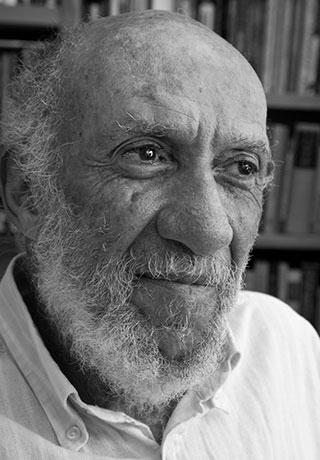

Professor Falk became an adviser to TFF when it was established in 1985.

Related Posts

LONDON – So far so good, at least on the wider level. While internally Iraq seems on the edge of chaos, the much heralded clash of civilizations between the Muslim and Judaeo-Christian worlds has yet to become apparent. We have anger and despair aplenty in the Arab and Muslim worlds. But very little rushing to the standard and there was no great pilgrimage of warriors to join the fight, as happened when the Soviet Union invaded Afghanistan twenty years ago, and then, having driven the Red Army out, were left to ferment in that mountainous redoubt. With the armaments supplied by the CIA the mujahidin were transformed into Al Qaeda that became, for a relatively brief moment as these things go, ‘the greatest threat to the homeland that America has ever known.’ Nevertheless a ‘Cold War’ between much of the Muslim world and the West is certainly in full swing. Winston...
The Challenge of Nuclear Weaponsin the Twenty-first CenturyA Path Forward The peoples and governments of the world face an urgent challenge relating to weaponry of mass destruction and particularly to nuclear weaponry.  At the crossroads of technology, terrorism, geopolitical ambition, and policies of preemption are new and potent dangers for humanity. Despite ending the nuclear standoff of the Cold War era, nuclear weaponry is again menacing the peoples of the world with catastrophic possibilities.  We recognize the need for any government to pursue its security interests in accordance with international law; and further, we recognize that distinctive threats to these interests now exist as a result of an active international terrorist network having declared war on the United States and its allies. Nonetheless, we reject the assessment of the current US administration that upgrading a reliance on nuclear weapons is in any sense justified as a response. We find it...
By Karin Wegestal MP, the Social Democratic Partyon behalf of the Swedish Committee for Solidarity with the Yugoslav People During the last decade, the Federal Republic of Yugoslavia has received more than 500,000 refugees from Croatia and Bosnia, and another 300,000 internally displaced persons, mainly from the province Kosovo and Metohia. For a country with about ten million inhabitants, such an influx of homeless people is obviously a very heavy burden – even under peaceful conditions. But in addition to that, the Federal Republic of Yugoslavia has been the subject to sanctions from the western powers for close to ten years and its infrastructure was badly hurt through Nato’s intense bombardment during 78 days in 1999. The result of all this is that Yugoslavia, once the most developed industrial country in Eastern Europe, is today the poorest country in Europe. In Serbia excluding Kosovo, with about ten million inhabitants and...

Recent Articles

Tony Robinson October 4, 2026 Violence is easy to recognise when someone is being beaten, shot or killed. It becomes more difficult when nobody is holding a weapon. Poverty, discrimination, exploitation and repression can restrict a human life just as effectively, although they do so in very different ways and with very different consequences. Simply adding more categories to an ever-growing list of forms of violence does not really solve the problem. The more interesting question is what all these different situations have in common and why it makes sense to describe them using the same word. Human beings do not simply react to what happens around them. They remember the past, imagine things that do not yet exist, make plans and undertake projects. Workers organise because they imagine different working conditions; people migrate because they imagine another life somewhere else; social movements emerge because people refuse to accept the...
It’s a matter of principles, courage, vision and pulling together – while the militarist world is falling apart… Peter Langille October 3, 2026 “Here, then, is the problem which we present to you, stark and dreadful and inescapable: Shall we put an end to the human race; or shall mankind renounce war?”The Bertrand Russell—Albert Einstein Manifesto, July 9, 1955 ⁕ The forecast for what’s ahead is worrisome. The sharp rise in armed conflicts over the past three years is adding to what was already the highest level in over seventy years. Genocides, which should be prevented are supported. A shared climate emergency that jeopardises survival is ignored. Diverse polls now suggest that people are war-weary, worried and interested in a more effective United Nations. And, there are viable policy options for a more secure world! Yet governments are doubling-down, betting on more war and investing heavily. If current trends persist,...
Johan Galtung 1930-2024October 2015 Published here on October 3, 2026 Let us focus on Civilization for conflict analysis and remedies. Major forms of disorder use violence; war is state organized violence. The most belligerent states are the United States of America and Israel, both with civilization roots. National Evangelism, the US Protestant Christian civilization– more national than evangelical–justifies US warfare as exceptionalism of a people chosen by God, with a manifest destiny to run the world. Orthodox Judaism justifies Israeli warfare to conquer and expand from Nile to Euphrates as a religious right and duty to the Eternal One. The third most belligerent country, the UK, no longer believes it is God-chosen but chosen by the USA; not quite the same but something. But the root cause of global disorder lies in the Occident–with Islam–seeing itself as the single, universal civilization valid for all at all times, all others being...

TFF on Substack

Discover and subscribe to more peace materials on TFF Substack

Most Popular

Tony Robinson October 4, 2026 Violence is easy to recognise when someone is being beaten, shot or killed. It becomes more difficult when nobody is holding a weapon. Poverty, discrimination, exploitation and repression can restrict a human life just as effectively, although they do so in very different ways and with very different consequences. Simply adding more categories to an ever-growing list of forms of violence does not really solve the problem. The more interesting question is what all these different situations have in common and why it makes sense to describe them using the same word. Human beings do not simply react to what happens around them. They remember the past, imagine things that do not yet exist, make plans and undertake projects. Workers organise because they imagine different working conditions; people migrate because they imagine another life somewhere else; social movements emerge because people refuse to accept the...
It’s a matter of principles, courage, vision and pulling together – while the militarist world is falling apart… Peter Langille October 3, 2026 “Here, then, is the problem which we present to you, stark and dreadful and inescapable: Shall we put an end to the human race; or shall mankind renounce war?”The Bertrand Russell—Albert Einstein Manifesto, July 9, 1955 ⁕ The forecast for what’s ahead is worrisome. The sharp rise in armed conflicts over the past three years is adding to what was already the highest level in over seventy years. Genocides, which should be prevented are supported. A shared climate emergency that jeopardises survival is ignored. Diverse polls now suggest that people are war-weary, worried and interested in a more effective United Nations. And, there are viable policy options for a more secure world! Yet governments are doubling-down, betting on more war and investing heavily. If current trends persist,...
Johan Galtung 1930-2024October 2015 Published here on October 3, 2026 Let us focus on Civilization for conflict analysis and remedies. Major forms of disorder use violence; war is state organized violence. The most belligerent states are the United States of America and Israel, both with civilization roots. National Evangelism, the US Protestant Christian civilization– more national than evangelical–justifies US warfare as exceptionalism of a people chosen by God, with a manifest destiny to run the world. Orthodox Judaism justifies Israeli warfare to conquer and expand from Nile to Euphrates as a religious right and duty to the Eternal One. The third most belligerent country, the UK, no longer believes it is God-chosen but chosen by the USA; not quite the same but something. But the root cause of global disorder lies in the Occident–with Islam–seeing itself as the single, universal civilization valid for all at all times, all others being...
Read More
Living-Peace-Sign-Budapest-copy
Tony Robinson October 4, 2026 Violence is easy to recognise when someone is being beaten, shot or killed. It becomes more difficult when nobody is holding a weapon. Poverty, discrimination, exploitation and repression can restrict a human life just as effectively, although they do so in very different ways and with very different consequences. Simply adding more categories to an ever-growing list of forms of violence does not really solve the problem. The more interesting question is what all these different situations have in common and why it makes sense to describe them using the same word. Human beings do not simply react to what happens around them. They remember the past, imagine things that do not yet exist, make plans and undertake projects. Workers organise because they imagine different working conditions; people migrate because they imagine another life somewhere else; social movements emerge because people refuse to accept the...
b54a1f10-8c65-4f0b-9dd5-4abc0a7d04cc_2659x2659
It’s a matter of principles, courage, vision and pulling together – while the militarist world is falling apart… Peter Langille October 3, 2026 “Here, then, is the problem which we present to you, stark and dreadful and inescapable: Shall we put an end to the human race; or shall mankind renounce war?”The Bertrand Russell—Albert Einstein Manifesto, July 9, 1955 ⁕ The forecast for what’s ahead is worrisome. The sharp rise in armed conflicts over the past three years is adding to what was already the highest level in over seventy years. Genocides, which should be prevented are supported. A shared climate emergency that jeopardises survival is ignored. Diverse polls now suggest that people are war-weary, worried and interested in a more effective United Nations. And, there are viable policy options for a more secure world! Yet governments are doubling-down, betting on more war and investing heavily. If current trends persist,...
010
Johan Galtung 1930-2024October 2015 Published here on October 3, 2026 Let us focus on Civilization for conflict analysis and remedies. Major forms of disorder use violence; war is state organized violence. The most belligerent states are the United States of America and Israel, both with civilization roots. National Evangelism, the US Protestant Christian civilization– more national than evangelical–justifies US warfare as exceptionalism of a people chosen by God, with a manifest destiny to run the world. Orthodox Judaism justifies Israeli warfare to conquer and expand from Nile to Euphrates as a religious right and duty to the Eternal One. The third most belligerent country, the UK, no longer believes it is God-chosen but chosen by the USA; not quite the same but something. But the root cause of global disorder lies in the Occident–with Islam–seeing itself as the single, universal civilization valid for all at all times, all others being...
Screenshot 2026-10-02 011738
Jan ObergPhD, director, The Transnational Foundation for Peace and Future Research, TFFLund, Sweden October 2, 2026 This is my full original manuscript. The Chinese Academy of Social Science, CASS, makes two publications out if it. 1. China’s Five-year plan emphasized the capabilities of basic research and original innovation. It is regarded as the goal of the future social development, which, as required, should be significantly enhanced. Can you comment on the importance of original innovation in research and academic study? I believe it is easier to define “original innovation” in the natural sciences than in social sciences. The breaking points of what constitutes something new, or innovative, are not quite as sharp in the latter. But in both fields it is about opening up something that was closed, unseen, unexplored before – making manifest what was earlier latent. Innovations come in many forms and shapes – naming something that was not...
arctic-circle-map
The agreement is catastrophic both because of what it says and what it doesn’t mention. It reduces further the major asset of security policies: Freedom of action. Jan Oberg TFF director September 25, 2026 A couple of hours before the agreement was signed on September 22, 2026, I published the following 13 hypotheses about what it would most likely contain on TFF Substack (in English). I was wrong on only the first point. Contrary to what Trump had written on his Truth Social platform, it does not appear to come into force immediately. In fact, it turned out to be worse than even I had anticipated. After these hypotheses now come a number of reflections in light of what the agreement actually contains, and does not contain, as well as the way in which it has generally been presented by major media outlets and by the public-service broadcaster DR. My...
girl-5894831_1280
Below are TFF-related media mentions, comments, videos and social media posts published elsewhere but not on this homepage. We happen to catch and list only a fraction. Regarding video comments and debates, we recommend that you go to the TFF Video Channel on Substack where many of them are reproduced. Jan Oberg is a contributor to China Daily – 52 million daily clicks – and Global Times, CGTN and CCTV (the national television), China Investment, Xinhua News Agency and several others. Articles and videos on these media very often multiply into countless Chinese (and Western media) that re-post them from these main media. Thanks to The China Academy, his analyses, interviews and comments are frequently posted on YouTube channels such as Thinkers Forum and Wave Media. These videos are often re-posted on Bilibili (China’s YouTube), the China Content Center on TikTok, and on the Chinese edition of TikTok, Douyin.com. This means reaching hundreds of millions of viewers worldwide over a year. While there are too many to catch on all these...




