

Pros and Cons of solidarity with the Palestinian people

The posture of solidarity with the struggle of ‘the other’ is more complex than it might appear at first glance. It seems a simple act to join with others in opposing severe injustice and cruelty, especially when its reality is experienced and witnessed first-hand as I have for several decades in relation to the Palestinian struggle.

I was initially led to understand the Palestinian (counter-) narrative by friends while still a law student in the late 1950s. But my engagement was more in the spirit of resisting what Noam Chomsky would later teach us to call ‘indoctrination in a liberal society,’ a matter of understanding how the supposedly objective media messes with our mind in key areas of policy sensitivity, and none has turned out in the West, especially in North America, to be more menacingly stage managed than the presentation of Palestinians and their struggle, which merge with sinister forms of racial and religious profiling under the labels of ‘the Arab mind’ and ‘Muslim extremism.’

The intended contrast to be embedded in Western political consciousness is between the bloodthirsty Arab/Palestinian/Muslim and the Western custodian of morality and human rights.

Perhaps, for very personal reasons I had since childhood taken the side of the less privileged in whatever domain the issue presented itself, whether in sports or family life or in relation to race and sexual identity, and professionally, in foreign policy. Despite being white and attracted sexually only to women, I found myself deeply moved by the ordeal in democratic America of African Americans, gays, and later, members of indigenous communities. I have sustained these affinities despite a long career that involved swimming upstream in the enclaves of the privileged as a longtime member of the Princeton University faculty.

In recent years, partly by chance, most of these energies of solidarity have been associated with the Palestinian struggle, which has involved mainly in my case the bearing of witness to abuses endured by the Palestinian people living under occupation or in varying forms of exile, especially in my role as UN Special Rapporteur. This is an unpaid position, and affords me a much higher degree of independence than is enjoyed by normal UN career civil servants or diplomats serving a particular government.

Many of these individuals work with great dedication and taken on dangerous assignments, but are expected to conform to institutional discipline that is exercised in a deadly hierarchical manner that often links the UN to the grand strategy and geopolitical priorities of a West-centric world order. This structure itself seems more and more out of step with the rise of the non-West in the last several decades. Just days ago the Indian representative at the UN called for a restructuring of the Security Council to get rid of its anachronistic cast of characteristics that overvalues the West and undervalues the rest.

Bearing witness involves being truthful and as factually accurate as possible, regardless of what sort of consensus is operative in the corridors of power. In a biased media and a political climate that is orchestrated from above, the objectivity of bearing witness will itself be challenged as ‘biased’ or ‘one-sided’ whenever it ventures onto prohibited terrain. In actuality, the purpose of bearing witness is to challenge bias, not to perpetuate it, but in our Orwellian media world, it is bias that is too often presented as balanced, and truth witnessing that is either ignored or derided.

The witness of unwelcome truths should always exhibit a posture of humility, not making judgments about the tactics of struggle employed by those fighting against oppression, and not supplying the solutions for those whose destinies are directly and daily affected by a deep political struggle. To do otherwise is to pretend to be thea purveyor of greater wisdom and morality than those enduring victimization.

In the Palestine/Israel conflict it is up to the parties, the peoples themselves and their authentic representatives, to find the path to a sustainable and just peace, although it seems permissible for outsiders to delineate the distribution of rights that follow from an application of international law and to question whether the respective peoples are being legitimately represented.

These comments reflect my reading of a passionate and provocative essay by Linah Alsaafin entitled “How obsession with ‘non-violence’ harms the Palestinian cause,” which was published online in the Electronic Intifada on July 11, 2012. The burden of her excellent article is the insistence that it is for the Palestinians, and only the Palestinians, to decide on the forms and nature of their resistance.

She writes with high credibility as a recent graduate of Birzeit University who was born in Cardiff, Wales and lived in England and the United States, as well as Palestine. She persuasively insists that for sympathetic observers and allies to worship at the altar of Palestinian non-violence is to cede to the West the authority to determine what are acceptable and unacceptable forms of Palestinian struggle. This is grotesquely hypocritical considering the degree to which Western militarism is violently unleashed around the planet so as to maintain structures of oppression and exploitation, more benignly described as ‘national interests.’ In effect, the culturally sanctioned political morality of the West is indicative of an opportunistically split personality: nonviolence for your struggle, violence for ours. Well-meaning liberals, by broadcasting such an insidious message, are not to be welcomed as true allies.

In this connection, I acknowledge my own carelessness in taking positive note of this shift in Palestinian tactics in the direction of nonviolent forms of resistance, being unwittingly paternalistic, if not complicit with an unhealthy ‘tyranny of the stranger.’

It is certainly not the case that Alsaafin is necessarily advocating Palestinian violence, but rather she is contending that unless the Palestinians realize that they must mobilize their own masses to shape their own destiny, which leads her to lament because it is not yet happening, nothing will change, and the occupiers and oppressors will continue to dominate the Palestinian scene. In effect, Alsaafin is telling us that deferring to Western canons of struggle is currently dooming Palestinians to apathy and despair.

I find most of what Alsaafin has to say to be persuasive, illuminating, and instructive, although I feel she neglects to take note of the courage and mobilizing impact of the prison hunger strikes that have ignited the imagination of many Palestinians in recent months. Also, to some extent, my highlighting of nonviolence was never intended as an input into the Palestinian discourse or as favorable commentary, but seeks to challenge and expose the untrustworthiness of Western liberals who have for years been lecturing the Palestinians to abandon violence for the sake of effectiveness, arguing that a supposedly democratic and morally sensitive society such as they allege exists in Israel would be responsive to a nonviolent challenge by the Palestinians, and this would in turn lead to a more reasonable and fair negotiating approach by the Israelis out of which a just peace could emerge.

As should have been understood by the harsh Israeli responses to both intifadas, Israel turns a blind eye to Palestinian nonviolence, or even does its best to provoke Palestinian violence so as to have some justification for its own. And the usually noisy liberal pontificators such as Tom Friedman and Nicholas Kristof go into hiding whenever Palestinian creativity in resistance does have recourse to nonviolent tactics.

These crown princes of liberal internationalism were both silent throughout the unfolding and dramatic stories of the various long hunger strikes. These were remarkable examples of nonviolent dedication that bear comparison with Gandhi’s challenges hurled at the British Empire or the later efforts of the IRA to awaken London to the horrors of prison conditions in Northern Ireland, and certainly were newsworthy.

At the same time, there are some universal values at stake that Alsaafin does not pause to acknowledge. There are two of these truths intertwined in bewildering complexity: no outsider has the moral authority or political legitimacy to tell those enduring severe oppression how to behave; no act of violence whatever the motivation that is directed against an innocent child or civilian bystander is morally acceptable or legally permissible even if it seems politically useful.

Terrorism is terrorism whether the acts are performed by the oppressor or the oppressed, and for humanity to move toward any kind of collective emancipation, such universal principles must be affirmed as valid, and respected by militants.

Also absent from the article is any effort to situate the Palestinian struggle in an historical and geographic context. There are tactical realities in some situations of conflict that may make those who act in solidarity a vital part of the struggle that participate on the basis of their own political calculus. The Vietnamese recognized the importance of an autonomous Western peace movement in weakening the will of the American political establishment to continue with the Vietnam War.

The global anti-apartheid campaign turned the tide in South Africa, and allowed the internal forces led by the African National Congress to prevail in their long struggle against settler colonial rule and racism.

We all need to remember that each struggle has its own originality that is historically, politically, and culturally conditioned, and the Palestinian struggle is no exception.

As Alsaafin powerfully reminds us who attempt to act in solidarity, while she is addressing a related message to the Palestinians, it is for the Palestinians to exert leadership and find inspiration, and for the rest of us to step to one side.

We must be humble for our sake as well as theirs, they must be assertive, and then our solidarity might make a welcome contribution a rather than unintentionally administering a mild depressant.
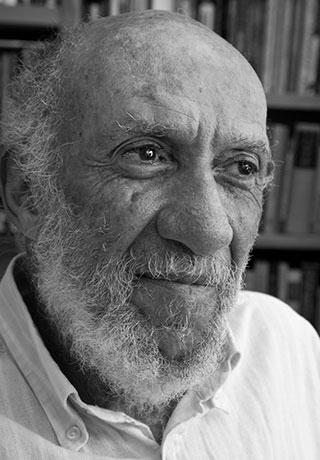

Professor Falk became an adviser to TFF when it was established in 1985.

Related Posts

Tony Robinson October 4, 2026 Violence is easy to recognise when someone is being beaten, shot or killed. It becomes more difficult when nobody is holding a weapon. Poverty, discrimination, exploitation and repression can restrict a human life just as effectively, although they do so in very different ways and with very different consequences. Simply adding more categories to an ever-growing list of forms of violence does not really solve the problem. The more interesting question is what all these different situations have in common and why it makes sense to describe them using the same word. Human beings do not simply react to what happens around them. They remember the past, imagine things that do not yet exist, make plans and undertake projects. Workers organise because they imagine different working conditions; people migrate because they imagine another life somewhere else; social movements emerge because people refuse to accept the...
It’s a matter of principles, courage, vision and pulling together – while the militarist world is falling apart… Peter Langille October 3, 2026 “Here, then, is the problem which we present to you, stark and dreadful and inescapable: Shall we put an end to the human race; or shall mankind renounce war?”The Bertrand Russell—Albert Einstein Manifesto, July 9, 1955 ⁕ The forecast for what’s ahead is worrisome. The sharp rise in armed conflicts over the past three years is adding to what was already the highest level in over seventy years. Genocides, which should be prevented are supported. A shared climate emergency that jeopardises survival is ignored. Diverse polls now suggest that people are war-weary, worried and interested in a more effective United Nations. And, there are viable policy options for a more secure world! Yet governments are doubling-down, betting on more war and investing heavily. If current trends persist,...
Johan Galtung 1930-2024October 2015 Published here on October 3, 2026 Let us focus on Civilization for conflict analysis and remedies. Major forms of disorder use violence; war is state organized violence. The most belligerent states are the United States of America and Israel, both with civilization roots. National Evangelism, the US Protestant Christian civilization– more national than evangelical–justifies US warfare as exceptionalism of a people chosen by God, with a manifest destiny to run the world. Orthodox Judaism justifies Israeli warfare to conquer and expand from Nile to Euphrates as a religious right and duty to the Eternal One. The third most belligerent country, the UK, no longer believes it is God-chosen but chosen by the USA; not quite the same but something. But the root cause of global disorder lies in the Occident–with Islam–seeing itself as the single, universal civilization valid for all at all times, all others being...

Recent Articles

Tony Robinson October 4, 2026 Violence is easy to recognise when someone is being beaten, shot or killed. It becomes more difficult when nobody is holding a weapon. Poverty, discrimination, exploitation and repression can restrict a human life just as effectively, although they do so in very different ways and with very different consequences. Simply adding more categories to an ever-growing list of forms of violence does not really solve the problem. The more interesting question is what all these different situations have in common and why it makes sense to describe them using the same word. Human beings do not simply react to what happens around them. They remember the past, imagine things that do not yet exist, make plans and undertake projects. Workers organise because they imagine different working conditions; people migrate because they imagine another life somewhere else; social movements emerge because people refuse to accept the...
It’s a matter of principles, courage, vision and pulling together – while the militarist world is falling apart… Peter Langille October 3, 2026 “Here, then, is the problem which we present to you, stark and dreadful and inescapable: Shall we put an end to the human race; or shall mankind renounce war?”The Bertrand Russell—Albert Einstein Manifesto, July 9, 1955 ⁕ The forecast for what’s ahead is worrisome. The sharp rise in armed conflicts over the past three years is adding to what was already the highest level in over seventy years. Genocides, which should be prevented are supported. A shared climate emergency that jeopardises survival is ignored. Diverse polls now suggest that people are war-weary, worried and interested in a more effective United Nations. And, there are viable policy options for a more secure world! Yet governments are doubling-down, betting on more war and investing heavily. If current trends persist,...
Johan Galtung 1930-2024October 2015 Published here on October 3, 2026 Let us focus on Civilization for conflict analysis and remedies. Major forms of disorder use violence; war is state organized violence. The most belligerent states are the United States of America and Israel, both with civilization roots. National Evangelism, the US Protestant Christian civilization– more national than evangelical–justifies US warfare as exceptionalism of a people chosen by God, with a manifest destiny to run the world. Orthodox Judaism justifies Israeli warfare to conquer and expand from Nile to Euphrates as a religious right and duty to the Eternal One. The third most belligerent country, the UK, no longer believes it is God-chosen but chosen by the USA; not quite the same but something. But the root cause of global disorder lies in the Occident–with Islam–seeing itself as the single, universal civilization valid for all at all times, all others being...

TFF on Substack

Discover and subscribe to more peace materials on TFF Substack

Most Popular

Tony Robinson October 4, 2026 Violence is easy to recognise when someone is being beaten, shot or killed. It becomes more difficult when nobody is holding a weapon. Poverty, discrimination, exploitation and repression can restrict a human life just as effectively, although they do so in very different ways and with very different consequences. Simply adding more categories to an ever-growing list of forms of violence does not really solve the problem. The more interesting question is what all these different situations have in common and why it makes sense to describe them using the same word. Human beings do not simply react to what happens around them. They remember the past, imagine things that do not yet exist, make plans and undertake projects. Workers organise because they imagine different working conditions; people migrate because they imagine another life somewhere else; social movements emerge because people refuse to accept the...
It’s a matter of principles, courage, vision and pulling together – while the militarist world is falling apart… Peter Langille October 3, 2026 “Here, then, is the problem which we present to you, stark and dreadful and inescapable: Shall we put an end to the human race; or shall mankind renounce war?”The Bertrand Russell—Albert Einstein Manifesto, July 9, 1955 ⁕ The forecast for what’s ahead is worrisome. The sharp rise in armed conflicts over the past three years is adding to what was already the highest level in over seventy years. Genocides, which should be prevented are supported. A shared climate emergency that jeopardises survival is ignored. Diverse polls now suggest that people are war-weary, worried and interested in a more effective United Nations. And, there are viable policy options for a more secure world! Yet governments are doubling-down, betting on more war and investing heavily. If current trends persist,...
Johan Galtung 1930-2024October 2015 Published here on October 3, 2026 Let us focus on Civilization for conflict analysis and remedies. Major forms of disorder use violence; war is state organized violence. The most belligerent states are the United States of America and Israel, both with civilization roots. National Evangelism, the US Protestant Christian civilization– more national than evangelical–justifies US warfare as exceptionalism of a people chosen by God, with a manifest destiny to run the world. Orthodox Judaism justifies Israeli warfare to conquer and expand from Nile to Euphrates as a religious right and duty to the Eternal One. The third most belligerent country, the UK, no longer believes it is God-chosen but chosen by the USA; not quite the same but something. But the root cause of global disorder lies in the Occident–with Islam–seeing itself as the single, universal civilization valid for all at all times, all others being...
Read More
Living-Peace-Sign-Budapest-copy
Tony Robinson October 4, 2026 Violence is easy to recognise when someone is being beaten, shot or killed. It becomes more difficult when nobody is holding a weapon. Poverty, discrimination, exploitation and repression can restrict a human life just as effectively, although they do so in very different ways and with very different consequences. Simply adding more categories to an ever-growing list of forms of violence does not really solve the problem. The more interesting question is what all these different situations have in common and why it makes sense to describe them using the same word. Human beings do not simply react to what happens around them. They remember the past, imagine things that do not yet exist, make plans and undertake projects. Workers organise because they imagine different working conditions; people migrate because they imagine another life somewhere else; social movements emerge because people refuse to accept the...
b54a1f10-8c65-4f0b-9dd5-4abc0a7d04cc_2659x2659
It’s a matter of principles, courage, vision and pulling together – while the militarist world is falling apart… Peter Langille October 3, 2026 “Here, then, is the problem which we present to you, stark and dreadful and inescapable: Shall we put an end to the human race; or shall mankind renounce war?”The Bertrand Russell—Albert Einstein Manifesto, July 9, 1955 ⁕ The forecast for what’s ahead is worrisome. The sharp rise in armed conflicts over the past three years is adding to what was already the highest level in over seventy years. Genocides, which should be prevented are supported. A shared climate emergency that jeopardises survival is ignored. Diverse polls now suggest that people are war-weary, worried and interested in a more effective United Nations. And, there are viable policy options for a more secure world! Yet governments are doubling-down, betting on more war and investing heavily. If current trends persist,...
010
Johan Galtung 1930-2024October 2015 Published here on October 3, 2026 Let us focus on Civilization for conflict analysis and remedies. Major forms of disorder use violence; war is state organized violence. The most belligerent states are the United States of America and Israel, both with civilization roots. National Evangelism, the US Protestant Christian civilization– more national than evangelical–justifies US warfare as exceptionalism of a people chosen by God, with a manifest destiny to run the world. Orthodox Judaism justifies Israeli warfare to conquer and expand from Nile to Euphrates as a religious right and duty to the Eternal One. The third most belligerent country, the UK, no longer believes it is God-chosen but chosen by the USA; not quite the same but something. But the root cause of global disorder lies in the Occident–with Islam–seeing itself as the single, universal civilization valid for all at all times, all others being...
Screenshot 2026-10-02 011738
Jan ObergPhD, director, The Transnational Foundation for Peace and Future Research, TFFLund, Sweden October 2, 2026 This is my full original manuscript. The Chinese Academy of Social Science, CASS, makes two publications out if it. 1. China’s Five-year plan emphasized the capabilities of basic research and original innovation. It is regarded as the goal of the future social development, which, as required, should be significantly enhanced. Can you comment on the importance of original innovation in research and academic study? I believe it is easier to define “original innovation” in the natural sciences than in social sciences. The breaking points of what constitutes something new, or innovative, are not quite as sharp in the latter. But in both fields it is about opening up something that was closed, unseen, unexplored before – making manifest what was earlier latent. Innovations come in many forms and shapes – naming something that was not...
arctic-circle-map
The agreement is catastrophic both because of what it says and what it doesn’t mention. It reduces further the major asset of security policies: Freedom of action. Jan Oberg TFF director September 25, 2026 A couple of hours before the agreement was signed on September 22, 2026, I published the following 13 hypotheses about what it would most likely contain on TFF Substack (in English). I was wrong on only the first point. Contrary to what Trump had written on his Truth Social platform, it does not appear to come into force immediately. In fact, it turned out to be worse than even I had anticipated. After these hypotheses now come a number of reflections in light of what the agreement actually contains, and does not contain, as well as the way in which it has generally been presented by major media outlets and by the public-service broadcaster DR. My...
girl-5894831_1280
Below are TFF-related media mentions, comments, videos and social media posts published elsewhere but not on this homepage. We happen to catch and list only a fraction. Regarding video comments and debates, we recommend that you go to the TFF Video Channel on Substack where many of them are reproduced. Jan Oberg is a contributor to China Daily – 52 million daily clicks – and Global Times, CGTN and CCTV (the national television), China Investment, Xinhua News Agency and several others. Articles and videos on these media very often multiply into countless Chinese (and Western media) that re-post them from these main media. Thanks to The China Academy, his analyses, interviews and comments are frequently posted on YouTube channels such as Thinkers Forum and Wave Media. These videos are often re-posted on Bilibili (China’s YouTube), the China Content Center on TikTok, and on the Chinese edition of TikTok, Douyin.com. This means reaching hundreds of millions of viewers worldwide over a year. While there are too many to catch on all these...




