
Choosing a president for the World Bank: West centrism prevails over global democracy

This post is a revised version of a text that appeared a few days ago in Al Jazeera English, and seeks to use the selection of an American as the new President of the World Bank both to expose the fraudulent claim of a merit-based selection process and to insist indirectly that the future peace and justice of the world requires a more democratic and legitimate structure of global governance that reflects the post-colonial rise of the non-West, a rise that is not reflected in antiquated structures that persist despite changed conditions.

******************************************

The unsurprising announcement that the Board of the World Bank had voted in favor of the American candidate, Jim Yong Kim, presents an opportune moment to reflect upon the soft power structures that shape global public policy in the early 21st Century inside the UN system and beyond.

It is necessary to draw a distinction between Mr. Kim’s substantive qualifications and the procedure by which he was selected. Substantively, although lacking in either financial or diplomatic experience, Dr. Kim is in certain respects an interesting choice because of his lifelong dedication to improving the health of the very poor in the global South, as well as his training in medicine and PhD in anthropology.

He has had extensive relevant experience on the ground, and in working with NGOs (he co-founded the widely admired Partners in Health) and in institutional settings (for some years he directed the HIV/AIDs program for the World Health Organization) and has been president of Dartmouth University for the past three years, although stirring controversy during his brief period of administrative tenure. It may be still wondered whether Dr. Kim understands sufficiently the economic dimensions of World Bank policy to enjoy the respect of the professional staff, and might have been more appropriately chosen to head an enhanced program of the Bank devoted to health and poverty.

Overall, still, the substantive case for the appointment is relatively strong, although the two opposing candidates, both former finance ministers of developing countries, certainly had equally impressive substantive résumés and ethical profiles, and were plausible choices for this position.

The procedural criticisms of the appointment process are far more serious… and raise fundamental questions about the legitimacy of global institutions in the post-colonial period.

It was not surprising that Dr. Kim’s two opponents, Ngozi Okonjo-Iweala of Nigera and José Antonio Ocampo of Colombia, openly expressed their disgust with the process, complaining that the most qualified candidate had not been chosen despite the institutional promise of a ‘merit-based’ selection process. Ms Okonjo-Iweala uttered a truism when she said that selecting the Bank president was not “open, transparent and merit-based.” Mr. Ocampo was even more direct, saying, “[Y]ou know this thing is not really being decided on merit.”

In this fundamental respect, the supposed international search for a director was a charade. It became clear as other candidate were put forward by their respective governments that the decision would be made in Washington and that the person proposed would be, as in every instance, since the World Bank was established would be an American – just as every Managing Director of the International Monetary Fund has been a European. This is a quid pro quo never formalized but decreasingly legitimate given the new de-Westernized geopolitical landscape that is becoming the most prominent reality of the early 21st century.

More specifically, this vote was a foregone conclusion, despite some mutterings to the effect that this World Bank search would be open as compared to the past, because Europe had bargained away their independence with respect to the Bank some months earlier so as to secure American support for Christine Lagarde’s appointment to head of the IMF.

She too had been faced with non-Western well qualified candidates for the position that she now occupies. In fact, there were feeble boasts made in Western circles that at least this time there were non-Western candidates for these positions would be considered fairly.

In a letter to The Financial Times (April 19, 2012), Mr. Moen Qureshi, former Prime Minister of Pakistan and former Senior Vice President of the World Bank, expresses his annoyance with this new assertion of American ‘old boy’ privileges in staffing the top positions in world order. He does not offer criticisms in the wider context of a dysfunctional institutional rigidities that fail to register historical changes, and instead makes the temporizing suggestion that the World Bank establish a new No. 2 position who would be a person with banking experience and knowledge of the World Bank, allowing the Bank to clarify its role in a global setting with changing priorities.

He proposes that Ngozi Okonjo-Iweala be given the job, partially to overcome the injustice of her losing out in the competition for top position, but also to bring into the World Bank a person of stature and experience who can offset the limitations of Kim’s background. Of course, even in the unlikely event that Qureshi’s sensible advice is followed, it fails to address the fundamental issue of creating a more legitimate, just, and effective structure of global governance.

If the credibility of global financial leadership is considered more critically, given American responsibility for the global meltdown and recession going back to 2008 and the ongoing failed European efforts to solve the sovereign debt problems and internal budgetary, and taking account, in contrast, of how well the leading emerging economies handled the crisis of the last several years, this would have seemed to be an ideal moment to acknowledge the globalization of economic know-how and competence, and pick a non-Westerner to head the Bank.

President Obama might even have restored some of his tarnished reputation as a visionary and post-nationalist global citizen if he had gratuitously given up this informal prerogative enjoyed by the United States ever since the end of World War II, although those who preside over the erosion of imperial prerogatives are invariably appreciated at home for accommodating changing realities that downgrade the role of their own country, however compelling the case for such an overdue adjustment may be.

Arguably, the more overdue the adjustment, the more intense the likely backlash from those with strong ideological affinities and entrenched interests in maintaining the old order as long as possible. It certainly would not have been a wise tactical move for Obama to make in an election year, but at anytime any gesture toward a more globally democratic structure for global public policy in the economic realm would have elicited a bitter screed from the likes of the Wall Street Journal.

The informal lock on Western domination of the Bretton Woods institutions continues without much challenge. It is reported that both China and India supported the selection of Dr. Kim, apparently not wanting to alter expectations about the locus of global economic leadership, and even Russia and Mexico apparently voted for the American candidate (the votes are cast by secret ballot, and so their attribution is based on leaks and speculation).

It seems that the geopolitical comfort level of the BRIC countries remains largely accommodationist in character, suggesting that decolonizing the mind of the global South has a long way to go.

It would seem almost self-evident that the informal power/prestige sharing that might have appeared natural in 1945 when access to American capital markets were crucial for the success of international financial initiatives should no longer govern behavior more than 65 years later when the United States is close to being a failed state when it comes to financial viability having even suffered the indignity of having its credit rating downgraded by an independent market-oriented private agency.

As it is, despite broadening the G-8 to the G-20 with regard to some global economic issues, the governance of the world economy remains determinedly neo-liberal and West-centric, and for this reason less than legitimate, especially when consideration is given to widening disparities of wealth and income within and between countries and the persistence of high levels of deep poverty and material deprivation.

The geopolitical passivity of the BRICs is not encouraging from the perspective either of the wellbeing of the peoples of the world or the prospects for global democracy. It is notable that such passivity is also evident in other policy domains: climate change, control of nuclear weaponry and even recourse to military intervention (the most that BRIC countries were willing to do to express their opposition to the NATO intervention in Libya was to abstain when it came to the crucial March 2011 vote in the Security Council, although Russia and China deceived in the Libyan setting have refused to go along with R2P approach in the Syrian context).

Undoubtedly, the most vivid institutional effort to achieve global reform that reflects the world we now live in rather than the one that existed at the end of World War II when most of the non-West was formally or informally operating under Western surveillance and control, has been the endlessly frustrating struggle to broaden and reconstitute the membership in the UN Security Council.

It is scandalously anachronistic that the United Kingdom and France, at best secondary countries in the present global hierarchy, both hold permanent seats in the Security Council and enjoy a veto right, while countries such as Brazil, India, Nigeria, Indonesia, Pakistan, and Turkey must compete for the nine seats with two-year terms that are shared with the other 189 members of the UN.

It is not only a problem of representation for important states, but also the fact that there is no Muslim or Hindu majority state that is permanently represented in the supposedly global body. At least with the UN there is an excuse that the Charter makes amendments almost impossible, prescribing that there must be total acquiescence in any change in the composition of the Security Council by all five of its permanent members, as well as two-thirds of the overall membership.

I suppose it is far too much to expect that France and the UK would accept a single rotating European permanent seat, and relinquish their dysfunctional separate membership on the Council. In the meantime, the UN System is largely frozen in time, and the world is deprived of a more legitimate and effective global problem-solving capability that is desperately needed at this time.

It is important to move toward the achievement of global democracy for the sake of both global policymaking and the overall legitimacy of world order. To move away from violent geopolitics, acknowledging changes in the status of governments by reliance on soft power criteria leadership of international institutions has never been more useful.

From this perspective the selection of Dr. Kim, even if he lives up to his considerable potential for a turn toward global empathy, is one more lost opportunity to move beyond the West-centric structuring of world order after World War II.
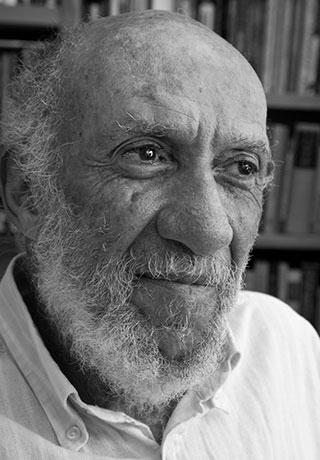

Professor Falk became an adviser to TFF when it was established in 1985.

Related Posts

Photos © TFF 2000 Read PressInfo 90 “Lift the Sanctions and Bring More Aid to Yugoslavia” See Pictures from Belgrade © TFF 2000 Please reprint, copy, archive, quote or re-post this item, but please retain the source.
LONDON – So far so good, at least on the wider level. While internally Iraq seems on the edge of chaos, the much heralded clash of civilizations between the Muslim and Judaeo-Christian worlds has yet to become apparent. We have anger and despair aplenty in the Arab and Muslim worlds. But very little rushing to the standard and there was no great pilgrimage of warriors to join the fight, as happened when the Soviet Union invaded Afghanistan twenty years ago, and then, having driven the Red Army out, were left to ferment in that mountainous redoubt. With the armaments supplied by the CIA the mujahidin were transformed into Al Qaeda that became, for a relatively brief moment as these things go, ‘the greatest threat to the homeland that America has ever known.’ Nevertheless a ‘Cold War’ between much of the Muslim world and the West is certainly in full swing. Winston...
The Challenge of Nuclear Weaponsin the Twenty-first CenturyA Path Forward The peoples and governments of the world face an urgent challenge relating to weaponry of mass destruction and particularly to nuclear weaponry.  At the crossroads of technology, terrorism, geopolitical ambition, and policies of preemption are new and potent dangers for humanity. Despite ending the nuclear standoff of the Cold War era, nuclear weaponry is again menacing the peoples of the world with catastrophic possibilities.  We recognize the need for any government to pursue its security interests in accordance with international law; and further, we recognize that distinctive threats to these interests now exist as a result of an active international terrorist network having declared war on the United States and its allies. Nonetheless, we reject the assessment of the current US administration that upgrading a reliance on nuclear weapons is in any sense justified as a response. We find it...

Recent Articles

Tony Robinson October 4, 2026 Violence is easy to recognise when someone is being beaten, shot or killed. It becomes more difficult when nobody is holding a weapon. Poverty, discrimination, exploitation and repression can restrict a human life just as effectively, although they do so in very different ways and with very different consequences. Simply adding more categories to an ever-growing list of forms of violence does not really solve the problem. The more interesting question is what all these different situations have in common and why it makes sense to describe them using the same word. Human beings do not simply react to what happens around them. They remember the past, imagine things that do not yet exist, make plans and undertake projects. Workers organise because they imagine different working conditions; people migrate because they imagine another life somewhere else; social movements emerge because people refuse to accept the...
It’s a matter of principles, courage, vision and pulling together – while the militarist world is falling apart… Peter Langille October 3, 2026 “Here, then, is the problem which we present to you, stark and dreadful and inescapable: Shall we put an end to the human race; or shall mankind renounce war?”The Bertrand Russell—Albert Einstein Manifesto, July 9, 1955 ⁕ The forecast for what’s ahead is worrisome. The sharp rise in armed conflicts over the past three years is adding to what was already the highest level in over seventy years. Genocides, which should be prevented are supported. A shared climate emergency that jeopardises survival is ignored. Diverse polls now suggest that people are war-weary, worried and interested in a more effective United Nations. And, there are viable policy options for a more secure world! Yet governments are doubling-down, betting on more war and investing heavily. If current trends persist,...
Johan Galtung 1930-2024October 2015 Published here on October 3, 2026 Let us focus on Civilization for conflict analysis and remedies. Major forms of disorder use violence; war is state organized violence. The most belligerent states are the United States of America and Israel, both with civilization roots. National Evangelism, the US Protestant Christian civilization– more national than evangelical–justifies US warfare as exceptionalism of a people chosen by God, with a manifest destiny to run the world. Orthodox Judaism justifies Israeli warfare to conquer and expand from Nile to Euphrates as a religious right and duty to the Eternal One. The third most belligerent country, the UK, no longer believes it is God-chosen but chosen by the USA; not quite the same but something. But the root cause of global disorder lies in the Occident–with Islam–seeing itself as the single, universal civilization valid for all at all times, all others being...

TFF on Substack

Discover and subscribe to more peace materials on TFF Substack

Most Popular

Tony Robinson October 4, 2026 Violence is easy to recognise when someone is being beaten, shot or killed. It becomes more difficult when nobody is holding a weapon. Poverty, discrimination, exploitation and repression can restrict a human life just as effectively, although they do so in very different ways and with very different consequences. Simply adding more categories to an ever-growing list of forms of violence does not really solve the problem. The more interesting question is what all these different situations have in common and why it makes sense to describe them using the same word. Human beings do not simply react to what happens around them. They remember the past, imagine things that do not yet exist, make plans and undertake projects. Workers organise because they imagine different working conditions; people migrate because they imagine another life somewhere else; social movements emerge because people refuse to accept the...
It’s a matter of principles, courage, vision and pulling together – while the militarist world is falling apart… Peter Langille October 3, 2026 “Here, then, is the problem which we present to you, stark and dreadful and inescapable: Shall we put an end to the human race; or shall mankind renounce war?”The Bertrand Russell—Albert Einstein Manifesto, July 9, 1955 ⁕ The forecast for what’s ahead is worrisome. The sharp rise in armed conflicts over the past three years is adding to what was already the highest level in over seventy years. Genocides, which should be prevented are supported. A shared climate emergency that jeopardises survival is ignored. Diverse polls now suggest that people are war-weary, worried and interested in a more effective United Nations. And, there are viable policy options for a more secure world! Yet governments are doubling-down, betting on more war and investing heavily. If current trends persist,...
Johan Galtung 1930-2024October 2015 Published here on October 3, 2026 Let us focus on Civilization for conflict analysis and remedies. Major forms of disorder use violence; war is state organized violence. The most belligerent states are the United States of America and Israel, both with civilization roots. National Evangelism, the US Protestant Christian civilization– more national than evangelical–justifies US warfare as exceptionalism of a people chosen by God, with a manifest destiny to run the world. Orthodox Judaism justifies Israeli warfare to conquer and expand from Nile to Euphrates as a religious right and duty to the Eternal One. The third most belligerent country, the UK, no longer believes it is God-chosen but chosen by the USA; not quite the same but something. But the root cause of global disorder lies in the Occident–with Islam–seeing itself as the single, universal civilization valid for all at all times, all others being...
Read More
Living-Peace-Sign-Budapest-copy
Tony Robinson October 4, 2026 Violence is easy to recognise when someone is being beaten, shot or killed. It becomes more difficult when nobody is holding a weapon. Poverty, discrimination, exploitation and repression can restrict a human life just as effectively, although they do so in very different ways and with very different consequences. Simply adding more categories to an ever-growing list of forms of violence does not really solve the problem. The more interesting question is what all these different situations have in common and why it makes sense to describe them using the same word. Human beings do not simply react to what happens around them. They remember the past, imagine things that do not yet exist, make plans and undertake projects. Workers organise because they imagine different working conditions; people migrate because they imagine another life somewhere else; social movements emerge because people refuse to accept the...
b54a1f10-8c65-4f0b-9dd5-4abc0a7d04cc_2659x2659
It’s a matter of principles, courage, vision and pulling together – while the militarist world is falling apart… Peter Langille October 3, 2026 “Here, then, is the problem which we present to you, stark and dreadful and inescapable: Shall we put an end to the human race; or shall mankind renounce war?”The Bertrand Russell—Albert Einstein Manifesto, July 9, 1955 ⁕ The forecast for what’s ahead is worrisome. The sharp rise in armed conflicts over the past three years is adding to what was already the highest level in over seventy years. Genocides, which should be prevented are supported. A shared climate emergency that jeopardises survival is ignored. Diverse polls now suggest that people are war-weary, worried and interested in a more effective United Nations. And, there are viable policy options for a more secure world! Yet governments are doubling-down, betting on more war and investing heavily. If current trends persist,...
010
Johan Galtung 1930-2024October 2015 Published here on October 3, 2026 Let us focus on Civilization for conflict analysis and remedies. Major forms of disorder use violence; war is state organized violence. The most belligerent states are the United States of America and Israel, both with civilization roots. National Evangelism, the US Protestant Christian civilization– more national than evangelical–justifies US warfare as exceptionalism of a people chosen by God, with a manifest destiny to run the world. Orthodox Judaism justifies Israeli warfare to conquer and expand from Nile to Euphrates as a religious right and duty to the Eternal One. The third most belligerent country, the UK, no longer believes it is God-chosen but chosen by the USA; not quite the same but something. But the root cause of global disorder lies in the Occident–with Islam–seeing itself as the single, universal civilization valid for all at all times, all others being...
Screenshot 2026-10-02 011738
Jan ObergPhD, director, The Transnational Foundation for Peace and Future Research, TFFLund, Sweden October 2, 2026 This is my full original manuscript. The Chinese Academy of Social Science, CASS, makes two publications out if it. 1. China’s Five-year plan emphasized the capabilities of basic research and original innovation. It is regarded as the goal of the future social development, which, as required, should be significantly enhanced. Can you comment on the importance of original innovation in research and academic study? I believe it is easier to define “original innovation” in the natural sciences than in social sciences. The breaking points of what constitutes something new, or innovative, are not quite as sharp in the latter. But in both fields it is about opening up something that was closed, unseen, unexplored before – making manifest what was earlier latent. Innovations come in many forms and shapes – naming something that was not...
arctic-circle-map
The agreement is catastrophic both because of what it says and what it doesn’t mention. It reduces further the major asset of security policies: Freedom of action. Jan Oberg TFF director September 25, 2026 A couple of hours before the agreement was signed on September 22, 2026, I published the following 13 hypotheses about what it would most likely contain on TFF Substack (in English). I was wrong on only the first point. Contrary to what Trump had written on his Truth Social platform, it does not appear to come into force immediately. In fact, it turned out to be worse than even I had anticipated. After these hypotheses now come a number of reflections in light of what the agreement actually contains, and does not contain, as well as the way in which it has generally been presented by major media outlets and by the public-service broadcaster DR. My...
girl-5894831_1280
Below are TFF-related media mentions, comments, videos and social media posts published elsewhere but not on this homepage. We happen to catch and list only a fraction. Regarding video comments and debates, we recommend that you go to the TFF Video Channel on Substack where many of them are reproduced. Jan Oberg is a contributor to China Daily – 52 million daily clicks – and Global Times, CGTN and CCTV (the national television), China Investment, Xinhua News Agency and several others. Articles and videos on these media very often multiply into countless Chinese (and Western media) that re-post them from these main media. Thanks to The China Academy, his analyses, interviews and comments are frequently posted on YouTube channels such as Thinkers Forum and Wave Media. These videos are often re-posted on Bilibili (China’s YouTube), the China Content Center on TikTok, and on the Chinese edition of TikTok, Douyin.com. This means reaching hundreds of millions of viewers worldwide over a year. While there are too many to catch on all these...




