

Turkey’s Foreign Policy: Zero Problems with Neighbors Revisited

Pundits in Europe and North America in recent months have delighted in citing with a literary smirk ‘zero problems with neighbors,’ which has been the centerpiece of Ahmet Davutoglu’s foreign policy agenda since he became Foreign Minister on May 1, 2009. Mr. Davutoglu had previously served as Chief Advisor to both the Prime Minister and Foreign Minister ever since the AKP came to power in 2002, and was known in those years as the ‘architect’ behind the scenes.

Critics of the zero problems approach point to the heightened Turkish tensions with Syria and Iraq, the persisting inability of Ankara to overcome the hostile fallout from Mavi Marmara incident with Israel, and even the revived salience of the long unresolved dispute with the Armenian diaspora sparked by a new French law that makes the denial of genocide associated with the 1915 massacres a crime and has led to a dramatic worsening of Turkish-French relations.

Troubles to be sure, but should these be interpreted as ‘failures,’ and more precisely as ‘Turkish failures’? Perhaps, Davutoglu was insufficiently cautious, or alternatively too optimistic, when he articulated the zero problems diplomacy, but was it not at the time an accurate way of signaling a new dawn for Turkey’s approach to neighbors, especially its Arab neighbors, and actually, to the world as a whole?

And Davutoglu implemented his lofty vision with a dizzying series of initiatives that opened long locked doors. He also made it clear that the neighborhood was not to be understood in a narrow geographical sense, but rather in as broad a sense as disclosed by cultural and historical affinities and mutual strategic interests. Davutoglu was eager not only to banish lingering bad memories associated with centuries of Ottoman rule over much of the Arab world, as well as to renew connections with countries that shared Turkic and Muslim identities.

It should be recalled that Turkish foreign policy began charting this new course years before Davutoglu became Foreign Minister, and thus was a shift in worldview that was shared with Recip Tayyip Erdogan and Abudllah Gul, the two dominant political leaders during the past decade. Indeed, both men deserve some of the credit, and a share of the responsibility, for steering the Turkish ship of state into such mainly uncharted waters of diplomatic initiative.

In an important sense, the turning point came in 2003 when the Turkish government, after sending some mixed signals to Washington, finally refused to allow the United States to use its territory to stage an invasion of Iraq. At the time the anti-AKP domestic opposition challenged this unprecedented act of geopolitical insubordination by Ankara as the biggest mistake in the whole of Turkish republican history.

In retrospect, this opting out of the invasion of Iraq constituted a transformational moment for Turkey that demonstrated to its neighbors and the world, and even to itself, that Turkey could and would think and act for itself when it comes to foreign policy, that the hierarchical alliances of the Cold War period were over, and that Washington should no longer take Ankara’s collaboration for granted.

And yet this move did not mean, as some critics in both Turkey and the United States wrongly claimed, a turn toward Islam and away from the West or its continuing involvement in Western security arrangements. Even during the Iraq War Turkey allowed the Incirlik Air Base to be used by American combat aircraft, including for bombing missions. As recently shown, Turkey still values its NATO ties even to the extent of allowing radar stations to be deployed on its territory that is linked to a missile defense system that seems mainly intended to protect Europe, Israel, and the Gulf from Iran in the immediate future and possibly Russia in the long-term.

By now it is almost forgotten that it was Turkey that encouraged peace talks between Syria and Israel to resolve their conflict that seemed to be headed for success until their abrupt breakdown, a development attributed at the time to the Israeli attacks on Gaza at the end of 2008, but in retrospect better understood as the unwillingness of Israel to give up its 1967 conquest and subsequent occupation of the Golan Heights.

Turkey also sought to be a peacemaker further afield in the Balkans and Caucasus, doing the seemingly impossible, bringing Bosnia and Serbia together in a manner that moved these two antagonistic governments on a path leading to normalization and at least a cold peace.

Even more ambitiously, in collaboration with Brazil, Turkey used its new stature as an independent regional player in May 2010 to persuade Tehran to accept an arrangement for the storage of a large portion of Iran’s enriched uranium in Turkey, thereby demonstrating the plausibility of a peaceful alternative to the United States/Israel posture of sanctions and warmongering.

To be sure, the earlier sensible effort to have friendly relations with Syria has now badly backfired, but not until the regime in Damascus started the massive shooting of its citizens and refused to meet the demands of its people for far reaching reforms. Arguably, the same reversal of outlook in Ankara occurred in relation to Libya after Qaddafi threatened to massacre his opposition, leading eventually to extending some Turkish humanitarian support for the UN-backed NATO intervention in Libya in 2011 that shaped the outcome of an ongoing internal struggle for control of the Libyan political future.

Also, there is no doubt that the refusal of the European Union to shift its one-sided stance on Cyprus that is punitive toward Turkey has had some serious consequences. It has soured relations with Greece, producing a temporary deterioration that has taken place despite the Turkish show of reasonableness and exhibiting a spirit of compromise in relation to Cyprus. And, together with the recent Islamophobic surge in Europe, this perceived unfairness to Turkey with respect to Cyprus has reinforced the weakening of an earlier Turkish commitment to qualify for membership in the EU.

Even with Israel, despite the strong sympathies of the Turkish public with the struggle of the Palestinians, the AKP leadership has done its best to restore normalcy to the relationship between the two countries. After all, the May 31, 2010 attack by Israel’s navy in international waters on the Mavi Marmara carrying humanitarian activists and assistance to Gaza and challenging the Israeli blockade was not only a flagrant breach of international law but resulted in the death of nine Turkish passengers.

Turkey has demanded an official apology and compensation for the families of the victims, a reasonable set of expectations that was apparently on the verge of acceptance by Tel Aviv, but collapsed at the last hour when challenged by the internal political opposition to Netanyahu led by the super-hawk foreign minister, Avigdor Liebermann, now under government investigation for fraud.

What this brief overview argues is that Turkey has consistently tried to avert recourse to intervention and war in the Middle East and to promote diplomatic approaches that rely to the extent possible on soft power. It has, to be sure, experienced several geopolitical rebuffs, as in relation to its efforts to end the confrontation with Iran, impressively refusing to stay in line behind the bellicose leadership of the United States and Israel.

Davutoglu has correctly affirmed Turkey’s resolve to act on the principled basis of its values and convictions, as well as strategic calculations of its interests, in the post-Cold War politics of the region, and not blindly follow directives from Washington. Iran is a striking case where the Turkish approach, although seemingly incapable of stemming the drift toward war being mounted by the West, is both wiser and more likely to achieve the goal of reassuring the world that Tehran means what it says when it insists that it does not intend to acquire nuclear weapons.

As in every other foreign policy setting, Davutoglu is exhibiting his belief that in the 21st century persuasion works better than coercion when it comes to achieving political goals without even considering the costs of death, devastation, and displacement.

In sum, the zero problems with neighbors as a touchstone to Turkish foreign policy in the Middle East and the world needs to be understood as an aspiration and strong preference rather than as an invariable and inflexible guide to practice. There are too many contradictions embedded in the political realities of the contemporary world to be slavishly tied to a rigid foreign policy doctrine that is incapable of taking account of context and shifting perceptions and interests.

For instance, in Syria and Libya the Turkish government was forced to choose between siding with a regime slaughtering its own people and backing a disorganized opposition in its heroic if clouded efforts to democratize and humanize the governing process. Of course, there are suspicions that Turkey’s support for the anti-Assad insurgency also reflects a disguised preference for a Sunni opposition that is anchored, if at all, in the Muslim Brotherhood as compared to the secular authoritianism of the Damascus regime.

As well, there are speculations that in the ongoing regional struggle for ascendancy Turkey would rather in the end side with Saudi Arabia and Egypt, reinforced by the United States, than Iran and a newly engaged Russia.

Zero problems needs to be understood as a preferred framework for addressing the relations between countries, not just governments, and in situations of strife choices must be made.

Arguably Turkey went too far when it backed NATO in Libya and the UN Security Council with respect to Syria or not far enough when it failed to show support for the Green Revolution in Iran after the stolen elections of June 2009. These are difficult interpretative choices upon which reasonable persons of good faith can disagree. Whatever the policies pursued in specific situations, they do not necessarily invalidate the principled positions articulated by Davutoglu since he became Foreign Minister. Davutoglu has repeatedly affirmed these principles as being as important for him as are realist calculations in shaping foreign policy in complex situations. Possibly, if the Green Revolution had shown more persistence and promise or the Iranian regime had engaged in more widespread killing of its people Turkey would have made a ‘Syrian choice.’

Davutoglu on more than one occasion has expressed enthusiastic support for the upheavals grouped together under the banner of ‘the Arab Spring.’ He calls these upheavals great historical transformations that are irreversible, and expressions of a thirst by young people in their respective countries for lives of dignity and democratic freedoms. There is nothing that Turkey has done to thwart these high ideals.

In this respect, I think it is possible to reach an assessment of Turkish foreign policy as of early 2012. It has charted a course of action based to the extent feasible on soft power diplomacy, taking numerous initiatives to resolve its conflicts with neighbors but also to offer its good offices to mediate and unfreeze conflicts between states to which it is not a party.

Its credibility has become so great that Istanbul has replaced European capitals as the preferred venue for conflict resolution whether in relation to Afghanistan or even Iran, and despite its much publicized diplomatic differences with Washington.

It is notable that despite Western annoyance with Ankara regarding Iran or resulting from the simmering dispute with Israel, the U.S. Government seems to favor Istanbul as the most propitious site for any prospective negotiations with Iran concerning its nuclear program.

At the same time, as the policy reversals with respect to Syria and Libya illustrate, it is not always possible to avoid taking sides in response to internal struggles, although Turkey has delayed doing so to give governments in power the opportunity to establish internal peace.

In a globalizing world boundaries are not absolute, and sovereignty must give way if severe violations of human rights are being committed by the regime. Even in such extreme circumstances armed intervention should always be a last resort, and one only undertaken in extreme instances on behalf of known opposition forces and in a manner that has a reasonable prospect of cumulative benefits at acceptable costs for the targeted society.

Such conditions almost never exist, and so intervention under present world conditions is rarely if ever, in my judgment, justified, although bloodshed, oppression, and crimes against humanity may generate strong public and governmental support for interventionary diplomacy.

We can only hope that Turkey stays the Dautoglu course, pursuing every opening that enables positive mutual relations among countries and using its diplomatic stature to encourage peaceful conflict resolution wherever possible.

Rather than viewing ‘zero problems’ as a failure, it should be a time to reaffirm the creativity of Turkish foreign policy in the course of the last decade that has shown the world the benefits of soft power diplomacy, and a pattern that other governments might learn from while adapting to their own realities. This diplomacy, as supplemented by Turkey’s economic success and political stability, helps us appreciate the deserved popularity of and respect for the Turkish Prime Minister, Recep Tayyip Erdogan, throughout the region and the world.
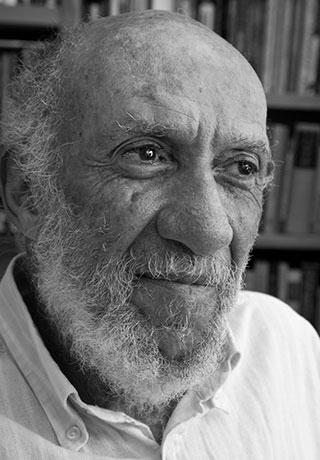

Professor Falk became an adviser to TFF when it was established in 1985.

Related Posts

LONDON – So far so good, at least on the wider level. While internally Iraq seems on the edge of chaos, the much heralded clash of civilizations between the Muslim and Judaeo-Christian worlds has yet to become apparent. We have anger and despair aplenty in the Arab and Muslim worlds. But very little rushing to the standard and there was no great pilgrimage of warriors to join the fight, as happened when the Soviet Union invaded Afghanistan twenty years ago, and then, having driven the Red Army out, were left to ferment in that mountainous redoubt. With the armaments supplied by the CIA the mujahidin were transformed into Al Qaeda that became, for a relatively brief moment as these things go, ‘the greatest threat to the homeland that America has ever known.’ Nevertheless a ‘Cold War’ between much of the Muslim world and the West is certainly in full swing. Winston...
The Challenge of Nuclear Weaponsin the Twenty-first CenturyA Path Forward The peoples and governments of the world face an urgent challenge relating to weaponry of mass destruction and particularly to nuclear weaponry.  At the crossroads of technology, terrorism, geopolitical ambition, and policies of preemption are new and potent dangers for humanity. Despite ending the nuclear standoff of the Cold War era, nuclear weaponry is again menacing the peoples of the world with catastrophic possibilities.  We recognize the need for any government to pursue its security interests in accordance with international law; and further, we recognize that distinctive threats to these interests now exist as a result of an active international terrorist network having declared war on the United States and its allies. Nonetheless, we reject the assessment of the current US administration that upgrading a reliance on nuclear weapons is in any sense justified as a response. We find it...
By Karin Wegestal MP, the Social Democratic Partyon behalf of the Swedish Committee for Solidarity with the Yugoslav People During the last decade, the Federal Republic of Yugoslavia has received more than 500,000 refugees from Croatia and Bosnia, and another 300,000 internally displaced persons, mainly from the province Kosovo and Metohia. For a country with about ten million inhabitants, such an influx of homeless people is obviously a very heavy burden – even under peaceful conditions. But in addition to that, the Federal Republic of Yugoslavia has been the subject to sanctions from the western powers for close to ten years and its infrastructure was badly hurt through Nato’s intense bombardment during 78 days in 1999. The result of all this is that Yugoslavia, once the most developed industrial country in Eastern Europe, is today the poorest country in Europe. In Serbia excluding Kosovo, with about ten million inhabitants and...

Recent Articles

Tony Robinson October 4, 2026 Violence is easy to recognise when someone is being beaten, shot or killed. It becomes more difficult when nobody is holding a weapon. Poverty, discrimination, exploitation and repression can restrict a human life just as effectively, although they do so in very different ways and with very different consequences. Simply adding more categories to an ever-growing list of forms of violence does not really solve the problem. The more interesting question is what all these different situations have in common and why it makes sense to describe them using the same word. Human beings do not simply react to what happens around them. They remember the past, imagine things that do not yet exist, make plans and undertake projects. Workers organise because they imagine different working conditions; people migrate because they imagine another life somewhere else; social movements emerge because people refuse to accept the...
It’s a matter of principles, courage, vision and pulling together – while the militarist world is falling apart… Peter Langille October 3, 2026 “Here, then, is the problem which we present to you, stark and dreadful and inescapable: Shall we put an end to the human race; or shall mankind renounce war?”The Bertrand Russell—Albert Einstein Manifesto, July 9, 1955 ⁕ The forecast for what’s ahead is worrisome. The sharp rise in armed conflicts over the past three years is adding to what was already the highest level in over seventy years. Genocides, which should be prevented are supported. A shared climate emergency that jeopardises survival is ignored. Diverse polls now suggest that people are war-weary, worried and interested in a more effective United Nations. And, there are viable policy options for a more secure world! Yet governments are doubling-down, betting on more war and investing heavily. If current trends persist,...
Johan Galtung 1930-2024October 2015 Published here on October 3, 2026 Let us focus on Civilization for conflict analysis and remedies. Major forms of disorder use violence; war is state organized violence. The most belligerent states are the United States of America and Israel, both with civilization roots. National Evangelism, the US Protestant Christian civilization– more national than evangelical–justifies US warfare as exceptionalism of a people chosen by God, with a manifest destiny to run the world. Orthodox Judaism justifies Israeli warfare to conquer and expand from Nile to Euphrates as a religious right and duty to the Eternal One. The third most belligerent country, the UK, no longer believes it is God-chosen but chosen by the USA; not quite the same but something. But the root cause of global disorder lies in the Occident–with Islam–seeing itself as the single, universal civilization valid for all at all times, all others being...

TFF on Substack

Discover and subscribe to more peace materials on TFF Substack

Most Popular

Tony Robinson October 4, 2026 Violence is easy to recognise when someone is being beaten, shot or killed. It becomes more difficult when nobody is holding a weapon. Poverty, discrimination, exploitation and repression can restrict a human life just as effectively, although they do so in very different ways and with very different consequences. Simply adding more categories to an ever-growing list of forms of violence does not really solve the problem. The more interesting question is what all these different situations have in common and why it makes sense to describe them using the same word. Human beings do not simply react to what happens around them. They remember the past, imagine things that do not yet exist, make plans and undertake projects. Workers organise because they imagine different working conditions; people migrate because they imagine another life somewhere else; social movements emerge because people refuse to accept the...
It’s a matter of principles, courage, vision and pulling together – while the militarist world is falling apart… Peter Langille October 3, 2026 “Here, then, is the problem which we present to you, stark and dreadful and inescapable: Shall we put an end to the human race; or shall mankind renounce war?”The Bertrand Russell—Albert Einstein Manifesto, July 9, 1955 ⁕ The forecast for what’s ahead is worrisome. The sharp rise in armed conflicts over the past three years is adding to what was already the highest level in over seventy years. Genocides, which should be prevented are supported. A shared climate emergency that jeopardises survival is ignored. Diverse polls now suggest that people are war-weary, worried and interested in a more effective United Nations. And, there are viable policy options for a more secure world! Yet governments are doubling-down, betting on more war and investing heavily. If current trends persist,...
Johan Galtung 1930-2024October 2015 Published here on October 3, 2026 Let us focus on Civilization for conflict analysis and remedies. Major forms of disorder use violence; war is state organized violence. The most belligerent states are the United States of America and Israel, both with civilization roots. National Evangelism, the US Protestant Christian civilization– more national than evangelical–justifies US warfare as exceptionalism of a people chosen by God, with a manifest destiny to run the world. Orthodox Judaism justifies Israeli warfare to conquer and expand from Nile to Euphrates as a religious right and duty to the Eternal One. The third most belligerent country, the UK, no longer believes it is God-chosen but chosen by the USA; not quite the same but something. But the root cause of global disorder lies in the Occident–with Islam–seeing itself as the single, universal civilization valid for all at all times, all others being...
Read More
Living-Peace-Sign-Budapest-copy
Tony Robinson October 4, 2026 Violence is easy to recognise when someone is being beaten, shot or killed. It becomes more difficult when nobody is holding a weapon. Poverty, discrimination, exploitation and repression can restrict a human life just as effectively, although they do so in very different ways and with very different consequences. Simply adding more categories to an ever-growing list of forms of violence does not really solve the problem. The more interesting question is what all these different situations have in common and why it makes sense to describe them using the same word. Human beings do not simply react to what happens around them. They remember the past, imagine things that do not yet exist, make plans and undertake projects. Workers organise because they imagine different working conditions; people migrate because they imagine another life somewhere else; social movements emerge because people refuse to accept the...
b54a1f10-8c65-4f0b-9dd5-4abc0a7d04cc_2659x2659
It’s a matter of principles, courage, vision and pulling together – while the militarist world is falling apart… Peter Langille October 3, 2026 “Here, then, is the problem which we present to you, stark and dreadful and inescapable: Shall we put an end to the human race; or shall mankind renounce war?”The Bertrand Russell—Albert Einstein Manifesto, July 9, 1955 ⁕ The forecast for what’s ahead is worrisome. The sharp rise in armed conflicts over the past three years is adding to what was already the highest level in over seventy years. Genocides, which should be prevented are supported. A shared climate emergency that jeopardises survival is ignored. Diverse polls now suggest that people are war-weary, worried and interested in a more effective United Nations. And, there are viable policy options for a more secure world! Yet governments are doubling-down, betting on more war and investing heavily. If current trends persist,...
010
Johan Galtung 1930-2024October 2015 Published here on October 3, 2026 Let us focus on Civilization for conflict analysis and remedies. Major forms of disorder use violence; war is state organized violence. The most belligerent states are the United States of America and Israel, both with civilization roots. National Evangelism, the US Protestant Christian civilization– more national than evangelical–justifies US warfare as exceptionalism of a people chosen by God, with a manifest destiny to run the world. Orthodox Judaism justifies Israeli warfare to conquer and expand from Nile to Euphrates as a religious right and duty to the Eternal One. The third most belligerent country, the UK, no longer believes it is God-chosen but chosen by the USA; not quite the same but something. But the root cause of global disorder lies in the Occident–with Islam–seeing itself as the single, universal civilization valid for all at all times, all others being...
Screenshot 2026-10-02 011738
Jan ObergPhD, director, The Transnational Foundation for Peace and Future Research, TFFLund, Sweden October 2, 2026 This is my full original manuscript. The Chinese Academy of Social Science, CASS, makes two publications out if it. 1. China’s Five-year plan emphasized the capabilities of basic research and original innovation. It is regarded as the goal of the future social development, which, as required, should be significantly enhanced. Can you comment on the importance of original innovation in research and academic study? I believe it is easier to define “original innovation” in the natural sciences than in social sciences. The breaking points of what constitutes something new, or innovative, are not quite as sharp in the latter. But in both fields it is about opening up something that was closed, unseen, unexplored before – making manifest what was earlier latent. Innovations come in many forms and shapes – naming something that was not...
arctic-circle-map
The agreement is catastrophic both because of what it says and what it doesn’t mention. It reduces further the major asset of security policies: Freedom of action. Jan Oberg TFF director September 25, 2026 A couple of hours before the agreement was signed on September 22, 2026, I published the following 13 hypotheses about what it would most likely contain on TFF Substack (in English). I was wrong on only the first point. Contrary to what Trump had written on his Truth Social platform, it does not appear to come into force immediately. In fact, it turned out to be worse than even I had anticipated. After these hypotheses now come a number of reflections in light of what the agreement actually contains, and does not contain, as well as the way in which it has generally been presented by major media outlets and by the public-service broadcaster DR. My...
girl-5894831_1280
Below are TFF-related media mentions, comments, videos and social media posts published elsewhere but not on this homepage. We happen to catch and list only a fraction. Regarding video comments and debates, we recommend that you go to the TFF Video Channel on Substack where many of them are reproduced. Jan Oberg is a contributor to China Daily – 52 million daily clicks – and Global Times, CGTN and CCTV (the national television), China Investment, Xinhua News Agency and several others. Articles and videos on these media very often multiply into countless Chinese (and Western media) that re-post them from these main media. Thanks to The China Academy, his analyses, interviews and comments are frequently posted on YouTube channels such as Thinkers Forum and Wave Media. These videos are often re-posted on Bilibili (China’s YouTube), the China Content Center on TikTok, and on the Chinese edition of TikTok, Douyin.com. This means reaching hundreds of millions of viewers worldwide over a year. While there are too many to catch on all these...




