
johangaltung

Speech given in Oslo on January 27, 2012

Norway’s by any comparison greatest philosopher was born one hundred years ago today, and died close to the age of 97. A world philosopher, a human being with an incredible radiation. Nobody who came close to him remained the same.
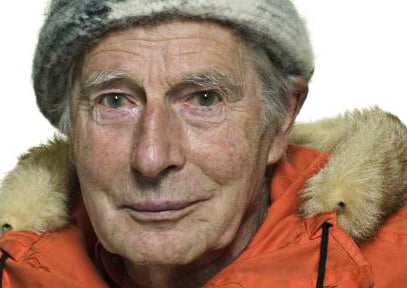
Arne Næss 27 January 1912 – 12 January 2009

What was his basic theme? In one word: nonviolence, but in a broader and deeper sense than most approaching demanding idea.

Arne Næss was very sensitive to verbal violence in debates; his answer was objectivity. He identified physical violence in political struggle; his answer was Gandhian nonviolence, strongly inspired as a student in Paris early 1930s by Indian students strongly convinced that nonviolence was the way.

He identified violence against nature, inspired by Rachel Carson’s Silent Spring and his own closeness to nature as a mountaineer; his answer was deep ecology.

He identified violence to reality through the logico-empirical straitjacket of positivism, a philosophy he shared as a younger man but gradually left in favor of what he called possibilism, the diversity of the world inspired by Duhem-Poincaré’s thesis of theory manifold.

And he identified violence to philosophy by reducing it to Western philosophy, starting with a Geek and ending with a French or German philosopher. His answer was a world philosophy at least open to Indian and Chinese thought.

A theme in Norway is “Anglo-American vs continental”, the latter in practice meaning Germany or France. Much too narrow for Næss. He had a yearning eastward, at home in Greek, Latin and mathematics, but when we drove together by car from Oslo to a Gandhi conference in Varanasi in January 1969 he examined himself in Sanskrit. Næss worked hard, deeply, broadly.

His philosophy history included Gandhi and general Chinese thought, under the heading “The Masses Philosophize”. This was an early theme in Næss’ research, with questionnaires and interview guides, social science methods, not only analysis of philosophers’ texts and, thus, exploring “Truth as Conceived of by –” Norwegian housewives and students.

He found that housewives had in them the key interpretations of “truth”: correspondence with empirical reality, valid deduction from axioms, and a pragmatic truth as means to higher goals. But housewives did not write down their thoughts.

Philosophy is pluralistic, like the world. He wanted diverse images of the world, and also many possible worlds, in symbiosis.

Næss was a moralist. He expressed his ideas analytically, but also normatively, as Thou shalt.

His deep ecology was summarized in eight normative propositions:

1. That human and other forms of life unfold on earth has a value in its own right regardless of the use value for narrow human purposes;

2. The diversity and richness of all forms of life has a value in its own right;

3. Human beings have no right to reduce this diversity which in no way limits the satisfaction of their needs;

4. The complete realization of the potentials of individual human beings and the diversity of cultures is compatible with a reduction of the size of the human population; the preservation and further development of the diversity and richness of forms of life presuppose that reduction unless, alternatively, we change our style of life fundamentally, which seems improbable;

5. The human intervention in nature at the present time is indefensible and the deterioration of the situation accelerates;

6. Basic improvement presupposes fundamental change of economic, technical and ideological structures to a joyful experience of how “everything hangs together”, the so-called struggle against nature becomes meaningless;

7. The ideological change will be in terms of search for quality of life rather than standard of living, and a concern for goals rather than means for their own sake;

8. Those who accept these points have a responsibility to try to contribute directly or indirectly to create the necessary changes.

His six theses about objectivity in debates were:

1) Avoid ad hominem, characteristics of personalities and motives, stick to the issue, the arguments;

2) Avoid biased presentation of your opponent’s arguments;

3) Avoid attributing to your opponent views he has not himself expressed;

4) Avoid presentations that are untrue, incomplete, biased, withholding relevant information;

5) Avoid irony, sarcasms, negative epithets, exaggerations, threats.

6) You serve common human interest and enrich yourself by taking in the strongest argument of your opponent against your own views, not the weakest. And you may conclude that you both have valid points to offer, that neither you nor he has monopoly on truth.

And then the norms he extracted from Gandhi’s life and teachings, like: Struggle against the antagonism, not the antagonist; be willing to compromise; admit when you are in the wrong; convert, don’t coerce your opponent.[i]

A challenging vision to what happens today in his native Norway: more biased, ad hominem debate than ever in the name of freedom of expression, even anonymous on the web-site of the Norwegian state broadcasting corporation; instead of deep ecology Norway buys eco-quotas abroad so as to proceed as before; Norway joins one US-led war after the other – Serbia, Afghanistan, Iraq, Libya; Norway propagates itself as a world norm, not diversity; and textbooks are back to normal, Western regional philosophy.

So the message for the coming hundred years emanating from this giant would be: time has come for practice. He will be rediscovered. And his vision will enlighten our inner selves, and guide us toward better, less violent, societies.

Note

[i]. Typical of his ability to make much younger researchers parties to his work I was invited to be his assistant on Gandhi’s Political Ethics, Oslo: Tanum 1955. By Johan Galtung and Arne Næss (though out by Arne, written by Johan). Taken to task by one who has propagated and used gandhian nonviolence all over the world, Jörgen Johansen, for not having a translation into English the answer could be that we tried five English publishing companies at the time. But the doors were closed. Maybe not that enthusiastic about a book trying to elevate the political ethics of the man who brought down not only the British rule in India but the whole British empire? Well, never too late!

Related Posts

Tony Robinson October 4, 2026 Violence is easy to recognise when someone is being beaten, shot or killed. It becomes more difficult when nobody is holding a weapon. Poverty, discrimination, exploitation and repression can restrict a human life just as effectively, although they do so in very different ways and with very different consequences. Simply adding more categories to an ever-growing list of forms of violence does not really solve the problem. The more interesting question is what all these different situations have in common and why it makes sense to describe them using the same word. Human beings do not simply react to what happens around them. They remember the past, imagine things that do not yet exist, make plans and undertake projects. Workers organise because they imagine different working conditions; people migrate because they imagine another life somewhere else; social movements emerge because people refuse to accept the...
It’s a matter of principles, courage, vision and pulling together – while the militarist world is falling apart… Peter Langille October 3, 2026 “Here, then, is the problem which we present to you, stark and dreadful and inescapable: Shall we put an end to the human race; or shall mankind renounce war?”The Bertrand Russell—Albert Einstein Manifesto, July 9, 1955 ⁕ The forecast for what’s ahead is worrisome. The sharp rise in armed conflicts over the past three years is adding to what was already the highest level in over seventy years. Genocides, which should be prevented are supported. A shared climate emergency that jeopardises survival is ignored. Diverse polls now suggest that people are war-weary, worried and interested in a more effective United Nations. And, there are viable policy options for a more secure world! Yet governments are doubling-down, betting on more war and investing heavily. If current trends persist,...
Johan Galtung 1930-2024October 2015 Published here on October 3, 2026 Let us focus on Civilization for conflict analysis and remedies. Major forms of disorder use violence; war is state organized violence. The most belligerent states are the United States of America and Israel, both with civilization roots. National Evangelism, the US Protestant Christian civilization– more national than evangelical–justifies US warfare as exceptionalism of a people chosen by God, with a manifest destiny to run the world. Orthodox Judaism justifies Israeli warfare to conquer and expand from Nile to Euphrates as a religious right and duty to the Eternal One. The third most belligerent country, the UK, no longer believes it is God-chosen but chosen by the USA; not quite the same but something. But the root cause of global disorder lies in the Occident–with Islam–seeing itself as the single, universal civilization valid for all at all times, all others being...

Recent Articles

Tony Robinson October 4, 2026 Violence is easy to recognise when someone is being beaten, shot or killed. It becomes more difficult when nobody is holding a weapon. Poverty, discrimination, exploitation and repression can restrict a human life just as effectively, although they do so in very different ways and with very different consequences. Simply adding more categories to an ever-growing list of forms of violence does not really solve the problem. The more interesting question is what all these different situations have in common and why it makes sense to describe them using the same word. Human beings do not simply react to what happens around them. They remember the past, imagine things that do not yet exist, make plans and undertake projects. Workers organise because they imagine different working conditions; people migrate because they imagine another life somewhere else; social movements emerge because people refuse to accept the...
It’s a matter of principles, courage, vision and pulling together – while the militarist world is falling apart… Peter Langille October 3, 2026 “Here, then, is the problem which we present to you, stark and dreadful and inescapable: Shall we put an end to the human race; or shall mankind renounce war?”The Bertrand Russell—Albert Einstein Manifesto, July 9, 1955 ⁕ The forecast for what’s ahead is worrisome. The sharp rise in armed conflicts over the past three years is adding to what was already the highest level in over seventy years. Genocides, which should be prevented are supported. A shared climate emergency that jeopardises survival is ignored. Diverse polls now suggest that people are war-weary, worried and interested in a more effective United Nations. And, there are viable policy options for a more secure world! Yet governments are doubling-down, betting on more war and investing heavily. If current trends persist,...
Johan Galtung 1930-2024October 2015 Published here on October 3, 2026 Let us focus on Civilization for conflict analysis and remedies. Major forms of disorder use violence; war is state organized violence. The most belligerent states are the United States of America and Israel, both with civilization roots. National Evangelism, the US Protestant Christian civilization– more national than evangelical–justifies US warfare as exceptionalism of a people chosen by God, with a manifest destiny to run the world. Orthodox Judaism justifies Israeli warfare to conquer and expand from Nile to Euphrates as a religious right and duty to the Eternal One. The third most belligerent country, the UK, no longer believes it is God-chosen but chosen by the USA; not quite the same but something. But the root cause of global disorder lies in the Occident–with Islam–seeing itself as the single, universal civilization valid for all at all times, all others being...

TFF on Substack

Discover and subscribe to more peace materials on TFF Substack

Most Popular

Tony Robinson October 4, 2026 Violence is easy to recognise when someone is being beaten, shot or killed. It becomes more difficult when nobody is holding a weapon. Poverty, discrimination, exploitation and repression can restrict a human life just as effectively, although they do so in very different ways and with very different consequences. Simply adding more categories to an ever-growing list of forms of violence does not really solve the problem. The more interesting question is what all these different situations have in common and why it makes sense to describe them using the same word. Human beings do not simply react to what happens around them. They remember the past, imagine things that do not yet exist, make plans and undertake projects. Workers organise because they imagine different working conditions; people migrate because they imagine another life somewhere else; social movements emerge because people refuse to accept the...
It’s a matter of principles, courage, vision and pulling together – while the militarist world is falling apart… Peter Langille October 3, 2026 “Here, then, is the problem which we present to you, stark and dreadful and inescapable: Shall we put an end to the human race; or shall mankind renounce war?”The Bertrand Russell—Albert Einstein Manifesto, July 9, 1955 ⁕ The forecast for what’s ahead is worrisome. The sharp rise in armed conflicts over the past three years is adding to what was already the highest level in over seventy years. Genocides, which should be prevented are supported. A shared climate emergency that jeopardises survival is ignored. Diverse polls now suggest that people are war-weary, worried and interested in a more effective United Nations. And, there are viable policy options for a more secure world! Yet governments are doubling-down, betting on more war and investing heavily. If current trends persist,...
Johan Galtung 1930-2024October 2015 Published here on October 3, 2026 Let us focus on Civilization for conflict analysis and remedies. Major forms of disorder use violence; war is state organized violence. The most belligerent states are the United States of America and Israel, both with civilization roots. National Evangelism, the US Protestant Christian civilization– more national than evangelical–justifies US warfare as exceptionalism of a people chosen by God, with a manifest destiny to run the world. Orthodox Judaism justifies Israeli warfare to conquer and expand from Nile to Euphrates as a religious right and duty to the Eternal One. The third most belligerent country, the UK, no longer believes it is God-chosen but chosen by the USA; not quite the same but something. But the root cause of global disorder lies in the Occident–with Islam–seeing itself as the single, universal civilization valid for all at all times, all others being...
Read More
Living-Peace-Sign-Budapest-copy
Tony Robinson October 4, 2026 Violence is easy to recognise when someone is being beaten, shot or killed. It becomes more difficult when nobody is holding a weapon. Poverty, discrimination, exploitation and repression can restrict a human life just as effectively, although they do so in very different ways and with very different consequences. Simply adding more categories to an ever-growing list of forms of violence does not really solve the problem. The more interesting question is what all these different situations have in common and why it makes sense to describe them using the same word. Human beings do not simply react to what happens around them. They remember the past, imagine things that do not yet exist, make plans and undertake projects. Workers organise because they imagine different working conditions; people migrate because they imagine another life somewhere else; social movements emerge because people refuse to accept the...
b54a1f10-8c65-4f0b-9dd5-4abc0a7d04cc_2659x2659
It’s a matter of principles, courage, vision and pulling together – while the militarist world is falling apart… Peter Langille October 3, 2026 “Here, then, is the problem which we present to you, stark and dreadful and inescapable: Shall we put an end to the human race; or shall mankind renounce war?”The Bertrand Russell—Albert Einstein Manifesto, July 9, 1955 ⁕ The forecast for what’s ahead is worrisome. The sharp rise in armed conflicts over the past three years is adding to what was already the highest level in over seventy years. Genocides, which should be prevented are supported. A shared climate emergency that jeopardises survival is ignored. Diverse polls now suggest that people are war-weary, worried and interested in a more effective United Nations. And, there are viable policy options for a more secure world! Yet governments are doubling-down, betting on more war and investing heavily. If current trends persist,...
010
Johan Galtung 1930-2024October 2015 Published here on October 3, 2026 Let us focus on Civilization for conflict analysis and remedies. Major forms of disorder use violence; war is state organized violence. The most belligerent states are the United States of America and Israel, both with civilization roots. National Evangelism, the US Protestant Christian civilization– more national than evangelical–justifies US warfare as exceptionalism of a people chosen by God, with a manifest destiny to run the world. Orthodox Judaism justifies Israeli warfare to conquer and expand from Nile to Euphrates as a religious right and duty to the Eternal One. The third most belligerent country, the UK, no longer believes it is God-chosen but chosen by the USA; not quite the same but something. But the root cause of global disorder lies in the Occident–with Islam–seeing itself as the single, universal civilization valid for all at all times, all others being...
Screenshot 2026-10-02 011738
Jan ObergPhD, director, The Transnational Foundation for Peace and Future Research, TFFLund, Sweden October 2, 2026 This is my full original manuscript. The Chinese Academy of Social Science, CASS, makes two publications out if it. 1. China’s Five-year plan emphasized the capabilities of basic research and original innovation. It is regarded as the goal of the future social development, which, as required, should be significantly enhanced. Can you comment on the importance of original innovation in research and academic study? I believe it is easier to define “original innovation” in the natural sciences than in social sciences. The breaking points of what constitutes something new, or innovative, are not quite as sharp in the latter. But in both fields it is about opening up something that was closed, unseen, unexplored before – making manifest what was earlier latent. Innovations come in many forms and shapes – naming something that was not...
arctic-circle-map
The agreement is catastrophic both because of what it says and what it doesn’t mention. It reduces further the major asset of security policies: Freedom of action. Jan Oberg TFF director September 25, 2026 A couple of hours before the agreement was signed on September 22, 2026, I published the following 13 hypotheses about what it would most likely contain on TFF Substack (in English). I was wrong on only the first point. Contrary to what Trump had written on his Truth Social platform, it does not appear to come into force immediately. In fact, it turned out to be worse than even I had anticipated. After these hypotheses now come a number of reflections in light of what the agreement actually contains, and does not contain, as well as the way in which it has generally been presented by major media outlets and by the public-service broadcaster DR. My...
girl-5894831_1280
Below are TFF-related media mentions, comments, videos and social media posts published elsewhere but not on this homepage. We happen to catch and list only a fraction. Regarding video comments and debates, we recommend that you go to the TFF Video Channel on Substack where many of them are reproduced. Jan Oberg is a contributor to China Daily – 52 million daily clicks – and Global Times, CGTN and CCTV (the national television), China Investment, Xinhua News Agency and several others. Articles and videos on these media very often multiply into countless Chinese (and Western media) that re-post them from these main media. Thanks to The China Academy, his analyses, interviews and comments are frequently posted on YouTube channels such as Thinkers Forum and Wave Media. These videos are often re-posted on Bilibili (China’s YouTube), the China Content Center on TikTok, and on the Chinese edition of TikTok, Douyin.com. This means reaching hundreds of millions of viewers worldwide over a year. While there are too many to catch on all these...




