
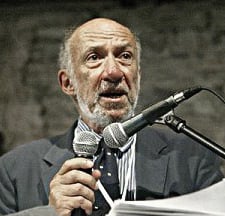
Nuclear-free Middle East: Desirable, necessary and impossible

Finally, there is some argumentation in the West supportive of a nuclear free zone for the Middle East. Such thinking is still treated as politically marginal, and hardly audible above the beat of the war drums. It also tends to be defensively and pragmatically phrased as in the NY Times article by Shibley Telhami and Steven Kull (January 15, 2012) with full disclosure title, “Preventing a Nuclear Iran, Peacefully.”

The article makes a prudential argument against attacking Iran based on prospects of a damaging Iranian retaliation and the inability of an attack to destroy Iran’s nuclear program at an acceptable cost. The most that could be achieved for would be a short delay in Iran’s acquisition of weaponry, and maybe not even that. An attack seems likely to create irresistible pressure in Iran to everything possible to obtain a nuclear option with a renewed sense of urgency.

This argument is sensibly reinforced by pointing to respected public opinion surveys that show Israeli attitudes to be less war-inclined than had been generally assumed. According to a Israeli recent poll, only 43% of Israelis favoring a military strike, while 64% favored establishing a nuclear free zone (NFZ) in the region that included Israel. In effect, then, establishing a NFZ that includes Israel would seem politically feasible, although not a course of action that would be entertained by the current Tel Aviv governmental political climate. We can conclude that the silence of Washington with respect to such an alternative approach to the dispute with Iran confirms what is widely believed, namely, that the U.S. Government adheres to the official Israeli line, and is not particularly sensitive to the wishes of the Israeli public even to the extent of serving America’s own strong national interest in finding a peaceful solution to the conflict.

A variant of NFZ thinking has recently been attributed to Saudi Prince Turki Al-Faisal, former Saudi ambassador to the United States and once the head of Saudi intelligence. He too argues that NFZ is a better alternative than the military option, which he contends should be removed from the table.

Prince Turki insists that sanctions have not altered Iran’s behavior. His proposal is more complex than simply advocating a NFZ. He would favor sanctions against Iran if there is convincing evidence that it is seeking nuclear weapons, but he also supports sanctions imposed on Israel if it does not disclose openly the full extent of its nuclear weapons arsenal.

His approach has several additional features: extending the scope of the undertaking to all weapons of mass destruction (WMD), that is, including biological and chemical weapons; establishing a nuclear security umbrella for the region by the five permanent members of the UN Security Council; and seeking a resolution of outstanding conflicts in the region in accordance with the Mecca Arab proposals of 2002 that calls for Israeli withdrawal from Palestinian territories and the Golan Heights occupied in 1967, as well as the political and commercial normalization of relations between Israel and the Arab world.

Prince Turki warns that if such an arrangement is not soon put in place, and Iran proceeds with its nuclear program, other countries in the region, including Turkey, are likely to be drawn into an expensive and destabilizing nuclear arms race. In effect, as with Telhami and Kull, Prince Turki’s approach is designed to avoid worst case scenarios, but is framed mainly in relation to the future of the region rather than confined to the Israel/Iran confrontation.

It concretely urges establishing such a framework with or without Israeli support at a conference of parties to the Nuclear Nonproliferation Treaty scheduled for later in the year in Finland. Israel, not a party to the NPT, has not indicated its willingness to attend the conference at this point. As long ago as the 1995 NPT Review Conference the Arab countries put forward a proposal to establish in the Middle East a WMD free zone, but it has never been acted upon at any subsequent session. Israel, which is not a member of the NPT, has consistently taken the position over the years that a complete peace involving the region must precede any prohibition directed at the possession of nuclear weapons.

The NFZ or WMDFZ initiatives need to be seen in the setting established by the NPT regime. An initial observation involves Israel’s failure to become a party to the NPT coupled with its covert nuclear program that resulted in the acquisition of the weaponry with the complicity of the West as documented in Seymour Hersh’s 1991 The Samson Option.

Such a pattern of behavior needs to be contrasted with that of Iran, a party to the NPT that has reported to and accepted, with some friction, inspections on its territory by the Western oriented International Atomic Energy Agency. Iran has consistently denied any ambition to acquire nuclear weapons, but has insisted on its rights under Article IV of the treaty to exercise “..its inalienable right..to develop research, production and use of nuclear energy for peaceful purposes without discrimination..” Iran has been under constant threat of an attack by Israel, the target for several years of Israel’s dirty low intensity war, the target of a Congressionally funded destabilization program of the United States reinforced by a diplomacy that constantly reaffirms the relevance of the military option, and operates in a political climate that excludes consideration of Israel’s nuclear arsenal.

What is surprising under these circumstances is that Iran has not freed itself from NPT obligation by exercising its option to withdraw from the treaty as it entitled to do by Article X provided only that it gives notice to other treaty parties and an explanation of its reasons for withdrawing.

Comparing these Israeli and Iran patterns of behavior with respect to nuclear weapons, it is difficult not to conclude that it is Israel, not Iran, that should be subjected to sanctions, and pressure to participate in denuclearizing negotiations. After all, Israel acquired the weaponry secretly, has not been willing to participate in the near universal discipline to the NPT, and has engaged in aggressive wars repeatedly against its neighbors resulting in long-term occupations.

It can be argued that Israel was entitled to enhance its security by remaining outside the NPT, and thus is acting within its sovereign rights. This is a coherent legalistic position, but we should all realize by now that the NPT is more a geopolitical than a legal regime, and that Iran, for instance, would be immediately subject to a punitive response if it tried to withdraw from the treaty. In other words geopolitical priorities override legal rights in the NPT setting.

The NPT is shaped by its geopolitical nature. This is best illustrated by the utter refusal of the nuclear weapons states, above all the United States, to fulfill its obligation under Article VI “to pursue negotiations in good faith on effective measures relating to the cessation of the nuclear arms race at an early date and to nuclear disarmament, and on a treaty on general and complete disarmament under strict and effective international control.”

The International Court of Justice in its 1996 Advisory Opinion on The Legality of Nuclear Weapons unanimously affirmed in its findings the legal imperative embodied in Article VI: “There exists an obligation to pursue in good faith and bring to a conclusion negotiations leading to nuclear disarmament, and on a treaty on general and complete disarmament in all its aspects under strict international control.” This finding that has been completely ignored by the nuclear weapons states (who had earlier made a furious failed effort to dissuade the UN General Assembly from seeking guidance from the ICJ with respect to the legal status of nuclear weapons and the obligations of the NPT).

The refusal to uphold these obligations of Article VI would certainly appear to be a material breach of the treaty that authorizes any party to regard the treaty as void. Again the international discourse on nuclear weapons is so distorted that it is a rarity to encounter criticism of its discriminatory application, its double standards as between nuclear and non-nuclear states, and its geopolitical style of selective enforcement. In this regard it should be appreciated that the threat of military attack directed at Iran resembles reliance on the so-called Bush Doctrine of preventive war that had been used to justify aggression against Iraq in 2003.

In summary, it is of utmost importance to avoid a war in the Middle East arising from the unresolved dispute about Iran’s nuclear program. One way to do this is to seek a NFZ or a WMDFZ for the entire region that includes the participation of Israel. What has given this approach a renewed credibility for the West is that it seems the only way to avoid a lose/lose war option, that it possesses some prudential appeal to change minds in Tehran and Tel Aviv, and also to engage Washington in a less destructive and self-destructive course of action.

Whether this prudential appeal is sufficiently strong to overcome the iron cage of militarism that guides policy choices in Israel and the United States remains doubtful. Thinking outside the militarist box remains a forbidden activity, partly reflecting the domestic lock on the political and moral imagination of these countries by their respective military industrial media think tank complexes.

I would conclude this commentary with three pessimistic assessments that casts a dark shadow over the regional future:

(1) An NFZ or WMDFZ for the Middle East is necessary and desirable, but it almost certainly will not be placed on the political agenda of American-led diplomacy relating to the conflict;

(2) Moves toward nuclear disarmament negotiations that have been legally mandated and would be beneficial for the world, and for the nuclear weapons states and their peoples, will not be made in the current atmosphere that blocks all serious initiatives to abolish nuclear weapons;

(3) The drift toward a devastating attack on Iran will only be stopped by an urgent mobilization of anti-war forces in civil society, which seems unlikely given other preoccupations.
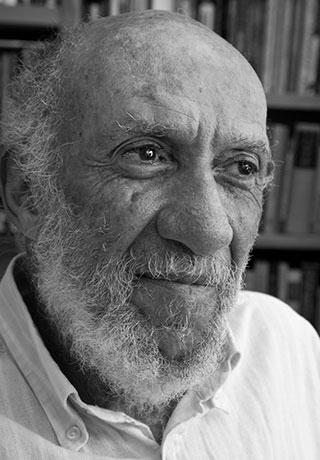

Professor Falk became an adviser to TFF when it was established in 1985.

Related Posts

Photos © TFF 2000 Read PressInfo 90 “Lift the Sanctions and Bring More Aid to Yugoslavia” See Pictures from Belgrade © TFF 2000 Please reprint, copy, archive, quote or re-post this item, but please retain the source.
By Jan ObergTFF co-founder and director February 11, 2026 PART 3 — ECONOMICS, TRADE & FINANCIAL SOVEREIGNTY A. Trade Measures & Market Signaling Economic pressure can be applied instantly and scaled without violence. Immediate Measures (within a week) Government boycott US goods and services  A very powerful signal which over time will be felt. Targeted tariffs on selected U.S. goods Symbolic but high-visibility sectors send a clear message. Suspend trade facilitation talks A peaceful pause that signals deep concern. Freeze U.S. participation in public procurement – military procurement in particular A nonviolent way to reduce influence. Competition law review of U.S. corporations A legal tool to scrutinise market dominance. Longer-Term Measures EU–Asia–Africa trade corridors Reducing reliance on U.S. markets. European supply chains for critical minerals Strategic autonomy in resource access. European Strategic Trade Authority Monitoring coercive practices globally. Euro-denominated commodity markets Weakening the dollar’s pricing monopoly. The EU must resume contacts and negotiations with Russia, focusing on energy cooperation To...
Background and CV Dr Pascal Lottaz joined TFF as an Associate in May 2025. Very short bio Dr. Pascal Lottaz is an Associate Professor at Kyoto University’s Graduate School of Law and Hakubi Center (Japan). He researches neutrality in international relations and directs the network neutralitystudies.com. Short bio Dr. Pascal Lottaz is an Associate Professor at Kyoto University, where he investigates neutrality in international relations and directs the research network neutralitystudies.com. He received his MA and PhD from the National Graduate Institute for Policy Studies (GRIPS) and previously researched and taught at Waseda University and Temple University (Japan Campus). His recent books include Sweden, Japan, and the Long Second World War (Routledge, 2022), Neutral Beyond the Cold: Neutral States and the Post-Cold War International System (Lexington Books, 2022), and Notions of Neutralities (Lexington Books, 2019). He also wrote articles on “Neutrality Studies” for Oxford Encyclopedia and “The Politics and Diplomacy of Neutrality”...

Recent Articles

Tony Robinson October 4, 2026 Violence is easy to recognise when someone is being beaten, shot or killed. It becomes more difficult when nobody is holding a weapon. Poverty, discrimination, exploitation and repression can restrict a human life just as effectively, although they do so in very different ways and with very different consequences. Simply adding more categories to an ever-growing list of forms of violence does not really solve the problem. The more interesting question is what all these different situations have in common and why it makes sense to describe them using the same word. Human beings do not simply react to what happens around them. They remember the past, imagine things that do not yet exist, make plans and undertake projects. Workers organise because they imagine different working conditions; people migrate because they imagine another life somewhere else; social movements emerge because people refuse to accept the...
It’s a matter of principles, courage, vision and pulling together – while the militarist world is falling apart… Peter Langille October 3, 2026 “Here, then, is the problem which we present to you, stark and dreadful and inescapable: Shall we put an end to the human race; or shall mankind renounce war?”The Bertrand Russell—Albert Einstein Manifesto, July 9, 1955 ⁕ The forecast for what’s ahead is worrisome. The sharp rise in armed conflicts over the past three years is adding to what was already the highest level in over seventy years. Genocides, which should be prevented are supported. A shared climate emergency that jeopardises survival is ignored. Diverse polls now suggest that people are war-weary, worried and interested in a more effective United Nations. And, there are viable policy options for a more secure world! Yet governments are doubling-down, betting on more war and investing heavily. If current trends persist,...
Johan Galtung 1930-2024October 2015 Published here on October 3, 2026 Let us focus on Civilization for conflict analysis and remedies. Major forms of disorder use violence; war is state organized violence. The most belligerent states are the United States of America and Israel, both with civilization roots. National Evangelism, the US Protestant Christian civilization– more national than evangelical–justifies US warfare as exceptionalism of a people chosen by God, with a manifest destiny to run the world. Orthodox Judaism justifies Israeli warfare to conquer and expand from Nile to Euphrates as a religious right and duty to the Eternal One. The third most belligerent country, the UK, no longer believes it is God-chosen but chosen by the USA; not quite the same but something. But the root cause of global disorder lies in the Occident–with Islam–seeing itself as the single, universal civilization valid for all at all times, all others being...

TFF on Substack

Discover and subscribe to more peace materials on TFF Substack

Most Popular

Tony Robinson October 4, 2026 Violence is easy to recognise when someone is being beaten, shot or killed. It becomes more difficult when nobody is holding a weapon. Poverty, discrimination, exploitation and repression can restrict a human life just as effectively, although they do so in very different ways and with very different consequences. Simply adding more categories to an ever-growing list of forms of violence does not really solve the problem. The more interesting question is what all these different situations have in common and why it makes sense to describe them using the same word. Human beings do not simply react to what happens around them. They remember the past, imagine things that do not yet exist, make plans and undertake projects. Workers organise because they imagine different working conditions; people migrate because they imagine another life somewhere else; social movements emerge because people refuse to accept the...
It’s a matter of principles, courage, vision and pulling together – while the militarist world is falling apart… Peter Langille October 3, 2026 “Here, then, is the problem which we present to you, stark and dreadful and inescapable: Shall we put an end to the human race; or shall mankind renounce war?”The Bertrand Russell—Albert Einstein Manifesto, July 9, 1955 ⁕ The forecast for what’s ahead is worrisome. The sharp rise in armed conflicts over the past three years is adding to what was already the highest level in over seventy years. Genocides, which should be prevented are supported. A shared climate emergency that jeopardises survival is ignored. Diverse polls now suggest that people are war-weary, worried and interested in a more effective United Nations. And, there are viable policy options for a more secure world! Yet governments are doubling-down, betting on more war and investing heavily. If current trends persist,...
Johan Galtung 1930-2024October 2015 Published here on October 3, 2026 Let us focus on Civilization for conflict analysis and remedies. Major forms of disorder use violence; war is state organized violence. The most belligerent states are the United States of America and Israel, both with civilization roots. National Evangelism, the US Protestant Christian civilization– more national than evangelical–justifies US warfare as exceptionalism of a people chosen by God, with a manifest destiny to run the world. Orthodox Judaism justifies Israeli warfare to conquer and expand from Nile to Euphrates as a religious right and duty to the Eternal One. The third most belligerent country, the UK, no longer believes it is God-chosen but chosen by the USA; not quite the same but something. But the root cause of global disorder lies in the Occident–with Islam–seeing itself as the single, universal civilization valid for all at all times, all others being...
Read More
Living-Peace-Sign-Budapest-copy
Tony Robinson October 4, 2026 Violence is easy to recognise when someone is being beaten, shot or killed. It becomes more difficult when nobody is holding a weapon. Poverty, discrimination, exploitation and repression can restrict a human life just as effectively, although they do so in very different ways and with very different consequences. Simply adding more categories to an ever-growing list of forms of violence does not really solve the problem. The more interesting question is what all these different situations have in common and why it makes sense to describe them using the same word. Human beings do not simply react to what happens around them. They remember the past, imagine things that do not yet exist, make plans and undertake projects. Workers organise because they imagine different working conditions; people migrate because they imagine another life somewhere else; social movements emerge because people refuse to accept the...
b54a1f10-8c65-4f0b-9dd5-4abc0a7d04cc_2659x2659
It’s a matter of principles, courage, vision and pulling together – while the militarist world is falling apart… Peter Langille October 3, 2026 “Here, then, is the problem which we present to you, stark and dreadful and inescapable: Shall we put an end to the human race; or shall mankind renounce war?”The Bertrand Russell—Albert Einstein Manifesto, July 9, 1955 ⁕ The forecast for what’s ahead is worrisome. The sharp rise in armed conflicts over the past three years is adding to what was already the highest level in over seventy years. Genocides, which should be prevented are supported. A shared climate emergency that jeopardises survival is ignored. Diverse polls now suggest that people are war-weary, worried and interested in a more effective United Nations. And, there are viable policy options for a more secure world! Yet governments are doubling-down, betting on more war and investing heavily. If current trends persist,...
010
Johan Galtung 1930-2024October 2015 Published here on October 3, 2026 Let us focus on Civilization for conflict analysis and remedies. Major forms of disorder use violence; war is state organized violence. The most belligerent states are the United States of America and Israel, both with civilization roots. National Evangelism, the US Protestant Christian civilization– more national than evangelical–justifies US warfare as exceptionalism of a people chosen by God, with a manifest destiny to run the world. Orthodox Judaism justifies Israeli warfare to conquer and expand from Nile to Euphrates as a religious right and duty to the Eternal One. The third most belligerent country, the UK, no longer believes it is God-chosen but chosen by the USA; not quite the same but something. But the root cause of global disorder lies in the Occident–with Islam–seeing itself as the single, universal civilization valid for all at all times, all others being...
Screenshot 2026-10-02 011738
Jan ObergPhD, director, The Transnational Foundation for Peace and Future Research, TFFLund, Sweden October 2, 2026 This is my full original manuscript. The Chinese Academy of Social Science, CASS, makes two publications out if it. 1. China’s Five-year plan emphasized the capabilities of basic research and original innovation. It is regarded as the goal of the future social development, which, as required, should be significantly enhanced. Can you comment on the importance of original innovation in research and academic study? I believe it is easier to define “original innovation” in the natural sciences than in social sciences. The breaking points of what constitutes something new, or innovative, are not quite as sharp in the latter. But in both fields it is about opening up something that was closed, unseen, unexplored before – making manifest what was earlier latent. Innovations come in many forms and shapes – naming something that was not...
arctic-circle-map
The agreement is catastrophic both because of what it says and what it doesn’t mention. It reduces further the major asset of security policies: Freedom of action. Jan Oberg TFF director September 25, 2026 A couple of hours before the agreement was signed on September 22, 2026, I published the following 13 hypotheses about what it would most likely contain on TFF Substack (in English). I was wrong on only the first point. Contrary to what Trump had written on his Truth Social platform, it does not appear to come into force immediately. In fact, it turned out to be worse than even I had anticipated. After these hypotheses now come a number of reflections in light of what the agreement actually contains, and does not contain, as well as the way in which it has generally been presented by major media outlets and by the public-service broadcaster DR. My...
girl-5894831_1280
Below are TFF-related media mentions, comments, videos and social media posts published elsewhere but not on this homepage. We happen to catch and list only a fraction. Regarding video comments and debates, we recommend that you go to the TFF Video Channel on Substack where many of them are reproduced. Jan Oberg is a contributor to China Daily – 52 million daily clicks – and Global Times, CGTN and CCTV (the national television), China Investment, Xinhua News Agency and several others. Articles and videos on these media very often multiply into countless Chinese (and Western media) that re-post them from these main media. Thanks to The China Academy, his analyses, interviews and comments are frequently posted on YouTube channels such as Thinkers Forum and Wave Media. These videos are often re-posted on Bilibili (China’s YouTube), the China Content Center on TikTok, and on the Chinese edition of TikTok, Douyin.com. This means reaching hundreds of millions of viewers worldwide over a year. While there are too many to catch on all these...




