

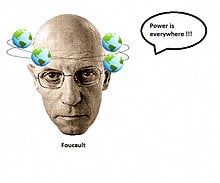
For et par måneder siden erklærede den islandske præsident at folketinget, Det Hvide Hus og traditionelle magtinstanser næsten er blevet et ”side show” i forhold til sociale medier. Ligeså stille bevæger vi os væk fra nationalstaten som den suveræne magtinstans til globale netværk i forskellige udformninger. Med andre ord er det folk som dig og mig, der har ansvar for, hvor verden bevæger sig hen. Men hvilke værdier skal vi handle efter i denne nye verdensorden?
Moralsk tomrum
I Danmark er mange værdier blevet sideordnede. Fordi vi har indset, at jeg ganske rigtigt ser verden fra mit perspektiv, mens du ser verden fra dit, har vi konkluderet at alt er lige godt. Om du bruger dine penge på designermøbler eller sender dem til Afrika er stort set hip som hap. Lige bortset fra at det første er mere hipt. Enhver må leve sit liv som han vil, sålænge han ikke forvolder skade mod andre og iøvrigt betaler sin skat.

I dette normative tomrum opstår en masse divergerende teorier om, hvordan man bør leve sit liv. Hvordan man bør klæde sig, opdrage sine børn, lede sin virksomhed og ikke mindst, hvilket føde man må indtage. Den ene dag giver det kræft at spise æg, den næste dag er det sundt for håret. Det normative input mangler på én gang substans, konsistens og mening, der rækker udover os selv.

Det samme er tilfældet på det religiøse felt. Ligesom bogtrykkerkunsten hjalp til at udbrede biblen har internettet givet anledning til en helt ny tilgang til religion – hvad den danske forfatter, Morten Thomsen Højsgaard, kalder google buddhisme.

Denne form for spiritualitet indebærer, at man krydrer sit ellers sækulære liv med diverse indput fra forskellige spirituelle retninger, som man selv samensætter (jf. søger på google). For at religion ikke blot bliver et projekt på linie med andre narcisistiske foretagender, mangler vi også her et moralsk kompas til at navigere i dette net af ideer, teorier og praksiser.

Globale netværk
Forleden snakkede jeg med en 12 årig pige, der var dybt engageret i Japan med alt fra manga og suchi til japansk humor og politiske forhold. Hun sad klistret til dr-update hele dagen efter tsunamien og føler lige stor forbundethed med hændelser i Japan som i fx Norge.

Og hun er ikke den eneste. Om det er Liberal Alliance der oprigtigt bekymrer sig om den globale konkurrence, soldater der sendes til Afghanistan, patienter der behandles af irakiske læger eller min mormor, der har sat sig for at lære kinesisk.

På finurligvis er vi alle forbundet på kryds og tværs. Mine bukser er syet af børn i Indien, mine bananer er fra Mellem Amerika, min computer fra USA og metallerne heri fra Afrika.

Hvis vi skal tage de fulde konsekvenser af denne forbundethed, må vi erkende vores ansvar. Ligesom vi har empati og ansvar for vores nærmeste familie i kraft af vores indbyrdes afhængighed, kan vi ligeledes have dette for vores nation, religiøse fællesskab – ja sågar for hele kloden. Vi kan udvikle globalt medborgerskab og udvide vores horisont til global bevidsthed.
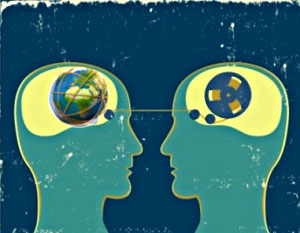
Men er det overhovedet muligt at se verden i et globalt perspektiv? At lægge låg på debatten om en enlig mors budget og fokusere på, hvordan vi kan skabe et velfærdsamfund på verdensplan, så vores arbejdspladser ikke ryger til Kina?

En af de ting der muliggør global bevidsthed er moderne teknologi. De nye medier gør det meget vanskeligt at undgå input fra andre steder på kloden – pludselig står oprørerne fra det arabiske forår midt i vores stue og råber på frihed.

På mange måder er internettet en analogi for de globale netværk som vi alle indgår i, forbundet på kryds og tværs i et net af uendelig kompleksitet. Samtidig er internettet et af de værktøjer, der muliggør globalt engagement. Fx har organisationen Avaaz over ti millioner medlemmer verden over, der skriver emails og støtter sager om klimaaftaler, menneskerettigheder og demokrati.
Ansvar og guldskeer
Men det individuelle ansvar i forhold til verden må række udover ”kliktivisme” og være en del af vores valg i dagligdagen. For at leve op til et sådant ansvar mener jeg vi har brug for to ting: 1) et moralsk kompas og 2) konkrete handlingsmuligheder for at bidrage.

Jeg har her understreget ansvar og empati for folk på den anden side af kloden som passende værdier til den måde verden hænger sammen på i dag. Jo større perspektiv jo bedre.

Problemet er, at det er umuligt at opstille endegyldige regler, der til enhver tid kan fortælle, hvad der er det rigtige at gøre. Tidernerne skifter konstant og hvad der er passende i én situation er måske tåbeligt i en anden. Vi må derfor skærpe vores opmærksomhed og være bevidste i enhver situation for at komme med en passende respons. Hvad er virkelig min intention med denne handling? Gør jeg det også for et højere formål? Har jeg set situationen i det størst mulige perspektiv?

Her kommer problematikken om vores handlemuligheder ind i billedet. For selv hvis jeg oprigtigt ønskede at handle etisk og globalt – hvilke muligheder har jeg herfor uden nødvendigvis at sætte hele mit liv over bord?

Jeg tror der er virkelig mange, som inderligt ønsker at gøre en forskel, men ikke helt ved hvor de skal sætte ind. Vi må skabe flere handlingsmuligheder sammen, undersøge hvordan vi hver især bidrager bedst og bygge skoler hvor initiativ, global bevidsthed og mod på at forandre verden styrkes.

Netop fordi vi ikke længere blot kan slå op i en enkelt bog for at finde svar på de udfordringer vi står overfor i dag, har vi brug for at sætte os sammen og diskutere, i hvilken retning vi gerne vil dreje udviklingen.
Vi er ikke blot ansvarlige for verden, fordi vi er en del af den, men også fordi vi tilhører den mest priviligerede del af den.

Med andre ord: os der er født med en guldske i røven må se at få fingeren ud – der er simpelthen ikke plads til begge dele.
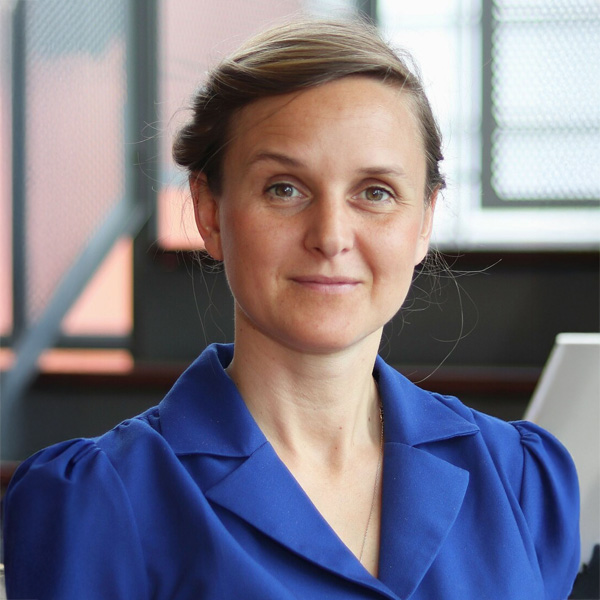

"2011-2012 MA in Peace and Conflict Studies Malmö University 2011 Peace Research (MA level), Oslo University 2011 Peace-building Course at University for Peace (MA level). 2010 Peace and conflict studies in India (BA level). 2008 – 2010 Roskilde university, Cultural encounters and psychology 2008 Testrup Højskole, theatre 2004 – 2007 Rønde High School "

Related Posts

Photos © TFF 2000 Read PressInfo 90 “Lift the Sanctions and Bring More Aid to Yugoslavia” See Pictures from Belgrade © TFF 2000 Please reprint, copy, archive, quote or re-post this item, but please retain the source.
PRESS RELEASE – 6 OCTOBER 2025 LAY DOWN YOUR ARMSPEACE PRIZE FOR 2025 is awarded Francesca Albanese The United Nations Special Rapporteur on the occupied Palestinian territories – as the person who, in accordance with Alfred Nobel’s will, has “done the most or the best work for fraternity between nations and for the abolition or reduction of standing armies as well as for the holding and promotion of peace congresses.” Francesca Albanese has forcefully and unwaveringly worked against Israel’s full-scale war on the occupied Palestinian territories, in particular Israel´s ongoing genocide against the Palestinian people. She has confronted Israel’s systematic war crimes and crimes against humanity in a truly global outreach. Further, she has brought governments, international organisations and people’s groups together to underline the responsibility of the world at large to act and to stop arming, enabling, and profiting from Israel’s ongoing criminal actions. But first of all, Albanese...
Joie De Vivre, 1946 by Pablo Picasso Not recognizing the magic of the present moment may just be a crime against our humanity. David Andersson August 5, 2025 TFF publishes this with particular joy because, while we have always been pro-peace, future-oriented and proposal-making, we need even more of that now: Peace is to be FOR something and go for it. In my recent article, From Personal Development to Human Development, I explored the imbalance between our inner growth and society’s relentless focus on external activity. One of the greatest obstacles to genuine human development today is the sheer level of negativity we encounter daily. As an editor, I regularly receive submissions from Western contributors. Many center on themes like political corruption—even among progressive leaders—technological control, cognitive warfare, genocide, alarming climate forecasts (“only three years left to avoid the worst”), and Europe’s persistent, deadly hypocrisy. The list continues, each entry more...

Recent Articles

Tony Robinson October 4, 2026 Violence is easy to recognise when someone is being beaten, shot or killed. It becomes more difficult when nobody is holding a weapon. Poverty, discrimination, exploitation and repression can restrict a human life just as effectively, although they do so in very different ways and with very different consequences. Simply adding more categories to an ever-growing list of forms of violence does not really solve the problem. The more interesting question is what all these different situations have in common and why it makes sense to describe them using the same word. Human beings do not simply react to what happens around them. They remember the past, imagine things that do not yet exist, make plans and undertake projects. Workers organise because they imagine different working conditions; people migrate because they imagine another life somewhere else; social movements emerge because people refuse to accept the...
It’s a matter of principles, courage, vision and pulling together – while the militarist world is falling apart… Peter Langille October 3, 2026 “Here, then, is the problem which we present to you, stark and dreadful and inescapable: Shall we put an end to the human race; or shall mankind renounce war?”The Bertrand Russell—Albert Einstein Manifesto, July 9, 1955 ⁕ The forecast for what’s ahead is worrisome. The sharp rise in armed conflicts over the past three years is adding to what was already the highest level in over seventy years. Genocides, which should be prevented are supported. A shared climate emergency that jeopardises survival is ignored. Diverse polls now suggest that people are war-weary, worried and interested in a more effective United Nations. And, there are viable policy options for a more secure world! Yet governments are doubling-down, betting on more war and investing heavily. If current trends persist,...
Johan Galtung 1930-2024October 2015 Published here on October 3, 2026 Let us focus on Civilization for conflict analysis and remedies. Major forms of disorder use violence; war is state organized violence. The most belligerent states are the United States of America and Israel, both with civilization roots. National Evangelism, the US Protestant Christian civilization– more national than evangelical–justifies US warfare as exceptionalism of a people chosen by God, with a manifest destiny to run the world. Orthodox Judaism justifies Israeli warfare to conquer and expand from Nile to Euphrates as a religious right and duty to the Eternal One. The third most belligerent country, the UK, no longer believes it is God-chosen but chosen by the USA; not quite the same but something. But the root cause of global disorder lies in the Occident–with Islam–seeing itself as the single, universal civilization valid for all at all times, all others being...

TFF on Substack

Discover and subscribe to more peace materials on TFF Substack

Most Popular

Tony Robinson October 4, 2026 Violence is easy to recognise when someone is being beaten, shot or killed. It becomes more difficult when nobody is holding a weapon. Poverty, discrimination, exploitation and repression can restrict a human life just as effectively, although they do so in very different ways and with very different consequences. Simply adding more categories to an ever-growing list of forms of violence does not really solve the problem. The more interesting question is what all these different situations have in common and why it makes sense to describe them using the same word. Human beings do not simply react to what happens around them. They remember the past, imagine things that do not yet exist, make plans and undertake projects. Workers organise because they imagine different working conditions; people migrate because they imagine another life somewhere else; social movements emerge because people refuse to accept the...
It’s a matter of principles, courage, vision and pulling together – while the militarist world is falling apart… Peter Langille October 3, 2026 “Here, then, is the problem which we present to you, stark and dreadful and inescapable: Shall we put an end to the human race; or shall mankind renounce war?”The Bertrand Russell—Albert Einstein Manifesto, July 9, 1955 ⁕ The forecast for what’s ahead is worrisome. The sharp rise in armed conflicts over the past three years is adding to what was already the highest level in over seventy years. Genocides, which should be prevented are supported. A shared climate emergency that jeopardises survival is ignored. Diverse polls now suggest that people are war-weary, worried and interested in a more effective United Nations. And, there are viable policy options for a more secure world! Yet governments are doubling-down, betting on more war and investing heavily. If current trends persist,...
Johan Galtung 1930-2024October 2015 Published here on October 3, 2026 Let us focus on Civilization for conflict analysis and remedies. Major forms of disorder use violence; war is state organized violence. The most belligerent states are the United States of America and Israel, both with civilization roots. National Evangelism, the US Protestant Christian civilization– more national than evangelical–justifies US warfare as exceptionalism of a people chosen by God, with a manifest destiny to run the world. Orthodox Judaism justifies Israeli warfare to conquer and expand from Nile to Euphrates as a religious right and duty to the Eternal One. The third most belligerent country, the UK, no longer believes it is God-chosen but chosen by the USA; not quite the same but something. But the root cause of global disorder lies in the Occident–with Islam–seeing itself as the single, universal civilization valid for all at all times, all others being...
Read More
Living-Peace-Sign-Budapest-copy
Tony Robinson October 4, 2026 Violence is easy to recognise when someone is being beaten, shot or killed. It becomes more difficult when nobody is holding a weapon. Poverty, discrimination, exploitation and repression can restrict a human life just as effectively, although they do so in very different ways and with very different consequences. Simply adding more categories to an ever-growing list of forms of violence does not really solve the problem. The more interesting question is what all these different situations have in common and why it makes sense to describe them using the same word. Human beings do not simply react to what happens around them. They remember the past, imagine things that do not yet exist, make plans and undertake projects. Workers organise because they imagine different working conditions; people migrate because they imagine another life somewhere else; social movements emerge because people refuse to accept the...
b54a1f10-8c65-4f0b-9dd5-4abc0a7d04cc_2659x2659
It’s a matter of principles, courage, vision and pulling together – while the militarist world is falling apart… Peter Langille October 3, 2026 “Here, then, is the problem which we present to you, stark and dreadful and inescapable: Shall we put an end to the human race; or shall mankind renounce war?”The Bertrand Russell—Albert Einstein Manifesto, July 9, 1955 ⁕ The forecast for what’s ahead is worrisome. The sharp rise in armed conflicts over the past three years is adding to what was already the highest level in over seventy years. Genocides, which should be prevented are supported. A shared climate emergency that jeopardises survival is ignored. Diverse polls now suggest that people are war-weary, worried and interested in a more effective United Nations. And, there are viable policy options for a more secure world! Yet governments are doubling-down, betting on more war and investing heavily. If current trends persist,...
010
Johan Galtung 1930-2024October 2015 Published here on October 3, 2026 Let us focus on Civilization for conflict analysis and remedies. Major forms of disorder use violence; war is state organized violence. The most belligerent states are the United States of America and Israel, both with civilization roots. National Evangelism, the US Protestant Christian civilization– more national than evangelical–justifies US warfare as exceptionalism of a people chosen by God, with a manifest destiny to run the world. Orthodox Judaism justifies Israeli warfare to conquer and expand from Nile to Euphrates as a religious right and duty to the Eternal One. The third most belligerent country, the UK, no longer believes it is God-chosen but chosen by the USA; not quite the same but something. But the root cause of global disorder lies in the Occident–with Islam–seeing itself as the single, universal civilization valid for all at all times, all others being...
Screenshot 2026-10-02 011738
Jan ObergPhD, director, The Transnational Foundation for Peace and Future Research, TFFLund, Sweden October 2, 2026 This is my full original manuscript. The Chinese Academy of Social Science, CASS, makes two publications out if it. 1. China’s Five-year plan emphasized the capabilities of basic research and original innovation. It is regarded as the goal of the future social development, which, as required, should be significantly enhanced. Can you comment on the importance of original innovation in research and academic study? I believe it is easier to define “original innovation” in the natural sciences than in social sciences. The breaking points of what constitutes something new, or innovative, are not quite as sharp in the latter. But in both fields it is about opening up something that was closed, unseen, unexplored before – making manifest what was earlier latent. Innovations come in many forms and shapes – naming something that was not...
arctic-circle-map
The agreement is catastrophic both because of what it says and what it doesn’t mention. It reduces further the major asset of security policies: Freedom of action. Jan Oberg TFF director September 25, 2026 A couple of hours before the agreement was signed on September 22, 2026, I published the following 13 hypotheses about what it would most likely contain on TFF Substack (in English). I was wrong on only the first point. Contrary to what Trump had written on his Truth Social platform, it does not appear to come into force immediately. In fact, it turned out to be worse than even I had anticipated. After these hypotheses now come a number of reflections in light of what the agreement actually contains, and does not contain, as well as the way in which it has generally been presented by major media outlets and by the public-service broadcaster DR. My...
girl-5894831_1280
Below are TFF-related media mentions, comments, videos and social media posts published elsewhere but not on this homepage. We happen to catch and list only a fraction. Regarding video comments and debates, we recommend that you go to the TFF Video Channel on Substack where many of them are reproduced. Jan Oberg is a contributor to China Daily – 52 million daily clicks – and Global Times, CGTN and CCTV (the national television), China Investment, Xinhua News Agency and several others. Articles and videos on these media very often multiply into countless Chinese (and Western media) that re-post them from these main media. Thanks to The China Academy, his analyses, interviews and comments are frequently posted on YouTube channels such as Thinkers Forum and Wave Media. These videos are often re-posted on Bilibili (China’s YouTube), the China Content Center on TikTok, and on the Chinese edition of TikTok, Douyin.com. This means reaching hundreds of millions of viewers worldwide over a year. While there are too many to catch on all these...




