

The US, Middle East and Libya – players on a stage

By Mariam Abuhaideri
“All the world’s a stage, 
and all the men and women merely players;
 They have their exits and their entrances;
 And one man in his time plays many parts.”

Sounds familiar? What Shakespeare penned down in ‘As You Like It’ is more than mere words. The monologue captures the essence of international relations since early ages. A ruler plays both protector and destroyer based on what he or she deems appropriate for his/ her strategy to expand his/her empire.

Likewise we have witnessed empires rise, rulers claim victory and be favored amid his/her people, and civilizations flourish. But the contrary is also true, empires fall, power is seized and abused, civilizations have collapsed.

Throughout history and during different periods Persian, Greek, Roman, British, French, Spanish, Portuguese, and the Ottoman empires were the power feared and respected world over. Each enjoyed a glorious victory over the preceding hegemonic power in a gory blood bath and extended their reign to lands near and far. Eventually however they succumbed to other powers adding more to history. Arguably therefore the more known history is tainted with violence.

There are of course subtle nonviolent victories like the ones in South Africa, Burma (under Aung San Suu Kyi), and India, but somehow these take the backseat when relying on precedents to resolve a conflict or protect borders. What has remained common amid the two categories of historical events is the rise and fall of power and powerhouses.

Man, thus, cannot be charged with being anarchic in nature, as many theorists have done. Should it be intended for man to heed to violence when dealing with his problems, we would not hear stories of victory achieved on mere perseverance to adhere to peaceful means. We would not have peace and nonviolence activists or NGOs working for sustainable peace. This shows that man switches in and out of roles and acts based on the personal nature of the issue at hand and how they perceive history. The sword in the past, and the gun in today’s age are therefore not mightier than education and the pen.

If a country’s people have only known history of oppression, deceit, and dictatorship, they tend to live under that reality unless, of course, someone challenges this reality. Not everyday is such a challenger born. This challenger could be hailed as the leader of the movement that is challenging the norm, or he/she could be the founder of a movement consciously or naively.

Did Mohammed Bouazizi know that his expression of rage and discontent would spark revolutions across the Arab world? We can only speculate about the answer, based on what the people of Tunisia know about their past and present i.e. the history of authoritarian rule.

Analysts and philosophers like to ponder on the ‘what if’ questions. What if Bouazizi had remained passive and just protested at the local police station verbally? What if his story would have gone unheard? After all, how often do we hear of a small town vegetable vendor who makes history?

But history is full of traces of such individuals – common man who senses injustice and decides to speak on behalf of his people. The essential piece of such opposition is that the movements have begun with local individuals in the lead. No outside force could gain control of the movements despite constant and clandestine efforts to do so. The determination of Tunisians led to the ousting of Ben Ali. Mubarak was toppled by the Egyptians themselves. The interference of NATO, an external force to Libya, and now the sanctions on Syria only cause havoc in the respective countries. The latter cases shine the light on how prying by foreign agents can lead to mayhem in a country.

Libya saw the end of Ghaddafi, a leader that challenged western hegemony. Assad is trying his utmost to hold on to power perhaps because he fears that his country too would be taken over by western powers. The consequences of foreign intervention are there for us all to see. However, it has been popularly argued that he is merely trying to retain his power presence in Syria.

Most leaders are known to have both a favorable and unfavorable side to them. This does not give western powers the right to ransack a country and dictate their mandate to citizens of that country. Yes, Ghaddafi was ruthless, but the world also knows him as an eccentric leader and someone who could not, and had not, caused that much harm to others. He intended to unite Africa toward development and replace the dollar as the global currency.

Clearly, the US would not sit still and let that happen. It took its conventional route of violence and armed local rebels without paying heed to what the consequences would be. America does not care about development in some faraway land; but it should because it, too, would not welcome outside interference in its affairs. So why is the US government the first to jump on its toes and play savior? America’s players are replaced every 4 to 8 years and yet it does not re-evaluate its policies. It doesn’t learn.

When former US agent Mubarak was being challenged by the people, the American government decided to switch gears and support the call for democracy. Little did they know that this democracy would not be similar or compatible with their definition of democracy! History repeats itself and if you do not learn from it, you are not a superpower but a naïve player.

Analysts have compared Egypt to Iran but for the wrong reasons. Egypt may never become an Islamic republic. But the US has once again shown how naïve it is. The government of Eisenhower generously supported the Shah until, of course, the Shah began the process of restoring Persia’s glory in the world and in some respects challenging the US. American support of the Shah ceased completely when the Iranian people demanded that he and his westernization policies be replaced by a charismatic cleric Khomeini.

This Khomeini was the same man who had previously harshly criticized the US for its masterminding the coup of 1953 against Iran’s democratically elected government, and its constant efforts to dictate how their country should be run. The US somehow decided to ignore the past relationship with the cleric and pledged its support for democratic change in Iran.

Its hopes were slashed when, in late 70’s and early 80’s, Khomeini exposed his plan for an Islamic Republic with him as the Supreme Leader and declared Iran as an enemy of the US. Now Iran is part of what George W. Bush termed the Axis of Evil that also includes Iraq and North Korea which have shared a similar questionable relationships with the US.

The United States is again facing a situation of a parallel nature in Egypt and other Arab countries. The democratic movement in Egypt is facing criticism from Washington because Egyptians elected the Freedom and Justice Party, the political wing of the Ikhwan Muslemeen (Muslim Brotherhood) a group deemed too radical by western powers.

Western powers fail to understand that democracy should be unhindered or else it is anything but democracy. Islam and sharia, if adopted in tolerant doses, are not toxic to global security. Many on the Egyptian streets believe that not much has changed, but they take pride in the fact that they were able to break free from the only system they had ever known. The US instead ought to congratulate them as they write their future themselves. Or, it should keep out completely.

The consequences of American and western interference at large is not a clandestine affair. The US government supported Libya while it felt Libya was in line with their plans for the region and withdrew support when their former ally challenged western intentions. By supporting the rebels last year with arms – which was beyond any doubt against the UN Security Council mandate for Libya (Resolution 1975) – they have, once again, dug themselves into a deep hole. They managed to get rid of Ghaddafi in a brutal display of victory but, like in Iraq, did not have the faintest idea about what should come after his death. Except getting access to the oil, of course.

Despite having been the wealthiest country in Africa under Ghaddafi, Libya is now in a sorry state of affairs and there seems no solution in sight. The lack of institutions and a history of dependence on their leader is a disabling factor, and Libyans have a long way to go before they can take charge of their own land. Supporters of the former regime have nowhere to go. They are constantly targeted and their human rights violated. Even criminals have rights in the United States.

Is it a crime to pledge support for a ideal and to fight for it? In the best of cases, the US can provide educational and institutional support for Libyans to heal from a brutal war. Military equipment and agents on the ground is not the type of support the majority of Libyans would like the west to provide to their country.

In all of this Washington must stay alert because it has a precedence: it’s experience with the Mujahedeen in Afghanistan. The arms and ammunition supplied to the Libyan rebels could very well be targeted toward the US and its allies and interests if the Libyans become discontent with the way the US continues to interfere in the Arab world. Providing arms is a risky affair and no one is immune from the damage it can potentially cause.

This vicious cycle of chameleon-like coming and going on a stage Shakespeare-style is but a part of global politics. The world is truly a stage and man is merely an actor. But even actors improvise, confront their fears about acting, and are eventually replaced by fresh talent as time goes by.

No one can monopolize the stage forever unless, of course, the drama is actually a monologue. The real world outside the theatre – sadly for the monopolizing, imperial powers, but happily for the rest – is not.
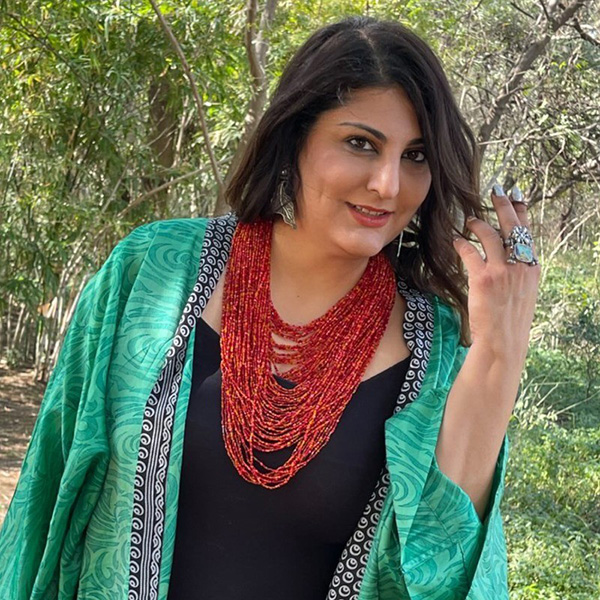

Duke University Durham, North Carolina Sanford School of Public Policy May 2013. Master of International Development Policy. Rotary World Peace Fellow Johns Hopkins University Bologna, Italy School of Advanced International Studies (SAIS) September 2010-February 2011 Middle Eastern Studies & International Economics. Selected Course Work: Political Islam and Change in the Mediterranean Area; Introduction to Development; Theory and Practice of International Peacekeeping; Microeconomics; Arabic Class of 1983 Lead Fellowship Recipient The University of West Georgia (Honors College) Carrollton GA, USA Bachelor of Arts, Mass Communication and Global Studies August 2009. Concentrations: Journalism and International Relations Selected Course Work: International Organizations; Media Law (Honors); International Relations; Politics of the Developing World; Politics of Oil and Global Warming; The Modern State System; Principles of Microeconomics Northumbria University, Newcastle, England (2007) West Georgia and Georgia Press Educational Foundation Scholarship Recipient GPA 3.74; Dean’s List; Graduated Cum Laude; Editor and Producer, Global Pathways to Peace

Related Posts

Photos © TFF 2000 Read PressInfo 90 “Lift the Sanctions and Bring More Aid to Yugoslavia” See Pictures from Belgrade © TFF 2000 Please reprint, copy, archive, quote or re-post this item, but please retain the source.
LONDON – So far so good, at least on the wider level. While internally Iraq seems on the edge of chaos, the much heralded clash of civilizations between the Muslim and Judaeo-Christian worlds has yet to become apparent. We have anger and despair aplenty in the Arab and Muslim worlds. But very little rushing to the standard and there was no great pilgrimage of warriors to join the fight, as happened when the Soviet Union invaded Afghanistan twenty years ago, and then, having driven the Red Army out, were left to ferment in that mountainous redoubt. With the armaments supplied by the CIA the mujahidin were transformed into Al Qaeda that became, for a relatively brief moment as these things go, ‘the greatest threat to the homeland that America has ever known.’ Nevertheless a ‘Cold War’ between much of the Muslim world and the West is certainly in full swing. Winston...
The Challenge of Nuclear Weaponsin the Twenty-first CenturyA Path Forward The peoples and governments of the world face an urgent challenge relating to weaponry of mass destruction and particularly to nuclear weaponry.  At the crossroads of technology, terrorism, geopolitical ambition, and policies of preemption are new and potent dangers for humanity. Despite ending the nuclear standoff of the Cold War era, nuclear weaponry is again menacing the peoples of the world with catastrophic possibilities.  We recognize the need for any government to pursue its security interests in accordance with international law; and further, we recognize that distinctive threats to these interests now exist as a result of an active international terrorist network having declared war on the United States and its allies. Nonetheless, we reject the assessment of the current US administration that upgrading a reliance on nuclear weapons is in any sense justified as a response. We find it...

Recent Articles

Tony Robinson October 4, 2026 Violence is easy to recognise when someone is being beaten, shot or killed. It becomes more difficult when nobody is holding a weapon. Poverty, discrimination, exploitation and repression can restrict a human life just as effectively, although they do so in very different ways and with very different consequences. Simply adding more categories to an ever-growing list of forms of violence does not really solve the problem. The more interesting question is what all these different situations have in common and why it makes sense to describe them using the same word. Human beings do not simply react to what happens around them. They remember the past, imagine things that do not yet exist, make plans and undertake projects. Workers organise because they imagine different working conditions; people migrate because they imagine another life somewhere else; social movements emerge because people refuse to accept the...
It’s a matter of principles, courage, vision and pulling together – while the militarist world is falling apart… Peter Langille October 3, 2026 “Here, then, is the problem which we present to you, stark and dreadful and inescapable: Shall we put an end to the human race; or shall mankind renounce war?”The Bertrand Russell—Albert Einstein Manifesto, July 9, 1955 ⁕ The forecast for what’s ahead is worrisome. The sharp rise in armed conflicts over the past three years is adding to what was already the highest level in over seventy years. Genocides, which should be prevented are supported. A shared climate emergency that jeopardises survival is ignored. Diverse polls now suggest that people are war-weary, worried and interested in a more effective United Nations. And, there are viable policy options for a more secure world! Yet governments are doubling-down, betting on more war and investing heavily. If current trends persist,...
Johan Galtung 1930-2024October 2015 Published here on October 3, 2026 Let us focus on Civilization for conflict analysis and remedies. Major forms of disorder use violence; war is state organized violence. The most belligerent states are the United States of America and Israel, both with civilization roots. National Evangelism, the US Protestant Christian civilization– more national than evangelical–justifies US warfare as exceptionalism of a people chosen by God, with a manifest destiny to run the world. Orthodox Judaism justifies Israeli warfare to conquer and expand from Nile to Euphrates as a religious right and duty to the Eternal One. The third most belligerent country, the UK, no longer believes it is God-chosen but chosen by the USA; not quite the same but something. But the root cause of global disorder lies in the Occident–with Islam–seeing itself as the single, universal civilization valid for all at all times, all others being...

TFF on Substack

Discover and subscribe to more peace materials on TFF Substack

Most Popular

Tony Robinson October 4, 2026 Violence is easy to recognise when someone is being beaten, shot or killed. It becomes more difficult when nobody is holding a weapon. Poverty, discrimination, exploitation and repression can restrict a human life just as effectively, although they do so in very different ways and with very different consequences. Simply adding more categories to an ever-growing list of forms of violence does not really solve the problem. The more interesting question is what all these different situations have in common and why it makes sense to describe them using the same word. Human beings do not simply react to what happens around them. They remember the past, imagine things that do not yet exist, make plans and undertake projects. Workers organise because they imagine different working conditions; people migrate because they imagine another life somewhere else; social movements emerge because people refuse to accept the...
It’s a matter of principles, courage, vision and pulling together – while the militarist world is falling apart… Peter Langille October 3, 2026 “Here, then, is the problem which we present to you, stark and dreadful and inescapable: Shall we put an end to the human race; or shall mankind renounce war?”The Bertrand Russell—Albert Einstein Manifesto, July 9, 1955 ⁕ The forecast for what’s ahead is worrisome. The sharp rise in armed conflicts over the past three years is adding to what was already the highest level in over seventy years. Genocides, which should be prevented are supported. A shared climate emergency that jeopardises survival is ignored. Diverse polls now suggest that people are war-weary, worried and interested in a more effective United Nations. And, there are viable policy options for a more secure world! Yet governments are doubling-down, betting on more war and investing heavily. If current trends persist,...
Johan Galtung 1930-2024October 2015 Published here on October 3, 2026 Let us focus on Civilization for conflict analysis and remedies. Major forms of disorder use violence; war is state organized violence. The most belligerent states are the United States of America and Israel, both with civilization roots. National Evangelism, the US Protestant Christian civilization– more national than evangelical–justifies US warfare as exceptionalism of a people chosen by God, with a manifest destiny to run the world. Orthodox Judaism justifies Israeli warfare to conquer and expand from Nile to Euphrates as a religious right and duty to the Eternal One. The third most belligerent country, the UK, no longer believes it is God-chosen but chosen by the USA; not quite the same but something. But the root cause of global disorder lies in the Occident–with Islam–seeing itself as the single, universal civilization valid for all at all times, all others being...
Read More
Living-Peace-Sign-Budapest-copy
Tony Robinson October 4, 2026 Violence is easy to recognise when someone is being beaten, shot or killed. It becomes more difficult when nobody is holding a weapon. Poverty, discrimination, exploitation and repression can restrict a human life just as effectively, although they do so in very different ways and with very different consequences. Simply adding more categories to an ever-growing list of forms of violence does not really solve the problem. The more interesting question is what all these different situations have in common and why it makes sense to describe them using the same word. Human beings do not simply react to what happens around them. They remember the past, imagine things that do not yet exist, make plans and undertake projects. Workers organise because they imagine different working conditions; people migrate because they imagine another life somewhere else; social movements emerge because people refuse to accept the...
b54a1f10-8c65-4f0b-9dd5-4abc0a7d04cc_2659x2659
It’s a matter of principles, courage, vision and pulling together – while the militarist world is falling apart… Peter Langille October 3, 2026 “Here, then, is the problem which we present to you, stark and dreadful and inescapable: Shall we put an end to the human race; or shall mankind renounce war?”The Bertrand Russell—Albert Einstein Manifesto, July 9, 1955 ⁕ The forecast for what’s ahead is worrisome. The sharp rise in armed conflicts over the past three years is adding to what was already the highest level in over seventy years. Genocides, which should be prevented are supported. A shared climate emergency that jeopardises survival is ignored. Diverse polls now suggest that people are war-weary, worried and interested in a more effective United Nations. And, there are viable policy options for a more secure world! Yet governments are doubling-down, betting on more war and investing heavily. If current trends persist,...
010
Johan Galtung 1930-2024October 2015 Published here on October 3, 2026 Let us focus on Civilization for conflict analysis and remedies. Major forms of disorder use violence; war is state organized violence. The most belligerent states are the United States of America and Israel, both with civilization roots. National Evangelism, the US Protestant Christian civilization– more national than evangelical–justifies US warfare as exceptionalism of a people chosen by God, with a manifest destiny to run the world. Orthodox Judaism justifies Israeli warfare to conquer and expand from Nile to Euphrates as a religious right and duty to the Eternal One. The third most belligerent country, the UK, no longer believes it is God-chosen but chosen by the USA; not quite the same but something. But the root cause of global disorder lies in the Occident–with Islam–seeing itself as the single, universal civilization valid for all at all times, all others being...
Screenshot 2026-10-02 011738
Jan ObergPhD, director, The Transnational Foundation for Peace and Future Research, TFFLund, Sweden October 2, 2026 This is my full original manuscript. The Chinese Academy of Social Science, CASS, makes two publications out if it. 1. China’s Five-year plan emphasized the capabilities of basic research and original innovation. It is regarded as the goal of the future social development, which, as required, should be significantly enhanced. Can you comment on the importance of original innovation in research and academic study? I believe it is easier to define “original innovation” in the natural sciences than in social sciences. The breaking points of what constitutes something new, or innovative, are not quite as sharp in the latter. But in both fields it is about opening up something that was closed, unseen, unexplored before – making manifest what was earlier latent. Innovations come in many forms and shapes – naming something that was not...
arctic-circle-map
The agreement is catastrophic both because of what it says and what it doesn’t mention. It reduces further the major asset of security policies: Freedom of action. Jan Oberg TFF director September 25, 2026 A couple of hours before the agreement was signed on September 22, 2026, I published the following 13 hypotheses about what it would most likely contain on TFF Substack (in English). I was wrong on only the first point. Contrary to what Trump had written on his Truth Social platform, it does not appear to come into force immediately. In fact, it turned out to be worse than even I had anticipated. After these hypotheses now come a number of reflections in light of what the agreement actually contains, and does not contain, as well as the way in which it has generally been presented by major media outlets and by the public-service broadcaster DR. My...
girl-5894831_1280
Below are TFF-related media mentions, comments, videos and social media posts published elsewhere but not on this homepage. We happen to catch and list only a fraction. Regarding video comments and debates, we recommend that you go to the TFF Video Channel on Substack where many of them are reproduced. Jan Oberg is a contributor to China Daily – 52 million daily clicks – and Global Times, CGTN and CCTV (the national television), China Investment, Xinhua News Agency and several others. Articles and videos on these media very often multiply into countless Chinese (and Western media) that re-post them from these main media. Thanks to The China Academy, his analyses, interviews and comments are frequently posted on YouTube channels such as Thinkers Forum and Wave Media. These videos are often re-posted on Bilibili (China’s YouTube), the China Content Center on TikTok, and on the Chinese edition of TikTok, Douyin.com. This means reaching hundreds of millions of viewers worldwide over a year. While there are too many to catch on all these...




