

Our experiment with themedia on Kosovo’s secession

February 20, 2008

Jan Oberg

Do you believe that freedom of opinion, diversity, fairness, impartiality, basic knowledge, and research should be defining principles behind the news YOU get?

Then read the press release from TFF below which contains a fairly unique background story. It was mailed to about 400 journalists and editorial offices in Scandinavia and over 1000 worldwide, specialised in international affairs.

We got about the response we expected: 3 – CNN International, Radio Netherlands and Voima in Finland.

1397 chose to cut and paste telegrams from exclusively Western bureaus or write without relying on external expertise or research. So, routine-routine and politically correct – they repeat what for instance George W. Bush, Javier Solana, Nikolas Sarkozy and other Western leaders say interspersed with “angry” Serbs torching a border station on the Kosovo-Serbia border and “defiant” Belgrade – allied with the Russians so we know what to think about them – may say about the illegality of this recognition of secession.

Almost 20 years after the dissolution of Yugoslavia began, one must wonder how much genuine understanding people around the world have received from their dailies, radio and television?

With a few exceptions, knowledge is systematically substituted with statements, complex reality with appearances and make-believe. With an increasingly homogenized media coverage of world events, there is tremendous repetition – our media tend to imitate the selection and copy the angles of  “leading” media whatever that means.

Conclusion 1: Most organisations dare not point out this sort of thing because they want media attention themselves. Of course, TFF appreciates media attention too and recognition of what we do – but we don’t grovel for it. Media has tremendous power, and power should be criticized and confronted when important principles and human suffering is at stake.

Conclusion 2: Consider reducing the time you spend with dailies, radio and television and find the larger truths on the Internet. It may take some time, yes, but you will be so much better informed.

PRESS RELEASE

February 18, 2008
Lund, Sweden

Kosovo secession – Speak with TFF’s uniquely experienced experts
********************************************************************************

TFF’s Associates have worked in and with Kosovo since 1991; it has resulted in hundreds of articles, reports and books.

Little known publicly, the foundation was very instrumental in developing the original model for independence, serving as goodwill advisers to the Kosovo-Albanian leader at the time, Dr. Ibrahim Rugova who advocated pragmatic nonviolence. TFF’s first report (1992) was “Preventing War in Kosovo”.

The model independent state we developed – and the suggested path to it – was completely different from the unilateral secession declared on February 17, 2008.

A few years later the foundation published an international treaty text with arguments. It was based on this co-operation with the highest Albanian leadership in Kosovo and, impartially, consultations with three successive governments in Belgrade, including the then foreign minister and, in 2005, president Milosevic. It suggested a UN-mediated, three-year negotiation process.

TFF has never taken a stand for or against independence. We do conflict-mitigation which means that our associates and experts have only facilitated peaceful exchanges of views and a process through which the parties would have been able to find their own sustainable solution – which is a basic criteria of all decent, professional conflict management.

“Would have been able to” – that is, if Western forces had not clandestinely helped extremist Albanians develop the Kosovo-Albanian Liberation Army, KLA/UCK from 1993 onwards which undermined Dr. Rugova’s position and thereby that of a peaceful, longterm solution.

Some of TFF’s analyses appear, to some at least, as anti-independence. That is – due to the above fact – a misunderstanding. But there is independence and independence. There are negotiations and negotiations. And there is conflict management and mis-management.

This secession is called the only on possible for two reasons:

1) US and EU politicians involved in ex-Yugoslava lack basic skills in conflict-management and -resolution as well as creativity. Therefore, the result of their intervention will be the same as will a surgeon with no medical education operating on a patient.

2) Certain Western governments have to endorse independence because

a) if they don’t, NATO’s 1999 bombing will now be seen as a moral and political failure in addition to being a gross violation of human rights, international law and the UN;

b) they began with a wrongheaded, intellectually impossible black-and-white perception of the bad Serbs and the good everybody else – and can’t change that now;

c) Kosovo-Albanians have all rights to interpret Western policies as pro-independence, and their leaders were probably promised during the fake Rambouillet “negotiations” preceding NATO’s bombings that they would get an independent state if only they remained patient and accepted foreigners on their territory.

Are YOU interested in discussing these WIDER perspectives with TFF Associates – all of whom have between 10 and 40 years of personal experience with Yugoslavia?

Are YOU interested in the intellectual freedom underlying both a free press and free research?

Are YOU willing to do some search and re-search of a larger truth that is not black-and-white and which gives a fair hearing to all sides in this conflict, including the US, EU, Russia and others?

Do YOU want to interview or simply talk with these resource persons for your personal benefit?

Then contact
Jan Oberg, director of TFF
Head of TFF’s work in former Yugoslavia since 1991
E-mail – see above
Phone: +46 46 14 59 09
Skype: janoberg

– and I shall be pleased to connect you with the following TFF Associates who are area experts, conflict-resolution specialists, media connoiseurs, and more:

Radmila Nakarada, Belgrade
<nakara@EUnet.yu>

Biljana Vankovska, Skopje
<bvankovska@mt.net.mk>

Aleksandar Mitic, Brussels
<amitic5star@yahoo.com>

Johan Galtung, Spain/France/US
<galtung@transcend.org>or through
Dietrich Fischer
<102464.1110@compuserve.com>
or through me
<tff@transnational.live>

Soren Sommelius, Sweden
<sosommelius@hd.se>

Vasiliki Neofotistos, US
<neofotis@buffalo.edu>

Richard Falk, US
<rfalk@Princeton.EDU>

Michel Chossudovsky
<chossudovsky@videotron.ca>

All materials about Yugoslavia and Kosovo here
http://www.transnational.org/Area_Index_Yugoslavia.htm
where you also find the links to the above-mentioned Associates’ CV

With reference to the importance of free media, we look forward to hearing from you,

Kind regards

Jan Oberg
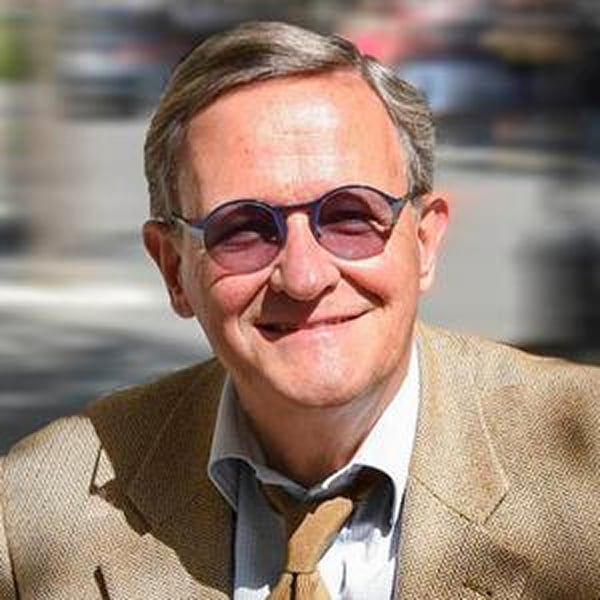
Peace & future researcher + ‌Art Photographer

Related Posts

Tony Robinson October 4, 2026 Violence is easy to recognise when someone is being beaten, shot or killed. It becomes more difficult when nobody is holding a weapon. Poverty, discrimination, exploitation and repression can restrict a human life just as effectively, although they do so in very different ways and with very different consequences. Simply adding more categories to an ever-growing list of forms of violence does not really solve the problem. The more interesting question is what all these different situations have in common and why it makes sense to describe them using the same word. Human beings do not simply react to what happens around them. They remember the past, imagine things that do not yet exist, make plans and undertake projects. Workers organise because they imagine different working conditions; people migrate because they imagine another life somewhere else; social movements emerge because people refuse to accept the...
It’s a matter of principles, courage, vision and pulling together – while the militarist world is falling apart… Peter Langille October 3, 2026 “Here, then, is the problem which we present to you, stark and dreadful and inescapable: Shall we put an end to the human race; or shall mankind renounce war?”The Bertrand Russell—Albert Einstein Manifesto, July 9, 1955 ⁕ The forecast for what’s ahead is worrisome. The sharp rise in armed conflicts over the past three years is adding to what was already the highest level in over seventy years. Genocides, which should be prevented are supported. A shared climate emergency that jeopardises survival is ignored. Diverse polls now suggest that people are war-weary, worried and interested in a more effective United Nations. And, there are viable policy options for a more secure world! Yet governments are doubling-down, betting on more war and investing heavily. If current trends persist,...
Johan Galtung 1930-2024October 2015 Published here on October 3, 2026 Let us focus on Civilization for conflict analysis and remedies. Major forms of disorder use violence; war is state organized violence. The most belligerent states are the United States of America and Israel, both with civilization roots. National Evangelism, the US Protestant Christian civilization– more national than evangelical–justifies US warfare as exceptionalism of a people chosen by God, with a manifest destiny to run the world. Orthodox Judaism justifies Israeli warfare to conquer and expand from Nile to Euphrates as a religious right and duty to the Eternal One. The third most belligerent country, the UK, no longer believes it is God-chosen but chosen by the USA; not quite the same but something. But the root cause of global disorder lies in the Occident–with Islam–seeing itself as the single, universal civilization valid for all at all times, all others being...

Recent Articles

Tony Robinson October 4, 2026 Violence is easy to recognise when someone is being beaten, shot or killed. It becomes more difficult when nobody is holding a weapon. Poverty, discrimination, exploitation and repression can restrict a human life just as effectively, although they do so in very different ways and with very different consequences. Simply adding more categories to an ever-growing list of forms of violence does not really solve the problem. The more interesting question is what all these different situations have in common and why it makes sense to describe them using the same word. Human beings do not simply react to what happens around them. They remember the past, imagine things that do not yet exist, make plans and undertake projects. Workers organise because they imagine different working conditions; people migrate because they imagine another life somewhere else; social movements emerge because people refuse to accept the...
It’s a matter of principles, courage, vision and pulling together – while the militarist world is falling apart… Peter Langille October 3, 2026 “Here, then, is the problem which we present to you, stark and dreadful and inescapable: Shall we put an end to the human race; or shall mankind renounce war?”The Bertrand Russell—Albert Einstein Manifesto, July 9, 1955 ⁕ The forecast for what’s ahead is worrisome. The sharp rise in armed conflicts over the past three years is adding to what was already the highest level in over seventy years. Genocides, which should be prevented are supported. A shared climate emergency that jeopardises survival is ignored. Diverse polls now suggest that people are war-weary, worried and interested in a more effective United Nations. And, there are viable policy options for a more secure world! Yet governments are doubling-down, betting on more war and investing heavily. If current trends persist,...
Johan Galtung 1930-2024October 2015 Published here on October 3, 2026 Let us focus on Civilization for conflict analysis and remedies. Major forms of disorder use violence; war is state organized violence. The most belligerent states are the United States of America and Israel, both with civilization roots. National Evangelism, the US Protestant Christian civilization– more national than evangelical–justifies US warfare as exceptionalism of a people chosen by God, with a manifest destiny to run the world. Orthodox Judaism justifies Israeli warfare to conquer and expand from Nile to Euphrates as a religious right and duty to the Eternal One. The third most belligerent country, the UK, no longer believes it is God-chosen but chosen by the USA; not quite the same but something. But the root cause of global disorder lies in the Occident–with Islam–seeing itself as the single, universal civilization valid for all at all times, all others being...

TFF on Substack

Discover and subscribe to more peace materials on TFF Substack

Most Popular

Tony Robinson October 4, 2026 Violence is easy to recognise when someone is being beaten, shot or killed. It becomes more difficult when nobody is holding a weapon. Poverty, discrimination, exploitation and repression can restrict a human life just as effectively, although they do so in very different ways and with very different consequences. Simply adding more categories to an ever-growing list of forms of violence does not really solve the problem. The more interesting question is what all these different situations have in common and why it makes sense to describe them using the same word. Human beings do not simply react to what happens around them. They remember the past, imagine things that do not yet exist, make plans and undertake projects. Workers organise because they imagine different working conditions; people migrate because they imagine another life somewhere else; social movements emerge because people refuse to accept the...
It’s a matter of principles, courage, vision and pulling together – while the militarist world is falling apart… Peter Langille October 3, 2026 “Here, then, is the problem which we present to you, stark and dreadful and inescapable: Shall we put an end to the human race; or shall mankind renounce war?”The Bertrand Russell—Albert Einstein Manifesto, July 9, 1955 ⁕ The forecast for what’s ahead is worrisome. The sharp rise in armed conflicts over the past three years is adding to what was already the highest level in over seventy years. Genocides, which should be prevented are supported. A shared climate emergency that jeopardises survival is ignored. Diverse polls now suggest that people are war-weary, worried and interested in a more effective United Nations. And, there are viable policy options for a more secure world! Yet governments are doubling-down, betting on more war and investing heavily. If current trends persist,...
Johan Galtung 1930-2024October 2015 Published here on October 3, 2026 Let us focus on Civilization for conflict analysis and remedies. Major forms of disorder use violence; war is state organized violence. The most belligerent states are the United States of America and Israel, both with civilization roots. National Evangelism, the US Protestant Christian civilization– more national than evangelical–justifies US warfare as exceptionalism of a people chosen by God, with a manifest destiny to run the world. Orthodox Judaism justifies Israeli warfare to conquer and expand from Nile to Euphrates as a religious right and duty to the Eternal One. The third most belligerent country, the UK, no longer believes it is God-chosen but chosen by the USA; not quite the same but something. But the root cause of global disorder lies in the Occident–with Islam–seeing itself as the single, universal civilization valid for all at all times, all others being...
Read More
Living-Peace-Sign-Budapest-copy
Tony Robinson October 4, 2026 Violence is easy to recognise when someone is being beaten, shot or killed. It becomes more difficult when nobody is holding a weapon. Poverty, discrimination, exploitation and repression can restrict a human life just as effectively, although they do so in very different ways and with very different consequences. Simply adding more categories to an ever-growing list of forms of violence does not really solve the problem. The more interesting question is what all these different situations have in common and why it makes sense to describe them using the same word. Human beings do not simply react to what happens around them. They remember the past, imagine things that do not yet exist, make plans and undertake projects. Workers organise because they imagine different working conditions; people migrate because they imagine another life somewhere else; social movements emerge because people refuse to accept the...
b54a1f10-8c65-4f0b-9dd5-4abc0a7d04cc_2659x2659
It’s a matter of principles, courage, vision and pulling together – while the militarist world is falling apart… Peter Langille October 3, 2026 “Here, then, is the problem which we present to you, stark and dreadful and inescapable: Shall we put an end to the human race; or shall mankind renounce war?”The Bertrand Russell—Albert Einstein Manifesto, July 9, 1955 ⁕ The forecast for what’s ahead is worrisome. The sharp rise in armed conflicts over the past three years is adding to what was already the highest level in over seventy years. Genocides, which should be prevented are supported. A shared climate emergency that jeopardises survival is ignored. Diverse polls now suggest that people are war-weary, worried and interested in a more effective United Nations. And, there are viable policy options for a more secure world! Yet governments are doubling-down, betting on more war and investing heavily. If current trends persist,...
010
Johan Galtung 1930-2024October 2015 Published here on October 3, 2026 Let us focus on Civilization for conflict analysis and remedies. Major forms of disorder use violence; war is state organized violence. The most belligerent states are the United States of America and Israel, both with civilization roots. National Evangelism, the US Protestant Christian civilization– more national than evangelical–justifies US warfare as exceptionalism of a people chosen by God, with a manifest destiny to run the world. Orthodox Judaism justifies Israeli warfare to conquer and expand from Nile to Euphrates as a religious right and duty to the Eternal One. The third most belligerent country, the UK, no longer believes it is God-chosen but chosen by the USA; not quite the same but something. But the root cause of global disorder lies in the Occident–with Islam–seeing itself as the single, universal civilization valid for all at all times, all others being...
Screenshot 2026-10-02 011738
Jan ObergPhD, director, The Transnational Foundation for Peace and Future Research, TFFLund, Sweden October 2, 2026 This is my full original manuscript. The Chinese Academy of Social Science, CASS, makes two publications out if it. 1. China’s Five-year plan emphasized the capabilities of basic research and original innovation. It is regarded as the goal of the future social development, which, as required, should be significantly enhanced. Can you comment on the importance of original innovation in research and academic study? I believe it is easier to define “original innovation” in the natural sciences than in social sciences. The breaking points of what constitutes something new, or innovative, are not quite as sharp in the latter. But in both fields it is about opening up something that was closed, unseen, unexplored before – making manifest what was earlier latent. Innovations come in many forms and shapes – naming something that was not...
arctic-circle-map
The agreement is catastrophic both because of what it says and what it doesn’t mention. It reduces further the major asset of security policies: Freedom of action. Jan Oberg TFF director September 25, 2026 A couple of hours before the agreement was signed on September 22, 2026, I published the following 13 hypotheses about what it would most likely contain on TFF Substack (in English). I was wrong on only the first point. Contrary to what Trump had written on his Truth Social platform, it does not appear to come into force immediately. In fact, it turned out to be worse than even I had anticipated. After these hypotheses now come a number of reflections in light of what the agreement actually contains, and does not contain, as well as the way in which it has generally been presented by major media outlets and by the public-service broadcaster DR. My...
girl-5894831_1280
Below are TFF-related media mentions, comments, videos and social media posts published elsewhere but not on this homepage. We happen to catch and list only a fraction. Regarding video comments and debates, we recommend that you go to the TFF Video Channel on Substack where many of them are reproduced. Jan Oberg is a contributor to China Daily – 52 million daily clicks – and Global Times, CGTN and CCTV (the national television), China Investment, Xinhua News Agency and several others. Articles and videos on these media very often multiply into countless Chinese (and Western media) that re-post them from these main media. Thanks to The China Academy, his analyses, interviews and comments are frequently posted on YouTube channels such as Thinkers Forum and Wave Media. These videos are often re-posted on Bilibili (China’s YouTube), the China Content Center on TikTok, and on the Chinese edition of TikTok, Douyin.com. This means reaching hundreds of millions of viewers worldwide over a year. While there are too many to catch on all these...





