

Edward Curtin: There Is No Escape From Telling

Edward Curtin

May 30, 2023

By the lake’s lapping shore above the town and the railroad tracks, my wife and I stopped and marveled, struck stone silent by two dazzling Baltimore Orioles, clawed together as they tumbled, wrestling in the green morning breeze above our heads. They perched upon a branch and sang a morning hymn, an ode to joy and the spring’s morning glory. Their black and orange throats vibrated amid the green quaking aspen’s leaves as the lake’s low lapping sounds lent counterpoint. They were sublime.

Originally published at Off Guardian on May 14, 2023

I too felt a quake, a shiver down my spine as associations tumbled through my mind. Poems, songs, memories of other early morning walks in spring. Intoxication, elation, the horripilation that accompanies spring’s rising, the sexual excitement. Hope, and the loose feeling of being forever young. No solution to anything, just reverence for existence. Nothing changed, except a few years.

In quickly putting into words what I felt a half-hour ago, I drew on a vast store of personal and cultural memories that came to me with little thought as I was walking home. Words strung together without thinking. You have just read them. I felt impelled to tell them.

Now as I sit and contemplate, I think about culture and what it might mean. In my case, I was gifted by my parents and schools with the love of poetry and art from a young age. I know well that everyone is not so lucky and that, in any case, culture has many meanings. “Culture,” writes Raymond Williams, “is one of the two or three most complicated words in the English language.” From its original verbal meaning to cultivate the land to high, low, and middlebrow culture onto so many other meanings and conflicts that are often tied up with social class issues. There are cultures and culture.

When I say cultural memories, I mean my memories, no one else’s.

I learned early on that the music of verse, the sound of birds in the trees, the rush of a creek murmuring over rocks, the lilt of words spoken passionately, the placement of a certain blue paint on a canvas, a singer’s voice flying with a tune of joy or sadness, and a instrument’s vibrations were all connected to the reverence I felt as an altar boy tolling the bells and repeating Latin responses, whose full meaning I couldn’t grasp amid the incense and candle smoke: Et introibo ad altare Dei: ad Deum qui laetificat juventutem mea – “And I go to the altar of God, to God who gives joy to my youth.”

It was the sound of the bells that entranced me, and that I was allowed to ring them. To sound in, to participate in the ancient ritual that created a musical enclave from the beyond. I knew then, as I know now, that God has many altars, and that reverence before them and their mysteries is the right refrain.   Bob Dylan singing “Ring Those Bells” comes to mind:

Ring them bells, ye heathen
From the city that dreams
Ring them bells from the sanctuaries
’Cross the valleys and streams
For they’re deep and they’re wide
And the world’s on its side
And time is running backwards
And so is the bride

So while it is not necessary to draw on stored cultural memories to appreciate the birds in the trees on nature’s altar on a beautiful spring morning, for me it enriched the experience. You may have heard echoes of Yeats, Van Morrison, and others in my words, but the reality of the world I described would be the same for those who never heard of these artists, who find their inspiration in the terrible beauty of nature and have other associations.

Are we really at home in our interpreted world, a poet once asked? It is a good question. This poet was Rilke, who wrote in the Duino Elegies :

For beauty is nothing/but the beginning of terror/which we are still just able to endure/and we are so awed because it serenely/disdains to annihilate us/Every angel is terrifying/And so I hold myself back and swallow the call note of my dark sobbing/Ah, whom can we ever turn to in our need?

Whom can we ever turn to in our need?

Everyone carries different associations that come to us when we are not thinking but are only immersed in our experiences.  Snatches of trace memories, images, words, sounds, smells, the look of light, etc. that usually occur slightly after the first encounter with natural phenomena. One doesn’t have to know Shakespeare or William Wordsworth to experience nature’s beauty. Nor it’s terrors. Yet I must admit I am partial to words like these from Wordsworth:

Though nothing can bring back the hour
Of splendour in the grass, of glory in the flower;
We will grieve not, rather find
Strength in what remains behind;
In the primal sympathy
Which having been must ever be;
In the soothing thoughts that spring
Out of human suffering;
In the faith that looks through death,
In years that bring the philosophic min
d.

But whatever our backgrounds, we are all interpreters of our world and words are our fundamental way of doing so. Words and metaphors that lead us to myth and art, even when its expression is wordless sound or pictures. Words that are often unacknowledged prayers to an unknown God.

For many years I taught what are called the liberal arts. This was an extension of my own education in the classics, philosophy, theology, and sociology, disciplines divided in name only but married in reality to science, literature, history, languages, etc. It is all one study when rightly understood. But our schools and  universities have been abandoning this approach for the sterility of numbers and the cold dead hand of technology and digital dementia. For specialization, where professors know nothing outside their limited disciplines. For the study of the parts without any sense of the whole.

A new Dark Age is closing upon us, as Max Weber noted more than a century ago when he described the people who run our societies and educational institutions as “specialists without spirit, sensualists without heart; this nullity imagines it has attained a level of civilization never before achieved.”

Students are being denied the rich heritage of words, images, and music that form the basis of Western culture. Without such a repository of cultural wisdom, they are left to draw only on popular cultural sources to interpret the world and their lives. More and more of these sources are anemic, if not degrading. 

It is not that some are not extraordinarily rich and meaningful, as is evident from those I link to in this essay, but a quick look around should convince any fair-minded person that the pickings are quite slim. 

We are drowning in cultural garbage that is being pumped out through digital media, primarily so-called smart phones, into young people’s minds and souls. It is poison. And the schools have devolved into protection rackets where students are protected from their own thoughts and ideas that might allow them to think and be thought.

To think, question, and debate have been replaced with censorship and the coddling of young minds.  Such censorship, of course, has its counterpart in society at large. Call it propaganda, which is exactly what it is.

If Rilke is right, we will never be at home on this earth, our interpreted world. As a poet and a man of words, he no doubt knew that there is no alternative to interpretation, to ask why, to use words to describe our experiences and to seek meaning as we travel through the mystery of time and existence.

I know, however, for those minutes I stood by the lake in rapt silence as the birds sang and the water lapped, I felt at home.

Home, of course, is a complicated word, for we are time-bound creatures always moving on, travelers who are home one minute and gone the next. Even the word culture derives from an Indo-European root meaning to revolve, tied as it is, as are we, to the idea of a natural cycle, the turning of the seasons.  Doesn’t a contemporary artist, Joni Mitchell, tell this beautifully with The Circle Game.

To say we are wayfarers is accurate, always on the way, as my recently departed dear friend Graeme MacQueen, a Buddhist and 9/11 scholar told me, when he laughingly said to me right before he recently died, that the old folk and Christian gospel song, Wayfaring Stranger, was his story too. He was a man of many talents who established the Centre for Peace Studies at McMaster University in Canada, wrote the important book, The 2001 Anthrax Deception, and much more, even a children’s book.

Graeme did all his work with the awareness that we are temporary sojourners on this earth, and that it is through stories and myths and their associations that come to us unbidden that we can connect life with death, the material and spiritual sides of our natures, in the search for peace. He died at home. I imagine him singing along with the words of the song: “I am a poor wayfaring stranger…I’m goin’ home to see my father/I’m goin’ home, no more to roam/I am just goin’ over Jordan/I am just goin’ over home”

And then laughing so hard he couldn’t breathe, just as he did earlier when he told me his doctor’s name was Dr. Sender, as he prepared to hit the road.

There is no escape from telling. Life is sublime.

From his album, On the Road, Van Morrison takes us out with “The Beauty of the Days Gone By”

Originally published at Off Guardian on May 14, 2023
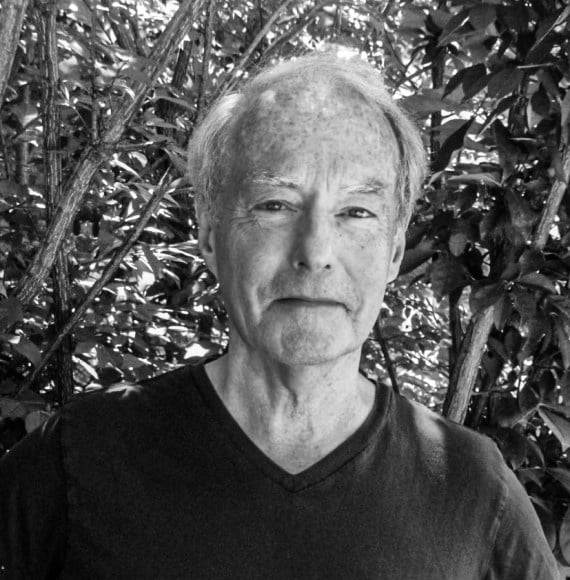
Edward Curtin is an independent writer whose work has appeared widely over many years. His website is edwardcurtin.com and his new book is Seeking Truth in a Country of Lies.

Please help TFF remain truly independent if you liked this article
Click here now!

Related Posts

Jan ObergPhD, director, The Transnational Foundation for Peace and Future Research, TFFLund, Sweden October 2, 2026 This is my full original manuscript. The Chinese Academy of Social Science, CASS, makes two publications out if it. 1. China’s Five-year plan emphasized the capabilities of basic research and original innovation. It is regarded as the goal of the future social development, which, as required, should be significantly enhanced. Can you comment on the importance of original innovation in research and academic study? I believe it is easier to define “original innovation” in the natural sciences than in social sciences. The breaking points of what constitutes something new, or innovative, are not quite as sharp in the latter. But in both fields it is about opening up something that was closed, unseen, unexplored before – making manifest what was earlier latent. Innovations come in many forms and shapes – naming something that was not...
In contrast to most, we’ll bring alternatives, solutions, hope and strategies for a better future. Times are dangerous, yes, but that only intensifies the need for constructive thinking and action! Jan Oberg, TFF director April 13, 2026 The new TFF Peace Pulse uses video messages in a new way: Max 3-5-minute-long comments, ideas or perhaps mini-lectures, all about peace – positive peace. We launch them today on April 13, 2026 with a carefully crafted visual aesthetic fitting the content. We hope to publish them regularly from now on. We launch Peace Pulse (PP) – for a number of reasons. The world is in chaos, and there are countless reasons to feel concerned, frustrated, even angry. The atmosphere is saturated with doom and gloom, with negative energy and rear‑mirror thinking, while vision, imagination, alternatives, strategies and genuine future‑mindedness remain in short supply. And without them, we simply can’t save the world. Looking at problems from a hundred angles will...
Jan Oberg February 19, 2026 What a thrill to be interviewed by former British diplomat Ian Proud! Don’t waste a minute: acquaint yourself with him here on his homepage, which he elegantly calls “Proud Diplomat.” Notice also his book, A Misfit In Moscow. Ian is, of course, also on Substack, where he calls himself The Peace Monger, and recently he set up his own PeaceMonger Channel on YouTube. For once, I was not interviewed as if I were a military geopolitical expert, where I normally have to twist the whole thing in the direction of peace. No, we both had a focus on peace – why it has been disappeared by research, politics and the media, but also what can be done to shape a more peaceful future for us all. One idea we came up with was that of connecting people through citizens diplomacy – in an era where...

Recent Articles

Tony Robinson October 4, 2026 Violence is easy to recognise when someone is being beaten, shot or killed. It becomes more difficult when nobody is holding a weapon. Poverty, discrimination, exploitation and repression can restrict a human life just as effectively, although they do so in very different ways and with very different consequences. Simply adding more categories to an ever-growing list of forms of violence does not really solve the problem. The more interesting question is what all these different situations have in common and why it makes sense to describe them using the same word. Human beings do not simply react to what happens around them. They remember the past, imagine things that do not yet exist, make plans and undertake projects. Workers organise because they imagine different working conditions; people migrate because they imagine another life somewhere else; social movements emerge because people refuse to accept the...
It’s a matter of principles, courage, vision and pulling together – while the militarist world is falling apart… Peter Langille October 3, 2026 “Here, then, is the problem which we present to you, stark and dreadful and inescapable: Shall we put an end to the human race; or shall mankind renounce war?”The Bertrand Russell—Albert Einstein Manifesto, July 9, 1955 ⁕ The forecast for what’s ahead is worrisome. The sharp rise in armed conflicts over the past three years is adding to what was already the highest level in over seventy years. Genocides, which should be prevented are supported. A shared climate emergency that jeopardises survival is ignored. Diverse polls now suggest that people are war-weary, worried and interested in a more effective United Nations. And, there are viable policy options for a more secure world! Yet governments are doubling-down, betting on more war and investing heavily. If current trends persist,...
Johan Galtung 1930-2024October 2015 Published here on October 3, 2026 Let us focus on Civilization for conflict analysis and remedies. Major forms of disorder use violence; war is state organized violence. The most belligerent states are the United States of America and Israel, both with civilization roots. National Evangelism, the US Protestant Christian civilization– more national than evangelical–justifies US warfare as exceptionalism of a people chosen by God, with a manifest destiny to run the world. Orthodox Judaism justifies Israeli warfare to conquer and expand from Nile to Euphrates as a religious right and duty to the Eternal One. The third most belligerent country, the UK, no longer believes it is God-chosen but chosen by the USA; not quite the same but something. But the root cause of global disorder lies in the Occident–with Islam–seeing itself as the single, universal civilization valid for all at all times, all others being...

TFF on Substack

Discover and subscribe to more peace materials on TFF Substack

Most Popular

Tony Robinson October 4, 2026 Violence is easy to recognise when someone is being beaten, shot or killed. It becomes more difficult when nobody is holding a weapon. Poverty, discrimination, exploitation and repression can restrict a human life just as effectively, although they do so in very different ways and with very different consequences. Simply adding more categories to an ever-growing list of forms of violence does not really solve the problem. The more interesting question is what all these different situations have in common and why it makes sense to describe them using the same word. Human beings do not simply react to what happens around them. They remember the past, imagine things that do not yet exist, make plans and undertake projects. Workers organise because they imagine different working conditions; people migrate because they imagine another life somewhere else; social movements emerge because people refuse to accept the...
It’s a matter of principles, courage, vision and pulling together – while the militarist world is falling apart… Peter Langille October 3, 2026 “Here, then, is the problem which we present to you, stark and dreadful and inescapable: Shall we put an end to the human race; or shall mankind renounce war?”The Bertrand Russell—Albert Einstein Manifesto, July 9, 1955 ⁕ The forecast for what’s ahead is worrisome. The sharp rise in armed conflicts over the past three years is adding to what was already the highest level in over seventy years. Genocides, which should be prevented are supported. A shared climate emergency that jeopardises survival is ignored. Diverse polls now suggest that people are war-weary, worried and interested in a more effective United Nations. And, there are viable policy options for a more secure world! Yet governments are doubling-down, betting on more war and investing heavily. If current trends persist,...
Johan Galtung 1930-2024October 2015 Published here on October 3, 2026 Let us focus on Civilization for conflict analysis and remedies. Major forms of disorder use violence; war is state organized violence. The most belligerent states are the United States of America and Israel, both with civilization roots. National Evangelism, the US Protestant Christian civilization– more national than evangelical–justifies US warfare as exceptionalism of a people chosen by God, with a manifest destiny to run the world. Orthodox Judaism justifies Israeli warfare to conquer and expand from Nile to Euphrates as a religious right and duty to the Eternal One. The third most belligerent country, the UK, no longer believes it is God-chosen but chosen by the USA; not quite the same but something. But the root cause of global disorder lies in the Occident–with Islam–seeing itself as the single, universal civilization valid for all at all times, all others being...
Read More
Living-Peace-Sign-Budapest-copy
Tony Robinson October 4, 2026 Violence is easy to recognise when someone is being beaten, shot or killed. It becomes more difficult when nobody is holding a weapon. Poverty, discrimination, exploitation and repression can restrict a human life just as effectively, although they do so in very different ways and with very different consequences. Simply adding more categories to an ever-growing list of forms of violence does not really solve the problem. The more interesting question is what all these different situations have in common and why it makes sense to describe them using the same word. Human beings do not simply react to what happens around them. They remember the past, imagine things that do not yet exist, make plans and undertake projects. Workers organise because they imagine different working conditions; people migrate because they imagine another life somewhere else; social movements emerge because people refuse to accept the...
b54a1f10-8c65-4f0b-9dd5-4abc0a7d04cc_2659x2659
It’s a matter of principles, courage, vision and pulling together – while the militarist world is falling apart… Peter Langille October 3, 2026 “Here, then, is the problem which we present to you, stark and dreadful and inescapable: Shall we put an end to the human race; or shall mankind renounce war?”The Bertrand Russell—Albert Einstein Manifesto, July 9, 1955 ⁕ The forecast for what’s ahead is worrisome. The sharp rise in armed conflicts over the past three years is adding to what was already the highest level in over seventy years. Genocides, which should be prevented are supported. A shared climate emergency that jeopardises survival is ignored. Diverse polls now suggest that people are war-weary, worried and interested in a more effective United Nations. And, there are viable policy options for a more secure world! Yet governments are doubling-down, betting on more war and investing heavily. If current trends persist,...
010
Johan Galtung 1930-2024October 2015 Published here on October 3, 2026 Let us focus on Civilization for conflict analysis and remedies. Major forms of disorder use violence; war is state organized violence. The most belligerent states are the United States of America and Israel, both with civilization roots. National Evangelism, the US Protestant Christian civilization– more national than evangelical–justifies US warfare as exceptionalism of a people chosen by God, with a manifest destiny to run the world. Orthodox Judaism justifies Israeli warfare to conquer and expand from Nile to Euphrates as a religious right and duty to the Eternal One. The third most belligerent country, the UK, no longer believes it is God-chosen but chosen by the USA; not quite the same but something. But the root cause of global disorder lies in the Occident–with Islam–seeing itself as the single, universal civilization valid for all at all times, all others being...
Screenshot 2026-10-02 011738
Jan ObergPhD, director, The Transnational Foundation for Peace and Future Research, TFFLund, Sweden October 2, 2026 This is my full original manuscript. The Chinese Academy of Social Science, CASS, makes two publications out if it. 1. China’s Five-year plan emphasized the capabilities of basic research and original innovation. It is regarded as the goal of the future social development, which, as required, should be significantly enhanced. Can you comment on the importance of original innovation in research and academic study? I believe it is easier to define “original innovation” in the natural sciences than in social sciences. The breaking points of what constitutes something new, or innovative, are not quite as sharp in the latter. But in both fields it is about opening up something that was closed, unseen, unexplored before – making manifest what was earlier latent. Innovations come in many forms and shapes – naming something that was not...
arctic-circle-map
The agreement is catastrophic both because of what it says and what it doesn’t mention. It reduces further the major asset of security policies: Freedom of action. Jan Oberg TFF director September 25, 2026 A couple of hours before the agreement was signed on September 22, 2026, I published the following 13 hypotheses about what it would most likely contain on TFF Substack (in English). I was wrong on only the first point. Contrary to what Trump had written on his Truth Social platform, it does not appear to come into force immediately. In fact, it turned out to be worse than even I had anticipated. After these hypotheses now come a number of reflections in light of what the agreement actually contains, and does not contain, as well as the way in which it has generally been presented by major media outlets and by the public-service broadcaster DR. My...
girl-5894831_1280
Below are TFF-related media mentions, comments, videos and social media posts published elsewhere but not on this homepage. We happen to catch and list only a fraction. Regarding video comments and debates, we recommend that you go to the TFF Video Channel on Substack where many of them are reproduced. Jan Oberg is a contributor to China Daily – 52 million daily clicks – and Global Times, CGTN and CCTV (the national television), China Investment, Xinhua News Agency and several others. Articles and videos on these media very often multiply into countless Chinese (and Western media) that re-post them from these main media. Thanks to The China Academy, his analyses, interviews and comments are frequently posted on YouTube channels such as Thinkers Forum and Wave Media. These videos are often re-posted on Bilibili (China’s YouTube), the China Content Center on TikTok, and on the Chinese edition of TikTok, Douyin.com. This means reaching hundreds of millions of viewers worldwide over a year. While there are too many to catch on all these...





