
Sam Kolitch
February 14, 2022
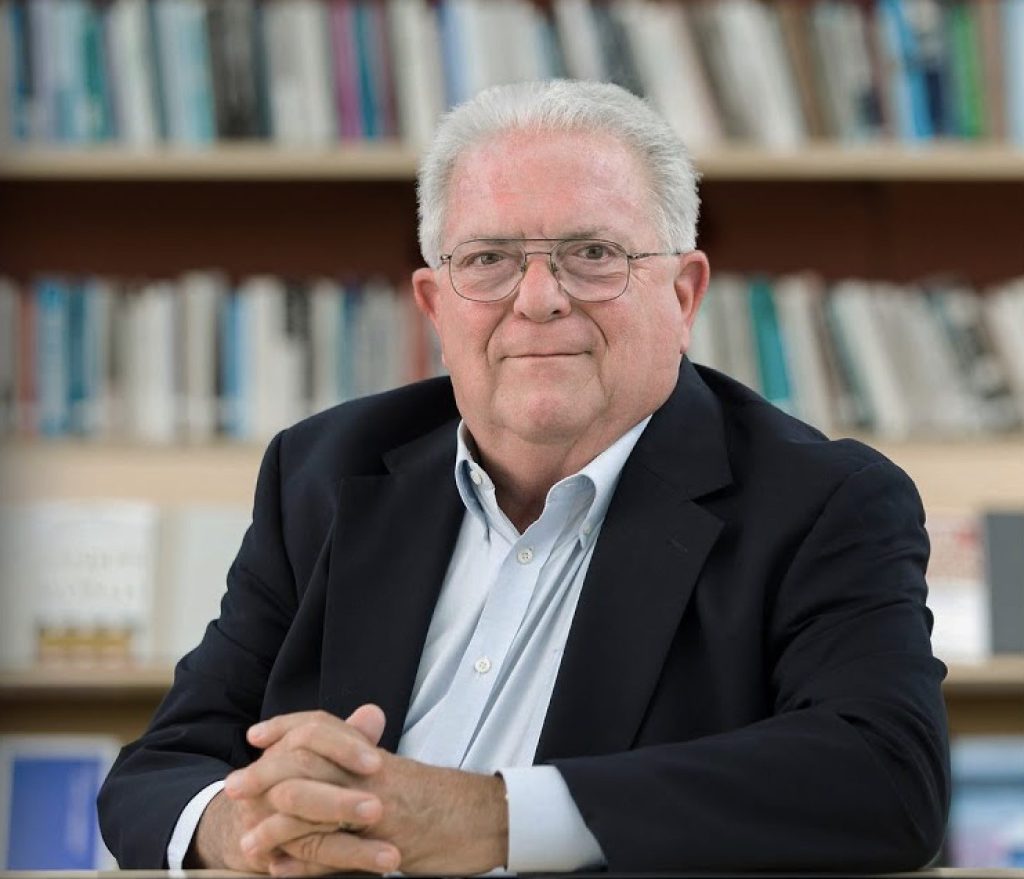
Ambassador Chas Freeman is a retired career diplomat who served as Assistant Secretary of Defense for International Security Affairs from 1993-1994, Ambassador to Saudi Arabia from 1989-1992 during operations Desert Shield and Desert Storm, Principal Deputy Assistant Secretary of State for African Affairs from 1986-1989 during the Cuban troop withdrawal from Angola and the US mediation of Namibian independence from South Africa, Deputy Chief of Mission and Chargé d’Affaires in the American embassies at Bangkok from 1984-1986 and Beijing from 1981-1984, and Director for Chinese Affairs at the US Department of State from 1979-1981. In 1972, he was the primary American interpreter for President Nixon’s trailblazing visit to China.
Ambassador Freeman is the author of America’s Continuing Misadventures in the Middle East, Interesting Times: China, America, and the Shifting Balance of Prestige, America’s Misadventures in the Middle East, The Diplomat’s Dictionary, Arts of Power: Statecraft and Diplomacy, and Cooking Western in China. He has also published in prestigious academic journals such as Foreign Affairs, Foreign Policy and The Harvard International Review. Prior to becoming a Visiting Scholar at Brown University’s Watson Institute for International and Public Affairs, Ambassador Freeman served as President of the Middle East Policy Council and Co-Chair of the United States China Policy Foundation. He studied at the Universidad Nacional Autónoma de México, and he earned a JD from the Harvard Law School and an AB magna cum laude from Yale University.
*Editors’ Note: This interview was conducted in March 2021.
Originally published on Brown Political Review, March 14, 2022
Sam Kolitch: When did you first encounter the Foreign Service?
Chas Freeman: The first time I really encountered the Foreign Service was after I graduated high school when I went on a hitchhiking trip to Tierra del Fuego. At the beginning of the trip, I was in Mexico, and I went to sleep on a beach in Tampico, which is in the state of Tamaulipas, and I awoke with a bayonet on my throat and a flashlight in my face. It turned out that I had fallen asleep in a security zone in front of a Mexican oil refinery. The soldiers took me into custody, and then they called the local American consul who came and got me and brought me to his house. I was pretty scruffy, and he allowed me to sleep on his kitchen floor. The next morning his wife kindly offered me breakfast, and I chatted with them. I discovered that even though they had spent a lot of time in Latin America, the consul’s Spanish was really lousy and his wife’s Spanish was what they called “kitchen Spanish,” which meant no conjugations, no verbs, no genders, and so forth—just a mangled mess that somehow allowed her to communicate. So I thought, “Geez, if this is what the Foreign Service is all about, I can compete.”
SK: You left midway through law school to join the Foreign Service. Why?
CF: Law School is not irrelevant, but it isn’t as interesting as dealing on behalf of the United States with foreign governments and cultures. The French have a phrase, “déformation professionnelle,” which means that you take on the mindset and reasoning skills of a particular profession and you become narrow-minded because you don’t see the whole picture. The first year of law school is a sort of ideological bootcamp in which you are taught to reason in terms of rights, duties, privileges, and immunities, and various other categories relevant to legal reasoning. That training is all very injurious to diplomacy because if you approach an international relationship in terms of who’s right and who’s wrong, you’re wasting your time. There is no superior authority, no court system, and no legal system to sort out many diplomatic questions. If you insist that the other party’s wrong, the other party may decide to go to war with you.
Nonetheless, a legal education is very helpful and instructive. As long as you can separate yourself from it in other circumstances, it does sharpen your reasoning. It helps you become an advocate—which diplomats are. And it clarifies certain ethical questions that diplomats face like, “What do I do if I’m asked to defend a policy I disagree with?” Lawyers defend clients who, even though they claim to be innocent, are really guilty.
SK: What specifically motivated you to join the Foreign Service?
CF: I joined it for several reasons. First, I wanted to serve my country. I came of age in the Kennedy era and was inspired to think of public service as better than “feathering your own nest.” I also liked the idea of a career in which the working environment, the colleagues, the cultural environment outside of the office, and the nature of the problems you were dealing with all changed periodically. In the Foreign Service you could not get bored because you were constantly subjected to new challenges like learning new languages, learning new cultures, learning new history, and learning to cope in unfamiliar circumstances.
SK: How did you end up serving as President Nixon’s primary interpreter on his trailblazing trip to China in 1972?
CF: In the mid-sixties, what fascinated me about China was that we had no relationship with it. At the time, it was taboo to advocate having relations with China—it was politically incorrect. But I concluded that it was necessary for the United States to reach out to China since the geopolitical geometry was such that we couldn’t avoid it. And so I fought like hell to get into the Foreign Service’s Chinese language program. I was not initially very welcomed because I spoke French, Spanish, Portuguese, Italian, German, and a couple of other languages. And so I was told, “Well, why should we waste our time training you?” But I did get into the program, and I ultimately ended up as the interpreter for Nixon in Beijing.
SK: Are there any experiences you had that speak to the personal sacrifices that Foreign Service officers make?
CF: During my first tour in India, I lost a son due to poor medical facilities and unhealthy conditions. When I came home after two or three years, I had six kinds of worms, dysentery, malaria filariasis, and dengue fever. And so the health conditions pose risks. Later on, in the course of my service, I got shot at quite a bit—fortunately they missed. There is also a strain on family life when you are in the Foreign Service since you move so frequently. For example, your kids make friends and then have to leave them. Your kids also have to change schools frequently. But on the other hand, your kids get an education in life and an exposure to things that they would have never experienced if they had stayed in the States.
SK: Few diplomats and former assistant secretaries of defense are also cookbook authors. How did your cookbook come about?
CF: When I arrived in Beijing in 1981, it was very isolated from Western culture. And what the Chinese cooks were cooking for diplomatic households bore only limited resemblance to Western cuisine—an outcome that is very much similar to what has happened to Chinese food in the United States. So my wife and I decided we would write a cookbook with our Chinese cook, who I later semi-adopted as a foster son. We wrote a bilingual cookbook in English and Chinese on how to cook mostly French and Italian cuisine using Chinese ingredients since there were no Western-style ingredients available at the time. I’m not sure how consequential it was, but it’s a pretty damn good cookbook, I might say. My main contribution to the cookbook, though, was eating and tasting (laughs).
SK: Before we discuss China, how do you define “good diplomacy”?
CF: The basis of diplomacy is empathy. It is the ability to understand how and why someone else sees things in order to persuade them of your position. Good diplomacy is all about persuading others to redefine their interests in order to conform with yours. It is also about forming relationships with people so that you can make them want to cooperate with you—not oppose you. This allows you to draw on people at a moment of crisis to gain access or to be heard. Diplomacy is also negotiation. It is about trying to ensure that bad things that could happen don’t happen. Very often, diplomats don’t get credit for what didn’t happen. But a lot of things don’t happen because skillful diplomats have prevented them from happening. So good diplomacy is complex and requires a lot of skill.
SK: What do you think is the root cause of the United States’ desire to confront China?
CF: I think the rudimentary driver of the United States’ confrontation with China is psychology, not strategy. We became the world’s largest economy sometime in the 1870s. That’s 150 years ago. Now we’ve either already been eclipsed, or we’re about to be eclipsed, by China. So we’re afraid of not being number one and we’ve decided that we will hamstring the rise of China. No one on the American side has described where this confrontation is supposed to take us—it’s just an end in itself. Also, we have exercised military primacy in the Asia-Pacific region since 1945. Now, we confront the return of China to wealth and power in the region. And our position in the Asia-Pacific is precarious. What does that mean? It means that we object to things like China’s anti-access and area denial weapon system (A2/AD), otherwise known as defense. The Chinese now can stop us from running through their defenses. So this is a threat: Wwe’re not all-powerful anymore. We are in danger of losing primacy.
But there’s not much evidence of China wanting to replace us. They are displacing us in some spheres because they’re big and growing and successful. Do they want to take on our global dominion and hegemony role? No, but we assert that they do. We posit that China thinks and behaves like us: “We had Manifest Destiny and it took us across the Pacific to the Philippines. Therefore, China must have a Monroe Doctrine and Manifest Destiny in mind.” This is wrong. Things don’t work like that. So I would argue that we have inhaled our own propaganda, and we are living in the appropriately stoned state that that produces. If we have sound policies, we can out-compete anyone. But we’re not looking at sound policies; we’re looking at pulling down our competitor.
SK: Isn’t the Belt and Road Initiative (BRI) indicative of China’s desire to expand its influence if not replace our hegemonic role on the global stage?
CF: The initial impulse of the Belt and Road Initiative was that China had a surplus capacity in steel, cement, aluminum, and construction capability—and it extended these resources abroad. Then China looked at what it was doing and said, “Actually, it would be really good if Lisbon was connected to Vladivostok efficiently, and Arkhangelsk was connected to Colombo. Maybe we could throw in Mombasa, too. This would create a huge interconnected area in which trade and investment could flow smoothly.” So, actually, a major part of the BRI is an agreement on tariffs, customs barrier treatment, transit, and bonded storage. It is the construction of roads, railroads, airports, ports, industrial parks, fiber optic cables, et cetera, over this huge area.
And the Chinese assumption—not aspiration, but assumption—is that as the largest and most dynamic society in that area, they will be the preeminent force in it. But this is an economic strategy, it’s not a military one. So the problem we have conceptually is that the only way we, the United States, know how to think about international affairs is in military terms. Our foreign policy is very militarized and is driven by military considerations.
SK: China has rejected the US State Department’s characterization of its treatment of Uighurs in the Xinjiang region as a genocide. Do you agree with this characterization?
CF: I think what is happening to the Uighurs is awful—no doubt about it. We do not, however, know exactly what’s happening to them. There are terms like genocide being thrown around, which may not fit the case. But I think it is entirely appropriate that we express the view that the treatment of Uighurs is appalling. What are we going to do about it? It is a complicated situation. I hate to keep coming back to American hypocrisy, but why does the Muslim world not line up with us on the Uighur situation? Because when was the last time we said anything about the Palestinians, Kashmiris, or Chechens? There are Muslims being oppressed all over the world, and we don’t say anything. So selective outrage isn’t very effective.
SK: China continues to defend its crackdown on democracy in Hong Kong. How will this impact US foreign policy toward China?
CF: What I expect will happen, now that ‘one country’ has been established, is that politics in Hong Kong will evolve to address some of the domestic problems in Hong Kong that have been neglected—housing, education, and social welfare, for example. So I don’t think there’s an easy answer to the Hong Kong issue, but I think that people who have written off the idea of any kind of democracy are wrong. Hong Kong’s democracy will not be focused on secession from China; it will be focused on problems inside Hong Kong. And it may or may not be effective.
We need to get real about these problems. If we really care about the Uighur and Hong Kong situations from a humanitarian point of view, we need to try to find a way to chip away at it—not just condemn it. Condemning things doesn’t do anything but make people angry and less receptive to your arguments. These issues ought to be addressed seriously.
SK: How does China view Taiwan’s continued push for independence?
CF: The Chinese government sees Taiwan as a continuation of a foreign sphere of influence on Chinese territory. They see it as a continuation of warlordism, which means local independence from central control. The Chinese see an independent Taiwan as a challenge to their legitimacy.
SK: With that in mind, do you think that we are heading toward a military confrontation with China in the Taiwan Strait?
CF:There is no framework for keeping the peace in the Taiwan area anymore. And I think it’s pretty clear that we’re heading into a war. We seem to be heading toward a bloody rendezvous with Chinese nationalism—and I don’t think that’s too smart. We’re talking about contesting the territory of a nuclear power. Does anybody think about that? There is an underlying assumption, probably born from the thirty years since the end of the Cold War, that we’re invulnerable and omnipotent. I don’t have any problem with the use of force. But I do have a problem with the foolish use of force by picking fights you’re going to lose. Let’s pick a fight, but let’s make sure it’s one that we can win. So I think that instead of trying to bring China down, which we won’t be able to do, we should be trying to leverage its growing prosperity to increase our own prosperity.
SK: How do we do that—leverage China’s prosperity to further our own interests?
CF: China has the world’s best technology for building infrastructure. We have infrastructure that is falling apart. Maybe their technology can be licensed. Maybe bonds could be issued against tolls on repaired roads or traffic on revamped rail lines. Maybe ports could be rebuilt. There’s been a whole series of international meetings in recent years about the problem of American infrastructure—our ports can’t handle traffic and they’re not being modernized. I think, actually, our country needs to come to a point where we rediscover what made us great in the beginning: an openness to foreigners, foreign ideas, and best practices from abroad so that we can apply them at home. We should not approach the world with the attitude that we have all the answers.
We should be cooperating with China on broad, planet-wide international problems like climate change, nuclear nonproliferation, environmental remediation, and so forth. We should be cooperating in order to bring a peaceful end to the confrontations with North Korea, Iran, and others. Lastly, we should not be pushing Russia and China together, which is what we are doing. The one maxim of diplomacy is “divide your enemies”—and we are doing the opposite.
*This interview has been edited for length and clarity.





