
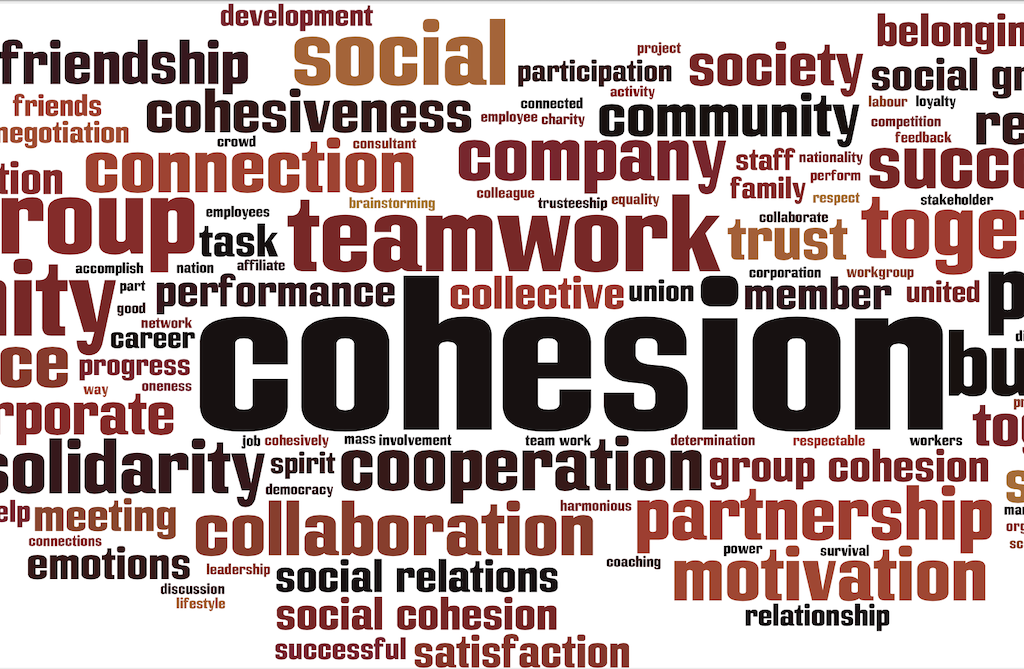
Chaiwat Satha-Anand: Bridging Troubled Waters – Forging Cohesion in Divided Societies

This article was first published in RSIS Commentary, No.069, 22 June 2022. RSIS Commentary is a platform to provide timely and, where appropriate, policy-relevant commentary and analysis of topical and contemporary issues. The authors’ views are their own and do not represent the official position of the S. Rajaratnam School of International Studies, NTU. These commentaries may be reproduced with prior permission from RSIS and due recognition to the author(s) and RSIS.

Synopsis

In an era of social tension and conflict, building bridges to foster cohesion has become critical. As the classic song “Bridge Over Troubled Water” reminds us, we should not ignore the troubled water under the bridges that we are building.

Commentary

At the inaugural International Conference on Cohesive Societies (ICCS) in Singapore in June 2019, President Halimah Yacob called on countries and societies to build bridges, not walls, across increasingly identitarian divides. At the same event, Dr Ali Al Nuaimi from the United Arab Emirates’ Hedayah International Centre of Excellence for Countering Violent Extremism reinforced this message by pointing out that we are in “an era of building bridges, not wars”.

When building bridges in the context of deeply divided societies, it is important to understand the troubled water under them. Three guiding questions could help elucidate the kind of “troubled water” challenging bridge builders as they try to foster social cohesion today: (1) Where could the rifts be found; (2) how deep are such rifts currently in contemporary societies; and (3) why is it so difficult to deal with such rifts?

Erosion of Civil Religion

In coming to terms with divided societies through the first question on where the rifts could be found, it is wise to follow what Robert Bellah wrote half a century ago. He said that people were connected in a cohesive society because of the strength of a collection of beliefs, symbols, and rituals with respect to sacred things institutionalised in a collectivity.

These beliefs, symbols and rituals give definition to a nation, not unlike the power a religion holds over its believers and followers– hence the term “civil religion”. It is the strength of civil religion that holds people of differences in a cohesive collective that could place trust in institutions such as the police, the court, or the media.

Judging from what has recently transpired in highly polarised societies such as the United States and Thailand, trust in the electoral process has been eroding in the former, while issues pertaining to monarchical institutional reform — unthinkable in the past — have seemingly torn the traditional fabric of society asunder in the latter.

Polarisation is also tearing at the seams of democratic institutions and practices around the world, from Bangladesh, Brazil and India to Kenya and Poland, among others. Perhaps, “civil religion” that once held these societies in cohesion is now fracturing, if not already broken down in some cases.

Gravity of “Ordinary Virtue”

How deep is the fracture threatening civil religion that has held societies together for so long? I think the cohesive quality of civil religion has been put through a vigorous test when the “universal” language of rights and liberty that reverberates well with liberals — both people and societies — is contested by the moral language used by ordinary people in their everyday virtues.


In Ordinary Virtues, Michael Ignatieff maintains that it is these ordinary virtues – trust and tolerance among others – which serve as the “moral operating system” guiding people through competing ideas and demands.

For ordinary virtues, the key moral distinction is self/other and citizen/stranger. Assuming the stranger is “the other”, race, religion, gender, and nationality are then primary for the self/citizen, while common humanity becomes secondary.

Consider the issue of tolerance believed to be crucial for social cohesion as an example. In ordinary virtues, tolerance is not an obligation, but a gift from the citizen; the state as sovereign defines who gets the gift. Citizens give gifts of tolerance to strangers on condition that the strangers accept their “moral operating system”. Tolerance will be denied if the stranger insists that it is his/her right.

Ignatieff further observes that while different groups can live in the same societies, they do so apart rather than together. While ordinary virtues can sometimes unite us, at other times they divide us. On one hand, they are the key to healing, reconciliation, and solidarity.

On the other, they could be easily exploited in the name of “politics of fear and exclusion” as one’s own group is privileged over others. It is perhaps how existing political discourse could empower or confiscate the ordinary virtues in this heightened “politics of fear and exclusion” that makes the water under the bridge extremely dangerous at present.

The Football Stadium Ecosystem

Why has building bridges to foster social cohesion in the context of heightened “politics of fear and exclusion” become increasingly difficult? Many have identified the influence of online communication, its nature and speed, as the main problems.

Others engage in the “war” against “fake news” with their versions of “true” accounts, not realising, perhaps, that the notion of “truth” itself has become increasingly problematic.

In my view, one of the best answers to the difficult question can be found in Zeynep Tufekci’s MIT Technology Review article. She suggests that to understand the destructive tendency of digital technology, one must look beyond the technologies themselves toward its ecosystem.

She explains that when “we encounter opposing views in the age and context of social media, it’s not like reading them in a newspaper while sitting alone, … (but) hearing them from the opposing team while sitting with our fellow fans in a football stadium”.

In an ecosystem where the sense of identity conflict is all-consuming, “belonging is stronger than facts”. Within this ecosystem, where facts are almost relegated to insignificance, a petrified sense of belonging poses a severe threat to a cohesive society that aims to cut across identitarian differences.

The Necessity of Building Bridges

Since working towards social cohesion in divided societies is so important currently, there is a dire need to try to understand the locations and depth of rifts threatening cohesion, as well as the condition that makes it difficult to work towards realising a healthy cohesive society.

Only by critically identifying the elemental conditions that constitute the troubled water under the bridge — civil religion, ordinary virtues, and ecosystem — and then confronting these realities, could bridge-building be realistically attempted and meaningful social cohesion possible.

About the author
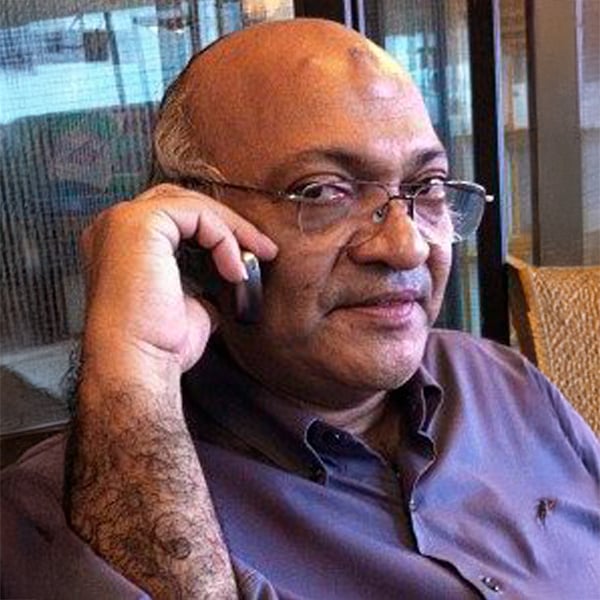
Dr Chaiwat Satha-Anand is a Professor of Political Science at Thammasat University, Bangkok, and Founder and Director of the Thai Peace Information Centre. He is the author of Nonviolence and Islamic Imperatives (2017), and “The Governor, The Cow Head, and the Thrashing Pillows: Negotiated “Restrictive Islam” in Twenty-First Century Southeast Asia” (in Religions, 2022).

Related Posts

Professor Zhang Weiwei is a highly respected Chinese intellectual and professor at Fudan University in Shanghai. He is the director of its China Institute and also runs a series of conversations with many different people around the world. Here is what came out of their meetings there and in Skopje, Macedonia in October 2024: & As you can see, also at the end of the second one, we both enjoy win-win exchanges like these about world order issues. Zhang Weiwei is known for using videos and social media to reach a large audience in China and worldwide. We suggest you see many more of Zhang Weiwei’s conversations – like recently with Professor Jeffrey Sachs – on the Thinkers’ Forum on YouTube. PSTFF posts hundreds of videos, its own and those of others, in our Video Collections on TFF Substack – including those that appear on YouTube. However, TFF has been cancelled by Google-owned...
Photo Jan Oberg China has recently garnered significant attention due to its advancements in various technological fields, such as quantum physics and artificial intelligence. In media discussions and my lectures on China, it is common to encounter objections asserting that the West, particularly the United States, is certainly ahead of China. These assertions appear to be more emotional than factual. However, a more fundamental consideration is whether this question holds any significance. Cultural Perspective One aspect that Westerners often overlook is the cultural variation in understanding the relationship between abstract academic insights and practical applications of those insights. To comprehend the origin and significance of discussions on technological superiority, it is essential to acknowledge cultural and social differences between China and the West. I have explored this topic before in some of my previous articles published on the TFF website. Particularism On the cultural dimension universalist – particularist, China exhibits...
On the invisible codes of culture that shape our worldviews long before memory or reason. This analysis was initially published on the author’s “China21 Journal” which contains several analyses of related issues, China-Western relations and how to increase knowledge and mutual understanding. Last week, we picked up our 5-year-old son from his public kindergarten in Beijing. On the way home, he proudly recited a Tang Dynasty poem by heart — 春望 (Chūnwàng, or Spring View, 757 AD), one of the most famous and widely recited works from that vibrant dynastic era over a thousand years ago, written by the renowned poet 杜甫 (Dù Fǔ, 712–770). The poem reflects on wartime and exile — hardly light or child-friendly themes. But that’s not the point. Children (and adults) recite ancient poems not just for their content, but for their rhythm, rhyme, tone, and the cultural feeling embedded in them. This is how cultural programming begins: not through rules or explanations,...

Recent Articles

Tony Robinson October 4, 2026 Violence is easy to recognise when someone is being beaten, shot or killed. It becomes more difficult when nobody is holding a weapon. Poverty, discrimination, exploitation and repression can restrict a human life just as effectively, although they do so in very different ways and with very different consequences. Simply adding more categories to an ever-growing list of forms of violence does not really solve the problem. The more interesting question is what all these different situations have in common and why it makes sense to describe them using the same word. Human beings do not simply react to what happens around them. They remember the past, imagine things that do not yet exist, make plans and undertake projects. Workers organise because they imagine different working conditions; people migrate because they imagine another life somewhere else; social movements emerge because people refuse to accept the...
It’s a matter of principles, courage, vision and pulling together – while the militarist world is falling apart… Peter Langille October 3, 2026 “Here, then, is the problem which we present to you, stark and dreadful and inescapable: Shall we put an end to the human race; or shall mankind renounce war?”The Bertrand Russell—Albert Einstein Manifesto, July 9, 1955 ⁕ The forecast for what’s ahead is worrisome. The sharp rise in armed conflicts over the past three years is adding to what was already the highest level in over seventy years. Genocides, which should be prevented are supported. A shared climate emergency that jeopardises survival is ignored. Diverse polls now suggest that people are war-weary, worried and interested in a more effective United Nations. And, there are viable policy options for a more secure world! Yet governments are doubling-down, betting on more war and investing heavily. If current trends persist,...
Johan Galtung 1930-2024October 2015 Published here on October 3, 2026 Let us focus on Civilization for conflict analysis and remedies. Major forms of disorder use violence; war is state organized violence. The most belligerent states are the United States of America and Israel, both with civilization roots. National Evangelism, the US Protestant Christian civilization– more national than evangelical–justifies US warfare as exceptionalism of a people chosen by God, with a manifest destiny to run the world. Orthodox Judaism justifies Israeli warfare to conquer and expand from Nile to Euphrates as a religious right and duty to the Eternal One. The third most belligerent country, the UK, no longer believes it is God-chosen but chosen by the USA; not quite the same but something. But the root cause of global disorder lies in the Occident–with Islam–seeing itself as the single, universal civilization valid for all at all times, all others being...

TFF on Substack

Discover and subscribe to more peace materials on TFF Substack

Most Popular

Tony Robinson October 4, 2026 Violence is easy to recognise when someone is being beaten, shot or killed. It becomes more difficult when nobody is holding a weapon. Poverty, discrimination, exploitation and repression can restrict a human life just as effectively, although they do so in very different ways and with very different consequences. Simply adding more categories to an ever-growing list of forms of violence does not really solve the problem. The more interesting question is what all these different situations have in common and why it makes sense to describe them using the same word. Human beings do not simply react to what happens around them. They remember the past, imagine things that do not yet exist, make plans and undertake projects. Workers organise because they imagine different working conditions; people migrate because they imagine another life somewhere else; social movements emerge because people refuse to accept the...
It’s a matter of principles, courage, vision and pulling together – while the militarist world is falling apart… Peter Langille October 3, 2026 “Here, then, is the problem which we present to you, stark and dreadful and inescapable: Shall we put an end to the human race; or shall mankind renounce war?”The Bertrand Russell—Albert Einstein Manifesto, July 9, 1955 ⁕ The forecast for what’s ahead is worrisome. The sharp rise in armed conflicts over the past three years is adding to what was already the highest level in over seventy years. Genocides, which should be prevented are supported. A shared climate emergency that jeopardises survival is ignored. Diverse polls now suggest that people are war-weary, worried and interested in a more effective United Nations. And, there are viable policy options for a more secure world! Yet governments are doubling-down, betting on more war and investing heavily. If current trends persist,...
Johan Galtung 1930-2024October 2015 Published here on October 3, 2026 Let us focus on Civilization for conflict analysis and remedies. Major forms of disorder use violence; war is state organized violence. The most belligerent states are the United States of America and Israel, both with civilization roots. National Evangelism, the US Protestant Christian civilization– more national than evangelical–justifies US warfare as exceptionalism of a people chosen by God, with a manifest destiny to run the world. Orthodox Judaism justifies Israeli warfare to conquer and expand from Nile to Euphrates as a religious right and duty to the Eternal One. The third most belligerent country, the UK, no longer believes it is God-chosen but chosen by the USA; not quite the same but something. But the root cause of global disorder lies in the Occident–with Islam–seeing itself as the single, universal civilization valid for all at all times, all others being...
Read More
Living-Peace-Sign-Budapest-copy
Tony Robinson October 4, 2026 Violence is easy to recognise when someone is being beaten, shot or killed. It becomes more difficult when nobody is holding a weapon. Poverty, discrimination, exploitation and repression can restrict a human life just as effectively, although they do so in very different ways and with very different consequences. Simply adding more categories to an ever-growing list of forms of violence does not really solve the problem. The more interesting question is what all these different situations have in common and why it makes sense to describe them using the same word. Human beings do not simply react to what happens around them. They remember the past, imagine things that do not yet exist, make plans and undertake projects. Workers organise because they imagine different working conditions; people migrate because they imagine another life somewhere else; social movements emerge because people refuse to accept the...
b54a1f10-8c65-4f0b-9dd5-4abc0a7d04cc_2659x2659
It’s a matter of principles, courage, vision and pulling together – while the militarist world is falling apart… Peter Langille October 3, 2026 “Here, then, is the problem which we present to you, stark and dreadful and inescapable: Shall we put an end to the human race; or shall mankind renounce war?”The Bertrand Russell—Albert Einstein Manifesto, July 9, 1955 ⁕ The forecast for what’s ahead is worrisome. The sharp rise in armed conflicts over the past three years is adding to what was already the highest level in over seventy years. Genocides, which should be prevented are supported. A shared climate emergency that jeopardises survival is ignored. Diverse polls now suggest that people are war-weary, worried and interested in a more effective United Nations. And, there are viable policy options for a more secure world! Yet governments are doubling-down, betting on more war and investing heavily. If current trends persist,...
010
Johan Galtung 1930-2024October 2015 Published here on October 3, 2026 Let us focus on Civilization for conflict analysis and remedies. Major forms of disorder use violence; war is state organized violence. The most belligerent states are the United States of America and Israel, both with civilization roots. National Evangelism, the US Protestant Christian civilization– more national than evangelical–justifies US warfare as exceptionalism of a people chosen by God, with a manifest destiny to run the world. Orthodox Judaism justifies Israeli warfare to conquer and expand from Nile to Euphrates as a religious right and duty to the Eternal One. The third most belligerent country, the UK, no longer believes it is God-chosen but chosen by the USA; not quite the same but something. But the root cause of global disorder lies in the Occident–with Islam–seeing itself as the single, universal civilization valid for all at all times, all others being...
Screenshot 2026-10-02 011738
Jan ObergPhD, director, The Transnational Foundation for Peace and Future Research, TFFLund, Sweden October 2, 2026 This is my full original manuscript. The Chinese Academy of Social Science, CASS, makes two publications out if it. 1. China’s Five-year plan emphasized the capabilities of basic research and original innovation. It is regarded as the goal of the future social development, which, as required, should be significantly enhanced. Can you comment on the importance of original innovation in research and academic study? I believe it is easier to define “original innovation” in the natural sciences than in social sciences. The breaking points of what constitutes something new, or innovative, are not quite as sharp in the latter. But in both fields it is about opening up something that was closed, unseen, unexplored before – making manifest what was earlier latent. Innovations come in many forms and shapes – naming something that was not...
arctic-circle-map
The agreement is catastrophic both because of what it says and what it doesn’t mention. It reduces further the major asset of security policies: Freedom of action. Jan Oberg TFF director September 25, 2026 A couple of hours before the agreement was signed on September 22, 2026, I published the following 13 hypotheses about what it would most likely contain on TFF Substack (in English). I was wrong on only the first point. Contrary to what Trump had written on his Truth Social platform, it does not appear to come into force immediately. In fact, it turned out to be worse than even I had anticipated. After these hypotheses now come a number of reflections in light of what the agreement actually contains, and does not contain, as well as the way in which it has generally been presented by major media outlets and by the public-service broadcaster DR. My...
girl-5894831_1280
Below are TFF-related media mentions, comments, videos and social media posts published elsewhere but not on this homepage. We happen to catch and list only a fraction. Regarding video comments and debates, we recommend that you go to the TFF Video Channel on Substack where many of them are reproduced. Jan Oberg is a contributor to China Daily – 52 million daily clicks – and Global Times, CGTN and CCTV (the national television), China Investment, Xinhua News Agency and several others. Articles and videos on these media very often multiply into countless Chinese (and Western media) that re-post them from these main media. Thanks to The China Academy, his analyses, interviews and comments are frequently posted on YouTube channels such as Thinkers Forum and Wave Media. These videos are often re-posted on Bilibili (China’s YouTube), the China Content Center on TikTok, and on the Chinese edition of TikTok, Douyin.com. This means reaching hundreds of millions of viewers worldwide over a year. While there are too many to catch on all these...




