
Alex Lo: How Xi Jinping became the real-life Dr Evil through the mainstream Western media

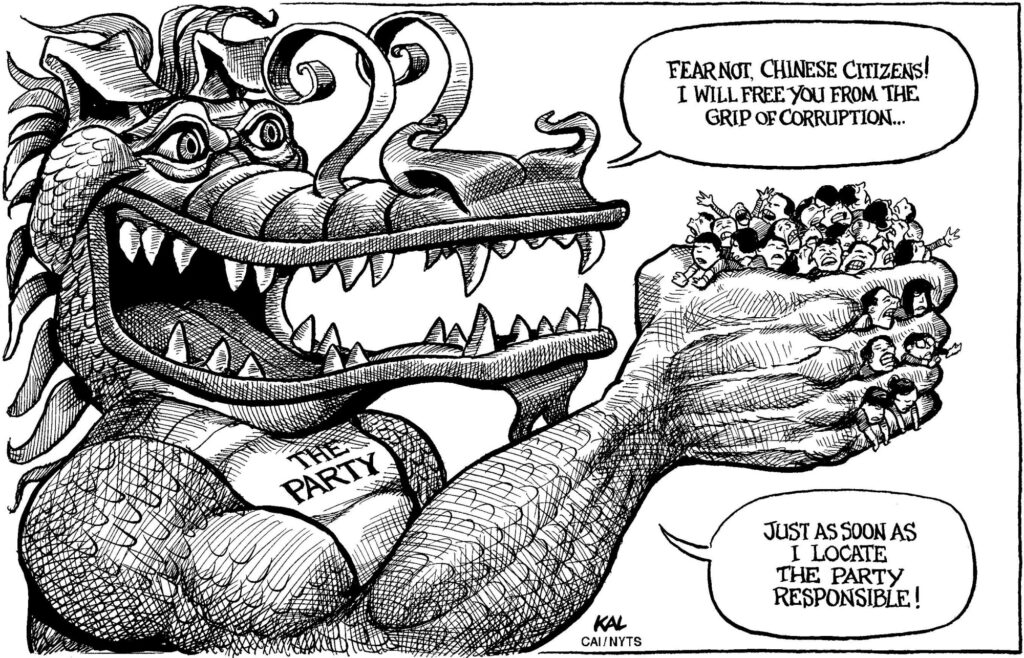
Cartoon printed by The Japan Times

Alex Lo

February 18, 2022

Endless negative news stories and opinion pieces about how bad China is
in almost every way are bound to shape public perception.

Almost nine in 10 Americans (89 per cent) consider China a competitor or enemy, rather than a partner, according to the authoritative Pew Research.

Commenting, Winston Lord, a US ambassador to China in the 1980s, said Beijing only had itself to blame.

“The shift is caused by China’s actions under Xi [Jinping], the repression at home, the more aggressive approach abroad and intrusions in societies, including our own,” Lord said. “It has turned off not only Americans, but also Europeans and Australians.”

Originally posted on “Pearls & Irritations – John Menadue’s Public Policy Journal”
on February 9, 2022

Lord was once one of Henry Kissinger’s bright young proteges. There is no dispute that he understands China-US relations better than most. He may have half a point. But there is also the other half, which is that if you are bombarded with negative stories about a country, day in and day out, year after year, to an absurd degree by the mainstream media, you too would think that country is just about the worst on Earth.

I was inspired to write this column by an alternative take, “How the threat of China was made in the USA”, from AJ+, a web channel of Al-Jazeera, which helps explain why the perception – “China is bad, period!” – is so widespread. Just consider some of the endless headlines cited in the news clip. They amount to subgenres of China news and analysis, with their own templates and preset assumptions and narratives; you just need to slot in different names for people and countries, time periods and numerical figures. Seemingly inexhaustible, they come out in mind-numbing regularity and rapidity, in this era of 24-hour non-stop news cycles. The following is just a tiny sample.

The Chinese government is bad

“Xi Jinping Is Rewriting China’s History”, The New York Times, November 15, 2021

“China tries to tamp down controversy surrounding tennis star Peng Shuai”, US National Public Radio (NPR), November 22, 2021

“Covid-Era Controls May Outlast the Virus”, The New York Times, January 30, 2022

Chinese culture is bad

“China zoo ‘tries to pass dog off as wolf’”, BBC, March 5, 2021

“Why gendercide is the real ‘war on women’”, CNN, November 14, 2014

“China’s toxic work culture results in deaths and suicide”, Forbes, January 12, 2021

Chinese culinary practices are bad

“One Reason for Rising Food Prices? Chinese Hoarding”, Bloomberg, January 5, 2022

“China’s Monster Fishing Fleet: Though not alone in its destructive practices, Beijing’s rapacious fleet causes humanitarian disasters and has a unique military mission”, Foreign Policy, November 30, 2020

“Why Chinese food safety is so bad”, CNN, January 16, 2015

Chinese tech is bad

“Why China can’t innovate”, Harvard Business Review, March 2014

“Is TikTok Spying on You for China?”, Forbes, July 25, 2020

“The world’s largest surveillance system is growing – and so is the backlash”, Fortune, November 3, 2020

“How the Clean Network Changed the Future of Global Technology Competition: A US State Department initiative changed the competitive landscape for 5G”, Harvard Business Review, October 5, 2021
Chinese handling of Covid-19 was and is still bad

“The Chinese Government’s Cover-Up Killed Health Care Workers Worldwide”, Foreign Policy, March 18, 2021

“Omicron variant threatens to be Xi Jinping’s undoing”, Nikkei Asia, February 2, 2022

“Thousands of lives lost due to China’s Covid cover-up: US Republican report”, The Times of India, August 2, 2021

“China Covid-19: How state media and censorship took on coronavirus”, BBC, December 29, 2020

“Beijing is intentionally under-reporting China’s Covid death rate”, Forbes, January 2, 2022

China is bad on human rights

“The IOC and sponsors of the Beijing Games are complicit in China’s human rights abuses”, The Washington Post, January 31, 2022

“China’s genocide against the Uyghurs, in 4 disturbing charts, Vox, March 10, 2021

“China breaching every article in genocide convention, says legal report on Uyghurs”, The Guardian, March 10, 2021

Chinese support for ‘rogue states’ such as Iran, Russia and North Korea is bad

“China has to be put in the category of a ‘rogue state’”, Deutsche Welle (DW), January 22, 2019

“China and the ‘Rogues’: How China Deals with Pariah States”, The Diplomat, June 30, 2017

“How Russia and China Undermine Democracy”, Foreign Affairs, October 2, 2018

China is bad for Africa and developing nations

“China: Is it burdening poor countries with unsustainable debt?” BBC, January 6, 2022

“India subtly warns nations of China’s debt trap diplomacy”, Deccan Herald, July 31, 2020

China is bad for American jobs and manufacturing

“China trade deficit has cost the US 3.7 million jobs this century”, CNBC, January 30, 2020

“Trump vows to end China’s job ‘theft’”, BBC, February 6, 2019

“China really is to blame for millions of lost US manufacturing jobs”, MarketWatch, May 14, 2018

“How America’s biggest companies made China great again”, Newsweek, June 24, 2019

“1 Million Workers. 90 Million iPhones. 17 Suicides. Who’s to Blame?”, Wired, February. 28, 2011

China is bad for threatening Taiwan

“Beijing’s Attempts to Intimidate Taiwan Have Backfired”, Foreign Policy, July 30, 2021

“Why Is China Bullying Taiwan?”, The Diplomat, August 3, 2018

China is bad for cracking down in Hong Kong

“A Form of Brainwashing’: China Remakes Hong Kong. Neighbours are urged to report on one another. Children are taught to look for traitors. Officials are pressed to pledge their loyalty”, The New York Times, June 29, 2021

“The leader who killed her city: Carrie Lam has been a unique failure. Yet she is merely a symptom of Hong Kong’s ills”, The Atlantic, June 18, 2020

“How China’s Rise Has Forced Hong Kong’s Decline”, The New York Review of Books, November 26, 2019

China is bad for regional peace in Asia

“Top US admiral warns about China threat at Halifax forum in Canada”, Associated Press, November 21, 2021

“China’s bullying of Australia is bound to backfire”, Nikkei Asia, November 5, 2020

“China is the ‘principal military and economic threat’ in Asia”, CNBC, December 8, 2020

China is bad for democracy and freedom

“The World Is Fed Up with China’s Belligerence”, The Atlantic, November 9, 2021

“China’s Ambitions: Beijing’s campaign to destroy a fiercely pro-democracy newspaper suggests the playbook that it will use against other open societies”, The Wall Street Journal, January 27, 2022

“China Wants to Rule the World by Controlling the Rules”, The Atlantic, December 9, 2021

“China wants to reshape the global order”, Axios, January 19, 2018

You be the judge

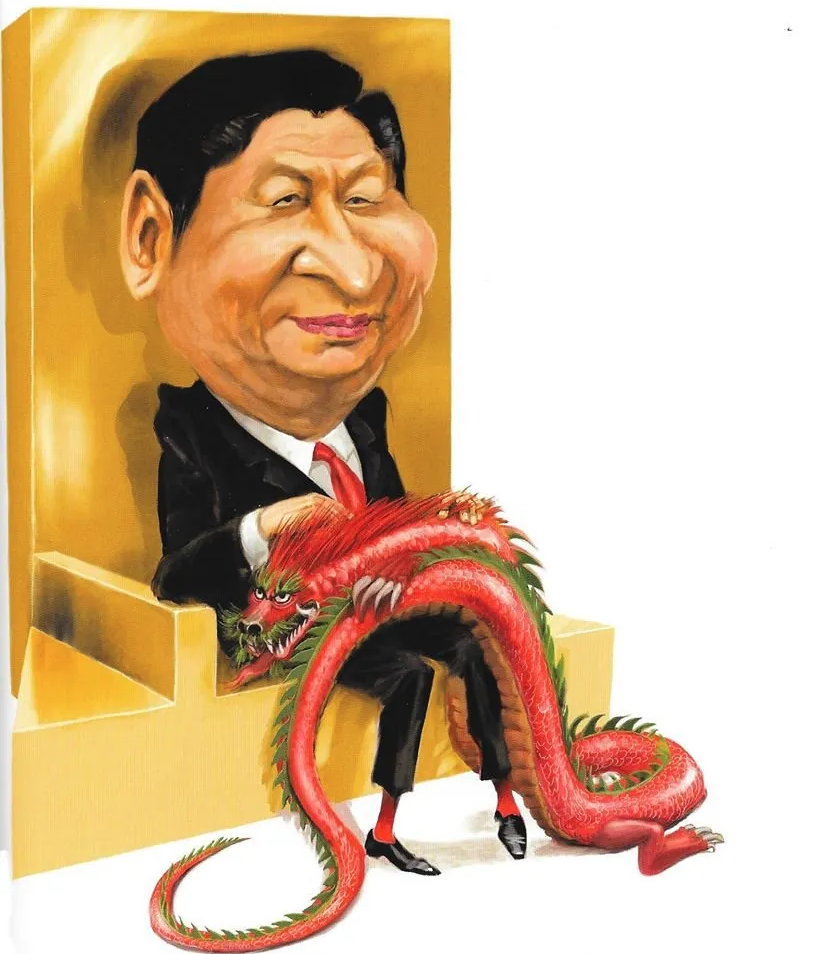
In short, China is bad for the world, in almost every possible way. It seems President Xi Jinping and his henchmen spend all their waking hours thinking of new ways to oppress and brainwash the Chinese people, exterminate ethnic minorities, destabilise poor nations, subvert Western democracies and plot world conquest.

In 2020, the media organisation Declassified UK released a statistical study of the reliance on unnamed intelligence or government sources by the British news media. It concluded that they routinely helped to demonise states identified by the British government as enemies, while whitewashing those considered as allies.

But the Brits pale in comparison with Americans. Upon retirement, many of the most senior officials from the US intelligence, counterterrorism and domestic law enforcement agencies end up being paid commentators and pundits for big US media corporations. For a list of their names and career paths, see my column, “Why do so many US intelligence chiefs become media pundits?” on June 24, 2021.

Imagine how it might look if a large number of retired Chinese intelligence and security chiefs ended up writing for China’s news media. Maybe Xi really is the real-life Dr Evil. More likely, though, the mainstream Western media basically follows their governments’ foreign policy priorities and goals.

Please support TFF’s work for peace through research and public education. We are all-volunteer, people-financed and do not accept money from governments of corporations. In other words, one of the very last free research think tanks in this world – and for a noble purpose: Peace by peaceful – intelligent – means. Thanks!

Alex Lo has been a South China Morning Post columnist since 2012, covering major issues affecting Hong Kong and the rest of China. A journalist for 25 years, he has worked for various publications in Hong Kong and Toronto as a news reporter and editor. He has also lectured in journalism at the University of Hong Kong.


Related Posts

Below are TFF-related media mentions, comments, videos and social media posts published elsewhere but not on this homepage. We happen to catch and list only a fraction. Regarding video comments and debates, we recommend that you go to the TFF Video Channel on Substack where many of them are reproduced. Jan Oberg is a contributor to China Daily – 52 million daily clicks – and Global Times, CGTN and CCTV (the national television), China Investment, Xinhua News Agency and several others. Articles and videos on these media very often multiply into countless Chinese (and Western media) that re-post them from these main media. Thanks to The China Academy, his analyses, interviews and comments are frequently posted on YouTube channels such as Thinkers Forum and Wave Media. These videos are often re-posted on Bilibili (China’s YouTube), the China Content Center on TikTok, and on the Chinese edition of TikTok, Douyin.com. This means reaching hundreds of millions of viewers worldwide over a year. While there are too many to catch on all these...
A friendly quarrel while we agree that the US sanctions are a weapon of mass destruction and kill more people than wars do. And that we must talk much more about sanctions than we have so far. Jan Oberg, TFF director March 16, 2026 John Mearsheimer recently stated that U.S. sanctions murdered around 38 million people between 1971 and 2021 – see the video below. It is a dramatic figure, and it has spread quickly because it captures, in one sentence, the enormous human cost of modern sanctions. I share his concern about the destructive effects of economic coercion. But the specific number he cites — and the way he attributes it — deserves a friendly academic clarification. The figure comes from a 2023 Lancet Global Health article estimating the mortality effects of unilateral U.S. and EU sanctions over the past half‑century. This is the first point where Mearsheimer’s shorthand diverges from the text: the study...
Photos © TFF 2000 Read PressInfo 90 “Lift the Sanctions and Bring More Aid to Yugoslavia” See Pictures from Belgrade © TFF 2000 Please reprint, copy, archive, quote or re-post this item, but please retain the source.

Recent Articles

Tony Robinson October 4, 2026 Violence is easy to recognise when someone is being beaten, shot or killed. It becomes more difficult when nobody is holding a weapon. Poverty, discrimination, exploitation and repression can restrict a human life just as effectively, although they do so in very different ways and with very different consequences. Simply adding more categories to an ever-growing list of forms of violence does not really solve the problem. The more interesting question is what all these different situations have in common and why it makes sense to describe them using the same word. Human beings do not simply react to what happens around them. They remember the past, imagine things that do not yet exist, make plans and undertake projects. Workers organise because they imagine different working conditions; people migrate because they imagine another life somewhere else; social movements emerge because people refuse to accept the...
It’s a matter of principles, courage, vision and pulling together – while the militarist world is falling apart… Peter Langille October 3, 2026 “Here, then, is the problem which we present to you, stark and dreadful and inescapable: Shall we put an end to the human race; or shall mankind renounce war?”The Bertrand Russell—Albert Einstein Manifesto, July 9, 1955 ⁕ The forecast for what’s ahead is worrisome. The sharp rise in armed conflicts over the past three years is adding to what was already the highest level in over seventy years. Genocides, which should be prevented are supported. A shared climate emergency that jeopardises survival is ignored. Diverse polls now suggest that people are war-weary, worried and interested in a more effective United Nations. And, there are viable policy options for a more secure world! Yet governments are doubling-down, betting on more war and investing heavily. If current trends persist,...
Johan Galtung 1930-2024October 2015 Published here on October 3, 2026 Let us focus on Civilization for conflict analysis and remedies. Major forms of disorder use violence; war is state organized violence. The most belligerent states are the United States of America and Israel, both with civilization roots. National Evangelism, the US Protestant Christian civilization– more national than evangelical–justifies US warfare as exceptionalism of a people chosen by God, with a manifest destiny to run the world. Orthodox Judaism justifies Israeli warfare to conquer and expand from Nile to Euphrates as a religious right and duty to the Eternal One. The third most belligerent country, the UK, no longer believes it is God-chosen but chosen by the USA; not quite the same but something. But the root cause of global disorder lies in the Occident–with Islam–seeing itself as the single, universal civilization valid for all at all times, all others being...

TFF on Substack

Discover and subscribe to more peace materials on TFF Substack

Most Popular

Tony Robinson October 4, 2026 Violence is easy to recognise when someone is being beaten, shot or killed. It becomes more difficult when nobody is holding a weapon. Poverty, discrimination, exploitation and repression can restrict a human life just as effectively, although they do so in very different ways and with very different consequences. Simply adding more categories to an ever-growing list of forms of violence does not really solve the problem. The more interesting question is what all these different situations have in common and why it makes sense to describe them using the same word. Human beings do not simply react to what happens around them. They remember the past, imagine things that do not yet exist, make plans and undertake projects. Workers organise because they imagine different working conditions; people migrate because they imagine another life somewhere else; social movements emerge because people refuse to accept the...
It’s a matter of principles, courage, vision and pulling together – while the militarist world is falling apart… Peter Langille October 3, 2026 “Here, then, is the problem which we present to you, stark and dreadful and inescapable: Shall we put an end to the human race; or shall mankind renounce war?”The Bertrand Russell—Albert Einstein Manifesto, July 9, 1955 ⁕ The forecast for what’s ahead is worrisome. The sharp rise in armed conflicts over the past three years is adding to what was already the highest level in over seventy years. Genocides, which should be prevented are supported. A shared climate emergency that jeopardises survival is ignored. Diverse polls now suggest that people are war-weary, worried and interested in a more effective United Nations. And, there are viable policy options for a more secure world! Yet governments are doubling-down, betting on more war and investing heavily. If current trends persist,...
Johan Galtung 1930-2024October 2015 Published here on October 3, 2026 Let us focus on Civilization for conflict analysis and remedies. Major forms of disorder use violence; war is state organized violence. The most belligerent states are the United States of America and Israel, both with civilization roots. National Evangelism, the US Protestant Christian civilization– more national than evangelical–justifies US warfare as exceptionalism of a people chosen by God, with a manifest destiny to run the world. Orthodox Judaism justifies Israeli warfare to conquer and expand from Nile to Euphrates as a religious right and duty to the Eternal One. The third most belligerent country, the UK, no longer believes it is God-chosen but chosen by the USA; not quite the same but something. But the root cause of global disorder lies in the Occident–with Islam–seeing itself as the single, universal civilization valid for all at all times, all others being...
Read More
Living-Peace-Sign-Budapest-copy
Tony Robinson October 4, 2026 Violence is easy to recognise when someone is being beaten, shot or killed. It becomes more difficult when nobody is holding a weapon. Poverty, discrimination, exploitation and repression can restrict a human life just as effectively, although they do so in very different ways and with very different consequences. Simply adding more categories to an ever-growing list of forms of violence does not really solve the problem. The more interesting question is what all these different situations have in common and why it makes sense to describe them using the same word. Human beings do not simply react to what happens around them. They remember the past, imagine things that do not yet exist, make plans and undertake projects. Workers organise because they imagine different working conditions; people migrate because they imagine another life somewhere else; social movements emerge because people refuse to accept the...
b54a1f10-8c65-4f0b-9dd5-4abc0a7d04cc_2659x2659
It’s a matter of principles, courage, vision and pulling together – while the militarist world is falling apart… Peter Langille October 3, 2026 “Here, then, is the problem which we present to you, stark and dreadful and inescapable: Shall we put an end to the human race; or shall mankind renounce war?”The Bertrand Russell—Albert Einstein Manifesto, July 9, 1955 ⁕ The forecast for what’s ahead is worrisome. The sharp rise in armed conflicts over the past three years is adding to what was already the highest level in over seventy years. Genocides, which should be prevented are supported. A shared climate emergency that jeopardises survival is ignored. Diverse polls now suggest that people are war-weary, worried and interested in a more effective United Nations. And, there are viable policy options for a more secure world! Yet governments are doubling-down, betting on more war and investing heavily. If current trends persist,...
010
Johan Galtung 1930-2024October 2015 Published here on October 3, 2026 Let us focus on Civilization for conflict analysis and remedies. Major forms of disorder use violence; war is state organized violence. The most belligerent states are the United States of America and Israel, both with civilization roots. National Evangelism, the US Protestant Christian civilization– more national than evangelical–justifies US warfare as exceptionalism of a people chosen by God, with a manifest destiny to run the world. Orthodox Judaism justifies Israeli warfare to conquer and expand from Nile to Euphrates as a religious right and duty to the Eternal One. The third most belligerent country, the UK, no longer believes it is God-chosen but chosen by the USA; not quite the same but something. But the root cause of global disorder lies in the Occident–with Islam–seeing itself as the single, universal civilization valid for all at all times, all others being...
Screenshot 2026-10-02 011738
Jan ObergPhD, director, The Transnational Foundation for Peace and Future Research, TFFLund, Sweden October 2, 2026 This is my full original manuscript. The Chinese Academy of Social Science, CASS, makes two publications out if it. 1. China’s Five-year plan emphasized the capabilities of basic research and original innovation. It is regarded as the goal of the future social development, which, as required, should be significantly enhanced. Can you comment on the importance of original innovation in research and academic study? I believe it is easier to define “original innovation” in the natural sciences than in social sciences. The breaking points of what constitutes something new, or innovative, are not quite as sharp in the latter. But in both fields it is about opening up something that was closed, unseen, unexplored before – making manifest what was earlier latent. Innovations come in many forms and shapes – naming something that was not...
arctic-circle-map
The agreement is catastrophic both because of what it says and what it doesn’t mention. It reduces further the major asset of security policies: Freedom of action. Jan Oberg TFF director September 25, 2026 A couple of hours before the agreement was signed on September 22, 2026, I published the following 13 hypotheses about what it would most likely contain on TFF Substack (in English). I was wrong on only the first point. Contrary to what Trump had written on his Truth Social platform, it does not appear to come into force immediately. In fact, it turned out to be worse than even I had anticipated. After these hypotheses now come a number of reflections in light of what the agreement actually contains, and does not contain, as well as the way in which it has generally been presented by major media outlets and by the public-service broadcaster DR. My...
girl-5894831_1280
Below are TFF-related media mentions, comments, videos and social media posts published elsewhere but not on this homepage. We happen to catch and list only a fraction. Regarding video comments and debates, we recommend that you go to the TFF Video Channel on Substack where many of them are reproduced. Jan Oberg is a contributor to China Daily – 52 million daily clicks – and Global Times, CGTN and CCTV (the national television), China Investment, Xinhua News Agency and several others. Articles and videos on these media very often multiply into countless Chinese (and Western media) that re-post them from these main media. Thanks to The China Academy, his analyses, interviews and comments are frequently posted on YouTube channels such as Thinkers Forum and Wave Media. These videos are often re-posted on Bilibili (China’s YouTube), the China Content Center on TikTok, and on the Chinese edition of TikTok, Douyin.com. This means reaching hundreds of millions of viewers worldwide over a year. While there are too many to catch on all these...



