
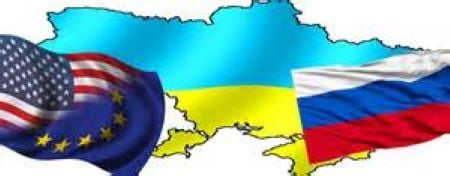
Gordon Hahn: NATO Expansion, Maidan Ukraine, and the Donbass War

By Gordon M. Hahn

December 15, 2021

It is now quite clear, as I have stated for decades, that NATO expansion is the main cause of U.S.-Russian and WesternRussian tensions, and the Russian Angst over said expansion is the cause of the Ukrainian crisis sparked in winter 2013-2014.

It appears that Putin is escalating the stakes in the Ukrainian crisis in an effort to solve it and the overall problem of NATO expansion and European security. The positioning of Russian troops closer to the Ukrainian border – not on the border as is being reported – is an attempt to concentrate the minds of the West and bring the main driver of the Ukrainian crisis on the Western side – the U.S. – into the Minsk 2 process directly or otherwise.

His highlighting the issue has the important side benefit of putting the issue in a central place before Western publics and unmasking what is often the stealthy nature of NATO expansion processes.

Originally published at Gordon Hahns’ homepage

It was the American policy of NATO expansion – America drives NATO policy – that brought us the crisis in Ukraine. The crisis is the inevitable outcome of the first round of expansion to the Czech Republic and Ukraine’s neighbours Hungary and Poland pushed by the Clinton administration and ensuing rounds of NATO expansion pushed by the George Bush Jr administration.

It is not just the authoritarian Putin who resists NATO expansion. Almost all Russia does, and this is because of several centuries of Russian history that has seen Western powers repeatedly meddle, interfere, and intervene in and invade, shaping a security culture that values highly vigilance against external threats, internal divisions, and any connection – collusion – between the two.

Pro-democratic and pro-Western Russian president Boris Yeltsin, therefore, was also adamantly opposed to NATO expansion. He literally blew up at Clinton during the 1994 Budapest summit, well before the decision to expand had even been made.

Still two years before the decision, Clinton went to Moscow in May 1995 for the 50th-anniversary celebrations of the victory over Hitler, and Yeltsin regaled Clinton in no uncertain terms about NATO expansion, seeing “nothing but humiliation” for Russia, he declared: “For me to agree to the borders of NATO expanding towards those of Russia – that would constitute a betrayal on my part of the Russian people.”

Putin alluded to this last week when he issued his call for a treaty codifying a ban on NATO expansion any further east – a violation of explicit promises to the last Soviet leader would not expand “one inch” beyond East Germany: “Why was it necessary to expand NATO to our borders? Who can answer this question? There is no good answer, it does not exist. We had an almost idyllic picture of relations, especially in the mid-1990s. We were almost allies.”

As is well known, Putin and Yeltsin before him suggested the possibility of Russia’s entry into NATO but they were rebuffed and ignored, respectively.

The fact that Putin has raised the NATO issue directly to the West now is a function of several factors.

The Minsk 2 process has collapsed and Ukraine continues to fail in fulfilling key elements of the agreement, for example, by directly negotiating with the Donbass rebel regimes on a special autonomous status within Ukraine for them.

As the peace process stalled, in part because Zelenskiy cannot withstand ultranationalist/neofascist pressures to cease negotiating with hated Russia, Zelenskiy’s popularity has nosedived. The rating’s fall has little to no connection to the ongoing war in Donbass but is a result of economic factors, the Russian language issue, corruption and other purely domestic issues.

With Zelenskiy’s ratings collapsed and a broad opposition coalition arrayed against him, the Ukrainian president has abandoned his attempt to disarm and contain illegally armed fascist groups and instead has courted them.

The founder of the neo-fascist Right Sector and Volunteer Ukrainian Corps, Dmitro Yarosh, was appointed advisor to the chief of staff of the Ukrainian Armed Forces, and Zelenskiy recently awarded the ‘Hero of Ukraine’ award to one of their members, who has repeatedly violated the ceasefire agreement on the front.

It is on this background that Putin has Russian troops leaning forward.

In short, neither the Donbass nor Putin has a partner with which to talk. Putin has turned to Washington now because the crisis is deepening and is only set to get worse. Completely without domestic allies and the precipitous fall of Zelenskiy’s own and his party’s now disastrously popularity ratings, there is likely to be a major political crisis in Ukraine next year.

Moreover, at next year’s NATO summit, Ukraine is poised to gain a NATO Membership Action Plan (MAP) that will begin the process of Kyiv’s accession to the alliance and the transformation of one of the two main traditional invasion routes into Russia into NATO territory. This will happen on a background where already the West is sending weapons to Ukraine, training the Ukrainian army, including its neo-fascist units.

The possibility of NATO in Crimea and Russia’s loss of a base for its Black Sea Fleet was key in Putin’s decision to seize the peninsula after Maidan. Without the senseless Maidan revolt – leaving aside here the brutal terrorist culmination of sniper fire targeting both police and demonstrators carried out by the Maidan’s neo-fascist wing – or without a Russian naval base and tens of thousands of Russian troops based in Sevastopol, there would have been no annexation of Crimea. Full stop.

Now the possibility emerges that NATO could incorporate Ukraine despite its territorial stateness problem in the Donbass, bringing NATO into the civil war’s calculus by boosting the Ukrainian army’s prospects for defeating the Donbass rebels. Thus, Putin will have little choice but to intervene militarily in Donbass, seizing and annexing it and daring the Ukraine-enhanced West to challenge the Russian army.

The alternative to this near-doomsday scenario, with asymmetrical and other forms, including nuclear escalation waiting in the wings, is obvious and imperative to choose. As I have repeatedly argued, the West should agree to militarily non-aligned, neutral status – no NATO, CSTO, or SCO membership – for Ukraine.

EU membership would remain an open option for Kyiv, and the Donbass would be fully reintegrated into Ukraine, with a degree of autonomy to be negotiated directly between Kyiv and the Donbass with Western, including more active American, mediation in accordance with Minsk 2 or a Minsk 3, revised to take into account American participation.

If this is not done, Putin might use a real or fake neo-fascist or official Kievan provocation or mistake in order to seize the Donbass in order to preempt any further Kievan move there. He then might try to use the Donbass’s return to full Ukrainian control as a bargaining chip for a deal on Ukraine’s neutral status.

This would be dangerous enough, and, unfortunately, NATO and Ukraine view the struggle on the eastern front as a zero-sum game.

If Ukraine receives a NATO Membership Action Plan (MAP), it is a victory for the ‘free world.’ If not, Putin wins. The prospect of Putin ‘winning’ is becoming more objectionable in the West and Kyiv than the prospect of war, a formula for precisely that: War.  

And Ukraine is just one of three problems on the eastern front. Belarus and Moldova are each almost as intractable. This week’s inconclusive virtual Biden-Putin summit keeps the clock ticking and the tension ratcheting up. All this risk to the national security of all of Europe: For what precisely?

For the sake of NATO expansion. For a NATO that could not prevail in Afghanistan, despite all the expenditure in blood and treasure, and will not stand to defend Ukraine even if Russia was to invade.

And if NATO did move to fight Russia over Ukraine, what would that entail?

Nothing other than the potential for a third world war and a first nuclear one.

Originally published at Gordon Hahn’s homepage
The author

About the author

Gordon M. Hahn, PhD, is a Senior Researcher at the Center for Terrorism and Intelligence Studies (CETIS), Akribis Group, San Jose, California, www.cetisresearch.org; an expert analyst at Corr Analytics, www.canalyt.com.

Hahn is also an analyst at Geostrategic Forecasting Corporation in Chicago, www.geostrategicforecasting.com. 

He is the author of the forthcoming book from McFarland Publishers Ukraine Over the Edge: Russia, the West, and the Making of the Ukrainian Crisis and ‘New Cold War. 

Please help TFF remain truly independent by contributing if you benefited from this article

Related Posts

Jan Oberg May 15, 2026 Go to this Fox News page and scroll the whole way down: President Donald Trump tells the world that his meeting with President Xi Jinping yielded a lot of very concrete political and economic results – of course, only where the Chinese side, according to him, agreed with him. He does not mention the Taiwan issue, but Secretary of State, Marco Rubio, says that it did not feature prominently in their talks and that the US policy on Taiwan has not changed. Then go to China Daily – or Global Times – and you will see that for the Chinese it is framework, principles, structure of cooperation etc. that matters – all embedded in the overall idea of “constructive bilateral relationship of strategic stability.” Nowhere is any concrete agreement or deal – all that Trump refers to – mentioned. At the general level, this gives you insights into the very different social...
In contrast to most, we’ll bring alternatives, solutions, hope and strategies for a better future. Times are dangerous, yes, but that only intensifies the need for constructive thinking and action! Jan Oberg, TFF director April 13, 2026 The new TFF Peace Pulse uses video messages in a new way: Max 3-5-minute-long comments, ideas or perhaps mini-lectures, all about peace – positive peace. We launch them today on April 13, 2026 with a carefully crafted visual aesthetic fitting the content. We hope to publish them regularly from now on. We launch Peace Pulse (PP) – for a number of reasons. The world is in chaos, and there are countless reasons to feel concerned, frustrated, even angry. The atmosphere is saturated with doom and gloom, with negative energy and rear‑mirror thinking, while vision, imagination, alternatives, strategies and genuine future‑mindedness remain in short supply. And without them, we simply can’t save the world. Looking at problems from a hundred angles will...
Jan Oberg, TFF director April 9, 2026 I was recently invited to have a good, long talk about the world – and, of course, about peace too – with Boris Malagurski on his Weight of Chains Channel on YouTube. It was a real joy and seems to have been greatly appreciated by the viewers too. Mr Malagurski and I shall of course be grateful if you share this conversation in your circles – of course, only if you like what you see and hear 😉☮️ And remember that this one – like hundreds of others with TFF Associates – can be enjoyed at our TFF Video Collection.

Recent Articles

Tony Robinson October 4, 2026 Violence is easy to recognise when someone is being beaten, shot or killed. It becomes more difficult when nobody is holding a weapon. Poverty, discrimination, exploitation and repression can restrict a human life just as effectively, although they do so in very different ways and with very different consequences. Simply adding more categories to an ever-growing list of forms of violence does not really solve the problem. The more interesting question is what all these different situations have in common and why it makes sense to describe them using the same word. Human beings do not simply react to what happens around them. They remember the past, imagine things that do not yet exist, make plans and undertake projects. Workers organise because they imagine different working conditions; people migrate because they imagine another life somewhere else; social movements emerge because people refuse to accept the...
It’s a matter of principles, courage, vision and pulling together – while the militarist world is falling apart… Peter Langille October 3, 2026 “Here, then, is the problem which we present to you, stark and dreadful and inescapable: Shall we put an end to the human race; or shall mankind renounce war?”The Bertrand Russell—Albert Einstein Manifesto, July 9, 1955 ⁕ The forecast for what’s ahead is worrisome. The sharp rise in armed conflicts over the past three years is adding to what was already the highest level in over seventy years. Genocides, which should be prevented are supported. A shared climate emergency that jeopardises survival is ignored. Diverse polls now suggest that people are war-weary, worried and interested in a more effective United Nations. And, there are viable policy options for a more secure world! Yet governments are doubling-down, betting on more war and investing heavily. If current trends persist,...
Johan Galtung 1930-2024October 2015 Published here on October 3, 2026 Let us focus on Civilization for conflict analysis and remedies. Major forms of disorder use violence; war is state organized violence. The most belligerent states are the United States of America and Israel, both with civilization roots. National Evangelism, the US Protestant Christian civilization– more national than evangelical–justifies US warfare as exceptionalism of a people chosen by God, with a manifest destiny to run the world. Orthodox Judaism justifies Israeli warfare to conquer and expand from Nile to Euphrates as a religious right and duty to the Eternal One. The third most belligerent country, the UK, no longer believes it is God-chosen but chosen by the USA; not quite the same but something. But the root cause of global disorder lies in the Occident–with Islam–seeing itself as the single, universal civilization valid for all at all times, all others being...

TFF on Substack

Discover and subscribe to more peace materials on TFF Substack

Most Popular

Tony Robinson October 4, 2026 Violence is easy to recognise when someone is being beaten, shot or killed. It becomes more difficult when nobody is holding a weapon. Poverty, discrimination, exploitation and repression can restrict a human life just as effectively, although they do so in very different ways and with very different consequences. Simply adding more categories to an ever-growing list of forms of violence does not really solve the problem. The more interesting question is what all these different situations have in common and why it makes sense to describe them using the same word. Human beings do not simply react to what happens around them. They remember the past, imagine things that do not yet exist, make plans and undertake projects. Workers organise because they imagine different working conditions; people migrate because they imagine another life somewhere else; social movements emerge because people refuse to accept the...
It’s a matter of principles, courage, vision and pulling together – while the militarist world is falling apart… Peter Langille October 3, 2026 “Here, then, is the problem which we present to you, stark and dreadful and inescapable: Shall we put an end to the human race; or shall mankind renounce war?”The Bertrand Russell—Albert Einstein Manifesto, July 9, 1955 ⁕ The forecast for what’s ahead is worrisome. The sharp rise in armed conflicts over the past three years is adding to what was already the highest level in over seventy years. Genocides, which should be prevented are supported. A shared climate emergency that jeopardises survival is ignored. Diverse polls now suggest that people are war-weary, worried and interested in a more effective United Nations. And, there are viable policy options for a more secure world! Yet governments are doubling-down, betting on more war and investing heavily. If current trends persist,...
Johan Galtung 1930-2024October 2015 Published here on October 3, 2026 Let us focus on Civilization for conflict analysis and remedies. Major forms of disorder use violence; war is state organized violence. The most belligerent states are the United States of America and Israel, both with civilization roots. National Evangelism, the US Protestant Christian civilization– more national than evangelical–justifies US warfare as exceptionalism of a people chosen by God, with a manifest destiny to run the world. Orthodox Judaism justifies Israeli warfare to conquer and expand from Nile to Euphrates as a religious right and duty to the Eternal One. The third most belligerent country, the UK, no longer believes it is God-chosen but chosen by the USA; not quite the same but something. But the root cause of global disorder lies in the Occident–with Islam–seeing itself as the single, universal civilization valid for all at all times, all others being...
Read More
Living-Peace-Sign-Budapest-copy
Tony Robinson October 4, 2026 Violence is easy to recognise when someone is being beaten, shot or killed. It becomes more difficult when nobody is holding a weapon. Poverty, discrimination, exploitation and repression can restrict a human life just as effectively, although they do so in very different ways and with very different consequences. Simply adding more categories to an ever-growing list of forms of violence does not really solve the problem. The more interesting question is what all these different situations have in common and why it makes sense to describe them using the same word. Human beings do not simply react to what happens around them. They remember the past, imagine things that do not yet exist, make plans and undertake projects. Workers organise because they imagine different working conditions; people migrate because they imagine another life somewhere else; social movements emerge because people refuse to accept the...
b54a1f10-8c65-4f0b-9dd5-4abc0a7d04cc_2659x2659
It’s a matter of principles, courage, vision and pulling together – while the militarist world is falling apart… Peter Langille October 3, 2026 “Here, then, is the problem which we present to you, stark and dreadful and inescapable: Shall we put an end to the human race; or shall mankind renounce war?”The Bertrand Russell—Albert Einstein Manifesto, July 9, 1955 ⁕ The forecast for what’s ahead is worrisome. The sharp rise in armed conflicts over the past three years is adding to what was already the highest level in over seventy years. Genocides, which should be prevented are supported. A shared climate emergency that jeopardises survival is ignored. Diverse polls now suggest that people are war-weary, worried and interested in a more effective United Nations. And, there are viable policy options for a more secure world! Yet governments are doubling-down, betting on more war and investing heavily. If current trends persist,...
010
Johan Galtung 1930-2024October 2015 Published here on October 3, 2026 Let us focus on Civilization for conflict analysis and remedies. Major forms of disorder use violence; war is state organized violence. The most belligerent states are the United States of America and Israel, both with civilization roots. National Evangelism, the US Protestant Christian civilization– more national than evangelical–justifies US warfare as exceptionalism of a people chosen by God, with a manifest destiny to run the world. Orthodox Judaism justifies Israeli warfare to conquer and expand from Nile to Euphrates as a religious right and duty to the Eternal One. The third most belligerent country, the UK, no longer believes it is God-chosen but chosen by the USA; not quite the same but something. But the root cause of global disorder lies in the Occident–with Islam–seeing itself as the single, universal civilization valid for all at all times, all others being...
Screenshot 2026-10-02 011738
Jan ObergPhD, director, The Transnational Foundation for Peace and Future Research, TFFLund, Sweden October 2, 2026 This is my full original manuscript. The Chinese Academy of Social Science, CASS, makes two publications out if it. 1. China’s Five-year plan emphasized the capabilities of basic research and original innovation. It is regarded as the goal of the future social development, which, as required, should be significantly enhanced. Can you comment on the importance of original innovation in research and academic study? I believe it is easier to define “original innovation” in the natural sciences than in social sciences. The breaking points of what constitutes something new, or innovative, are not quite as sharp in the latter. But in both fields it is about opening up something that was closed, unseen, unexplored before – making manifest what was earlier latent. Innovations come in many forms and shapes – naming something that was not...
arctic-circle-map
The agreement is catastrophic both because of what it says and what it doesn’t mention. It reduces further the major asset of security policies: Freedom of action. Jan Oberg TFF director September 25, 2026 A couple of hours before the agreement was signed on September 22, 2026, I published the following 13 hypotheses about what it would most likely contain on TFF Substack (in English). I was wrong on only the first point. Contrary to what Trump had written on his Truth Social platform, it does not appear to come into force immediately. In fact, it turned out to be worse than even I had anticipated. After these hypotheses now come a number of reflections in light of what the agreement actually contains, and does not contain, as well as the way in which it has generally been presented by major media outlets and by the public-service broadcaster DR. My...
girl-5894831_1280
Below are TFF-related media mentions, comments, videos and social media posts published elsewhere but not on this homepage. We happen to catch and list only a fraction. Regarding video comments and debates, we recommend that you go to the TFF Video Channel on Substack where many of them are reproduced. Jan Oberg is a contributor to China Daily – 52 million daily clicks – and Global Times, CGTN and CCTV (the national television), China Investment, Xinhua News Agency and several others. Articles and videos on these media very often multiply into countless Chinese (and Western media) that re-post them from these main media. Thanks to The China Academy, his analyses, interviews and comments are frequently posted on YouTube channels such as Thinkers Forum and Wave Media. These videos are often re-posted on Bilibili (China’s YouTube), the China Content Center on TikTok, and on the Chinese edition of TikTok, Douyin.com. This means reaching hundreds of millions of viewers worldwide over a year. While there are too many to catch on all these...




