
Photo collage © Jan Oberg 2021

Researchers who question the legitimacy of US wars, seem to experience being ousted from their positions in research and media institutions. The example presented here is from the Institute for Peace Research in Oslo (PRIO), an institution that historically has had researchers critical of wars of aggression – and who can hardly be labelled friends of nuclear arms.
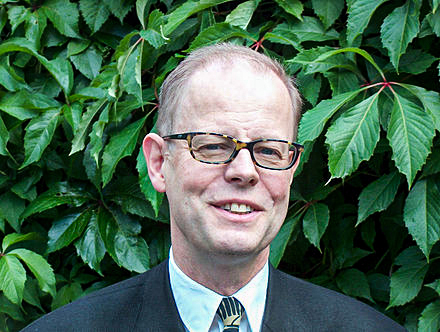
Ola Tunander, Research Professor Emeritus at PRIO
Originally published in Norwegian by “Modern Times/Ny Tid”, Whistleblower supplement, March 1, 2021
A researcher is said to seek objectivity and truth. But he or she learns to select their research topics and arrive at conclusions in accordance with what the authorities and management expect, and this despite the fact that academic freedom is codified in Norway through the “freedom to express oneself publicly”, “freedom to promote new ideas” and “freedom to choose method and material». In today’s societal discourse, freedom of speech seems to be reduced to the right to offend other people’s ethnicity or religion.
But freedom of speech should be about the right to scrutinize power and society. My experience is that the opportunity to express freely as a researcher has become increasingly limited during the last 20 years. How did we end up here?
This is my story as a researcher. For almost 30 years I worked at the Peace Research Institute Oslo (PRIO), from 1987 to 2017. I became a senior researcher after completing my doctorate in 1989 and led the Institute’s program for foreign and security policy. I received my professorship in 2000 and wrote and edited a number of books on international politics and security policy.
After the Libya War in 2011, I wrote a book in Swedish about this war, about how Western bomber aircraft coordinated operations with Islamist rebels and ground forces from Qatar in order to defeat the Libyan army. (I wrote another book on the Libya War in Norwegian, published in 2018.) Western countries were allied with radical Islamists, just as in Afghanistan in the 1980s. In Libya, Islamists carried out ethnic cleansing of black Africans and committed war crimes.
On the other hand, the media claimed that Muammar Gaddafi bombed civilians and planned a genocide in Benghazi. US senator John McCain and Secretary of State Hillary Clinton talked about “a new Rwanda”. Today we know that this was pure misinformation or rather disinformation. In a special report from 2016, the British House of Commons’ Foreign Affairs Committee rejected all allegations of government forces’ violence against civilians and threats of genocide. There was no evidence for this. The war turned out to be a “war of aggression”, in other words, “the worst of all crimes,” to quote the Nuremberg tribunal.
Denied book launch
I launched my Swedish Libya book in Stockholm in December 2012 and planned a similar seminar at PRIO in Oslo. My colleague Hilde Henriksen Waage had just launched her book Conflict and Great Power Politics in the Middle East for a packed hall at PRIO. I liked the concept and decided together with our communication director and my immediate superior to hold a similar PRIO seminar on my book Libyenkrigets Geopolitik (The Geopolitics of the Libya War).
We set a date, venue and format. A former head of Norwegian Intelligence Service, General Alf Roar Berg, agreed to comment on the book. He was experienced from the Middle East and ten years of experience from top positions in the intelligence service in the 1980s and 1990s. Berg’s counterpart in the United States was Director of the CIA Robert Gates, who in 2011 was Secretary of Defense. He had also visited Berg in Oslo.
Gates was a critic of the Libya War – in conflict with Secretary of State, Hillary Clinton. She had even put a stop to the US Africa Command’s successful negotiations with the Libyan government. She did not want negotiations, but war, and she got President Barack Obama involved in this. When asked if American forces would participate, Gates replied, “Not as long as I’m in this job.” Shortly afterwards, he announced his resignation. Alf Roar Berg had been as critical as Gates was.
But when PRIO’s director at the time, Kristian Berg Harpviken, was informed about my Libya seminar, he reacted sharply. He suggested an “internal seminar” or a panel “on the Arab Spring” instead, but he did not want a public seminar on the book. He did not want to be associated with a critical book about the war, but more importantly: he hardly wanted a critique of Secretary of State Hillary Clinton or of her ground forces from Qatar, which had played a vital role in the war. Harpviken had held talks at PRIO with Qatar’s foreign minister. And Clinton’s man in Oslo, Ambassador Barry White, had been a guest at the PRIO director’s private birthday party.
PRIO established in the United States
PRIO had also established the Peace Research Endowment (PRE) in the United States. The board consisted of President Bill Clinton’s Chief of Central Command, General Anthony Zinni. He had led the bombing of Iraq in 1998 (Operation Desert Fox). In parallel with holding the board position in PRE, he was chairman of the board in the USA for what is perhaps the most corrupt weapons manufacturer in the world, BAE Systems, which already in the 1990s had given Saudi princes bribes in the order of 150 billion Norwegian kroner at today’s monetary value.
The chairman of the PRIO-established PRE was President Clinton’s Under Secretary of the Army Joe Reeder, who had helped fund Hillary Clinton’s presidential campaign. He had served on the board of the US National Defense Industrial Association and already the same month as the Iraq war began, he was engaged in getting contracts in Iraq. He had held a central legal position for a lobbying company that in 2011 marketed the rebels’ Libya War.
There may seem to have been a link between PRIO’s unwillingness to criticize the war in Libya and PRIO’s attachment to the Clinton family’s military-industrial network.
But PRE’s board also included a former Republican governor and PRIO contact, David Beasley, now head of the World Food Program and the Nobel Peace Prize laureate for 2020. He was nominated to this position by President Trump’s former UN ambassador Nikki Haley, who, like Hillary Clinton, had threatened to wage a “humanitarian war” against Syria.
Whatever the explanation, my investigation into these wars was not popular with PRIO’s leadership.
In an e-mail on 14 January 2013, director Harpviken described my Swedish book on the Libya War as “deeply problematic”. He demanded a “quality assurance mechanism” so that PRIO could “prevent similar mishaps” in the future. While PRIO found my Libya book unacceptable, I lectured on the Libya War to the annual GLOBSEC conference in Bratislava. My counterpart on the panel was one of Defense Secretary Robert Gates’ closest assistants. Among the participants were ministers and security policy advisers, such as Zbigniew Brzezinski.
Spreading war to the Middle East and Africa
Today we know that the war in 2011 destroyed Libya for decades to come. The weapons of the Libyan state were spread to radical Islamists throughout the Middle East and North Africa. More than ten thousand surface-to-air missiles to shoot down aircraft ended up in the hands of various terrorists. Hundreds of armed fighters and a large number of weapons were transferred from Benghazi to Aleppo in Syria with disastrous consequences. The civil wars in these countries, in Libya, Mali and Syria, were a direct result of the destruction of the Libyan state.
Hillary Clinton’s adviser Sidney Blumenthal wrote that a victory in Libya could open the way for a victory in Syria, as if these wars were only a continuation of the neoconservative wars that began with Iraq and were to continue with Libya, Syria, Lebanon and end with Iran. The war against Libya also prompted countries such as North Korea to intensify their interest in nuclear weapons. Libya had ended its nuclear weapons program in 2003 against guarantees from the United States and Britain not to attack. Nevertheless, they attacked. North Korea realized that US-British guarantees were worthless. In other words, the Libya War became a driving force for the proliferation of nuclear weapons.
One may ask why PRIO, with scholars who historically have been critical of all wars of aggression and hardly have belonged to the close friends of nuclear weapons, is now seeking to stop a critique of such a war and at the same time ally itself with the more problematic part of the military-industrial complex?
But this development may reflect a general adjustment within the research community. Research institutes must be funded, and from around the year 2000, researchers have been required to secure their own funding. Then they also had to adapt their research and conclusions to the financing authorities. During PRIO luncheons, it seemed more important to discuss how to finance projects than to discuss actual research issues.
But I also believe there are other, particular, reasons for PRIO’s radical change.
“Just War”
First of all, during the recent decade, PRIO has during the recent decade been increasingly engaged in the issue of “just war”, in which the Journal of Military Ethics is central. The journal has been edited by Henrik Syse and Greg Reichberg (who also sat on the PRE board). Their thinking is based on Thomas Aquinas’ idea of ”just war,” a concept also significant in President Barack Obama’s Nobel Peace Prize acceptance speech for 2009.
But every war seeks a “humanitarian” legitimation. In 2003, it was claimed that Iraq had weapons of mass destruction. And in Libya in 2011, it was said that Muammar Gaddafi threatened genocide in Benghazi. However, both were examples of gross disinformation. In addition, the consequences of a war are often naturally impossible to predict.
The term “just war” has been used since 2000 to legitimize several wars of aggression. In all instances, this has had catastrophic results.
In 1997, PRIO’s then-director Dan Smith asked me if we should hire Henrik Syse, a well-known Norwegian conservative profile. I knew Syse’s supervisor for his doctorate, and considered it a good idea. I thought Syse could add to the spectrum of PRIO. I had no idea then that this, together with the points I argue below, would eventually exclude any interest in realpolitik, military detente and the exposing of military-political aggression.
“Democratic peace”
Secondly, PRIO researchers connected to the Journal of Peace Research had developed the thesis of “democratic peace”. They believed they could show that democratic states do not wage war against each other. However, it became clear that it was up to the aggressor, the United States, to define who is democratic or not, such as Serbia. Maybe the United States was not so democratic itself. Perhaps other arguments were more prominent, such as economic ties.
But for the neo-conservatives, the thesis of “democratic peace” came to legitimize any war of aggression. A war against Iraq or Libya could “open up for democracy” and thus for peace in the future, they said. Also, one or another researcher at PRIO supported this idea. For them, the idea of ”just war” was compatible with the thesis of “democratic peace”, which in practice led to the thesis that the West should be allowed the right to intervene in non-Western countries.
Destabilization
Thirdly, several PRIO employees were influenced by the American scholar Gene Sharp. He worked for regime change by mobilizing for mass demonstrations to overthrow “dictatorships”. Such “color revolutions” had the support of the United States and were a form of destabilization aimed primarily at countries that were allied with Moscow or Beijing. They did not take into account to what extent such destabilization could trigger a global conflict. Sharp was at one point the PRIO leadership’s favorite for the Nobel Peace Prize.
Sharp’s basic idea was that with the dictator and his people ousted, the door to democracy would open. It turned out that this was rather simplistic. In Egypt, Sharp’s ideas allegedly played a role for the Arab Spring and the Muslim Brotherhood. But its takeover turned out to escalate the crisis. In Libya and Syria, it was claimed that peaceful protesters opposed the violence of the dictatorship. But these protesters had been “supplemented” from day one by the military violence of Islamist insurgents.
The media’s support for the uprising insurgents was never confronted by institutes such as the PRIO, which had catastrophic consequences.
PRIO’s annual conference
Fourthly, PRIO’s participation in international peace research conferences and Pugwash conferences in the 1980s and 1990s has been replaced by participation in US political science conferences in particular. The big, annual conference for PRIO is currently the International Studies Association (ISA) Convention, held annually in the United States or Canada with more than 6,000 participants – primarily from the United States, but also from European and other countries. ISA’s president is elected for one year and has been American since 1959 with a few exceptions: In 2008–2009, PRIO’s Nils Petter Gleditsch was president.
Researchers at PRIO have also been associated with universities and research institutes in the United States, such as the Brookings Institution and the Jamestown Foundation (established in 1984 with the support of the then CIA Director William Casey). PRIO has become increasingly “American” with many American researchers. I would like to add that the Norwegian Institute of International Affairs ( NUPI ), on the other hand, is more «European».
From Vietnam to Afghanistan
Fifthly, the development at PRIO is a question of generational differences. While my generation experienced the 1960s and 1970s’ US-initiated coups and bombing of Vietnam and the killing of millions of people, PRIO’s later leadership was marked by the Soviet war in Afghanistan and by US support for Islamic insurgents in the fight against the Soviet Union.
In the early 1990s, PRIO’s later director Kristian Berg Harpviken had been the leader of the Norwegian Afghanistan Committee in Peshawar (in Pakistan near Afghanistan), where aid organizations in the 1980s lived side by side with intelligence services and radical Islamists.
Hillary Clinton claimed in 2008 that there had been a political consensus in the United States in the 1980s for supporting radical Islamists – just as she supported the Islamists in Libya in 2011. But in the 1980s, it was not yet known that the United States with the CIA was behind the war in Afghanistan through their support to the uprisings as early as July 1979, with the intention to deceive the Soviets into supporting their ally in Kabul.
In this way the United States had “the opportunity of giving the Soviet Union its Vietnam War”, to quote President Carter’s security adviser Zbigniew Brzezinski (see also later Defense Secretary Robert Gates). Brzezinski had himself been responsible for the operation. In the 1980s, it was also not known that the entire Soviet military leadership had been opposed to the war.
For the new generation at PRIO, the United States and Islamic insurgents were seen as allies in the conflict with Moscow.
– founder of PRIO in 1959
The realities of power
I wrote my doctoral dissertation in the 1980’s on US Maritime Strategy and northern European geopolitics. It was published as a book in 1989 and was on the curriculum at the US Naval War College. In short, I was a scholar who recognized the “realities of power.” But in strict, normative terms, I saw already in the early 1980s an opportunity for a detènte between the great power blocs – just as Willy Brandt, and later, Olof Palme in Sweden, saw it. After the Cold War, we discussed with diplomats about finding a practical solution to the East-West divide in the High North. This led to what became the Barents Region Cooperation.
In 1994, I co-edited an English book titled The Barents Region, with contributions from researchers as well as Norwegian Foreign Minister Johan Jørgen Holst and his Russian colleague Andrei Kosyrev – with a foreword by former Norwegian foreign minister, Thorvald Stoltenberg. I also wrote and edited books on European development and security policy, attended conferences and lectured worldwide.
My book on European geopolitics in 1997 was on the curriculum at Oxford University. I participated as a civilian expert in Sweden’s official submarine investigation in 2001, and after my books on submarine operations in 2001 and 2004, my work played a central role for the official Danish report Denmark During the Cold War (2005). It referred to my, and CIA’s chief historian Benjamin Fischer’s, books and reports, as the most important contributions to the understanding of President Reagan’s program for psychological operations.
My new “submarine book” (2019) was launched in February 2020 at NUPI, not at PRIO, with comments by the former director at both institutions, Sverre Lodgaard.
Possible head of research
Following my appointment as Research Professor (Researcher 1, equivalent to two doctorates) in 2000, I wrote books and articles and evaluated articles for the Kennedy School of Government at Harvard University and the Royal United Service Institute. I sat on the advisory committee for a journal at the London School of Economics and on the board of the Nordic International Studies Association.
In 2008, I applied for the new position as director of research at NUPI – the Norwegian Institute of International Affairs. Director Jan Egeland did not have the academic qualifications required. An international committee was appointed to evaluate the applicants. It found that only three of them were qualified for the position: a Belgian researcher, Iver B. Neumann at NUPI, and myself. Neumann eventually got this position – as one of the most qualified scholars in the world within “International Relations Theory”.
Ironically, while I was evaluated as qualified to lead all research at the Norwegian Institute of International Affairs, my director at PRIO wanted to force upon me an “academic supervisor”. Experiences like this are likely to deter most people from any kind of critical work.
Research is meticulous work. Researchers usually develop their manuscripts based on comments from qualified colleagues. The manuscript is then sent to an academic journal or publisher, who allows their anonymous referees to reject or approve the contribution (by “peer reviews”). This usually requires additional work. But this meticulous academic tradition was not enough for PRIO’s management. They wanted to check everything I wrote.
An article in Modern Times (Ny Tid)
On January 26, 2013, I was summoned to the director’s office after having had an op-ed about Syria in print in the Norwegian weekly Ny Tid (Modern Times). I had quoted the UN Special Envoy to Syria, Robert Mood, and former UN Secretary-General Kofi Annan, who had said that the Security Council’s 5 permanent members had all agreed on “a political settlement in Syria” on June 30, 2011, but the Western states had sabotaged it “at the subsequent meeting” in New York.
However, for PRIO my quoting these two was unacceptable.
On 14 February 2013, PRIO asked me in an e-mail to accept “quality assurance measures [that] relate to all printed publications, including shorter texts such as up-eds [sic]”. I was to be assigned a person who was to examine both my academic papers and op-eds before they were sent out of the house.
It was de facto about creating a position as a “political officer”. I must admit that I started having trouble sleeping.
However, I received support from professors in several countries. The Norwegian trade union (NTL) said that it is not possible to have an exclusive rule for only one employee. But this commitment to control everything I wrote, was so strong that it can only be explained by the pressure from the Americans. A candidate for the position as National Security Adviser to President Ronald Reagan, in no uncertain terms, let me know that what I had written “would have consequences” for me.
The time that followed, turned out to be bizarre.
Whenever I was to give a lecture for security policy institutions, these institutions were immediately contacted by certain people who wanted to stop the lecture. I learnt that if you raise questions about the legitimacy of the US wars, you will be pressured out from research and media institutions.
America’s most famous critical journalist, Seymour Hersh, was pushed out of The New York Times and then out of The New Yorker. His articles on the My Lai massacre (Vietnam, 1968) and Abu Ghraib (Iraq, 2004) had a deep impact throughout the United States. But Hersh can no longer publish in his home country (see a previous issue of Modern Times and this Whistleblower supplement p. 26). Glenn Greenwald, who worked with Edward Snowden and who co-founded The Intercept, was also pushed out of his own magazine in October 2020 after being censored.
Trade union support
I got a permanent position at PRIO in 1988. Having a permanent position and support from a trade union is probably the most important thing for any researcher who wants to retain a certain degree of academic freedom. According to PRIO’s statutes, all researchers have «full freedom of expression». But without a union that can back you by threatening to go to court, the individual researcher has little influence.
In the spring of 2015, PRIO’s management had decided that I should retire with pension. I said that this was not up to them and that I had to talk to my union, NTL. My immediate superior then replied that it did not matter what the union said. The decision about my retirement had already been made. Every day, for a full month, he came into my office to discuss my retirement. I realized that this would be impossible to stand.
I spoke to a former chairman of the PRIO board, Bernt Bull. He said that “you must not even think about meeting the management alone. You have to bring the union https://www.prio.org/About/with you». Thanks to a couple of wise NTL representatives, who negotiated with PRIO for months, I got an agreement in November 2015. We concluded that I would retire in May 2016 in exchange for continuing as Research Professor Emeritus “at PRIO” with full access to “computer, IT- support, e-mail and access to the library as other researchers have at PRIO”.
In connection with my retirement






One Response
“Research institutes must be funded…” The world is seeing levels of extreme wealth concentration not seen since the 1920’s-1930’s. With that massive concentration comes massive power & influence. “Reality”, ideas, “science”, norms, etc. are simply being defined by those controlling that wealth. And the established hierarchy of power brought by that concentrated wealth, means a trickling-down of conformity & obedience. Tow the official line or be left out. There is no longer room nor tolerance for divergence nor “eccentricity”. The modern academic system of higher education, i.e. degrees & certifications & such, are often reportedly founded, based & deeply rooted in the Scholastic movement of the Middle Ages, during a time of massive wealth concentration by the Church & “Nobles”. That Scholastic movement had often been criticized by more logical & rational Philosophers & Thinkers of the Renaissance & Enlightenment eras. It was a corruption of true logic & knowledge by a powerful Church that merely sought conformity to its ideals & theologies. The right to grant a licentia docendi was originally reserved to the church which required the applicant to pass a test, to take oath of allegiance to the ideologies of the Church, and pay a fee. I feel for anyone in this contemporary age that goes thru the time, effort & expense of acquiring advanced degrees. For those degrees again have become, most solely, exercises in indoctrination, and control. Greater levels of more formalized “education” often bring more esteemed professional positions, and greater wealth, but most often at the cost of individuality, freedom, independence, and such. The more esteem & pay one receives, the more they are expected to comply & abide with the systems of established hierarchy. I work with many, but know very few Researchers that are able to pursue their own truly innovative work. Pay to play. This was part basis for Petrarch’s criticism during his era in what he termed the Dark Ages. An absence of true Enlightenment. “But every war seeks a ‘humanitarian’ legitimation…” And every side declares righteousness and justice in their causes & motives. One sides “Freedom Fighters” are the other sides “Terrorists”. With very little understanding or compassion of the needs of both, by both. Rather finding & identifying a common enemy, and decisively outlining their “evils”, thereby instilling & selling that “‘humanitarian’ legitimation”. Both the “Left” and “right” often call for & justify wars, under their spun reasoning.