

The lost peace discourse and the arts as a possible way out?

“Crystal Opalescent” by Jan Oberg 2020

Jan Oberg

October 8, 2020

The discourse about, or for, peace has mostly disappeared over the last 2-3 decades. It applies to research (and its non-governmental funding possibilities), to politics in general and to the media. 

In foreign and security politics, the intellectual level is now such that it does not even seem strange to decision-makers that they never obtain peace advice or consult peace experts. The fantasy-assumption is that if only there is enough military’ security’ means applied to enough societal problems, peace will automatically come about. 

I can’t remember having heard a parliamentarian or minister mention or conceptualise peace beyond the level of the state dinner speech – that is, devoid of theoretical and factual content as well as of meaning. 

Originally published as an editorial on the Transcend Media Service, TMS.

The mainstream media have no one who can focus on peace – not to mention, do peace journalism with professional conflict analysis. Military, political, psychological and economic warfare as well as interventions – usually in the fake-and-omission mode – dominate the reporting. 

Remarkably, that applies also to those who are firmly against these types of policies: the focus is critical but seldom constructive: What should and can be done? Think Chomsky.

Living in Sweden, I cannot remember the last 20 or so years to have seen a peace perspective applied to the world or a particular conflict by any mainstream media in the Nordic countries. There is simply no editors, reporters or journalists who are specialised in such a perspective. And “peace people” seem barred from those media.

So the peace discourse has vanished. Peace made invisible. Peace being treated as the big benign Godot in the middle of the room that everybody, knowingly or not, pretends will never come and is unrealistic – that is, irrelevant and much more unrealistic than the ongoing militarism, nuclearism, interventionism and ongoing destruction of that Nature on which we are all dependent and with which we must all have a partnership.

Eutopia #18 @ Jan Oberg

Those of us who have been engaged in international matters for about half a century are seen as survivors of a culture gone by – the culture, thinking, researching and action for peace. Welcome to the Museum of Peace and its niks…

In other words, in the corridors of today’s more or less kakistocratic (” a government that is ruled by the least suitable, able, or experienced people”) power circles, the word ‘peace’ will be met with silence, ridiculed, considered overly idealistic/unrealistic out of time and place.

Conclusion on those points: We should simply just continue in spite of all – lit the light in that darkness ’cause the times will change. If you work out of conviction, passion or talent – like, say, a composer – you don’t stop just because you don’t get attention. You continue because you are passionate about your values and goals and because – precisely in these times – you have a delightfully different story to tell: that peace is possible and by no measure unrealistic but requires different thinking, knowledge and policies. 

This leads me to continue saying that we must change this fact: 95% of the people in the West, devote 95% of their energies to the world as it is – criticising this or that, producing diagnoses and prognoses, predicting catastrophes, issuing warnings and fighting each other about the right interpretation or making up conspiracies and propaganda.

But such negative energy will get us exactly nowhere:

• When you fall ill, you don’t fancy a doctor who does only diagnosis and prognosis but hasn’t got a clue about your treatment, do you?

• The focus ought to be on the better futures that are possible – imagining them and finding ways to reach them – together. Dear Elise Boulding always rightly told us that what people cannot imagine they won’t work for.

• We know more than enough about today’s problems to now attend creatively to what could be instead of what is: that is, a little of wisdom built on top of knowledge – as E F” Small is Beautiful” Schumacher expressed it: We are now so knowledgeable that we cannot do without wisdom.

In short, positive energy put into visualising and “visionising”…

This leads me in this short article – as well as in my own life – to the question: What about art?

Can the arts become one of the building blocks of the necessary bridge between what is and what could be? Between criticism and constructivism? Between now/here and vision/strategy towards different future(s)? Between the blindness of the information avalanche and the seeing of a better future?

I believe it can – however with the qualification “in principle” or ”theoretically”.

Art is fundamentally about seeing something less visible or not readily visible. It’s about realising something that does not yet exist but comes bursting out of the imagination. It’s about doing old things in new ways or doing what has never been done before.

Art is based on an emotionally/intuitively expressive urge to say something – also beyond empirical reality – to make a wake-up call to fellow global citizens. It’s the thing the artist does because she or he can do nothing better than exactly that.

True art is existential – no matter today’s perverted commercial “art market” and “art industry” (and some who are inside that are indeed true artists anyhow, complicated and contradictory as it may seem).

If you can’t hear those defining qualities in, say, Beethoven’s symphonies or in Dylan’s poetry-music, if you cannot see it in Helen Frankenthaler’s paintings, sense it in Tolstoy’s writings, or in Boulding’s writings – and Gandhi’s and King’s too – there is nothing I can do to explain what I mean.

YellowRedGreenPink Geometry © Jan Oberg

But there is still at least one problem on my mind: Why is so much of the arts also focused more – much more – on violence, war, evil, death, drama, killing, aggression and suffering?

Why is so little of it motivated by or conveying life-confirming stuff such as reconciliation, forgiveness, harmony, diversity, development, cooperation, joy, conviviality … and peace?

Why is so much of it on problems rather than solutions? On history/present more than on the future?

The classical discussion – are humans fundamentally good or evil? – can be extended to: Do humans pay attention mostly to good or to evil? To problems or solutions? And that is much more easy to answer.  

Perhaps you now think that I am exaggerating and that these matters can simply not be quantified. That’s a valid argument but I believe we should try to dialogue about it anyhow. 

Many of the great works in literature, films, music, and paintings build on themes of violence and destruction and take their inspiration in the dark sides of human and societal nature, behaviour and actions. They ask the question why the past and present world is evil – rather than stimulate our imagination to perceive the better world as it could be – to paraphrase George Bernhard Shaw.

I was reminded of that when recently I went to the leading photography festival in Sweden, if not in Scandinavia – the Landskrona Photo Festival –  which I always visit because I am also an art photographer.

Beyond any doubt, it shows high average quality, considerable diversity, many and highly topical themes – all the attributes defining fine curatorship.

So what was my problem?

Well, that at least 40% of the exhibited works focus on war, genocide, massacre, concentration camps, the suffering of particular groups of people, refugees and other ‘damned of the earth.’ And that much of the rest is either expressive of de-politicising identity issues or experimental photography, constructed, stage-set or hybrid, formalistic.

And it’s all pretty lifeless! No humour, satire, no attempt to depict beauty, conviviality, happiness. Or make the spectator think about peace and other positive values.

I mean, what is the point of displaying yet another series of (documentary) images of skeletons from various massacres in the narrow, dark prison cells of a Citadel?

Is the assumption, perhaps, the – naive – one like the one surrounding Hiroshima and hibakusha films and photos, namely that by showing them the audience will be appalled and become more critical or warfare and other types of violence?

Is it part of the broader “violence industry” in which we also find the museums of wars and massacres and Holocaust?

Or is it that it hits us emotionally and get an “automatic” mileage, a little like if a photographer takes portraits of celebrities rather than non-celebrities, then she or he becomes famous more easily?

Why are there so many more images in this world of destruction than of construction, of violence than of peace? 

The very important World Press Photo contest is another – worse – example. Just look at the photos on the link. 

It’s filled with violence and suffering – and I am relatively sure that those who run these contests and festivals are not even aware of that bias or have discussed it. As if reality or the imagination or the creative impulse could not also be expressed through images of beauty and peace?

Perhaps we have come so far down the mental slippery slope that war and destruction is considered (un- or subconsciously) to be more ‘realistic’ and significant or ‘normal’ and everyday-like than peace, love, cooperation and beauty?

We live in an age influenced much more by images than by text and even sound – also because everybody has become a kind of photographer.

What the hundreds of images we more or less consciously perceive during a day through all sorts of media tell us about the world is extremely important in shaping our worldview. 
 
Well, you may say, it’s always been the case that the negative dominated and fascinated us, hasn’t it? Perhaps. 

But if so, let’s become a bit more peace-creative and re-balance it all! 

If you thought this was useful or even thought-provoking, we’d be grateful for your contribution to this unique homepage.

The author

TFF – The Transnational
&
Oberg PhotoGraphics
&
Jan Oberg personal
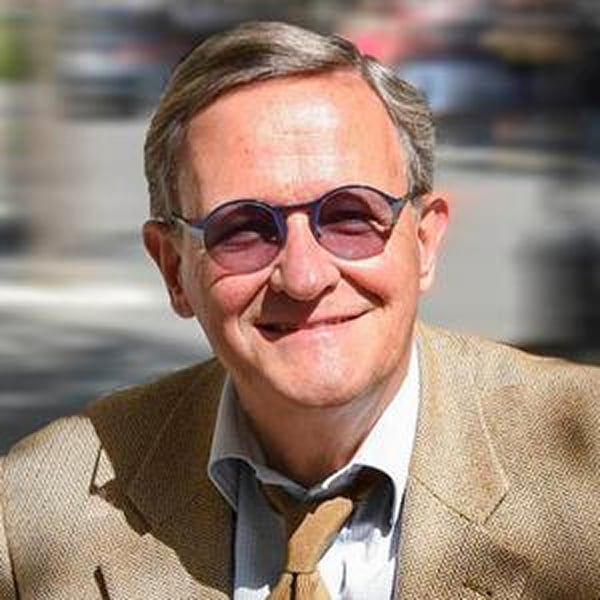
Peace & future researcher + ‌Art Photographer

One Response

  1. This is not only a timely as well as timeless, penetrating and challenging (in the good, moral, sense) analysis and appeal, it may well have got to the very root of the tragic malaise among people of good will, their seeming capitulation to the culture (if not the cult) of violence and war. I’d like to share two features I hope will prove apposite from my website that, I hope, can to some degree complement your discussion of the visual arts with the literary ones. Oscar Wilde: Antidote to war https://rickrozoff.wordpress.com/2011/06/16/oscar-wilde-antidote-to-war/ Walter Benjamin: Self-alienated mankind experiences its own destruction as aesthetic pleasure https://rickrozoff.wordpress.com/2011/08/11/walter-benjamin-self-alienated-mankind-experiences-its-own-destruction-as-aesthetic-pleasure/

Related Posts

Tony Robinson October 4, 2026 Violence is easy to recognise when someone is being beaten, shot or killed. It becomes more difficult when nobody is holding a weapon. Poverty, discrimination, exploitation and repression can restrict a human life just as effectively, although they do so in very different ways and with very different consequences. Simply adding more categories to an ever-growing list of forms of violence does not really solve the problem. The more interesting question is what all these different situations have in common and why it makes sense to describe them using the same word. Human beings do not simply react to what happens around them. They remember the past, imagine things that do not yet exist, make plans and undertake projects. Workers organise because they imagine different working conditions; people migrate because they imagine another life somewhere else; social movements emerge because people refuse to accept the...
It’s a matter of principles, courage, vision and pulling together – while the militarist world is falling apart… Peter Langille October 3, 2026 “Here, then, is the problem which we present to you, stark and dreadful and inescapable: Shall we put an end to the human race; or shall mankind renounce war?”The Bertrand Russell—Albert Einstein Manifesto, July 9, 1955 ⁕ The forecast for what’s ahead is worrisome. The sharp rise in armed conflicts over the past three years is adding to what was already the highest level in over seventy years. Genocides, which should be prevented are supported. A shared climate emergency that jeopardises survival is ignored. Diverse polls now suggest that people are war-weary, worried and interested in a more effective United Nations. And, there are viable policy options for a more secure world! Yet governments are doubling-down, betting on more war and investing heavily. If current trends persist,...
Johan Galtung 1930-2024October 2015 Published here on October 3, 2026 Let us focus on Civilization for conflict analysis and remedies. Major forms of disorder use violence; war is state organized violence. The most belligerent states are the United States of America and Israel, both with civilization roots. National Evangelism, the US Protestant Christian civilization– more national than evangelical–justifies US warfare as exceptionalism of a people chosen by God, with a manifest destiny to run the world. Orthodox Judaism justifies Israeli warfare to conquer and expand from Nile to Euphrates as a religious right and duty to the Eternal One. The third most belligerent country, the UK, no longer believes it is God-chosen but chosen by the USA; not quite the same but something. But the root cause of global disorder lies in the Occident–with Islam–seeing itself as the single, universal civilization valid for all at all times, all others being...

Recent Articles

Tony Robinson October 4, 2026 Violence is easy to recognise when someone is being beaten, shot or killed. It becomes more difficult when nobody is holding a weapon. Poverty, discrimination, exploitation and repression can restrict a human life just as effectively, although they do so in very different ways and with very different consequences. Simply adding more categories to an ever-growing list of forms of violence does not really solve the problem. The more interesting question is what all these different situations have in common and why it makes sense to describe them using the same word. Human beings do not simply react to what happens around them. They remember the past, imagine things that do not yet exist, make plans and undertake projects. Workers organise because they imagine different working conditions; people migrate because they imagine another life somewhere else; social movements emerge because people refuse to accept the...
It’s a matter of principles, courage, vision and pulling together – while the militarist world is falling apart… Peter Langille October 3, 2026 “Here, then, is the problem which we present to you, stark and dreadful and inescapable: Shall we put an end to the human race; or shall mankind renounce war?”The Bertrand Russell—Albert Einstein Manifesto, July 9, 1955 ⁕ The forecast for what’s ahead is worrisome. The sharp rise in armed conflicts over the past three years is adding to what was already the highest level in over seventy years. Genocides, which should be prevented are supported. A shared climate emergency that jeopardises survival is ignored. Diverse polls now suggest that people are war-weary, worried and interested in a more effective United Nations. And, there are viable policy options for a more secure world! Yet governments are doubling-down, betting on more war and investing heavily. If current trends persist,...
Johan Galtung 1930-2024October 2015 Published here on October 3, 2026 Let us focus on Civilization for conflict analysis and remedies. Major forms of disorder use violence; war is state organized violence. The most belligerent states are the United States of America and Israel, both with civilization roots. National Evangelism, the US Protestant Christian civilization– more national than evangelical–justifies US warfare as exceptionalism of a people chosen by God, with a manifest destiny to run the world. Orthodox Judaism justifies Israeli warfare to conquer and expand from Nile to Euphrates as a religious right and duty to the Eternal One. The third most belligerent country, the UK, no longer believes it is God-chosen but chosen by the USA; not quite the same but something. But the root cause of global disorder lies in the Occident–with Islam–seeing itself as the single, universal civilization valid for all at all times, all others being...

TFF on Substack

Discover and subscribe to more peace materials on TFF Substack

Most Popular

Tony Robinson October 4, 2026 Violence is easy to recognise when someone is being beaten, shot or killed. It becomes more difficult when nobody is holding a weapon. Poverty, discrimination, exploitation and repression can restrict a human life just as effectively, although they do so in very different ways and with very different consequences. Simply adding more categories to an ever-growing list of forms of violence does not really solve the problem. The more interesting question is what all these different situations have in common and why it makes sense to describe them using the same word. Human beings do not simply react to what happens around them. They remember the past, imagine things that do not yet exist, make plans and undertake projects. Workers organise because they imagine different working conditions; people migrate because they imagine another life somewhere else; social movements emerge because people refuse to accept the...
It’s a matter of principles, courage, vision and pulling together – while the militarist world is falling apart… Peter Langille October 3, 2026 “Here, then, is the problem which we present to you, stark and dreadful and inescapable: Shall we put an end to the human race; or shall mankind renounce war?”The Bertrand Russell—Albert Einstein Manifesto, July 9, 1955 ⁕ The forecast for what’s ahead is worrisome. The sharp rise in armed conflicts over the past three years is adding to what was already the highest level in over seventy years. Genocides, which should be prevented are supported. A shared climate emergency that jeopardises survival is ignored. Diverse polls now suggest that people are war-weary, worried and interested in a more effective United Nations. And, there are viable policy options for a more secure world! Yet governments are doubling-down, betting on more war and investing heavily. If current trends persist,...
Johan Galtung 1930-2024October 2015 Published here on October 3, 2026 Let us focus on Civilization for conflict analysis and remedies. Major forms of disorder use violence; war is state organized violence. The most belligerent states are the United States of America and Israel, both with civilization roots. National Evangelism, the US Protestant Christian civilization– more national than evangelical–justifies US warfare as exceptionalism of a people chosen by God, with a manifest destiny to run the world. Orthodox Judaism justifies Israeli warfare to conquer and expand from Nile to Euphrates as a religious right and duty to the Eternal One. The third most belligerent country, the UK, no longer believes it is God-chosen but chosen by the USA; not quite the same but something. But the root cause of global disorder lies in the Occident–with Islam–seeing itself as the single, universal civilization valid for all at all times, all others being...
Read More
Living-Peace-Sign-Budapest-copy
Tony Robinson October 4, 2026 Violence is easy to recognise when someone is being beaten, shot or killed. It becomes more difficult when nobody is holding a weapon. Poverty, discrimination, exploitation and repression can restrict a human life just as effectively, although they do so in very different ways and with very different consequences. Simply adding more categories to an ever-growing list of forms of violence does not really solve the problem. The more interesting question is what all these different situations have in common and why it makes sense to describe them using the same word. Human beings do not simply react to what happens around them. They remember the past, imagine things that do not yet exist, make plans and undertake projects. Workers organise because they imagine different working conditions; people migrate because they imagine another life somewhere else; social movements emerge because people refuse to accept the...
b54a1f10-8c65-4f0b-9dd5-4abc0a7d04cc_2659x2659
It’s a matter of principles, courage, vision and pulling together – while the militarist world is falling apart… Peter Langille October 3, 2026 “Here, then, is the problem which we present to you, stark and dreadful and inescapable: Shall we put an end to the human race; or shall mankind renounce war?”The Bertrand Russell—Albert Einstein Manifesto, July 9, 1955 ⁕ The forecast for what’s ahead is worrisome. The sharp rise in armed conflicts over the past three years is adding to what was already the highest level in over seventy years. Genocides, which should be prevented are supported. A shared climate emergency that jeopardises survival is ignored. Diverse polls now suggest that people are war-weary, worried and interested in a more effective United Nations. And, there are viable policy options for a more secure world! Yet governments are doubling-down, betting on more war and investing heavily. If current trends persist,...
010
Johan Galtung 1930-2024October 2015 Published here on October 3, 2026 Let us focus on Civilization for conflict analysis and remedies. Major forms of disorder use violence; war is state organized violence. The most belligerent states are the United States of America and Israel, both with civilization roots. National Evangelism, the US Protestant Christian civilization– more national than evangelical–justifies US warfare as exceptionalism of a people chosen by God, with a manifest destiny to run the world. Orthodox Judaism justifies Israeli warfare to conquer and expand from Nile to Euphrates as a religious right and duty to the Eternal One. The third most belligerent country, the UK, no longer believes it is God-chosen but chosen by the USA; not quite the same but something. But the root cause of global disorder lies in the Occident–with Islam–seeing itself as the single, universal civilization valid for all at all times, all others being...
Screenshot 2026-10-02 011738
Jan ObergPhD, director, The Transnational Foundation for Peace and Future Research, TFFLund, Sweden October 2, 2026 This is my full original manuscript. The Chinese Academy of Social Science, CASS, makes two publications out if it. 1. China’s Five-year plan emphasized the capabilities of basic research and original innovation. It is regarded as the goal of the future social development, which, as required, should be significantly enhanced. Can you comment on the importance of original innovation in research and academic study? I believe it is easier to define “original innovation” in the natural sciences than in social sciences. The breaking points of what constitutes something new, or innovative, are not quite as sharp in the latter. But in both fields it is about opening up something that was closed, unseen, unexplored before – making manifest what was earlier latent. Innovations come in many forms and shapes – naming something that was not...
arctic-circle-map
The agreement is catastrophic both because of what it says and what it doesn’t mention. It reduces further the major asset of security policies: Freedom of action. Jan Oberg TFF director September 25, 2026 A couple of hours before the agreement was signed on September 22, 2026, I published the following 13 hypotheses about what it would most likely contain on TFF Substack (in English). I was wrong on only the first point. Contrary to what Trump had written on his Truth Social platform, it does not appear to come into force immediately. In fact, it turned out to be worse than even I had anticipated. After these hypotheses now come a number of reflections in light of what the agreement actually contains, and does not contain, as well as the way in which it has generally been presented by major media outlets and by the public-service broadcaster DR. My...
girl-5894831_1280
Below are TFF-related media mentions, comments, videos and social media posts published elsewhere but not on this homepage. We happen to catch and list only a fraction. Regarding video comments and debates, we recommend that you go to the TFF Video Channel on Substack where many of them are reproduced. Jan Oberg is a contributor to China Daily – 52 million daily clicks – and Global Times, CGTN and CCTV (the national television), China Investment, Xinhua News Agency and several others. Articles and videos on these media very often multiply into countless Chinese (and Western media) that re-post them from these main media. Thanks to The China Academy, his analyses, interviews and comments are frequently posted on YouTube channels such as Thinkers Forum and Wave Media. These videos are often re-posted on Bilibili (China’s YouTube), the China Content Center on TikTok, and on the Chinese edition of TikTok, Douyin.com. This means reaching hundreds of millions of viewers worldwide over a year. While there are too many to catch on all these...





