
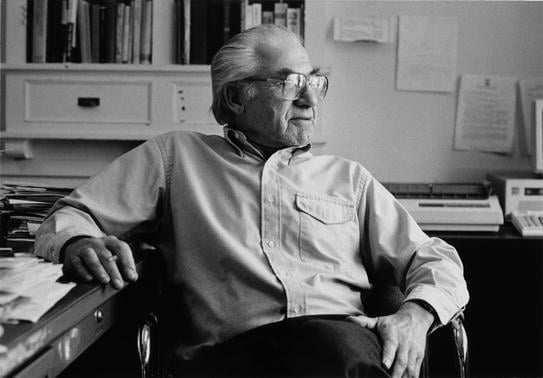
Louis Kriesberg

By Louis Kriesberg

September 25, 2020

Since Donald J. Trump was inaugurated as president, many Americans have carried out a wide variety of collective nonviolent actions to oppose many of his and his administration’s policies. The actions include massive marches in Washington, D.C. in concert with marches in cities across the nation.

They also include strikes, boycotts, walkouts, and regular meetings to plan and conduct ongoing programs of resistance. The actions have been conducted by diverse segments of the American people.

These nonviolent strategies and tactics follow and build on those used throughout American history. Many of the social movements relying on nonviolent methods of struggle have yielded widely beneficial changes in American society. But often they have failed to make substantial lasting change and sometimes they have been counterproductive. Frequently, there are mixed results over time.

Originally published at lkriesbe.expressions.syr.edu

Fortunately, there are resources that increase the likelihood that the choice of actions will have positive results. Considerable research and theorizing have been done about the effectiveness of various nonviolent actions and reasons for failures.

An important leader in such studies has been Gene Sharp, who died on January 28, 2018, at age 90. His influential work was based on extensive research about numerous actual nonviolent undertakings.

His research confirmed the premise that authority is based on the obedience and goodwill of the subjects. When that obedience is withdrawn from presumed authorities, their authority is lost.

He published many books and pamphlets analyzing how nonviolent strategies can be applied in various circumstances. Many of these materials are accessible at the website he established: aeinstein.org.

In addition, webinars, videos, and other materials are accessible on the website of the International Center on Nonviolent Conflict: nonviolent-conflict.org/.

Overall, the evidence is clear that social movements seeking substantial change that rely on nonviolent methods are more likely to achieve their objectives than are those movements that resort to violence.

After all, violence usually prompts counterviolence by the more powerful, which suppresses the effort to change the pre-existing conditions.

Relying on nonviolent actions, of course, does not ensure success. Fortunately, there is strong empirical evidence about more or less effective ways of applying nonviolent practices. Careful analysis of the conflict is a paramount practice before initiating actions, whether from the perspective of a leader from any side, an interested party, or a possible intervener.

The many possible opposing and potentially engaged entities should be identified. Their diverse positions and interests should be considered, keeping in mind the heterogeneity of the entities and the varying priority of their concerns.

That analysis should guide planning for future actions. Planning entails setting short term, mid-term, and long term goals and selecting the methods appropriate to advance toward the chosen goals.

The choice of means and of ends should influence each other and also each side’s choices should take into consideration the likely choices of the adversary.

Formulating goals should involve reflecting on how the opposing side will react, mobilize, and fight back.

Thus, selecting a very ambitious goal may appeal to supporters, but antagonize the opponents and strengthen their resolve. Goals that seem to threaten the vital interests of an opponent, are less likely to be achieved than are more modest goals.

Careful attention needs to be given to alternative methods of conducting a struggle. A fight does not require reliance only on coercion, whether violent or nonviolent.

Persuasive inducements are often important aspects of many strategies. Thus, appeals to shared values and interests relating to religion, country, or company may convince opposing sides that they have more to win together than they can gainatthe other’s expense.

Furthermore, promises of benefits after concessions are made may sweeten demands and help advance important goals. Thus, striking workers can claim that improved working conditions will result in increased productivity, benefiting managers and owners.

Successful nonviolent campaigns usually combine coercion with persuasion and promised benefits, if not to all the opponents, then to a goodly number of them.

Illustratively, the people who fought for civil rights in the southern states of America used many different strategies, which incorporated nonviolent coercion, persuasion, and prospective benefits in order to make gains at the community, state, and national levels.

At present, very many Americans are engaged in direct actions to resist some political and social changes and bring about other changes.

Some people have demonstrated their opposition to the policies that the new administration in Washington introduced, by carrying out marches and rallies, but also by nonviolent acts of noncompliance in implementing the new policies.

In addition, many alternative policies have been urged and strategies employed to win their establishment. This is true in efforts to enhance security against gun violence, against sexual harassment, against racist deprivations, and other ways of denying equal opportunities to the inalienable rights of all people to life, liberty, and the pursuit of happiness.

It is also true for efforts to improve policies to meet shared threats, for example, relating to global warming. Furthermore, many efforts are designed to strengthen American democratic institutions ensuring greater freedom and equality.

For example, this is the case for improving the opportunity for all U.S. citizens to vote in political elections rather than suppressing that right.

The present extensive activity is a manifestation of the vitality of the American society. That contentious conduct can be done best when it is done nonviolently and with thoughtful reflection.

Ultimately, the people have the power to make the changes they want.

As Gene Sharp knew, authority depends on the obedience and goodwill of the subjects.

Originally published at kriesbe.expressions.syr.edu

About the author

Louis Kriesberg (PhD 1953, University of Chicago) is Professor Emeritus of Sociology, Maxwell Professor Emeritus of Social Conflict Studies, and founding director of the Program on the Analysis and Resolution of Conflicts (1986–1994), all at Syracuse University. He has published over 160 book chapters and articles about Conflict Resolution and peace.

In 2016, marking his 90th birthday, Kriesberg published this book (click on image):

And here is this amazing pioneer’s homepage at Syracuse University.

If you appreciate this piece about nonviolence, please show it here. Thanks!

Related Posts

Tony Robinson October 4, 2026 Violence is easy to recognise when someone is being beaten, shot or killed. It becomes more difficult when nobody is holding a weapon. Poverty, discrimination, exploitation and repression can restrict a human life just as effectively, although they do so in very different ways and with very different consequences. Simply adding more categories to an ever-growing list of forms of violence does not really solve the problem. The more interesting question is what all these different situations have in common and why it makes sense to describe them using the same word. Human beings do not simply react to what happens around them. They remember the past, imagine things that do not yet exist, make plans and undertake projects. Workers organise because they imagine different working conditions; people migrate because they imagine another life somewhere else; social movements emerge because people refuse to accept the...
It’s a matter of principles, courage, vision and pulling together – while the militarist world is falling apart… Peter Langille October 3, 2026 “Here, then, is the problem which we present to you, stark and dreadful and inescapable: Shall we put an end to the human race; or shall mankind renounce war?”The Bertrand Russell—Albert Einstein Manifesto, July 9, 1955 ⁕ The forecast for what’s ahead is worrisome. The sharp rise in armed conflicts over the past three years is adding to what was already the highest level in over seventy years. Genocides, which should be prevented are supported. A shared climate emergency that jeopardises survival is ignored. Diverse polls now suggest that people are war-weary, worried and interested in a more effective United Nations. And, there are viable policy options for a more secure world! Yet governments are doubling-down, betting on more war and investing heavily. If current trends persist,...
Johan Galtung 1930-2024October 2015 Published here on October 3, 2026 Let us focus on Civilization for conflict analysis and remedies. Major forms of disorder use violence; war is state organized violence. The most belligerent states are the United States of America and Israel, both with civilization roots. National Evangelism, the US Protestant Christian civilization– more national than evangelical–justifies US warfare as exceptionalism of a people chosen by God, with a manifest destiny to run the world. Orthodox Judaism justifies Israeli warfare to conquer and expand from Nile to Euphrates as a religious right and duty to the Eternal One. The third most belligerent country, the UK, no longer believes it is God-chosen but chosen by the USA; not quite the same but something. But the root cause of global disorder lies in the Occident–with Islam–seeing itself as the single, universal civilization valid for all at all times, all others being...

Recent Articles

Tony Robinson October 4, 2026 Violence is easy to recognise when someone is being beaten, shot or killed. It becomes more difficult when nobody is holding a weapon. Poverty, discrimination, exploitation and repression can restrict a human life just as effectively, although they do so in very different ways and with very different consequences. Simply adding more categories to an ever-growing list of forms of violence does not really solve the problem. The more interesting question is what all these different situations have in common and why it makes sense to describe them using the same word. Human beings do not simply react to what happens around them. They remember the past, imagine things that do not yet exist, make plans and undertake projects. Workers organise because they imagine different working conditions; people migrate because they imagine another life somewhere else; social movements emerge because people refuse to accept the...
It’s a matter of principles, courage, vision and pulling together – while the militarist world is falling apart… Peter Langille October 3, 2026 “Here, then, is the problem which we present to you, stark and dreadful and inescapable: Shall we put an end to the human race; or shall mankind renounce war?”The Bertrand Russell—Albert Einstein Manifesto, July 9, 1955 ⁕ The forecast for what’s ahead is worrisome. The sharp rise in armed conflicts over the past three years is adding to what was already the highest level in over seventy years. Genocides, which should be prevented are supported. A shared climate emergency that jeopardises survival is ignored. Diverse polls now suggest that people are war-weary, worried and interested in a more effective United Nations. And, there are viable policy options for a more secure world! Yet governments are doubling-down, betting on more war and investing heavily. If current trends persist,...
Johan Galtung 1930-2024October 2015 Published here on October 3, 2026 Let us focus on Civilization for conflict analysis and remedies. Major forms of disorder use violence; war is state organized violence. The most belligerent states are the United States of America and Israel, both with civilization roots. National Evangelism, the US Protestant Christian civilization– more national than evangelical–justifies US warfare as exceptionalism of a people chosen by God, with a manifest destiny to run the world. Orthodox Judaism justifies Israeli warfare to conquer and expand from Nile to Euphrates as a religious right and duty to the Eternal One. The third most belligerent country, the UK, no longer believes it is God-chosen but chosen by the USA; not quite the same but something. But the root cause of global disorder lies in the Occident–with Islam–seeing itself as the single, universal civilization valid for all at all times, all others being...

TFF on Substack

Discover and subscribe to more peace materials on TFF Substack

Most Popular

Tony Robinson October 4, 2026 Violence is easy to recognise when someone is being beaten, shot or killed. It becomes more difficult when nobody is holding a weapon. Poverty, discrimination, exploitation and repression can restrict a human life just as effectively, although they do so in very different ways and with very different consequences. Simply adding more categories to an ever-growing list of forms of violence does not really solve the problem. The more interesting question is what all these different situations have in common and why it makes sense to describe them using the same word. Human beings do not simply react to what happens around them. They remember the past, imagine things that do not yet exist, make plans and undertake projects. Workers organise because they imagine different working conditions; people migrate because they imagine another life somewhere else; social movements emerge because people refuse to accept the...
It’s a matter of principles, courage, vision and pulling together – while the militarist world is falling apart… Peter Langille October 3, 2026 “Here, then, is the problem which we present to you, stark and dreadful and inescapable: Shall we put an end to the human race; or shall mankind renounce war?”The Bertrand Russell—Albert Einstein Manifesto, July 9, 1955 ⁕ The forecast for what’s ahead is worrisome. The sharp rise in armed conflicts over the past three years is adding to what was already the highest level in over seventy years. Genocides, which should be prevented are supported. A shared climate emergency that jeopardises survival is ignored. Diverse polls now suggest that people are war-weary, worried and interested in a more effective United Nations. And, there are viable policy options for a more secure world! Yet governments are doubling-down, betting on more war and investing heavily. If current trends persist,...
Johan Galtung 1930-2024October 2015 Published here on October 3, 2026 Let us focus on Civilization for conflict analysis and remedies. Major forms of disorder use violence; war is state organized violence. The most belligerent states are the United States of America and Israel, both with civilization roots. National Evangelism, the US Protestant Christian civilization– more national than evangelical–justifies US warfare as exceptionalism of a people chosen by God, with a manifest destiny to run the world. Orthodox Judaism justifies Israeli warfare to conquer and expand from Nile to Euphrates as a religious right and duty to the Eternal One. The third most belligerent country, the UK, no longer believes it is God-chosen but chosen by the USA; not quite the same but something. But the root cause of global disorder lies in the Occident–with Islam–seeing itself as the single, universal civilization valid for all at all times, all others being...
Read More
Living-Peace-Sign-Budapest-copy
Tony Robinson October 4, 2026 Violence is easy to recognise when someone is being beaten, shot or killed. It becomes more difficult when nobody is holding a weapon. Poverty, discrimination, exploitation and repression can restrict a human life just as effectively, although they do so in very different ways and with very different consequences. Simply adding more categories to an ever-growing list of forms of violence does not really solve the problem. The more interesting question is what all these different situations have in common and why it makes sense to describe them using the same word. Human beings do not simply react to what happens around them. They remember the past, imagine things that do not yet exist, make plans and undertake projects. Workers organise because they imagine different working conditions; people migrate because they imagine another life somewhere else; social movements emerge because people refuse to accept the...
b54a1f10-8c65-4f0b-9dd5-4abc0a7d04cc_2659x2659
It’s a matter of principles, courage, vision and pulling together – while the militarist world is falling apart… Peter Langille October 3, 2026 “Here, then, is the problem which we present to you, stark and dreadful and inescapable: Shall we put an end to the human race; or shall mankind renounce war?”The Bertrand Russell—Albert Einstein Manifesto, July 9, 1955 ⁕ The forecast for what’s ahead is worrisome. The sharp rise in armed conflicts over the past three years is adding to what was already the highest level in over seventy years. Genocides, which should be prevented are supported. A shared climate emergency that jeopardises survival is ignored. Diverse polls now suggest that people are war-weary, worried and interested in a more effective United Nations. And, there are viable policy options for a more secure world! Yet governments are doubling-down, betting on more war and investing heavily. If current trends persist,...
010
Johan Galtung 1930-2024October 2015 Published here on October 3, 2026 Let us focus on Civilization for conflict analysis and remedies. Major forms of disorder use violence; war is state organized violence. The most belligerent states are the United States of America and Israel, both with civilization roots. National Evangelism, the US Protestant Christian civilization– more national than evangelical–justifies US warfare as exceptionalism of a people chosen by God, with a manifest destiny to run the world. Orthodox Judaism justifies Israeli warfare to conquer and expand from Nile to Euphrates as a religious right and duty to the Eternal One. The third most belligerent country, the UK, no longer believes it is God-chosen but chosen by the USA; not quite the same but something. But the root cause of global disorder lies in the Occident–with Islam–seeing itself as the single, universal civilization valid for all at all times, all others being...
Screenshot 2026-10-02 011738
Jan ObergPhD, director, The Transnational Foundation for Peace and Future Research, TFFLund, Sweden October 2, 2026 This is my full original manuscript. The Chinese Academy of Social Science, CASS, makes two publications out if it. 1. China’s Five-year plan emphasized the capabilities of basic research and original innovation. It is regarded as the goal of the future social development, which, as required, should be significantly enhanced. Can you comment on the importance of original innovation in research and academic study? I believe it is easier to define “original innovation” in the natural sciences than in social sciences. The breaking points of what constitutes something new, or innovative, are not quite as sharp in the latter. But in both fields it is about opening up something that was closed, unseen, unexplored before – making manifest what was earlier latent. Innovations come in many forms and shapes – naming something that was not...
arctic-circle-map
The agreement is catastrophic both because of what it says and what it doesn’t mention. It reduces further the major asset of security policies: Freedom of action. Jan Oberg TFF director September 25, 2026 A couple of hours before the agreement was signed on September 22, 2026, I published the following 13 hypotheses about what it would most likely contain on TFF Substack (in English). I was wrong on only the first point. Contrary to what Trump had written on his Truth Social platform, it does not appear to come into force immediately. In fact, it turned out to be worse than even I had anticipated. After these hypotheses now come a number of reflections in light of what the agreement actually contains, and does not contain, as well as the way in which it has generally been presented by major media outlets and by the public-service broadcaster DR. My...
girl-5894831_1280
Below are TFF-related media mentions, comments, videos and social media posts published elsewhere but not on this homepage. We happen to catch and list only a fraction. Regarding video comments and debates, we recommend that you go to the TFF Video Channel on Substack where many of them are reproduced. Jan Oberg is a contributor to China Daily – 52 million daily clicks – and Global Times, CGTN and CCTV (the national television), China Investment, Xinhua News Agency and several others. Articles and videos on these media very often multiply into countless Chinese (and Western media) that re-post them from these main media. Thanks to The China Academy, his analyses, interviews and comments are frequently posted on YouTube channels such as Thinkers Forum and Wave Media. These videos are often re-posted on Bilibili (China’s YouTube), the China Content Center on TikTok, and on the Chinese edition of TikTok, Douyin.com. This means reaching hundreds of millions of viewers worldwide over a year. While there are too many to catch on all these...




