

s at the end of the Cold War – there are more civil wars today than there were in that immediate period, which was the all-time low, and the Cold War itself threatens to re-combust.

Nevertheless, the number of soldiers killed on the battlefield continues its decline and in the principal countries of Europe, the locus of most of the wars of history, there has been no war for 74 years.

War in the early seventeenth century at the time of the great Dutch thinker, Hugo Grotius, was thought about in a totally different way as it is today. Grotius taught that war was the legitimate way in which states could enforce their rights or their side of a dispute.

There was no League of Nations or United Nations to which antagonists could appeal. States had no recourse but to take the law into their own hands. Grotius upheld the morality of war and argued that it was legally applicable to disputes ranging from finance to criminal justice to territorial disputes.

Grotius built on the “just war” theory, which has its roots in the philosophy of Cicero, St Augustine and Thomas Aquinas, the latter two believing they had fashioned a concept that reflected the teachings of the Church. All of them believed that in certain cases war was just and legitimate.

Grotius accepted this but went further arguing that states had the right to conquest and to right wrongs.

By the time of the eighteenth century, so accepted was Grotius’s reasoning, that war came to be seen as absolutely necessary and knights all over Europe regarded it as a right of passage. By the time of the early twentieth century and the First World War, the British war poets saw war as “glorious”, a sentiment that would have been approved by Grotius. 

We owe a lot to a successful corporate lawyer in Chicago, Salmon Levinson, for the pushing aside of Grotius’s philosophy. Repelled by the carnage of the First World War he began an anti-war movement that spread fast across the Americas and Europe.

He campaigned for the “outlawing of war”. War was not a legal human endeavour. Even though the League of Nations was coming into existence the concept of the illegality of war was not built into its constitution as later it was with the United Nations.

On August 27th, 1928, the great powers assembled in Paris at the French foreign ministry. France’s foreign minister, Aristide Briand, declared before the assembly that that day would mark “mark a new date in the history of mankind” and the “end of selfish and willful warfare”.

The treaty became known as the Kellogg-Briand Pact. (Kellogg was the US secretary of state.) It outlawed war as a means of resolving disputes. No longer, it said, could war be “an instrument of national policy”.

The Pact remains in effect to this day. Its principles were later incorporated into the United Nations.

By the light of the times the Pact was truly idealistic and revolutionary, even though it was totally ignored by the protagonists of World War 2, the Korean War, the Vietnam, Iraq and Afghanistan wars, the Indo-Pakistan and Israeli-Arab wars. In that sense the Pact was a failure.

Nevertheless, it overturned Grotius’s philosophy.

From 1928 on war was deemed illegal, not a morally acceptable way of settling disputes. Economic sanctions, until then illegal, were now allowed as a substitute means of enforcement.

Over time, despite the above wars, the concept has tricked through the mind of politicians and peoples and has contributed to the more peaceful state of the world which we inhabit in the twenty-first century. Even President Donald Trump does not trumpet the virtues of war.

In one way World War 2 made nonsense of the Pact. Yet in another, it brought to the surface a struggle between two visions of the world. Although Germany had signed the Pact, it obviously still believed in the legality and justice of war. For their part, the successful Allies aimed to build a new structure, grounded in the illegality of war. The UN was founded. For all its failures, its Charter has laid down a norm.

At Christmas 2019 we should reflect that humanity is now formally committed to the pursuit of peace, that war is considered illegal and that the number of people killed in war has gone sharply down. Simply put: we have to keep up the good work.

One of the first priorities for 2020 is to get Russia and the US to renew the treaty of 2010 that cuts their intercontinental nuclear missiles by half.

Copyright: Jonathan Power.

Notes by the editor

  1. While Power may be right in the overall trend, one may take issue with the concepts and definition on which it builds.
    If uninvited foreign military presence on the territory of sovereign states is considered inter-state – and I would argue it is – then there are still many inter-state conflicts and wars – just think of all the countries in which US forces are present, ready to fight or actually fights other military forces: Afghanistan, Iraq, Syria, Libya, Yemen, Somalia…
    A 2016 analysis concluded that there are presently US Special Operations Forces in 138 countries around the world. Many of them are in fighting mode and present without any UN Security Council mandate. Here is Forbes on this issue.
    It is, therefore, bordering on the bizarre to call Syria a “civil war” after 9 years of fighting between Syrian government forces and Russia on the one side and hundreds of foreign military-terrorist units and groups on the other, most of which supported by various NATO countries and their allies by weapons, training and money.
    In short, there are many ways of fighting inter-state wars and they are being used.
  2. That even Trump does not trumpet the virtues of war is in need of explanation. He bombed Syria with the pretext that the government had used chemical weapons on its own people – something not even proved the OPCW report could prove without “editing”. Trump has threatened to obliterate North Korea and he has constantly threatened Iran with military action. It seems that he does see some virtues in war – also given his recent defence budget, the highest ever in human history and introducing also the – perverse – idea of a US space force.
  3. And all this applies only to one category of war, namely the military. When it comes to political, psychological and economic warfare, I believe it would be impossible to prove that the world has become a better place. In Iraq, the economic sanction and embargo over 13 years caused more deaths to innocent people than did the invasion, occupation and military struggle.
  4. In principle, it is true that war is illegal. However, one must not forget that Article 51 of the UN Charter does permit military struggle in situations of pure self-defence. And that Chapter 7, does permit military action – for sure, organised and conducted by the UN and nobody else – as a last resort when all other means have been tried and found ineffective.

Jan Oberg

Bonus video

Very important – but hurry up: TFF Associate David Swanson’s WorldBeyondWar runs a super-relevant online course for you!
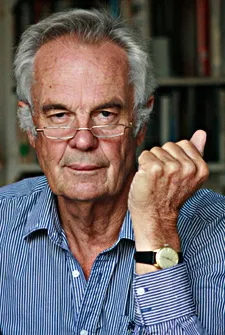

Foreign affairs columnist, film-maker and author

Related Posts

Johan Galtung 1930-2024October 2015 Published here on October 3, 2026 Let us focus on Civilization for conflict analysis and remedies. Major forms of disorder use violence; war is state organized violence. The most belligerent states are the United States of America and Israel, both with civilization roots. National Evangelism, the US Protestant Christian civilization– more national than evangelical–justifies US warfare as exceptionalism of a people chosen by God, with a manifest destiny to run the world. Orthodox Judaism justifies Israeli warfare to conquer and expand from Nile to Euphrates as a religious right and duty to the Eternal One. The third most belligerent country, the UK, no longer believes it is God-chosen but chosen by the USA; not quite the same but something. But the root cause of global disorder lies in the Occident–with Islam–seeing itself as the single, universal civilization valid for all at all times, all others being...
Jan ObergPhD, director, The Transnational Foundation for Peace and Future Research, TFFLund, Sweden October 2, 2026 This is my full original manuscript. The Chinese Academy of Social Science, CASS, makes two publications out if it. 1. China’s Five-year plan emphasized the capabilities of basic research and original innovation. It is regarded as the goal of the future social development, which, as required, should be significantly enhanced. Can you comment on the importance of original innovation in research and academic study? I believe it is easier to define “original innovation” in the natural sciences than in social sciences. The breaking points of what constitutes something new, or innovative, are not quite as sharp in the latter. But in both fields it is about opening up something that was closed, unseen, unexplored before – making manifest what was earlier latent. Innovations come in many forms and shapes – naming something that was not...
The agreement is catastrophic both because of what it says and what it doesn’t mention. It reduces further the major asset of security policies: Freedom of action. Jan Oberg TFF director September 25, 2026 A couple of hours before the agreement was signed on September 22, 2026, I published the following 13 hypotheses about what it would most likely contain on TFF Substack (in English). I was wrong on only the first point. Contrary to what Trump had written on his Truth Social platform, it does not appear to come into force immediately. In fact, it turned out to be worse than even I had anticipated. After these hypotheses now come a number of reflections in light of what the agreement actually contains, and does not contain, as well as the way in which it has generally been presented by major media outlets and by the public-service broadcaster DR. My...

Recent Articles

Tony Robinson October 4, 2026 Violence is easy to recognise when someone is being beaten, shot or killed. It becomes more difficult when nobody is holding a weapon. Poverty, discrimination, exploitation and repression can restrict a human life just as effectively, although they do so in very different ways and with very different consequences. Simply adding more categories to an ever-growing list of forms of violence does not really solve the problem. The more interesting question is what all these different situations have in common and why it makes sense to describe them using the same word. Human beings do not simply react to what happens around them. They remember the past, imagine things that do not yet exist, make plans and undertake projects. Workers organise because they imagine different working conditions; people migrate because they imagine another life somewhere else; social movements emerge because people refuse to accept the...
It’s a matter of principles, courage, vision and pulling together – while the militarist world is falling apart… Peter Langille October 3, 2026 “Here, then, is the problem which we present to you, stark and dreadful and inescapable: Shall we put an end to the human race; or shall mankind renounce war?”The Bertrand Russell—Albert Einstein Manifesto, July 9, 1955 ⁕ The forecast for what’s ahead is worrisome. The sharp rise in armed conflicts over the past three years is adding to what was already the highest level in over seventy years. Genocides, which should be prevented are supported. A shared climate emergency that jeopardises survival is ignored. Diverse polls now suggest that people are war-weary, worried and interested in a more effective United Nations. And, there are viable policy options for a more secure world! Yet governments are doubling-down, betting on more war and investing heavily. If current trends persist,...
Johan Galtung 1930-2024October 2015 Published here on October 3, 2026 Let us focus on Civilization for conflict analysis and remedies. Major forms of disorder use violence; war is state organized violence. The most belligerent states are the United States of America and Israel, both with civilization roots. National Evangelism, the US Protestant Christian civilization– more national than evangelical–justifies US warfare as exceptionalism of a people chosen by God, with a manifest destiny to run the world. Orthodox Judaism justifies Israeli warfare to conquer and expand from Nile to Euphrates as a religious right and duty to the Eternal One. The third most belligerent country, the UK, no longer believes it is God-chosen but chosen by the USA; not quite the same but something. But the root cause of global disorder lies in the Occident–with Islam–seeing itself as the single, universal civilization valid for all at all times, all others being...

TFF on Substack

Discover and subscribe to more peace materials on TFF Substack

Most Popular

Tony Robinson October 4, 2026 Violence is easy to recognise when someone is being beaten, shot or killed. It becomes more difficult when nobody is holding a weapon. Poverty, discrimination, exploitation and repression can restrict a human life just as effectively, although they do so in very different ways and with very different consequences. Simply adding more categories to an ever-growing list of forms of violence does not really solve the problem. The more interesting question is what all these different situations have in common and why it makes sense to describe them using the same word. Human beings do not simply react to what happens around them. They remember the past, imagine things that do not yet exist, make plans and undertake projects. Workers organise because they imagine different working conditions; people migrate because they imagine another life somewhere else; social movements emerge because people refuse to accept the...
It’s a matter of principles, courage, vision and pulling together – while the militarist world is falling apart… Peter Langille October 3, 2026 “Here, then, is the problem which we present to you, stark and dreadful and inescapable: Shall we put an end to the human race; or shall mankind renounce war?”The Bertrand Russell—Albert Einstein Manifesto, July 9, 1955 ⁕ The forecast for what’s ahead is worrisome. The sharp rise in armed conflicts over the past three years is adding to what was already the highest level in over seventy years. Genocides, which should be prevented are supported. A shared climate emergency that jeopardises survival is ignored. Diverse polls now suggest that people are war-weary, worried and interested in a more effective United Nations. And, there are viable policy options for a more secure world! Yet governments are doubling-down, betting on more war and investing heavily. If current trends persist,...
Johan Galtung 1930-2024October 2015 Published here on October 3, 2026 Let us focus on Civilization for conflict analysis and remedies. Major forms of disorder use violence; war is state organized violence. The most belligerent states are the United States of America and Israel, both with civilization roots. National Evangelism, the US Protestant Christian civilization– more national than evangelical–justifies US warfare as exceptionalism of a people chosen by God, with a manifest destiny to run the world. Orthodox Judaism justifies Israeli warfare to conquer and expand from Nile to Euphrates as a religious right and duty to the Eternal One. The third most belligerent country, the UK, no longer believes it is God-chosen but chosen by the USA; not quite the same but something. But the root cause of global disorder lies in the Occident–with Islam–seeing itself as the single, universal civilization valid for all at all times, all others being...
Read More
Living-Peace-Sign-Budapest-copy
Tony Robinson October 4, 2026 Violence is easy to recognise when someone is being beaten, shot or killed. It becomes more difficult when nobody is holding a weapon. Poverty, discrimination, exploitation and repression can restrict a human life just as effectively, although they do so in very different ways and with very different consequences. Simply adding more categories to an ever-growing list of forms of violence does not really solve the problem. The more interesting question is what all these different situations have in common and why it makes sense to describe them using the same word. Human beings do not simply react to what happens around them. They remember the past, imagine things that do not yet exist, make plans and undertake projects. Workers organise because they imagine different working conditions; people migrate because they imagine another life somewhere else; social movements emerge because people refuse to accept the...
b54a1f10-8c65-4f0b-9dd5-4abc0a7d04cc_2659x2659
It’s a matter of principles, courage, vision and pulling together – while the militarist world is falling apart… Peter Langille October 3, 2026 “Here, then, is the problem which we present to you, stark and dreadful and inescapable: Shall we put an end to the human race; or shall mankind renounce war?”The Bertrand Russell—Albert Einstein Manifesto, July 9, 1955 ⁕ The forecast for what’s ahead is worrisome. The sharp rise in armed conflicts over the past three years is adding to what was already the highest level in over seventy years. Genocides, which should be prevented are supported. A shared climate emergency that jeopardises survival is ignored. Diverse polls now suggest that people are war-weary, worried and interested in a more effective United Nations. And, there are viable policy options for a more secure world! Yet governments are doubling-down, betting on more war and investing heavily. If current trends persist,...
010
Johan Galtung 1930-2024October 2015 Published here on October 3, 2026 Let us focus on Civilization for conflict analysis and remedies. Major forms of disorder use violence; war is state organized violence. The most belligerent states are the United States of America and Israel, both with civilization roots. National Evangelism, the US Protestant Christian civilization– more national than evangelical–justifies US warfare as exceptionalism of a people chosen by God, with a manifest destiny to run the world. Orthodox Judaism justifies Israeli warfare to conquer and expand from Nile to Euphrates as a religious right and duty to the Eternal One. The third most belligerent country, the UK, no longer believes it is God-chosen but chosen by the USA; not quite the same but something. But the root cause of global disorder lies in the Occident–with Islam–seeing itself as the single, universal civilization valid for all at all times, all others being...
Screenshot 2026-10-02 011738
Jan ObergPhD, director, The Transnational Foundation for Peace and Future Research, TFFLund, Sweden October 2, 2026 This is my full original manuscript. The Chinese Academy of Social Science, CASS, makes two publications out if it. 1. China’s Five-year plan emphasized the capabilities of basic research and original innovation. It is regarded as the goal of the future social development, which, as required, should be significantly enhanced. Can you comment on the importance of original innovation in research and academic study? I believe it is easier to define “original innovation” in the natural sciences than in social sciences. The breaking points of what constitutes something new, or innovative, are not quite as sharp in the latter. But in both fields it is about opening up something that was closed, unseen, unexplored before – making manifest what was earlier latent. Innovations come in many forms and shapes – naming something that was not...
arctic-circle-map
The agreement is catastrophic both because of what it says and what it doesn’t mention. It reduces further the major asset of security policies: Freedom of action. Jan Oberg TFF director September 25, 2026 A couple of hours before the agreement was signed on September 22, 2026, I published the following 13 hypotheses about what it would most likely contain on TFF Substack (in English). I was wrong on only the first point. Contrary to what Trump had written on his Truth Social platform, it does not appear to come into force immediately. In fact, it turned out to be worse than even I had anticipated. After these hypotheses now come a number of reflections in light of what the agreement actually contains, and does not contain, as well as the way in which it has generally been presented by major media outlets and by the public-service broadcaster DR. My...
girl-5894831_1280
Below are TFF-related media mentions, comments, videos and social media posts published elsewhere but not on this homepage. We happen to catch and list only a fraction. Regarding video comments and debates, we recommend that you go to the TFF Video Channel on Substack where many of them are reproduced. Jan Oberg is a contributor to China Daily – 52 million daily clicks – and Global Times, CGTN and CCTV (the national television), China Investment, Xinhua News Agency and several others. Articles and videos on these media very often multiply into countless Chinese (and Western media) that re-post them from these main media. Thanks to The China Academy, his analyses, interviews and comments are frequently posted on YouTube channels such as Thinkers Forum and Wave Media. These videos are often re-posted on Bilibili (China’s YouTube), the China Content Center on TikTok, and on the Chinese edition of TikTok, Douyin.com. This means reaching hundreds of millions of viewers worldwide over a year. While there are too many to catch on all these...




