
By Conn M. Hallinan

November 27, 2019

The fallout from the September attack on Saudi Arabia’s Aramco oil facilities is continuing to reverberate throughout the Middle East, sidelining old enmities – sometimes for new ones – and re-drawing traditional alliances. While Turkey’s recent invasion of northern Syria is grabbing the headlines, the bigger story may be that major regional players are contemplating some historic re-alignments.

Originally posted on Counterpunch on November 8, 2019, here

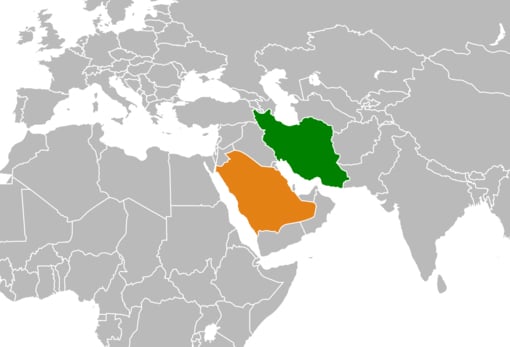
After years of bitter rivalry, the Saudis and the Iranians are considering how they can dial down their mutual animosity. The formerly powerful Gulf Cooperation Council (GCC) of the Persian Gulf monarchs is atomizing because Saudi Arabia is losing its grip. And Washington’s former domination of the region appears to be in decline.

Some of these developments are long-standing, pre-dating the cruise missile and drone assault that knocked out 50 per cent of Saudi Arabia’s oil production. But the double shock – Turkey’s lunge into Syria and the September missile attack – is accelerating these changes.

Pakistani Prime Minister, Imran Khan, recently flew to Iran and then on to Saudi Arabia to lobby for détente between Teheran and Riyadh and to head off any possibility of hostilities between the two countries. “What should never happen is a war,” Khan said, “because this will not just affect the whole region…this will cause poverty in the world. Oil prices will go up.”

According to Khan, both sides have agreed to talk, although the Yemen War is a stumbling block. But there are straws in the wind on that front, too. A partial ceasefire seems to be holding, and there are back-channel talks going on between the Houthis and the Saudis.

The Saudi intervention in Yemen’s civil war was supposed to last three months, but it has dragged on for over four years. The United Arab Emirates (UAE) was to supply the ground troops and the Saudis the airpower. But the Saudi-UAE alliance has made little progress against the battle-hardened Houthis, who have been strengthened by defections from the regular Yemeni army.

Air wars without supporting ground troops are almost always a failure, and they are very expensive. The drain on the Saudi treasury is significant, and the country’s wealth is not bottomless.

Crown Prince Mohammed bin Salman is trying to shift the Saudi economy from its over-reliance on petroleum, but he needs outside money to do that and he is not getting it. The Yemen War – which, according to the United Nations is the worst humanitarian disaster on the planet – and the Prince’s involvement with the murder and dismemberment of Saudi journalist Jamal Khashoggi, has spooked many investors.

Without outside investment, the Saudi’s have to use their oil revenues, but the price per barrel is below what the Kingdom needs to fulfil its budget goals, and world demand is falling off. The Chinese economy is slowing – the trade war with the US has had an impact – and European growth is sluggish. There is a whiff of recession in the air, and that’s bad news for oil producers.

Riyadh is also losing allies. The UAE is negotiating with the Houthis and withdrawing their troops, in part because the Abu Dhabi has different goals in Yemen than Saudi Arabia, and because in any dustup with Iran, the UAE would be ground zero. US generals are fond of calling the UAE “little Sparta” because of its well-trained army, but the operational word for Abu Dhabi is “little”: the Emirate’s army can muster 20,000 troops, Iran can field more than 800,000 soldiers.

Saudi Arabia’s goals in Yemen are to support the government-in-exile of President Rabho Mansour Hadi, control its southern border and challenge Iran’s support of the Houthis. The UAE, on the other hand, is less concerned with the Houthis but quite focused on backing the anti-Hadi Southern Transitional Council, which is trying to re-create south Yemen as a separate country. North and south Yemen were merged in 1990, largely as a result of Saudi pressure, and it has never been a comfortable marriage.

Riyadh has also lost its grip on the Gulf Cooperation Council. Oman, Kuwait, and Qatar continue to trade with Iran in spite of efforts by the Saudis to isolate Teheran.

Rapidly changing and bewildering political sociometry
– added by The Transnational from CIDOB Barcelona’s twitter account

The UAE and Saudi Arabia recently hosted Russian President Vladimir Putin, who pressed for the 22-member Arab League to re-admit Syria. GCC member Bahrain has already re-established diplomatic relations with Damascus. Putin is pushing for a multilateral security umbrella for the Middle East, which includes China.

“While Russia is a reliable ally, the US is not,” Middle East scholar Mark Katz told the South Asia Journal. And while many in the region have no love for Syria’s Assad, “they respect Vladimir Putin for sticking by Russia’s ally.”

The Arab League – with the exception of Qatar – denounced the Turkish invasion and called for a withdrawal of Ankara’s troops. Qatar is currently being blockaded by Saudi Arabia and the UAE for pursuing an independent foreign policy and backing a different horse in the Libyan civil war. Turkey is Qatar’s main ally.

Russia’s 10-point agreement with Turkey on Syria has generally gone down well with Arab League members, largely because the Turks agreed to respect Damascus’s sovereignty and eventually withdraw all troops. Of course, “eventually” is a shifty word, especially because Turkey’s goals are hardly clear.

Turkish President Recep Tayyip Erdogan wants to drive the Syrian Kurds away from the Turkish border and move millions of Syrian refugees into a strip of land some 19 miles deep and 275 miles wide. The Kurds may move out, but the Russian and Syrian military – filling in the vacuum left by President Trump’s withdrawal of American forces – have blocked the Turks from holding more than the border and one deep enclave, certainly not one big enough to house millions of refugees.

Erdogan’s invasion is popular at home – nationalism plays well with the Turkish population and most Turks are unhappy with the Syrian refugees – but for how long? The Turkish economy is in trouble and invasions cost a lot of money. Ankara is using proxies for much of the fighting, but without lots of Turkish support, those proxies are no match for the Kurds – let alone the Syrian and Russian military.

That would mainly mean airpower, and Turkish airpower is restrained by the threat of Syrian anti-aircraft and Russian fighters, not to mention the fact that the Americans still control the airspace. The Russians have deployed their latest fifth-generation stealth fighter, the SU-57, and a number of MiG-29s and SU-27s, not planes the Turks would wish to tangle with. The Russians also have their new mobile S-400 anti-aircraft system, and the Syrians have the older, but still effective, S-300s.

In short, things could get really messy if Turkey decided to push their proxies or their army into areas occupied by Russian or Syrian troops. There are reports of clashes in Syria’s northeast and casualties among the Kurds and Syrian Army, but a serious attempt to push the Russians and the Syrians out seems questionable.

The goal of resettling refugees is unlikely to go anywhere. It will cost some $53 billion to build an infrastructure and move two million refugees into Syria, money that Turkey doesn’t have. The European Union has made it clear it won’t offer a nickel, and the UN can’t step in because the invasion is a violation of international law.

When those facts sink in, Erdogan might find that Turkish nationalism will not be enough to support his Syrian adventure if it turns into an occupation.

The Middle East that is emerging from the current crisis may be very different than the one that existed before those cruise missiles and drones tipped over the chessboard.

The Yemen War might finally end. Iran may, at least partly, break out of the political and economic blockade that Saudi Arabia, the US and Israel has imposed on it. Syria’s civil war will recede.  

And the Americans, who have dominated the Middle East since 1945, will become simply one of several international players in the region, along with China, Russia, India and the European Union.

Conn M. Hallinan is a columnist for Foreign Policy In Focus, “A Think Tank Without Walls, and an independent journalist. He holds a PhD in Anthropology from the University of California, Berkeley. He oversaw the journalism program at the University of California at Santa Cruz for 23 years and won the UCSC Alumni Association’s Distinguished Teaching Award, as well as UCSC’s Innovations in Teaching Award, and Excellence in Teaching Award.  He was also a college provost at UCSC, and retired in 2004.
He is a winner of a Project Censored “Real News Award” and lives in Berkeley, California. Conn Hallinan can be read at dispatchesfromtheedgeblog.wordpress.com


Related Posts

Jan Oberg May 15, 2026 Go to this Fox News page and scroll the whole way down: President Donald Trump tells the world that his meeting with President Xi Jinping yielded a lot of very concrete political and economic results – of course, only where the Chinese side, according to him, agreed with him. He does not mention the Taiwan issue, but Secretary of State, Marco Rubio, says that it did not feature prominently in their talks and that the US policy on Taiwan has not changed. Then go to China Daily – or Global Times – and you will see that for the Chinese it is framework, principles, structure of cooperation etc. that matters – all embedded in the overall idea of “constructive bilateral relationship of strategic stability.” Nowhere is any concrete agreement or deal – all that Trump refers to – mentioned. At the general level, this gives you insights into the very different social...
Lena Petrova of “World Affairs In Context” with more than half a million subscribers on YouTube wanted to explore what a peace researcher like me has to say about, among other things, the First and the Second Cold War and why eethics has disappeared from politics. I am particularly happy about this conversation that also yielded an amazing number of very appreciative comments on YouTube. No doubt, people are longing for alternatives, including peace perspectives.
The MIMAC – Military-Industrial-Media-Academic Complex – drives the world’s rampant militarism and wars without end. Here is a short reflection of how it works against all interests of humanity. #5 deals with why there is no real enemy or threat images/analysis. It’s all ex-post constructions. And, btw, theTFF Peace Pulse is now on Rumble.

Recent Articles

Tony Robinson October 4, 2026 Violence is easy to recognise when someone is being beaten, shot or killed. It becomes more difficult when nobody is holding a weapon. Poverty, discrimination, exploitation and repression can restrict a human life just as effectively, although they do so in very different ways and with very different consequences. Simply adding more categories to an ever-growing list of forms of violence does not really solve the problem. The more interesting question is what all these different situations have in common and why it makes sense to describe them using the same word. Human beings do not simply react to what happens around them. They remember the past, imagine things that do not yet exist, make plans and undertake projects. Workers organise because they imagine different working conditions; people migrate because they imagine another life somewhere else; social movements emerge because people refuse to accept the...
It’s a matter of principles, courage, vision and pulling together – while the militarist world is falling apart… Peter Langille October 3, 2026 “Here, then, is the problem which we present to you, stark and dreadful and inescapable: Shall we put an end to the human race; or shall mankind renounce war?”The Bertrand Russell—Albert Einstein Manifesto, July 9, 1955 ⁕ The forecast for what’s ahead is worrisome. The sharp rise in armed conflicts over the past three years is adding to what was already the highest level in over seventy years. Genocides, which should be prevented are supported. A shared climate emergency that jeopardises survival is ignored. Diverse polls now suggest that people are war-weary, worried and interested in a more effective United Nations. And, there are viable policy options for a more secure world! Yet governments are doubling-down, betting on more war and investing heavily. If current trends persist,...
Johan Galtung 1930-2024October 2015 Published here on October 3, 2026 Let us focus on Civilization for conflict analysis and remedies. Major forms of disorder use violence; war is state organized violence. The most belligerent states are the United States of America and Israel, both with civilization roots. National Evangelism, the US Protestant Christian civilization– more national than evangelical–justifies US warfare as exceptionalism of a people chosen by God, with a manifest destiny to run the world. Orthodox Judaism justifies Israeli warfare to conquer and expand from Nile to Euphrates as a religious right and duty to the Eternal One. The third most belligerent country, the UK, no longer believes it is God-chosen but chosen by the USA; not quite the same but something. But the root cause of global disorder lies in the Occident–with Islam–seeing itself as the single, universal civilization valid for all at all times, all others being...

TFF on Substack

Discover and subscribe to more peace materials on TFF Substack

Most Popular

Tony Robinson October 4, 2026 Violence is easy to recognise when someone is being beaten, shot or killed. It becomes more difficult when nobody is holding a weapon. Poverty, discrimination, exploitation and repression can restrict a human life just as effectively, although they do so in very different ways and with very different consequences. Simply adding more categories to an ever-growing list of forms of violence does not really solve the problem. The more interesting question is what all these different situations have in common and why it makes sense to describe them using the same word. Human beings do not simply react to what happens around them. They remember the past, imagine things that do not yet exist, make plans and undertake projects. Workers organise because they imagine different working conditions; people migrate because they imagine another life somewhere else; social movements emerge because people refuse to accept the...
It’s a matter of principles, courage, vision and pulling together – while the militarist world is falling apart… Peter Langille October 3, 2026 “Here, then, is the problem which we present to you, stark and dreadful and inescapable: Shall we put an end to the human race; or shall mankind renounce war?”The Bertrand Russell—Albert Einstein Manifesto, July 9, 1955 ⁕ The forecast for what’s ahead is worrisome. The sharp rise in armed conflicts over the past three years is adding to what was already the highest level in over seventy years. Genocides, which should be prevented are supported. A shared climate emergency that jeopardises survival is ignored. Diverse polls now suggest that people are war-weary, worried and interested in a more effective United Nations. And, there are viable policy options for a more secure world! Yet governments are doubling-down, betting on more war and investing heavily. If current trends persist,...
Johan Galtung 1930-2024October 2015 Published here on October 3, 2026 Let us focus on Civilization for conflict analysis and remedies. Major forms of disorder use violence; war is state organized violence. The most belligerent states are the United States of America and Israel, both with civilization roots. National Evangelism, the US Protestant Christian civilization– more national than evangelical–justifies US warfare as exceptionalism of a people chosen by God, with a manifest destiny to run the world. Orthodox Judaism justifies Israeli warfare to conquer and expand from Nile to Euphrates as a religious right and duty to the Eternal One. The third most belligerent country, the UK, no longer believes it is God-chosen but chosen by the USA; not quite the same but something. But the root cause of global disorder lies in the Occident–with Islam–seeing itself as the single, universal civilization valid for all at all times, all others being...
Read More
Living-Peace-Sign-Budapest-copy
Tony Robinson October 4, 2026 Violence is easy to recognise when someone is being beaten, shot or killed. It becomes more difficult when nobody is holding a weapon. Poverty, discrimination, exploitation and repression can restrict a human life just as effectively, although they do so in very different ways and with very different consequences. Simply adding more categories to an ever-growing list of forms of violence does not really solve the problem. The more interesting question is what all these different situations have in common and why it makes sense to describe them using the same word. Human beings do not simply react to what happens around them. They remember the past, imagine things that do not yet exist, make plans and undertake projects. Workers organise because they imagine different working conditions; people migrate because they imagine another life somewhere else; social movements emerge because people refuse to accept the...
b54a1f10-8c65-4f0b-9dd5-4abc0a7d04cc_2659x2659
It’s a matter of principles, courage, vision and pulling together – while the militarist world is falling apart… Peter Langille October 3, 2026 “Here, then, is the problem which we present to you, stark and dreadful and inescapable: Shall we put an end to the human race; or shall mankind renounce war?”The Bertrand Russell—Albert Einstein Manifesto, July 9, 1955 ⁕ The forecast for what’s ahead is worrisome. The sharp rise in armed conflicts over the past three years is adding to what was already the highest level in over seventy years. Genocides, which should be prevented are supported. A shared climate emergency that jeopardises survival is ignored. Diverse polls now suggest that people are war-weary, worried and interested in a more effective United Nations. And, there are viable policy options for a more secure world! Yet governments are doubling-down, betting on more war and investing heavily. If current trends persist,...
010
Johan Galtung 1930-2024October 2015 Published here on October 3, 2026 Let us focus on Civilization for conflict analysis and remedies. Major forms of disorder use violence; war is state organized violence. The most belligerent states are the United States of America and Israel, both with civilization roots. National Evangelism, the US Protestant Christian civilization– more national than evangelical–justifies US warfare as exceptionalism of a people chosen by God, with a manifest destiny to run the world. Orthodox Judaism justifies Israeli warfare to conquer and expand from Nile to Euphrates as a religious right and duty to the Eternal One. The third most belligerent country, the UK, no longer believes it is God-chosen but chosen by the USA; not quite the same but something. But the root cause of global disorder lies in the Occident–with Islam–seeing itself as the single, universal civilization valid for all at all times, all others being...
Screenshot 2026-10-02 011738
Jan ObergPhD, director, The Transnational Foundation for Peace and Future Research, TFFLund, Sweden October 2, 2026 This is my full original manuscript. The Chinese Academy of Social Science, CASS, makes two publications out if it. 1. China’s Five-year plan emphasized the capabilities of basic research and original innovation. It is regarded as the goal of the future social development, which, as required, should be significantly enhanced. Can you comment on the importance of original innovation in research and academic study? I believe it is easier to define “original innovation” in the natural sciences than in social sciences. The breaking points of what constitutes something new, or innovative, are not quite as sharp in the latter. But in both fields it is about opening up something that was closed, unseen, unexplored before – making manifest what was earlier latent. Innovations come in many forms and shapes – naming something that was not...
arctic-circle-map
The agreement is catastrophic both because of what it says and what it doesn’t mention. It reduces further the major asset of security policies: Freedom of action. Jan Oberg TFF director September 25, 2026 A couple of hours before the agreement was signed on September 22, 2026, I published the following 13 hypotheses about what it would most likely contain on TFF Substack (in English). I was wrong on only the first point. Contrary to what Trump had written on his Truth Social platform, it does not appear to come into force immediately. In fact, it turned out to be worse than even I had anticipated. After these hypotheses now come a number of reflections in light of what the agreement actually contains, and does not contain, as well as the way in which it has generally been presented by major media outlets and by the public-service broadcaster DR. My...
girl-5894831_1280
Below are TFF-related media mentions, comments, videos and social media posts published elsewhere but not on this homepage. We happen to catch and list only a fraction. Regarding video comments and debates, we recommend that you go to the TFF Video Channel on Substack where many of them are reproduced. Jan Oberg is a contributor to China Daily – 52 million daily clicks – and Global Times, CGTN and CCTV (the national television), China Investment, Xinhua News Agency and several others. Articles and videos on these media very often multiply into countless Chinese (and Western media) that re-post them from these main media. Thanks to The China Academy, his analyses, interviews and comments are frequently posted on YouTube channels such as Thinkers Forum and Wave Media. These videos are often re-posted on Bilibili (China’s YouTube), the China Content Center on TikTok, and on the Chinese edition of TikTok, Douyin.com. This means reaching hundreds of millions of viewers worldwide over a year. While there are too many to catch on all these...



