

Of all the present foes of America it is Iran which has consistently been over time the number one.  Since its Islamic Revolution in 1979 that overthrew the secular-minded Shah and supplanted him with a militant, sometimes warlike, Islamic theocracy, it has been America’s Great Satan. (But for Europe rather less so, although no country has broken ranks with Washington.)

In the current edition of Foreign Affairs two professors, Daniel Benjamin and Steven Simon, write, “Imagine historians 100 years from now trying to decide which foreign power the US feared most in the decades from the late Cold War…They would see Russia first as an archenemy, then as a friend, and finally as a challenging nuisance.

They would see China become a great power rival. North Korea would appear as sideshow. Only one country would be depicted as a persistent and implacable foe: Iran.”

A couple of months ago it looked as if President Donald Trump would give the order to attack Iran but then pulled back, comfortable that the West’s sanctions were ruining the Iranian economy.

As in its early years the regime has been profoundly irritating the US. It has returned to enriching uranium towards a level that could mean, if it wanted to, it could one day build a nuclear bomb.

It has been supporting Bashar al-Assad in Syria and provoking Israel via its surrogate, Hezbollah, in Lebanon and giving help to the rebelling Shi’ites in Iraq.

In Yemen it has given modest support to the Houthi uprising. Only in Afghanistan where its interests coincide has Iran unofficially worked on the same side as the US and Nato.

One fifth of the world’s exported oil flows through the Persian Gulf on which Iran has a long shoreline. None of the oil goes to the US but interruption can affect the price of oil. Ironically, much of it goes to China, a supporter of Iran.

Contrary to panicky voices in Washington the Straits of Hormuz at the Gulf’s head cannot be closed. It’s too wide for that. Nevertheless, the Iranians have shown with their recent sabotaging of two big (non American) oil tankers that they can pinch the West’s nerves.

In balance of power terms Washington’s obsession with Iran is absurd. Its economy is barely 2% as large. The US and its allies in the Middle East- Israel, Saudi Arabia and the United Arab Emirates- together spend 750 billion US dollars annually on their armed forces. That’s about 50 times more than Iran.

It has missiles but as yet they don’t go very far. Its (presumed) recent bombing attack on Saudi Arabia’s oil storage complex with drones that flew below the radar was done with relatively elementary technology.

President Barack Obama did take this inequality on board and, backed up by Russia and the EU, he did forge an agreement with Tehran that rolled back Iran’s nuclear research and removed the threat of it developing weapons (which it probably had no plans to do anyway).

The 2015 agreement was meant to be the entry door to engaging in negotiations with the regime to limit Iran’s provocative interventions in the Middle East. But Obama also missed his opportunities. Early in his tenure Iran offered him an olive branch and he spurned it. He came to push for the anti-nuclear negotiations too late in the day.

Trump, with his perverse urge to sabotage everything that Obama had accomplished, pulled the plug on the deal before it had the time to set itself in concrete.

After 40 years of alienation from and persecution by the US and its allies why should anyone be surprised that Iran has attempted to push back, especially where it can do damage in its backyard?

Its constant hostility towards Israel is because it fears that Israel is working for the downfall of its regime. In Iraq there would be no Iranian presence if there hadn’t been the US-led war of 2003. Saddam Hussein was helped by the US in his war against Iran.

Saudi Arabia has an urge to bring down the regime in Tehran, for reasons part political and part religious. This is why Iran via the Houthis is attempting to bleed the Saudis dry.

But who gets kudos from supporting the Saudi tactics which spare neither women, children or hospitals?

Iran’s relationship with Syria is principally a marriage of convenience by two Shi’ite states which feel threatened by the Middle East’s majority of Sunnis. It does not threaten US essential interests.

Iran and the US have never been further apart. The EU tries to be a moderating force but is cowed by the reach of American economic sanctions.

Yet if the US undermined Iran to the point of destabilizing its economy and its government it would be shooting itself in the foot, unleashing further instability in the Middle East, not least a massive refugee crisis.

Iran can be belligerent but it doesn’t help to constantly confront it.

Obama showed the way with EU and Russian support.

The sooner the US can return to that path the sooner can the Middle East become much more peaceful.
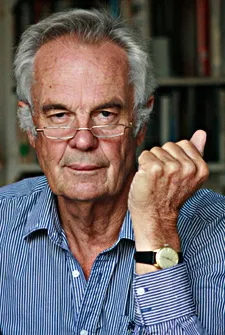

Foreign affairs columnist, film-maker and author

One Response

  1. Various US administrations, dominated by pro-Israeli zealots, have continued to demonise and oppose Iran ever since the Islamic revolution changed Iran’s pro-Israeli policies to extreme anti-Israeli sentiments. One cannot expect anything else from US administrations before the United States can free itself from undue Israeli influence. Before starting serious negotiations with Iran, even President Obama spent his first term imposing “crippling sanctions” on Iran to soften the opposition of the neocons in Congress and in the country as a whole. However, the reaction of most European countries to US policies towards Iran has been most disappointing. Europe lost tens of billions of dollars of euros in likely trade deals with Iran after Trump violated the nuclear deal. If the situation in the Persian Gulf explodes to a war, it is Europe that will have to put up with much higher oil prices, huge instability in the Middle East that would affect Europe and a new wave of refugees that will even surpass what we saw after the US ‘s failed attempt to topple President Bashar al-Assad. Yet, in the face of all this, European leaders have acted like frightened rabbits paralysed in the glaring light of US aggression. They are unable to say no even to a president who is on the verge of being impeached, who has broken numerous international treaties, who has intensified tension with China and Russia and who is dictating to Europeans in a way that an emperor dictates to his vassals. European leaders must get together and stop greater erosion of international law and a rules-based political order before it is too late. Otherwise, we will be seeing a repetition of the unstoppable aggression of the Nazis before World War II.

Related Posts

Johan Galtung 1930-2024October 2015 Published here on October 3, 2026 Let us focus on Civilization for conflict analysis and remedies. Major forms of disorder use violence; war is state organized violence. The most belligerent states are the United States of America and Israel, both with civilization roots. National Evangelism, the US Protestant Christian civilization– more national than evangelical–justifies US warfare as exceptionalism of a people chosen by God, with a manifest destiny to run the world. Orthodox Judaism justifies Israeli warfare to conquer and expand from Nile to Euphrates as a religious right and duty to the Eternal One. The third most belligerent country, the UK, no longer believes it is God-chosen but chosen by the USA; not quite the same but something. But the root cause of global disorder lies in the Occident–with Islam–seeing itself as the single, universal civilization valid for all at all times, all others being...
Jan ObergPhD, director, The Transnational Foundation for Peace and Future Research, TFFLund, Sweden October 2, 2026 This is my full original manuscript. The Chinese Academy of Social Science, CASS, makes two publications out if it. 1. China’s Five-year plan emphasized the capabilities of basic research and original innovation. It is regarded as the goal of the future social development, which, as required, should be significantly enhanced. Can you comment on the importance of original innovation in research and academic study? I believe it is easier to define “original innovation” in the natural sciences than in social sciences. The breaking points of what constitutes something new, or innovative, are not quite as sharp in the latter. But in both fields it is about opening up something that was closed, unseen, unexplored before – making manifest what was earlier latent. Innovations come in many forms and shapes – naming something that was not...
The agreement is catastrophic both because of what it says and what it doesn’t mention. It reduces further the major asset of security policies: Freedom of action. Jan Oberg TFF director September 25, 2026 A couple of hours before the agreement was signed on September 22, 2026, I published the following 13 hypotheses about what it would most likely contain on TFF Substack (in English). I was wrong on only the first point. Contrary to what Trump had written on his Truth Social platform, it does not appear to come into force immediately. In fact, it turned out to be worse than even I had anticipated. After these hypotheses now come a number of reflections in light of what the agreement actually contains, and does not contain, as well as the way in which it has generally been presented by major media outlets and by the public-service broadcaster DR. My...

Recent Articles

Tony Robinson October 4, 2026 Violence is easy to recognise when someone is being beaten, shot or killed. It becomes more difficult when nobody is holding a weapon. Poverty, discrimination, exploitation and repression can restrict a human life just as effectively, although they do so in very different ways and with very different consequences. Simply adding more categories to an ever-growing list of forms of violence does not really solve the problem. The more interesting question is what all these different situations have in common and why it makes sense to describe them using the same word. Human beings do not simply react to what happens around them. They remember the past, imagine things that do not yet exist, make plans and undertake projects. Workers organise because they imagine different working conditions; people migrate because they imagine another life somewhere else; social movements emerge because people refuse to accept the...
It’s a matter of principles, courage, vision and pulling together – while the militarist world is falling apart… Peter Langille October 3, 2026 “Here, then, is the problem which we present to you, stark and dreadful and inescapable: Shall we put an end to the human race; or shall mankind renounce war?”The Bertrand Russell—Albert Einstein Manifesto, July 9, 1955 ⁕ The forecast for what’s ahead is worrisome. The sharp rise in armed conflicts over the past three years is adding to what was already the highest level in over seventy years. Genocides, which should be prevented are supported. A shared climate emergency that jeopardises survival is ignored. Diverse polls now suggest that people are war-weary, worried and interested in a more effective United Nations. And, there are viable policy options for a more secure world! Yet governments are doubling-down, betting on more war and investing heavily. If current trends persist,...
Johan Galtung 1930-2024October 2015 Published here on October 3, 2026 Let us focus on Civilization for conflict analysis and remedies. Major forms of disorder use violence; war is state organized violence. The most belligerent states are the United States of America and Israel, both with civilization roots. National Evangelism, the US Protestant Christian civilization– more national than evangelical–justifies US warfare as exceptionalism of a people chosen by God, with a manifest destiny to run the world. Orthodox Judaism justifies Israeli warfare to conquer and expand from Nile to Euphrates as a religious right and duty to the Eternal One. The third most belligerent country, the UK, no longer believes it is God-chosen but chosen by the USA; not quite the same but something. But the root cause of global disorder lies in the Occident–with Islam–seeing itself as the single, universal civilization valid for all at all times, all others being...

TFF on Substack

Discover and subscribe to more peace materials on TFF Substack

Most Popular

Tony Robinson October 4, 2026 Violence is easy to recognise when someone is being beaten, shot or killed. It becomes more difficult when nobody is holding a weapon. Poverty, discrimination, exploitation and repression can restrict a human life just as effectively, although they do so in very different ways and with very different consequences. Simply adding more categories to an ever-growing list of forms of violence does not really solve the problem. The more interesting question is what all these different situations have in common and why it makes sense to describe them using the same word. Human beings do not simply react to what happens around them. They remember the past, imagine things that do not yet exist, make plans and undertake projects. Workers organise because they imagine different working conditions; people migrate because they imagine another life somewhere else; social movements emerge because people refuse to accept the...
It’s a matter of principles, courage, vision and pulling together – while the militarist world is falling apart… Peter Langille October 3, 2026 “Here, then, is the problem which we present to you, stark and dreadful and inescapable: Shall we put an end to the human race; or shall mankind renounce war?”The Bertrand Russell—Albert Einstein Manifesto, July 9, 1955 ⁕ The forecast for what’s ahead is worrisome. The sharp rise in armed conflicts over the past three years is adding to what was already the highest level in over seventy years. Genocides, which should be prevented are supported. A shared climate emergency that jeopardises survival is ignored. Diverse polls now suggest that people are war-weary, worried and interested in a more effective United Nations. And, there are viable policy options for a more secure world! Yet governments are doubling-down, betting on more war and investing heavily. If current trends persist,...
Johan Galtung 1930-2024October 2015 Published here on October 3, 2026 Let us focus on Civilization for conflict analysis and remedies. Major forms of disorder use violence; war is state organized violence. The most belligerent states are the United States of America and Israel, both with civilization roots. National Evangelism, the US Protestant Christian civilization– more national than evangelical–justifies US warfare as exceptionalism of a people chosen by God, with a manifest destiny to run the world. Orthodox Judaism justifies Israeli warfare to conquer and expand from Nile to Euphrates as a religious right and duty to the Eternal One. The third most belligerent country, the UK, no longer believes it is God-chosen but chosen by the USA; not quite the same but something. But the root cause of global disorder lies in the Occident–with Islam–seeing itself as the single, universal civilization valid for all at all times, all others being...
Read More
Living-Peace-Sign-Budapest-copy
Tony Robinson October 4, 2026 Violence is easy to recognise when someone is being beaten, shot or killed. It becomes more difficult when nobody is holding a weapon. Poverty, discrimination, exploitation and repression can restrict a human life just as effectively, although they do so in very different ways and with very different consequences. Simply adding more categories to an ever-growing list of forms of violence does not really solve the problem. The more interesting question is what all these different situations have in common and why it makes sense to describe them using the same word. Human beings do not simply react to what happens around them. They remember the past, imagine things that do not yet exist, make plans and undertake projects. Workers organise because they imagine different working conditions; people migrate because they imagine another life somewhere else; social movements emerge because people refuse to accept the...
b54a1f10-8c65-4f0b-9dd5-4abc0a7d04cc_2659x2659
It’s a matter of principles, courage, vision and pulling together – while the militarist world is falling apart… Peter Langille October 3, 2026 “Here, then, is the problem which we present to you, stark and dreadful and inescapable: Shall we put an end to the human race; or shall mankind renounce war?”The Bertrand Russell—Albert Einstein Manifesto, July 9, 1955 ⁕ The forecast for what’s ahead is worrisome. The sharp rise in armed conflicts over the past three years is adding to what was already the highest level in over seventy years. Genocides, which should be prevented are supported. A shared climate emergency that jeopardises survival is ignored. Diverse polls now suggest that people are war-weary, worried and interested in a more effective United Nations. And, there are viable policy options for a more secure world! Yet governments are doubling-down, betting on more war and investing heavily. If current trends persist,...
010
Johan Galtung 1930-2024October 2015 Published here on October 3, 2026 Let us focus on Civilization for conflict analysis and remedies. Major forms of disorder use violence; war is state organized violence. The most belligerent states are the United States of America and Israel, both with civilization roots. National Evangelism, the US Protestant Christian civilization– more national than evangelical–justifies US warfare as exceptionalism of a people chosen by God, with a manifest destiny to run the world. Orthodox Judaism justifies Israeli warfare to conquer and expand from Nile to Euphrates as a religious right and duty to the Eternal One. The third most belligerent country, the UK, no longer believes it is God-chosen but chosen by the USA; not quite the same but something. But the root cause of global disorder lies in the Occident–with Islam–seeing itself as the single, universal civilization valid for all at all times, all others being...
Screenshot 2026-10-02 011738
Jan ObergPhD, director, The Transnational Foundation for Peace and Future Research, TFFLund, Sweden October 2, 2026 This is my full original manuscript. The Chinese Academy of Social Science, CASS, makes two publications out if it. 1. China’s Five-year plan emphasized the capabilities of basic research and original innovation. It is regarded as the goal of the future social development, which, as required, should be significantly enhanced. Can you comment on the importance of original innovation in research and academic study? I believe it is easier to define “original innovation” in the natural sciences than in social sciences. The breaking points of what constitutes something new, or innovative, are not quite as sharp in the latter. But in both fields it is about opening up something that was closed, unseen, unexplored before – making manifest what was earlier latent. Innovations come in many forms and shapes – naming something that was not...
arctic-circle-map
The agreement is catastrophic both because of what it says and what it doesn’t mention. It reduces further the major asset of security policies: Freedom of action. Jan Oberg TFF director September 25, 2026 A couple of hours before the agreement was signed on September 22, 2026, I published the following 13 hypotheses about what it would most likely contain on TFF Substack (in English). I was wrong on only the first point. Contrary to what Trump had written on his Truth Social platform, it does not appear to come into force immediately. In fact, it turned out to be worse than even I had anticipated. After these hypotheses now come a number of reflections in light of what the agreement actually contains, and does not contain, as well as the way in which it has generally been presented by major media outlets and by the public-service broadcaster DR. My...
girl-5894831_1280
Below are TFF-related media mentions, comments, videos and social media posts published elsewhere but not on this homepage. We happen to catch and list only a fraction. Regarding video comments and debates, we recommend that you go to the TFF Video Channel on Substack where many of them are reproduced. Jan Oberg is a contributor to China Daily – 52 million daily clicks – and Global Times, CGTN and CCTV (the national television), China Investment, Xinhua News Agency and several others. Articles and videos on these media very often multiply into countless Chinese (and Western media) that re-post them from these main media. Thanks to The China Academy, his analyses, interviews and comments are frequently posted on YouTube channels such as Thinkers Forum and Wave Media. These videos are often re-posted on Bilibili (China’s YouTube), the China Content Center on TikTok, and on the Chinese edition of TikTok, Douyin.com. This means reaching hundreds of millions of viewers worldwide over a year. While there are too many to catch on all these...




