The World Order Backdrop
Arguably, even before the atom bomb was dropped on Hiroshima, there was a widespread sense that a state-centric form of world order was morally and functionally deficient in certain fundamental respects. Political actors were indifferent to the outbreaks of war, disease, and famine outside of their sovereign territory absent serious extraterritorial reverberations. At the same time lesser states were vulnerable to the manipulations and territorial/imperial ambitions of leading states that generated colonialism, interventions, and sustained an exploitative Europeanization of world order.
Originally posted on Richard Falk’s blog
Citizen Pilgrimage on September 5, 2019, here
World War I with massive casualties, closely followed by the Russian Revolution, which posed a normative challenge to the capitalist/market
It became soon obvious that the League, a project of idealists, was not endowed with the capabilities, independence, and authority needed for success, and its failure to bring peace to the world did not surprise the political leaders of major countries and even less, their realist advisors.
Then came World War II with estimated casualties of 60 million and the future gravely menaced by the advent of the nuclear age, and the recognition became more widespread, including among political classes, that global reform was indispensable if catastrophe was to be avoided.
The United Nations emerged in this atmosphere of urgency, conceived to correct the shortcomings of the League while recognizing and incorporating the geopolitical realities of inequalities among states when it comes to political and economic power and diplomatic influence. The predominant Western understanding in 1945 was that to make the UN operationally relevant it would be necessary to connect geopolitics to statism in a mutually acceptable manner.
This rather incoherent dualistic goal was operationalized by giving the right of veto to the five permanent members of the Security Council and in the Charter and General Assembly affirming the juridical equality of all Members, whether small or large sovereign states.
There were also parallel worries in 1945 as serious as the impulse to achieve war prevention. It was widely believed in the West that effective global mechanisms were needed to avoid a new worldwide economic depression, which was translated into political reality through the establishment of the World Bank, IMF, and later, the World Trade Organization that also had a dual mission of regulating and promoting global market forces.
The UN lacked sufficient financial independence and political autonomy to fulfill the promise of the idealistic vision of the Preamble to the UN Charter. This vision of war prevention was blocked geopolitically by the political behavior of states enjoying a right of veto and juridically by the primacy accorded national interests of all Members.
The result, as evidenced by the failure to remove threats of nuclear weapons, climate change, and global migration, demonstrated the UN’s inability to protect either global or human (that is, species) interests.
In such an atmosphere, the drift toward catastrophe continues, hastened by hyper-nationalism, escapism, denialism, and short-termism. This drift is currently accelerated by the hyper-nationalism of leading states, including the United States, that earlier offered some incidental support for global and human interests, expressive of its hybrid approach to global leadership, which featured both selfish and benevolent motivations.
This meant combining the pursuit of self-aggrandizing goals with the pursuit of a somewhat enlightened and pragmatic view of its global leadership role, sometimes called ‘liberal internationalism.’
Such an approach
In effect, the sovereign territoriality of all states prevailed in the organization of international life so long as the strategic, ideological, corporate, and financial interests of geopolitical actors were not serious threatened adversely affected by internal developments. The UN Charter recognized this in Article 2(7) by prohibiting the Organization from intervening in matters ‘essentially within the domestic jurisdiction’ of Member states unless international peace and security were affected.
In this spirit, environmental issues have never been seen as providing sufficient grounds for intervention by the UN or geopolitical actors. As a matter of international law intervention by states is prohibited by contemporary international law, although opportunistic exceptions exist, and violations and geopolitical interpretations of the norm occur.
There exists a doctrine of ‘humanitarian intervention’ and a norm mandating ‘a right to protect’ (R2P), but no claim or practice associated with ‘environmental’ or ‘ecological’ transnational intervention, and no norm formulated in light of a ‘right to protect humanity.’
And so the fires in Brazil (and Africa) continue to burn,
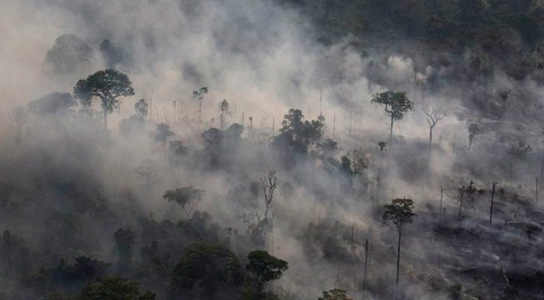
The Brazilian response has produced exclamations of ‘national sovereignty’ and some cosmetic reassurances that matters are under control, despite the continuing billowing of clouds of smoke so dark as to obscure the sun as far 1,700 miles away in the huge city of Sao Paulo.
Finally, nominally bowing to international pressures, Bolsonaro finally dispatched 700 troops to help with firefighting in the Amazon, but such a move seemed nominal and too belated to undo the damage being daily done by the raging fires in the forest areas.
Amazonia, Syria, Yemen, and Kashmir
What these issues have in common is the inability of the global system of authority to save these national populations from experiencing prolonged tragedy as a result of the criminal behaviour of the territorial government and, in some instances,
The political will to act effectively is shaped by nationalist motivations and by more material concerns involving territory, markets, resources, and population identities, with the concern for the avoidance of mass suffering pretty much confined to angry or pleading rhetoric.
In effect, principles of international law and the authority UN are ineffectual unless backed by political will or activated by a robust political movement. For Syria, Yemen, these tragic happenings impact upon the society of people, while for Kashmir, the Indian repudiation of Kashmiri autonomy threatens a war between two nuclear weapons states, as well as gives rise to severe state/society tensions.
The 2127 fires ablaze in the Amazon are different. Burning Amazonia affects the world by endangering the world’s largest rain forest.
It is the latest manifestation of ecological insensitivity by leaders of important countries, in this case, Brazil. Such an extreme degree of insensitivity is not only responsible for massive human suffering by way of displacement and disruption, it also weakens the carbon cycle and lessens biodiversity. The increased concerns about these fires are linked to the 278% in deforestation over the prior year, and to a Brazilian political leadership that makes no secret of its hostility to environmentalism, blaming its critics for drawing attention to these occurrences to discredit the Bolsonaro government, a way of discrediting Brazil’s supposedly justifiable emphasis on economic development and investment opportunity.
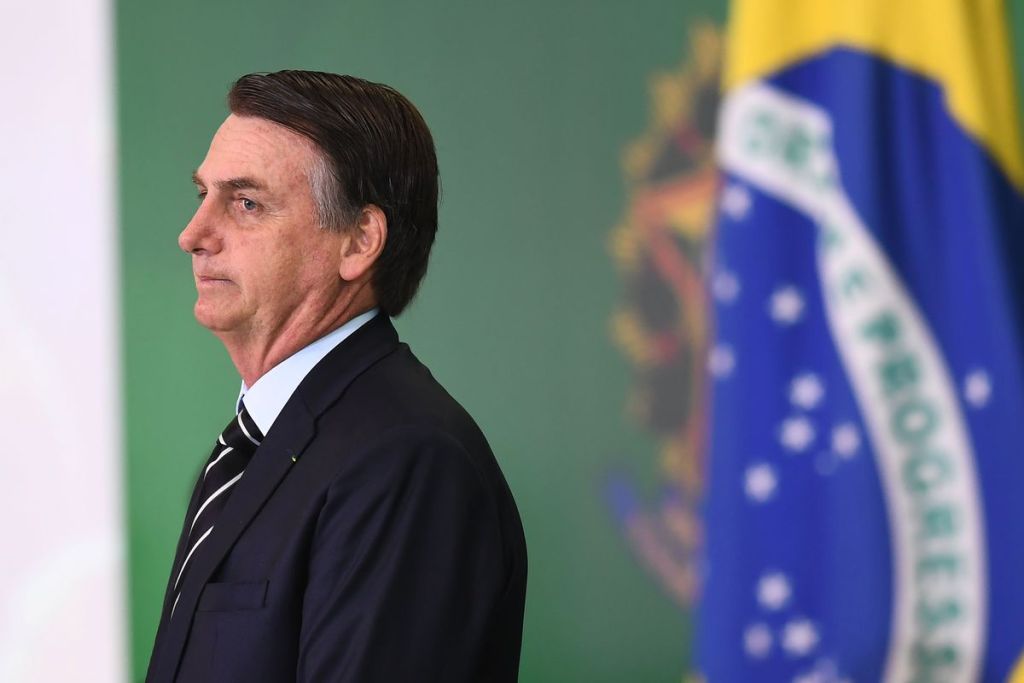
The Environmental Minister of Brazil, Ricardo Selles sought to deflect criticism, attributing the surge in fires to weather, wind, and heat, that is, as arising from natural causes rather than government policies. He pointed out, correctly, that many of the fires were annual efforts by cattle ranchers, farmers, and loggers to clear their land, a routine agricultural practice.
Bolsonaro went so far as to suggest that environmental NGOs might have deliberately set the fires to bring disrepute to the government, and he angrily resisted attempts by the French president, Emmanuel Macron, to internationalize the Amazon fires. There may be an element of truth in these defensive assertions, but they fail to address the real ecological destruction done by those fires in the forest areas of the Amazon that have been deliberately set to make way for soy crops, cattle, and more profitable logging.
Despite ‘the fog of ecocide,’ this much is clear:
The rainforests of the Amazonia, sub-
Forest experts warn that once a rainforest is degraded beyond a certain point, a tipping point is reached, and the degrading will continue of its own accord until what was once a flourishing rainforest becomes a huge area savannah grasslands. Even before tipping points are reached it takes decades to restore forest ecosystems, including precious biodiversity resources.
This dynamic of disastrous mismanagement is accentuated with respect to Amazonia by the Brazilian leadership that ignores pleas from indigenous and riverine communities, as well as environmental groups in Brazil, and the UN and the EU at a time when the planet’s eco-stability depends on planting billions of trees annually, and is further jeopardized by large scale deforestation that cuts deeply into the population of carbon-absorbing trees.
Of course, ecological irresponsibility has become for the autocrats who now rule the world their perverse norm of political correctness, led by the climate deniers in Washington that are setting retrograde standards for American environmental policy during the Trump presidency.
If the richest country in the world is so irresponsible as to embrace climate change denialism, withdraw from negotiated international arrangements, and make national policy on this basis, what can we reasonably expect from poorer more economically challenged developmentally preoccupied countries?
The world order crisis is real, severe, intensifying, and unprecedented in scale and scope.
Legalistic Exercises in Futility
One of the most progressive and persuasive contemporary advocates of a law-based approach to world order and U.S. foreign policy has been that of Marjorie Cohn, a friend and more than that, a comrade. She has responded to the fires in the Amazon in a well-sourced opinion piece whose thesis is conveyed by its title “The UN Could Save the Amazon With One Simple Move,” published in Truthdig, Sept. 1, 2019.
She points out that the UN Security Council can declare that the Amazon fires are a threat to international peace and security, and that Brazil should be the target of economic punitive measures to coerce responsible environmental policies, pointing out that the UN did this with good effect as part of the global anti-apartheid movement [See Security Council Resolution 585, 586, 587, 1985].
Cohn also calls attention to Articles 25 and 49 of the UN Charter which commits Member states to implement Security Council decisions. Such an analysis is completely valid as far as it goes. A coherent legal framework exists within the UN System that could be used to exert unlimited pressure on Brazil to act in an ecologically responsible manner with respect to Amazonia, but there is one vital element missing—the political will of the main geopolitical actors.
It is often overlooked that the UN was never intended to offer the world an unconditional endorsement of a global rule of law. By its constitutional character, it was established as an institution that was expected to juggle the requirements of global law and order with geopolitical priorities. Such was the clear function of the right of veto given to the five permanent members of the Security Council.
It was hoped by those of idealistic disposition that the wartime anti-fascist alliance would persist in a peaceful world, especially as the special status within the Organization was given only to the five states regarded as the victors in World War II.
But it was the realists who shaped the will of the geopolitical actors, then and now, and they never for a moment endorsed a global security system resting on law and Charter principles. Indeed, they derided it.
The realist consensus, associated with such policy-oriented intellectuals as Dean Acheson, George Kennan, Henry Kissinger, and Zbigniew Brzezinski knew better, believing that national and global security rested, as supposedly always had and always will on balance of power mechanisms, military capabilities, pragmatic leadership, and calculations of national interests.
With the partial exception of Kennan, none of those figures inhabiting the realist pantheon had the slightest interest in or respect for those who encouraged a framing of global policy by reference to human wellbeing, global justice, or ecological sustainability.
In the present global mix, it is only France, a geopolitical lightweight that has dared to raise its voice above the level of a whisper to urge that the extraterritorial repercussions of the Amazon fires justify a global response, but even Macron is quite timid, relying on diplomatic discourse, offers of economic assistance, and the policy venues of the European Community and the G-7.
He is too tied to the realist camp to encourage reliance on international law or the UN and gives not even a hint that the French government would favour punitive action. Even this small French gesture of concern is too much for Donald Trump who complains that Bolsonaro was not being properly consulted while Brazilian internal policy is under consideration.
It is perhaps true that the UN could save Amazonia if the political will to do so existed, but it doesn’t, which sadly means that the UN is irrelevant, which is even more true than in the past, given the ultra-national mood now prevailing among geopolitical actors.
We might ask what would Obama or Carter have done differently. Probably, not much without a robust global civil society movement that was itself advocating change and drastic measures. It should be remembered that the UN joined, rather than initiated, the anti-apartheid campaign in the
In this connection, it should be remembered that the U.S. and Britain vetoed UN calls for mandatory economic measures to be lifted only when South Africa agreed to abandon apartheid and abstained on other resolutions.
What is the Question?
In my view, the crisis of Amazonia Burning, makes us more aware of the structural deficiencies of world order that existed ever since sovereign states claimed authority over the entire land mass of the planet as allocated to governmental authorities through the device of internationally recognized boundaries, yet the environmental and ecological issues raised were largely containable within national, regional, and even global frameworks (including world wars).
This approach to the territorial allocation of authority and responsibility is supplemented by a highly permissive approach to the world’s oceans by way of freedom of all states to make almost unrestricted use, including naval operations, with minimal procedures for accountability in the absence of specific agreements (as exist, for instance, in the form of prohibitions on most whaling, and many other matters of common concern).
Perhaps, the most untenable use of the oceans occurred in the decades after World War II when massive nuclear explosives designed to become warheads on weapons were extensively tested on the high seas, causing radiation to cause disease and death, especially to nearby islanders.
And yet, aside from civil society protests, nothing was done by the UN or elsewhere, undoubtedly in part because the main culprit was the leading geopolitical actor. Only after a worldwide civil society protest did governments respond by negotiating the Limited Test Ban, which itself was never fully implemented.
With the use of atomic bombs in 1945, and their later development and spread, the core stability of statist world order – also, known as Westphalian world order – began to fray. With the buildup of greenhouse gasses and the decline of biodiversity that process has taken on a momentum of its own, which if not resisted and reversed, spells doom for the human species and much of its natural habitat.
We know that this bio-ethical ecological crisis cannot be overcome by appeals to international law and an ethos of international responsibility.
We know also that the UN and regional organizations lack the capability or authority to override the sovereign resolve of states dedicated to maximizing national interests, being especially inhibited by the geopolitical actors who have the authority to block decisions in the Security Council.
We also have become aware that these
In an earlier period, this supplemental structural element associated with global leadership helped generate such beneficial arrangements as the public order of the oceans and of Antarctica and more recently the 2015 Paris Agreement on Global Warming and the Iran Nuclear Agreement.
It would be a mistake to exaggerate the contribution of global
Efforts to overcome these deficiencies have been a characteristic of reformist initiatives and transformative proposals ever since the end of World War II.
A dramatic initiative took place with the formation of the Non-Aligned Movement as an outgrowth of the Bandung Conference in 1955. Reflecting developmental priorities and a post-colonial naïve sense of global ethical consciousness, the Third World configuration of non-Western state actors put forward a broad platform under the rubric of
And more recently, the UN International Convention on the Prohibition of Nuclear Weapons highlighted both the concerns of non-nuclear weapons states and the dismaying irresponsible offsetting pushback by geopolitical Western actors determined to retain nuclearism.
In effect, overcoming the deficiencies of world order have failed when undertaken by governments or under the auspices of the UN. Reformist initiatives supported by geopolitical actors have done somewhat better due to their policymaking leverage, but do not seek changes that are inconsistent with their short-term geopolitical interests.
Hence, the failure to realize the vision of a world without nuclear weaponry, to achieve environmental regulations as a level responsive to the consensus among climate scientists, and to address a long list of extraterritorial problems that would be treated differently if approached from perspectives of global rather than national interests.
What is suggested, is the dependence of human wellbeing on the emergence of a transnational activist movement that demands major structural reforms of world order that seek a favorable resolution of the bio-ethical crisis. If this seems utopian, you are quite right to react as if there is no plausible path leading from here to there. Yet I believe it is more illuminating to insist that activating the utopian imagination is the only source of a transformed realism that is sensitive to the distinctive challenges and opportunities of the 21st century.
Adhering the premises of 20th century realism is increasingly a recipe for disaster as the tragedy of Amazonia Burning illustrates, a metaphor for the losing struggle to save life, health, and sanity on planet earth. And while Yemen, Syria, and Kashmir do not threaten the planet’s material viability, the failure to address these massive assaults on human dignity and human rights exhibit the spiritual impoverishment of world order.