
Remembering the World Court Advisory Opinion on Israel’s Separation Wall After 15 Years

On July 9, 2004 the International Court of Justice (ICJ) in The Hague issued an Advisory Opinion by a vote of 14-1, with the American judge the lone dissenter, as if there would have been any doubt about such identity even if not disclosed.

The decision rendered in response to a question put to it by a General Assembly resolution declared the separation wall unlawful, and that compliance with international law would require it to be dismantled and Palestinian communities and individuals compensated for harm incurred.

As with the identity of the dissenting judge, the failure of Israel to comply with the decision was as predictable as the time of tomorrow’s sunrise.

Originally published at richardfalk.wordpress.com

Only slightly less anticipated was the American government response, which adopted its customary hegemonic tone, to instruct the parties that such issues should be resolved by politicalnegotiation, which even if heeded would end up as Israel wished, given the hierarchical relationship between Israel as occupier and Palestine as occupied.

It doesn’t require a legal education to dismiss the American argument as fatuous at best, cynical at worst. The question put to the ICJ was quintessentially legal, that is, whether the construction of the separation wall on occupied Palestinian territory was or was not consistent with the Fourth Geneva Convention governing belligerent occupation.

Although the decision is labeled as an ‘advisory opinion’ it has the authoritative backing of a fully reasoned and documented consensus of the world’s most distinguished jurists as to the requirements of international law in relation to the construction of this 700km wall, 85% of which is situated on occupied Palestinian territory.

The degree of authoritativeness of the legal analysis is enhanced by the one-sidedness of the decision. It is rare for a legal controversy before the ICJ to produce such near unanimity given the diversity of legal systems of the 15 judges and considering the civilizational and ideological differences that haunt world order generally.

This legal outcome in The Hague was overwhelmingly endorsed politically by the General Assembly mandating Israeli compliance. It is disappointing that Israeli defiance of both the ICJ, the world’s highest judicial tribunal, and the General Assembly, the organ of the UN most representative of the peoples of the world, should have occasioned so little adverse commentary over the years.

It is not only a further confirmation that the UN System and international law lacks the capacity to deliver even minimal justice to the Palestinian people but that such institutional authority is subject to a geopolitical veto, that is, international law without the backing of relevant power becomes paralyzed with respect to implementation.

When considering the constitutional right of veto given to the five permanent members of the Security Council as augmented by the informal geopolitical veto enabling dominant states to shield their friends as well as themselves from the constraints of international law, the dependence of law on the priorities of power becomes obvious, painfully so.

It helps us grasp the perverse ways the world is currently organized.  It is truly pathetic that only the weak and vulnerable are subject to the constraints of law, while the strong and those shielded by the strong are the lawless overlords of this unruly planet.

The wall a notorious international symbol of coercive and exploitative separation, as epitomized by the apartheid security structures imposed on the Palestinian people as a whole has a grotesque pattern of implementation.

Its ugly structures slice through and fragment Palestinian communities and neighborhoods, separating farmers from their farms, and creating a constant and an inescapable reminder of the nature of Israeli oppression.

It may put the issue of the separation wall in historical perspective to recall features of the Berlin Wall. During the Cold War it came to epitomize oppression in East Germany, and more generally in Eastern Europe.

If the East German government had dared extend the wall even a few feet into West Berlin it would have meant war, and quite possibly World War III.

And finally, when the wall came down it was an occasion of joyous celebration and a decisive moment in the historical dynamic that let the world know that the Cold War was over.

It is helpful to appreciate that the Berlin Wall was designed to keep people in, while the Israeli Wall is supposed to keep people out.

There is also the question of motivation. As many have pointed out, the wall remains unfinished more than 15 years after it was declared necessary for Israeli security, which tends to support those critics that pointed out that if security was the true motive, it would have been finished long ago.

Even if the claim is sincerely, in part, motivated by security, it illustrates the unjust impacts of ‘the security dilemma’: small increments of Israeli security are achieved by creating much larger increments of insecurity for the Palestinians.

Beyond security, it is obvious that this is one more land-grabbing tactic of the Israelis that is part of the wider Israeli strategy of treating ‘occupation,’ especially of the West Bank, as an occasion for ‘annexation.’ Even more insidiously, is the apparent Israeli intention to make Palestinian life near the wall so unendurable, that Palestinians relinquish their place of residence, ‘ethnic cleansing’ by any other name.  

What messages does this anniversary occasion deliver to the Palestinian people and the world? It is a grim reminder that the Palestinian people cannot hope to achieve justice or realize their rights by peaceful means.

Such a reminder is particularly instructive as it comes at a time when intergovernmental efforts to find a political compromise between Israeli expectations and Palestinian aspirations has been pronounced a failure. This failure, again not surprisingly, has meant a dramatic shift in approaching ‘peace’ and ‘a solution’ from diplomacy to geopolitics, from the Oslo flawed diplomatic framework to the Trump ‘deal of the century’ or as Kushner has rephrased it, ‘peace to prosperity.’

Or more transparently phrased, it is ‘the victory caucus’ that Daniel Pipes and the Middle East Forum that he presides over has promoted so successfully in recent months, in effect, advocating a final betrayal of the rights of the Palestinian people, an approach that has evidently found a receptive audience in both the U.S. Congress/White House and the Israeli Knesset.

This geopolitical strategy is a thinly disguised attempt to satisfy Israel’s expectations as to borders, refugees, settlements, water, and Jerusalem while repudiating Palestinian rights under international law, including their most fundamental right of self-determination, supposedly a legal entitlement of all peoples in the post-colonial era.

The question that remains is ‘how much longer can the Zionist Project swim against the strong historical current of anti-colonialism?’

The answer in my view depends on whether the global solidarity movement, together with Palestinian resistance, can reach a tipping point that leads Israeli leadership to reconsider its ‘security’ and its future. Such a point was reached in South Africa, admittedly under quite different conditions, but with an analogous sense that the Afrikaner leadership would never give up control without being defeated in a bloody struggle for power.   
Originally published at richardfalk.wordpress.com

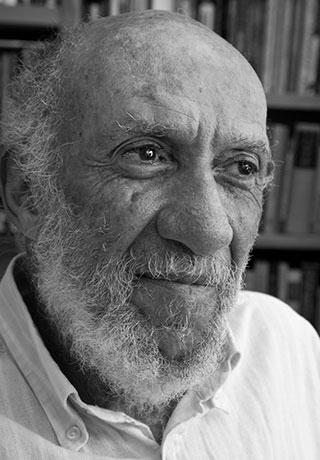
Professor Falk became an adviser to TFF when it was established in 1985.

Related Posts

Johan Galtung 1930-2024October 2015 Published here on October 3, 2026 Let us focus on Civilization for conflict analysis and remedies. Major forms of disorder use violence; war is state organized violence. The most belligerent states are the United States of America and Israel, both with civilization roots. National Evangelism, the US Protestant Christian civilization– more national than evangelical–justifies US warfare as exceptionalism of a people chosen by God, with a manifest destiny to run the world. Orthodox Judaism justifies Israeli warfare to conquer and expand from Nile to Euphrates as a religious right and duty to the Eternal One. The third most belligerent country, the UK, no longer believes it is God-chosen but chosen by the USA; not quite the same but something. But the root cause of global disorder lies in the Occident–with Islam–seeing itself as the single, universal civilization valid for all at all times, all others being...
Jan ObergPhD, director, The Transnational Foundation for Peace and Future Research, TFFLund, Sweden October 2, 2026 This is my full original manuscript. The Chinese Academy of Social Science, CASS, makes two publications out if it. 1. China’s Five-year plan emphasized the capabilities of basic research and original innovation. It is regarded as the goal of the future social development, which, as required, should be significantly enhanced. Can you comment on the importance of original innovation in research and academic study? I believe it is easier to define “original innovation” in the natural sciences than in social sciences. The breaking points of what constitutes something new, or innovative, are not quite as sharp in the latter. But in both fields it is about opening up something that was closed, unseen, unexplored before – making manifest what was earlier latent. Innovations come in many forms and shapes – naming something that was not...
The agreement is catastrophic both because of what it says and what it doesn’t mention. It reduces further the major asset of security policies: Freedom of action. Jan Oberg TFF director September 25, 2026 A couple of hours before the agreement was signed on September 22, 2026, I published the following 13 hypotheses about what it would most likely contain on TFF Substack (in English). I was wrong on only the first point. Contrary to what Trump had written on his Truth Social platform, it does not appear to come into force immediately. In fact, it turned out to be worse than even I had anticipated. After these hypotheses now come a number of reflections in light of what the agreement actually contains, and does not contain, as well as the way in which it has generally been presented by major media outlets and by the public-service broadcaster DR. My...

Recent Articles

Tony Robinson October 4, 2026 Violence is easy to recognise when someone is being beaten, shot or killed. It becomes more difficult when nobody is holding a weapon. Poverty, discrimination, exploitation and repression can restrict a human life just as effectively, although they do so in very different ways and with very different consequences. Simply adding more categories to an ever-growing list of forms of violence does not really solve the problem. The more interesting question is what all these different situations have in common and why it makes sense to describe them using the same word. Human beings do not simply react to what happens around them. They remember the past, imagine things that do not yet exist, make plans and undertake projects. Workers organise because they imagine different working conditions; people migrate because they imagine another life somewhere else; social movements emerge because people refuse to accept the...
It’s a matter of principles, courage, vision and pulling together – while the militarist world is falling apart… Peter Langille October 3, 2026 “Here, then, is the problem which we present to you, stark and dreadful and inescapable: Shall we put an end to the human race; or shall mankind renounce war?”The Bertrand Russell—Albert Einstein Manifesto, July 9, 1955 ⁕ The forecast for what’s ahead is worrisome. The sharp rise in armed conflicts over the past three years is adding to what was already the highest level in over seventy years. Genocides, which should be prevented are supported. A shared climate emergency that jeopardises survival is ignored. Diverse polls now suggest that people are war-weary, worried and interested in a more effective United Nations. And, there are viable policy options for a more secure world! Yet governments are doubling-down, betting on more war and investing heavily. If current trends persist,...
Johan Galtung 1930-2024October 2015 Published here on October 3, 2026 Let us focus on Civilization for conflict analysis and remedies. Major forms of disorder use violence; war is state organized violence. The most belligerent states are the United States of America and Israel, both with civilization roots. National Evangelism, the US Protestant Christian civilization– more national than evangelical–justifies US warfare as exceptionalism of a people chosen by God, with a manifest destiny to run the world. Orthodox Judaism justifies Israeli warfare to conquer and expand from Nile to Euphrates as a religious right and duty to the Eternal One. The third most belligerent country, the UK, no longer believes it is God-chosen but chosen by the USA; not quite the same but something. But the root cause of global disorder lies in the Occident–with Islam–seeing itself as the single, universal civilization valid for all at all times, all others being...

TFF on Substack

Discover and subscribe to more peace materials on TFF Substack

Most Popular

Tony Robinson October 4, 2026 Violence is easy to recognise when someone is being beaten, shot or killed. It becomes more difficult when nobody is holding a weapon. Poverty, discrimination, exploitation and repression can restrict a human life just as effectively, although they do so in very different ways and with very different consequences. Simply adding more categories to an ever-growing list of forms of violence does not really solve the problem. The more interesting question is what all these different situations have in common and why it makes sense to describe them using the same word. Human beings do not simply react to what happens around them. They remember the past, imagine things that do not yet exist, make plans and undertake projects. Workers organise because they imagine different working conditions; people migrate because they imagine another life somewhere else; social movements emerge because people refuse to accept the...
It’s a matter of principles, courage, vision and pulling together – while the militarist world is falling apart… Peter Langille October 3, 2026 “Here, then, is the problem which we present to you, stark and dreadful and inescapable: Shall we put an end to the human race; or shall mankind renounce war?”The Bertrand Russell—Albert Einstein Manifesto, July 9, 1955 ⁕ The forecast for what’s ahead is worrisome. The sharp rise in armed conflicts over the past three years is adding to what was already the highest level in over seventy years. Genocides, which should be prevented are supported. A shared climate emergency that jeopardises survival is ignored. Diverse polls now suggest that people are war-weary, worried and interested in a more effective United Nations. And, there are viable policy options for a more secure world! Yet governments are doubling-down, betting on more war and investing heavily. If current trends persist,...
Johan Galtung 1930-2024October 2015 Published here on October 3, 2026 Let us focus on Civilization for conflict analysis and remedies. Major forms of disorder use violence; war is state organized violence. The most belligerent states are the United States of America and Israel, both with civilization roots. National Evangelism, the US Protestant Christian civilization– more national than evangelical–justifies US warfare as exceptionalism of a people chosen by God, with a manifest destiny to run the world. Orthodox Judaism justifies Israeli warfare to conquer and expand from Nile to Euphrates as a religious right and duty to the Eternal One. The third most belligerent country, the UK, no longer believes it is God-chosen but chosen by the USA; not quite the same but something. But the root cause of global disorder lies in the Occident–with Islam–seeing itself as the single, universal civilization valid for all at all times, all others being...
Read More
Living-Peace-Sign-Budapest-copy
Tony Robinson October 4, 2026 Violence is easy to recognise when someone is being beaten, shot or killed. It becomes more difficult when nobody is holding a weapon. Poverty, discrimination, exploitation and repression can restrict a human life just as effectively, although they do so in very different ways and with very different consequences. Simply adding more categories to an ever-growing list of forms of violence does not really solve the problem. The more interesting question is what all these different situations have in common and why it makes sense to describe them using the same word. Human beings do not simply react to what happens around them. They remember the past, imagine things that do not yet exist, make plans and undertake projects. Workers organise because they imagine different working conditions; people migrate because they imagine another life somewhere else; social movements emerge because people refuse to accept the...
b54a1f10-8c65-4f0b-9dd5-4abc0a7d04cc_2659x2659
It’s a matter of principles, courage, vision and pulling together – while the militarist world is falling apart… Peter Langille October 3, 2026 “Here, then, is the problem which we present to you, stark and dreadful and inescapable: Shall we put an end to the human race; or shall mankind renounce war?”The Bertrand Russell—Albert Einstein Manifesto, July 9, 1955 ⁕ The forecast for what’s ahead is worrisome. The sharp rise in armed conflicts over the past three years is adding to what was already the highest level in over seventy years. Genocides, which should be prevented are supported. A shared climate emergency that jeopardises survival is ignored. Diverse polls now suggest that people are war-weary, worried and interested in a more effective United Nations. And, there are viable policy options for a more secure world! Yet governments are doubling-down, betting on more war and investing heavily. If current trends persist,...
010
Johan Galtung 1930-2024October 2015 Published here on October 3, 2026 Let us focus on Civilization for conflict analysis and remedies. Major forms of disorder use violence; war is state organized violence. The most belligerent states are the United States of America and Israel, both with civilization roots. National Evangelism, the US Protestant Christian civilization– more national than evangelical–justifies US warfare as exceptionalism of a people chosen by God, with a manifest destiny to run the world. Orthodox Judaism justifies Israeli warfare to conquer and expand from Nile to Euphrates as a religious right and duty to the Eternal One. The third most belligerent country, the UK, no longer believes it is God-chosen but chosen by the USA; not quite the same but something. But the root cause of global disorder lies in the Occident–with Islam–seeing itself as the single, universal civilization valid for all at all times, all others being...
Screenshot 2026-10-02 011738
Jan ObergPhD, director, The Transnational Foundation for Peace and Future Research, TFFLund, Sweden October 2, 2026 This is my full original manuscript. The Chinese Academy of Social Science, CASS, makes two publications out if it. 1. China’s Five-year plan emphasized the capabilities of basic research and original innovation. It is regarded as the goal of the future social development, which, as required, should be significantly enhanced. Can you comment on the importance of original innovation in research and academic study? I believe it is easier to define “original innovation” in the natural sciences than in social sciences. The breaking points of what constitutes something new, or innovative, are not quite as sharp in the latter. But in both fields it is about opening up something that was closed, unseen, unexplored before – making manifest what was earlier latent. Innovations come in many forms and shapes – naming something that was not...
arctic-circle-map
The agreement is catastrophic both because of what it says and what it doesn’t mention. It reduces further the major asset of security policies: Freedom of action. Jan Oberg TFF director September 25, 2026 A couple of hours before the agreement was signed on September 22, 2026, I published the following 13 hypotheses about what it would most likely contain on TFF Substack (in English). I was wrong on only the first point. Contrary to what Trump had written on his Truth Social platform, it does not appear to come into force immediately. In fact, it turned out to be worse than even I had anticipated. After these hypotheses now come a number of reflections in light of what the agreement actually contains, and does not contain, as well as the way in which it has generally been presented by major media outlets and by the public-service broadcaster DR. My...
girl-5894831_1280
Below are TFF-related media mentions, comments, videos and social media posts published elsewhere but not on this homepage. We happen to catch and list only a fraction. Regarding video comments and debates, we recommend that you go to the TFF Video Channel on Substack where many of them are reproduced. Jan Oberg is a contributor to China Daily – 52 million daily clicks – and Global Times, CGTN and CCTV (the national television), China Investment, Xinhua News Agency and several others. Articles and videos on these media very often multiply into countless Chinese (and Western media) that re-post them from these main media. Thanks to The China Academy, his analyses, interviews and comments are frequently posted on YouTube channels such as Thinkers Forum and Wave Media. These videos are often re-posted on Bilibili (China’s YouTube), the China Content Center on TikTok, and on the Chinese edition of TikTok, Douyin.com. This means reaching hundreds of millions of viewers worldwide over a year. While there are too many to catch on all these...





