

Let’s make America great again! Or as the prime minister of France said: Let’s make France great again. Or, as President Donald Trump conceded, let every nation in the world announce that they are going to be great again.

But what makes for greatness? Over that there is a big dispute.

Strategists say that power has to be measured carefully because “the balance of power is the motor of world politics, playing a role as central as the role of energy in physics and money in economics”, as writes Professor Michael Beckley of Tufts University, in his analysis The Power of Nations. Measuring what really matters.

“Power is like love, it is easier to define than measure. Just as one cannot say, ‘I love you 3.6 times more than her,’ scholars cannot calculate the balance of power precisely, because power is largely unobservable and context-dependent”.

So what can scholars do?  A suggested path is to measure power by tallying the wealth and military assets of a country. Others scholars think this is insufficient. It’s outcomes that should be measured. Often Davids have beaten Goliaths.

The Vietnam War, when a relatively small guerrilla army defeated and then drove out the Americans, is an event no one in the last generation or two can ever forget. Smart strategy by the North Vietnamese leadership was responsible for this. The average Vietnamese family survived on one dollar a day but they triumphed.

In other cases, it can be that the weaker party is prepared to run more risks or bear greater costs, as with the Taliban in Afghanistan, which after America’s longest war has worn down America and its allies’ resolve.

Its obvious, then, that the size of GDP (national income) is not always a sure indicator of who will win. But, perhaps, more often it is if the measurement statistic is refined. If one combines GDP with GDP per capita this yields a primitive indicator that accounts for size and efficiency, the two main ingredients of “net resources”.

Beckley argues that despite the uncertainty as to whether this “net resources” is the best measurement, in most cases it predicts outcomes. Beckley has trawled through the data on war and “net resources” and found this to be usually true.

Look at the Chinese- Japanese War of 1937-1939. Clearly, China with its large population, a sizeable aggregate GDP and a big military gave it far greater power resources. On the other hand Japan was much more efficient with lower production, welfare and security costs and so had a preponderance of “net resources”. Japan’s industry was more three times more productive than China’s. Japan’s agriculture provided a much higher standard of living than China’s and therefore yielded higher taxes to pay for the government’s investment in the modern sectors of the economy, and developing sophisticated military hardware.

Military spending absorbed half of the Chinese government’s revenues. In Japan it was only 7%. It isn’t surprising that Japan easily defeated Japan.

In World War 1 Germany annihilated Russia’s military and forced Russia to give up territory comprising parts of modern-day Estonia, Latvia, Lithuania, Poland and Ukraine. Russia was devastated by the war.

The reason for this was that Russia had higher production, welfare and security costs than Germany and thus had far fewer “net resources” available for geopolitical competition. Russia lost the war despite having an army twice the size of Germany’s and a bigger budget, but Germany was ahead in technology and skill at fighting. Russian soldiers were sent to the battlefield without training and even sent into battle without rifles. Russia also lacked railways in the western regions, in contrast to Germany which could move men and materials round fast.

Beckley concludes that over the last two centuries the side with greater “net resources” won 70% of disputes and nearly 80% of wars.

He adds to this the picture painted by what is called “power transition theory”. For decades scholars have debated whether power parity increases or decreases the likelihood of war between states. Today as China grows economically, approaching per head, western levels of GDP, many scholars have argued that it is becoming extremely powerful and that this will lead to war.

But they overlook that China leads the world in debt, resource consumption, pollution, useless infrastructure, wasted industrial capacity, scientific fraud, internal security spending, border disputes and the creation of over-large numbers of pensioners, invalids and geriatrics.

China also uses seven times the input to generate a given level of economic output as the US. It is surrounded by nineteen countries, most of which are hostile towards China.

All this reduces greatly the significance of China’s rise. Measured by the “net resources” indicator it is a long way from becoming truly powerful. 

Politicians, the media and academics need to get hold of the “net resources” argument if the electorate is to be properly educated on China’s true status.

The old way of measuring power distorts reality.
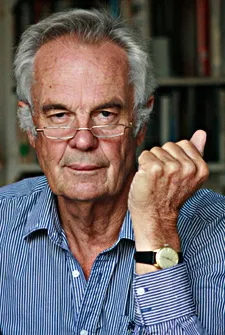
Foreign affairs columnist, film-maker and author

One Response

  1. The one sentence that jumped out at me was Professor Beckley’s remark, “the balance of power is the motor of world politics, playing a role as central as the role of energy in physics and money in economics.” On a global level, it seems that this observation is quite correct. In international politics whenever one country has achieved dominant power it has been very problematic for the world and even for that country. Since the end of the Cold War when the United States found herself as the sole superpower in a unipolar world it started to act with a lack of restraint. It started with President H. D. Bush’s Desert Shield and Desert Storm, to U.S.’s almost non-stop attacks on Iraq that eventually culminated in the Invasion of Iraq, and its wars in Somalia, Afghanistan, Libya, Yemen, etc. where the United States acts with no restraint at all. As Madeleine Albright said: “We follow the United Nations when it suits us and we ignore it when we must” (paraphrase). Now, that form of unilateralism has reached its grotesque height under Trump who openly violates international law, undermines U.N. agencies, issues executive orders illegally giving other people’s territories to its clients as in the case of Israel, and is now openly pushing for regime change and war in Iran. In other words, it has been acting like a total rogue state having silenced and intimidated other countries. Until we have an international system with teeth to enforce international law, balance of power is essential to restrain the efforts of rogue states.

Related Posts

Johan Galtung 1930-2024October 2015 Published here on October 3, 2026 Let us focus on Civilization for conflict analysis and remedies. Major forms of disorder use violence; war is state organized violence. The most belligerent states are the United States of America and Israel, both with civilization roots. National Evangelism, the US Protestant Christian civilization– more national than evangelical–justifies US warfare as exceptionalism of a people chosen by God, with a manifest destiny to run the world. Orthodox Judaism justifies Israeli warfare to conquer and expand from Nile to Euphrates as a religious right and duty to the Eternal One. The third most belligerent country, the UK, no longer believes it is God-chosen but chosen by the USA; not quite the same but something. But the root cause of global disorder lies in the Occident–with Islam–seeing itself as the single, universal civilization valid for all at all times, all others being...
Jan ObergPhD, director, The Transnational Foundation for Peace and Future Research, TFFLund, Sweden October 2, 2026 This is my full original manuscript. The Chinese Academy of Social Science, CASS, makes two publications out if it. 1. China’s Five-year plan emphasized the capabilities of basic research and original innovation. It is regarded as the goal of the future social development, which, as required, should be significantly enhanced. Can you comment on the importance of original innovation in research and academic study? I believe it is easier to define “original innovation” in the natural sciences than in social sciences. The breaking points of what constitutes something new, or innovative, are not quite as sharp in the latter. But in both fields it is about opening up something that was closed, unseen, unexplored before – making manifest what was earlier latent. Innovations come in many forms and shapes – naming something that was not...
The agreement is catastrophic both because of what it says and what it doesn’t mention. It reduces further the major asset of security policies: Freedom of action. Jan Oberg TFF director September 25, 2026 A couple of hours before the agreement was signed on September 22, 2026, I published the following 13 hypotheses about what it would most likely contain on TFF Substack (in English). I was wrong on only the first point. Contrary to what Trump had written on his Truth Social platform, it does not appear to come into force immediately. In fact, it turned out to be worse than even I had anticipated. After these hypotheses now come a number of reflections in light of what the agreement actually contains, and does not contain, as well as the way in which it has generally been presented by major media outlets and by the public-service broadcaster DR. My...

Recent Articles

Tony Robinson October 4, 2026 Violence is easy to recognise when someone is being beaten, shot or killed. It becomes more difficult when nobody is holding a weapon. Poverty, discrimination, exploitation and repression can restrict a human life just as effectively, although they do so in very different ways and with very different consequences. Simply adding more categories to an ever-growing list of forms of violence does not really solve the problem. The more interesting question is what all these different situations have in common and why it makes sense to describe them using the same word. Human beings do not simply react to what happens around them. They remember the past, imagine things that do not yet exist, make plans and undertake projects. Workers organise because they imagine different working conditions; people migrate because they imagine another life somewhere else; social movements emerge because people refuse to accept the...
It’s a matter of principles, courage, vision and pulling together – while the militarist world is falling apart… Peter Langille October 3, 2026 “Here, then, is the problem which we present to you, stark and dreadful and inescapable: Shall we put an end to the human race; or shall mankind renounce war?”The Bertrand Russell—Albert Einstein Manifesto, July 9, 1955 ⁕ The forecast for what’s ahead is worrisome. The sharp rise in armed conflicts over the past three years is adding to what was already the highest level in over seventy years. Genocides, which should be prevented are supported. A shared climate emergency that jeopardises survival is ignored. Diverse polls now suggest that people are war-weary, worried and interested in a more effective United Nations. And, there are viable policy options for a more secure world! Yet governments are doubling-down, betting on more war and investing heavily. If current trends persist,...
Johan Galtung 1930-2024October 2015 Published here on October 3, 2026 Let us focus on Civilization for conflict analysis and remedies. Major forms of disorder use violence; war is state organized violence. The most belligerent states are the United States of America and Israel, both with civilization roots. National Evangelism, the US Protestant Christian civilization– more national than evangelical–justifies US warfare as exceptionalism of a people chosen by God, with a manifest destiny to run the world. Orthodox Judaism justifies Israeli warfare to conquer and expand from Nile to Euphrates as a religious right and duty to the Eternal One. The third most belligerent country, the UK, no longer believes it is God-chosen but chosen by the USA; not quite the same but something. But the root cause of global disorder lies in the Occident–with Islam–seeing itself as the single, universal civilization valid for all at all times, all others being...

TFF on Substack

Discover and subscribe to more peace materials on TFF Substack

Most Popular

Tony Robinson October 4, 2026 Violence is easy to recognise when someone is being beaten, shot or killed. It becomes more difficult when nobody is holding a weapon. Poverty, discrimination, exploitation and repression can restrict a human life just as effectively, although they do so in very different ways and with very different consequences. Simply adding more categories to an ever-growing list of forms of violence does not really solve the problem. The more interesting question is what all these different situations have in common and why it makes sense to describe them using the same word. Human beings do not simply react to what happens around them. They remember the past, imagine things that do not yet exist, make plans and undertake projects. Workers organise because they imagine different working conditions; people migrate because they imagine another life somewhere else; social movements emerge because people refuse to accept the...
It’s a matter of principles, courage, vision and pulling together – while the militarist world is falling apart… Peter Langille October 3, 2026 “Here, then, is the problem which we present to you, stark and dreadful and inescapable: Shall we put an end to the human race; or shall mankind renounce war?”The Bertrand Russell—Albert Einstein Manifesto, July 9, 1955 ⁕ The forecast for what’s ahead is worrisome. The sharp rise in armed conflicts over the past three years is adding to what was already the highest level in over seventy years. Genocides, which should be prevented are supported. A shared climate emergency that jeopardises survival is ignored. Diverse polls now suggest that people are war-weary, worried and interested in a more effective United Nations. And, there are viable policy options for a more secure world! Yet governments are doubling-down, betting on more war and investing heavily. If current trends persist,...
Johan Galtung 1930-2024October 2015 Published here on October 3, 2026 Let us focus on Civilization for conflict analysis and remedies. Major forms of disorder use violence; war is state organized violence. The most belligerent states are the United States of America and Israel, both with civilization roots. National Evangelism, the US Protestant Christian civilization– more national than evangelical–justifies US warfare as exceptionalism of a people chosen by God, with a manifest destiny to run the world. Orthodox Judaism justifies Israeli warfare to conquer and expand from Nile to Euphrates as a religious right and duty to the Eternal One. The third most belligerent country, the UK, no longer believes it is God-chosen but chosen by the USA; not quite the same but something. But the root cause of global disorder lies in the Occident–with Islam–seeing itself as the single, universal civilization valid for all at all times, all others being...
Read More
Living-Peace-Sign-Budapest-copy
Tony Robinson October 4, 2026 Violence is easy to recognise when someone is being beaten, shot or killed. It becomes more difficult when nobody is holding a weapon. Poverty, discrimination, exploitation and repression can restrict a human life just as effectively, although they do so in very different ways and with very different consequences. Simply adding more categories to an ever-growing list of forms of violence does not really solve the problem. The more interesting question is what all these different situations have in common and why it makes sense to describe them using the same word. Human beings do not simply react to what happens around them. They remember the past, imagine things that do not yet exist, make plans and undertake projects. Workers organise because they imagine different working conditions; people migrate because they imagine another life somewhere else; social movements emerge because people refuse to accept the...
b54a1f10-8c65-4f0b-9dd5-4abc0a7d04cc_2659x2659
It’s a matter of principles, courage, vision and pulling together – while the militarist world is falling apart… Peter Langille October 3, 2026 “Here, then, is the problem which we present to you, stark and dreadful and inescapable: Shall we put an end to the human race; or shall mankind renounce war?”The Bertrand Russell—Albert Einstein Manifesto, July 9, 1955 ⁕ The forecast for what’s ahead is worrisome. The sharp rise in armed conflicts over the past three years is adding to what was already the highest level in over seventy years. Genocides, which should be prevented are supported. A shared climate emergency that jeopardises survival is ignored. Diverse polls now suggest that people are war-weary, worried and interested in a more effective United Nations. And, there are viable policy options for a more secure world! Yet governments are doubling-down, betting on more war and investing heavily. If current trends persist,...
010
Johan Galtung 1930-2024October 2015 Published here on October 3, 2026 Let us focus on Civilization for conflict analysis and remedies. Major forms of disorder use violence; war is state organized violence. The most belligerent states are the United States of America and Israel, both with civilization roots. National Evangelism, the US Protestant Christian civilization– more national than evangelical–justifies US warfare as exceptionalism of a people chosen by God, with a manifest destiny to run the world. Orthodox Judaism justifies Israeli warfare to conquer and expand from Nile to Euphrates as a religious right and duty to the Eternal One. The third most belligerent country, the UK, no longer believes it is God-chosen but chosen by the USA; not quite the same but something. But the root cause of global disorder lies in the Occident–with Islam–seeing itself as the single, universal civilization valid for all at all times, all others being...
Screenshot 2026-10-02 011738
Jan ObergPhD, director, The Transnational Foundation for Peace and Future Research, TFFLund, Sweden October 2, 2026 This is my full original manuscript. The Chinese Academy of Social Science, CASS, makes two publications out if it. 1. China’s Five-year plan emphasized the capabilities of basic research and original innovation. It is regarded as the goal of the future social development, which, as required, should be significantly enhanced. Can you comment on the importance of original innovation in research and academic study? I believe it is easier to define “original innovation” in the natural sciences than in social sciences. The breaking points of what constitutes something new, or innovative, are not quite as sharp in the latter. But in both fields it is about opening up something that was closed, unseen, unexplored before – making manifest what was earlier latent. Innovations come in many forms and shapes – naming something that was not...
arctic-circle-map
The agreement is catastrophic both because of what it says and what it doesn’t mention. It reduces further the major asset of security policies: Freedom of action. Jan Oberg TFF director September 25, 2026 A couple of hours before the agreement was signed on September 22, 2026, I published the following 13 hypotheses about what it would most likely contain on TFF Substack (in English). I was wrong on only the first point. Contrary to what Trump had written on his Truth Social platform, it does not appear to come into force immediately. In fact, it turned out to be worse than even I had anticipated. After these hypotheses now come a number of reflections in light of what the agreement actually contains, and does not contain, as well as the way in which it has generally been presented by major media outlets and by the public-service broadcaster DR. My...
girl-5894831_1280
Below are TFF-related media mentions, comments, videos and social media posts published elsewhere but not on this homepage. We happen to catch and list only a fraction. Regarding video comments and debates, we recommend that you go to the TFF Video Channel on Substack where many of them are reproduced. Jan Oberg is a contributor to China Daily – 52 million daily clicks – and Global Times, CGTN and CCTV (the national television), China Investment, Xinhua News Agency and several others. Articles and videos on these media very often multiply into countless Chinese (and Western media) that re-post them from these main media. Thanks to The China Academy, his analyses, interviews and comments are frequently posted on YouTube channels such as Thinkers Forum and Wave Media. These videos are often re-posted on Bilibili (China’s YouTube), the China Content Center on TikTok, and on the Chinese edition of TikTok, Douyin.com. This means reaching hundreds of millions of viewers worldwide over a year. While there are too many to catch on all these...





