

I suppose it is of interest that Donald Trump and Hillary Clinton have found something to agree about – the criminal indictment of Julian Assange.  Trump is acutely vulnerable to the exposure of truth and Clinton blames her electoral defeat in 2016 partly on what WikiLeaks disclosed about her improper use of a government computer to send private emails.

Such are the perverse ways of the deeply unjust.

The liberal media is not happy with this indictment, although it also wants to distance itself from justifications for Assange’s claims of journalistic privilege, viewing him as a lone wolf with rogue traits. There are solemn assessments evaluating the narrowly framed government indictment charging cyber-crime, that is, publishing illicitly obtained classified documents from a digital source, apparently an apolitical everyday occurrence for government employees.

What is apparently at legal issue is deciding whether or not Assange should be protected by reference to freedom of expression or prosecuted as a cyber-criminal without reference to his motivation.

WikiLeaks and the Pentagon Papers

A few commentators have noted that the main reason to go after Assange is to discourage whistleblowing of the sort most prominently associated with the disclosures of Daniel Ellsberg and Edward Snowden.

Here Assange is accused of conspiring with another heroic American whistleblower, Chelsea Manning, in obtaining the documents that featured 800 Guantanamo Bay ‘detainee assessment briefs’ and more than 400,000 cables and documents relating to the wars in Afghanistan and Iraq.

A particularly damaging document was a video showing deliberate bombing of civilians in Iraq by American pilots, clear evidence of a serious war crime.
 
WikiLeaks, co-founded by Julian Assange in 2006, has been dedicated all along to the ideal of transparency in state/society relations as promoted by civil society initiatives. As such, it can be viewed as a service institution of robust democracy, a needed contemporary check on gross misuses of governmental secrecy.

We know from a reading of the Pentagon Papers that what made publication so provocative was the degree to which the truths about the Vietnam War were being hidden from the American people through the misuse of classification protocols.

There was little in the original twelve volumes of the Pentagon Papers that the Vietnamese ‘enemy’ did not know already. The inflammatory message of the Papers was how and why the war in Vietnam was going badly while the government was disseminating to the world a rosy picture of how well things were proceeding, which had the political effect of extending an unlawful war by years at the cost of tens of thousands American and Vietnamese lives.

I remember hearing George Ball speak off the record a few days after he resigned as LBJ’s Under Secretary of State for Economic and Agricultural Affairs in the late 1960s about why he dissented from the Vietnam policies.

He started his talk by saying “I only began to understand the Vietnam War when I stopped reading the cables from Saigon.” In other words, the patterns of deception were within the government as well as between the government and the public.

Secrecy, governance and democracy

We are up against a basic challenge posed by the digital age where the government operates as a citadel of surveillance, collecting meta-data on its own citizenry as well as on masses of foreigners, threatening dissent, privacy, and the essence of freedom itself.

It was these concerns that led Snowden to do what he did a few years ago, and yet be pursued around the world as if a dangerous criminal, and not at first by the Trumpist right, but by the moderate center that was in political control of the government during the Obama presidency.

The republican idea of governance, that is, the founding principles of the American system of constitutional governance, relied on ‘checks and balances’ and ‘separation of powers’ to restrain excesses and abuses of power by the state.

Such governance was reinforced by the first ten amendments to the U.S. Constitution that conferred an array of rights on the citizenry both as protection against an overreaching state and as protection against various manifestations of ‘the tyranny of the majority.’

The WikiLeaks role is especially important in the war/peace context as war-mongering governments tend to exaggerate, if not lie, to mobilize public support. This vital dimension of republicanism, designed to distinguish the American political undertaking from monarchies where war was often regarded as ‘the sport of kings,’ was entrusted to Congress, the legislative branch of government most directly connected with the people.

The modern security state has moved away from restraints on war-making as Congress has virtually abandoned its initially vital constitutional role of authorizing recourse to war. To revitalize this kind of republican democracy requires new instruments of transparency and validation of truth-telling public servants.

Otherwise, as in the Trump era, democratic constitutionalism can succumb to pre-fascist demagoguery.

The closeness of media to the security state

A reinforcing observation in the American context arises from the corporatization of the media, as well as an appreciation of the unseemly recent closeness of the media to the intelligence and security governmental establishment.

This has definitely weakened the independent and watchman role of journalism, especially TV, as part of the checks and balances framework in relation to the war/peace agenda, including the most trusted media outlets.

Listeners of CNN, let alone FOX, know too well how debate on controversial foreign policy issues is almost exclusively entrusted to ex-generals,  admirals, CIA officials, and think tank hawks. It is rare to have the opportunity to hear the views of a civil society progressive or an articulate critic of global militarism, American style.

In contrast, WikiLeaks is independent of corporations, media, and governments, and has since its inception been devoted to the publication of materials incriminating governments and their private sector allies.

We need to affirm WikiLeaks and whistleblowing as part of the legitimate architecture of constitutional democracy in the digital age. By criminalizing anti-war or human rights whistleblowing the political system is ratifying the suicide of substantive democracy.

Admittedly, this generalized endorsement of such transparency assumes that the government or the private sector have no legitimate secrets. I think there should be protection of legitimate state secrets wherein the criminality of unauthorized disclosures would require the government to sustain a burden of truth beyond a reasonable doubt that the material released was not in the public interest.

This is bound to be a controversial line to draw conceptually and in practice. In different circumstances the release of the full Mueller Report tests whether transparency will lose out to those anti-democratic forces trying to hide, or at least obscure by redaction, the extent of wrongdoing by the Trump administration.

In the background should be the realization that whistleblowers rarely, if ever, act without a deeply felt sense that information crucial for the public to know about is being wrongfully withheld.

Even without legal repercussions there are often high costs incurred by whistleblowers in relation to career and reputation. You are forever feared as the opposite of ‘a team player,’ so important for the morale and standard operating procedures of almost all bureaucracies, but especially those of government.

I know this the personal experience of friends. Dan Ellsberg and Tony Russo, the Pentagon Papers whistleblowers were forever non-legally tainted by their brave acts of true patriotism. They realized at the time that they were taking big risks of prison and would in any event pay a high price though informal dynamics of exclusion, and yet acted out of their profound feelings of loyalty to America’s professed values.

And it is true that Ellsberg, in particular, has been ‘compensated’ by being lionized in civil society as an offset to being permanently invalidated as a high-level civil servant.

The importance of what has been revealed

What is mainly forgotten in relation to these whistleblowing incidents is the truly incriminating content of the disclosures. In each of these prominent instances, the material released there was exposed criminal conduct by the government of a kind that threatens millions of lives and confirms the most shocking suspicions about government conduct in war zones or through malicious encroachments on public liberty.

It seems apt to recall President Franklin Roosevelt’s 1944 message on German war crimes directed at the German people in the midst of World War II: “Hitler is committing war crimes in the name of the German people. I ask every German and every man everywhere under German domination to show the world by his action that in his heart he does not share these insane criminal desires. Let him hide the victims, help them to get over their borders, and do what they can to save them from the Nazi hangman. I ask him also to keep watch and to record the evidence that will one day be used to convict the guilty.”

Is this not precisely what Chelsea Manning and Julian Assange have been doing?

Nuremberg and international law

As the U.S. Chief Prosecutor at Nuremberg, Justice Robert H. Jackson, reminded the world in his opening statement at the trials, if prosecution,  conviction, and punishment of the defendants is “to serve a useful purpose” it must in the future condemn similar lawlessness by others “including those who sit in here in judgment.”

In effect, if the rule of law is to govern human behavior with respect to war crimes and crimes against humanity, the sort of ‘victors’ justice’ applied to the German and Japanese losers must in the future be replaced by ‘justice,’ that is, the application of law to all who violate it.

Of course, this Nuremberg Promise has been repeatedly broken in spirit and substance, and most defiantly by the Trump/Bolton attacks on the very existence of the International Criminal Court.

The UN Membership unanimously affirmed that the Nuremberg Judgment was a desirable development of international law in General Assembly Resolution 95(I). In addition, the International Law Commission, the most authoritative body entrusted with the codification and development of international law, formulated the Nuremberg Principles in 1946 to formalize the impact of the trials on international criminal law.

Of particular relevance is final Principle VII: “Complicity in the commission of a crime against the peace, a war crime, or a crime against humanity..is a crime under international law.”

Fairly read, this proposition would suggest that the U.S. Government moves to prosecute Assange are themselves crimes, while the acts of Assange are commendable efforts to prevent international crimes from continuing.

Such reasoning should also be relevant to the British judicial response to the formal American request for extradition. Of course, extradition should be denied because ‘political crimes’ are by treaty arrangement not extraditable, and if there ever was a political crime it is this apparently failed attempt by Assange to hack the password of a government computer so as to hide the identity of the whistleblower, Chelsea Manning.

In the context of antiwar activism during the Vietnam War, I made the argument that there existed a ‘Nuremberg Obligation’ that had moral, if not legal authority. In effect, the Nuremberg Obligation in light of the material discussed above means that every person has the right and is subject to the duty to contribute to the exposure of violations of international criminal law in war/peace and human rights contexts.

Additionally, this moral right/duty could be reasonably construed as a legal obligation.

Julian Assange should be judged against this background. This applies not only to the underlying criminal charge but also to the withdrawal of asylum status by the government of Ecuador that led to Assange’s unseemly arrest London and to the judicial treatment of the extradition request by the British judiciary.

Credit
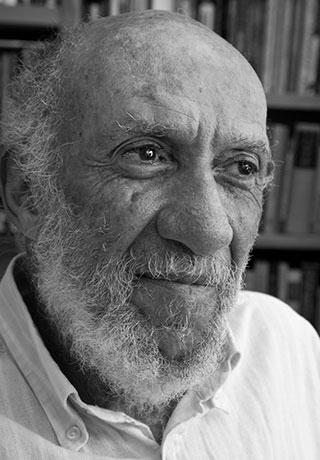
The photo on top via Paradigma

TFF also recommends

Richard Rubenstein
Julian and Martin: Reflections on the arrest of Assange

Joe Emersberger
Assange’s ‘conspiracy’ to expose war crimes has already been punished

John Pilger
The Assange arrest is a warning from history

David Swanson, TFF Associate
Ten reasons Assange should walk free
WikiLeaks homepage

Professor Falk became an adviser to TFF when it was established in 1985.

Related Posts

It’s a matter of principles, courage, vision and pulling together – while the militarist world is falling apart… Peter Langille October 3, 2026 “Here, then, is the problem which we present to you, stark and dreadful and inescapable: Shall we put an end to the human race; or shall mankind renounce war?”The Bertrand Russell—Albert Einstein Manifesto, July 9, 1955 ⁕ The forecast for what’s ahead is worrisome. The sharp rise in armed conflicts over the past three years is adding to what was already the highest level in over seventy years. Genocides, which should be prevented are supported. A shared climate emergency that jeopardises survival is ignored. Diverse polls now suggest that people are war-weary, worried and interested in a more effective United Nations. And, there are viable policy options for a more secure world! Yet governments are doubling-down, betting on more war and investing heavily. If current trends persist,...
Johan Galtung 1930-2024October 2015 Published here on October 3, 2026 Let us focus on Civilization for conflict analysis and remedies. Major forms of disorder use violence; war is state organized violence. The most belligerent states are the United States of America and Israel, both with civilization roots. National Evangelism, the US Protestant Christian civilization– more national than evangelical–justifies US warfare as exceptionalism of a people chosen by God, with a manifest destiny to run the world. Orthodox Judaism justifies Israeli warfare to conquer and expand from Nile to Euphrates as a religious right and duty to the Eternal One. The third most belligerent country, the UK, no longer believes it is God-chosen but chosen by the USA; not quite the same but something. But the root cause of global disorder lies in the Occident–with Islam–seeing itself as the single, universal civilization valid for all at all times, all others being...
Jan ObergPhD, director, The Transnational Foundation for Peace and Future Research, TFFLund, Sweden October 2, 2026 This is my full original manuscript. The Chinese Academy of Social Science, CASS, makes two publications out if it. 1. China’s Five-year plan emphasized the capabilities of basic research and original innovation. It is regarded as the goal of the future social development, which, as required, should be significantly enhanced. Can you comment on the importance of original innovation in research and academic study? I believe it is easier to define “original innovation” in the natural sciences than in social sciences. The breaking points of what constitutes something new, or innovative, are not quite as sharp in the latter. But in both fields it is about opening up something that was closed, unseen, unexplored before – making manifest what was earlier latent. Innovations come in many forms and shapes – naming something that was not...

Recent Articles

Tony Robinson October 4, 2026 Violence is easy to recognise when someone is being beaten, shot or killed. It becomes more difficult when nobody is holding a weapon. Poverty, discrimination, exploitation and repression can restrict a human life just as effectively, although they do so in very different ways and with very different consequences. Simply adding more categories to an ever-growing list of forms of violence does not really solve the problem. The more interesting question is what all these different situations have in common and why it makes sense to describe them using the same word. Human beings do not simply react to what happens around them. They remember the past, imagine things that do not yet exist, make plans and undertake projects. Workers organise because they imagine different working conditions; people migrate because they imagine another life somewhere else; social movements emerge because people refuse to accept the...
It’s a matter of principles, courage, vision and pulling together – while the militarist world is falling apart… Peter Langille October 3, 2026 “Here, then, is the problem which we present to you, stark and dreadful and inescapable: Shall we put an end to the human race; or shall mankind renounce war?”The Bertrand Russell—Albert Einstein Manifesto, July 9, 1955 ⁕ The forecast for what’s ahead is worrisome. The sharp rise in armed conflicts over the past three years is adding to what was already the highest level in over seventy years. Genocides, which should be prevented are supported. A shared climate emergency that jeopardises survival is ignored. Diverse polls now suggest that people are war-weary, worried and interested in a more effective United Nations. And, there are viable policy options for a more secure world! Yet governments are doubling-down, betting on more war and investing heavily. If current trends persist,...
Johan Galtung 1930-2024October 2015 Published here on October 3, 2026 Let us focus on Civilization for conflict analysis and remedies. Major forms of disorder use violence; war is state organized violence. The most belligerent states are the United States of America and Israel, both with civilization roots. National Evangelism, the US Protestant Christian civilization– more national than evangelical–justifies US warfare as exceptionalism of a people chosen by God, with a manifest destiny to run the world. Orthodox Judaism justifies Israeli warfare to conquer and expand from Nile to Euphrates as a religious right and duty to the Eternal One. The third most belligerent country, the UK, no longer believes it is God-chosen but chosen by the USA; not quite the same but something. But the root cause of global disorder lies in the Occident–with Islam–seeing itself as the single, universal civilization valid for all at all times, all others being...

TFF on Substack

Discover and subscribe to more peace materials on TFF Substack

Most Popular

Tony Robinson October 4, 2026 Violence is easy to recognise when someone is being beaten, shot or killed. It becomes more difficult when nobody is holding a weapon. Poverty, discrimination, exploitation and repression can restrict a human life just as effectively, although they do so in very different ways and with very different consequences. Simply adding more categories to an ever-growing list of forms of violence does not really solve the problem. The more interesting question is what all these different situations have in common and why it makes sense to describe them using the same word. Human beings do not simply react to what happens around them. They remember the past, imagine things that do not yet exist, make plans and undertake projects. Workers organise because they imagine different working conditions; people migrate because they imagine another life somewhere else; social movements emerge because people refuse to accept the...
It’s a matter of principles, courage, vision and pulling together – while the militarist world is falling apart… Peter Langille October 3, 2026 “Here, then, is the problem which we present to you, stark and dreadful and inescapable: Shall we put an end to the human race; or shall mankind renounce war?”The Bertrand Russell—Albert Einstein Manifesto, July 9, 1955 ⁕ The forecast for what’s ahead is worrisome. The sharp rise in armed conflicts over the past three years is adding to what was already the highest level in over seventy years. Genocides, which should be prevented are supported. A shared climate emergency that jeopardises survival is ignored. Diverse polls now suggest that people are war-weary, worried and interested in a more effective United Nations. And, there are viable policy options for a more secure world! Yet governments are doubling-down, betting on more war and investing heavily. If current trends persist,...
Johan Galtung 1930-2024October 2015 Published here on October 3, 2026 Let us focus on Civilization for conflict analysis and remedies. Major forms of disorder use violence; war is state organized violence. The most belligerent states are the United States of America and Israel, both with civilization roots. National Evangelism, the US Protestant Christian civilization– more national than evangelical–justifies US warfare as exceptionalism of a people chosen by God, with a manifest destiny to run the world. Orthodox Judaism justifies Israeli warfare to conquer and expand from Nile to Euphrates as a religious right and duty to the Eternal One. The third most belligerent country, the UK, no longer believes it is God-chosen but chosen by the USA; not quite the same but something. But the root cause of global disorder lies in the Occident–with Islam–seeing itself as the single, universal civilization valid for all at all times, all others being...
Read More
Living-Peace-Sign-Budapest-copy
Tony Robinson October 4, 2026 Violence is easy to recognise when someone is being beaten, shot or killed. It becomes more difficult when nobody is holding a weapon. Poverty, discrimination, exploitation and repression can restrict a human life just as effectively, although they do so in very different ways and with very different consequences. Simply adding more categories to an ever-growing list of forms of violence does not really solve the problem. The more interesting question is what all these different situations have in common and why it makes sense to describe them using the same word. Human beings do not simply react to what happens around them. They remember the past, imagine things that do not yet exist, make plans and undertake projects. Workers organise because they imagine different working conditions; people migrate because they imagine another life somewhere else; social movements emerge because people refuse to accept the...
b54a1f10-8c65-4f0b-9dd5-4abc0a7d04cc_2659x2659
It’s a matter of principles, courage, vision and pulling together – while the militarist world is falling apart… Peter Langille October 3, 2026 “Here, then, is the problem which we present to you, stark and dreadful and inescapable: Shall we put an end to the human race; or shall mankind renounce war?”The Bertrand Russell—Albert Einstein Manifesto, July 9, 1955 ⁕ The forecast for what’s ahead is worrisome. The sharp rise in armed conflicts over the past three years is adding to what was already the highest level in over seventy years. Genocides, which should be prevented are supported. A shared climate emergency that jeopardises survival is ignored. Diverse polls now suggest that people are war-weary, worried and interested in a more effective United Nations. And, there are viable policy options for a more secure world! Yet governments are doubling-down, betting on more war and investing heavily. If current trends persist,...
010
Johan Galtung 1930-2024October 2015 Published here on October 3, 2026 Let us focus on Civilization for conflict analysis and remedies. Major forms of disorder use violence; war is state organized violence. The most belligerent states are the United States of America and Israel, both with civilization roots. National Evangelism, the US Protestant Christian civilization– more national than evangelical–justifies US warfare as exceptionalism of a people chosen by God, with a manifest destiny to run the world. Orthodox Judaism justifies Israeli warfare to conquer and expand from Nile to Euphrates as a religious right and duty to the Eternal One. The third most belligerent country, the UK, no longer believes it is God-chosen but chosen by the USA; not quite the same but something. But the root cause of global disorder lies in the Occident–with Islam–seeing itself as the single, universal civilization valid for all at all times, all others being...
Screenshot 2026-10-02 011738
Jan ObergPhD, director, The Transnational Foundation for Peace and Future Research, TFFLund, Sweden October 2, 2026 This is my full original manuscript. The Chinese Academy of Social Science, CASS, makes two publications out if it. 1. China’s Five-year plan emphasized the capabilities of basic research and original innovation. It is regarded as the goal of the future social development, which, as required, should be significantly enhanced. Can you comment on the importance of original innovation in research and academic study? I believe it is easier to define “original innovation” in the natural sciences than in social sciences. The breaking points of what constitutes something new, or innovative, are not quite as sharp in the latter. But in both fields it is about opening up something that was closed, unseen, unexplored before – making manifest what was earlier latent. Innovations come in many forms and shapes – naming something that was not...
arctic-circle-map
The agreement is catastrophic both because of what it says and what it doesn’t mention. It reduces further the major asset of security policies: Freedom of action. Jan Oberg TFF director September 25, 2026 A couple of hours before the agreement was signed on September 22, 2026, I published the following 13 hypotheses about what it would most likely contain on TFF Substack (in English). I was wrong on only the first point. Contrary to what Trump had written on his Truth Social platform, it does not appear to come into force immediately. In fact, it turned out to be worse than even I had anticipated. After these hypotheses now come a number of reflections in light of what the agreement actually contains, and does not contain, as well as the way in which it has generally been presented by major media outlets and by the public-service broadcaster DR. My...
girl-5894831_1280
Below are TFF-related media mentions, comments, videos and social media posts published elsewhere but not on this homepage. We happen to catch and list only a fraction. Regarding video comments and debates, we recommend that you go to the TFF Video Channel on Substack where many of them are reproduced. Jan Oberg is a contributor to China Daily – 52 million daily clicks – and Global Times, CGTN and CCTV (the national television), China Investment, Xinhua News Agency and several others. Articles and videos on these media very often multiply into countless Chinese (and Western media) that re-post them from these main media. Thanks to The China Academy, his analyses, interviews and comments are frequently posted on YouTube channels such as Thinkers Forum and Wave Media. These videos are often re-posted on Bilibili (China’s YouTube), the China Content Center on TikTok, and on the Chinese edition of TikTok, Douyin.com. This means reaching hundreds of millions of viewers worldwide over a year. While there are too many to catch on all these...





